
Agriculture Business & Farm Loans: Financing for Farmers and Agricultural Businesses
Agriculture businesses face a unique capital challenge: high seasonal revenue concentration, large upfront input costs, weather-dependent cash flow, and equipment that costs hundreds of thousands of dollars. Traditional banks often misunderstand agricultural businesses — underwriting against income smoothed across 12 months when a farm's actual economics operate in 2–3 month cycles. Crestmont Capital provides agriculture business loans and farm financing structured around how agricultural businesses actually operate: revenue-based approval, flexible draw timing, and equipment financing matched to crop cycles and production timelines.
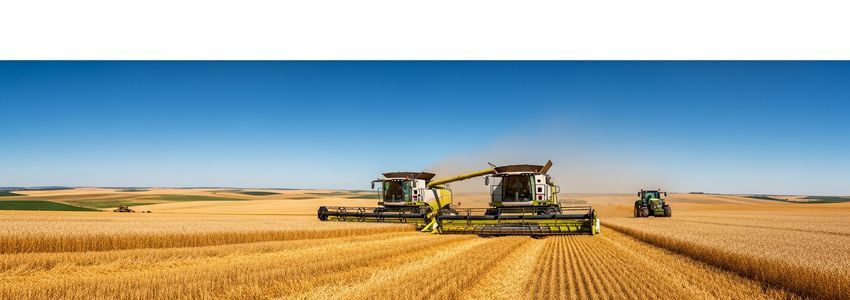
Why Agriculture Businesses Need Specialized Financing
Agricultural businesses operate on economic cycles that most lenders don't understand. A corn operation plants in April–May, cultivates through summer, and harvests in September–October — generating most of its annual revenue in a 6–8 week window. A cattle rancher may sell a year's worth of inventory in a single auction week. A greenhouse operator carries 6 months of growing costs before a single plant ships.
This seasonal concentration creates predictable challenges that standard bank underwriting is poorly designed to evaluate:
- Income smoothed across 12 months looks thin on standard financial statements even when the agricultural operation is economically strong
- Input costs are paid before revenue arrives — seed, fertilizer, fuel, labor, and water costs come months before harvest payment
- Equipment is capital-intensive and mission-critical — a failed combine during harvest is an existential crisis, not a deferrable maintenance issue
- Weather risk creates variance that conventional underwriters flag as instability when it's simply the nature of agricultural production
According to SBA data, agriculture ranks among the most underserved sectors for traditional small business financing. Crestmont Capital's agricultural lending programs are structured around the operational reality of farming — not the assumptions of urban commercial banking.
Types of Agriculture & Farm Loans We Offer
Farm Operating Loans
Operating loans cover the annual input costs of running an agricultural operation: seed, fertilizer, pesticides, fuel, labor, and water costs that must be paid before a crop generates revenue. Farm operating loans are typically short-term — 6 to 18 months — timed to be repaid from harvest proceeds.
Crestmont Capital's farm operating loans are structured as either lump-sum or revolving lines, allowing draws as input costs occur throughout the growing season rather than taking the full amount upfront. This reduces total interest cost while ensuring capital is available when each phase of the operation requires it.
Best for: Row crop operations, vegetable farms, orchards, greenhouse operations, and any agricultural business with defined plant-grow-harvest cycles.
Agricultural Equipment Financing
Farm equipment represents some of the largest capital expenditures in American small business — a modern combine harvester costs $400,000–$700,000. A tractor: $80,000–$400,000. A grain storage system: $100,000–$500,000. Equipment financing uses the purchased asset as collateral, enabling competitive rates and terms (typically 3–7 years) matched to the equipment's productive life.
Crestmont Capital finances all categories of agricultural equipment: tractors, combines, planting equipment, irrigation systems, livestock equipment, processing equipment, refrigeration systems, and specialty equipment for niche agricultural operations. New and used equipment both qualify; we finance both dealer purchases and private party transactions.
Best for: Operations replacing aging equipment, expanding capacity, or adding new production capabilities.
Livestock Financing
Livestock represents both inventory and capital equipment for cattle, hog, poultry, and dairy operations. Livestock financing provides capital to purchase breeding stock, feeder cattle, or grow a herd/flock to target production capacity. Repayment structures are matched to livestock production cycles — typically 12–36 months for cattle operations, shorter for poultry and hog cycles.
Best for: Cattle ranches expanding herd size, dairy operations purchasing milking stock, poultry operations starting a new flock cycle, and any livestock operation requiring capital to acquire production animals.
Agricultural Land Loans
Land is both the foundation and the primary long-term asset of most agricultural operations. Agricultural land loans (also called farm real estate loans) provide financing for land purchases, with terms typically ranging from 10–30 years. Interest rates for agricultural land loans are generally lower than unsecured products because the land itself provides substantial collateral value.
Best for: Operations expanding acreage, transitioning from tenant farming to land ownership, or consolidating multiple parcels into a single owned operation.
Ag Business Lines of Credit
A revolving agricultural line of credit provides ongoing access to capital for farm operations — draw funds for input purchases, repay from harvest proceeds, draw again for the next season. Lines of credit are the most flexible product for agricultural businesses because they accommodate the irregular cash flow timing of farming without requiring a new loan application each season.
Crestmont Capital's agricultural lines of credit are sized to seasonal input cost requirements, with draw periods aligned to planting schedules and repayment periods aligned to harvest timing.
Best for: Established farms with recurring seasonal input cost needs and consistent harvest revenue cycles.
Farm Working Capital Loans
Working capital loans provide lump-sum cash for immediate operational needs that fall outside the normal growing cycle: emergency equipment repair, unexpected labor costs, insurance gap coverage, or bridge financing while waiting on crop insurance payments or USDA program disbursements.
Best for: Any agricultural operation needing immediate cash for an unplanned operational expense.
Get Your Farm Financing Options
Crestmont Capital specializes in agricultural business loans. Apply in minutes — no hard credit pull.
Apply Now →Agriculture Loan Qualification Requirements
| Requirement | Typical Threshold | Notes |
|---|---|---|
| Personal Credit Score | 620+ preferred | Equipment loans possible at 580+ with collateral |
| Time in Operation | 1+ year | Established businesses with documented revenue |
| Annual Farm Revenue | $75,000+ | Scales with loan amount; seasonal concentration acceptable |
| Farm Tax Returns | 2 years (Schedule F) | Primary income documentation for agricultural borrowers |
| Business Bank Statements | 6–12 months | Seasonal patterns expected and acceptable |
| Equipment Collateral | For equipment loans | Equipment serves as collateral, reducing credit requirements |
Agriculture Loan Rates and Terms
| Loan Type | Typical Rate | Term | Use |
|---|---|---|---|
| Farm Operating Loan | 8%–22% APR | 6–18 months | Seed, fertilizer, labor, fuel |
| Agricultural Equipment | 6%–20% APR | 3–7 years | Tractors, combines, irrigation |
| Livestock Financing | 8%–20% APR | 12–36 months | Breeding stock, feeder cattle |
| Agricultural Land Loan | 5%–10% APR | 10–30 years | Land purchase or refinance |
| Ag Line of Credit | 10%–30% APR | Revolving (annual renewal) | Seasonal operating costs |
| SBA 7(a) Farm Loan | Prime + 2.75–4.75% | Up to 10 years | General business purposes |
How It Works: Step by Step
Ready to Apply for Farm Financing?
No obligation. No hard credit pull to check your options. Apply today with Crestmont Capital.
Check My Options →Agricultural Sectors We Finance
| Agricultural Sector | Common Financing Needs | Best Products |
|---|---|---|
| Row Crop Farming (corn, soy, wheat) | Seed, fertilizer, fuel, equipment | Operating loan, equipment financing, line of credit |
| Vegetable & Specialty Crop | Labor, irrigation, refrigeration, packaging | Operating loan, equipment financing |
| Cattle & Livestock Ranching | Feeder cattle, feed, veterinary, land | Livestock financing, land loans, operating loan |
| Dairy Operations | Milking equipment, feed, replacement stock | Equipment financing, livestock loan, line of credit |
| Poultry Production | Flock cycles, feed, processing equipment | Operating loan, equipment financing |
| Hog Operations | Feed, veterinary, processing facilities | Operating loan, equipment financing |
| Orchards & Vineyards | Irrigation, harvest equipment, cold storage | Equipment financing, line of credit |
| Greenhouse & Nursery | Climate systems, labor, growing supplies | Operating loan, equipment financing |
| Aquaculture (Fish Farming) | Tank systems, feed, processing equipment | Equipment financing, operating loan |
| Agribusiness (Processing, Distribution) | Working capital, processing equipment | Term loans, equipment financing, line of credit |
Real-World Agriculture Financing Scenarios
The Spring Planting Operating Loan
A 2,400-acre corn and soybean operation in Illinois needs $380,000 to cover spring planting inputs: seed ($140,000), fertilizer ($160,000), fuel ($45,000), and labor ($35,000). The operation harvested $1.2M in crop sales last fall but its business bank account reflects the seasonal reality — low in March, rebuilt by November. A farm operating loan of $380,000 at 11% over 9 months = $31,400 in interest. The crop sells for $1.4M in October, loan repaid in full. Net after financing cost: $988,600.
The Combine Replacement
A Kansas wheat farmer's 12-year-old combine fails inspection before harvest. Replacement: a 5-year-old used combine at $285,000. Equipment financing at 10.5% over 6 years = $5,290/month. The farmer owns 3,100 acres generating $620,000/year in wheat revenue. Monthly debt service coverage: 10x from annual revenue. Equipment financed, harvest completed on schedule.
The Cattle Operation Expansion
A Texas cattle rancher with 800 head wants to expand to 1,200 head by purchasing 400 feeder steers at $1,250/head ($500,000). A livestock loan at 9.5% over 18 months = $31,200/month. The 400 steers gain 500 lbs over 16 months on grass and supplement, then sell at $1.45/lb for a gross of $580,000. After feed ($45,000), veterinary ($8,000), and loan repayment ($561,600), net profit on the expansion: approximately $25,000 — plus the operation is scaled for the next cycle.
The Greenhouse Emergency
A commercial greenhouse operation in Florida loses its primary HVAC system in June — during peak growing season for a $900,000 holiday poinsettia and Christmas cactus crop. Replacement cost: $78,000. A working capital emergency loan at 1.28 factor = $21,840 total cost. System replaced in 6 days. Crop preserved. The $78,000 loan prevents a $900,000 loss — a 10x return on the financing cost.
USDA Loan Programs vs. Private Agricultural Loans
Agriculture borrowers have access to both government-backed USDA Farm Service Agency (FSA) loan programs and private agricultural lenders like Crestmont Capital. Understanding when to use each saves significant money and time.
| Factor | USDA FSA Loans | Private Agricultural Lenders |
|---|---|---|
| Rates | 1.5%–5% (subsidized) | 6%–22% depending on product |
| Approval Timeline | 4–12 weeks | 2–7 business days |
| Documentation | Extensive (farm plan, financial history) | Streamlined (tax returns, bank statements) |
| Eligibility | Family farms, beginning farmers, underserved | Any agricultural business |
| Loan Limits | $600,000 (direct) / $2.3M (guaranteed) | $5M+ |
| Best For | Long-term planning, patient applicants | Speed, flexibility, non-standard operations |
Agriculture Loan: Seasonal Cash Flow Timeline
Tips for Getting Approved for Agricultural Business Loans
- Know your Schedule F adjusted income: Before applying, calculate your net farm income plus depreciation plus any other non-cash deductions. This "adjusted net farm income" is what agricultural lenders actually use to size loans — and it's typically higher than your taxable income.
- Have your crop budget ready: A detailed input cost budget for the current or upcoming season is the strongest supporting document for an operating loan application. It demonstrates planning competence and gives the lender a clear repayment source.
- Show your revenue history: Multiple years of Schedule F returns showing consistent farm revenue — even with seasonal variation — is far more persuasive than a single strong year. Agricultural lenders weight multi-year revenue history heavily.
- Identify your collateral: Know what you own free and clear. Equipment titles, land deeds, and livestock inventory records all serve as potential collateral. Agricultural borrowers with strong collateral can often access better rates even with challenged credit.
- Apply before you need the money: The worst time to apply for a farm operating loan is April when planting starts in two weeks. Apply in January or February — before input costs arrive — to have capital approved and available before you need it. Lines of credit should be established during your strongest financial period, not your most stressed.
- Understand your crop insurance coverage: Lenders view crop insurance as a partial repayment guarantee. Having comprehensive coverage (at least 70% of APH yield) strengthens your application and may improve terms.
Agriculture Business Loans for Beginning Farmers
Beginning farmers — those with fewer than 10 years of significant farm management experience — face a specific access challenge: limited operating history, limited collateral, and often limited business credit. Crestmont Capital works with beginning farmers through several pathways:
- Equipment financing: The purchased equipment provides collateral, reducing credit requirements. Beginning farmers can often access equipment financing at 580+ credit with a reasonable down payment.
- USDA FSA Beginning Farmer programs: The FSA offers specific beginning farmer loan programs with relaxed requirements and lower rates. Crestmont Capital can help navigate these programs as a complement to private financing.
- Smaller initial loans: Starting with a smaller operating loan or equipment purchase, repaying successfully, and building the relationship enables larger financing in subsequent seasons.
- Co-signer or guarantor: An established farmer with strong credit can co-sign a beginning farmer's loan, significantly improving approval odds and terms.
See also: first-time business loans for related programs.
Agriculture Loans for Bad Credit
Agricultural businesses with challenged credit — often resulting from a bad crop year, a past livestock disease outbreak, or weather-related losses — still have financing options. Credit challenges in farming are often situational rather than behavioral, and agricultural lenders who understand the industry can differentiate between the two.
- Equipment financing at 580+ credit: Asset-backed products remain accessible even with lower credit when equipment serves as collateral.
- Revenue-based operating loans: Products that underwrite on farm revenue and bank statement deposits rather than credit score alone. Strong crop revenue history can offset credit challenges.
- USDA FSA Emergency Loan programs: Following natural disasters, the FSA offers emergency loan programs with relaxed credit requirements specifically designed for disaster-affected farms.
See also: bad credit business loans for general options.
Apply for Agriculture Business Financing
Join farmers across the U.S. who chose Crestmont Capital for fast, transparent agricultural financing.
Apply Today →Why Choose Crestmont Capital for Agricultural Business Loans
Crestmont Capital brings agricultural-specific expertise to business lending — understanding Schedule F income, seasonal cash flow patterns, equipment collateral values, and the operational realities of farming that generic business lenders miss.
- Agricultural financial literacy: We read Schedule F correctly, understand seasonal revenue concentration, and evaluate farm cash flow on its actual terms.
- Full product spectrum: Operating loans, equipment financing, livestock loans, land loans, and lines of credit — all structures an agricultural business might need across different stages and seasons.
- Fast approvals for time-sensitive ag needs: Planting windows don't wait. Equipment failures mid-harvest require capital in days, not weeks. We move at agricultural time, not bank time.
- Transparent cost disclosure: APR, monthly payment, total cost, and collateral requirements disclosed before you sign.
Related resources: equipment financing, small business loans, SBA loans, business line of credit.
Frequently Asked Questions About Agriculture & Farm Loans
What types of farms can get agricultural business loans?
Virtually all agricultural operation types qualify: row crop farms, vegetable and specialty crop operations, cattle and livestock ranches, dairy farms, poultry operations, hog farms, orchards and vineyards, greenhouses and nurseries, aquaculture operations, and agribusiness enterprises (processing, distribution, storage). The key qualification factors are consistent farm revenue and time in operation, not the specific agricultural sector.
How do farm loans differ from regular small business loans?
Farm loans account for agricultural-specific financial characteristics that standard business loans don't: seasonal revenue concentration, Schedule F income documentation (vs. standard P&L), crop and livestock cycles as repayment sources, agricultural equipment collateral, and weather-related revenue variance. Agricultural-specialized lenders understand these differences; generic business lenders often don't.
What is a farm operating loan and how does it work?
A farm operating loan provides capital to cover annual input costs — seed, fertilizer, pesticides, fuel, labor — that must be paid before a crop generates revenue. Repayment is typically structured to align with harvest timing: 6–12 month terms, with repayment from crop sale proceeds. Operating loans can be structured as lump sum (take all upfront) or revolving line of credit (draw as needed during the growing season).
Can I get agricultural financing with a bad crop year on my record?
Yes. Agricultural lenders with farm expertise understand that bad crop years happen — drought, floods, commodity price collapses. A single bad year on a multi-year operating history is evaluated differently than a trend of declining performance. Documenting the specific cause (weather event, market disruption) and showing recovery strengthens the application. Crop insurance proceeds also serve as documentation of the event's scope.
How do lenders handle seasonal income for farm loan qualification?
Agricultural lenders analyze annual income rather than monthly income averages, and they evaluate the pattern of seasonal concentration rather than treating it as instability. Schedule F returns across 2–3 years provide the primary income picture. Bank statements show the seasonal cash flow pattern — large deposits at harvest, drawdown through planting — which is expected and acceptable in agricultural underwriting.
What credit score do I need for an agricultural business loan?
620+ for most conventional agricultural loans. Equipment financing is accessible at 580+ because the asset provides collateral. USDA FSA Beginning Farmer programs accept lower scores with other compensating factors. Revenue-based operating loans may work at 550+ for farms with strong, documented income history.
Can I finance used farm equipment?
Yes. Used agricultural equipment financing is widely available. Equipment under 15 years old in good working condition generally qualifies. Older equipment or highly specialized equipment may require appraisal. Used equipment financing rates are slightly higher than new equipment rates to account for residual value uncertainty.
What is the difference between USDA FSA loans and private agricultural loans?
USDA FSA loans are government-backed with subsidized rates (1.5–5%) and are specifically designed for family farms and beginning farmers. They require more documentation and take 4–12 weeks to process. Private agricultural loans from lenders like Crestmont Capital fund in 2–7 business days at market rates (6–22% depending on product). The best strategy uses both: USDA for long-term, patient capital; private loans for seasonal operating needs and speed-dependent situations.
Do agriculture business loans require collateral?
It depends on the product. Equipment loans use the purchased machinery as collateral. Land loans use the property. Operating loans and lines of credit may be partially secured by crop liens, livestock liens, or general business assets. Unsecured agricultural operating loans are available for strong operations but carry higher rates. USDA FSA loans require all available collateral to be pledged.
How long does it take to get approved for a farm loan?
Private agricultural lenders: 2–5 business days for most products. Equipment financing may take 5–10 days for appraisal and title work. SBA 7(a) agricultural loans: 4–8 weeks. USDA FSA direct loans: 6–12 weeks. USDA guaranteed loans (through commercial lenders): 2–4 weeks. For time-sensitive agricultural needs — spring planting, emergency equipment — private lenders are the right choice.
Can a beginning farmer with no prior farm credit get a loan?
Yes, with the right approach. Equipment financing is the most accessible entry point — the asset provides collateral. USDA FSA Beginning Farmer programs are specifically designed for this situation with relaxed requirements. Co-signers with established farm credit can help. Starting with a smaller loan, repaying successfully, and building a lending relationship is the most reliable path to larger financing over 2–3 years.
What is an agricultural line of credit and how is it different from an operating loan?
An agricultural line of credit is revolving — you draw funds as needed up to your credit limit, repay from harvest proceeds, and the funds become available again for the next season without reapplication. An operating loan is a one-time lump sum for a specific season's inputs. Lines of credit are better for established operations with consistent multi-year input patterns; operating loans are better for operations with variable season-to-season input needs or lenders requiring specific use documentation.
Start Your Agriculture Loan Application
Fast decisions. Agricultural-specific underwriting. Dedicated funding advisors. Apply now with Crestmont Capital.