(800) 949-0401 Apply Now
For builders and developers, securing the right financing is the bedrock of any successful project. Construction loans provide the essential capital needed to transform raw land into profitable residential, commercial, or mixed-use properties. Unlike traditional mortgages, construction loans are designed to disburse funds in stages as development progresses, aligning financing with project milestones. Crestmont Capital specializes in structuring comprehensive construction financing solutions that empower developers to build with confidence, efficiency, and financial agility. Our expertise spans everything from single-family spec homes to large-scale multi-family and commercial developments, offering tailored funding that understands the unique risks and rewards of the construction cycle.
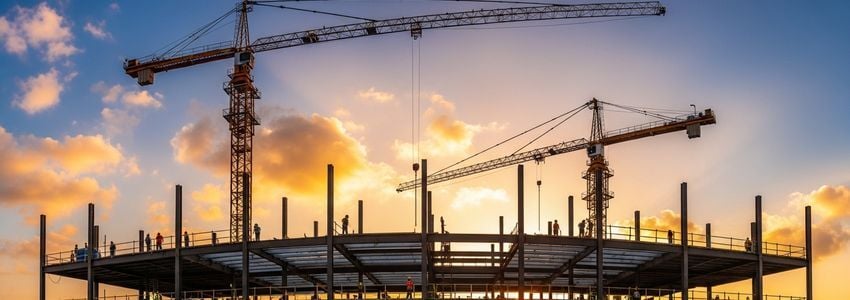
A construction loan is a short-term, specialized financing product designed to fund the development and construction of real estate projects. Unlike a traditional mortgage that is secured by a completed property, a construction loan is secured by the underlying land and the projected value of the completed structure. These loans are characterized by their phased disbursement structure, known as "draws," where funds are released incrementally as specific construction milestones are met and verified by inspections. This process minimizes risk for lenders while providing developers with capital precisely when needed, ensuring controlled spending and project accountability.
Construction loans are typically interest-only during the construction phase, allowing builders to preserve cash flow and allocate more capital directly to the project. Upon project completion, the construction loan is either repaid through the sale of the property (for speculative builds or pre-sold units) or refinanced into a permanent, long-term commercial mortgage (for income-generating properties like apartment complexes or retail centers). Crestmont Capital offers a variety of construction loan types, including ground-up construction, renovation and expansion, and land development loans, catering to the diverse needs of the builder and developer community.
The demand for robust construction financing is critical for economic growth, directly impacting housing supply and commercial infrastructure. According to a report by the U.S. Census Bureau, construction spending continues to be a significant driver of the national economy. Navigating the complexities of these specialized loans requires an experienced financial partner. At Crestmont Capital, our team brings deep industry knowledge and flexible underwriting to help builders and developers secure the capital they need to turn ambitious blueprints into tangible assets.
| Requirement | Typical Threshold | Notes |
|---|---|---|
| Developer Experience | Proven track record in similar projects | Demonstrated success is key; new developers may need stronger financials or partnerships |
| Financial Strength | Strong balance sheet, liquidity, net worth | Sufficient capital to cover potential cost overruns and interest reserves |
| Project Viability | Market analysis, detailed pro forma, permits | Evidence of market demand, realistic budget, and all necessary approvals in place |
| Collateral | Underlying land and improvements | Loan-to-cost (LTC) and loan-to-value (LTV) ratios are critical metrics |
| Pre-sales/Leases | For residential (pre-sales) or commercial (pre-leases) | Reduces market risk; often a requirement for higher leverage loans |
| Contractor Qualifications | Licensed, insured, strong references | Reputable and experienced general contractor is essential for project success |
| Loan-to-Cost (LTC) | Up to 70-80% of total project costs | Determines the maximum loan amount relative to the overall project budget |
Qualifying for a construction loan goes beyond just credit scores; it's about demonstrating a comprehensive understanding of your project, a solid financial foundation, and a proven ability to execute. Crestmont Capital looks at the holistic picture of your development, valuing strong project plans and credible development teams. We aim to partner with builders and developers who are poised for success, offering flexible solutions even when traditional banks impose rigid criteria.
Crestmont Capital offers tailored construction financing and expert guidance. Apply in minutes.
Apply Now →Construction loans involve a distinct fee structure and interest rate mechanism compared to other forms of financing, reflecting the incremental nature of funding and the higher inherent risk associated with uncompleted projects. Interest rates are typically variable, often pegged to a benchmark index like the Prime Rate or SOFR (Secured Overnight Financing Rate) plus a spread, meaning your monthly interest payments can fluctuate throughout the construction period. During the build phase, payments are usually interest-only, calculating interest solely on the funds that have been drawn to date, rather than the full loan amount.
Beyond the interest rate, developers should budget for various fees. These can include origination fees, typically 1% to 3% of the total loan amount, charged at closing. There are also inspection fees, which cover the cost of periodic site visits by the lender's third-party inspectors to verify construction progress before disbursing draws. Legal fees, appraisal costs for both "as-is" and "as-completed" values, and potential unused line fees may also apply. Understanding these costs upfront is crucial for accurate project budgeting and determining overall profitability.
| Cost Factor | Typical Range | What to Know |
|---|---|---|
| Interest Rate | 7%-15% APR (variable) | Often tied to Prime or SOFR + a spread; fluctuates with market rates |
| Term | 12-36 months | Aligned with typical construction timelines; extensions may be available for complex projects |
| Origination Fee | 1%-3% of loan amount | Charged at closing for processing and underwriting; can sometimes be rolled into the loan |
| Draw Fees | $250-$1,000 per draw | Covers administrative and inspection costs for each disbursement of funds |
| Inspection Fees | $150-$500 per inspection | Paid to third-party inspectors to verify construction progress for each draw request |
| Legal Fees | Varies ($2,000-$10,000+) | Covers lender's legal costs for documentation and closing; often passed to borrower |
| Loan Size | $250,000-$50,000,000+ | Ranges from small residential projects to large commercial developments, tailored to project scope |
Construction loans are indispensable tools for builders and developers, offering strategic advantages that facilitate project execution and financial management throughout the development lifecycle. Their unique structure is specifically tailored to the nuances of building, providing flexibility and control often unavailable through conventional financing.
Secure the financing you need with Crestmont Capital's expert support. Check your options today.
Check My Options →A builder specializing in high-end residential homes in a growing suburban market acquires a desirable lot. They need $850,000 to cover construction costs, including labor, materials, and finishes. Crestmont Capital provides a 15-month construction loan with an 80% Loan-to-Cost (LTC) ratio. Funds are disbursed in 10 draws, tied to specific milestones like foundation completion, framing, rough-ins, and final finishes. Upon completion, the home is listed and sells within three months, allowing the developer to repay the construction loan and realize a substantial profit. The phased funding ensures efficient use of capital and managed risk.
A seasoned developer plans to construct a 50-unit apartment complex in an urban core, requiring $12 million in total financing for land acquisition, infrastructure, and vertical construction. The project has strong market study projections for lease-up. Crestmont Capital structures a 24-month construction loan, providing 75% LTC, with a robust draw schedule linked to phases like site work, shell construction, interior build-out, and landscaping. The loan allows for interest-only payments, preserving the developer's cash flow during the intensive construction period. Upon stabilization, the construction loan is refinanced into a long-term, permanent commercial mortgage, providing stable cash flow from rental income.
A developer with a pre-leased anchor tenant (a national grocery chain) and several letters of intent from other retailers plans a new 30,000 sq ft retail center. The total project cost is $6 million. Crestmont Capital provides a 20-month construction loan, covering 70% of the project's costs. The strong pre-leasing commitments significantly strengthen the loan application, demonstrating clear demand and a reliable exit strategy through long-term leases. Funds are released based on construction progress, including pad site preparation, shell building erection, and tenant interior build-outs. The completed center generates consistent rental income, allowing for a smooth refinance to a permanent mortgage.
A developer purchases 100 acres of raw land with the intention of subdividing it into residential lots. The project requires $2.5 million for entitlements, grading, utilities (water, sewer, electric), and road construction before individual homes can be built. Crestmont Capital offers a 12-month land development loan specifically structured for this purpose. The draws are tied to engineering milestones, permit acquisitions, and infrastructure installation phases. Once the land is fully developed and platted, the developer can either sell the improved lots to homebuilders or secure separate construction loans for vertical home building, with the land development loan repaid by proceeds from lot sales or subsequent financing.
| Product | Approval Speed | Rate Range | Best For |
|---|---|---|---|
| Construction Loan | 30-90 days | 7%-15% APR | Funding new builds, renovations, or land development with phased draws |
| SBA Loan | 60-120 days | 6%-10% APR | Long-term financing for owner-occupied commercial properties, including ground-up construction (SBA 504) |
| Conventional Commercial Mortgage | 45-90 days | 6%-12% APR | Long-term financing for stabilized, income-generating commercial properties; typically not for construction |
| Bridge Loan | 5-15 days | 8%-18% APR | Short-term gap financing for land acquisition before a construction loan, or for immediate renovations before permanent financing |
| Hard Money Loan | 3-7 days | 10%-18%+ | Very fast, asset-based financing for distressed properties, credit-challenged borrowers, or highly opportunistic deals |
| Mezzanine Financing | 4-8 weeks | 10%-20%+ | Subordinate debt that fills the gap between senior debt (like a construction loan) and equity, for larger projects |
Partner with Crestmont Capital for expert construction financing solutions. Get started today.
Apply Today →Navigating the complex world of construction financing demands more than just capital; it requires a partner with deep industry insight, flexible solutions, and a commitment to your project's success. At Crestmont Capital, we pride ourselves on being that partner, offering unparalleled expertise to builders and developers across various asset classes.
We understand that every construction project is unique, with its own set of challenges and opportunities. Our approach is not one-size-fits-all; instead, we work closely with you to structure construction loans that align perfectly with your project's timeline, budget, and exit strategy. From the initial consultation through to project completion and beyond, our dedicated team provides transparent communication, responsive service, and invaluable guidance. We streamline the application and underwriting process, ensuring faster decisions and efficient funding to keep your project on track.
Our relationships with a vast network of capital sources, combined with our in-house underwriting capabilities, enable us to offer competitive rates and terms for a wide spectrum of development needs. Whether you're building a single-family home, a multi-unit residential complex, or a large-scale commercial property, Crestmont Capital has the experience and resources to help you secure the financing that turns your vision into reality. We also offer related financing solutions such as hard money loans for rapid land acquisition or commercial real estate financing for permanent debt upon stabilization.
A construction loan is short-term financing used to fund the building phase of a property, with funds disbursed in stages as construction progresses. Payments are typically interest-only. A permanent mortgage, by contrast, is a long-term loan secured by a completed, stabilized property, with principal and interest payments spread over many years (e.g., 15-30 years).
Funds are disbursed through a "draw schedule." As construction milestones are completed (e.g., foundation, framing, roofing, rough-ins), the developer requests a draw. An independent inspector verifies the work, and funds are then released to cover the completed phase's costs. This ensures responsible spending and aligns funding with physical progress.
Loan-to-Cost (LTC) is a key metric in construction financing, representing the loan amount as a percentage of the total project costs (including land, hard costs, and soft costs). For example, 75% LTC on a $1M project means a $750,000 loan. It's crucial because it indicates the borrower's equity contribution and the lender's risk exposure; lower LTC generally means higher borrower equity and lower risk for the lender.
For most institutional lenders, prior construction or development experience is a significant factor in qualifying, especially for larger projects. It demonstrates a borrower's ability to manage complex projects, budgets, and timelines. New developers may need a strong financial position, a highly experienced general contractor, or a co-developer with a proven track record to secure financing.
Yes, many construction loans can be structured to include the cost of land acquisition if the land is part of the overall development project. However, the loan amount for land is typically a lower percentage of its value than for construction costs. Sometimes, a separate short-term bridge loan or land loan might be used to acquire the land first, then rolled into a larger construction loan.
An interest reserve is a portion of the construction loan proceeds set aside by the lender to cover interest payments during the construction period. This is common because projects often don't generate income until completion. While not always strictly required, it's a frequent condition that provides comfort to the lender that interest payments will be made even if initial sales or lease-ups are slow. The reserve reduces the developer's immediate out-of-pocket interest expenses.
Fast decisions. Competitive terms. Dedicated funding advisors. Apply now with Crestmont Capital.
Get Funded Now →Disclaimer: The information provided on this page is for general educational purposes only and is not financial, legal, or tax advice. Funding terms, qualifications, and product availability may vary and are subject to change without notice. Crestmont Capital does not guarantee approval, rates, or specific outcomes. For personalized information about your business funding options, contact our team directly.