
 (800) 949-0401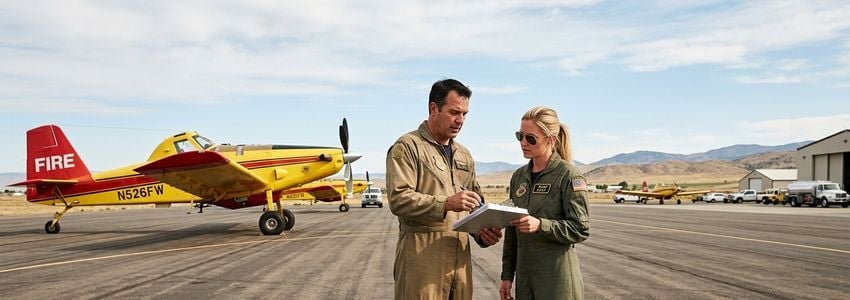
Aerial Firefighting and Wildland Fire Equipment Financing: The Complete Guide for Fire Suppression Contractors
Wildfire seasons across the United States have grown longer, hotter, and more destructive, and the contractors who battle these fires from the ground and the air are under constant pressure to keep their fleets ready. Wildland fire equipment financing gives fire suppression contractors, aerial applicators, and forestry firefighting operators a way to acquire air tankers, brush trucks, water tenders, and suppression equipment without draining cash reserves during the off-season. For a business where equipment readiness can mean the difference between winning a federal or state contract and sitting on the sidelines, financing is often the fastest path to fleet expansion.
Federal and state agencies spend billions of dollars every fire season contracting private aerial firefighting operators, wildland engine crews, and fire suppression contractors to supplement government resources. Winning and keeping those contracts requires airworthy aircraft, certified apparatus, and specialized equipment that meets strict agency standards - and that equipment is expensive to buy, maintain, and upgrade. Financing lets contractors scale their fleets to match contract opportunities instead of turning down work because of capital constraints.
In This Article
What Is Wildland Fire Equipment Financing?
Wildland fire equipment financing is a category of equipment loans and leases designed for businesses that provide fire suppression, aerial firefighting, and wildfire mitigation services. It covers everything from single-engine air tankers and helicopter buckets to Type 3 wildland engines, water tenders, and dozer transport trailers. Instead of paying the full purchase price upfront, contractors borrow the funds or lease the equipment and repay over a fixed term, typically 24 to 84 months depending on the asset.
Because aircraft, engines, and heavy suppression apparatus hold substantial resale value, the equipment itself frequently serves as collateral for the loan. That collateral position often makes approval easier and terms more competitive than an unsecured line of credit, especially for contractors whose revenue is concentrated in a seasonal seven-to-eight month fire year.
Wildland fire equipment financing also gives contractors a way to respond quickly when a new federal exclusive-use contract, state cooperative agreement, or private timberland client requires additional aircraft or engines on short notice. Rather than waiting a full off-season to save enough cash, a financed acquisition can put new equipment into service before the next fire season begins.
Industry Insight: According to Forbes, federal wildfire response spending has grown so substantially that agencies have reorganized their coordination structures, with a growing share of aircraft and engine capacity supplied by private contractors under exclusive-use and call-when-needed agreements.
Equipment Commonly Financed
Lenders evaluate the durability, resale value, and revenue-generating potential of an asset when determining loan terms. The following categories of wildland and aerial firefighting equipment are routinely financed through equipment loan and lease programs:
- Single-Engine Air Tankers (SEATs) - Fixed-wing aircraft used for retardant and water drops on wildland fires
- Helicopters and Aerial Buckets - Rotor-wing aircraft, Bambi Buckets, and belly tank systems for water and retardant delivery
- Type 1, 2, and 3 Wildland Engines - Brush trucks and structural engines built for off-road wildland access
- Water Tenders - Tank trucks that resupply engines and portable pumps at the fire line
- Dozers and Dozer Transports - Fire dozers and the lowboy trailers used to move them between incidents
- Portable Pumps and Hose Systems - Wildland-rated pumps, hose reels, and foam/retardant delivery systems
- UTVs and Fast-Attack Vehicles - Compact off-road units used for initial attack and mop-up operations
- Command and Support Vehicles - Mobile command centers, crew transport vehicles, and communications trailers
- Retardant and Foam Mixing Equipment - Ground-based mixing and loading stations for tanker bases
- Chainsaws, Masticators, and Fuel Reduction Equipment - Fuel break and fire mitigation machinery used in prevention contracts
Both new and well-maintained used equipment can typically be financed, though aircraft financing often requires additional documentation such as maintenance logs, airworthiness certificates, and total time records. Ground apparatus financing generally follows a process closer to standard commercial truck and heavy equipment lending.
Ready to Expand Your Fleet Before Fire Season?
Get fast, flexible equipment financing from the #1 business lender in the U.S. Apply in minutes, no obligation.
Apply Now →Key Benefits of Wildland Fire Equipment Financing
Fire suppression contracting is a capital-intensive, seasonal business. Financing addresses several of the specific financial pressure points that operators face year after year:
- Preserves working capital for payroll, fuel, and maintenance during the fire season, rather than tying it up in equipment purchases
- Matches payments to seasonal cash flow through step-up or seasonal payment structures aligned with contract award timing
- Enables fast response to contract opportunities when a new exclusive-use agreement requires additional aircraft or engines quickly
- Supports fleet modernization so aging aircraft and engines can be replaced before mechanical issues threaten contract compliance
- Offers tax and accounting flexibility depending on whether a loan or lease structure is used for a given asset
- Keeps equipment collateral-backed rather than requiring contractors to pledge personal real estate or other unrelated business assets
For many wildland fire contractors, the ability to bid confidently on a larger exclusive-use contract - knowing that financing is available to cover the required aircraft or engine count - is itself a competitive advantage over smaller operators who can only bid what they already own outright. Specialty and government-contracting small businesses like these represent a meaningful share of the more than 33 million small businesses tracked in U.S. Census Bureau small business data.
How Wildland Fire Equipment Financing Works
The financing process for wildland fire and aerial firefighting equipment follows the general structure of commercial equipment lending, with some added documentation for aviation assets. Here is a step-by-step breakdown:
1. Identify Your Equipment Needs
Build a clear list of the aircraft, engines, or apparatus you need, including make, model, year, new-versus-used status, and vendor or seller quotes. If the purchase supports a specific contract bid or award, note the contract type and required delivery timeline.
2. Gather Business and Asset Documentation
Lenders typically request 3 to 6 months of business bank statements, recent tax returns, and a copy of any relevant operating certificates or contracts (such as USFS exclusive-use agreements or state cooperative agreements). For aircraft, maintenance records, total airframe time, and airworthiness documentation are usually required.
3. Submit Your Application
A complete application with supporting documentation allows for the fastest possible turnaround. Crestmont Capital can often provide a decision on ground equipment financing within 24 to 48 hours; aircraft financing may take several additional business days due to appraisal and title work.
4. Review Your Financing Offer
Your offer will outline the loan or lease amount, rate or factor rate, term, monthly payment, and any down payment or reserve requirements. Compare terms carefully, particularly if you are financing multiple assets across different equipment categories.
5. Close and Take Delivery
Once documents are signed, funds are typically disbursed within 1 to 5 business days for ground equipment. Aircraft transactions may involve escrow and title transfer timelines that extend closing by a few additional days.
6. Put the Equipment to Work
Once funded, your new or upgraded equipment can be put into service or made available for the upcoming contract season. Most financing structures allow a grace period before the first payment is due, giving contractors time to complete inspections and crew training.
By the Numbers
Wildfire Response and Equipment Financing - Key Statistics
$4B+
Federal wildfire suppression spending in a single recent fire year
76.8%
Industry-wide equipment financing approval rate in early 2026
24-84
Typical financing term range in months
$127K
Average small business equipment loan size in 2025
Financing Options: Loans vs. Leasing
Fire suppression contractors generally choose between two core financing structures for aircraft and apparatus: equipment loans and equipment leases. The right choice depends on how long you plan to keep the asset, your tax strategy, and your appetite for ownership versus flexibility.
Equipment Loans
An equipment loan finances the purchase price of the asset, with the equipment itself typically serving as collateral. You make fixed monthly payments over the loan term and own the aircraft or apparatus outright once the loan is repaid. Equipment loans work well when:
- You intend to operate the asset for its full useful life
- You want to build long-term equity in your fleet
- You prefer predictable, fixed monthly payments
- The equipment (such as a well-maintained engine or airframe) is expected to hold strong resale value
Equipment Leasing
Leasing allows a contractor to use the equipment for a set term without taking on full ownership immediately. At the end of the lease, you may purchase the asset at fair market value, return it, or roll into a new lease on updated equipment. Leasing is often attractive when:
- You want to keep pace with newer aircraft avionics or engine technology
- Lower monthly payments are a priority during the off-season
- You prefer to avoid long-term ownership of aging airframes
- You want financing that may be structured as an operating expense rather than a capital purchase
Some contractors also use a business line of credit alongside equipment financing to cover fuel, retardant, and crew costs during active incidents while equipment payments remain fixed and predictable.
For contractors evaluating longer-term, lower-rate options for major fleet expansions, the SBA 7(a) loan program can also finance equipment purchases, though approval timelines are typically longer than conventional equipment financing.
Pro Tip: Many contractors pair a long-term equipment loan for their primary aircraft or engine fleet with a revolving line of credit for fuel, retardant, and incident-related expenses. This hybrid approach keeps fixed costs predictable while preserving flexibility for variable, incident-driven spending.
Who Qualifies for Wildland Fire Equipment Financing?
Wildland fire equipment financing is available to a range of fire suppression and aerial application businesses, from established federal contractors to newer operators expanding into fire suppression work. Qualification depends on business history, contract backlog, and creditworthiness.
Established Federal and State Contractors
Operators with existing USFS exclusive-use agreements, state cooperative agreements, or multi-year timberland protection contracts represent the strongest borrower profile. Lenders view existing contract revenue as a reliable repayment source. This group typically accesses:
- Loan amounts from $50,000 for a single engine to several million dollars for a multi-aircraft fleet
- Terms of 36 to 84 months depending on asset type
- Competitive rates tied to contract history and creditworthiness
Growing Operators Bidding on New Contracts
Businesses that are expanding from a smaller fleet to compete for larger contracts can often qualify based on a combination of existing revenue history and the pending contract itself, particularly when the contract has already been awarded or is highly likely based on past performance.
Businesses Diversifying Into Fire Suppression
Aerial application companies, forestry contractors, and heavy construction firms diversifying into wildland fire suppression can often qualify under their existing business history, using their track record in adjacent industries to support new equipment purchases.
General Qualification Benchmarks
- Credit Score: 620+ for most ground apparatus programs; higher thresholds are common for aircraft financing
- Time in Business: 1 to 2+ years preferred, though contract-backed applications may qualify sooner
- Annual Revenue: Varies by fleet size; larger aircraft transactions typically require established revenue history
- Down Payment: 0% to 20% depending on asset type, age, and credit profile
See If You Qualify in Minutes
Crestmont Capital works with established federal contractors, growing operators, and businesses diversifying into fire suppression. No obligation to apply.
Check Your Options →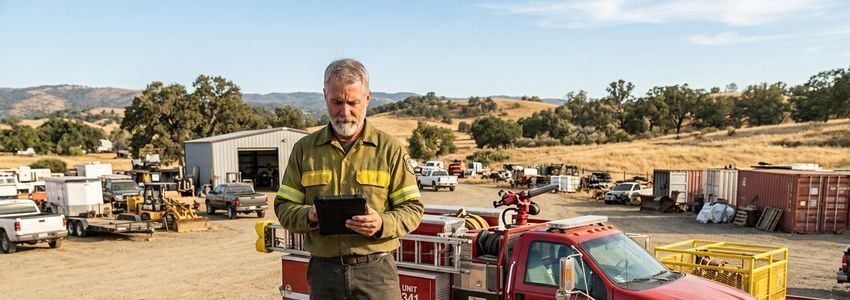
Financing Options Compared
Different financing structures suit different fleet strategies. Use this comparison to help determine which approach best fits your fire suppression operation:
| Feature | Equipment Loan | Equipment Lease | Line of Credit |
|---|---|---|---|
| Ownership | You own at end of term | Option to buy, return, or renew | You own immediately |
| Monthly Payments | Moderate, fixed | Lower, fixed | Variable (interest on drawn balance) |
| Best For | Long-term fleet assets | Frequently upgraded equipment | Seasonal operating costs |
| Down Payment | 0-20% | Often 1-2 months upfront | None |
| Approval Timeline | 1-5 days (ground); longer for aircraft | 1-5 days (ground); longer for aircraft | 1-5 days |
Note: Contractors with highly seasonal fire-year revenue may benefit from step-up or seasonal payment structures that align larger payments with peak contract billing months and smaller payments during the off-season.
How Crestmont Capital Helps Fire Suppression Contractors
Crestmont Capital works with specialty and heavy equipment operators across industries, including fire suppression, forestry, and government contracting businesses. We understand that a wildland fire contractor's revenue cycle looks different from a typical small business, with concentrated fire-season income and off-season equipment maintenance and readiness costs.
Here is what sets Crestmont Capital apart for fire suppression and aerial firefighting contractors:
Fast, Streamlined Approvals
When a new contract opportunity or equipment listing appears, waiting weeks for a financing decision isn't practical. Crestmont Capital typically provides decisions on ground equipment financing within 24 to 48 hours, with funding available shortly after.
Flexible Loan and Lease Structures
We offer equipment loans, leases, and business lines of credit, giving contractors the flexibility to structure financing around contract timing and seasonal cash flow rather than a one-size-fits-all payment schedule.
Broad Equipment Eligibility
Crestmont Capital finances new and used wildland fire and aerial firefighting equipment, including engines, water tenders, dozer transports, and support vehicles. For related fleet needs, explore our commercial truck financing and heavy machinery financing programs.
Government Contractor Experience
Many fire suppression contractors operate under federal or state government agreements. Crestmont Capital's government business loans programs are structured with an understanding of how contract-backed revenue and payment cycles work for agencies like the USFS and state forestry departments.
You can also explore our full equipment financing and equipment leasing programs, or review our related guide on fire suppression business loans for broader financing strategies beyond equipment purchases.
Real-World Scenarios: Wildland Fire Equipment Financing in Practice
Understanding how other fire suppression contractors have used equipment financing can help you think through your own fleet strategy. The following scenarios reflect common situations wildland fire and aerial firefighting operators face:
Scenario 1: Winning a New Exclusive-Use Contract
An aerial application company in California is awarded its first USFS exclusive-use contract, which requires a dedicated single-engine air tanker on standby for the full fire season. Rather than delaying the contract start, the company secures aircraft financing structured around the contract's payment schedule, allowing it to meet the agency's readiness date.
Scenario 2: Replacing an Aging Engine Fleet
A wildland fire contractor in Colorado has operated the same three Type 3 engines for over a decade. Rising maintenance costs and reliability concerns threaten contract compliance. The owner finances two new engines through a 60-month equipment loan, reducing downtime and strengthening the company's position for contract renewal.
Scenario 3: Adding a Water Tender for a Larger Territory
A regional fire suppression business in Oregon expands its service territory after a competitor exits the market. The added distance between water sources and fire lines requires an additional water tender. A $180,000 equipment loan allows the company to add the tender in time for the upcoming fire season.
Scenario 4: Diversifying From Forestry Into Fire Suppression
A forestry mulching and fuel-reduction contractor in Idaho decides to add wildland fire suppression services, leveraging its existing off-road equipment experience. The company finances a Type 4 brush truck and portable pump systems through a lease, preserving cash for the initial contract bidding season.
Scenario 5: Upgrading Aircraft Avionics and Safety Equipment
A helicopter operator providing bucket work for a state cooperative agreement in Montana needs to upgrade avionics and safety systems to meet updated agency standards. Rather than grounding the aircraft during a cash-intensive upgrade, the operator uses equipment financing to spread the cost over the useful life of the improvements.
Scenario 6: Building a Multi-Engine Fleet for Federal Bidding
A growing fire suppression company in Washington state wants to bid on a larger federal contract requiring a minimum of five engines on standby. Starting with two owned engines, the company uses a combination of equipment loans and leasing to add three additional Type 2 engines, positioning the fleet to meet the contract's minimum equipment requirements.
How to Get Started
Complete our quick application at offers.crestmontcapital.com/apply-now. Have your equipment list, contract information, and recent bank statements ready.
A Crestmont Capital financing advisor will review your application, discuss your equipment and contract timeline, and match you with the right loan or lease structure.
Once approved and documents are signed, funding for ground equipment typically arrives within 1 to 5 business days, putting your fleet in position ahead of the next fire season.
Get Your Fleet Ready for Fire Season
Join fire suppression contractors nationwide who use Crestmont Capital to finance aircraft, engines, and support equipment. Apply in minutes.
Apply Now →Conclusion
Wildfire seasons are getting longer and more intense, and the contractors who supply aircraft, engines, and suppression equipment to federal and state agencies play an increasingly critical role in the nation's wildfire response. But building and maintaining a fleet capable of meeting agency standards requires significant capital, and that is exactly where wildland fire equipment financing becomes a competitive advantage.
Whether you are winning your first exclusive-use contract, replacing an aging engine fleet, or expanding into aerial firefighting, Crestmont Capital offers the fast approvals, flexible structures, and government contracting familiarity you need to move quickly and grow with confidence. Do not let equipment costs keep your fire suppression business from taking on the next contract.
Explore our equipment leasing options or commercial financing programs to find the right fit for your fire suppression fleet.
Frequently Asked Questions
Disclaimer: The information provided in this article is for general educational purposes only and is not financial, legal, or tax advice. Funding terms, qualifications, and product availability may vary and are subject to change without notice. Crestmont Capital does not guarantee approval, rates, or specific outcomes. For personalized information about your business funding options, contact our team directly.








