
 (800) 949-0401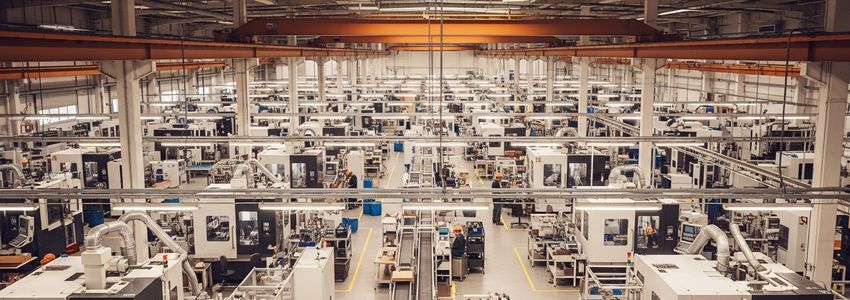
Using Equipment Financing to Open a New Department
Opening a new department is one of the most powerful ways to scale a business, increase revenue, and stay competitive in any market. Whether you are expanding clinical services, adding a manufacturing line, launching a repair division, or introducing a specialty service, the upfront cost of equipment can be substantial. This is where equipment financing becomes a strategic growth tool rather than a last resort.
Instead of tying up working capital or delaying growth, equipment financing allows businesses to acquire the tools they need immediately while preserving cash flow. In this guide, we cover how equipment financing works, why it is often the smartest way to fund departmental expansion, what types of equipment qualify, and how to get started with Crestmont Capital.
In This Article
- What Is Equipment Financing?
- Why Equipment Financing Is Ideal for New Department Launches
- Types of Departments That Benefit Most
- How Equipment Financing Works Step by Step
- What Types of Equipment You Can Finance
- Equipment Financing vs. Other Funding Options
- How to Qualify for Equipment Financing
- How Crestmont Capital Helps
- Real-World Scenarios
- Common Mistakes to Avoid
- Frequently Asked Questions
- How to Get Started
What Is Equipment Financing?
Equipment financing is a form of business funding specifically designed to help companies purchase or lease equipment without paying the full cost upfront. Rather than depleting savings or using high-interest revolving credit, a business secures a loan or lease that is directly tied to the equipment being acquired. The equipment often serves as collateral for the financing, which keeps approval rates high and interest rates competitive.
When opening a new department, equipment is rarely optional. Medical devices, commercial machinery, technology systems, vehicles, specialized tools, and professional-grade furniture often define whether a department can operate at all. Equipment financing aligns the cost of those assets with the revenue they are intended to generate, creating a sustainable financial structure from day one.
There are two primary forms of equipment financing: equipment loans and equipment leases. With an equipment loan, you own the asset outright once the loan is repaid. With an equipment lease, you pay to use the asset over a defined period, with options to purchase, return, or upgrade at the end of the term. Both structures are widely used for new department launches depending on the type of asset and how long the business expects to use it.
According to the U.S. Small Business Administration, equipment financing is among the most commonly used funding tools for growing businesses, with billions of dollars deployed annually to help companies acquire the assets they need to scale.
Key Fact: The Equipment Leasing and Finance Association reports that over 80% of U.S. businesses use some form of equipment financing or leasing, making it one of the most widely adopted business funding strategies in the country.
Why Equipment Financing Is Ideal for New Department Launches
Starting a new department is not just an operational decision. It is a capital allocation decision. The challenge most business owners face is that expansion requires significant investment before any new revenue arrives. Equipment financing solves this timing mismatch in several critical ways.
It preserves working capital. When you finance equipment rather than pay for it outright, your operating cash stays available for staffing, marketing, inventory, and the day-to-day costs of launching the new division. This is especially important during the ramp-up period when expenses exceed initial revenue.
It aligns costs with revenue generation. Monthly equipment payments typically begin once the equipment is delivered and operational, which means you are generating revenue at the same time you are paying for the assets that produce it. This creates a self-funding dynamic that cash purchases cannot replicate.
It enables faster execution. Waiting to save enough cash to purchase equipment outright can take months or even years. Businesses that move quickly on expansion opportunities often secure competitive advantages that slower-moving competitors lose. Equipment financing compresses that timeline significantly.
It keeps credit lines available. Using a business line of credit or general-purpose loan to buy equipment ties up that capacity for other needs. Equipment financing is purpose-specific, leaving your revolving credit available for emergencies, inventory, or opportunities that arise after the department is up and running.
It may offer structured repayment options. Many equipment financing programs offer fixed monthly payments that make budget forecasting straightforward. Unlike variable-rate credit products, fixed-payment structures give new department managers a clear cost picture from the start.
Growth Insight: According to CNBC, businesses that use financing to fund expansion grow revenue approximately 2.5 times faster than those that rely solely on organic cash accumulation. Speed of execution matters enormously when entering a new market or service category.
Types of Departments That Benefit Most from Equipment Financing
Equipment financing is versatile enough to support virtually any type of departmental expansion. That said, some industries and department types have especially strong use cases for this funding approach.
Healthcare and Medical Practices. Adding a new clinical service line almost always requires specialized diagnostic equipment, treatment devices, or patient care technology. Whether a medical practice is launching a physical therapy wing, an imaging department, or a specialty procedure suite, the equipment investment can easily run into six or seven figures. Equipment financing spreads those costs over 24 to 72 months while the new service begins generating patient revenue.
Manufacturing and Production. Manufacturers opening new production departments need CNC machines, conveyor systems, packaging lines, or custom fabrication equipment. These assets are often expensive and highly specialized. Equipment financing provides the capital to acquire them without waiting years to accumulate cash or disrupting existing operations.
Automotive and Repair Services. Auto body shops, dealerships, and repair centers expanding into new service categories often need lifts, alignment systems, diagnostic tools, or spray booths. These are precisely the types of assets that equipment financing was built for.
Restaurant and Hospitality. Adding a catering department, bakery wing, or expanded kitchen operation requires commercial refrigeration, prep stations, cooking equipment, and dishwashing systems. Equipment financing makes these expansions financially manageable.
Technology and IT Services. Companies adding a managed IT, cloud services, or hardware repair division need servers, networking infrastructure, diagnostic equipment, and workstations. Equipment financing can cover both the physical hardware and certain technology infrastructure assets.
Construction and Trades. General contractors adding a new specialty division such as excavation, electrical, or HVAC often need heavy machinery, specialized tools, or fleet vehicles. Equipment financing is standard practice in these industries for exactly that reason.
How Equipment Financing Works Step by Step
The process of obtaining equipment financing is straightforward compared to many other business loan types. Here is a step-by-step overview of how it typically works when you are using it to launch a new department.
Quick Guide
How Equipment Financing Works for New Departments
Create a detailed list of every piece of equipment needed to launch the new department, including vendors and pricing.
Submit your application with basic business financials, time in business, and equipment details.
The lender reviews your application and returns an offer with loan amount, rate, and repayment schedule.
Funds are released directly to the vendor, or the lender pays the vendor on your behalf.
You begin monthly payments while the new department generates its own revenue to offset the cost.
Ready to Open Your New Department?
Get fast, flexible equipment financing from the #1 business lender in the U.S. Apply in minutes and get funded in days.
Apply NowWhat Types of Equipment You Can Finance
One of the greatest advantages of equipment financing is how broadly it applies. As long as the item has a useful economic life and can serve as collateral, it can almost certainly be financed. Here are some of the most common categories businesses finance when opening new departments.
Industrial and Manufacturing Equipment. CNC machines, lathes, milling equipment, laser cutters, conveyor systems, industrial presses, packaging lines, and fabrication tools all qualify. These assets often carry six-figure price tags, making financing not just convenient but essential for most expansion plans.
Medical and Diagnostic Equipment. X-ray machines, MRI systems, ultrasound units, surgical equipment, patient monitoring systems, dental chairs, and physical therapy devices are all commonly financed. The specialized nature of these assets makes them ideal collateral because they retain predictable value.
Technology and IT Infrastructure. Servers, networking hardware, data storage systems, workstations, POS systems, point-of-sale terminals, and telecommunications equipment are all financeable. Some lenders also cover software when it is bundled with hardware.
Construction and Heavy Equipment. Excavators, forklifts, loaders, cranes, scissor lifts, and specialty vehicles are routinely financed through capital equipment financing programs. These assets have strong residual values, which often translates into competitive terms for borrowers.
Commercial Vehicles and Fleets. Delivery trucks, service vans, specialty vehicles, and fleet additions for new distribution or service departments can all be financed through equipment loan programs. This is particularly valuable for businesses launching field service or logistics divisions.
Restaurant and Food Service Equipment. Commercial ovens, refrigeration systems, dishwashers, food prep stations, espresso machines, and specialty cooking equipment are all standard candidates for equipment financing in the hospitality sector.
Office Furniture and Modular Equipment. While less common, some lenders finance high-value office buildouts including modular workstations, AV systems, reception furniture, and specialized fixtures when they are tied to a specific operational purpose.
Equipment Financing vs. Other Funding Options
Before committing to equipment financing for your department launch, it is worth understanding how it compares to the alternatives. Each option has its place, but equipment financing often stands out on several key dimensions.
| Factor | Equipment Financing | Business Line of Credit | Cash Purchase |
|---|---|---|---|
| Cash Flow Impact | Low - spreads costs over time | Medium - draws on available credit | High - depletes reserves immediately |
| Approval Speed | 1 to 3 business days | 2 to 7 business days | Immediate (no approval needed) |
| Collateral Required | Equipment itself (self-secured) | May require personal guarantee | None |
| Credit Line Usage | Does not use revolving credit | Reduces available credit balance | No credit line impact |
| Ownership | You own it after payoff | You own it immediately | You own it immediately |
For most businesses launching a new department, equipment financing hits the best balance of speed, cost, and capital preservation. A business line of credit is excellent for operational costs but was not designed for large asset purchases. Cash purchases make sense only when capital reserves are strong and other growth needs are minimal, which is rarely the case during expansion.
To learn more about how different financing tools compare, read our guide on Equipment Financing 101: How It Works and Who Should Use It.
By the Numbers
Equipment Financing for New Departments
80%
of U.S. businesses use equipment financing or leasing
$1.3T
in equipment financed annually across U.S. industries
1-3 Days
typical approval timeline for equipment financing
100%
financing available on qualified equipment purchases
How to Qualify for Equipment Financing
One of the advantages of equipment financing compared to other business loan types is that qualification requirements tend to be more accessible. Because the equipment itself serves as collateral, lenders face less risk, which often translates into more flexible underwriting standards.
Here is what most lenders look for when evaluating an equipment financing application for a new department launch.
Time in Business. Most equipment financing lenders want to see at least 12 to 24 months of operating history. Startups or businesses under one year in operation may still qualify through startup-focused equipment programs, but terms may be more conservative. If you need equipment financing as a startup, read our guide on startup equipment financing.
Credit Score. A business credit score of 620 or above generally qualifies for standard equipment financing terms. Higher scores in the 700-plus range often unlock better rates and longer repayment terms. If your credit is below 620, options still exist, though you may face higher rates or require a larger down payment. See our guide on equipment financing with bad credit for more information.
Annual Revenue. Most lenders want to see sufficient annual revenue to support the loan payments. A general rule is that your total annual debt service should not exceed 15 to 20 percent of your annual gross revenue. For a new department, lenders may factor in projected revenue from the new service line.
Down Payment. Some equipment financing programs offer 100 percent financing with no money down, particularly for well-qualified borrowers with strong credit profiles. Others require 10 to 20 percent down. Putting more down generally improves your rate and monthly payment.
Equipment Age and Type. New equipment from recognized vendors is easiest to finance. Used equipment is also financeable, but lenders may require a higher down payment or offer shorter terms to account for depreciation risk. Specialized or highly customized equipment may require appraisal before financing is extended.
Business Documentation. Expect to provide basic business documents including recent bank statements, tax returns, a business license, and possibly a brief explanation of how the new department fits into your overall business plan. At Crestmont Capital, we keep documentation requirements minimal to speed up the process.
Pro Tip: Before applying, gather vendor quotes and equipment specifications for everything you plan to finance. Having a clear purchase list and pricing ready speeds up the application and approval process significantly.

How Crestmont Capital Helps with Equipment Financing for New Departments
At Crestmont Capital, we specialize in helping businesses access the equipment they need to grow without the friction that comes with traditional bank lending. Our equipment financing programs are designed with expansion-minded business owners in mind.
We offer flexible financing for virtually any type of commercial equipment, with loan amounts ranging from $10,000 to several million dollars. Our programs include fixed-rate equipment loans, operating leases, and capital leases, giving you the structure that best matches your financial goals and accounting preferences.
Our approval process is streamlined and fast. Most applicants receive a decision within 24 to 48 hours. Once approved, funds are typically disbursed within one to three business days. When you are racing to get a new department operational, this speed matters.
We also understand that new department launches sometimes involve multiple equipment categories from multiple vendors. Our team can structure omnibus financing solutions that cover all of your equipment needs under a single monthly payment, simplifying your budget and cash flow management.
For businesses with complex needs or larger capital requirements, we offer access to capital equipment financing programs that include longer terms, larger loan amounts, and specialized underwriting for heavy or highly specialized assets.
Our team of financing specialists works with business owners across dozens of industries, which means we understand the equipment, the revenue models, and the growth timelines relevant to your sector. We are not a one-size-fits-all lender. We build solutions around your specific situation.
To explore the full range of what we can finance, visit our small business financing hub or speak directly with a member of our team.
Launch Your New Department with the Right Financing
Crestmont Capital has helped thousands of businesses fund equipment purchases and open new service lines. Get a fast quote today.
Get My QuoteReal-World Scenarios: Equipment Financing for New Departments
The best way to understand how equipment financing works in practice is to look at real business situations where it makes a decisive difference.
Scenario 1: Medical Practice Launching a Physical Therapy Wing. A busy internal medicine practice with $4.2 million in annual revenue wants to add a physical therapy department. The equipment needed includes therapy tables, exercise equipment, ultrasound therapy units, and specialized rehab tools totaling $180,000. Rather than draw down cash reserves, the practice secures a 60-month equipment loan at a fixed rate. Monthly payments of approximately $3,500 begin once the department opens. Within six months, the PT department is generating $22,000 per month in new revenue, making the loan payments a fraction of the return.
Scenario 2: Metal Fabrication Shop Expanding into CNC Cutting. A welding and fabrication business with $2.8 million in revenue sees demand for precision CNC laser cutting but lacks the equipment. A CNC fiber laser cutting system costs $320,000. Equipment financing with a 20 percent down payment and a 48-month term results in a manageable monthly payment that the new service line covers within its first few jobs. The shop expands its client base and raises its average job value by 40 percent.
Scenario 3: Restaurant Group Adding a Commercial Catering Division. A restaurant group with three locations wants to add a corporate catering division requiring dedicated commercial cooking equipment, warmers, transport vehicles, and prep stations. Total equipment cost: $95,000. A 36-month equipment lease keeps monthly costs low and allows the group to upgrade to newer equipment at lease end as the catering operation scales. The division becomes profitable within its first full quarter.
Scenario 4: IT Company Launching a Hardware Repair Department. A managed IT services firm wants to add an in-house hardware repair division to reduce outsourcing costs and add a new revenue stream. Diagnostic equipment, repair stations, soldering systems, and testing hardware total $52,000. Equipment financing covers the full amount with a 24-month term. The new department begins paying for itself within 45 days of launch.
Scenario 5: Dental Practice Adding Orthodontic Services. A general dentistry practice wants to add orthodontic services including digital scanning, clear aligner systems, and treatment chairs totaling $140,000. Equipment financing spreads the investment over 48 months. The orthodontic department adds $35,000 in monthly revenue within its first six months, delivering strong return on the financed investment.
Scenario 6: Construction Company Adding a Concrete Division. A general contractor specializing in framing wants to expand into concrete work. A concrete mixer truck, finishing tools, and related equipment total $210,000. Equipment financing allows the company to take on concrete subcontracts immediately rather than turning down jobs. The new division adds $600,000 in annual revenue within its first year.
Common Mistakes to Avoid When Financing a New Department
Equipment financing is a powerful tool, but like any financial instrument, it works best when used thoughtfully. Here are some of the most common mistakes businesses make when using equipment financing to launch new departments, and how to avoid them.
Underestimating total equipment costs. Many business owners plan around a few major equipment items and forget to include installation costs, freight, training, accessories, extended warranties, and initial maintenance contracts. These can add 15 to 30 percent to the base equipment price. Build a comprehensive equipment budget before applying to ensure your financing covers everything you need.
Choosing the wrong loan term. Taking a 72-month term to minimize monthly payments sounds appealing, but if the equipment has a useful life of only 48 months, you may still owe money on equipment that needs replacement. Match your loan term to the realistic useful life of the asset.
Ignoring cash flow timing. Equipment financing preserves cash flow, but only if the payments are manageable from day one. Make sure your financial projections account for the ramp-up period before the new department reaches full revenue capacity. Build a three to six month cash flow buffer if possible.
Not comparing lenders. Rates, terms, and fee structures vary significantly across equipment financing lenders. A one percent difference in rate on a $200,000 loan over 48 months translates into thousands of dollars in total interest. Shop your application and compare multiple offers before committing.
Mixing equipment and operating costs. Equipment financing is designed for asset purchases, not for funding payroll, rent, or operational launch costs. If you need to cover both equipment and operating expenses for the new department, consider a combination of equipment financing for assets and a working capital loan or business line of credit for operational costs.
According to Forbes Advisor, one of the top reasons new department launches underperform financial projections is insufficient capitalization during the startup phase. Planning your financing comprehensively from the start dramatically improves the odds of a successful launch.
Frequently Asked Questions
How to Get Started
Compile a detailed list of every piece of equipment needed for your new department, including vendor names, model numbers, and pricing. The more specific your list, the faster your financing can be structured.
Complete our streamlined application at offers.crestmontcapital.com/apply-now in just a few minutes. We keep the process simple and fast.
A Crestmont Capital financing specialist will review your application and present loan and lease options tailored to your department launch timeline and budget.
Once approved, funding typically arrives within one to three business days. Your equipment is ordered, delivered, and your new department launches on schedule.
Conclusion
Opening a new department is one of the most powerful moves a business can make to expand revenue, diversify services, and strengthen its competitive position. Equipment financing makes that expansion financially sustainable by converting large upfront equipment costs into predictable monthly payments that align with the revenue the new department generates.
Whether you are adding a clinical wing, launching a new production line, opening a specialty service division, or expanding into a new trade category, the right equipment financing structure can be the difference between a successful launch and a missed opportunity. With fast approvals, flexible terms, and programs designed for growth-oriented businesses, Crestmont Capital is ready to be your equipment financing partner.
Start your application today and take the first step toward opening the department that will define your business's next chapter.
Your New Department Starts Here
Apply in minutes and get the equipment financing you need to open your new department fast. No obligation, no commitment to apply.
Apply NowDisclaimer: The information provided in this article is for general educational purposes only and is not financial, legal, or tax advice. Funding terms, qualifications, and product availability may vary and are subject to change without notice. Crestmont Capital does not guarantee approval, rates, or specific outcomes. For personalized information about your business funding options, contact our team directly.








