Growing a business rarely happens overnight. For most successful companies, sustainable expansion means adding capacity in measured steps - acquiring equipment when demand supports it, not before. Equipment financing makes this disciplined, strategic growth achievable for businesses of every size and industry. By spreading costs over time instead of depleting capital reserves, equipment financing lets you say yes to the next stage of growth without gambling your entire financial foundation.
In This Article
- What Is Equipment Financing for Gradual Expansion?
- Key Benefits of Gradual Capacity Expansion
- How Equipment Financing Works
- Types of Equipment Financing Available
- Industries That Benefit Most
- Equipment Financing vs. Other Options
- How Crestmont Capital Helps
- Real-World Scenarios
- How to Qualify
- Frequently Asked Questions
- How to Get Started
What Is Equipment Financing for Gradual Capacity Expansion?
Equipment financing is a funding solution specifically designed to help businesses acquire physical assets - machinery, vehicles, tools, production equipment, or technology - without paying the full purchase price upfront. Unlike a general-purpose business loan, equipment financing is tied directly to the asset being acquired, which typically serves as collateral for the loan.
Gradual capacity expansion refers to the strategic practice of increasing production output, service throughput, or operational capability in stages rather than all at once. Instead of purchasing an entire new production line in one transaction, a manufacturer might finance one additional machine, prove it generates sufficient revenue, and then finance the next. This measured approach reduces risk, conserves working capital, and allows business owners to respond to actual market demand rather than optimistic projections.
When combined, equipment financing and gradual expansion create a powerful, disciplined growth model. The equipment secures the loan, keeping interest rates competitive. Monthly payments are predictable, making budget planning straightforward. And the incremental approach ensures each new asset pays for itself before the next investment is made.
Industry Insight: According to the Equipment Leasing and Finance Association (ELFA), U.S. businesses invest over $1 trillion annually in equipment and software - and more than 55% of those acquisitions are financed rather than paid outright. Financing is not a last resort; it is the standard operating model for smart business growth.
Key Benefits of Using Equipment Financing for Gradual Expansion
Business owners who use equipment financing for incremental growth consistently report several significant advantages over businesses that rely on cash purchases or forgo expansion entirely.
Preserve Working Capital
Capital tied up in equipment purchases cannot be used for payroll, inventory, marketing, or emergency expenses. Equipment financing lets you retain liquid reserves while still adding productive capacity. A restaurant that finances a new commercial oven keeps its operating cash free for food costs and staffing - the lifeblood of day-to-day operations.
Match Growth to Demand
Adding capacity before revenue demands it creates overhead without income. Equipment financing allows businesses to respond precisely to actual growth signals - a construction company financing a second excavator only after winning enough contracts to justify it, for example. This discipline prevents the overexpansion that has bankrupted many otherwise profitable companies.
Build Business Credit
Each equipment loan you repay on schedule strengthens your business credit profile. Future financing becomes more accessible and arrives with better interest rates. Gradual expansion financed over time is, in effect, an ongoing investment in your company's financial reputation.
Predictable Monthly Payments
Fixed monthly payments make cash flow planning far more reliable than large one-time capital expenditures. You know exactly what each piece of equipment costs per month, making it straightforward to calculate when that asset becomes profitable.
Tax Advantages
Equipment loan interest is generally deductible as a business expense. Additionally, certain depreciation treatments under the U.S. tax code may allow for accelerated write-offs on qualifying equipment. Consult your tax advisor for the specifics applicable to your situation.
Hedge Against Technology Obsolescence
For technology-dependent industries, leasing through equipment financing programs allows businesses to upgrade to newer models at the end of a term rather than being stuck with depreciating assets. This is especially valuable in fields like healthcare, IT, and manufacturing, where technology evolves rapidly.
Ready to Expand Your Business Capacity?
Get fast, flexible equipment financing from the #1 business lender in the U.S. Apply in minutes - no obligation.
Apply Now →How Equipment Financing Works: Step by Step
Understanding the mechanics of equipment financing removes uncertainty from the process. Here is how a typical equipment loan or lease unfolds from application to acquisition.
Step 1: Identify the Equipment You Need
The first step is to define exactly what asset you need and why. A detailed equipment specification - including make, model, new vs. used status, and a clear rationale for how it expands revenue capacity - strengthens your application and speeds underwriting.
Step 2: Choose Between a Loan and a Lease
An equipment loan means you own the asset at the end of the term - it appears on your balance sheet as an asset and may be eligible for depreciation. A lease typically offers lower monthly payments and the option to upgrade or return the equipment at the end of the term. We'll examine this decision in more detail in the comparison section below.
Step 3: Apply and Provide Documentation
Lenders typically require basic business financials (typically 3-6 months of bank statements), identification, information about the equipment, and basic credit information. At Crestmont Capital, our application takes minutes and many decisions are made the same day.
Step 4: Underwriting and Approval
The lender evaluates your business revenue, time in business, credit profile, and the equipment itself. Because the equipment serves as collateral, approval criteria are often more flexible than for unsecured business loans.
Step 5: Receive Funding and Acquire Equipment
Upon approval, funds are disbursed directly to the equipment vendor. You acquire the asset and begin using it in your operations, with monthly payments beginning shortly after.
Quick Guide
How Equipment Financing for Gradual Expansion Works
Define what asset you need and project how it will increase revenue capacity.
Submit a quick application with basic business financials and equipment details.
Underwriting reviews your business performance, credit, and the equipment as collateral.
Funds go to the vendor; you put the equipment to work and begin monthly payments.
Types of Equipment Financing for Gradual Expansion
Not all equipment financing is the same. Understanding your options helps you choose the structure that best fits your growth strategy.
Equipment Loans
With an equipment loan, the lender provides capital to purchase the equipment outright. You own the asset from day one, make fixed monthly payments over a term (typically 24-84 months), and the equipment serves as collateral. At the end of the loan, you own the equipment free and clear. This is ideal when you expect to use the equipment long-term and want to build equity in the asset.
Equipment Leasing
Leasing means you use the equipment for a set term and return or purchase it at the end. Operating leases are particularly attractive for technology-heavy businesses because they allow frequent upgrades. Monthly payments on a lease are typically lower than on a loan for the same equipment, though you do not build ownership equity. Crestmont Capital's equipment leasing programs are structured to maximize operational flexibility.
Equipment Lines of Credit
An equipment line of credit is a revolving credit facility specifically for equipment purchases. You draw on the line as needed, pay down, and draw again. This is an excellent tool for businesses that acquire equipment frequently across multiple departments or projects.
Sale-Leaseback Arrangements
If you own equipment outright, you can sell it to a lender and immediately lease it back. This unlocks the capital tied up in existing assets without disrupting operations. Sale-leaseback can be a powerful tool for funding the next phase of expansion using assets you already have.
SBA Equipment Loans
The U.S. Small Business Administration backs certain equipment loans through programs like the SBA 7(a) loan program. These loans often carry favorable interest rates and longer terms, making them well-suited for significant equipment investments. However, the application process is more involved and funding timelines are longer than conventional equipment financing.
Industries That Benefit Most from Gradual Expansion Financing
Equipment financing for incremental expansion works across virtually every industry, but certain sectors rely on it especially heavily.
Manufacturing
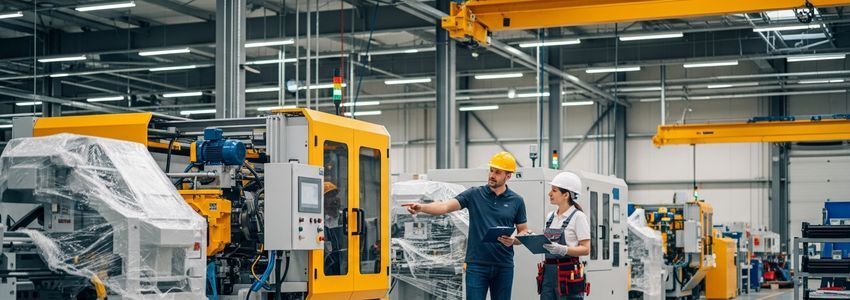
Production facilities can add one new machine or production line at a time, testing capacity against actual orders before committing to more. This prevents the overcapitalization that plagues many manufacturing startups. Manufacturing equipment financing covers everything from CNC machines to injection molding systems to precision fabrication tools.
Construction
Contractors build their equipment arsenals project by project - a new excavator here, a concrete pump there. Each piece of construction equipment is financed against the revenue it helps generate. The result is steady, profitable growth rather than the boom-bust cycles that trap under-capitalized contractors.
Healthcare
Medical practices and clinics routinely use financing to add diagnostic equipment, imaging systems, or patient care technology incrementally. Adding one new ultrasound unit and assessing patient volume before purchasing additional imaging capacity is classic gradual expansion. Detailed guides on healthcare equipment financing are available for practices of all sizes.
Restaurants and Food Service
A restaurant that finances a new commercial oven to handle increased weekend traffic, proves it pays for itself, and then finances additional refrigeration is exercising textbook gradual expansion. Restaurant equipment financing covers the full range of kitchen and front-of-house assets.
Transportation and Logistics
Fleet operators add trucks, vans, or trailers incrementally as new routes and contracts are secured. Each vehicle's revenue streams directly justify its financing costs, creating a self-funding growth model.
Research Note: A 2024 survey by the National Federation of Independent Business (NFIB) found that equipment investment was among the top three planned expenditures for small businesses anticipating growth - and that businesses using financing for those purchases reported higher rates of successful capacity expansion than those using cash alone.
Equipment Financing vs. Other Expansion Funding Options
How does equipment financing stack up against alternative ways to fund business capacity growth?
| Factor | Equipment Financing | Business Line of Credit | Cash Purchase | SBA Loan |
|---|---|---|---|---|
| Collateral Required | Equipment itself | Often unsecured | None | Varies |
| Approval Speed | Same day to 48 hrs | 1-5 business days | N/A | Weeks to months |
| Preserves Working Capital | Yes | Yes | No | Yes |
| Typical Term | 24-84 months | Revolving | N/A | Up to 10 years |
| Asset Ownership | At term end (loan) / Optional (lease) | Yes (if used for purchase) | Immediate | Yes |
| Best For | Specific equipment acquisition | Flexible, recurring needs | Low-cost assets | Large, long-term investments |
Equipment financing's key differentiator is the combination of asset-secured rates, fast approval, and preservation of working capital. A business line of credit offers more flexibility but typically at higher rates and with lower limits. Cash purchases avoid interest entirely but deplete the reserves businesses need for day-to-day operations and unexpected costs.
How Crestmont Capital Supports Gradual Business Expansion
Crestmont Capital is the #1 rated business lender in the United States, and our equipment financing programs are built for exactly this kind of strategic, incremental growth. We work with businesses across every industry and stage of development - from startups adding their first production asset to established companies expanding into new markets.
Our equipment financing programs offer:
- Flexible terms from 24 to 84 months, structured to match your cash flow
- Competitive rates leveraged by the equipment as collateral
- Same-day decisions for qualified applicants with straightforward documentation
- Funding for virtually any type of equipment - machinery, vehicles, technology, medical devices, restaurant equipment, and more
- Programs for businesses at all credit levels, including our specialized bad credit equipment financing solutions
Whether you're adding a single machine to your production line or financing multiple assets across a facility expansion, Crestmont Capital's advisors work with you to structure payments that make each piece of equipment cash-flow positive as quickly as possible.
By the Numbers
Equipment Financing for Gradual Expansion - Key Statistics
$1T+
Equipment & software acquired annually by U.S. businesses (ELFA)
55%+
Of business equipment acquisitions are financed rather than paid cash
24-84
Month terms available for equipment loans and leases
Same Day
Decisions for many equipment financing applications at Crestmont Capital
Real-World Scenarios: Gradual Expansion in Action
Understanding how equipment financing enables step-by-step growth is easiest through concrete examples.
Scenario 1: A Small Manufacturer Scales Production
A regional plastics manufacturer had consistent orders but was leaving revenue on the table because its single injection molding machine ran at 100% capacity. The owner financed a second machine using a 48-month equipment loan. Within three months, the new machine was generating enough additional revenue to cover its monthly payment with margin to spare. Two years later, the business financed a third machine - and by then, its payment history had strengthened its credit profile enough to qualify for more favorable rates.
Scenario 2: A Bakery Meets Growing Wholesale Demand
A growing bakery landed a wholesale contract with a regional grocery chain - but fulfilling the orders required more oven capacity and a commercial walk-in cooler. Rather than depleting cash reserves, the owner financed both assets through equipment financing. The wholesale revenue easily covered the monthly payments, and the business retained its operating capital for ingredient costs and staffing. Eighteen months later, a second wholesale contract led to financing a commercial mixer to handle increased dough production.
Scenario 3: A Landscaping Company Expands Service Territory
A landscaping company received service requests from neighboring counties but lacked the equipment to work multiple territories simultaneously. The owner financed a second truck and trailer, a commercial zero-turn mower, and additional hand tools as a bundled equipment package. The new crew's revenue more than covered the equipment payments, and the company doubled its service territory in a single season.
Scenario 4: A Medical Practice Adds Diagnostic Capability
A chiropractic clinic wanted to add digital X-ray imaging capabilities to better serve existing patients and attract new referrals. Rather than a $40,000 cash outlay, the practice financed the equipment over 60 months. The imaging revenue - billed to insurance - began covering the monthly payment within the first two months, and the investment paid for itself well ahead of schedule.
Scenario 5: A Construction Contractor Lands Larger Projects
A general contractor was repeatedly losing bids for larger commercial projects because it lacked the heavy equipment (specifically, a mini-excavator and a telehandler) that the projects required. By financing both machines, the contractor could bid competitively, won two commercial contracts in the first month, and the project revenue covered equipment payments for the entire financing term.
Scenario 6: An Auto Shop Adds a Specialty Service Bay
An independent auto repair shop financed a vehicle lift and diagnostic scan tool to add EV battery service - a growing market segment in its area. The specialty service generated a consistent stream of new customers who subsequently used the shop for traditional services as well. The financing cost was recovered within the first quarter through the new revenue stream.
Your Growth Opportunity Is Waiting
Crestmont Capital helps businesses across every industry finance the equipment they need to grow. Fast approvals, flexible terms, competitive rates.
Get Financing Today →How to Qualify for Equipment Financing
Equipment financing is among the more accessible forms of business lending, partly because the equipment itself reduces lender risk. That said, lenders do evaluate several factors.
Time in Business
Most conventional equipment lenders prefer to see at least 2 years of operating history. However, startups and newer businesses can often access equipment financing through specialized programs, particularly when the equipment itself has strong resale value. Crestmont Capital's startup equipment financing programs serve businesses at earlier stages of development.
Annual Revenue
Lenders want to see that your business generates sufficient revenue to comfortably service the new debt. Equipment financing underwriting typically focuses on revenue consistency and trajectory rather than just a single year's numbers.
Credit Profile
Both personal and business credit are evaluated. Equipment financing typically has more flexible credit requirements than unsecured loans. Bad credit equipment financing options exist for businesses whose credit profiles have blemishes - lenders take into account the equipment's value as collateral.
Equipment Valuation
The equipment being financed directly influences terms. New equipment from reputable manufacturers is easier to finance and typically receives better rates than highly specialized or exotic assets. Used equipment is generally financeable, though with slightly tighter parameters.
Down Payment
Many equipment financing programs require little to no down payment. Some lenders offer 100% financing, covering the full purchase price plus soft costs like delivery and installation. Having a small down payment available (10-20%) can improve your rate and terms.
Pro Tip: When applying for equipment financing, gather 3-6 months of business bank statements, a recent tax return (if available), and the equipment invoice or quote from the vendor. Having these documents ready accelerates the underwriting process significantly.
Frequently Asked Questions
What is equipment financing and how does it work for business expansion?
Equipment financing is a loan or lease product that funds the acquisition of business equipment, with the equipment itself typically serving as collateral. For gradual expansion, it allows businesses to add capacity one asset at a time - financing a new machine, vehicle, or technology system and using the revenue it generates to cover monthly payments before financing the next piece of equipment.
How much can I borrow with equipment financing?
Equipment financing amounts vary widely based on the equipment's value and your business's financial profile. Loans typically range from $5,000 for small tools to several million dollars for heavy industrial machinery or specialized medical equipment. Crestmont Capital works with businesses across this entire range.
What types of equipment can be financed?
Almost any tangible business asset can be financed - manufacturing machinery, construction equipment, medical devices, restaurant equipment, commercial vehicles, computers and servers, agricultural equipment, fitness equipment, and much more. Both new and used equipment are eligible. Soft costs like installation and delivery can sometimes be bundled into the financing as well.
What credit score do I need to qualify for equipment financing?
Credit requirements vary by lender and program. Many conventional equipment lenders look for a business credit score of at least 600 and personal credit of 650+. However, because the equipment serves as collateral, equipment financing often has more flexible credit requirements than unsecured loans. Crestmont Capital offers programs specifically for businesses with lower credit scores or thin credit histories.
How long does equipment financing approval typically take?
Approval timelines depend on the lender and loan complexity. At Crestmont Capital, many equipment financing applications receive same-day decisions, with funding completed within 1-3 business days. Larger or more complex deals may take slightly longer. SBA-backed equipment loans have longer timelines of several weeks to months due to more extensive underwriting requirements.
Should I choose an equipment loan or an equipment lease?
The choice depends on your goals. A loan builds ownership equity and is better for equipment you plan to use long-term. A lease typically offers lower monthly payments and flexibility to upgrade at term end - better for technology or assets that become obsolete quickly. Both preserve working capital compared to cash purchase. A Crestmont Capital advisor can help you evaluate which structure best fits your specific situation.
Can a startup or new business qualify for equipment financing?
Yes, though with somewhat stricter requirements. Startup equipment financing programs typically place more weight on personal credit, may require a larger down payment, and often focus on equipment with strong resale value that limits lender risk. Crestmont Capital has specific programs designed for newer businesses. Having a solid business plan and demonstrating industry experience helps significantly.
What happens if I need to replace or upgrade financed equipment before the term ends?
Options vary by agreement and lender. For loans, you can often pay off the remaining balance early (check for prepayment penalties). For leases, early termination may involve fees, but many lease structures include upgrade options at designated intervals. When structuring equipment financing for gradual expansion, it's worth discussing upgrade provisions with your lender upfront if you anticipate technology changes.
Does equipment financing hurt my business credit if I take out multiple loans?
Managed responsibly, multiple equipment loans actually strengthen your business credit over time. Each on-time payment builds your payment history and demonstrates creditworthiness. The key is ensuring each new loan is within your debt service capacity - meaning the equipment's revenue contribution comfortably covers the monthly payment. Overextending debt service can stress cash flow, but a well-structured gradual expansion plan avoids this.
What interest rates should I expect on equipment financing?
Equipment financing rates typically range from around 4% to 30% APR depending on the lender, loan amount, term, equipment type, and your business's financial profile. Businesses with strong credit histories, multiple years of operation, and consistent revenue typically access the most competitive rates. The asset-secured nature of equipment financing generally produces lower rates than unsecured working capital loans.
Can I finance used equipment?
Yes. Used equipment financing is common and often makes excellent sense for gradual expansion strategies where preserving cash is the priority and new equipment pricing feels excessive. Lenders evaluate used equipment based on its condition, age, and resale market value. Crestmont Capital's used equipment financing programs cover a wide range of asset types and ages.
Is a down payment required for equipment financing?
Not always. Many equipment financing programs offer 100% financing - covering the full purchase price, and sometimes soft costs as well. When a down payment is required, it's typically 10-20% of the equipment value. Offering a down payment voluntarily can improve your rate and terms even when it's not required.
How does gradual expansion financing differ from just taking one large business loan?
A single large business loan funds multiple assets at once, which means you're paying interest on borrowed capital before all of it is deployed and generating revenue. Gradual expansion financing aligns each borrowing event with a specific asset and revenue opportunity - you borrow when you need it, not speculatively. This reduces interest costs, lowers risk, and creates a measurable feedback loop between each acquisition and its financial performance.
What documents do I need to apply for equipment financing?
Standard documentation includes: 3-6 months of business bank statements, a government-issued ID for the business owner(s), the equipment invoice or vendor quote, and basic business information (legal name, EIN, time in business). For larger loans, lenders may also request tax returns and financial statements. Crestmont Capital's application process is streamlined to minimize paperwork and accelerate approval.
How do I know when it's the right time to finance the next piece of equipment?
The clearest signals are: existing equipment running at or near capacity consistently, documented customer demand that cannot be fulfilled with current capacity, and a clear revenue model showing the new asset covers its monthly payment. Before financing the next piece of equipment, confirm that your previous equipment financing is comfortably within your debt service coverage - typically that your monthly revenue is at least 1.25x your total debt service payments.
How to Get Started with Equipment Financing
Define exactly what asset you need, get a vendor quote, and project how it will generate revenue. The clearer your plan, the faster the process.
Complete our quick application at offers.crestmontcapital.com/apply-now - takes just a few minutes. Have bank statements and the equipment quote ready.
A Crestmont Capital advisor will review your situation, match you to the right program, and structure payments to align with your expansion plan.
Receive funding in as little as 24-48 hours, acquire your equipment, and begin the next stage of your business's expansion.
Conclusion
Equipment financing for gradual capacity expansion is not just a funding tool - it's a growth philosophy. It favors discipline over speculation, aligns investment with demonstrated demand, and builds financial strength through each repaid loan. Whether you're a manufacturer adding a second production line, a restaurant meeting growing catering demand, or a contractor bidding on larger projects, equipment financing creates the runway for sustainable, profitable growth.
The businesses that grow most effectively are not those that overreach in good times - they're the ones that expand incrementally, measure results, and build on proven success. Equipment financing is what makes that approach financially viable for businesses that cannot or choose not to tie up capital in large one-time equipment purchases.
Crestmont Capital is here to support your gradual expansion strategy with competitive equipment financing programs designed for businesses at every stage of growth. Apply today and take the next step in building the business you've been working toward.
Start Your Expansion Today
Fast approvals. Flexible terms. Competitive rates. The #1 rated business lender in the U.S. is ready to help you grow.
Apply Now →Disclaimer: The information provided in this article is for general educational purposes only and is not financial, legal, or tax advice. Funding terms, qualifications, and product availability may vary and are subject to change without notice. Crestmont Capital does not guarantee approval, rates, or specific outcomes. For personalized information about your business funding options, contact our team directly.