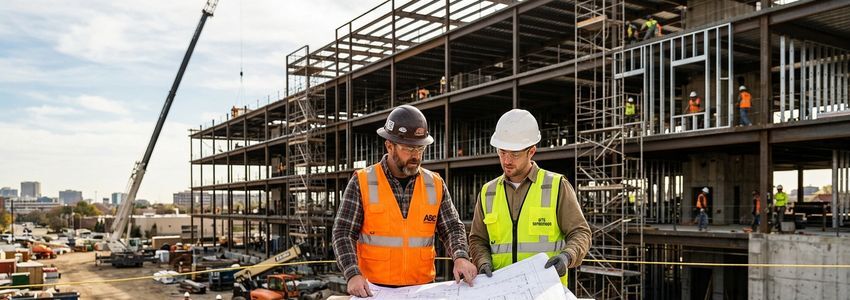
When a subcontractor walks off a job or fails to perform, the general contractor is the one left holding the bill. This is exactly why subcontractor default insurance and fast business financing have become essential tools for contractors managing risk on active job sites. A defaulted subcontractor does not just delay a project, it forces the general contractor to absorb the cost of hiring a replacement crew, often at a higher rate, while the original contract sits unpaid or in dispute.
This guide breaks down exactly how contractors and construction businesses use financing to cover a subcontractor default replacement cost without stalling a project or draining working capital. It covers what subcontractor default insurance actually protects against, how business loans fill the gap when insurance falls short or is not in place, and how to choose the right financing structure when a subcontractor default hits mid-project.
In This Article
- What Is Subcontractor Default Insurance and Financing?
- Key Benefits of Financing a Subcontractor Default
- How the Financing Process Works
- Types of Financing for Replacement Costs
- Who This Financing Is Best For
- Comparing Your Financing Options
- How Crestmont Capital Helps
- Real-World Scenarios
- Frequently Asked Questions
- Next Steps
- Conclusion
What Is Subcontractor Default Insurance and Financing?
Subcontractor default insurance is a first-party coverage product that general contractors carry to protect against the direct costs of a subcontractor failing to complete its scope of work, whether from bankruptcy, walking off the job, poor workmanship, or missed deadlines. Unlike a traditional performance bond, which is a third-party surety instrument triggered by a formal bond claim process, subcontractor default insurance pays the general contractor directly and is typically faster to access.
Even with a policy in place, most subcontractor default insurance carries a deductible, often tens of thousands of dollars per incident, and claims can take weeks to process while the project clock keeps running. That gap between the moment a subcontractor defaults and the moment insurance proceeds or a bond payout actually arrives is where business financing becomes critical. A general contractor still has to mobilize a replacement crew, cover mobilization costs, and often pay a premium for emergency scheduling, all before any claim resolves.
For contractors without subcontractor default insurance or a performance bond covering the specific trade that defaulted, financing is not a bridge, it is the entire solution. A working capital loan or business line of credit becomes the direct source of funds to hire a replacement subcontractor and keep the project moving toward its completion deadline.
Key Point: Lenders underwriting this type of financing look at the health of the general contractor's business, not the details of the subcontractor dispute. Consistent revenue, active contract backlog, and time in business matter far more than the specifics of why the subcontractor defaulted. The SBA notes that access to fast, flexible capital remains one of the most common pain points reported by small construction businesses.
Key Benefits of Financing a Subcontractor Default Replacement Cost
Bringing in financing to cover a subcontractor default gives a general contractor several practical advantages beyond simply having cash on hand.
- Keeps the project on schedule. Construction contracts almost always carry liquidated damages clauses for missed deadlines. Fast financing lets you hire a replacement crew immediately instead of waiting on a claims process.
- Preserves bonding capacity for other jobs. Draining cash reserves to cover a default can hurt your working capital ratios, which sureties review closely when evaluating your capacity for future bonded work. Financing keeps that capital intact.
- Covers the premium cost of emergency labor. Replacement subcontractors brought in on short notice frequently charge more than the original bid. A loan or line of credit absorbs that premium without cutting into other project budgets.
- Bridges the gap before insurance or bond proceeds arrive. Subcontractor default insurance claims and performance bond payouts can take weeks. Financing provides funds now, with the eventual insurance or bond recovery used to pay down the balance.
- Protects your relationship with the project owner. Keeping the project moving on schedule, even after a subcontractor failure, protects your reputation and reduces the risk of contract disputes with the owner or developer.
- Flexible use of funds. Unlike equipment financing tied to a specific asset, working capital financing can cover replacement labor, materials remobilization, expedited shipping, and any other cost tied to the default.
Subcontractor Walked Off Your Job?
Get the working capital you need to bring in a replacement crew and keep your project on schedule. Apply in minutes, no obligation.
Apply Now →How the Financing Process Works
General contractors dealing with a subcontractor default rarely have weeks to wait on traditional underwriting. The process below is built around speed, since every day a trade sits unfilled adds cost and schedule risk to the project.
- Step 1: Document the default. Confirm the subcontractor's breach in writing, including the notice-to-cure period if your contract requires one, and calculate the estimated cost to complete the remaining scope with a replacement crew.
- Step 2: Check your insurance and bonding position. Determine whether subcontractor default insurance or a performance bond applies, what the deductible is, and how long the claims process is expected to take. This determines how much of the replacement cost financing needs to cover versus what will eventually be recovered.
- Step 3: Gather financial documentation. Most alternative lenders request 3 to 6 months of business bank statements, your current contract backlog, and basic company information such as time in business and average monthly revenue.
- Step 4: Submit an application. Online applications for working capital loans and business lines of credit can often be completed in under 15 minutes, with cash flow-based underwriting allowing same-day decisions in many cases.
- Step 5: Review your offer. Compare the approved amount, term, and repayment structure against the estimated replacement cost and your expected insurance or bond recovery timeline.
- Step 6: Fund the replacement crew and continue the project. Once approved, funds typically deposit within 24 to 72 hours, allowing you to mobilize a new subcontractor and keep the project moving toward completion.
Types of Financing for a Subcontractor Default Replacement Cost
Different financing products fit different stages of a subcontractor default. The right choice depends on whether you need a single lump sum immediately, ongoing flexibility across multiple projects, or a structure tied to outstanding receivables from the owner.
Business Lines of Credit
A business line of credit is often the strongest fit for contractors, since subcontractor defaults tend to happen unpredictably across different jobs. Draw only what you need to cover a specific replacement cost, pay it down as insurance or bond proceeds come in, and keep the line available for the next issue that comes up on another project.
Unsecured Working Capital Loans
An unsecured working capital loan provides a lump sum sized to the known replacement cost, useful when you have already priced out the new subcontractor's bid and know exactly how much you need to bridge until the project owner's next draw or an insurance payout arrives.
Accounts Receivable Financing
If the delayed trade means an owner draw is also held up pending completion, accounts receivable financing can unlock cash tied up in other completed and billed work, giving you liquidity without waiting on a specific draw tied to the defaulted scope.
Construction Equipment Financing
If the replacement subcontractor requires specialized machinery your company needs to supply or rent long-term rather than the sub bringing their own, construction equipment financing can cover that piece separately from the labor cost financing.
SBA Loans
For contractors who want to build a larger reserve against future subcontractor risk rather than solve one urgent default, an SBA loan offers lower rates and longer terms, though the underwriting timeline is too slow for an active, unfolding default situation.

By the Numbers
Subcontractor Default Risk and Financing: Key Statistics
$2.1T+
Annual U.S. construction spending, per the Census Bureau
1-3 Days
Typical funding time for a working capital loan
Weeks
Common wait time for default insurance or bond claim payouts
6-24 Mo
Typical repayment term for working capital financing
Source figures compiled from the U.S. Census Bureau's construction spending data and industry funding-speed benchmarks.
Who Should Consider This Financing?
Financing a subcontractor default replacement cost is not the right fit for every contractor, but it is a strong option for companies in the following situations.
- General contractors mid-project with a defaulted trade. If a subcontractor has already walked or been terminated, you need capital to mobilize a replacement crew now, not after a claims process concludes.
- Contractors without subcontractor default insurance in place. If your current job does not carry that coverage, financing is the primary tool available to absorb the replacement cost.
- Contractors with an insurance or bond claim in process. Financing bridges the gap between the default and the eventual payout, which is often used to pay down the loan or line balance once received.
- Contractors managing multiple active jobsites. A revolving line of credit lets you respond to a default on any project without pulling cash reserved for another job's payroll or materials.
- Contractors who want to protect bonding capacity. Sureties evaluate working capital and liquidity when underwriting future bonded work. Financing a default instead of draining cash keeps those numbers intact.
Common Concerns Contractors Have
Contractors facing a subcontractor default often worry that financing tied to a legal or contractual dispute will be harder to secure than a standard business loan. In practice, alternative lenders evaluating this type of request focus almost entirely on the general contractor's cash flow and contract backlog, not on the underlying dispute with the defaulted trade.
Another common concern is timing relative to an active insurance claim. Taking out financing to cover a replacement cost does not interfere with a subcontractor default insurance claim or a bond claim against a defaulted sub's surety. These are separate financial transactions. The financing simply provides liquidity now while the claim proceeds on its own track, and any eventual recovery can go toward paying down the loan balance.
Contractors also sometimes assume a recent default will hurt their approval odds going forward. A single default event, especially one tied to a subcontractor's own financial trouble rather than the general contractor's performance, is generally viewed as an isolated risk rather than a reflection of the borrower's own creditworthiness.
Comparing Your Financing Options
The table below summarizes how the main financing options compare when the goal is covering a subcontractor default replacement cost.
| Financing Type | Speed to Fund | Best For | Repayment Structure |
|---|---|---|---|
| Business Line of Credit | 1-5 business days | Recurring risk across multiple active jobsites | Draw as needed, pay interest only on funds used |
| Working Capital Loan | 1-3 business days | A known, fixed replacement cost on one project | Fixed term, daily/weekly/monthly payments |
| Accounts Receivable Financing | 2-5 business days | Contractors with delayed owner draws elsewhere | Repaid as receivables are collected |
| Construction Equipment Financing | 3-7 business days | Machinery needed to support a replacement crew | Fixed term tied to equipment lifespan |
| SBA Loan | 2-8 weeks | Building a reserve against future subcontractor risk | Long-term, fixed monthly payments |
Don't Let One Bad Subcontractor Sink Your Schedule
Crestmont Capital helps contractors move fast when a trade defaults mid-project. Get a decision quickly.
Get Started →How Crestmont Capital Helps Contractors Facing a Subcontractor Default
Crestmont Capital, rated the #1 business lender in the country, works with general contractors who need capital quickly when a subcontractor default threatens a project timeline. Crestmont's business lines of credit and unsecured working capital loans are structured to move quickly, often funding within one to three business days of approval, so a replacement crew can mobilize without a lengthy delay.
Rather than digging into the specifics of the subcontractor dispute, Crestmont's underwriting evaluates the health of the general contracting business itself: revenue consistency, contract backlog, and time in business. This lets contractors dealing with an active default still access capital, provided the core company remains financially sound.
Contractors who regularly manage bonded work should also review Crestmont's guide on bid bond financing, which covers how surety requirements interact with working capital needs on bonded projects. For a broader look at financing options across the construction industry, the complete guide to construction company business loans breaks down every major financing type available to contractors and builders. As Forbes has reported, unexpected large expenses are consistently cited as one of the biggest threats to small business stability, which is exactly the risk a subcontractor default creates mid-project.
Real-World Scenarios
Scenario 1: The Mid-Size Commercial Builder
Business: A commercial general contractor's electrical subcontractor abandons a $4.2 million office build-out three months from completion, with a $65,000 subcontractor default insurance deductible standing between the company and its claim payout.
Solution: The contractor secures a working capital loan sized to the deductible plus estimated remobilization costs, hiring a replacement electrical crew within five days and repaying the loan once the insurance claim settles.
Scenario 2: The Multi-Site Regional Contractor
Business: A contractor managing four active jobsites has a framing subcontractor default on one project while two others are running smoothly.
Solution: The company opens a business line of credit, drawing only the funds needed for the framing replacement while keeping the rest of the line available in case a default happens on another active site.
Scenario 3: The Residential Development Company
Business: A homebuilder's HVAC subcontractor fails to complete rough-in work across an entire subdivision phase, delaying certificates of occupancy for 18 homes.
Solution: The builder uses accounts receivable financing to unlock cash from completed, billed homes elsewhere in the development, funding a replacement HVAC crew without waiting on the delayed phase's draws.
Scenario 4: The Specialty Trade General Contractor
Business: A general contractor's excavation subcontractor defaults, and the replacement crew requires specialized compaction equipment the sub was originally supplying.
Solution: The contractor combines a short-term working capital loan for labor costs with construction equipment financing to secure the compaction equipment needed to keep the site prep on schedule.
Scenario 5: The Government Contractor
Business: A contractor on a bonded federal project has a mechanical subcontractor default, triggering a formal bond claim process expected to take several weeks.
Solution: With advance notice of the timeline, the contractor uses a business line of credit to bridge the gap, drawing funds as needed for the replacement subcontractor and repaying the balance once the surety's bond claim payout arrives.
Ready to Protect Your Project Timeline?
Get fast, flexible financing built for contractors managing real jobsite risk. No obligation, apply in minutes.
Apply Now →Frequently Asked Questions
What is subcontractor default insurance?
Subcontractor default insurance is a first-party coverage policy that pays a general contractor directly when a subcontractor fails to complete its scope of work due to default, bankruptcy, or abandonment. It is typically faster to access than a traditional performance bond claim, though it still carries a deductible and a claims processing period.
What is a business loan for a subcontractor default replacement cost?
It is business financing, such as a working capital loan or business line of credit, used to cover the cost of hiring a replacement subcontractor after the original trade defaults on a project. It bridges the gap before insurance proceeds or bond payouts arrive.
How is subcontractor default insurance different from a performance bond?
Subcontractor default insurance is a first-party policy the general contractor purchases directly, paying claims to the contractor itself. A performance bond is a third-party surety instrument that the subcontractor is required to obtain, with claims filed against the subcontractor's surety rather than an insurer.
How quickly can I get financing after a subcontractor defaults?
Working capital loans and business lines of credit can often fund within one to three business days after approval. Because underwriting for these products relies heavily on cash flow rather than lengthy document review, decisions frequently come back the same day.
What if I don't have subcontractor default insurance on this project?
If a job does not carry subcontractor default insurance or a matching performance bond, financing becomes the primary tool for covering the replacement cost. A working capital loan or line of credit fills that role directly, without waiting on any insurance or bond process.
Will an ongoing subcontractor dispute hurt my loan approval odds?
An ongoing dispute with a defaulted subcontractor generally does not disqualify a general contractor from financing. Lenders primarily evaluate the contractor's own revenue, contract backlog, and cash flow rather than the details of the underlying subcontractor issue.
What documents do lenders require for this type of financing?
Most alternative lenders request three to six months of business bank statements, basic company information such as time in business and monthly revenue, and sometimes a summary of your current contract backlog. Detailed documentation of the subcontractor default itself is generally not required for underwriting.
Should I use a lump-sum loan or a line of credit for a subcontractor default?
A working capital loan works well when you have a single, known replacement cost on one project. A business line of credit is a better fit for contractors managing multiple active jobsites who may face default risk on more than one project at a time.
How much can I borrow to cover a replacement subcontractor cost?
Loan amounts are typically based on your company's monthly and annual revenue, often ranging from a fraction of monthly revenue up to several times that amount. Contractors with strong, consistent cash flow can often secure financing sized closely to the estimated replacement cost.
Can financing affect my bonding capacity with my surety?
Using financing to cover a default, rather than draining your own cash reserves, generally helps preserve the working capital and liquidity ratios sureties review when evaluating your bonding capacity for future projects. Sureties typically care more about your overall balance sheet strength than the presence of a business line of credit.
Can I use financing alongside an insurance or bond claim?
Yes. Financing and an insurance or bond claim are separate processes and do not conflict. Many contractors use financing to fund the replacement crew immediately, then apply the eventual insurance or bond recovery toward paying down the loan or line balance once it arrives.
How does my credit score affect approval for this financing?
Alternative lenders typically weigh business revenue and cash flow more heavily than personal credit score. While a strong credit profile can help secure better terms, contractors with healthy, consistent revenue can often still qualify even with a lower personal credit score.
Are there costs specific to construction financing I should know about?
Costs vary by product and speed. A business line of credit generally offers lower ongoing costs since you only pay interest on funds drawn, while a fixed-term working capital loan provides predictable payments for a known replacement cost. Comparing total repayment cost against your project's schedule urgency helps determine the right fit.
Can newer construction companies qualify for this financing?
Most working capital and line of credit products require at least six months to one year in business along with consistent monthly revenue. Newer construction companies with strong recent revenue and an active contract backlog may still qualify, typically for smaller amounts than an established contractor would receive.
How does Crestmont Capital help contractors facing a subcontractor default?
Crestmont Capital offers fast-funding business lines of credit and working capital loans designed to move quickly when a subcontractor default threatens a project timeline. Underwriting focuses on the health of the general contracting business rather than the details of the subcontractor dispute, helping contractors mobilize a replacement crew without delay.
Conclusion
A subcontractor default does not have to derail an otherwise well-run project. With the right financing in place, a general contractor can mobilize a replacement crew immediately, protect the project schedule, and avoid draining cash reserves needed for other active jobs. Whether the right fit is a business line of credit, a working capital loan, or a combination with equipment or receivables financing, the key is matching the financing structure to the specific replacement cost and timeline. Business financing that covers a subcontractor default replacement cost, secured quickly and paired with any available subcontractor default insurance recovery, can be the difference between a manageable setback and a genuine project crisis.
Disclaimer: The information provided in this article is for general educational purposes only and is not financial, legal, or tax advice. Funding terms, qualifications, and product availability may vary and are subject to change without notice. Crestmont Capital does not guarantee approval, rates, or specific outcomes. For personalized information about your business funding options, contact our team directly.