
 (800) 949-0401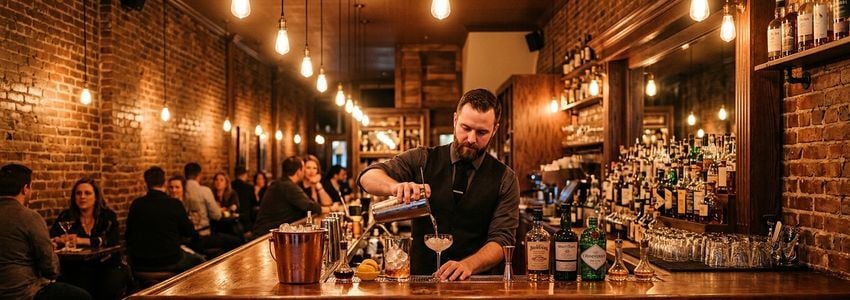
Speakeasy Bar Financing: The Complete Guide for Themed Bar Owners
Speakeasy bar financing has become one of the fastest-growing funding categories in the nightlife industry as hidden-entrance, Prohibition-era-themed bars continue to capture guest attention across major U.S. markets. Whether the concept lives behind an unmarked door, through a vintage phone booth, or past a fake bookshelf, the buildout, licensing, and equipment costs behind these immersive concepts are anything but hidden. This guide breaks down exactly how speakeasy bar financing works, what lenders look for, and how owners can secure the capital needed to open or expand a themed bar without draining personal savings.
From custom millwork and mixology equipment to the liquor license itself, a speakeasy concept carries a unique cost structure compared to a standard neighborhood bar. Understanding the financing options available, and how to position a loan application for approval, is the difference between a concept that stays a Pinterest board and one that opens its hidden door to paying guests.
In This Article
What Is Speakeasy Bar Financing?
Speakeasy bar financing refers to the business loans, equipment leases, and working capital products used to fund the buildout, licensing, equipment, and launch of a hidden-entrance or Prohibition-themed bar concept. Because speakeasy bars lean heavily on atmosphere, from reclaimed brick walls and Edison bulb lighting to hidden door mechanisms and custom bar tops, the startup budget skews toward buildout and interior design costs far more than a typical quick-service concept.
Unlike a standard restaurant loan, speakeasy bar financing needs to account for a longer buildout timeline, a more elaborate permitting process (especially where the concept requires unusual entrances or signage restrictions), and premium bar equipment such as craft cocktail programs, back-bar refrigeration, and specialty ice systems. Lenders that understand the hospitality and nightlife space can structure financing around these specific line items rather than forcing an owner into a generic small business loan that does not match the actual cash flow timeline of a themed concept.
In practice, speakeasy bar financing is rarely a single loan product. Most owners combine two or three funding sources: one for the physical buildout and leasehold improvements, one for equipment (draft systems, ice machines, POS hardware, glassware storage), and a working capital line to cover the first several months of payroll, inventory, and marketing before the concept builds a steady clientele.
Key Stat: According to the U.S. Small Business Administration, opening a bar in the United States typically costs between $174,000 and $850,000, with most independent operators investing in the $425,000 to $480,000 range once buildout, licensing, and equipment are factored in.
Key Benefits of Financing a Speakeasy Bar
Financing a speakeasy concept rather than self-funding it out of pocket carries several advantages for owners who want to move fast without overextending personal assets.
- Preserve personal savings and cash reserves. A buildout-heavy concept like a speakeasy can easily consume six figures before the first drink is poured. Financing spreads that cost over time instead of draining an owner's entire nest egg.
- Match repayment to revenue ramp-up. Speakeasy concepts often take three to six months to build a steady reservation base through word of mouth and social media buzz. The right financing structure aligns payments with that ramp-up period.
- Fund the "hidden" elements that make the concept work. Custom entryways, disguised doors, soundproofing, and theatrical lighting are expensive and highly specific. Equipment and buildout financing can cover these atypical costs that a generic small business loan might not anticipate.
- Move faster on real estate and buildout timelines. Landlords and contractors want to see funding secured before signing a lease or starting demolition. Pre-approved financing strengthens an owner's negotiating position.
- Access working capital for the slow ramp period. Even a buzzworthy concept needs a cash cushion for payroll, inventory, and marketing before reservations and walk-ins stabilize.
- Build business credit. Structured financing, paid on time, helps establish a credit profile that makes it easier to finance a second location or a major renovation down the road.
Ready to Open Your Speakeasy?
Get fast, flexible financing built around bar buildouts and equipment. No obligation, apply in minutes.
Apply Now →How Speakeasy Bar Financing Works
The financing process for a speakeasy or themed bar concept generally follows the same core steps as any commercial financing application, but with a few nightlife-specific wrinkles around licensing timelines and buildout inspections.
Step one: Define the full project scope. Before approaching a lender, owners should have a detailed budget covering leasehold improvements, the hidden-entrance or theatrical build elements, bar and kitchen equipment, initial liquor and inventory costs, licensing fees, and at least three to six months of working capital.
Step two: Choose the right financing structure. Buildout and leasehold improvements are typically financed differently than equipment. A term loan or SBA loan often covers the larger buildout costs, while equipment financing or an equipment lease covers items like draft systems, refrigeration, POS hardware, and specialty ice machines.
Step three: Submit financial and business documentation. Lenders will typically request bank statements, a business plan, lease agreement or letter of intent, contractor bids or buildout estimates, and personal financial information from the ownership group. A concept with a strong, detailed business plan (including realistic revenue projections tied to seating capacity and expected turn times) moves through underwriting faster.
Step four: Underwriting and approval. Lenders evaluate the owner's credit profile, time in business (for existing operators expanding into a second concept), cash flow projections, and the strength of the buildout plan. Because speakeasy concepts are asset-heavy on the design side, some lenders will want to see contractor quotes or a signed buildout contract before releasing funds.
Step five: Funding and disbursement. Depending on the product, funds may be disbursed as a lump sum, released in stages tied to buildout milestones, or made available as a revolving line of credit that the owner draws against as costs come in.
Types of Financing for Speakeasy Bars
Most speakeasy bar owners do not rely on a single loan type. Instead, they layer financing products to match each category of cost.
- SBA loans. SBA 7(a) loans are commonly used for ground-up buildouts, leasehold improvements, and working capital because of their longer repayment terms and competitive rates. The tradeoff is a longer approval timeline and more documentation.
- Equipment financing and leasing. Draft beer systems, back-bar refrigeration, ice machines, glassware chillers, and POS systems can be financed directly against the equipment itself, often with faster approval than a traditional term loan.
- Unsecured working capital loans. These cover the gap between opening day and steady cash flow, funding payroll, initial inventory restocks, and marketing pushes to build the buzz a speakeasy concept depends on.
- Business lines of credit. A revolving line gives owners flexibility to draw funds as buildout costs come in, rather than taking a lump sum term loan for costs that are still being finalized with contractors.
- Commercial real estate financing. For owners purchasing the underlying property rather than leasing, commercial real estate financing may be layered in alongside buildout and equipment products.
- Traditional term loans. A straightforward lump-sum loan with a fixed repayment schedule, useful when the full project budget is known upfront and does not require staged disbursement.
By the Numbers
Speakeasy and Themed Bar Financing — Key Statistics
$425K
Typical total startup investment for an independent bar concept
28,113+
U.S. business locations classified as drinking places, per Census Bureau data (NAICS 722410)
40-60%
Share of startup costs typically tied to buildout and leasehold improvements
3-6 Mo
Typical working capital runway new operators should plan for post-launch
Licensing and Permitting Considerations for Hidden-Entrance Concepts
Speakeasy concepts often run into permitting questions that a standard bar or restaurant never has to answer. Local building and fire codes govern how a concealed entrance can be built, since egress requirements, exit signage, and occupancy limits still apply even when the front-facing entrance is disguised as a bookshelf, refrigerator door, or unmarked storefront. Working with a contractor and local fire marshal early in the buildout process avoids costly rework after walls and fixtures are already installed.
Liquor licensing timelines vary enormously by state and even by county. States with quota-based liquor license systems, where a limited number of licenses circulate and can carry a high resale price, can add months and tens of thousands of dollars to a launch budget compared to states with more open licensing. According to the U.S. Census Bureau, over 28,000 establishments nationwide operate as licensed drinking places, reflecting just how much local regulatory variation a new operator may encounter depending on where they choose to open. Owners in quota states should budget for a potentially longer runway between signing a lease and pouring the first drink, and should discuss staged or milestone-based financing disbursement with their lender to avoid paying interest on funds sitting idle during a licensing delay.
Signage restrictions are another area worth checking before finalizing a buildout plan. Some municipalities have rules requiring a minimum level of exterior signage identifying a licensed establishment, which can conflict with a speakeasy's intentionally unmarked aesthetic. A local zoning or licensing attorney can confirm whether a jurisdiction allows the kind of understated or absent signage that defines the speakeasy experience, well before construction begins.
Who Speakeasy Bar Financing Is Best For
Speakeasy bar financing is best suited for a specific range of operators and situations, including:
- First-time bar owners who have a strong concept and business plan but lack the six-figure cash reserve needed to self-fund a full buildout.
- Experienced restaurant or bar operators looking to add a themed speakeasy concept as a second location or as a hidden add-on within an existing restaurant.
- Hospitality groups expanding a successful concept into a new market where buildout costs and licensing timelines vary by city or state.
- Owners taking over an existing space that needs significant renovation to convert a standard bar or retail space into a themed, hidden-entrance concept.
- Operators with a signed or pending lease who need financing in place quickly to satisfy landlord requirements and keep the buildout timeline on track.
Speakeasy financing is generally a poorer fit for owners who have not yet secured a location, do not have a detailed buildout budget, or are still finalizing the core concept. Lenders want to see a concrete plan, not just an idea, before committing capital to a nightlife venture.
Comparing Financing Options for Themed Bar Concepts
Choosing between financing products often comes down to how much of the project cost is buildout versus equipment versus working capital, and how quickly the owner needs funds.
| Financing Type | Best For | Typical Speed | Repayment Term |
|---|---|---|---|
| SBA Loan | Full buildout and long-term working capital | Weeks | Up to 10-25 years |
| Equipment Financing | Draft systems, refrigeration, POS, ice machines | Days | 2-7 years |
| Working Capital Loan | Payroll, inventory, and marketing during ramp-up | Days | 6-24 months |
| Business Line of Credit | Flexible draws as buildout invoices come in | Days | Revolving |
Beyond the four core product types above, owners should also weigh how each option handles cost overruns. Buildout projects, especially those involving custom carpentry, hidden mechanisms, or historic building renovations, frequently run 10 to 20 percent over initial estimates once walls are opened and unexpected issues surface. A revolving line of credit or a financing partner willing to layer in a supplemental draw can absorb these overruns without forcing a full loan renegotiation midway through construction.
How Crestmont Capital Helps Speakeasy and Themed Bar Owners
Crestmont Capital works with bar, restaurant, and hospitality owners across the country to structure financing around the real cost breakdown of a themed concept, not a one-size-fits-all loan product. Our bar business loans are built specifically around the buildout, licensing, and equipment needs unique to bar and nightlife concepts, including speakeasy-style builds with custom entrances and theatrical design elements.
For the equipment side of a speakeasy build, from draft systems and back-bar refrigeration to POS hardware, our restaurant equipment financing and equipment leasing programs let owners preserve cash for the buildout and design elements that make a hidden bar concept memorable. Once the doors open, our unsecured working capital loans help cover payroll, inventory, and marketing during the critical first months when word of mouth is still building.
Owners considering a second location or a larger buildout that requires more favorable long-term rates often look at our bar business loans alongside a broader real estate or renovation plan. We have also helped operators in related nightlife categories, including rooftop bar buildouts and wine bar concepts, apply the same buildout-first financing approach to a themed speakeasy launch.
Let's Fund Your Concept
From buildout to opening night, Crestmont Capital structures financing around your bar's real cost timeline.
Apply Now →Trend Watch: Forbes has documented a sustained speakeasy revival across major U.S. markets, with hidden-entrance concepts continuing to draw new investment even as the broader nightlife industry evolves toward "secret bar" experiences beyond the classic speakeasy label.
Real-World Scenarios
Scenario 1: The hidden bookshelf concept. A first-time operator signs a lease on a 1,400-square-foot retail space and plans a speakeasy accessed through a disguised bookshelf door in a front-facing coffee shop. The buildout, including the custom door mechanism, soundproofing, and interior finishes, runs $310,000. The owner uses an SBA loan for the bulk of the buildout and a smaller equipment lease for the draft system and back-bar refrigeration, preserving cash for the first three months of payroll.
Scenario 2: Adding a speakeasy to an existing restaurant. An established restaurant owner wants to convert an unused storage room into a reservation-only speakeasy accessible through a hidden door behind the host stand. Because the owner already has two years of strong restaurant cash flow, a business line of credit funds the $95,000 buildout in stages as contractor invoices come in, avoiding a lump-sum loan for a project with a flexible timeline.
Scenario 3: Multi-location hospitality group expansion. A hospitality group with three existing bar concepts wants to open a fourth location built entirely around a Prohibition-era theme, including custom millwork, vintage fixtures, and a hidden entrance through a false phone booth. With established credit history, the group secures a term loan for the $650,000 buildout and layers in equipment financing for the specialty ice program and cocktail equipment.
Scenario 4: Licensing delays require a bridge. An owner completes buildout on schedule but faces a three-month delay in liquor license approval due to local quota restrictions. A short-term working capital loan covers rent and staffing costs during the delay so the trained team does not have to be let go before opening night.
Scenario 5: Seasonal cash flow gap. A speakeasy concept in a college town sees steady weekend traffic but slower weeknight and off-season revenue. The owner uses a business line of credit to smooth cash flow during the slower months rather than taking on a new term loan for a temporary gap.
Frequently Asked Questions
Bring Your Speakeasy Concept to Life
Get a financing plan built around your buildout, equipment, and opening-day cash flow. No obligation to apply.
Apply Now →Next Steps
Get firm contractor bids for the buildout, hidden-entrance mechanism, and interior finishes so your loan request matches your real costs.
Pull together recent bank statements, your business plan, lease documents, and personal financial information.
Discuss your concept, timeline, and budget so financing can be structured around buildout, equipment, and working capital needs.
Submit your application and keep your buildout, licensing, and opening timeline on track with financing already in place.
Conclusion
Speakeasy bar financing exists because hidden-entrance, themed bar concepts carry a cost structure that standard restaurant loans do not always fit well. Between elaborate buildouts, custom entrance mechanisms, premium bar equipment, and the working capital needed to survive the ramp-up period before word of mouth kicks in, most successful speakeasy owners layer two or three financing products rather than relying on a single loan. With the right mix of SBA financing, equipment leasing, and working capital, opening a themed bar concept becomes a matter of careful planning rather than an impossible cash barrier.
Whether the plan is a hidden bookshelf door, a false phone booth, or a reservation-only room behind an unmarked storefront, Crestmont Capital can help structure speakeasy bar financing around the real costs and timeline of the concept, from first contractor bid to opening night. A well-financed launch, backed by realistic budgeting and the right mix of products, gives a themed bar concept the best possible shot at building the loyal, word-of-mouth following that keeps guests coming back through the hidden door.
Disclaimer: The information provided in this article is for general educational purposes only and is not financial, legal, or tax advice. Funding terms, qualifications, and product availability may vary and are subject to change without notice. Crestmont Capital does not guarantee approval, rates, or specific outcomes. For personalized information about your business funding options, contact our team directly.








