
Behind every restaurant kitchen in America sits a supply chain most diners never think about: the restaurant supply stores and distributors that stock the ranges, refrigeration, cookware, disposables, and tabletop items that keep food service running. The 2026 restaurant supply store statistics show a resilient, fragmented industry that grows alongside the broader restaurant economy, rewards operators who manage inventory tightly, and increasingly competes across both local showrooms and national e-commerce channels.
This report brings together the most important numbers on the restaurant supply store industry for 2026: market size, business counts, startup costs, margins, customer demand, e-commerce shifts, and the financing trends shaping how owners fund growth. Whether you run a supply store, sell into the foodservice channel, or are evaluating the industry as a business opportunity, these are the benchmarks that matter.
In This Article
- Restaurant Supply Store Industry Overview
- How Many Restaurant Supply Stores Operate in the U.S.?
- Market Size and Revenue Statistics
- Startup Costs and Business Formation Statistics
- Margins, Revenue, and Business Economics
- Customer Base and Demand Drivers
- E-Commerce and the Channel Shift
- Cost Pressures and Industry Challenges
- Growth Trends and 2026 Outlook
- Financing Options for Restaurant Supply Store Owners
- Frequently Asked Questions
Restaurant Supply Store Industry Overview
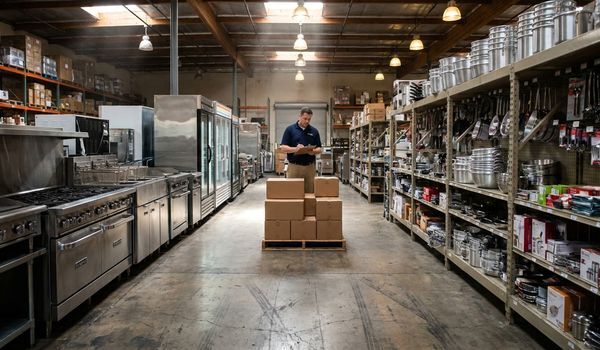
Restaurant supply stores occupy a distinct niche between wholesale distribution and specialty retail. Their core business is selling commercial-grade equipment and consumable supplies to restaurants, bars, caterers, food trucks, hotels, and institutional kitchens such as hospitals, schools, and corporate dining facilities. Product lines typically span five categories: heavy kitchen equipment (ranges, fryers, ovens, walk-in refrigeration), light equipment (mixers, slicers, blenders), smallwares (pots, pans, knives, utensils, cutting boards), tabletop and serving items (plates, glassware, flatware), and consumables (disposables, food packaging, cleaning and janitorial supplies).
The industry is structurally fragmented. A small number of national players, including broadline foodservice distributors, cash-and-carry chains, and one dominant online retailer, sit at the top of the market, while thousands of independent dealers and local supply stores serve regional customer bases. The Foodservice Equipment Distributors Association (FEDA), the primary trade group for dealers, counts roughly 300 member companies that collectively handle a majority of the equipment and supplies sold through the traditional dealer channel. Around that core, a long tail of independent stores, buying-group members, and specialty shops competes on service, speed, and local relationships.
Demand for restaurant supplies tracks the health of the broader foodservice economy. The National Restaurant Association projects total U.S. restaurant industry sales of roughly $1.5 trillion for 2025, with approximately 15.5 million industry employees, about one in ten American workers. Every one of those establishments is a recurring buyer of the products restaurant supply stores sell, which gives the industry an unusually wide and resilient customer base.
Key Stat: Industry estimates place U.S. foodservice equipment and supplies distribution sales at $15 billion to $18 billion per year, supported by a customer base of roughly one million restaurant and foodservice outlets nationwide.
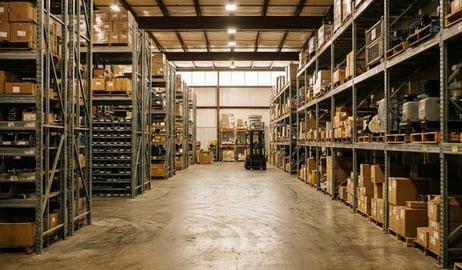
What distinguishes the 2026 landscape from a decade ago is the number of ways a supply store can win. Walk-in retail showrooms still matter for urgent replacement purchases, but dealers increasingly run hybrid models that combine a local warehouse, a delivery fleet, an e-commerce catalog, and a sales team that manages large project work such as new restaurant buildouts and kitchen redesigns.
How Many Restaurant Supply Stores Operate in the U.S.?
Counting restaurant supply stores precisely is harder than it sounds, because no single Census industry code isolates them. The industry straddles two classifications: merchant wholesalers of commercial equipment, tracked under NAICS 423440 (Other Commercial Equipment Merchant Wholesalers, which includes restaurant equipment and supplies wholesalers), and specialty retailers that sell directly to end users from storefronts and warehouses. The U.S. Census Bureau's County Business Patterns program counts roughly 4,000 to 5,000 employer establishments in the core wholesale category, and industry directories that include retail-format stores and cash-and-carry warehouses put the broader count of businesses selling restaurant equipment and supplies in the range of 6,000 to 8,000 locations nationwide.
At the top of the market, scale varies enormously. A handful of national dealers operate dozens of branches and report annual revenue in the hundreds of millions of dollars. Cash-and-carry operator Restaurant Depot runs more than 150 warehouse stores across the country. The largest single competitor by revenue is an e-commerce pure play: WebstaurantStore, the online arm of Clark Associates, carries more than 400,000 products and is widely estimated to generate several billion dollars in annual sales from distribution centers totaling millions of square feet.
Below that top tier sits the industry's backbone: independent, often family-owned supply stores operating one to five locations in a metro area. Barriers to entry are moderate. A new store needs meaningful capital for inventory and space, but no special federal license, which keeps the independent segment competitive and constantly refreshed with new entrants. The Census Bureau's Statistics of U.S. Businesses data on wholesale and retail establishment births and deaths shows that wholesale trade sectors like this one typically see annual opening and closing rates in the range of 8 to 10 percent, meaning several hundred new supply businesses enter the market in a typical year while a similar number exit.
Ready to Stock Up for Growth?
Get fast, flexible financing from the #1 business lender in the U.S. No obligation - apply in minutes.
Apply Now →Market Size and Revenue Statistics
The restaurant supply store industry generates revenue from two distinct streams: project-based equipment sales and recurring supplies sales. Industry estimates place total U.S. foodservice equipment and supplies distribution at $15 billion to $18 billion annually. The equipment-only portion of that market, covering cooking, refrigeration, warewashing, and food preparation equipment, accounts for an estimated $10 billion to $13 billion, with the remainder coming from smallwares, tabletop, disposables, and janitorial supplies.
Globally, the foodservice equipment market is estimated at $40 billion to $45 billion and growing at a compound annual rate of roughly 5 to 6 percent, with North America representing the largest regional market. The U.S. share is anchored by the sheer size of the domestic restaurant industry: the Census Bureau's monthly retail trade data shows food services and drinking places running at an annualized sales pace above $1.1 trillion, and every dollar of that food revenue requires equipment and supplies behind it.
Revenue per store varies widely by format and market. A single-location independent supply store in a mid-size metro commonly generates $2 million to $10 million in annual revenue. Established regional dealers with multiple branches, a delivery fleet, and a contract sales team regularly operate in the $20 million to $100 million range. At the very top, the largest national dealers and the dominant online retailer each measure revenue in the billions.
By the Numbers
Restaurant Supply Store Industry - Key 2026 Statistics
$15-18B
Annual U.S. foodservice equipment and supplies distribution sales (industry estimates)
6,000-8,000
Businesses selling restaurant equipment and supplies at wholesale or retail in the U.S.
$1.5T
Projected 2025 U.S. restaurant industry sales (National Restaurant Association)
$100-300K
Typical equipment spend for a new restaurant kitchen buildout
28-35%
Blended gross margin range for a typical restaurant supply dealer
4-6x
Healthy annual inventory turnover for a supply store
The recurring-supplies side of the business is what makes the economics attractive. Equipment sales are lumpy, tied to openings, remodels, and replacements, but disposables, chemicals, and smallwares reorder on weekly or monthly cycles. For mature supply stores, consumables and smallwares frequently represent 40 to 60 percent of total revenue, smoothing cash flow between large equipment projects.
Startup Costs and Business Formation Statistics
Opening a restaurant supply store is a capital-intensive undertaking compared with most retail businesses, primarily because of inventory depth. Customers expect a supply store to have the item they need today, which means carrying thousands of SKUs from day one. Industry startup estimates for a modest independent store typically fall in the range of $250,000 to $1 million or more, with the spread driven by inventory depth, showroom size, and local real estate costs.
A realistic startup budget breaks down roughly as follows:
- Initial inventory: $100,000 to $500,000. This is almost always the largest single line item. A credible opening assortment covers 5,000 to 15,000 SKUs across equipment, smallwares, tabletop, and disposables.
- Warehouse and showroom space: first and last months plus buildout, commonly $30,000 to $150,000 depending on market and square footage. Most stores need 5,000 to 20,000 square feet combining showroom, warehouse, and receiving space.
- Racking, forklifts, and material handling: $30,000 to $80,000 for pallet racking, shelving, a forklift or two, and warehouse equipment.
- Delivery vehicles: $40,000 to $70,000 per truck or van if delivery is offered, which most full-service stores find necessary to compete for restaurant accounts.
- Systems and technology: $10,000 to $40,000 for point-of-sale, inventory management, and a functional e-commerce catalog.
- Working capital: three to six months of operating expenses to cover payroll, rent, and reordering while the customer base builds.
Licensing requirements are straightforward: a standard business license, a resale or sales tax permit, and compliance with local zoning for warehouse-retail use. No special federal license is required, which is one reason the independent segment stays competitive. The SBA's market research guidance is a useful starting framework for sizing up local restaurant density before committing to a location.
Margins, Revenue, and Business Economics
Restaurant supply is a margin-layered business. Gross margins vary sharply by product category, which is why assortment strategy matters so much to profitability:
- Heavy equipment (ranges, refrigeration, dishwashers): 20 to 30 percent gross margin. Price-transparent and competitive, especially against online sellers.
- Light equipment (mixers, slicers, food processors): 25 to 35 percent.
- Smallwares (cookware, utensils, prep tools): 35 to 45 percent. This is the margin engine of most stores.
- Disposables and janitorial supplies: 25 to 35 percent, with high reorder frequency.
- Tabletop and furniture: 30 to 40 percent, often sold as part of project packages.
Blended across categories, a typical dealer operates at 28 to 35 percent gross margin. After occupancy, delivery, payroll, and carrying costs, net profit margins for well-run supply stores generally land in the 3 to 8 percent range, consistent with distribution businesses broadly. The difference between a store earning 3 percent and one earning 8 percent usually comes down to inventory discipline: stores that turn inventory four to six times per year and keep dead stock below 10 percent of SKUs consistently outperform.
Project work changes the economics. A new restaurant buildout package covering kitchen equipment, smallwares, and initial disposables can run $100,000 to $300,000 or more for a full-service concept, and dealers who win project specifications gain a customer whose recurring supply orders follow for years. This is why many stores maintain a dedicated contract sales team separate from the showroom.
Customer Base and Demand Drivers
The customer base for restaurant supply stores is one of the broadest in B2B commerce. The core segment is the nation's roughly 750,000 restaurant and foodservice establishments, but the full demand picture includes bars and nightclubs, caterers, food trucks (estimated at 35,000 to 40,000 operating units), hotels and resorts, coffee shops, bakeries, and a large noncommercial segment covering hospitals, schools, senior living facilities, and corporate dining.
Three structural drivers shape demand in 2026:
- New openings. Accommodation and food services consistently posts some of the highest business formation rates of any sector in Census business dynamics data, with tens of thousands of new establishments opening each year. Every new concept is a six-figure equipment and supplies opportunity.
- Replacement cycles. Commercial kitchen equipment typically serves 5 to 10 years before replacement, and industry service data suggests 15 to 20 percent of an average restaurant's equipment needs repair-or-replace attention in any given year. That creates a steady replacement market independent of new openings.
- Off-premise growth. Takeout and delivery now account for a large majority of restaurant occasions, and every off-premise order consumes packaging. Disposable and packaging sales have been the fastest-growing supply category for several consecutive years.
Customer churn cuts both ways. Restaurant turnover is real, but failed restaurants release used equipment back into the market and their spaces are frequently re-tenanted by new operators who restock from local supply stores. Dealers that manage house-account credit carefully and stay close to local opening activity convert churn into opportunity.
Fund Your Inventory, Forklifts, or Fleet
Fast approvals, flexible terms, and a team that understands supply-chain businesses. See what your store qualifies for.
Apply Now →E-Commerce and the Channel Shift
No force has reshaped the restaurant supply industry more over the past decade than e-commerce. WebstaurantStore proved that a pure-online model could scale nationally on selection, price transparency, and fast freight, and its growth forced every incumbent to respond. Industry observers estimate that 15 to 25 percent of restaurant supply purchases by dollar volume now move through online channels, with the share highest for smallwares, disposables, and light equipment, and lowest for heavy equipment that requires site planning, ventilation coordination, and installation.
Amazon Business has added a second layer of price pressure on commodity items. The independent store's response has been to double down on what online sellers cannot easily replicate: same-day availability for emergency replacements, local delivery on standing orders, equipment demos and test kitchens, knowledge of local health and fire codes, installation and warranty service, and personal relationships with chefs and operators who buy weekly.
Key Stat: The largest online restaurant supply retailer carries more than 400,000 products and is estimated to sell several billion dollars per year, yet independent dealers continue to hold the majority of heavy equipment and project business through service, installation, and local relationships.
The winning model in 2026 is hybrid. Successful independents run their own e-commerce catalogs for reorder convenience while keeping the showroom, the delivery trucks, and the contract sales team. Stores that tried to compete with national online sellers purely on price have largely lost; stores that compete on speed, service, and total account value continue to grow.
Cost Pressures and Industry Challenges
The 2026 operating environment presents restaurant supply store owners with a specific set of pressures worth quantifying:
- Price transparency. Online catalogs have compressed margins on commodity heavy equipment, pushing profitability toward smallwares, disposables, and services. Dealers report needing to earn margin on the full account relationship rather than on any single equipment sale.
- Import exposure. A large share of commercial kitchen equipment and smallwares sold in the U.S. is imported, so tariff schedules and freight rates flow directly into cost of goods. Stores that locked in domestic supplier relationships or diversified sourcing have weathered cost swings better than import-dependent competitors.
- Freight and logistics costs. Heavy equipment is expensive to ship. Rising freight rates squeeze margins on delivered equipment and raise the value of local warehouse stock.
- Labor costs. Warehouse and delivery wages have risen steadily, and drivers with commercial licenses remain difficult to hire in many metros. Labor is typically the second-largest operating expense after occupancy for a full-service dealer.
- Customer credit risk. Restaurant turnover means house accounts carry real bad-debt risk. Disciplined dealers run credit checks, keep terms tight, and price the risk into account margins.
- Consolidation. National chains and buying groups continue to acquire independent dealers, raising competitive intensity in metro markets but also creating exit opportunities for owners with strong books.
None of these pressures are existential. Industry surveys of equipment and supplies dealers consistently show a majority expecting flat-to-growing sales, because demand is anchored by a restaurant industry that keeps expanding its total sales year over year.
Growth Trends and 2026 Outlook
The restaurant supply store industry enters 2026 with steady, fundamentals-driven momentum. The core growth drivers:
- Restaurant industry expansion. With total industry sales projected around $1.5 trillion and food-away-from-home spending continuing to take share from grocery, the installed base of supply customers keeps growing.
- Energy-efficient equipment upgrades. Utility rebates and rising energy costs are pushing operators toward induction cooking, high-efficiency refrigeration, and Energy Star-rated equipment, a multi-year replacement tailwind for dealers.
- Kitchen automation. Persistent kitchen labor shortages are driving investment in equipment that reduces prep labor, from combi ovens to automated fryers, lifting average equipment ticket sizes.
- Packaging and disposables growth. Off-premise dining's large share of restaurant occasions keeps disposables and packaging among the fastest-growing categories.
- Noncommercial segment growth. Healthcare, senior living, and education foodservice are expanding, diversifying dealer customer bases beyond restaurants.
Market research forecasts for foodservice equipment and supplies distribution generally project mid-single-digit annual growth through the late 2020s, tracking restaurant industry sales growth plus a modest lift from equipment upgrade cycles. The stores positioned to capture more than their share are those investing in e-commerce capability, project sales capacity, and inventory depth in high-margin consumables.
Key Stat: Equipment replacement is a reliable demand floor: with 15 to 20 percent of a typical restaurant's equipment needing attention each year and a 5 to 10 year replacement cycle, dealers earn recurring heavy-equipment sales even in years when new restaurant openings slow.
Financing Options for Restaurant Supply Store Owners
Restaurant supply stores are asset-heavy, inventory-heavy businesses, and the financing products that fit them reflect that reality. The most common funding structures in the industry:
- Inventory financing to fund deep stock positions without draining operating cash. Because inventory is the largest asset on most supply store balance sheets, this is often the single most useful product for the industry.
- Equipment financing for forklifts, racking, delivery trucks, showroom fixtures, and warehouse systems, spreading costs over the useful life of the assets while preserving cash for inventory.
- Business lines of credit to smooth the gap between paying suppliers and collecting on house accounts, and to pounce on closeout inventory buys that require fast cash.
- Working capital loans for hiring, marketing, showroom expansion, or covering seasonal swings. Our restaurant working capital guide covers how foodservice businesses structure this funding, and the same principles apply to the supply stores that serve them.
- SBA loans for larger, longer-term moves such as buying a building, acquiring a competing dealer, or refinancing expensive debt, accepting a longer application process in exchange for lower rates.
Because supply stores carry meaningful hard assets and receivables, they generally qualify for more financing options than service businesses of similar size. Lenders look at inventory turns, gross margin trends, customer concentration, and how much of the business is recurring supplies versus one-time project work. Stores with clean inventory records and diversified account bases consistently secure better terms.
For restaurant owners reading this from the buyer side, the mirror image applies: the equipment and initial supply packages you purchase from these stores are themselves highly financeable. Our breakdown of restaurant equipment financing statistics covers that side of the market, and restaurant business loans can fund a full kitchen buildout without exhausting opening capital.
Get Funding Built for Your Supply Business
Fast approvals, flexible terms, and a team that understands inventory-driven businesses. See what your store qualifies for.
Apply Now →The restaurant supply store statistics for 2026 describe an industry that rewards operational discipline: deep inventory, tight margin management, hybrid sales channels, and well-structured financing. With restaurant industry sales at record levels and replacement demand providing a reliable floor, supply stores that manage the fundamentals continue to find room to grow.
Frequently Asked Questions
How big is the restaurant supply store industry in 2026? +
Industry estimates place U.S. foodservice equipment and supplies distribution at $15 billion to $18 billion in annual sales. The equipment-only portion accounts for roughly $10 billion to $13 billion, with smallwares, tabletop, disposables, and janitorial supplies making up the remainder.
How many restaurant supply stores are there in the United States? +
Census data counts roughly 4,000 to 5,000 employer establishments in the core wholesale category covering restaurant equipment and supplies. Including retail-format stores and cash-and-carry warehouses, industry directories put the broader count at approximately 6,000 to 8,000 locations nationwide.
How much does it cost to start a restaurant supply store? +
A modest independent store typically requires $250,000 to $1 million or more in startup capital. Initial inventory is the largest line item at $100,000 to $500,000, followed by warehouse and showroom costs, racking and forklifts, delivery vehicles, technology, and working capital to cover several months of operations.
What do restaurant supply stores sell? +
Product lines span five categories: heavy kitchen equipment such as ranges, fryers, and walk-in refrigeration; light equipment like mixers and slicers; smallwares including cookware, knives, and utensils; tabletop and serving items; and consumables such as disposables, food packaging, and janitorial supplies.
Who are the typical customers of a restaurant supply store? +
The core customers are the roughly 750,000 restaurant and foodservice establishments in the U.S., plus bars, caterers, food trucks, hotels, coffee shops, and bakeries. A large noncommercial segment, including hospitals, schools, senior living facilities, and corporate dining rooms, also buys from restaurant supply stores.
What profit margins do restaurant supply stores make? +
Blended gross margins typically run 28 to 35 percent. Heavy equipment earns 20 to 30 percent, smallwares earn 35 to 45 percent, and disposables earn 25 to 35 percent. After operating expenses, well-run stores generally net 3 to 8 percent, consistent with distribution businesses broadly.
How much inventory does a restaurant supply store need? +
A credible opening assortment covers 5,000 to 15,000 SKUs, because customers expect immediate availability. Healthy stores turn inventory four to six times per year and keep dead stock below about 10 percent of SKUs. Inventory is typically the largest asset on the balance sheet.
Is the restaurant supply business growing? +
Yes. Market forecasts project mid-single-digit annual growth through the late 2020s, tracking restaurant industry sales growth of a similar pace. Additional tailwinds include energy-efficient equipment upgrades, kitchen automation, and rising demand for takeout packaging and disposables.
How has e-commerce changed the restaurant supply industry? +
Online sellers now capture an estimated 15 to 25 percent of supply purchases by dollar volume, concentrated in smallwares, disposables, and light equipment. Heavy equipment and project work remain largely with local dealers because those sales require site planning, installation, and ongoing service.
What are the biggest challenges for restaurant supply stores in 2026? +
The main pressures are online price transparency compressing equipment margins, import costs and freight rates flowing into cost of goods, rising warehouse and delivery wages, bad-debt risk from restaurant customer turnover, and ongoing consolidation as national chains acquire independent dealers.
Do restaurant supply stores sell to the general public? +
Many do. Cash-and-carry warehouses and independent showroom stores commonly welcome home cooks and small caterers alongside trade accounts, because walk-in retail buyers typically pay list price and pay immediately. Some dealer-format stores sell only to businesses and require a resale certificate or business account.
What licenses do you need to open a restaurant supply store? +
Requirements are straightforward: a standard local business license, a resale or sales tax permit, and zoning approval for warehouse-retail use. No special federal license is required. The real barriers to entry are capital requirements for inventory and space, not regulation.
How do local restaurant supply stores compete with online retailers? +
Successful independents compete on what online sellers cannot easily replicate: same-day availability for emergency replacements, standing local delivery, equipment demos, knowledge of local health and fire codes, installation and warranty service, and personal relationships with operators who buy weekly.
What financing options are available for restaurant supply stores? +
Common structures include inventory financing to fund deep stock positions, equipment financing for forklifts, racking, and delivery vehicles, business lines of credit to bridge supplier payments and customer collections, working capital loans for expansion, and SBA loans for larger moves such as buying a building or acquiring a competitor.
Can a restaurant supply store get equipment financing? +
Yes. Supply stores are strong candidates for equipment financing because they carry hard assets and receivables. Forklifts, pallet racking, delivery trucks, showroom fixtures, and warehouse systems are all routinely financed, spreading costs over the useful life of the assets while preserving cash for inventory purchases.
Disclaimer: The information provided in this article is for general educational purposes only and is not financial, legal, or tax advice. Funding terms, qualifications, and product availability may vary and are subject to change without notice. Crestmont Capital does not guarantee approval, rates, or specific outcomes. Statistics cited are drawn from public sources including the U.S. Census Bureau and Bureau of Labor Statistics, as well as industry association surveys and market research estimates; figures may vary by source and are subject to revision. For personalized information about your business funding options, contact our team directly.

About the author and reviewer
Allan GarfinkleMBA (Finance), JD
Chief Revenue Officer, Crestmont Capital
Allan Garfinkle is the Chief Revenue Officer at Crestmont Capital, where he has spent more than a decade leading revenue strategy, business development, and operational growth. With 28 years of experience building and advising startups and small businesses, Allan has helped more than 10,000 business owners navigate financing decisions, growth opportunities, and changing economic conditions. He earned a Bachelor of Science in Economics and an MBA with a concentration in Finance from Northeastern University, as well as a Juris Doctor from New England Law, where his studies focused on contracts and business law. His writing draws on extensive practical experience in small-business lending, equipment financing, business credit, and commercial finance.