
 (800) 949-0401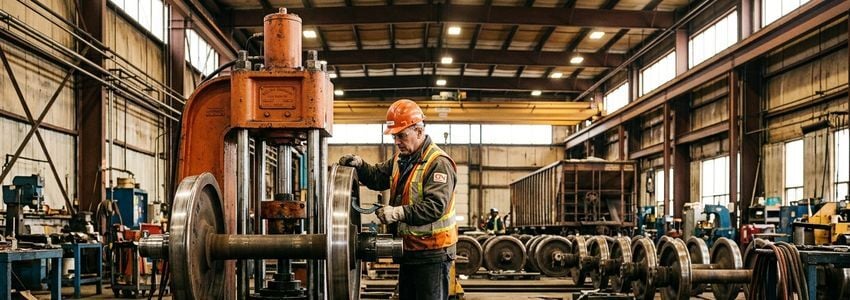
Railcar Repair Shop Financing: The Complete Guide for Rail Service Businesses
Railcar repair shops keep the nation's freight moving, but the equipment that makes that work possible does not come cheap. Wheel presses, wheel lathes, brake shop lifts, and axle inspection systems can each run into six figures, and a shop that cannot keep pace with equipment demands risks losing contracts to competitors with newer capacity. Railcar repair shop financing gives rail service business owners a structured way to fund that equipment, expand a facility, or add a second repair bay without draining the working capital that keeps daily operations running.
In This Article
What Is Railcar Repair Shop Financing?
Railcar repair shop financing is a category of commercial lending built around the specific equipment and facility needs of rail service businesses. Rather than forcing a repair shop owner into a generic small business loan that ignores the realities of railcar maintenance work, this type of financing structures the loan or lease around the value and useful life of shop equipment such as wheel presses, wheel lathes, hydraulic jacks, brake system test stands, and axle-bearing inspection tools.
Rail service businesses that maintain, inspect, and repair freight cars, tank cars, and railcars for Class I railroads, short lines, and private fleet owners often face a distinct capital challenge: the equipment is specialized, expensive, and not something a general bank loan officer necessarily understands. A lender familiar with heavy equipment financing can move faster and structure terms that match the equipment's productive life, rather than applying a one-size-fits-all underwriting model.
Financing in this space typically covers three categories: shop equipment (wheel presses, lathes, lifts, welding equipment), facility improvements (rail siding work, pit upgrades, additional repair bays), and working capital to bridge the gap between completing repair work and collecting payment from railroads or car owners, which can take longer than typical commercial invoicing cycles.
Key Stat: According to the U.S. Census Bureau, rail transportation and support activities remain a core piece of national freight infrastructure, with private repair and maintenance contractors playing an increasingly important role as railroads focus capital on network operations rather than in-house shop expansion.
Key Benefits of Railcar Repair Shop Financing
A repair shop that pays cash for every wheel press or facility upgrade often finds itself unable to bid on larger contracts because capital is tied up in equipment rather than available for operations. Financing changes that equation in several concrete ways.
- Preserve working capital: Keep cash available for payroll, parts inventory, and the receivables gap that comes with railroad billing cycles.
- Match payments to contract revenue: Structure loan or lease terms so monthly payments align with the additional repair volume new equipment makes possible.
- Faster access to capacity: Approval and funding can happen in days rather than the months it might take to accumulate cash for a six-figure wheel press.
- Preserve existing credit lines: Equipment-secured financing typically does not compete with a shop's existing bank relationship or revolving credit facility.
- Bid on larger contracts: Additional capacity and modern equipment can help a shop qualify for larger railroad or private fleet maintenance contracts that require specific certifications or throughput.
- Predictable budgeting: Fixed monthly payments make it easier to forecast cash flow compared to a large lump-sum capital outlay.
How Railcar Repair Shop Financing Works
The financing process for a rail service business generally follows a predictable path, though the exact steps vary by lender and by whether the shop is financing new equipment, used equipment, or a facility expansion.
Quick Guide
How Railcar Repair Shop Financing Works — At a Glance
Obtain pricing from an equipment manufacturer or dealer for the wheel press, lathe, or lift you need.
Provide basic business financials, time in business, and the equipment quote to the lender.
Most equipment financing decisions come back within a few business days, with term length tied to the equipment's useful life.
The lender pays the equipment vendor directly, or reimburses the shop, depending on deal structure.
New equipment is commissioned in the shop while fixed monthly payments continue over the agreed term.
Underwriting for railcar repair shop financing typically looks at time in business, monthly revenue, existing contracts with railroads or fleet owners, and the value and useful life of the equipment being financed. Because the equipment often serves as its own collateral, shops with newer businesses or thinner credit files sometimes qualify more easily than they would for an unsecured loan of the same size.
Ready to Expand Your Repair Capacity?
Get fast, flexible financing from the #1 business lender in the U.S. No obligation — apply in minutes.
Apply Now →Types of Financing Available for Railcar Repair Shops
Not every rail service business needs the same financing structure. The right fit depends on whether the shop wants to own equipment outright, keep monthly payments as low as possible, or preserve flexibility for a growing receivables gap.
- Equipment Loans: The shop owns the wheel press, lathe, or lift from day one, with the loan secured by the equipment itself. Best for shops planning to keep the equipment long-term.
- Equipment Leasing: Lower monthly payments and the option to upgrade at the end of the term. Good for shops that expect to keep scaling capacity or want newer equipment down the road.
- Working Capital Loans: Useful for bridging the gap between completing repair work and collecting payment from railroads or fleet owners, or covering installation labor and facility prep.
- Business Line of Credit: A flexible option for shops that want to draw funds as needed across a phased expansion rather than a single lump-sum purchase.
- Commercial Equipment Financing: Broader financing that can bundle a wheel press or lathe together with related shop equipment such as welding systems or overhead cranes into a single structured deal.
Who Railcar Repair Shop Financing Is Best For
This type of financing tends to make the most sense for rail service businesses that have already validated demand for more repair capacity than their current shop allows, whether that shows up as a backlog of cars waiting for service, a new contract requiring faster turnaround, or an aging fleet of tools that no longer meets railroad inspection standards.
- Independent railcar repair shops adding a wheel press or lathe to reduce turnaround time
- Rail service businesses expanding to a second repair bay or additional rail siding
- Shops winning new contracts with Class I railroads, short lines, or private tank car fleet owners that require added capacity
- Businesses replacing aging brake test stands or axle inspection equipment to stay compliant with current standards
- Rail maintenance contractors relocating to a larger facility to accommodate more simultaneous repair jobs
It is generally less well suited to businesses still in the concept or pre-revenue stage, since most lenders want to see at least some operating history and consistent repair volume or contract revenue before extending equipment financing.
Comparing Your Financing Options
Choosing between an equipment loan, a lease, and a broader working capital loan comes down to how the shop wants to manage ownership, monthly payments, and flexibility. The table below breaks down the core tradeoffs.
| Feature | Equipment Loan | Equipment Lease | Working Capital Loan |
|---|---|---|---|
| Ownership | Shop owns equipment immediately | Lender owns equipment during term | N/A (unsecured cash) |
| Typical Monthly Payment | Moderate | Lower | Varies by amount and term |
| Best For | Long-term equipment ownership | Frequent upgrades / newer equipment | Bridging receivables, covering installation |
| Collateral | The equipment itself | The equipment itself (owned by lender) | Often unsecured or blanket lien |
How Crestmont Capital Helps
Crestmont Capital works with rail service business owners across the country to structure financing for exactly this kind of equipment purchase and facility expansion. Rather than forcing every shop into a single loan product, Crestmont evaluates the equipment, the contract pipeline, and the shop's cash flow to recommend the structure that fits.
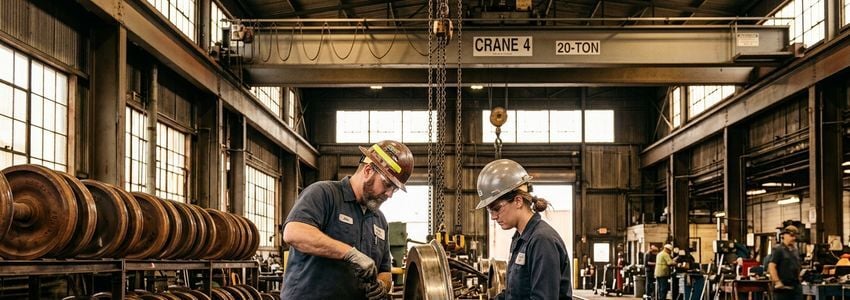
For wheel presses, lathes, and other heavy shop tools, Crestmont's Equipment Financing and Equipment Leasing programs are built around the realities of capital-intensive repair work, including the longer receivables cycles that come with railroad billing. Shops that need to bundle a wheel press with other equipment, such as a new brake test stand or overhead crane, can also explore Commercial Equipment Financing as a broader option.
If a facility expansion involves more than equipment alone, such as rail siding work, additional repair bay construction, or extra parts inventory to support new contract volume, a Working Capital Loan can supplement the equipment purchase. Shops that prefer to draw funds in stages as a phased expansion rolls out often use a Business Line of Credit for that same flexibility.
Rail service businesses whose equipment needs extend into general industrial or manufacturing-grade tools can also review Crestmont's guide to manufacturing equipment financing, and shops that also manage a support fleet of service trucks may find useful context in Crestmont's guide to transportation and logistics company business loans. For a broader look at how other capital-intensive contractors fund large equipment purchases, see Crestmont's blog post on funding solutions for industrial equipment purchases.
Real-World Scenarios
Scenario 1: The Backlog Bottleneck
An independent railcar repair shop wins a new inspection and repair contract with a regional short line, but its single aging wheel press cannot keep pace with the added volume. Cars begin backing up on the siding, threatening the new contract before it even gets started. Rather than turn down the work or wait months to save cash, the shop finances a second wheel press through an equipment loan, sized so the added repair volume covers the monthly payment with room to spare.
Scenario 2: The Compliance Upgrade
A rail maintenance contractor's brake test stand no longer meets current inspection standards required by its primary railroad client. Instead of pulling capital from payroll or parts inventory, the shop uses equipment leasing to install a modern brake test stand, keeping the core operating budget untouched while staying compliant.
Scenario 3: The Facility Expansion
A growing repair shop outgrows its single-bay facility and signs a lease on a larger site with room for two additional rail sidings. The move requires outfitting an entirely new bay from scratch, including a wheel lathe, overhead crane, and welding station. The shop combines an equipment loan for the tools with a working capital loan to cover installation labor and site preparation.
Scenario 4: The Receivables Gap
A shop completes a large batch of tank car repairs for a private fleet owner, but payment terms stretch to 60 days while payroll and parts suppliers still need to be paid on the usual schedule. The shop draws on a business line of credit to bridge the gap, repaying it once the invoice clears.
Scenario 5: The Fleet Owner Contract
A private railcar leasing company awards a multi-year maintenance contract to a repair shop on the condition that the shop can handle a higher volume of scheduled inspections. Because the additional revenue is already contracted, the shop qualifies for equipment financing largely on the strength of the new agreement, adding capacity without waiting for a full season of increased cash reserves.
Frequently Asked Questions
Don't Let Equipment Limitations Cap Your Contract Pipeline
Whether it's a new wheel press or a full facility expansion, get financing structured around your shop's repair volume and timeline.
Apply Now →Pro Tip: Before ordering a new wheel press or lathe, confirm floor load capacity and rail siding access with your facility. A financing plan that includes a small buffer for supporting infrastructure prevents a second, unplanned expense a few months later.
Next Steps
Contact equipment manufacturers or your usual dealer for pricing and lead times on wheel presses, lathes, or test stands.
Have the last three to six months of business bank statements ready for a faster application.
Submit your application and get a financing decision, often within a business day or two.
Conclusion
An equipment bottleneck is a good problem for a railcar repair shop to have, but it is still a problem that costs real contract revenue every month it goes unsolved. Railcar repair shop financing exists precisely to close that gap, letting a growing rail service business add the wheel presses, lathes, and facility capacity that railroads and private fleet owners are demanding without draining the cash reserves the rest of the business depends on. Whether the right fit is an equipment loan, a lease, or a working capital loan to bridge receivables and cover installation, structuring the financing around the shop's contract pipeline is what turns an expansion from a risk into a growth story.
Disclaimer: The information provided in this article is for general educational purposes only and is not financial, legal, or tax advice. Funding terms, qualifications, and product availability may vary and are subject to change without notice. Crestmont Capital does not guarantee approval, rates, or specific outcomes. For personalized information about your business funding options, contact our team directly.








