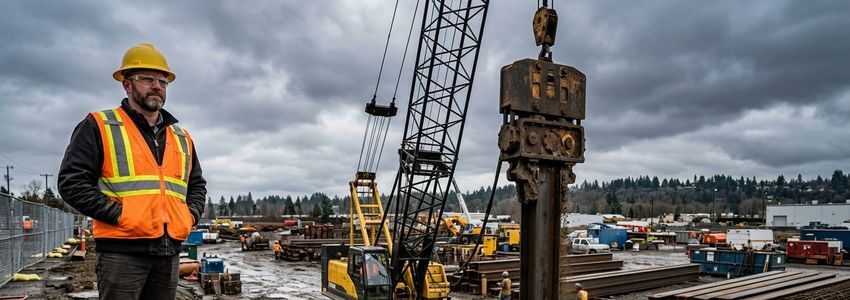
Pile driving equipment financing gives construction and foundation contractors a practical way to acquire impact hammers, vibratory hammers, leads, and complete pile driving rigs without tying up the cash reserves a growing business needs for payroll, materials, and bonding. Whether you are bidding on a deep foundation project, a bridge abutment job, or a solar farm pile installation contract, the right financing structure determines how fast you can mobilize equipment and say yes to the next job. This guide covers every financing option available for pile driving equipment, what lenders look for during underwriting, and how to move quickly when a rig becomes available.
In This Article
- What Is Pile Driving Equipment Financing?
- Key Benefits for Contractors
- How Pile Driving Equipment Financing Works
- Types of Equipment You Can Finance
- Who This Financing Is Best For
- Comparing Your Financing Options
- How Crestmont Capital Helps
- Real-World Scenarios
- Frequently Asked Questions
- How to Get Started
What Is Pile Driving Equipment Financing?
Pile driving equipment financing is a type of commercial equipment financing that allows foundation contractors, marine construction companies, and utility contractors to acquire impact hammers, vibratory hammers, pile driving leads, diesel hammers, and complete rig packages through a structured loan or lease instead of a single large cash outlay. The equipment itself typically serves as collateral, which streamlines underwriting and allows for faster approvals than a general-purpose business loan.
Pile driving rigs and hammers are capital-intensive. A used vibratory hammer can run anywhere from $15,000 to well over $300,000, and a new variable moment hammer can exceed $450,000 before accessories, leads, and a carrier crane are factored in. Few contractors can justify writing a check that large without disrupting working capital needed for crews, fuel, insurance, and bid bonds on upcoming projects. Financing spreads that cost over the useful life of the equipment while the contractor keeps the rig earning revenue from day one.
Crestmont Capital structures pile driving equipment financing for both new and used machinery, covering everything from a single replacement hammer to a full rig purchase for a contractor opening a new market.
Key Benefits for Contractors
Financing pile driving equipment instead of paying cash offers several advantages that matter to a contractor managing tight project margins and seasonal cash flow:
- Preserve working capital. Keep cash on hand for payroll, fuel, insurance renewals, and the next project's mobilization costs instead of locking it into a single asset.
- Match payments to revenue. Structure monthly payments around the contract that justified the purchase, so the equipment is largely paying for itself as the job progresses.
- Fast approval and funding. Equipment-backed financing often closes in days rather than weeks, which matters when a project award has a tight mobilization deadline.
- Access to newer, more capable equipment. Financing makes it realistic to acquire variable moment vibratory hammers or larger diesel impact hammers that open up bigger, higher-margin contracts.
- Predictable budgeting. Fixed monthly payments make it easier to bid future jobs accurately, since equipment cost is a known, scheduled expense rather than a cash flow shock.
- Potential to finance soft costs. Many lenders, including Crestmont Capital, can roll in delivery, installation, leads, hammer cushions, and other accessories alongside the core equipment cost.
Ready to Add a Pile Driving Rig to Your Fleet?
Get fast, flexible financing from the #1 business lender in the U.S. No obligation, apply in minutes.
Apply Now →How Pile Driving Equipment Financing Works
The process for financing pile driving equipment follows a fairly consistent path across most equipment lenders, though timelines and documentation requirements vary:
- Identify the equipment. Whether you are buying a new hammer from a dealer or a used rig from an auction or private seller, get a quote, invoice, or purchase agreement in hand.
- Submit an application. Most equipment financing applications require basic business information, the equipment details and price, and either financial statements or, for smaller amounts, a simplified application.
- Underwriting review. The lender evaluates the business's time in operation, credit profile, cash flow, and the equipment's value and expected useful life. Since the hammer or rig secures the loan, underwriting can move faster than unsecured financing.
- Approval and terms. Once approved, you receive specific terms: rate, term length, down payment requirement (if any), and monthly payment amount.
- Funding and purchase. The lender pays the seller directly or funds the contractor to complete the purchase, and the equipment is typically titled or UCC-filed in the lender's favor as collateral.
- Ongoing payments. The contractor makes fixed monthly payments over the agreed term while using the equipment on active jobs.
Lenders evaluating pile driving equipment pay close attention to a few specifics that general equipment underwriters may not fully understand, which is why working with a lender experienced in heavy construction equipment matters. Hour meters, hammer energy rating, undercarriage or crane-mount compatibility, and resale demand in the used equipment market all factor into how aggressively a lender will price the deal.
Types of Equipment You Can Finance
Pile driving equipment financing is not limited to a single machine type. Crestmont Capital structures financing for the full range of equipment a foundation or marine construction contractor needs:
- Impact hammers (diesel, hydraulic, and air hammers) used to drive steel, concrete, or timber piles with repeated striking force.
- Vibratory hammers (fixed moment and variable moment) used to install and extract sheet piles and steel pipe piles with vibration rather than impact.
- Pile driving leads and templates that guide the hammer and pile into alignment during installation.
- Crawler cranes and carrier rigs used to mount and maneuver the hammer assembly on the job site.
- Pile extraction equipment used for temporary sheet pile removal and reuse.
- Hammer cushions, caps, and accessories that are consumable or wear items but still represent a meaningful equipment cost on larger rigs.
- Specialty pile systems including helical pile drive heads and auger cast pile equipment used in soil conditions where traditional impact driving is impractical.
By the Numbers
Pile Driving Equipment Financing — Key Statistics
$2.2T
Annualized U.S. construction spending, August 2026 (Census Bureau)
$547.8B
Annualized public construction spending, August 2026, driving deep foundation demand
$15K-$450K+
Typical price range for used to new pile hammers and rigs
2-7 Yrs
Typical financing term length for pile driving equipment
Key Stat: U.S. construction spending topped $2.2 trillion on a seasonally adjusted annual basis in August 2026, according to the Census Bureau, with public construction spending alone running at a $547.8 billion annual rate, much of it tied to bridge, highway, and deep foundation work that requires pile driving equipment.
Who This Financing Is Best For
Pile driving equipment financing fits a specific set of contractors who need deep foundation or marine construction capability but do not want to self-fund a six-figure equipment purchase:
- Foundation contractors expanding from drilled shaft or spread footing work into driven pile systems to bid on a wider range of projects.
- Marine and waterfront construction companies installing bulkheads, docks, and sheet pile seawalls.
- Bridge and highway contractors taking on bridge abutment and pier foundation work tied to public infrastructure spending.
- Solar and renewable energy contractors installing helical or driven pile racking foundations for utility-scale solar farms.
- Utility contractors who need pile driving capability for transmission tower foundations.
- Established contractors replacing aging equipment whose current hammer or rig has high hours and rising maintenance costs.
Business owners who are new to pile driving specifically, with limited time running this type of equipment, may still qualify, but should expect a lender to look more closely at related construction industry experience and the strength of the contract that justifies the purchase.
Comparing Your Financing Options
Contractors generally choose between three structures when acquiring pile driving equipment. Each has tradeoffs worth understanding before signing.
| Option | Best For | Ownership | Typical Down Payment |
|---|---|---|---|
| Equipment Loan | Contractors who want to build equity and keep equipment long-term | You own the equipment from day one | 0-20% |
| Equipment Lease | Contractors who want lower monthly payments or plan to upgrade hammers frequently | Buyout option at lease end (often $1 or fair market value) | 0-10% |
| Working Capital + Cash Purchase | Contractors with strong cash reserves who want to negotiate a cash discount | Full ownership, no lien | 100% |
Most contractors land on an equipment loan or lease rather than a full cash purchase, since preserving liquidity for bonding capacity and payroll typically outweighs the benefit of a cash discount on the hammer itself. According to the U.S. Small Business Administration, structured equipment and fixed-asset financing remains one of the most common ways small and mid-size contractors fund major machinery purchases without disrupting operating cash flow.
How Crestmont Capital Helps
Crestmont Capital works with foundation, marine, and heavy civil contractors across the country to structure financing for both new and used pile driving equipment. Our construction equipment financing programs are built around the realities of this industry: seasonal cash flow, large contract-driven purchases, and equipment that needs to go to work immediately after funding.
For contractors running a broader heavy equipment fleet alongside pile driving capability, our heavy machinery financing programs can cover cranes, excavators, and other supporting equipment on the same job site. If your pile driving operation also requires a dedicated carrier crane, our crane financing options can be structured alongside the hammer purchase.
Contractors researching how to fund a broader equipment buildout often also review our guide to heavy equipment financing for a wider overview of structures and qualification requirements, or our crane financing guide if a carrier crane purchase is part of the same project. Contractors establishing or scaling a construction company more broadly can also review our construction company financing guide for working capital and bonding-related funding options that often run alongside equipment purchases.
Crestmont Capital works with contractors across a wide range of credit profiles and time-in-business, structuring terms around the specific contract or project that justifies the purchase rather than applying a one-size-fits-all underwriting model.
Bidding a Deep Foundation Project?
Secure the pile driving equipment you need before the mobilization deadline hits. Apply in minutes.
Apply Now →Real-World Scenarios
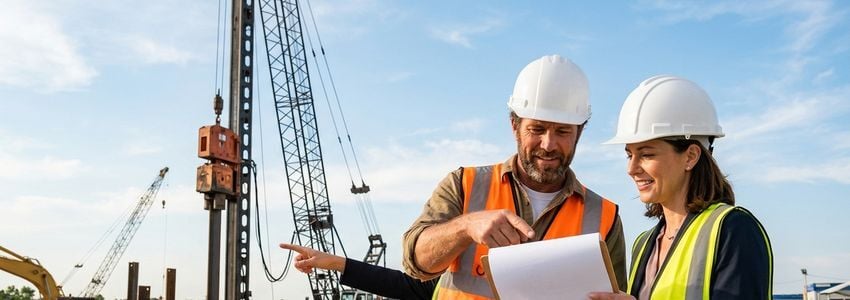
The following scenarios illustrate how contractors commonly use pile driving equipment financing in practice.
Scenario 1: Expanding from drilled shaft to driven pile work. A mid-size foundation contractor in the Gulf Coast region had been subcontracting all driven pile work to a competitor. After winning a bridge abutment contract that required in-house pile driving capability, the owner financed a used diesel impact hammer and leads package, funded in nine business days, and completed the project without subcontracting a single pile.
Scenario 2: Solar farm racking foundations. A utility-scale solar installer needed to drive thousands of helical and steel pile foundations across a multi-site contract. Rather than renting a vibratory hammer month to month at a cost that would have exceeded ownership within a year, the company financed a new variable moment hammer and recovered the monthly payment within the first phase of the project.
Scenario 3: Replacing an aging rig. A marine construction company's 20-year-old diesel hammer was requiring increasingly expensive repairs between jobs. The owner financed a newer hydraulic hammer with lower maintenance costs and better fuel efficiency, improving both uptime and bid competitiveness on waterfront projects.
Scenario 4: New contractor entering a growing market. A contractor with strong construction industry experience but no prior pile driving equipment ownership financed a complete starter rig, including leads and a used vibratory hammer, after landing a transmission tower foundation contract. Strong personal credit and a signed contract offset the lack of direct pile driving equipment history.
Scenario 5: Seasonal cash flow gap. A contractor in a region with a short construction season needed a second rig to run two crews simultaneously during the busy months. Financing allowed the purchase to happen in the spring, ahead of the busy season, without depleting the cash reserve set aside for winter payroll.
Frequently Asked Questions
Don't Let Equipment Availability Hold Back Your Next Bid
See what financing you qualify for before your next pile driving project deadline.
Apply Now →How to Get Started
Complete our quick application at offers.crestmontcapital.com/apply-now, it takes just a few minutes.
A Crestmont Capital advisor will review your equipment needs, project timeline, and match you with the right financing structure.
Receive your funds and mobilize your pile driving rig, often within days of approval.
Conclusion
Pile driving equipment financing lets foundation, marine, and utility contractors acquire the impact hammers, vibratory hammers, leads, and rigs they need without draining the working capital required to run active projects. With U.S. construction spending running at a $2.2 trillion annualized pace and public infrastructure work continuing to drive demand for deep foundation capability, contractors who can move quickly on equipment are better positioned to win the next bid. Whether you need a single replacement hammer or a complete rig to enter a new market, structuring the right financing is often the difference between bidding confidently and passing on the opportunity.
Crestmont Capital works with contractors nationwide to structure pile driving equipment financing around the realities of the construction industry, not a generic lending template. Reach out today to see what you qualify for.
Disclaimer: The information provided in this article is for general educational purposes only and is not financial, legal, or tax advice. Funding terms, qualifications, and product availability may vary and are subject to change without notice. Crestmont Capital does not guarantee approval, rates, or specific outcomes. For personalized information about your business funding options, contact our team directly.