Digger derrick truck financing gives utility contractors a way to put a $150,000 to $300,000+ piece of equipment to work without draining cash reserves or waiting months for a bank decision. Whether you install utility poles, run underground cable, or handle emergency storm restoration, the right financing structure can get a new or used digger derrick on your lot in days instead of quarters.
This guide breaks down exactly how digger derrick truck financing works, what lenders look for, how new versus used equipment changes your options, and how to choose the financing structure that fits a utility contracting business. We will also walk through real-world scenarios, a full FAQ, and the next steps to get funded.
In This Article
- What Is Digger Derrick Truck Financing?
- Why Utility Contractors Need This Equipment
- How Digger Derrick Truck Financing Works
- Types of Financing Available
- New vs. Used Digger Derrick Trucks
- Who Qualifies
- Comparing Your Financing Options
- How Crestmont Capital Helps
- Real-World Scenarios
- Frequently Asked Questions
- Next Steps
What Is Digger Derrick Truck Financing?
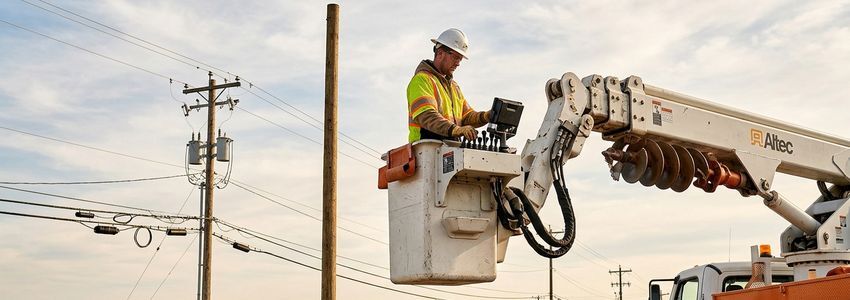
A digger derrick truck is a specialized utility vehicle that combines a hydraulic auger for digging pole holes with a boom and winch for setting utility poles, lifting transformers, and handling other heavy utility components. These trucks are essential equipment for electric utilities, telecommunications contractors, cable companies, and underground utility installers.
Digger derrick truck financing is a type of commercial equipment financing specifically structured to cover the purchase, lease, or refinance of these vehicles. Because a digger derrick truck is a chassis-mounted, specialized piece of equipment rather than a standard work truck, lenders typically treat it the same way they treat cranes, bucket trucks, or other heavy utility equipment: the truck itself serves as collateral, which often allows for more flexible terms than a general business loan.
Financing can cover a brand-new unit straight from the manufacturer, a used digger derrick purchased from a dealer or private seller, or even a sale-leaseback arrangement on a truck your business already owns outright. Terms typically range from 24 to 84 months depending on the age of the equipment, the lender, and your business's financial profile.
Key Stat: According to listings data compiled across major equipment marketplaces, used digger derrick trucks commonly sell in the $50,000 to $180,000 range, while new units from major manufacturers frequently exceed $200,000 to $300,000 once insulated booms, auger torque upgrades, and chassis specifications are factored in.
Why Utility Contractors Need This Equipment
Utility contractors rarely have the luxury of waiting around for the right truck. Storm restoration work, scheduled pole replacement contracts, and new fiber or electric line installation projects all run on tight timelines with penalty clauses for missed deadlines. Owning or financing the right digger derrick truck directly affects how much work a contractor can take on and how reliably they can deliver it.
- Faster project turnaround: A dedicated digger derrick means crews are not waiting on rented equipment or subcontracted auger work.
- Expanded bidding capacity: Owning the right equipment lets contractors bid on larger pole-setting and line-construction contracts.
- Lower long-term cost than renting: Frequent rental fees on digger derricks add up quickly on multi-month utility contracts.
- Emergency response readiness: Storm and outage restoration work often goes to contractors who already have equipment staged and ready.
- Tax and depreciation benefits: Financed equipment is generally eligible for standard business depreciation treatment, which a contractor's accountant can factor into annual planning.
The labor shortage affecting the broader construction and utility trades makes equipment capacity even more important. Industry workforce data points to a need for hundreds of thousands of new skilled construction and trade workers over the next several years, with a significant share of the current workforce approaching retirement age. When qualified crew members are harder to find and more expensive to retain, the productivity of each crew matters more. A contractor who can keep a single crew consistently productive with the right digger derrick truck gets more value out of every payroll dollar than one who is constantly waiting on rented or borrowed equipment.
This dynamic also affects how utilities and general contractors select subcontractors for larger projects. A contractor who shows up to a bid walk with their own digger derrick truck, rather than a plan to rent one if awarded the job, signals operational readiness. On municipal and cooperative utility contracts in particular, equipment ownership or a clear financing plan can be the difference between winning and losing a bid, since project owners want confidence that crews and equipment will be on-site on schedule.
Demand for this kind of equipment is tied directly to utility infrastructure spending. The U.S. Census Bureau's construction spending data shows power-related construction running at a seasonally adjusted annual rate of roughly $186 billion as of mid-2026, with communication infrastructure spending near $30 billion annually, both of which require pole-setting, trenching, and underground utility work that depends on digger derrick capacity (U.S. Census Bureau).
Ready to Add a Digger Derrick Truck to Your Fleet?
Get fast, flexible financing from the #1 business lender in the U.S. No obligation - apply in minutes.
Apply Now →How Digger Derrick Truck Financing Works
The process for financing a digger derrick truck follows a fairly standard commercial equipment financing path, though the exact documentation requested can vary by lender and by the size of the deal.
- Identify the equipment. Have a quote, invoice, or dealer listing for the specific digger derrick truck, including the chassis, boom specifications, and auger torque rating.
- Submit a financing application. Most lenders use a simplified application for equipment under roughly $250,000 to $350,000, often requiring just basic business and personal information rather than a full loan package.
- Provide supporting financials. Depending on deal size, this may include recent bank statements, a profit and loss statement, or tax returns. Larger transactions typically require more documentation.
- Underwriting and approval. The lender reviews time in business, credit profile, and the value of the equipment as collateral. Many digger derrick financing decisions are returned within 24 to 48 hours.
- Sign financing documents. Once approved, you will sign a financing or lease agreement outlining the term, rate structure, and any end-of-term purchase option.
- Funding and delivery. The lender pays the seller directly, and the truck is delivered or picked up. Many contractors are operating the new equipment within a week of final approval.
Quick Guide
How Digger Derrick Truck Financing Works - At a Glance
Lock in the digger derrick truck's price from a dealer or seller.
Submit a simplified application with basic business details.
Underwriting typically returns a decision in 24 to 48 hours.
The lender pays the seller and your crew gets to work.
Types of Digger Derrick Financing
Not every utility contractor needs the same financing structure. The right choice depends on cash flow, how long you plan to keep the equipment, and how your accountant wants to treat the asset.
- Equipment financing (loan structure): You own the digger derrick truck from day one, make fixed payments over the term, and build equity as you pay it down. Best for contractors planning to keep the truck long-term.
- Equipment leasing: Lower monthly payments with a $1 buyout, 10% purchase option, or fair market value end-of-term option. Useful for contractors who want to preserve cash flow or who may want to upgrade equipment every few years.
- Working capital loans paired with equipment purchase: Some contractors finance the truck separately and use a working capital loan to cover insulation upgrades, auger attachments, or operator training.
- Business line of credit: A revolving line can cover smaller add-ons, repairs, or seasonal cash flow gaps around a larger equipment purchase.
- SBA 7(a) or 504 loans: For contractors buying multiple units or bundling a digger derrick purchase with other fixed assets, an SBA-backed loan can offer longer terms and lower rates, though approval timelines are typically longer than direct equipment financing.
New vs. Used Digger Derrick Trucks: Which Financing Makes Sense
New digger derrick trucks carry a higher price tag, often $200,000 to $300,000 or more depending on boom reach, lifting capacity, and chassis, but come with full manufacturer warranties and the latest insulation and safety ratings. Financing terms on new equipment tend to run longer, often 60 to 84 months, because lenders view new equipment as lower-risk collateral with a longer useful life.
Used digger derrick trucks, typically ranging from $50,000 to $180,000 depending on age, mileage, and condition, are a common entry point for growing utility contractors. Financing terms on used equipment are usually shorter, often 36 to 60 months, and lenders may ask for more documentation on maintenance history and insulation testing records, since the insulated boom rating is critical for safe operation near energized lines.
Either way, the chassis mileage and engine hours matter almost as much as the derrick unit itself. A utility truck with a well-maintained chassis but an older derrick attachment can sometimes be a better value than a newer derrick on a chassis nearing the end of its service life.
Beyond the sticker price, contractors evaluating new versus used should think in terms of total cost of ownership rather than purchase price alone. A new digger derrick truck typically arrives with a full manufacturer warranty on the boom, hydraulics, and auger drive, which can offset years of unplanned repair costs. A used unit may carry a lower monthly payment, but a contractor should budget for the possibility of replacing hydraulic hoses, auger teeth, or insulation components sooner than they would on a new truck.
Unplanned downtime is often the hidden cost that tips the math in favor of newer equipment for high-volume contractors. A digger derrick truck that goes down mid-project can mean a rented replacement unit, idle crew time, and missed contract deadlines, all of which add up quickly on storm restoration or municipal contracts with penalty clauses. Contractors running smaller crews or seasonal operations, by contrast, often find that a well-maintained used truck financed on a shorter term is the more capital-efficient choice.
Scenario 6: Cooperative Vendor Expanding Service Territory
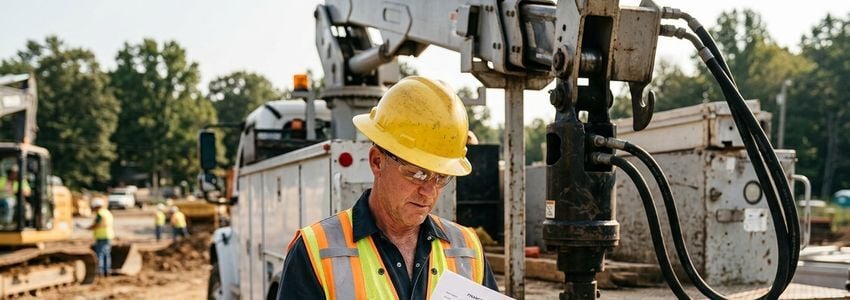
A contractor approved as a preferred vendor for a rural electric cooperative needs to expand from a one-truck operation to a two-truck operation within 90 days to take on an expanded service territory. Using an SBA 504 loan to bundle the new digger derrick truck purchase with a small equipment yard upgrade, the contractor secures a longer term and lower rate than a standalone equipment loan would have offered, though the approval process takes closer to 60 days.
Who Qualifies for Digger Derrick Truck Financing
Digger derrick truck financing is generally accessible to a wider range of businesses than a traditional unsecured loan because the equipment itself backs the financing. That said, lenders still look at a handful of core factors.
- Time in business: Many lenders will work with contractors who have been operating for a year or more, though some programs accommodate newer businesses with a larger down payment.
- Credit profile: Stronger personal and business credit typically unlocks better rates, but bad credit equipment financing options exist for contractors with past credit challenges.
- Revenue and cash flow: Lenders want to see that monthly revenue can comfortably support the new payment alongside existing obligations.
- Industry experience: Utility, telecom, and underground contractors with documented project history and active contracts are viewed favorably.
- Down payment: Many programs require 0% to 20% down depending on credit and equipment age, with no-money-down options available for stronger applicants.
See What You Qualify For
Whether you need a new or used digger derrick truck, Crestmont Capital can structure financing around your business. No obligation.
Check Your Options →Comparing Your Financing Options
Each financing path trades off differently on monthly payment, ownership timeline, and flexibility. The table below compares the most common structures utility contractors use for digger derrick trucks.
| Financing Type | Typical Term | Ownership | Best For |
|---|---|---|---|
| Equipment Loan | 36-84 months | Immediate | Contractors keeping the truck long-term |
| Equipment Lease | 24-60 months | End-of-term option | Preserving cash flow, upgrading frequently |
| SBA 7(a)/504 | Up to 10-25 years | Immediate | Larger fleet purchases, lower rates |
| Sale-Leaseback | 24-60 months | Retained, cash unlocked | Freeing up cash from owned equipment |
How Crestmont Capital Helps Utility Contractors Finance Digger Derrick Trucks
Crestmont Capital works directly with utility and telecom contractors to structure equipment financing around the realities of the business: seasonal storm work, multi-year municipal contracts, and the need to move fast when a truck becomes available. We finance both new and used digger derrick trucks, and our underwriting team is familiar with insulated boom specifications and utility-grade chassis requirements.
For contractors comparing a digger derrick to other heavy equipment, we also offer crane financing and heavy truck financing under the same streamlined process. If your business already owns equipment outright, a sale-leaseback through our used equipment financing program can free up working capital without giving up the truck.
We have also published detailed guides on bucket truck financing and utility contractor business loans for contractors evaluating their full range of fleet and working capital options.
Real-World Scenarios
Scenario 1: Storm Restoration Contractor Adding Capacity
A regional utility contractor with three years in business wins a mutual aid contract for hurricane season storm restoration. They need a second digger derrick truck within two weeks to meet the contract's equipment requirements. Using equipment financing with a 60-month term and a modest down payment, they take delivery of a used digger derrick truck in nine days and meet the contract deadline.
Scenario 2: Telecom Installer Scaling for a Fiber Build
A fiber optic installation company lands a multi-year municipal broadband expansion contract. Rather than tie up cash reserves, the owner finances two new digger derrick trucks through a lease structure with a 10% purchase option at the end of the 48-month term, preserving working capital for crew expansion and materials.
Scenario 3: Rural Electric Cooperative Contractor Replacing Aging Equipment
A contractor servicing a rural electric cooperative is operating a digger derrick truck with over 15,000 hours on the boom and frequent insulation re-certification issues. They sell the old unit and finance a newer used digger derrick truck, reducing downtime and passing insulation inspections on the first attempt.
Scenario 4: New Utility Contractor Building a First Fleet
A contractor two years into business has been subcontracting pole-setting work to competitors because they lack a digger derrick truck of their own. With a 15% down payment and a 48-month equipment loan, they purchase their first used unit and begin bidding directly on pole-replacement contracts instead of subcontracting the work away.
Scenario 5: Established Utility Contractor Freeing Up Cash
An established contractor owns three digger derrick trucks outright but needs cash for a new facility lease. Using a sale-leaseback on one truck, they unlock roughly 70% of its appraised value in cash while continuing to operate the equipment under a new lease agreement.
Frequently Asked Questions
Get Your Digger Derrick Truck Working Sooner
Apply in minutes and get a financing decision fast, often within 24 to 48 hours. No obligation to proceed.
Get Started →Next Steps
Conclusion
Digger derrick truck financing lets utility contractors add critical pole-setting and line-construction capacity without tying up cash reserves that are better spent on crews, materials, and bidding on the next contract. With utility and communication construction spending holding steady in the hundreds of billions of dollars annually and a persistent shortage of skilled trades competing for infrastructure work, contractors who can move fast on equipment have a real edge (Forbes).
Whether you are financing a first used digger derrick truck or adding a third unit to an established fleet, matching the right financing structure, loan, lease, or sale-leaseback, to your business's cash flow and growth plans makes the equipment pay for itself faster. Crestmont Capital works with utility contractors across the country to structure digger derrick truck financing that fits the realities of the job.
Before signing any financing agreement, it is worth running the numbers on a specific scenario: estimate the monthly payment at a few different term lengths, compare that against the revenue a second crew or additional bidding capacity would generate, and factor in how quickly the truck would need to be replaced or refinanced. Contractors who take this step before applying tend to move through underwriting faster, since they can speak confidently about how the equipment fits into their broader operating plan rather than treating the purchase as an isolated decision.
Disclaimer: The information provided in this article is for general educational purposes only and is not financial, legal, or tax advice. Funding terms, qualifications, and product availability may vary and are subject to change without notice. Crestmont Capital does not guarantee approval, rates, or specific outcomes. For personalized information about your business funding options, contact our team directly.