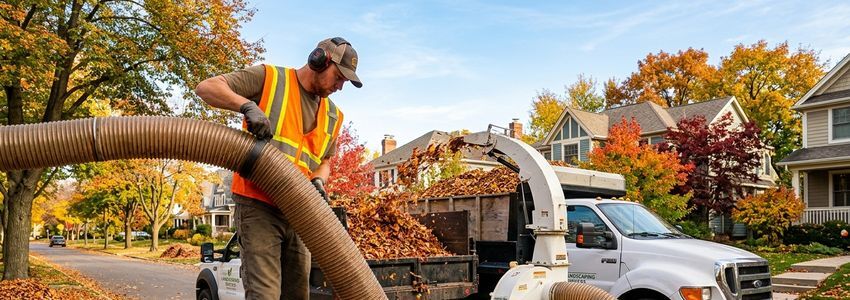
For landscaping companies, grounds maintenance crews, and property management contractors, fall cleanup season can make or break annual revenue. A high-capacity commercial leaf vacuum, whether a tow-behind trailer unit, a truck-loader system, or a walk-behind model, turns a labor-intensive chore into a fast, profitable service line. But commercial-grade leaf vacuums are expensive, often ranging from a few thousand dollars for a walk-behind unit to well over $60,000 for a self-contained truck-loader system. That is precisely why commercial leaf vacuum financing has become such an important tool for landscaping business owners who want to add or expand leaf collection services without draining cash reserves.
Whether you are bidding on a new municipal leaf collection contract, replacing an aging unit before the fall rush, or scaling up a residential route into commercial-grade production capacity, understanding your financing options is the first step. This guide breaks down what a commercial leaf vacuum costs, the financing products available, how the approval process works, and how to position your business for the best possible rate.
In This Article
- What Is Commercial Leaf Vacuum Financing?
- Key Benefits of Financing Your Leaf Vacuum
- How Commercial Leaf Vacuum Financing Works
- Types of Commercial Leaf Vacuums and Their Costs
- Who Qualifies for This Financing
- Comparing Your Financing Options
- How Crestmont Capital Helps Landscaping Businesses
- Real-World Scenarios
- Frequently Asked Questions
- How to Get Started
- Conclusion
What Is Commercial Leaf Vacuum Financing?
Commercial leaf vacuum financing is a type of equipment financing used specifically to purchase or lease industrial-grade leaf collection equipment. Rather than paying the full purchase price in cash, a landscaping or grounds maintenance business works with a lender to spread the cost across fixed monthly payments over an agreed term. The leaf vacuum itself typically serves as collateral for the loan, which makes approval faster and more accessible than many unsecured business financing products.
This financing category covers the full range of commercial leaf collection equipment: walk-behind leaf vacuums, tow-behind trailer units pulled by a mower or UTV, truck-loader systems mounted on a dump truck or flatbed, and self-propelled leaf loaders used by municipalities and large landscaping contractors. It can also cover related accessories such as debris trailers, mulching attachments, hoses, and the installation labor needed to mount a truck-loader unit.
Why Landscaping Businesses Need This Financing
A commercial leaf vacuum is a seasonal revenue generator, but the upfront cost can be steep relative to the typical cash reserves of a landscaping company. A $15,000 to $30,000 truck-loader leaf vacuum purchased in cash could wipe out the working capital a crew needs to cover payroll, fuel, and fall-season overtime. Financing converts that lump-sum cost into a predictable monthly expense, allowing the equipment to generate revenue from day one while you pay it off gradually, often during the very season it is earning you money.
Industry Insight: According to the U.S. Census Bureau's County Business Patterns, there are well over 100,000 landscaping service establishments operating across the country, the vast majority of which are small, independently owned businesses competing for seasonal contracts like fall leaf cleanup.
Key Benefits of Financing Your Leaf Vacuum
Choosing to finance rather than pay cash for your commercial leaf vacuum offers several strategic advantages for a landscaping business operating on seasonal cash flow.
- Preserve working capital: Keep cash on hand for payroll, fuel, insurance, and other operating costs during your busiest season.
- Match payments to revenue: Many lenders offer seasonal or step payment structures that align with a landscaping company's cash flow cycle.
- Faster equipment acquisition: Approval can happen in hours, not weeks, letting you get the unit mounted and running before the leaves start falling.
- Build business credit: On-time payments on an equipment loan can help establish or strengthen your business credit profile.
- Potential tax advantages: Financed equipment may qualify for accelerated depreciation treatment; consult your tax professional for specifics relevant to your situation.
- Flexibility to upgrade: Leasing structures let you move to a newer, more efficient unit every few years rather than being stuck with aging equipment.
- Win bigger contracts: Owning higher-capacity equipment allows you to bid on municipal and large commercial property leaf collection contracts you could not service with residential-grade tools.
Ready to Gear Up for Leaf Season?
Get fast, flexible equipment financing from the #1 business lender in the U.S. No obligation, apply in minutes.
Apply Now →How Commercial Leaf Vacuum Financing Works
The financing process for a leaf vacuum is similar to financing any piece of commercial equipment, but lenders who specialize in landscaping and outdoor service equipment understand the seasonal nature of the business and structure offers accordingly.
Step 1: Get a Vendor Quote
Identify the specific leaf vacuum model, new or used, that fits your crew size and route volume. Get a written quote from the equipment dealer or manufacturer. This quote becomes the basis of your financing application.
Step 2: Submit a Simple Application
Most lenders, including Crestmont Capital, offer an application-only process for equipment purchases under roughly $250,000. This means a one-page application with basic business information is often all that is required, with no extensive paperwork needed upfront.
Step 3: Underwriting Review
The lender reviews your time in business, credit profile, and recent cash flow. Because the leaf vacuum itself acts as collateral, underwriters place significant weight on the equipment's resale value in addition to your business financials.
Step 4: Approval and Offer
Once approved, you will receive an offer detailing the loan amount, term length, interest rate or factor rate, and monthly payment. Review this carefully, and ask your financing advisor to walk through any term you do not fully understand.
Step 5: Funding and Delivery
After you sign the agreement, the lender pays the equipment vendor directly. Once funds clear, your leaf vacuum is released for delivery or installation, often within 24 to 72 hours of final approval for straightforward applications.
Types of Commercial Leaf Vacuums and Their Costs
Commercial leaf collection equipment spans a wide price range depending on capacity, mounting style, and intended scale of operation. Understanding these categories helps you budget accurately and choose the right financing structure.
Walk-Behind Leaf Vacuums
Price Range: $2,500 to $7,000
Walk-behind units are self-propelled machines operated by a single crew member, ideal for smaller properties, tight residential lots, and solo operators building out a leaf cleanup route. They are the entry point for a business adding leaf collection as a seasonal add-on service.
Tow-Behind Trailer Leaf Vacuums
Price Range: $5,000 to $20,000
These units attach behind a zero-turn mower, tractor, or UTV and offer significantly higher collection capacity than walk-behind models. They are the most common choice for small to mid-size landscaping crews that need to cover multiple residential and light commercial properties per day.
Truck-Loader Leaf Vacuum Systems
Price Range: $15,000 to $60,000+
Truck-loader systems mount directly onto a dump truck or flatbed and can process enormous volumes of leaves and debris, loading material directly into the truck bed for hauling. These are the workhorses used by larger landscaping companies, municipal crews, and contractors bidding on commercial property and HOA-wide cleanup contracts.
Self-Propelled and Municipal-Grade Loaders
Price Range: $40,000 to $150,000+
At the top end are large self-propelled leaf loaders used for citywide curbside collection programs and major commercial contracts. These machines represent a significant capital investment and are almost always acquired through financing rather than cash purchase.
| Equipment Type | Typical Price Range | Best For |
|---|---|---|
| Walk-Behind | $2,500 - $7,000 | Solo operators, small residential lots |
| Tow-Behind Trailer | $5,000 - $20,000 | Small to mid-size landscaping crews |
| Truck-Loader System | $15,000 - $60,000+ | Larger companies, commercial/HOA contracts |
| Self-Propelled/Municipal | $40,000 - $150,000+ | Municipal contracts, citywide programs |
By the Numbers
Commercial Leaf Vacuum Financing - Key Statistics
117,969
Landscaping service establishments in the U.S. (Census Bureau, 2023)
$60K+
Typical cost of a high-capacity truck-loader leaf vacuum system
24-72 Hrs
Typical time from approval to funding for equipment under $250,000
$41.2B
Combined annual payroll of U.S. landscaping service businesses (Census Bureau)
Who Qualifies for This Financing
Commercial leaf vacuum financing tends to be more accessible than traditional bank loans because the equipment itself backs the financing. Still, lenders evaluate several factors before approving an application.
Credit Score Requirements
For the best rates, lenders typically look for a personal credit score of 650 or higher. However, many lenders, including Crestmont Capital, offer programs for business owners with scores in the 580 to 640 range, particularly when the business shows strong recent cash flow.
Time in Business
Most lenders prefer at least one to two years of operating history, though seasonal landscaping businesses with a strong first season and solid bank statements can often qualify for startup equipment financing programs as well.
Revenue and Cash Flow
Lenders will review your business bank statements, typically the last three to six months, to confirm your revenue can comfortably support the new monthly payment, especially important given the seasonal nature of leaf collection work.
Down Payment
Many programs offer 100% financing with no down payment required. For startups or businesses with lower credit scores, a down payment of 10 to 20 percent can help secure approval and may unlock a better rate.
Comparing Your Financing Options
Several financing structures can be used to acquire a commercial leaf vacuum. Each has distinct advantages depending on your business's financial position and long-term equipment strategy.
| Option | Ownership | Typical Term | Best For |
|---|---|---|---|
| Equipment Loan | You own it at term end | 24-60 months | Businesses that want long-term equity in the asset |
| Equipment Lease | Purchase option at end | 24-48 months | Businesses wanting lower payments, easy upgrades |
| SBA Loan | You own it | Up to 10 years | Established businesses seeking the lowest rates |
| Working Capital Loan | You own it once purchased | 6-24 months | Fast funding for smaller equipment or down payments |
SBA-backed options, such as the SBA 504 loan program, can offer some of the lowest rates available for major equipment purchases, though the application process is generally slower than a direct equipment financing agreement. For a business that needs a leaf vacuum mounted and operational before the fall rush, a streamlined equipment financing agreement is often the more practical choice, while SBA financing may make more sense for a business planning further ahead.
How Crestmont Capital Helps Landscaping Businesses
Crestmont Capital works with landscaping, lawn care, and grounds maintenance businesses across the country to finance the equipment that keeps crews productive through every season. Our equipment financing programs are built for fast approval and funding, so you are not left waiting while leaves pile up and contract deadlines approach.
We also offer equipment leasing for businesses that prefer lower monthly payments and the flexibility to upgrade to newer leaf collection technology every few seasons. If your leaf vacuum needs to be mounted on a dump truck or flatbed, we can also help finance the commercial truck itself as part of a complete equipment package.
For landscaping business owners who have faced credit challenges, our bad credit equipment financing programs focus on recent business performance rather than relying solely on a credit score. And if you are weighing SBA options for a larger acquisition, our team can walk you through SBA loan programs as well. We have also helped landscaping businesses finance everything from zero-turn mowers to wood chippers, so we understand the full equipment lifecycle of a growing landscaping operation.
Build Your Fall Cleanup Revenue Stream
Crestmont Capital can get your crew equipped before the leaves start falling. Apply today and get a decision fast.
Apply Now →Real-World Scenarios: Leaf Vacuum Financing in Action
To illustrate how this financing works in practice, consider the following detailed scenarios based on common situations landscaping business owners face.
Scenario 1: The Solo Operator Scaling Up - "GreenEdge Lawn Care"
- Business: A one-person lawn care operation in its second year, currently using a hand-held blower for leaf cleanup.
- Goal: Add a tow-behind leaf vacuum to take on larger residential properties and cut cleanup time in half.
- Equipment Cost: $8,500 for a tow-behind trailer unit.
- Challenge: Limited business credit history as a young operation.
- Financing Solution: Approved for startup equipment financing based on a 690 personal credit score and six months of consistent bank deposits, with a 10% down payment.
- Outcome: A 36-month term with payments around $230 per month. The unit paid for itself within the first six weeks of the fall season through added cleanup jobs.
Scenario 2: The Growing Crew - "Hillside Grounds Maintenance"
- Business: A four-year-old landscaping company with three crews, looking to bid on its first HOA-wide fall cleanup contract.
- Goal: Purchase a truck-loader leaf vacuum system to mount on an existing dump truck.
- Equipment Cost: $32,000.
- Challenge: Did not want to use cash reserves needed for the busy spring planting season ahead.
- Financing Solution: Approved for 100% equipment financing with strong business revenue of $400,000 annually and a solid business credit profile.
- Outcome: A 48-month term with payments near $780 per month. The new system let the company win the HOA contract worth $45,000 for the season.
Scenario 3: The Equipment Upgrade - "Carolina Property Services"
- Business: An established grounds maintenance contractor with an aging truck-loader unit that broke down twice during the previous fall season.
- Goal: Replace the unit with a newer, higher-capacity model before contracts begin again.
- Equipment Cost: $48,000.
- Challenge: Wanted to avoid being locked into old equipment again in a few years.
- Financing Solution: Chose an equipment lease with a fair market value buyout option, lowering the monthly payment compared to a standard loan.
- Outcome: A 48-month lease at roughly $1,150 per month, with the option to upgrade again at the end of the term rather than being stuck with aging equipment.
Scenario 4: The Credit Rebuild - "Second Chance Landscaping"
- Business: A two-year-old landscaping business run by an owner with a 600 credit score due to a past medical bankruptcy.
- Goal: Purchase a used tow-behind leaf vacuum for $6,000 to add a fall service offering.
- Challenge: Multiple declines from traditional banks.
- Financing Solution: Approved through a bad credit equipment financing program that focused on six months of consistent bank statements showing steady revenue.
- Outcome: A 30-month term with a higher rate reflecting the risk profile and a 15% down payment, but the owner is now rebuilding business credit with on-time payments.
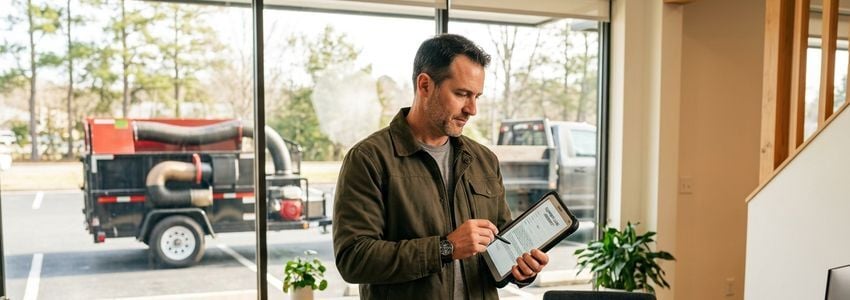
Pro Tip: Ask your lender whether seasonal or step payment structures are available. These allow lower payments during slow months and higher payments during peak leaf season, matching your financing cost to when the equipment is actually generating revenue.
Tips for Getting the Best Rate on Leaf Vacuum Financing
A few proactive steps can meaningfully improve the rate and terms you are offered.
1. Strengthen Your Personal Credit Before Applying
Pull your credit reports, dispute any errors, and pay down revolving balances below 30% of their limits before applying. Even a modest score improvement can unlock a better rate tier.
2. Gather Financial Documents in Advance
Have your last three to six months of bank statements, a vendor quote for the equipment, and your most recent tax return ready. Being prepared speeds up underwriting significantly.
3. Consider a Voluntary Down Payment
Even when 100% financing is available, offering 10-20% down reduces the lender's risk and can lead to a meaningfully lower rate over the life of the loan.
4. Time Your Application Before Peak Season
Apply in late summer, well before the fall rush, to avoid rushed decisions and give yourself time to compare offers from multiple lenders.
5. Work With a Lender Who Understands Seasonal Businesses
A lender familiar with landscaping cash flow cycles can structure payments that make sense for your business, rather than forcing a flat payment onto a seasonal revenue pattern.
Frequently Asked Questions
Don't Let Fall Season Catch You Unprepared
Secure your leaf vacuum financing now and have your equipment ready before the first leaves drop.
Apply Now →How to Get Started with Leaf Vacuum Financing
Getting your commercial leaf vacuum financed is a straightforward process. Follow these steps to move from application to a fully equipped crew.
Choose the leaf vacuum model that fits your crew's needs and get a written price quote from the dealer.
Fill out our simple one-page application online. It takes just a few minutes.
A financing advisor will present your approved terms and answer any questions before you sign.
Once signed, we fund the vendor directly so your equipment can be delivered and ready for the season.
Conclusion
A commercial leaf vacuum is one of the most impactful investments a landscaping business can make heading into fall season, turning a time-consuming task into an efficient, high-margin service line. The upfront cost, however, can strain the working capital most small landscaping companies rely on throughout the year. This is exactly the gap that commercial leaf vacuum financing is designed to fill, converting a large capital expense into a manageable monthly payment that the equipment itself can help cover through new revenue.
Whether you are a solo operator adding your first tow-behind unit or an established contractor bidding on a municipal truck-loader contract, there is a financing structure suited to your situation. From straightforward equipment loans and flexible leases to SBA-backed options for larger acquisitions, understanding these choices is the first step toward a smarter purchase decision.
At Crestmont Capital, we specialize in helping landscaping and grounds maintenance businesses secure the equipment financing they need, quickly and with terms that reflect the realities of seasonal cash flow. If you are ready to add commercial leaf vacuum capacity to your fleet, our team is ready to help you get there before the leaves start falling.
Start Your Application Today
Crestmont Capital makes commercial leaf vacuum financing fast, simple, and accessible. Apply now and get funded before fall season hits.
Apply Now →Disclaimer: The information provided in this article is for general educational purposes only and is not financial, legal, or tax advice. Funding terms, qualifications, and product availability may vary and are subject to change without notice. Crestmont Capital does not guarantee approval, rates, or specific outcomes. For personalized information about your business funding options, contact our team directly.