In This Article
- What Is Packaging Equipment Financing?
- Types of Packaging Equipment You Can Finance
- How Packaging Equipment Financing Works
- The Packaging Industry: By the Numbers
- Key Benefits of Financing Packaging Equipment
- How to Qualify for Packaging Equipment Financing
- Loan Types and Financing Options
- How Crestmont Capital Helps Packaging Businesses
- Real-World Scenarios: Packaging Businesses That Benefited
- Financing vs. Leasing vs. Buying Outright
- How to Apply for Packaging Equipment Financing
- Frequently Asked Questions
- How to Get Started
- Conclusion
What Is Packaging Equipment Financing?
Packaging equipment financing is a type of business loan or lease specifically designed for the acquisition of machinery used in packaging processes. Unlike a traditional loan where you receive a lump sum of cash to use as you see fit, this financing is tied directly to the equipment you are purchasing. The core principle is straightforward: a lender provides the capital needed to buy the equipment, and in return, you make regular payments over a set term. The most significant feature of this financing structure is that the equipment itself typically serves as collateral for the loan. This is known as a self-collateralized or asset-based loan. Because the lender has a tangible asset securing the funds, the risk is lower compared to an unsecured loan. This often translates into more favorable terms for the borrower, including higher approval rates, more competitive interest rates, and less stringent requirements for additional collateral like real estate or personal assets. This financial product is tailored for businesses across a wide range of industries, including:- Food and beverage production
- Pharmaceutical and medical device manufacturing
- Consumer packaged goods (CPG)
- Third-party logistics (3PL) and fulfillment centers
- E-commerce and direct-to-consumer brands
- Contract packaging (co-packing) services
- Chemical and industrial goods manufacturing
Types of Packaging Equipment You Can Finance
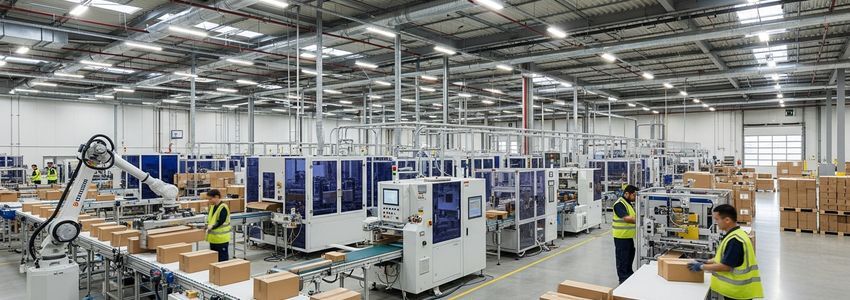
The scope of machinery eligible for packaging equipment financing is vast, covering nearly every component of a modern packaging line. Whether you need a single machine or a fully integrated, automated system, financing can make it possible. Lenders who specialize in this area understand the value and longevity of this type of industrial hardware, making them willing to fund a diverse array of assets. Here are some of the most common types of equipment businesses finance:Primary Packaging Machines
These machines are involved in the first layer of product containment.- Fillers and Depositors: Machines for accurately dispensing liquid, powder, or solid products into containers (e.g., auger fillers, piston fillers, volumetric fillers).
- Form, Fill, and Seal (FFS) Machines: Automated systems that create the package, fill it with product, and seal it in one continuous motion.
- Cappers and Sealers: Equipment for applying caps, lids, or seals to bottles, jars, and other containers.
- Blister and Clamshell Packers: Used for creating secure, transparent packaging common in pharmaceuticals and retail goods.
- Shrink Wrap Machine Financing: This includes L-bar sealers, shrink tunnels, and sleeve wrappers used to apply a tight polymer film over products.
- Baggers and Pouchers: Automated machines that fill and seal pre-made bags or create pouches from a roll of film.
Secondary and Tertiary Packaging Equipment
This equipment handles the grouping, boxing, and palletizing of primary packages.- Cartoners and Case Erectors: Machines that automatically form cartons or shipping boxes from flat blanks.
- Case Packers and Sealers: Systems that load products into cases and then seal them with tape or glue.
- Labeling and Coding Machines: Equipment for applying labels, printing batch codes, expiration dates, and barcodes.
- Palletizers and Depalletizers: Robotic or mechanical systems that stack cases onto pallets for shipping or unload them.
- Stretch Wrappers: Machines that wrap pallets with stretch film to secure the load for transit.
Material Handling and Conveying Systems
These are the arteries of the packaging line, moving products between stations.- Conveyor System Financing: This is a popular category that includes belt conveyors, roller conveyors, chain conveyors, and accumulation tables. A complete packaging line financing package often includes extensive conveyor systems.
- Robotics and Automation: Pick-and-place robots, automated guided vehicles (AGVs), and other robotic systems that improve efficiency and reduce manual labor.
- Inspection and Quality Control Systems: Checkweighers, metal detectors, X-ray inspection systems, and vision systems that ensure product safety and quality.
How Packaging Equipment Financing Works
The process of securing packaging equipment financing is designed to be more streamlined and faster than traditional bank loans. Lenders like Crestmont Capital who specialize in equipment financing have refined their processes to meet the urgent needs of business owners. Here is a general breakdown of the steps involved:1. Application and Documentation
The journey begins with a simple application. Most modern lenders offer online applications that can be completed in minutes. You will need to provide basic information about your business, such as its legal name, address, tax ID number (EIN), time in business, and annual revenue. You will also need to provide details about the equipment you wish to purchase, including a quote or invoice from the vendor. For smaller financing amounts (typically under $250,000), this may be all that is required. For larger requests, the lender might ask for additional documentation like bank statements, financial statements, or tax returns.2. Credit Review and Approval
Once your application is submitted, the lender's underwriting team will review your file. They assess your business's credit history, financial health, and the value of the equipment being financed. Because the equipment itself acts as collateral, the credit requirements are often more flexible than for unsecured loans. Lenders specializing in this field can often provide a credit decision within hours, a stark contrast to the weeks or months it can take with a traditional bank.3. Structuring the Agreement
Upon approval, the lender will present you with one or more financing offers. These will outline the key terms:- Loan Amount: The total capital being provided, which can often cover 100% of the equipment cost, plus soft costs like taxes, shipping, and installation.
- Term Length: The duration of the loan, typically ranging from 24 to 84 months (2 to 7 years). Longer terms result in lower monthly payments, while shorter terms mean you pay less interest overall.
- Interest Rate: The cost of borrowing, expressed as a percentage. This can be a fixed or variable rate, though fixed rates are more common for equipment financing, providing payment predictability.
- Payment Schedule: Most commonly, this will be a monthly payment, but some lenders offer flexible options like seasonal or deferred payments to match a business's cash flow cycles.
4. Funding and Acquisition
After you review and sign the financing documents, the process moves quickly. The lender will coordinate directly with the equipment vendor. They will pay the vendor the full invoice amount, and the vendor will then release the equipment for shipment and installation at your facility. This direct-funding process is efficient and removes the hassle of you having to manage the payment transfer yourself. Once the equipment is delivered and installed, your repayment term begins as scheduled.Ready to Finance Your Packaging Equipment?
Get fast, flexible equipment financing from the #1 business lender in the U.S. Apply in minutes - no obligation.
Apply in MinutesThe Packaging Industry: By the Numbers
The decision to invest in packaging equipment is backed by a robust and growing market. The industry's size and reliance on technology underscore the importance of strategic financing. Here are some key statistics that paint a picture of the landscape:$1.2 Trillion+
Projected global packaging market size, highlighting massive industry scale and demand.
73%
of U.S. manufacturers utilize financing or leasing to acquire equipment, preserving capital for other needs.
24 Hours
Typical approval times from specialized lenders, enabling rapid equipment acquisition.
Up to $5M
in equipment financing available for qualified businesses, covering entire packaging lines.
Key Benefits of Financing Packaging Equipment
Choosing to finance your packaging machinery offers a multitude of strategic advantages that go far beyond simply acquiring the asset. These benefits impact your cash flow, tax liability, and overall operational agility.1. Preservation of Working Capital
This is perhaps the most significant advantage. A complete packaging line can cost hundreds of thousands, if not millions, of dollars. Paying cash for such an asset can drain your liquidity, leaving little room for other critical business expenses like payroll, marketing, inventory, or unexpected opportunities. Financing converts a massive capital expenditure into a manageable monthly operating expense, keeping your cash free to fuel growth.2. 100% Financing and Soft Cost Inclusion
Many equipment financing agreements can cover the entire cost of the acquisition. This includes not only the price of the machinery but also "soft costs" associated with it. These can include:- Sales tax
- Shipping and freight charges
- Installation and setup fees
- Training for your staff
3. Potential Tax Advantages
Financing equipment can offer substantial tax benefits. Under Section 179 of the IRS tax code, businesses may be able to deduct the full purchase price of qualifying new or used equipment in the year it is placed into service. This can significantly lower your taxable income. Additionally, bonus depreciation rules may allow for further accelerated depreciation. An Equipment Finance Agreement (EFA) or a $1 Buyout Lease typically allows you to take full advantage of these deductions. It is always wise to consult with a tax professional to understand how these benefits apply to your specific situation.4. Access to a Competitive Edge
In a competitive market, having the latest technology can be a game-changer. Modern packaging equipment offers higher speeds, greater accuracy, improved reliability, and enhanced automation. This leads to increased throughput, reduced labor costs, and higher quality products. Financing makes this cutting-edge technology accessible, allowing you to compete with larger players without the prohibitive upfront cost. You can meet evolving consumer demands for sustainable packaging, intricate designs, and faster delivery times.5. Predictable Budgeting and Fixed Payments
Most equipment financing comes with a fixed interest rate and a fixed monthly payment. This predictability is a major asset for financial planning and budgeting. You know exactly what your equipment will cost each month for the entire term of the loan, eliminating surprises and allowing for more accurate cash flow forecasting. This stability is invaluable compared to the volatility of a business line of credit with a variable interest rate.6. Building Business Credit
Successfully managing and paying off an equipment loan is a positive mark on your business credit report. By making timely payments, you build a strong credit history, which can make it easier and more affordable to secure other types of small business financing in the future.How to Qualify for Packaging Equipment Financing
While equipment financing is generally more accessible than other types of business loans, lenders still have qualification criteria to assess risk. The specific requirements can vary between lenders, but they typically evaluate a few key areas of your business.1. Time in Business
Most lenders prefer to work with established businesses. The standard minimum is often two years in operation. This history provides a track record of revenue and financial management. However, some specialized lenders, including Crestmont Capital, have programs for newer businesses and startups, especially if the owner has strong personal credit and industry experience.2. Business and Personal Credit Score
Lenders will review both your business credit profile and the personal credit scores of the owners. A strong credit history demonstrates reliability and a lower risk of default. While a high score (700+) will secure the best rates and terms, financing is often available for businesses with fair or average credit (scores in the 600s). The self-collateralizing nature of the loan provides security that makes lenders more flexible on credit scores.3. Annual Revenue
Your business's annual revenue is a key indicator of its ability to handle new debt. Lenders want to see a steady and sufficient stream of income to comfortably cover the new monthly loan payment. A common minimum revenue threshold might be $150,000 to $250,000 per year, but this can vary widely depending on the loan amount and the lender.4. Financial Health and Cash Flow
For larger financing requests, lenders will likely ask for recent bank statements. They will analyze these to assess your average daily balance, cash flow patterns, and overall financial stability. They are looking for signs of a healthy business that is not consistently running low on cash or experiencing frequent overdrafts.5. The Equipment Itself
The type, age, and expected lifespan of the packaging equipment also play a role. New equipment from a reputable manufacturer is considered lower risk than older, specialized, or used machinery. The lender evaluates the asset's resale value, as it serves as their collateral if the loan defaults.Pro Tip: Get Pre-Approved
Before you start seriously shopping for equipment, consider getting pre-approved for financing. A pre-approval gives you a clear understanding of your budget and strengthens your negotiating position with vendors, as you can act like a cash buyer.
Loan Types and Financing Options
When you seek packaging equipment financing, you will encounter several different product structures. Understanding the nuances of each will help you select the option that best aligns with your business goals.1. Equipment Finance Agreement (EFA)
An EFA is a straightforward loan for the purchase of equipment. You are the owner of the equipment from day one, and the lender places a lien on it as collateral. You make regular principal and interest payments over the agreed-upon term. At the end of the term, once the final payment is made, the lender releases the lien, and you own the equipment free and clear. This is a popular choice for businesses that intend to use the machinery for its entire useful life and want to claim ownership and depreciation benefits immediately.2. $1 Buyout Lease (Capital Lease)
Functionally very similar to an EFA, a $1 Buyout Lease is structured as a lease for accounting and legal purposes, but it is designed for ownership. You make regular lease payments throughout the term, and at the end, you have the option to purchase the equipment for a nominal amount, typically $1. Because ownership is virtually guaranteed, the IRS generally treats this like a purchase, allowing you to take advantage of Section 179 and depreciation deductions. This is an excellent option for long-term asset acquisition.3. Fair Market Value (FMV) Lease (Operating Lease)
An FMV lease is a true rental agreement. You pay to use the equipment for a set period, and your monthly payments are typically lower than with a financing agreement because you are only paying for the depreciation of the asset during the lease term, not its full value. At the end of the term, you have several options:- Return the equipment to the lender.
- Purchase the equipment for its fair market value at that time.
- Renew the lease for another term.
4. Term Loans
While not exclusively for equipment, a standard business term loan can be used to purchase machinery. With a term loan, you receive a lump sum of cash that you repay over a fixed period. These can be secured or unsecured. If used for equipment, the terms might be less favorable than a dedicated equipment loan unless you have very strong business financials, as the loan is not inherently collateralized by the asset.How Crestmont Capital Helps Packaging Businesses
Navigating the world of financing can be complex, but partnering with a specialist lender like Crestmont Capital simplifies the process and unlocks significant advantages. We understand the unique challenges and opportunities within the packaging and manufacturing industries. Our expertise is not just in finance; it is in understanding the value and operational impact of the assets you need to acquire. Here is how we support businesses like yours:- Industry Specialization: We have extensive experience financing industrial packaging equipment, from single shrink wrap machines to entire conveyor systems. We know the manufacturers, the technology, and the asset values, which allows us to underwrite loans more intelligently and offer more competitive terms.
- Speed and Efficiency: Our streamlined online application and rapid approval process mean you can get a credit decision in hours, not weeks. We can fund your purchase in as little as 24 hours after documentation is complete, ensuring you can acquire your equipment without costly delays.
- Flexible and Customized Solutions: We are not a one-size-fits-all lender. We work with you to structure a financing plan that fits your budget and cash flow. This includes flexible term lengths (up to 84 months), deferred payment options, and seasonal payment plans for businesses with fluctuating revenue.
- High Approval Rates: Because we focus on asset-based lending, we can approve a wider range of businesses than traditional banks. We look beyond just a credit score, taking a holistic view of your business's health and the value of the equipment.
- Dedicated Financing Experts: When you work with Crestmont Capital, you are assigned a dedicated account executive who will guide you through the entire process, from application to funding. They are your single point of contact, ready to answer questions and ensure a smooth experience.
Upgrade Your Packaging Line Today
Crestmont Capital specializes in equipment financing for manufacturers and packaging businesses. See what you qualify for.
Get a Free QuoteReal-World Scenarios: Packaging Businesses That Benefited
To better understand the practical impact of packaging equipment financing, let's explore a few hypothetical but realistic scenarios.Scenario 1: The Growing Craft Brewery
A regional craft brewery has seen demand for its canned beer skyrocket. Their manual canning and packing process is creating a bottleneck, limiting production to 50 cases per hour and requiring significant labor. To meet demand from a new grocery store chain, they need to upgrade to an automated canning and cartoning line that can handle 200 cases per hour.- Challenge: The new system costs $350,000, a sum the brewery does not have available in cash.
- Solution: They secure a 7-year equipment finance agreement. This allows them to acquire the entire line with no money down.
- Outcome: The new line quadruples their output, reduces labor costs by 60%, and improves product consistency. The increased revenue and cost savings from the new line easily cover the monthly financing payment, generating significant new profit for the business.
Scenario 2: The E-commerce Fulfillment Center
A third-party logistics (3PL) company specializing in e-commerce fulfillment is struggling to keep up during peak season. Their manual box-taping and labeling process is slow and prone to errors. They want to invest in an automated case erector, a case sealer, and a print-and-apply labeling system.- Challenge: The total cost of the equipment is $125,000. While they could pay cash, it would deplete their reserves right before the holiday rush when they need capital for seasonal hiring.
- Solution: The company opts for a 5-year, $1 buyout lease for the equipment. This keeps their cash on hand for operational needs.
- Outcome: The automated system increases their order processing speed by 300%, improves shipping accuracy, and reduces material waste. They can now handle higher order volumes without hiring as many temporary workers, leading to a more profitable peak season. They also benefit from the Section 179 tax deduction on the full equipment cost.
Scenario 3: The Food Co-Packer
A contract packer for snack foods needs to add a new vertical form-fill-seal (VFFS) machine to serve a new client. The technology in this space evolves rapidly, and they are concerned about the machine becoming obsolete in a few years.- Challenge: The VFFS machine costs $180,000. They want to avoid being locked into owning an aging asset.
- Solution: They choose a 3-year Fair Market Value (FMV) lease. The monthly payments are significantly lower than a purchase loan.
- Outcome: The co-packer gets the state-of-the-art machine they need to win the new contract. At the end of the three-year term, they can simply return the machine and lease a newer, faster model, ensuring they always have the best technology to offer their clients. This flexibility is a key competitive advantage in the co-packing industry.
Financing vs. Leasing vs. Buying Outright
Deciding how to acquire your next piece of packaging equipment involves weighing the pros and cons of three primary methods: financing it with a loan or capital lease, leasing it with an operating lease, or buying it with cash. The right choice depends on your company's financial situation, long-term goals, and relationship with technology.| Feature | Equipment Financing (EFA / $1 Buyout) | Equipment Leasing (FMV Lease) | Buying with Cash |
|---|---|---|---|
| Ownership | You own the equipment at the end of the term. | Lender retains ownership. You have the option to buy, return, or renew. | You own the equipment immediately. |
| Upfront Cost | Low to none. Often 100% financing is available. | Low. Typically first and last month's payment. | Very high. 100% of the equipment cost plus soft costs. |
| Monthly Payments | Higher than an FMV lease, as you are paying off the full value. | Lower than financing, as you are only paying for depreciation. | None. |
| Tax Implications | Can take advantage of Section 179 and depreciation deductions. | Lease payments are typically treated as a direct operating expense. | Can take advantage of Section 179 and depreciation deductions. |
| Balance Sheet Impact | Asset and liability are recorded on the balance sheet. | Typically kept off the balance sheet (off-balance-sheet financing). | Asset is recorded on the balance sheet; cash is reduced. |
| Flexibility | Less flexible. You are committed to owning the asset. | Highly flexible. Easy to upgrade to new technology at the end of the term. | Inflexible. You are responsible for selling or disposing of the old asset. |
| Best For | Businesses planning to use the equipment for its full lifespan and build equity. | Businesses that need the latest technology and want lower monthly payments. | Highly capitalized businesses that can afford to reduce liquidity. |
How to Finance Your Packaging Equipment in 4 Steps
Apply Online
Complete a simple online application in minutes. Provide basic business details and information about the equipment you want to purchase.
Get Approved
Receive a credit decision, often within a few hours. Review your customized financing terms and options with a dedicated expert.
Sign Documents
Once you accept the offer, sign the financing documents electronically. The process is fast, secure, and convenient.
Receive Equipment
We pay the vendor directly. Your new equipment is shipped and installed, and you begin making your scheduled payments.
How to Apply for Packaging Equipment Financing
Applying for financing has never been easier. With lenders like Crestmont Capital, the process is designed for speed and convenience. Here is what you should prepare to ensure a smooth application.1. Gather Your Information
Before you start the application, have the following details on hand:- Business Information: Legal business name, DBA (if any), address, phone number, and Federal Tax ID (EIN).
- Ownership Information: Names, contact information, and social security numbers for all owners with 20% or more equity.
- Financial Snapshot: Your estimated annual revenue and time in business.
- Equipment Details: A formal quote or invoice from your chosen vendor. This should include the make, model, condition (new or used), and total cost of the equipment, including any soft costs.
2. Complete the Application
The most efficient way to apply is through the lender's secure online portal. Our Apply Now page takes just a few minutes to complete. Be sure to fill out all fields accurately to avoid delays.3. Submit Supporting Documents (if required)
For most application-only programs (typically up to $250,000), a quote is all you will need. For larger requests, be prepared to provide:- The last 3-6 months of business bank statements.
- Your most recent business tax return.
- A year-to-date profit and loss statement and balance sheet.
4. Speak with Your Financing Advisor
Once your application is reviewed, a financing advisor will contact you to discuss your approval and the available options. This is your opportunity to ask questions, clarify terms, and ensure the financing structure aligns with your goals. A good advisor will help you understand the differences between an EFA and a lease and recommend the best path forward for your business.A Note on Vendor Choice
You are free to choose your equipment from any reputable vendor, dealer, or even a private seller. The lender's primary concern is that the equipment is valued correctly and is in good working order. This freedom allows you to find the best machine at the best price.
Frequently Asked Questions
What is packaging equipment financing?
What types of packaging equipment can I finance?
How much can I borrow for packaging equipment?
What are typical interest rates for packaging equipment loans?
How long does the approval process take?
Do I need good credit to finance packaging equipment?
Can I finance used packaging equipment?
What is the difference between equipment financing and equipment leasing?
Can startups qualify for packaging equipment financing?
What documents do I need to apply?
Can I finance 100% of the equipment cost?
How are monthly payments calculated?
What happens at the end of a lease term?
Are there prepayment penalties?
Why choose Crestmont Capital for packaging equipment financing?
How to Get Started
Taking the next step toward acquiring the packaging equipment your business needs is simple and straightforward. By following this plan, you can move from planning to production efficiently.- Identify Your Equipment Needs: Work with your operations team to pinpoint the exact machinery that will solve your production bottlenecks and help you achieve your growth goals. Obtain a detailed quote from a reputable vendor.
- Assess Your Financials: Review your recent revenue and cash flow to determine a comfortable monthly payment for your budget. This will help you decide on an appropriate loan term.
- Complete a Quick Application: Fill out our secure online application. It takes only a few minutes and requires no commitment. This will allow us to provide you with a clear picture of your financing options.
- Consult with an Expert: Once you apply, a Crestmont Capital financing expert will reach out to discuss your application, answer your questions, and present you with tailored financing solutions.
- Secure Your Future: With financing in place, you can confidently purchase your new equipment, enhance your operational capacity, and drive your business forward.
Don't Let Equipment Costs Hold You Back
Fast approvals, competitive rates, and flexible terms - designed for businesses like yours.
See Your OptionsConclusion
In today's competitive business environment, operational efficiency is paramount. For any company involved in producing, packaging, or distributing goods, the right equipment is not a luxury; it is a fundamental necessity for growth and profitability. However, the high cost of industrial packaging machinery can present a formidable barrier, tying up capital that is vital for other areas of the business. Packaging equipment financing provides a powerful and strategic solution to this challenge. It transforms a prohibitive capital expense into a manageable operational one, enabling businesses to acquire the latest technology while preserving precious cash flow. From tax advantages and 100% financing to improved productivity and a stronger competitive position, the benefits are clear and substantial. By partnering with a knowledgeable and efficient lender like Crestmont Capital, you can navigate the financing process with confidence. We are committed to providing the flexible, fast, and transparent funding solutions that packaging businesses need to scale their operations, meet market demands, and achieve their long-term goals. Investing in your packaging line is an investment in your company's future, and with the right financing partner, that future is more accessible than ever.Disclaimer: The information provided in this article is for general educational purposes only and is not financial, legal, or tax advice. Funding terms, qualifications, and product availability may vary and are subject to change without notice. Crestmont Capital does not guarantee approval, rates, or specific outcomes. For personalized information about your business funding options, contact our team directly.

Allan Garfinkle
Allan Garfinkle is the Chief Revenue Officer at Crestmont Capital, where he has spent more than a decade leading revenue strategy, business development, and operational growth. With 28 years of experience building and advising startups and small businesses, Allan has helped more than 10,000 business owners navigate financing decisions, growth opportunities, and changing economic conditions. He earned a Bachelor of Science in Economics and an MBA with a concentration in Finance from Northeastern University, as well as a Juris Doctor from New England Law, where his studies focused on contracts and business law. His writing draws on extensive practical experience in small-business lending, equipment financing, business credit, and commercial finance.