

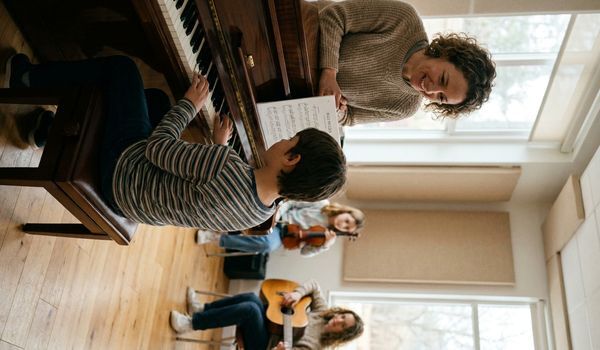
The latest music school statistics paint a clear picture: private music education in the United States is a resilient, steadily growing industry with strong demand from families, adult learners, and schools alike. Whether you already run a music school, teach private lessons, or are evaluating the market before opening your first location, understanding the numbers behind this industry helps you make smarter decisions about pricing, staffing, marketing, and expansion.
This guide compiles the most important music school statistics for 2026, covering market size, enrollment trends, tuition benchmarks, revenue data, and the financing options owners use to fund growth. Every figure is drawn from industry research, government data, and market reports so you can benchmark your school against the broader market with confidence.
If you are researching the business side of music education, this is the data roundup to bookmark. For a deeper look at funding specifically, see our complete guide to music school business loans after you finish the statistics below.
In This Article
- The Music School Industry at a Glance
- Key Music School Statistics for 2026
- Market Size and Growth Trends
- Enrollment and Student Demographics
- Tuition and Lesson Pricing Statistics
- Revenue and Profitability Benchmarks
- Music Teacher Supply and Staffing Trends
- How Owners Can Put This Data to Work
- Funding Options for Music School Growth
- How Crestmont Capital Helps Music Schools
- Real-World Scenarios
- Frequently Asked Questions
The Music School Industry at a Glance
Music schools sit at the intersection of education, retail, and the performing arts. The industry includes dedicated private music academies, franchise brands with dozens or hundreds of locations, lesson studios embedded inside instrument retailers, community music schools, and a fast-growing layer of online instruction platforms. Together, these providers serve millions of students every week, from four-year-olds in their first piano class to retirees picking up the guitar for the first time.
The U.S. Census Bureau tracks this sector under the fine arts schools category, which includes thousands of establishments offering private, non-degree instruction in music, dance, drama, and visual arts. Music instruction represents the largest share of that category, and industry analysts estimate that dedicated private music classes generate roughly $725 million to $750 million in annual revenue. When lessons offered inside music retail chains are included, the total private lesson market approaches $1.9 billion per year.
The broader fine arts schools industry, which gives useful context for the music segment, is estimated at $7.8 billion to $9.8 billion in annual revenue with a five-year compound annual growth rate near 4.3 percent. That growth has been remarkably steady, driven by consistent parental spending on enrichment activities, rising adult participation, and the expansion of franchise models into suburban markets.
Key Stat: Industry surveys consistently find that roughly half of U.S. households include at least one person who plays a musical instrument. That deep base of participation is the demand engine behind the private music instruction market.
Ownership structure in this industry is unusually fragmented. More than 70,000 independent music teachers operate across the country, and around 20,000 of them hold membership in the Music Teachers National Association. Alongside these solo operators, franchise brands have scaled aggressively: School of Rock operates well over 280 locations worldwide, Music and Arts runs more than 200 retail and lesson centers, and newer concepts like Bach to Rock and Musicologie continue to sign multi-unit franchise agreements across dozens of states.
This fragmentation matters for anyone studying music education statistics. Unlike public school music programs, which depend on district budgets, private music schools respond directly to consumer demand. That makes the industry's data a real-time read on how American families prioritize spending on their children's development and their own hobbies.
Key Music School Statistics for 2026
Before diving into each category, here is a snapshot of the headline numbers defining the industry this year. These figures combine government data, industry association research, and market analyst estimates, and each one is explored in more depth in the sections that follow.
- The private music lesson market in the United States generates approximately $1.9 billion annually when retail-based lesson programs are included.
- Dedicated music instruction studios account for roughly $725 million to $750 million of that total.
- The broader fine arts schools industry produces between $7.8 billion and $9.8 billion in annual revenue.
- The global online music education market is valued between $2.6 billion and $4.6 billion and is growing at 14 to 17 percent per year.
- North America holds the largest regional share of digital music education revenue at roughly 34 to 38 percent.
- More than 70,000 independent music teachers operate in the United States.
- The average private music lesson costs between $30 and $60 per half hour, with hourly rates of $50 to $100 common in major metro areas.
- Students in high-quality school music programs score an average of 22 percent higher in English and 20 percent higher in math on standardized tests, according to arts education research compiled from College Board data.
Each of these numbers tells part of the story. The sections below break down what they mean for school owners, investors, and anyone planning to enter the market.
Market Size and Growth Trends
The music school market has proven durable across economic cycles. During recessions, parents tend to cut discretionary spending last when it comes to their children's education, and music lessons benefit from that priority ranking. The result is an industry that rarely contracts sharply and instead grows in the low-to-mid single digits most years.
Analysts tracking the fine arts schools category report a five-year compound annual growth rate of approximately 4.3 percent. Applied to the music segment specifically, that implies the dedicated instruction market has added well over $100 million in annual revenue over the past five years. Growth is not evenly distributed, however. Suburban markets with high household incomes and strong school district reputations consistently outperform, and franchise operators have concentrated their expansion in exactly those zip codes.
The fastest-growing slice of the market is online instruction. Valued between $2.6 billion and $4.6 billion globally, online music education is expanding at a compound rate of 14 to 17 percent, roughly three to four times faster than in-person instruction. North America accounts for the largest share of that digital revenue. For brick-and-mortar schools, this trend is less a threat than a forcing function: the most successful operators now run hybrid models, using video lessons to fill teacher schedule gaps, serve students who move away, and reach households outside their driving radius.
Higher education provides another useful reference point. Music business and performance degrees sit inside a global industry worth roughly $4.2 billion, with North America representing about 38.5 percent of revenue. Tuition for in-state public university music programs averages around $7,900 per year, while private conservatories frequently exceed $40,000 annually. The willingness of families to invest at those levels signals the perceived value of serious music training, which cascades down into the private K-12 lesson market.
By the Numbers
Music School Industry - Key Statistics for 2026
$1.9B
Total U.S. private music lesson market, including retail-based lesson studios
70,000+
Independent music teachers operating across the United States
4.3%
Five-year compound annual growth rate for the fine arts schools industry
14-17%
Projected annual growth rate of the global online music education market
Looking ahead, most analysts expect the in-person segment to keep growing at 3 to 5 percent annually while online and hybrid models grow two to three times faster. Schools that build digital capacity now are positioning themselves to capture both curves. Government resources can help with that planning: the SBA market research guide walks owners through sizing their local market, and the Census Bureau Annual Business Survey publishes establishment-level data for the education services sector that can be filtered to your metro area.
Enrollment and Student Demographics
Enrollment patterns reveal who actually pays for music education, and the answer is broader than the stereotype of the eight-year-old piano student. Children ages 6 to 14 remain the core market, typically representing 55 to 65 percent of a community music school's roster. Within that band, enrollment peaks between ages 7 and 11, when parents are most likely to enroll children in structured enrichment activities.
The fastest-growing demographic segment is adults. Many schools report that adult students now make up 15 to 25 percent of enrollment, up from single digits a decade ago. Adults bring several advantages: they self-select into lessons, practice more consistently, rarely quit over scheduling conflicts with sports, and often pay premium rates for flexible scheduling. Schools that once ignored this segment now run dedicated adult programs, including daytime slots for retirees and evening group classes for working professionals.
Instrument preferences among new students have remained stable for years. Piano and keyboard instruments attract the largest share of beginners, typically 30 to 35 percent of new enrollments, followed by guitar at roughly 25 percent, voice at 15 to 20 percent, and violin and drums splitting most of the remainder. Ukulele has carved out a small but loyal niche as a low-cost entry instrument, and band instrument rentals spike predictably each fall as school band programs launch.
Key Stat: A University of British Columbia study of more than 112,000 students found that those engaged in instrumental music performed significantly better in English, math, and science, with the most involved students running about one academic year ahead of their non-musical peers. Research like this is a powerful enrollment marketing asset for private schools.
Retention is the quiet statistic that determines whether a music school thrives. Well-run schools retain 70 to 85 percent of students year over year, while poorly managed operations churn through half their roster annually. Because acquiring a new student costs five to seven times more than keeping an existing one, even a five-point improvement in retention flows directly to the bottom line. The schools with the best retention share common traits: consistent teacher assignments, regular performance opportunities, progress tracking that parents can see, and flexible makeup-lesson policies.
Seasonality is real but manageable. Enrollment peaks in late August through October as families set fall schedules, dips modestly in January, and softens in summer when vacations interrupt routines. Schools counter summer attrition with camps, workshops, and intensive programs, which also generate premium revenue. A typical school might lose 10 to 20 percent of its roster over summer without intervention but hold losses under 5 percent with a well-promoted summer program.
Ready to Grow Your Music School?
Get fast, flexible financing from the #1 business lender in the U.S. No obligation - apply in minutes.
Apply Now →Tuition and Lesson Pricing Statistics
Pricing is where music school statistics get immediately practical. The national average for a private half-hour lesson sits between $30 and $60, with most suburban markets clustering around $35 to $45. Full-hour lessons typically run $50 to $100, and rates in high-cost metros like New York, San Francisco, and Boston regularly exceed those bands by 20 to 40 percent.
Most schools have moved away from per-lesson billing toward monthly tuition subscriptions. The standard model charges a flat monthly fee, usually $120 to $180, covering four weekly half-hour lessons per month. This structure stabilizes cash flow, reduces administrative work, and improves retention because families budget for lessons the same way they budget for a gym membership. Annual registration fees of $25 to $75 and recital fees of $30 to $100 per event add modest but meaningful auxiliary revenue.
Group instruction offers a different pricing math. Group classes for beginners, typically four to eight students, price at $15 to $40 per student per session. A single teacher running a six-student group class at $25 per head generates $150 per hour, two to three times what the same hour produces in private lessons. That margin advantage explains why franchise systems build their early-level curriculum around group formats before feeding students into private instruction.
| Lesson Format | Typical Price Range | Revenue per Teaching Hour | Best Use Case |
|---|---|---|---|
| Private 30-minute lesson | $30 - $60 | $60 - $120 | Intermediate and advanced students |
| Private 60-minute lesson | $50 - $100 | $50 - $100 | Serious students, audition prep, adults |
| Group class (4-8 students) | $15 - $40 per student | $60 - $320 | Beginners, ensembles, adult social classes |
| Online private lesson | $25 - $50 | $50 - $100 | Geographic expansion, schedule gaps |
| Summer camp (per week) | $200 - $500 per student | Varies by group size | Summer revenue stabilization |
Discount strategy deserves care. Sibling discounts of 5 to 10 percent are standard and help lock in entire households. Deep discounting to fill schedule holes, by contrast, tends to attract price-sensitive families with the highest churn. The data consistently shows that schools competing on value, teacher quality, and community outperform schools competing on price over any multi-year horizon.
One pricing trend worth watching: bundled memberships that combine lessons, practice app subscriptions, instrument rental, and performance opportunities into a single monthly fee. Early adopters report higher lifetime value per student because bundles raise switching costs and deepen the family's relationship with the school.
Revenue and Profitability Benchmarks
How much can a music school actually earn? The range is wide, but the benchmarks are instructive. A solo teacher operating a home studio typically generates $40,000 to $80,000 per year. A small commercial school with two to four teachers and 80 to 150 enrolled students generally produces $150,000 to $400,000 in annual revenue. Mid-size schools with 300 to 500 students commonly reach $600,000 to $1.5 million, and top-performing franchise locations exceed $1 million annually, with a handful of flagship School of Rock locations reported well above that mark.
Revenue per student is the metric that ties these tiers together. With monthly tuition averaging $120 to $180, an enrolled student represents roughly $1,500 to $2,200 per year in lesson revenue alone. Add registration fees, recital fees, camps, and merchandise, and a fully engaged student can be worth $2,000 to $3,000 annually. Schools that track revenue per student religiously spot pricing leaks and under-enrolled programs faster than those watching only top-line numbers.
On the cost side, instructor compensation is the dominant expense, typically consuming 45 to 60 percent of revenue. Rent runs 10 to 20 percent depending on market, with second-generation retail or office space offering the best value for most schools. Marketing absorbs 5 to 10 percent, and administrative software, insurance, utilities, and supplies take most of the remainder. Well-managed schools land at net margins of 10 to 20 percent; exceptional operators with strong group-class revenue and tight payroll control push toward 25 percent.
The Census Bureau's business survey data confirms what operators already know: education services businesses with paid employees skew small, and the majority of fine arts schools employ fewer than ten people. Scale advantages in this industry are modest, which keeps the door open for independent owners even as franchises expand.
Music Teacher Supply and Staffing Trends
Labor is the industry's binding constraint. With more than 70,000 independent teachers nationwide, supply sounds abundant, but schools compete for a much smaller pool: teachers willing to work afternoon and evening peak hours, consistent five-day schedules, and someone else's curriculum. The result is a structural shortage of reliable instructors in most metro areas, particularly for high-demand instruments like piano, voice, and violin.
Compensation benchmarks help explain the tension. Independent teachers commonly charge $50 to $100 per hour, while schools typically pay staff instructors $25 to $45 per teaching hour. The gap between what the market will bear and what school economics allow is why many schools recruit early-career teachers, graduate students, and working musicians who value steady income over maximum hourly rates. Schools that offer health benefits, paid planning time, or guaranteed minimum hours differentiate themselves quickly in hiring.
Turnover is expensive in both directions. When a teacher leaves, schools typically lose 20 to 40 percent of that teacher's students within two billing cycles. That math makes teacher retention as important as student retention, and it explains why signing bonuses, retention bonuses, and clear advancement paths have become common at larger schools and franchise locations.
Certification trends are also shifting hiring. While a music degree remains the baseline credential, schools increasingly value teachers with early-childhood education training, experience with neurodivergent learners, and comfort teaching over video. The teachers commanding the highest compensation in 2026 combine strong pedagogy with the ability to retain students, because every school owner has learned that a beloved teacher is worth more than a credentialed one.
How Music School Owners Can Put This Data to Work
Statistics only matter if they change decisions. Here is how successful owners apply these numbers in practice.
Benchmark your tuition annually. If your half-hour rate has sat at $32 for three years while the market average climbed toward $45, you are leaving thousands of dollars per year on the table. Modest annual increases of 3 to 5 percent, communicated clearly and paired with visible program improvements, rarely trigger meaningful attrition.
Track revenue per student, not just headcount. A school with 200 students averaging $1,400 per year is weaker than a school with 160 students averaging $2,400. Adding camps, group classes, instrument rentals, and retail add-ons lifts per-student revenue without the marketing cost of new enrollment.
Watch retention like a hawk. Measure rolling 90-day and 12-month retention by teacher, by instrument, and by program. The data will surface problems, such as a specific teacher losing students or a specific program churning, months before those problems show up in revenue.
Size expansion with real market data. Before signing a lease on a second location, work through local demographics: households with children, median income, competitor count within a 15-minute drive, and school district arts funding. The SBA's market research framework and Census data make this analysis accessible to any owner willing to spend a weekend on it.
Pitch with data when raising capital. Lenders and landlords respond to numbers. An owner who can cite industry growth rates, local market statistics, and school-level retention and margin data presents a fundamentally stronger case than one asking for trust. That credibility is often the difference between approval and rejection.
Funding Options for Music School Growth
Whether the plan is a second location, a build-out of lesson studios, a fleet of rental instruments, or a marketing push into a new suburb, growth requires capital. Music schools typically choose among five funding structures, each with distinct tradeoffs.
| Funding Type | Typical Amounts | Speed | Best For |
|---|---|---|---|
| Term loan | $25K - $500K+ | Days to weeks | Build-outs, second locations, acquisitions |
| Business line of credit | $10K - $250K revolving | Days | Summer cash-flow gaps, payroll timing |
| Equipment financing | $5K - $250K | Days | Pianos, instruments, sound systems, studio gear |
| SBA loan | $50K - $5M | Weeks to months | Real estate, large expansions at low rates |
| Working capital advance | $10K - $500K | 1-3 days | Urgent needs, thin credit files |
The right choice depends on use of funds. Instruments and studio equipment are natural fits for equipment financing, where the gear itself secures the loan and preserves working capital. Seasonal cash-flow swings, the eternal challenge of a business that slows every summer, are exactly what a business line of credit is designed to smooth. Larger moves like buying a building or acquiring a competitor's school call for term loans or SBA products. For an owner-by-owner breakdown of how these structures apply to music schools, our guide to business loans for dance and music schools covers qualification requirements in detail, and the broader small business financing hub compares every product side by side.
How Crestmont Capital Helps Music Schools Grow
Crestmont Capital has funded thousands of small businesses across the country, including education and enrichment businesses at every stage of growth. As the #1 rated business lender in the U.S., we understand the seasonal rhythms of enrollment-driven businesses and structure financing around them.
Music school owners work with us for a few consistent reasons. Approvals move fast, often within 24 to 48 hours, which matters when a retail space opens up or a competitor lists their school for sale. Funding amounts scale from $10,000 for an instrument purchase to $500,000 or more for a second location. And our advisors understand the education services category, so owners spend their consultation talking about enrollment and retention rather than explaining how a monthly tuition model works.
The application takes minutes, there is no obligation, and a funding specialist follows up with options matched to your school's numbers. Whether you are expanding, smoothing out summer cash flow, or buying your first commercial space, we can show you exactly what you qualify for.
Fund Your Music School's Next Chapter
Fast approvals, flexible terms, and advisors who understand enrollment-driven businesses. Apply in minutes.
Get Funded →Real-World Scenarios: Putting the Numbers to Work
Statistics become concrete when you see them applied. These composite scenarios reflect the situations music school owners bring to lenders most often.
Scenario 1: The suburban expansion
A profitable academy with 320 students and $640,000 in annual revenue identifies a fast-growing suburb 12 miles away with three new elementary schools and no dedicated music school. The build-out for a 2,400-square-foot second location runs $180,000: nine teaching studios, a small recital room, and front-desk space. Using the industry benchmark of 150 to 250 students within three years, the owner models breakeven at month 14 and funds the project with a term loan sized to keep payments under 8 percent of combined revenue.
Scenario 2: The instrument fleet
A school launching a band instrument rental program needs 120 instruments: flutes, clarinets, trumpets, and violins at a blended cost of $600 each, plus inventory tracking and maintenance supplies. The $78,000 purchase goes on equipment financing over 48 months. Rental fees of $28 to $45 per month per instrument cover the financing payment by the time 60 percent of the fleet is rented, and the school keeps a new recurring revenue stream after payoff.
Scenario 3: The summer bridge
An established school with strong September-through-May enrollment consistently drops 18 percent of revenue in July and August. Payroll, rent, and utilities do not drop with it. The owner opens a $60,000 line of credit, draws against it each summer, and repays in October when fall tuition flows back in. Total annual interest cost runs under $3,000, far less than the cost of layoffs, rehiring, and the enrollment losses that follow teacher turnover.
Scenario 4: The acquisition
A retiring teacher with 140 students and a loyal staff lists her school for $220,000. The buyer, a younger owner with a growing academy across town, sees immediate scale: combined revenue of $950,000, shared administrative costs, and cross-selling between the two locations. A combination of an SBA-backed loan and seller financing closes the deal in 90 days, and the consolidated operation reaches 22 percent net margins within two years.
Frequently Asked Questions
How big is the music school industry in the United States? +
Dedicated private music instruction generates roughly $725 million to $750 million per year, and the total private lesson market reaches about $1.9 billion when retail-based lesson programs are included. The broader fine arts schools industry, which includes music, dance, and drama instruction, is estimated at $7.8 billion to $9.8 billion annually.
How many music teachers and schools operate in the U.S.? +
More than 70,000 independent music teachers operate nationwide, with about 20,000 holding Music Teachers National Association membership. On the commercial side, thousands of fine arts school establishments are tracked by the Census Bureau, and franchise brands like School of Rock (280+ locations) and Music and Arts (200+ centers) anchor the multi-unit segment.
What is the average price of a private music lesson in 2026? +
A 30-minute private lesson typically costs $30 to $60, with most suburban markets clustering around $35 to $45. Hour-long lessons run $50 to $100, and major metro areas often exceed those ranges by 20 to 40 percent. Most schools bill through monthly tuition of $120 to $180 covering four weekly half-hour lessons.
How fast is the music education market growing? +
The in-person fine arts schools segment is growing at approximately 4.3 percent per year on a five-year basis. The online music education market is growing three to four times faster, at a projected 14 to 17 percent compound annual rate, with North America holding the largest regional share of digital revenue.
What percentage of households participate in music? +
Industry surveys consistently find that roughly half of U.S. households include at least one person who plays a musical instrument. That deep participation base is what sustains steady demand for private instruction across economic cycles.
What age group makes up most music school enrollment? +
Children ages 6 to 14 typically represent 55 to 65 percent of a music school's roster, with peak enrollment between ages 7 and 11. Adults are the fastest-growing segment and now account for 15 to 25 percent of enrollment at many schools.
How much revenue does a typical music school generate per year? +
A solo home-studio teacher generally earns $40,000 to $80,000. A small commercial school with 80 to 150 students typically produces $150,000 to $400,000. Mid-size schools with 300 to 500 students commonly reach $600,000 to $1.5 million, and top franchise locations exceed $1 million annually.
What are the biggest expenses for a music school? +
Instructor compensation is the dominant cost at 45 to 60 percent of revenue. Rent typically runs 10 to 20 percent, marketing 5 to 10 percent, and software, insurance, utilities, and supplies cover most of the rest. Well-managed schools achieve net margins of 10 to 20 percent.
How much do music teachers earn? +
Schools typically pay staff instructors $25 to $45 per teaching hour, while independent teachers who set their own rates commonly charge $50 to $100 per hour. Teachers with early-childhood training, experience with neurodivergent learners, or strong student retention records command the highest compensation.
Is online music education replacing in-person lessons? +
No. Online instruction is growing at 14 to 17 percent annually, but it functions mostly as a complement. The most successful brick-and-mortar schools run hybrid models, using video lessons to fill schedule gaps, retain students who move away, and reach households outside their driving radius.
What instruments are most popular with new students? +
Piano and keyboard instruments attract 30 to 35 percent of new enrollments, followed by guitar at roughly 25 percent and voice at 15 to 20 percent. Violin and drums split most of the remainder, and ukulele has carved out a loyal niche as a low-cost entry instrument.
How many students does a music school need to be profitable? +
The answer depends on pricing and cost structure, but a common benchmark is 100 to 150 enrolled students to cover a commercial location's fixed costs with a small teaching staff. Schools with strong group-class revenue and tight payroll control reach profitability with fewer students, while high-rent locations may need 200 or more.
What is a good student retention rate for a music school? +
Well-run schools retain 70 to 85 percent of students year over year. Because acquiring a new student costs five to seven times more than keeping an existing one, even a five-point retention improvement flows directly to the bottom line.
How can a music school use industry statistics to grow? +
Owners use market data to benchmark tuition annually, track revenue per student, monitor retention by teacher and program, size new locations with real demographics, and present credible numbers to lenders and landlords. Statistics turn gut-feel decisions into defensible business cases.
How do music schools finance expansion or new locations? +
Most schools use term loans for build-outs and second locations, equipment financing for instruments and studio gear, and lines of credit for seasonal cash-flow gaps. SBA loans suit real estate purchases and large expansions. Crestmont Capital structures financing around the seasonal rhythms of enrollment-driven businesses.
Turn Market Data Into Growth
Join the thousands of business owners who have funded expansion with Crestmont Capital. Apply in minutes.
Apply Now →How to Get Started
Complete our quick application at offers.crestmontcapital.com/apply-now - takes just a few minutes.
A Crestmont Capital advisor will review your needs and match you with the right financing option.
Receive your funds and put them to work - often within days of approval.
The Bottom Line on Music School Statistics in 2026
The music school statistics for 2026 describe an industry that is stable, growing, and full of opportunity for well-run operators. A $1.9 billion private lesson market, 70,000 working teachers, steady 4 percent-plus growth, and an online segment expanding three times faster all point in the same direction: demand for music education is not the constraint. Execution is.
The schools that win are the ones that price to the market, retain students and teachers relentlessly, add revenue per student through groups and rentals, and fund expansion with capital structured around their seasonal cash flow. If you are ready to put these numbers to work, Crestmont Capital can show you what your school qualifies for in minutes.
Disclaimer: The information provided in this article is for general educational purposes only and is not financial, legal, or tax advice. Funding terms, qualifications, and product availability may vary and are subject to change without notice. Crestmont Capital does not guarantee approval, rates, or specific outcomes. For personalized information about your business funding options, contact our team directly.

About the author and reviewer
Allan GarfinkleMBA (Finance), JD
Chief Revenue Officer, Crestmont Capital
Allan Garfinkle is the Chief Revenue Officer at Crestmont Capital, where he has spent more than a decade leading revenue strategy, business development, and operational growth. With 28 years of experience building and advising startups and small businesses, Allan has helped more than 10,000 business owners navigate financing decisions, growth opportunities, and changing economic conditions. He earned a Bachelor of Science in Economics and an MBA with a concentration in Finance from Northeastern University, as well as a Juris Doctor from New England Law, where his studies focused on contracts and business law. His writing draws on extensive practical experience in small-business lending, equipment financing, business credit, and commercial finance.