
 (800) 949-0401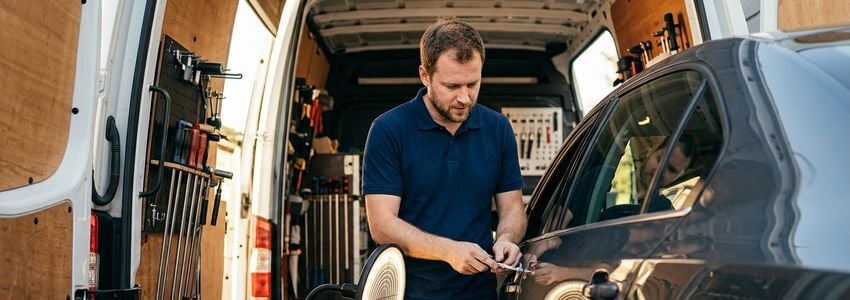
Mobile Dent Repair Equipment Financing: The Complete Guide for Business Owners
Mobile dent repair equipment financing gives paintless dent repair technicians and mobile auto reconditioning businesses a way to acquire dent pulling systems, glue pulling kits, LED paintless dent repair lighting boards, and a properly outfitted service van without draining working capital. Whether you are launching a mobile PDR operation or expanding an existing fleet of technicians, financing lets you spread the cost of equipment over time while the tools themselves generate the revenue that pays for them.
The mobile dent repair industry has grown quickly as insurance companies, dealerships, and fleet managers increasingly prefer paintless repair over traditional bodywork. That growth has created strong demand for well-equipped mobile technicians who can show up on-site with everything needed to remove dents, dings, and hail damage without repainting a single panel. Getting the right equipment financed correctly is often the difference between a technician working out of a cramped hatchback and a fully mobile business capable of servicing dealership lots and fleet accounts.
In This Article
What Is Mobile Dent Repair Equipment Financing?
Mobile dent repair equipment financing is a business funding product that allows paintless dent repair (PDR) technicians and mobile auto reconditioning companies to purchase or lease the tools of the trade through structured monthly payments instead of a single upfront cash outlay. This typically covers dent pulling systems, PDR rod and hook sets, glue pulling kits, LED reflection boards, hail damage repair stations, and the cargo van or trailer used to transport everything to the job site.
Unlike a general small business loan, equipment financing is secured by the equipment itself in many cases, which can make approval easier and terms more competitive for newer or growing mobile dent repair businesses. The lender is financing a tangible, resellable asset, so the underwriting conversation is often centered on the equipment's value and the business's ability to generate revenue with it, not just personal credit alone.
For most mobile PDR operators, the equipment list is not a single purchase but an ongoing investment. A technician might start with a basic rod and hook set, then add a dedicated LED board, then a second vehicle, then a hail-specific tool set as the business grows. Financing structures are flexible enough to support each of these stages separately, meaning you do not have to bundle every future purchase into one large loan up front. This lets a business scale its equipment investment in step with its actual revenue growth rather than guessing at future need years in advance.
It also matters where a mobile dent repair business fits in the broader auto reconditioning and collision repair ecosystem. Many mobile PDR technicians work as independent contractors for dealerships, auto auctions, fleet leasing companies, and insurance-referred repair networks. Each of these channels has different expectations around turnaround time, equipment quality, and professional presentation, all of which factor into how much and what type of equipment financing makes sense for a given business.
Key Stat: According to Forbes Advisor, the average hail damage claim for a vehicle runs between roughly $4,300 and $5,000, and severe storms can push repair bills past $10,000. Paintless dent repair has become the preferred remedy for insurers on many of these claims because it is faster and less expensive than traditional collision repair.
Key Benefits of Financing Your PDR Equipment
Financing mobile dent repair equipment instead of paying cash outright offers several advantages for technicians and shop owners who want to grow without stalling their cash flow.
- Preserve working capital. Keep cash on hand for marketing, insurance, fuel, and payroll instead of tying it up in a single equipment purchase.
- Match payments to revenue. A financed dent pulling rig starts generating billable jobs almost immediately, so monthly payments are offset by new work.
- Access premium tools sooner. High-end LED PDR lighting systems and glue pulling kits can cost thousands of dollars; financing lets you use professional-grade tools from day one instead of waiting years to save up.
- Predictable budgeting. Fixed monthly payments make it easy to forecast expenses months or years in advance.
- Potential tax advantages. Many equipment financing structures allow the equipment to be treated as a business expense; always confirm specifics with your accountant.
- Build business credit. On-time payments on an equipment financing account can help establish a stronger credit profile for your business over time.
Ready to Equip Your Mobile Dent Repair Business?
Get fast, flexible financing from the #1 business lender in the U.S. No obligation, apply in minutes.
Apply Now →How Mobile Dent Repair Equipment Financing Works
The process for financing dent repair equipment follows a fairly straightforward path, whether you are a solo PDR technician or running a small fleet of mobile repair vans.
Quick Guide
How Mobile Dent Repair Equipment Financing Works, At a Glance
Select your dent pulling system, glue kits, LED boards, and service van or trailer, either from a dealer quote or a used equipment listing.
Submit a short application with basic business details and, in most cases, a few months of bank statements.
Lenders evaluate the equipment value, your time in business, and cash flow. Many decisions come back within one business day.
Funds are released to purchase your equipment, and you start taking mobile dent repair jobs while making fixed monthly payments.
Most lenders will want to see a few key documents: a completed application, three to six months of business bank statements, an equipment quote or invoice from the seller, and basic identification. Established businesses with strong revenue may qualify for the most competitive rates, while newer mobile PDR operations can often still qualify through programs designed for startups and businesses with limited time in operation.
Interest rates and terms are typically driven by a combination of factors: the age and type of equipment being financed, the applicant's personal and business credit history, time in business, and monthly revenue. A brand-new LED lighting board or dent pulling rig financed by an established business with strong monthly deposits will usually see better terms than a used tool set financed by a business just getting off the ground, though both scenarios are commonly approved.
It is worth budgeting for more than just the sticker price of the tools themselves. Sales tax, delivery or installation, initial insurance premiums for the van, and any custom shelving or branding should all be factored into the total amount financed so you are not caught needing a second, smaller loan just weeks after the first one closes.
Types of Mobile Dent Repair Equipment You Can Finance
A well-equipped mobile PDR business typically needs a combination of specialized hand tools, lighting systems, and a reliable vehicle. Financing can cover the full package or individual pieces as your business grows.
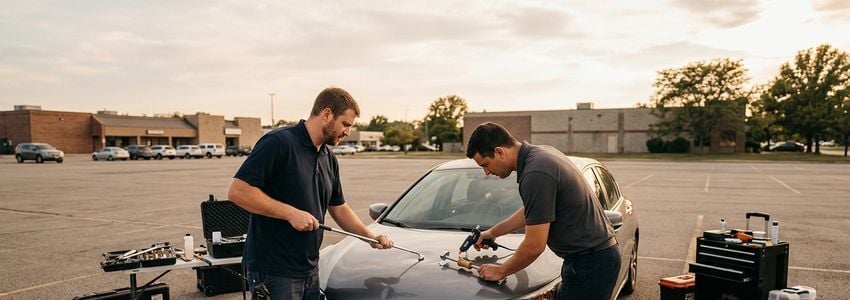
- Dent pulling systems - bridge pullers, slide hammers, and glue pulling tab kits used to reshape metal without damaging the paint finish.
- PDR rod and hook sets - the core hand tools used to push out dents from behind the panel, available in dozens of shapes and tip styles.
- LED reflection boards and lighting systems - essential for spotting dents accurately and verifying repair quality in the field.
- Hail damage repair stations - heavier-duty, higher-throughput setups designed for storm response and volume hail work.
- Glue pulling kits and heat guns - used for smaller dents and areas that traditional rod access cannot reach.
- Mobile service vans or trailers - a cargo van, sprinter van, or enclosed trailer outfitted with shelving, lighting, and power to serve as a rolling workshop.
- Portable generators and power inverters - needed to run lighting and tools at job sites without shop power.
- Paint touch-up and blending equipment - for technicians who also offer minor paint correction alongside PDR services.
Who This Financing Is Best For
Mobile dent repair equipment financing is a strong fit for several types of business owners in the auto reconditioning space.
- New mobile PDR technicians launching a business who need a complete tool set and van without a large cash reserve.
- Established PDR businesses expanding a second or third mobile unit to cover more territory or handle more volume.
- Hail catastrophe response teams that need to scale up equipment quickly ahead of storm season demand.
- Dealership and fleet service providers who need reliable, professional-grade equipment to meet volume contracts.
- Auto body and detailing shops adding mobile PDR as a new service line to their existing operation.
This type of financing tends to make less sense for businesses that only need a single low-cost tool and can comfortably pay cash, or for anyone still testing whether mobile dent repair is the right business model before committing to a fuller equipment package.
It is also worth thinking about seasonality when deciding whether financing is right for your situation. Mobile dent repair businesses that lean heavily on hail season revenue may prefer financing structures with seasonal or step-up payment options, while businesses with steadier, year-round dealership and fleet contracts may be comfortable with a standard fixed monthly payment from day one.
Comparing Mobile Dent Repair Financing Options
Business owners generally choose between a few different funding paths when equipping a mobile dent repair operation. Here is how they compare.
| Option | Best For | Typical Terms | Consideration |
|---|---|---|---|
| Equipment Financing | Full PDR tool sets, vans, and lighting systems | Fixed monthly payments, terms often 24-60 months | Equipment secures the loan, often easier approval |
| Equipment Leasing | Businesses that want to upgrade tools frequently | Lower monthly payments, option to buy at term end | May cost more over the full life of the equipment |
| Business Line of Credit | Smaller tool purchases and ongoing supply needs | Revolving access, draw as needed | Not ideal for a single large equipment purchase |
| Working Capital Loan | Combining equipment purchase with operating cash | Lump sum, fixed or variable repayment | Unsecured, so approval may weigh more on credit and revenue |
How Crestmont Capital Helps Mobile Dent Repair Businesses
Crestmont Capital works with mobile service businesses across the country to structure equipment financing that fits the realities of running a PDR operation, including irregular income tied to hail season and dealership contract cycles. Whether you are financing a single dent pulling kit or a fully outfitted service van, Crestmont's team can tailor a payment structure around your cash flow.
For technicians who need to finance the vehicle alongside the tools, commercial van financing can be paired with an equipment package so the entire mobile setup is financed under one plan. Businesses that have faced credit challenges in the past can also explore bad credit equipment financing, which is designed specifically for owners who may not qualify through a traditional bank.
If your budget calls for pre-owned tools or a used cargo van rather than brand-new equipment, used equipment financing can stretch your budget further while still covering the full cost through manageable monthly payments. And for mobile dent repair businesses that also want to smooth out day-to-day cash flow between jobs, Crestmont's unsecured working capital loans provide flexible funding that does not require pledging additional collateral.
Related reading: mobile PDR businesses that also handle collision-adjacent work may benefit from Crestmont's guide to auto body shop loans, which covers financing options for shops that combine traditional bodywork with paintless dent repair services.
Get Pre-Qualified in Minutes
See what mobile dent repair equipment financing you qualify for, no impact to your credit score to check.
Check Your Options →Pro Tip: Dealerships and fleet accounts often require proof of insurance and a professional appearance before signing a service contract. Financing a properly branded, well-stocked service van can help you win these higher-value recurring accounts faster than working out of a personal vehicle.
Real-World Scenarios
Scenario 1: The Solo Technician Going Mobile
A technician who has spent three years working inside a dealership's body shop decides to strike out on their own. They need a full PDR tool set, an LED lighting board, and a used cargo van to convert into a mobile unit. Equipment financing covering both the tools and the van lets them launch with professional-grade gear from day one instead of scraping by with secondhand rods bought individually.
Scenario 2: Scaling Up for Hail Season
An established mobile dent repair business normally runs two technicians but expects a major hail event to bring a surge of insurance claims. The owner uses equipment financing to quickly add two more fully outfitted vans and hail repair stations, allowing the business to respond to the surge without waiting months to save up the cash.
Scenario 3: Adding a Second Service Line
An auto detailing shop owner wants to add paintless dent repair as an upsell service for customers who bring in vehicles with minor door dings. Financing a starter PDR tool kit and glue pulling system lets the shop offer the new service immediately, generating incremental revenue from existing foot traffic.
Scenario 4: Upgrading From Basic to Professional-Grade Tools
A part-time mobile technician using entry-level tools wants to move into higher-paying dealership and fleet contracts, which require professional-grade LED boards and a wider selection of rods. Financing the upgrade lets them qualify for better-paying accounts without waiting years to reinvest profits.
Scenario 5: Credit-Challenged Owner Rebuilding
A business owner with a bankruptcy from several years earlier wants to restart a mobile dent repair operation but has been turned down by a traditional bank. Bad credit equipment financing, secured by the tools and van themselves, gives the owner a realistic path to get back into business.
Frequently Asked Questions
Next Steps
List out the exact equipment and vehicle you need, including model numbers or quotes if you have them.
Gather a few months of business bank statements and basic business documentation.
Apply online in minutes with no obligation to see what you qualify for.
Get equipped and start taking mobile dent repair jobs, often within days of approval.
Take the First Step Toward a Fully Equipped Mobile Business
Crestmont Capital makes it simple to finance the tools and vehicle your mobile dent repair business needs to grow.
Apply Now →Getting the Most Value From Your Equipment Financing
Once you have decided to finance your mobile dent repair equipment, a few practical steps can help you get the strongest terms and avoid common pitfalls that trip up first-time applicants.
- Get an itemized equipment quote first. Lenders move faster and offer more accurate terms when they can see exactly what is being purchased, including make, model, and price for each piece of equipment.
- Keep business and personal finances separate. A dedicated business bank account with clean, consistent deposits makes underwriting simpler and often results in better terms.
- Understand the full cost of the agreement. Ask about any origination fees, prepayment penalties, or end-of-term buyout costs before signing, not after.
- Match the term length to the equipment's useful life. Financing a five-year tool set over five years generally makes more sense than stretching payments out to seven or eight years, which can mean paying for equipment you have already replaced.
- Plan for maintenance costs separately. Financing covers the acquisition cost, but ongoing maintenance, tool replacement tips, and van upkeep should be budgeted as regular operating expenses.
Business owners who take these steps into their financing conversation tend to close faster and with fewer surprises. Lenders that specialize in equipment financing for service-based and mobile businesses are also generally more comfortable underwriting irregular revenue patterns, such as the seasonal spikes common in hail-driven PDR work, compared to a generalist bank that may not understand the industry.
The Growing Market for Mobile Dent Repair Services
Demand for paintless dent repair has expanded well beyond its original niche of minor door dings and parking lot dents. Auto auctions and dealerships increasingly use PDR to prepare trade-in and off-lease vehicles for resale quickly and at lower cost than traditional bodywork, and insurance carriers frequently steer eligible hail and minor collision claims toward PDR specialists because repairs are faster and less expensive than repainting.
Access to capital remains one of the biggest hurdles for small service businesses looking to scale, a challenge documented at length by the U.S. Small Business Administration, which offers its own loan guarantee programs alongside the private equipment financing market. For most mobile dent repair operators, private equipment financing remains faster and simpler for tool and vehicle purchases than navigating a government-backed loan application.
U.S. Census Bureau data on small business formation shows that service-based businesses, including specialty automotive repair operations, continue to represent one of the fastest-growing segments of new business applications nationwide, reflecting the kind of entrepreneurial opportunity mobile dent repair represents for technicians ready to go independent.
This shift has created steady, recurring opportunities for mobile technicians who can build relationships with dealership service departments, fleet managers, and property management companies that oversee large parking areas prone to hail exposure. A well-equipped, professional-looking mobile operation is often the deciding factor in whether a business wins these larger, recurring accounts versus a single homeowner referral here and there.
Technology has also changed what a lean mobile operation can accomplish. Portable LED lighting rigs, compact glue pulling kits, and lightweight aluminum rod sets have made it possible to run a highly capable mobile business out of a mid-sized cargo van rather than a large box truck, lowering the entry cost for new technicians while still allowing established operators to scale up when a larger contract calls for more capacity.
Conclusion
Mobile dent repair equipment financing gives PDR technicians and mobile auto reconditioning businesses a practical way to get fully equipped with dent pulling systems, LED lighting boards, glue pulling kits, and a properly outfitted service van without waiting years to save up cash. Whether you are just starting out, expanding for hail season, or adding paintless dent repair as a new service line, structuring the right financing lets your equipment start paying for itself from the first job. With flexible terms, fast approvals, and options for businesses at every stage, mobile dent repair equipment financing can be the tool that turns a growing side hustle into a full-scale, dealership-ready operation.
Disclaimer: The information provided in this article is for general educational purposes only and is not financial, legal, or tax advice. Funding terms, qualifications, and product availability may vary and are subject to change without notice. Crestmont Capital does not guarantee approval, rates, or specific outcomes. For personalized information about your business funding options, contact our team directly.








