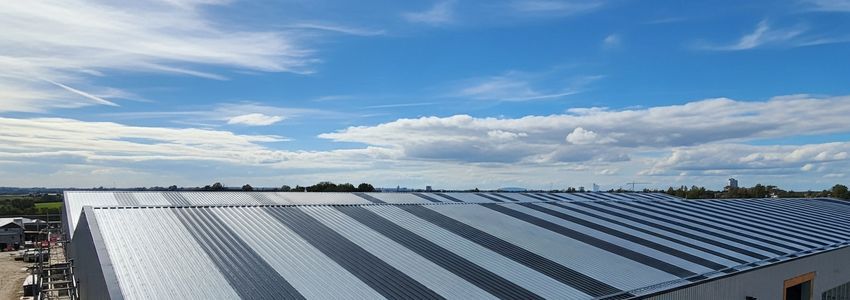
Metal roofing is one of the fastest-growing segments of the roofing industry, with demand surging across both residential and commercial markets. Whether you are expanding your crew, investing in panel fabrication equipment, or bridging cash flow between large commercial contracts, metal roofing business loans give you the capital to compete and grow. This guide covers every financing option available to metal roofing contractors in 2026, from SBA loans to equipment financing and working capital lines of credit.
In This Article
- Why Metal Roofing Contractors Need Financing
- Types of Business Loans for Metal Roofing Companies
- Equipment Financing for Metal Roofing Tools and Machinery
- SBA Loans for Metal Roofing Businesses
- Working Capital and Lines of Credit
- How to Qualify for Metal Roofing Business Loans
- Metal Roofing Industry Financing Snapshot
- How Crestmont Capital Helps Metal Roofing Contractors
- Best Uses for Metal Roofing Business Loan Proceeds
- Tips for a Strong Loan Application
- Next Steps
- Frequently Asked Questions
- Conclusion
Why Metal Roofing Contractors Need Financing
Metal roofing is a capital-intensive trade. Unlike asphalt shingle work, metal roofing requires specialized equipment such as standing seam panel roll formers, seamers, shears, brake presses, and lift equipment. A single commercial contract might require a $40,000 to $80,000 material deposit before the first panel is installed. Meanwhile, payment cycles in commercial construction can stretch 60 to 90 days, creating significant cash flow gaps even for profitable companies.
According to the U.S. Census Bureau's construction spending data, roofing and building envelope spending has grown consistently over the past decade. Industry research from the Metal Roofing Alliance projects that metal roofing's market share will continue to expand as commercial and residential buyers increasingly favor its durability, energy efficiency, and 40-plus-year lifespan.
For metal roofing contractors, strategic financing is not just about survival during slow seasons. It is about having the capital to pursue larger commercial bids, hire certified installers, invest in productivity-boosting machinery, and build a brand that commands premium pricing.
Industry Insight
Metal roofing typically costs 2-3x more per square than asphalt shingles, which means average job values are significantly higher - and so are material and labor costs. Financing helps contractors manage the upfront capital burden on large projects.
Ready to Grow Your Business?
Get fast, flexible financing from the #1 business lender in the U.S. No obligation - apply in minutes.
Apply NowTypes of Business Loans for Metal Roofing Companies
Metal roofing contractors have access to a wide range of financing products in 2026. Understanding which loan type fits your specific need - whether equipment, working capital, or growth - will help you secure the best terms and lowest total cost of capital.
Term Loans
A term loan provides a lump sum of capital repaid over a fixed period, typically 1 to 10 years, with set monthly payments. Term loans are well-suited for large, defined investments such as a roll-former machine, a company truck, or hiring a crew for a new market area. Online lenders typically offer small business loans with approval times of 24 to 72 hours, compared to several weeks at a traditional bank.
Business Line of Credit
A business line of credit functions like a flexible credit card: draw funds when needed and only pay interest on what you use. For metal roofing contractors, a line of credit is ideal for managing material deposits, covering payroll between milestones, or capitalizing on short-notice commercial opportunities. Lines typically range from $10,000 to $500,000 for established contractors.
Equipment Financing
Equipment loans and leases allow you to acquire panel roll formers, standing seam seamers, hydraulic brakes, and other specialized tools with the equipment itself serving as collateral. This keeps your existing assets free and avoids tying up working capital. Many metal roofing equipment financing deals are structured with $0 down for qualified businesses.
SBA Loans
The Small Business Administration's SBA loan programs offer the most favorable terms in small business lending: low interest rates, long repayment periods (up to 25 years for real estate), and flexible use of funds. The SBA 7(a) program is the most popular, allowing loan amounts up to $5 million for working capital, equipment, and expansion.
Short-Term Business Loans
Short-term business loans provide rapid capital - often funded in 24 hours - with repayment periods of 3 to 18 months. These are best for immediate cash flow needs such as covering a large material order before payment arrives from a completed commercial job.
Merchant Cash Advances
An MCA provides an advance against future receivables or credit card sales, repaid daily or weekly as a percentage of revenue. While expensive compared to term loans, MCAs have the lowest credit requirements and fastest approval times. They should generally be used as a last resort or for very short-term cash gaps.
Invoice Financing and Factoring
If your commercial clients pay on net-30, net-60, or net-90 terms, invoice financing lets you advance 80 to 95 percent of outstanding invoices immediately rather than waiting for payment. This is one of the most cost-effective working capital solutions for metal roofing contractors with large commercial receivables.
Equipment Financing for Metal Roofing Tools and Machinery
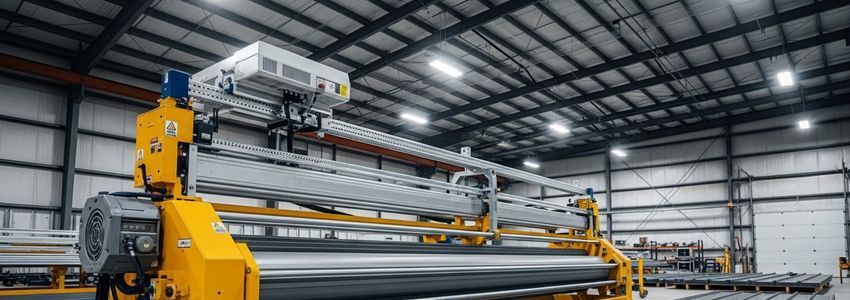
Metal roofing equipment is expensive, specialized, and essential to producing quality work at scale. Most contractors cannot write a $60,000 check for a panel roll former or a $30,000 brake press without straining their cash reserves. That is why equipment financing is one of the most popular loan products among metal roofing businesses.
Equipment most commonly financed by metal roofing contractors includes:
- Standing seam panel roll formers - portable job-site units range from $20,000 to $80,000+
- Mechanical seaming tools - $3,000 to $15,000 per unit
- Hydraulic brakes and shears - $5,000 to $40,000 depending on capacity
- Crane trucks and boom lifts - $30,000 to $150,000+
- Service trucks and work vans - $25,000 to $65,000
- Safety equipment (fall arrest systems, scaffolding) - $5,000 to $30,000
Equipment loans typically require a minimum time in business of 12 months and annual revenue above $100,000. Credit scores as low as 600 can qualify through alternative lenders. The equipment itself acts as collateral, which reduces the lender's risk and often leads to better rates than unsecured working capital loans.
Tax Advantage: Section 179
Under Section 179 of the IRS tax code, businesses can deduct the full purchase price of qualifying equipment in the year it is placed in service - up to $1.16 million in 2024. Combining equipment financing with Section 179 can dramatically reduce your net cost of acquisition. Consult your CPA to maximize this benefit.
SBA Loans for Metal Roofing Businesses
The U.S. Small Business Administration backs several loan programs that are well-suited to metal roofing contractors with strong credit and established revenue histories.
SBA 7(a) Loans
The SBA 7(a) is the most versatile SBA loan product. Metal roofing contractors can use it for working capital, equipment, inventory, hiring, and even commercial real estate purchases. Loan amounts range up to $5 million, with interest rates that vary based on the prime rate plus a margin set by the lender. Repayment terms extend to 10 years for working capital and equipment, and up to 25 years for commercial real estate.
SBA 504 Loans
The SBA 504 program is designed for major fixed assets - particularly real estate and heavy machinery. If you are buying a shop, warehouse, or fabrication facility, the 504 provides low, fixed interest rates with 10 to 25-year terms and a 10 percent down payment requirement. This is one of the most cost-effective ways to purchase commercial real estate for your business.
SBA Microloans
For newer metal roofing startups or smaller operations, SBA microloans provide up to $50,000 through nonprofit intermediary lenders. These are ideal for buying tools, safety equipment, or initial inventory when you cannot yet qualify for a traditional bank loan.
SBA loans require strong personal credit (typically 680+), at least 2 years in business, positive cash flow, and a detailed business plan. The approval process is slower than alternative lenders, often taking 30 to 90 days, but the interest savings over the life of a large loan are substantial.
Working Capital and Lines of Credit
Cash flow management is one of the greatest challenges in metal roofing contracting. You often purchase materials weeks before installation begins, pay crews weekly regardless of client payment timing, and wait 30 to 90 days for final draws on commercial projects. Without adequate working capital, even profitable metal roofing companies can find themselves unable to take on new jobs.
A working capital loan or revolving line of credit solves this problem by providing immediate liquidity when your cash position dips. According to CNBC's small business reporting, nearly 60 percent of small business owners have faced cash flow challenges that threatened their ability to meet payroll or cover material costs.
For metal roofing contractors, a line of credit offers several key benefits:
- Draw funds only when you need them, pay interest only on the outstanding balance
- Reusable capital - as you repay, funds become available again
- No restrictions on how funds are used (unlike equipment loans)
- Builds business credit over time with responsible use
- Can be used to capture seasonal opportunities or bulk material discounts
How to Qualify for Metal Roofing Business Loans
Lenders evaluate metal roofing businesses using several key factors. Understanding what underwriters look for helps you prepare a stronger application and secure better terms.
Credit Score Requirements
Most traditional bank loans require a personal credit score of 680 or higher. SBA-preferred lenders typically want 680 to 720+. Alternative and online lenders will approve loans with scores as low as 550, though at higher interest rates. If your score needs work, consider applying for a bad credit business loan in the short term while building your score for refinancing later.
Time in Business
Most lenders require a minimum of 6 to 24 months in business. SBA loans and bank loans typically require 2+ years. Newer contractors should focus on equipment financing and short-term lenders that work with startups under 24 months.
Annual Revenue
Lenders want to see consistent revenue that can comfortably service your loan payments. A general guideline is that your annual debt service (total annual loan payments) should not exceed 30 to 40 percent of annual gross revenue. Most lenders require minimum annual revenue of $100,000 to $250,000 for term loans and lines of credit.
Cash Flow
Bank statements showing consistent, positive cash flow are the most important factor for many alternative lenders. Most review 3 to 6 months of business bank statements to calculate average monthly deposits and assess repayment capacity.
Licensing and Insurance
Metal roofing contractors should have current state contractor licensing, general liability insurance (typically $1 million+ per occurrence), and workers' compensation coverage. Many lenders and certainly commercial clients require proof of coverage before issuing a loan or awarding a contract.
Metal Roofing Industry Financing Snapshot
Metal Roofing Business - Key Financing Statistics
$20K-$80K
Typical panel roll former cost
60-90
Days average commercial payment wait
2-3x
Higher avg job value vs. asphalt
$5M
Max SBA 7(a) loan amount
24 hrs
Funding speed with online lenders
40+ yrs
Metal roof lifespan driving demand
How Crestmont Capital Helps Metal Roofing Contractors
Crestmont Capital has worked with hundreds of specialty contractors across the United States, including metal roofing businesses ranging from owner-operators to 50-person commercial crews. We understand the unique financial dynamics of the metal roofing trade: high material costs, seasonal revenue patterns, long payment cycles on commercial projects, and the need for specialized equipment that traditional banks often struggle to evaluate.
Our metal roofing financing solutions include:
- Term loans from $10,000 to $5 million - for equipment, expansion, and working capital
- Revolving lines of credit - for ongoing cash flow management and seasonal flexibility
- Equipment financing - roll formers, trucks, lifts, and fabrication equipment with $0 down options
- SBA loan guidance - we help you navigate the SBA process for the best long-term rates
- Fast business loans - same-day to 48-hour approvals for time-sensitive needs
- Bad credit options - starting at 550+ personal credit scores through our lender network
Our application process takes under 10 minutes. We review your bank statements, business credentials, and basic financial information - no lengthy paperwork packages or weeks of waiting. Most metal roofing contractors receive a decision within 24 hours and funding within 2 to 5 business days.
As Forbes notes, the modern business lending landscape has shifted dramatically toward speed and flexibility. Online lenders now fund the majority of small business loans in the United States, offering approvals that were impossible just a decade ago.
Ready to Grow Your Business?
Get fast, flexible financing from the #1 business lender in the U.S. No obligation - apply in minutes.
Apply NowBest Uses for Metal Roofing Business Loan Proceeds
Metal roofing contractors who use financing strategically - investing in assets and activities that generate measurable returns - consistently outperform those who treat loans as emergency funds. Here are the highest-ROI uses of business loan proceeds for metal roofing companies:
1. Purchasing a Panel Roll Former
The most transformative investment for many metal roofing contractors is a portable job-site panel roll former. Fabricating panels on-site eliminates material waste, reduces cut-and-fit time, and allows you to bid on jobs with non-standard dimensions. A $40,000 to $80,000 roll former can add $200,000 to $500,000 in annual revenue capacity for a mid-size crew.
2. Fleet and Vehicle Expansion
A dedicated work truck or service van enables a second crew to operate independently, doubling your revenue capacity without doubling your fixed overhead. At $30,000 to $60,000 per truck, this is one of the most scalable investments in a roofing business.
3. Crew Expansion and Payroll Bridge
Hiring certified metal roofing installers - particularly those with standing seam experience - is one of the most effective growth levers. Using a long-term business loan to fund payroll for a new crew while a commercial project ramps up is a sound use of capital.
4. Commercial Bidding Working Capital
Winning commercial contracts often requires bonding, insurance certificates, and the ability to float large material deposits. A line of credit ensures you can respond to RFPs and pre-qualify for commercial bids without depleting your operating reserves.
5. Marketing and Digital Presence
Metal roofing is a high-value, visually driven market. Investing in professional photography, a well-designed website, Google Ads, and local SEO can generate $5 to $20 in revenue for every $1 spent on marketing. Business loans can fund marketing campaigns while you wait for organic growth to compound.
6. Licensing, Training, and Certifications
Manufacturer certifications from companies like ATAS International, Metal Sales, and Sheffield Metals open doors to warranty-backed work, premium pricing, and commercial accounts. Loan proceeds can fund training, travel, and the equipment required to maintain certifications.
Pro Tip: Match Loan Term to Asset Life
Finance long-lived assets (equipment, vehicles) with longer-term loans (3-7 years) and short-term cash flow needs (material deposits, payroll bridge) with short-term products (lines of credit, 12-month loans). Mismatching terms and uses is one of the most common - and costly - financing mistakes contractors make.
Tips for a Strong Loan Application
Preparation dramatically improves your odds of approval and helps you secure lower rates and better terms. Before applying for a metal roofing business loan, take these steps:
Organize Your Financial Documents
Most lenders require 3 to 6 months of business bank statements, a recent profit-and-loss statement, and sometimes 2 years of tax returns. Having these ready before you apply eliminates delays and demonstrates professional operations.
Check Your Credit Reports
Review both your personal credit report (via AnnualCreditReport.com) and your business credit profile (Dun and Bradstreet, Experian Business, Equifax Business). Dispute any errors and pay down high credit utilization before applying. Even small score improvements can result in meaningful rate reductions.
Quantify Your Use of Funds
Lenders respond positively to specific, well-reasoned uses of capital. Instead of "working capital," describe exactly what you will purchase, how it will generate revenue, and your repayment plan. For example: "We will use $55,000 to purchase a Swiftcoil roll former, which will allow us to bid on standing seam contracts we currently cannot service, targeting $300,000 in additional annual revenue."
Demonstrate Contract Pipeline
If you have signed contracts or active bids in your pipeline, provide documentation. This gives lenders confidence in your repayment ability and can be used to qualify for larger loan amounts.
Work with a Specialist
Lenders who specialize in contractor financing understand your business model and are less likely to misinterpret your revenue patterns (which are often lumpy and seasonal). Crestmont Capital works with roofing contractors daily and can help you identify the right product and lender for your situation.
For more guidance on getting approved fast, visit our same-day business loans page.
Next Steps
Your Path to Metal Roofing Business Financing
- Identify your financing need - equipment, working capital, payroll bridge, or growth
- Check your credit scores - personal and business - and dispute any errors
- Gather bank statements, P&L, and tax returns (3-6 months of statements minimum)
- Define your use of funds with specific dollar amounts and expected ROI
- Apply with Crestmont Capital - 10-minute application, decision in 24 hours
- Review and accept your offer - compare APR, term, and total cost of capital
- Receive funds - typically within 2 to 5 business days of approval
Ready to Grow Your Business?
Get fast, flexible financing from the #1 business lender in the U.S. No obligation - apply in minutes.
Apply NowFrequently Asked Questions
What types of loans are available for metal roofing contractors?
How much can a metal roofing business borrow?
What credit score do I need for a metal roofing business loan?
Can a new metal roofing startup get a business loan?
How fast can I get funded for a metal roofing business loan?
Can I finance a panel roll former through a business loan?
What is the difference between a term loan and a line of credit for roofing contractors?
Are metal roofing business loans tax-deductible?
What documents do I need to apply for a metal roofing business loan?
How do I choose between an SBA loan and an alternative lender?
Do I need collateral for a metal roofing business loan?
Can I get a metal roofing business loan with bad credit?
What interest rates should I expect on a metal roofing business loan?
How can invoice financing help a metal roofing contractor?
Is there a personal guarantee requirement for metal roofing business loans?
Conclusion
Metal roofing business loans are the financial backbone that allows contractors to invest in equipment, scale their crews, manage cash flow, and pursue the commercial contracts that drive long-term growth. Whether you are financing a $60,000 roll former, bridging a $150,000 material deposit on a commercial project, or expanding from a two-crew operation to a regional powerhouse, the right financing product can accelerate your growth and protect your cash position. The key is understanding which loan type fits your specific need, preparing a compelling application, and working with a lender who understands the roofing industry. Crestmont Capital is ready to help - apply in 10 minutes and get a decision in 24 hours.
Disclaimer: The information provided in this article is for general educational purposes only and is not financial, legal, or tax advice. Funding terms, qualifications, and product availability may vary and are subject to change without notice. Crestmont Capital does not guarantee approval, rates, or specific outcomes. For personalized information about your business funding options, contact our team directly.