
 (800) 949-0401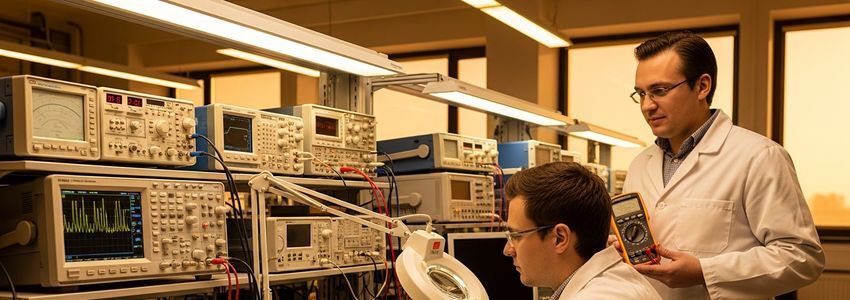
Loans for Building a Production Test Lab: Financing Precision, Speed, and Scalable Growth
Building a production test lab is one of the most strategic investments a manufacturer, engineer, or product-focused business can make. A dedicated test environment allows you to verify product quality, reduce costly defects, accelerate time-to-market, and meet regulatory standards before your product ever reaches a customer. But precision costs money, and the capital required to equip a fully functional test lab can easily run into the hundreds of thousands of dollars.
That's where production test lab financing comes in. Whether you're launching a brand-new facility, upgrading aging equipment, or expanding an existing lab to handle higher throughput, the right loan or equipment financing plan can help you build the infrastructure you need without draining your operating cash reserves.
This guide covers everything you need to know about financing a production test lab, from understanding what qualifies as test lab equipment to the best loan types, how to qualify, and how to get started today.
- What Is a Production Test Lab?
- What Does It Cost to Build a Test Lab?
- Best Financing Options for Test Labs
- How Equipment Financing Works for Labs
- SBA Loans for Production Labs
- How to Qualify for Test Lab Financing
- What Lenders Look For
- The ROI of Financing a Test Lab
- Industries That Benefit Most
- How to Apply and Get Funded Fast
- Frequently Asked Questions
- Next Steps
What Is a Production Test Lab?
A production test lab is a dedicated facility or controlled workspace where manufactured goods, components, assemblies, or software systems are systematically tested under real or simulated operating conditions. Unlike a general R&D lab, a production test lab focuses primarily on verifying product performance, quality, and reliability before or during mass production.
Common elements of a production test lab include:
- Environmental test chambers - simulate temperature, humidity, altitude, vibration, and shock conditions
- Electrical test equipment - oscilloscopes, spectrum analyzers, power analyzers, and protocol testers
- Automated test systems - ATE (Automated Test Equipment) platforms for high-volume circuit board and component testing
- Metrology and calibration tools - coordinate measuring machines (CMMs), precision calipers, and torque verification systems
- Safety and compliance testing equipment - EMC/EMI testers, hipot testers, burn-in ovens, and compliance analyzers
- Data acquisition systems - capturing and logging measurement data across hundreds of test points simultaneously
- Software and automation infrastructure - test management systems, ERP/MES integration, and automated reporting tools
A production test lab can serve multiple functions within the same organization: incoming quality inspection, in-process testing, end-of-line verification, reliability testing, and regulatory compliance validation. For companies producing medical devices, aerospace components, automotive electronics, or consumer electronics, having a properly equipped test lab is not just a business advantage; it is often legally required.
Ready to Finance Your Test Lab?
Get fast, flexible equipment financing from the #1 business lender in the U.S.
Apply Now →What Does It Cost to Build a Production Test Lab?
The cost of building a production test lab varies enormously based on your industry, the complexity of what you are testing, and whether you are building from the ground up or upgrading an existing facility. Here is a realistic breakdown to help you understand what financing you may need:
Entry-Level Test Lab: $50,000 to $250,000
Suitable for small manufacturers, electronics startups, and businesses handling component-level testing. This range typically covers a few core instruments, basic environmental testing, safety certification equipment, and workstation infrastructure.
Mid-Tier Production Test Lab: $250,000 to $1 Million
Common for mid-sized manufacturers in automotive, aerospace, or medical device industries. This range includes automated test platforms, multiple environmental chambers, data acquisition systems, and dedicated lab IT infrastructure.
High-End or Enterprise Test Lab: $1 Million and Above
Large-scale production testing operations with full ATE systems, multi-axis vibration testing, RF and EMC chambers, and integrated MES/ERP systems. These facilities are common in defense, telecommunications, and tier-1 automotive suppliers.
Industry Insight: According to industry surveys, manufacturers that invest in dedicated production test infrastructure report an average 22% reduction in field defect rates and a 15-30% improvement in production throughput within 18 months of deploying a structured test lab. The ROI of a properly financed test lab can be substantial.
Additional Cost Factors to Budget For:
- Lab construction and facility upgrades (electrical, HVAC, shielding)
- Software licenses for test management and automation platforms
- Calibration and initial metrology services
- Staff training and certification
- Ongoing maintenance and calibration contracts
Understanding your full budget needs is the first step toward selecting the right financing product. Many businesses underestimate total costs because they only account for equipment purchase price, not installation, infrastructure upgrades, and software.
Best Financing Options for Production Test Labs
There is no single "best" financing product for every test lab build-out. The right choice depends on your total project size, your time horizon, your credit profile, and how quickly you need the equipment operational. Here are the most effective options available through lenders like Crestmont Capital:
1. Equipment Financing
Equipment financing is the most direct and commonly used tool for test lab build-outs. You finance the cost of specific equipment, the equipment itself serves as collateral, and you own it outright at the end of the loan term. This approach is ideal for businesses that want to build equity in their lab infrastructure over time.
Key features:
- Loan amounts from $10,000 to $5 million or more
- Terms typically ranging from 24 to 84 months
- Fixed monthly payments for predictable cash flow
- Potential Section 179 tax deduction on equipment purchases
- Can finance new or used equipment
2. Equipment Leasing
Equipment leasing allows you to use high-cost test equipment without purchasing it outright. This is especially useful for technology that depreciates quickly, such as automated test systems, software-dependent platforms, and computing infrastructure. At the end of the lease term, you may have the option to purchase, upgrade to newer equipment, or return it.
3. Small Business Loans
Small business loans provide flexible, general-purpose funding that can cover not just equipment costs but also lab construction, facility upgrades, staffing, and software. If your project involves significant infrastructure work beyond simple equipment purchases, a term loan or working capital loan can be a better fit than equipment-specific financing.
4. Long-Term Business Loans
For larger test lab projects requiring substantial capital investment, long-term business loans with repayment periods up to 10 years can significantly reduce your monthly payment burden. This makes sense when you are building infrastructure that will serve your business for a decade or more.
5. SBA Loans
SBA loans, particularly the SBA 7(a) and SBA 504 programs, offer competitive interest rates and longer repayment terms backed by the U.S. Small Business Administration. The SBA 504 program in particular is well-suited for major facility and equipment investments where long-term ownership is the goal.
6. Startup Equipment Financing
New or early-stage companies building their first production test lab may qualify for startup equipment financing, which is specifically designed for businesses with limited credit history or time in operation. These programs look more closely at the value of the collateral and the owner's personal financial profile rather than years in business.
Pro Tip: Many businesses benefit from combining multiple financing products. For example, using equipment financing for your core instruments, an equipment lease for rapidly depreciating computing systems, and a small business loan to cover lab construction and infrastructure upgrades. A financing advisor can help you structure this efficiently.
Production Test Lab Financing by the Numbers
$50K+
Minimum typical lab investment
24-84
Month terms available
22%
Avg. reduction in field defects post-lab deployment
$5M+
Maximum equipment loans available
How Equipment Financing Works for Test Labs
Equipment financing is structured similarly to a standard term loan but is specifically tied to the equipment being purchased. Here is a step-by-step overview of how the process works when financing test lab equipment:
- Identify your equipment needs - Get vendor quotes for all equipment, including installation, calibration, and software licensing. Having a detailed list helps lenders assess the collateral and process your application faster.
- Apply with a lender - Submit a financing application with basic business and financial documentation. With Crestmont Capital, this process can often be completed online in minutes.
- Underwriting and approval - The lender reviews your credit profile, business financials, and the value of the equipment. For well-qualified borrowers, approvals can come within 24 to 72 hours.
- Funding - Once approved, funds are typically paid directly to the equipment vendor. In some cases, the borrower receives funds directly and purchases equipment themselves.
- Repayment - You make fixed monthly payments over the agreed term. At the end of the term, you own the equipment outright.
One of the major advantages of equipment financing for production test labs is that the equipment serves as the primary collateral. This often allows businesses to secure financing even if they lack significant other business assets, real estate, or a long operating history.
According to the U.S. Small Business Administration, equipment financing is one of the most common forms of business lending, particularly for manufacturing and technology companies. The SBA notes that properly financed capital equipment investments are among the most reliable drivers of small business productivity growth.

SBA Loans for Production Lab Build-Outs
For larger test lab projects, SBA-backed financing deserves special attention. Two programs are particularly relevant:
SBA 7(a) Loan Program
The SBA 7(a) is the most flexible SBA program. You can use 7(a) funding for equipment, working capital, facilities, and more. Loans go up to $5 million with terms up to 10 years for equipment and working capital, and up to 25 years for real estate. Interest rates are regulated by the SBA and generally lower than conventional loans.
This makes SBA 7(a) loans ideal for comprehensive test lab build-outs that include not just equipment purchases but also lab renovations, IT infrastructure, and initial operating capital.
SBA 504 Loan Program
The SBA 504 program is specifically designed for major fixed asset investments. It provides long-term, fixed-rate financing for major equipment purchases and real estate through Certified Development Companies (CDCs). The structure involves a conventional lender covering 50% of the project cost, a CDC providing 40%, and the borrower contributing 10% as a down payment.
According to the SBA 504 program guidelines, equipment funded must have a useful life of at least 10 years. Most precision test equipment easily meets this criterion.
Ready to Finance Your Test Lab?
Get fast, flexible equipment financing from the #1 business lender in the U.S.
Apply Now →How to Qualify for Test Lab Financing
Qualification requirements vary by lender and loan product, but here are the general criteria you will need to meet for most production test lab financing options:
Credit Score Requirements
- Equipment financing: Most lenders look for a personal credit score of 600 or higher. Strong business credit (PAYDEX score of 80+) can significantly improve your terms.
- SBA loans: Typically require a personal credit score of 650 or higher, with most approvals going to borrowers with 680+.
- Working capital loans: Minimum scores of 580-620 depending on the lender, with revenue and cash flow being equally important factors.
Time in Business
Most conventional financing options require a minimum of 1-2 years in operation. Startup equipment financing programs are available for businesses under 12 months old, often with somewhat higher rates. If your business is brand new, focusing on startup equipment financing options will give you the best chance of approval.
Revenue Requirements
Many lenders require minimum annual revenues of $100,000 to $250,000 for standard equipment loans. Larger transactions over $500,000 often require documented revenue of $1 million or more. Some programs, particularly equipment-only financing for small amounts, may have lower or no revenue minimums when the equipment collateral is strong.
Financial Documentation Typically Required
- Last 2-3 years of business tax returns
- Last 3-6 months of business bank statements
- Current profit and loss statement and balance sheet
- Equipment vendor quotes or purchase agreements
- Business plan or narrative for startups or expansion projects
Important: Many test lab financing applications can be completed and approved in as little as 24-48 hours for amounts under $150,000. For larger transactions, the process may take 1-3 weeks depending on the complexity of the deal and the documentation required.
What Lenders Look For When Financing a Test Lab
Understanding how lenders evaluate test lab financing requests can help you prepare a stronger application. Here are the key factors most lenders assess:
Equipment Quality and Resale Value
Since the equipment typically serves as collateral, lenders want to see that the instruments and systems you are purchasing retain value and have a clear secondary market. Major brands like National Instruments (NI), Keysight, Tektronix, Rohde & Schwarz, and Instron have strong resale value and are generally easy to finance. Custom or highly specialized equipment with limited secondary market appeal may require additional documentation or a higher down payment.
Business Financials and Cash Flow
Lenders want confidence that you can service the debt from your business cash flow. They will look at your DSCR (Debt Service Coverage Ratio), typically requiring a ratio of 1.25 or higher. This means your net operating income should be at least 1.25 times your annual debt obligations after adding the new loan payment.
According to Forbes, lenders evaluating equipment financing applications focus heavily on the borrower's ability to demonstrate consistent and growing cash flow, particularly in capital-intensive industries like manufacturing and testing.
Industry and Business Type
Lenders familiar with manufacturing, aerospace, automotive, medical devices, and electronics industries generally move faster on test lab financing because they understand the equipment's role and value. Be prepared to explain what you test, why the equipment matters to your production process, and how it directly supports your revenue-generating operations.
Purpose and Use Case
Lenders give preference to production test lab investments that are directly tied to active revenue generation or regulatory compliance obligations. "We need this equipment to pass FDA certification to ship product" is a much stronger case than "we might need this equipment someday."
For additional insights into what lenders look for, check out Crestmont Capital's guide on Equipment Financing 101 and our overview of lab equipment financing.
The ROI of Financing a Production Test Lab
One of the most important questions business owners ask is whether financing a production test lab actually makes financial sense. The answer, in most cases, is a clear yes, provided you structure the financing appropriately and the lab serves a genuine production need. Here is how to think about the ROI:
Direct Cost Savings
A well-equipped production test lab can dramatically reduce the cost of quality failures. Field returns, warranty repairs, and product liability claims are significantly more expensive than catching defects before shipment. Industry studies consistently show that the cost of detecting and fixing a defect in the field is 10 to 100 times higher than catching it during production testing.
If your business currently ships 10,000 units per month with a 2% defect rate and an average cost of $200 per field return, you are spending approximately $40,000 per month on warranty issues. A test lab that cuts your defect rate to 0.2% could save you $36,000 per month, or $432,000 per year, more than enough to service a significant financing commitment.
Compliance and Market Access
For regulated industries, having in-house testing capability can be the difference between getting to market and being blocked entirely. Industries such as medical devices, automotive safety systems, and industrial control equipment require third-party certification or in-house documentation of testing. Outsourcing this testing is expensive and creates delays; having your own lab gives you speed and control.
According to a report from Reuters, manufacturers with in-house quality testing infrastructure report up to 30% faster product launch timelines compared to those who rely entirely on external testing labs.
Production Speed and Throughput
Automated test systems allow you to test more units in less time. A production test lab can eliminate bottlenecks caused by manual inspection, reduce cycle time, and allow you to scale production without proportionally scaling headcount. This is a major competitive advantage in high-volume manufacturing environments.
Competitive Differentiation
Customers in aerospace, defense, medical, and industrial sectors increasingly require suppliers to document testing protocols and quality control results. Having a certified in-house test lab can be a deciding factor in contract awards. Financing your test lab is not just an operational decision; it is a business development investment.
Industries That Benefit Most from Production Test Lab Financing
While virtually any manufacturing or product-focused business can benefit from a production test lab, certain industries have particularly strong cases for financing and investing in test infrastructure:
Electronics and Circuit Board Manufacturing
PCB assembly and electronics manufacturers need automated optical inspection (AOI), in-circuit testing (ICT), functional test systems, and boundary scan tools to ensure quality at scale. Testing equipment for this sector can range from $50,000 to several million dollars depending on production volumes and complexity.
Medical Device Manufacturing
FDA regulations under 21 CFR Part 820 require documented testing and quality control for medical devices. Device manufacturers must maintain rigorous records of testing protocols, calibration, and defect tracking. A properly equipped test lab is a regulatory requirement, not just a best practice.
Automotive and EV Component Suppliers
IATF 16949 and related automotive quality standards require extensive in-process and end-of-line testing. EV component manufacturers face additional testing requirements for battery systems, power electronics, and safety-critical components. This is one of the fastest-growing segments for production test lab investment.
Aerospace and Defense
AS9100 certification and government contract requirements mandate rigorous testing documentation. Defense suppliers often require EMI/EMC testing, environmental stress screening, and first article inspection capabilities that require significant capital investment in test infrastructure.
Telecommunications and RF
5G equipment, wireless modules, and antenna systems require extensive RF testing including spectrum analysis, OTA (over-the-air) testing, and conformance testing. The equipment involved is expensive but directly tied to product certifications required for sale in regulated markets.
Did you know? According to the U.S. Census Bureau's Annual Survey of Manufactures, U.S. manufacturers spend over $50 billion annually on quality control infrastructure and testing, with the electronics, automotive, and aerospace sectors accounting for the largest share. Investing in in-house testing infrastructure helps businesses reduce outsourcing costs while improving control over quality outcomes.
How to Apply for Production Test Lab Financing and Get Funded Fast
Getting funded for your production test lab does not have to be complicated. Here is a practical step-by-step approach to securing financing efficiently:
Step 1: Define Your Equipment Needs
Before approaching any lender, prepare a comprehensive equipment list with vendor quotes. Include not just the purchase price but also installation, calibration, shipping, and any software licensing costs. The more detail you provide, the faster your application will move through underwriting.
Step 2: Review Your Financial Profile
Pull your business and personal credit reports. Check your PAYDEX score through Dun & Bradstreet. Gather your last 2 years of tax returns and 3-6 months of bank statements. Knowing where you stand financially allows you to set realistic expectations and choose the right loan product.
Step 3: Choose the Right Financing Structure
Based on your total project cost, credit profile, and cash flow situation, determine whether equipment financing, a term loan, an SBA loan, or a combination makes the most sense. A financing advisor at Crestmont Capital can help you evaluate your options at no cost.
Step 4: Submit Your Application
With Crestmont Capital, you can apply online in minutes. For equipment financing under $150,000, decisions often come back same day or next day. For larger or more complex transactions, plan on 3-10 business days.
Step 5: Review and Accept Terms
Carefully review the loan amount, interest rate, term, monthly payment, and any prepayment penalties or fees. Ask questions before signing. Make sure the payment structure fits comfortably within your cash flow projections.
Step 6: Receive Funding and Order Equipment
Once you accept the terms, funds can often be disbursed within 1-3 business days for conventional equipment loans. For SBA loans, funding timelines are typically 30-90 days from approval.
Ready to Finance Your Test Lab?
Get fast, flexible equipment financing from the #1 business lender in the U.S.
Apply Now →Frequently Asked Questions About Production Test Lab Financing
What types of equipment qualify for test lab financing?
Most precision testing and measurement equipment qualifies for equipment financing, including oscilloscopes, spectrum analyzers, automated test systems, environmental test chambers, CMMs, EMC test equipment, power analyzers, data acquisition systems, and associated software and infrastructure. Lenders generally finance any equipment with clear collateral value and a useful life matching the loan term.
Can I finance used or refurbished test equipment?
Yes, many lenders including Crestmont Capital offer financing for used and refurbished test equipment. The approval and rate may differ slightly from new equipment financing, as lenders consider the equipment's remaining useful life and current market value. Certified refurbished equipment from reputable vendors is generally well-received by lenders.
How much can I borrow for a production test lab?
Loan amounts vary widely depending on your business's financial profile and the lender. Equipment financing through Crestmont Capital ranges from $10,000 to $5 million or more. SBA 504 loans can go up to $5.5 million for standard projects and $5.5-16.5 million for energy-efficient or manufacturing projects. Your actual maximum loan amount will depend on your creditworthiness, cash flow, and the value of the collateral.
What credit score do I need to finance test lab equipment?
For standard equipment financing, most lenders prefer a personal credit score of 600 or higher. A score of 680+ typically qualifies you for the best rates and terms. For SBA loans, the minimum is generally 650, with most approvals at 680 or above. If your score is below these thresholds, startup equipment financing programs or alternative lending options may still offer a path to funding.
Can a startup finance a production test lab?
Yes. While conventional lenders prefer established businesses, startup equipment financing programs are specifically designed for early-stage companies. These programs place more weight on the value of the equipment as collateral and on the owner's personal credit and financial profile. Startups in regulated industries (medical devices, aerospace, defense) may actually have an easier time demonstrating the business necessity of test equipment.
How long does it take to get approved for test lab financing?
For equipment loans under $150,000 through alternative lenders like Crestmont Capital, approval can come as fast as same day or next day. Larger transactions or SBA loans typically require 1-6 weeks depending on documentation complexity. Having your financial documents ready in advance is the single best way to accelerate the process.
Is there a down payment required for test lab equipment financing?
Many equipment financing programs offer 100% financing with no down payment, particularly when the collateral is strong. Some lenders may require 10-20% down for higher-risk transactions, older equipment, or borrowers with weaker credit profiles. SBA 504 loans require a 10% down payment from the borrower.
Can I use an SBA loan to build a test lab?
Yes. SBA 7(a) and SBA 504 loans can both be used for production test lab build-outs including equipment, facility upgrades, IT infrastructure, and related working capital. The SBA 504 program is particularly attractive for major equipment investments because of its long terms (up to 25 years for real estate components) and below-market fixed interest rates on the CDC portion.
Are there tax benefits to financing test lab equipment?
Yes. Under Section 179 of the IRS tax code, businesses can deduct the full purchase price of qualifying equipment placed in service during the tax year, up to $1,160,000 for the 2023 tax year. The bonus depreciation provision may offer additional deductions. Consult with your tax advisor to understand how these provisions apply to your specific situation and financing structure.
Should I lease or buy my test lab equipment?
The lease vs. buy decision depends on several factors. If the equipment has a long useful life, holds its value well, and is critical to your core operations, buying with equipment financing is usually the better choice as you build equity and can eventually eliminate payments. If the equipment is technology-dependent and likely to become obsolete within 3-5 years, leasing may make more sense as it allows you to upgrade at lease end.
How does equipment financing affect my business credit?
Equipment financing, like any business credit product, reports to business credit bureaus and can help you build your business credit profile when managed responsibly. On-time payments improve your business credit score and PAYDEX rating, which can unlock better terms and larger credit limits on future financing requests. Late payments have the opposite effect.
Can I finance lab software along with hardware?
Many lenders allow you to bundle software costs with hardware when the software is integral to the operation of the equipment being financed. Standalone software financing is also available through some lenders, although terms may be shorter given that software depreciates differently than physical equipment. Check with your lender about their specific policies for bundled hardware/software financing.
What if my test lab needs a facility build-out in addition to equipment?
If your project involves significant construction or facility modifications, such as electrical upgrades, shielding rooms, environmental control systems, or structural changes, you will likely need a combination of financing tools. Equipment financing covers the hardware, while a small business term loan or SBA loan can cover facility improvements, construction costs, and soft costs like installation, training, and software.
Do I need a business plan to apply for test lab financing?
For most equipment financing applications, a formal business plan is not required. You will need standard financial documents including tax returns, bank statements, and equipment quotes. For SBA loans or larger capital requests above $500,000, lenders may request a business plan that outlines how the investment will generate returns and service the debt.
What is the typical interest rate for test lab equipment financing?
Interest rates for equipment financing typically range from 4% to 18% APR depending on your credit profile, the type of loan, the lender, and current market conditions. Well-qualified borrowers with strong credit and financials can often secure rates in the 5-9% range for conventional equipment loans. SBA 504 rates are tied to U.S. Treasury benchmarks and are often among the lowest available for fixed-asset financing. Rates are subject to change, and your actual rate will be disclosed during the application process.
Next Steps: Finance Your Production Test Lab Today
Ready to build or upgrade your production test lab? Follow these steps to get started:
Contact your vendors for detailed quotes covering equipment, installation, calibration, and software. A complete list accelerates lender review.
Review your business and personal credit scores. Gather your last 2 years of tax returns and 3-6 months of bank statements.
Based on your total project cost and timeline, choose between equipment financing, an SBA loan, a term loan, or a combination approach.
Complete our simple online application. For most equipment financing requests, you will receive a decision within 24-48 hours.
Once approved, funds are disbursed quickly so you can place equipment orders and begin your lab build-out without delay.
Disclaimer: The information provided in this article is for general educational purposes only and is not financial, legal, or tax advice. Funding terms, qualifications, and product availability may vary and are subject to change without notice. Crestmont Capital does not guarantee approval, rates, or specific outcomes. For personalized information about your business funding options, contact our team directly.








