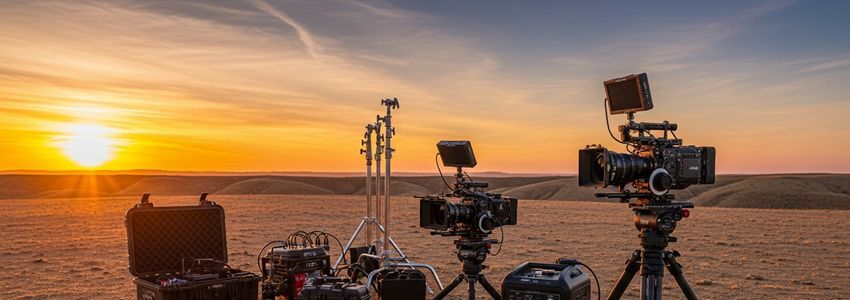
In the dynamic world of video production, staying ahead means having the best equipment. High-end drones and professional camera stabilizers are no longer luxuries; they are essential tools for creating the stunning, cinematic shots that clients demand. However, the substantial cost of this technology can be a major barrier for businesses of all sizes, tying up crucial capital that could be used for growth. This guide explores how video production equipment financing provides a strategic solution, enabling you to acquire the gear you need to elevate your work without draining your bank account.
In This Article
- What Is Drone and Camera Stabilizer Financing?
- Why Video Production Businesses Choose Equipment Financing
- How Video Production Equipment Financing Works
- Types of Financing Available
- What Equipment Qualifies?
- Who Qualifies for Financing?
- Financing vs. Buying Outright: A Comparison
- How Crestmont Capital Helps Video Production Businesses
- Real-World Financing Scenarios
- Frequently Asked Questions
- Your Next Steps to Acquiring New Equipment
- Conclusion
What Is Drone and Camera Stabilizer Financing?
Drone and camera stabilizer financing, a specialized form of equipment financing, is a financial tool that allows video production businesses to acquire high-value gear without paying the full cost upfront. Instead of a large, one-time cash expenditure, you make predictable monthly payments over a set term. The equipment itself typically serves as the collateral for the loan or lease, making it an accessible and secure option for both the lender and the business owner.
At its core, this type of financing is about managing cash flow and leveraging assets. It transforms a major capital expense into a manageable operating expense. This is particularly crucial in the fast-paced tech world of video production, where a new drone model or a groundbreaking gimbal can offer a significant competitive advantage. Financing empowers you to adopt this new technology immediately and start generating revenue from it while you pay it off.
There are two primary ways this is structured:
- Equipment Loans: You borrow a sum of money to purchase the equipment. You are the owner of the equipment from day one, and you make payments to the lender until the loan is paid off. This is similar to a traditional car loan.
- Equipment Leases: You essentially "rent" the equipment for a specific period. At the end of the lease term, you may have the option to purchase the equipment (often for a predetermined price like $1), renew the lease, or return the equipment and upgrade to the latest model. This is a popular choice for technology that rapidly becomes outdated.
Whether you're a freelance videographer looking to finance your first professional drone or an established production house upgrading an entire fleet of camera rigs, video production equipment financing provides a scalable and strategic path to obtaining the tools you need to succeed.
Ready to Finance Your Video Production Equipment?
Get the drones, gimbals, and cameras you need to produce stunning visuals. Our simple application process provides decisions in hours, not days.
Apply Now - Takes 2 MinutesWhy Video Production Businesses Choose Equipment Financing
The decision to finance equipment rather than purchase it outright with cash is a strategic one, driven by several powerful business advantages. For video production companies, where technology and cash flow are king, these benefits are particularly pronounced. Here’s a detailed look at why savvy business owners are turning to financing to build their gear arsenal.
1. Preserve Vital Cash Flow
Cash is the lifeblood of any business. A large, upfront purchase of a $20,000 cinema camera package or a $15,000 heavy-lift drone can instantly deplete cash reserves. This leaves your business vulnerable to unexpected expenses, slow client payments, or lulls in project work. Financing breaks down this massive cost into small, predictable monthly payments. This frees up your working capital for other critical business needs, such as:
- Hiring freelance crew for a big project
- Investing in marketing and advertising to attract new clients
- Covering payroll and other operational overhead
- Having a cash cushion for emergencies
By keeping cash on hand, you maintain operational flexibility and financial health, which is far more valuable than owning a piece of equipment outright that has drained your resources.
2. Stay on the Cutting Edge of Technology
The video production industry is in a constant state of technological evolution. A state-of-the-art drone today could be surpassed by a new model with better sensors and longer flight times in just 18-24 months. Paying cash for equipment locks you into that specific technology. When it becomes obsolete, you are faced with another huge capital outlay to upgrade.
Financing, especially through an equipment leasing structure like a Fair Market Value (FMV) lease, solves this problem. FMV leases offer lower monthly payments and give you the option to return the equipment at the end of the term and upgrade to the newest technology. This "technology refresh cycle" ensures you always have the best gear to offer clients, keeping you competitive and your services in high demand.
3. Gain an Immediate Competitive Advantage
Imagine being able to bid on a high-paying aerial cinematography job but lacking the required high-resolution drone. Or losing a corporate video project because your camera stabilizers can't produce the smooth, dynamic motion the client wants. Financing eliminates this barrier. It gives you immediate access to the professional-grade equipment needed to compete for and win bigger, more lucrative projects. You can start generating revenue with the new equipment right away, and the income from these new projects often covers the monthly financing payment and more, resulting in a clear and immediate return on investment.
4. Simplify Budgeting with Predictable Payments
Running a business involves juggling numerous variable costs. Equipment financing introduces a welcome element of predictability. You know exactly what your equipment payment will be each month for the entire term of the agreement. This fixed expense makes financial forecasting and budgeting significantly easier and more accurate. You can plan for the future with confidence, knowing that a key operational cost is locked in and won't fluctuate unexpectedly.
5. Build and Strengthen Business Credit
Just like personal credit, business credit is a valuable asset. Successfully managing an equipment financing agreement is a great way to build a positive credit history for your company. Every on-time payment is reported to business credit bureaus, strengthening your company's credit profile. A strong business credit score makes it easier and cheaper to secure other forms of financing in the future, whether you need a business line of credit for a short-term project or a larger loan for expansion.
6. 100% Financing for a Complete Solution
Most equipment financing agreements can be structured to cover 100% of the equipment cost. But it doesn't stop there. Often, you can bundle "soft costs" into the same financing package. This can include taxes, shipping and installation fees, and even initial training or software licenses associated with the equipment. This means you can get a complete, ready-to-use solution with potentially zero money out of pocket, preserving your cash for other immediate needs.
How Video Production Equipment Financing Works
Navigating the world of equipment financing can seem complex, but the process is actually quite straightforward and designed to be fast and efficient. At Crestmont Capital, we've streamlined the journey from application to acquisition to get the gear in your hands as quickly as possible. Here is a step-by-step breakdown of how it works.
Step 1: Identify Your Equipment Needs and Get a Quote
The process begins with you, the business owner. First, pinpoint the exact equipment that will best serve your production needs. Are you looking for a DJI Inspire 3 for high-end aerial shots, a Sony FX6 with a DJI RS 3 Pro gimbal for run-and-gun documentary work, or a complete lighting and audio package? Research your options and decide on the specific models and configurations.
Once you know what you want, contact your preferred equipment vendor or retailer. Request a formal, itemized quote for the entire package, including any accessories, batteries, lenses, software, and extended warranties. This quote is a crucial document you will provide to the financing company.
Step 2: Complete a Simple Financing Application
With your vendor quote in hand, the next step is to apply for financing. Unlike traditional bank loans that often require extensive paperwork, mountains of financial history, and long waiting periods, modern equipment financing applications are simple. Most lenders, including Crestmont Capital, offer a one-page online application that can be completed in just a few minutes. You will typically need to provide basic information about your business, such as:
- Business Name and Address
- Time in Business
- Federal Tax ID (EIN)
- Information about the business owner(s)
- The total cost of the equipment you wish to finance
Step 3: Underwriting and Approval
Once you submit your application, it goes to the underwriting team. This is where the lender evaluates the financial health and creditworthiness of your business to determine risk and approve the financing. This process is much faster than with traditional loans. While banks can take weeks, specialized equipment financiers can often provide a credit decision within hours. The underwriter will review your business credit profile, time in business, and the information provided on the application. For larger financing amounts, they may request additional documentation like bank statements or financial statements.
Step 4: Review Terms and Sign Documents
Upon approval, you will receive a financing offer. This document will clearly outline all the key details of the agreement, including:
- The total amount being financed
- The term length (e.g., 24, 36, 48, or 60 months)
- The fixed monthly payment amount
- The interest rate or factor rate
- The type of agreement (e.g., Equipment Finance Agreement, $1 Buyout Lease, or FMV Lease)
Carefully review these terms to ensure they align with your business's budget and goals. If everything looks good, you will sign the financing documents. Thanks to modern technology, this is almost always done electronically via e-signature, making the process quick and convenient.
Step 5: Funding and Equipment Acquisition
This is the final and most exciting step. After you've signed the documents, the financing company coordinates directly with your chosen equipment vendor. The lender will issue a purchase order and send the full payment for the equipment directly to the vendor. You do not have to handle the payment yourself.
Once the vendor confirms they have been paid, they will ship the equipment directly to you or arrange for you to pick it up. You can unbox your new gear and immediately put it to work on your next project. Your first monthly payment to the financing company will typically be due about 30 days after the funding is complete.
Types of Financing Available
When seeking video production equipment financing, it's important to understand that not all financing is the same. Different structures are designed to meet different business needs, from long-term ownership to short-term use with frequent upgrades. Understanding these options will help you choose the best path for your company's financial strategy and technological needs.
1. Equipment Finance Agreement (EFA)
An Equipment Finance Agreement, or EFA, is the most straightforward type of equipment financing. It functions very much like a traditional loan. You borrow a specific amount of money to purchase the equipment, and you make regular monthly payments of principal and interest over a fixed term. From a legal and ownership perspective, you are the owner of the equipment from the moment it's purchased. The lender places a lien on the equipment as collateral until the loan is fully paid off.
- Best for: Businesses that want to own their equipment outright for the long term. This is ideal for gear with a long useful life, such as high-quality cinema lenses, tripods, or basic lighting kits.
- End-of-Term: Once you make the final payment, the lien is released, and you own the equipment free and clear.
2. Equipment Leases
Leasing offers more flexibility, particularly for technology that evolves rapidly. With a lease, you are paying for the right to use the equipment for a set period. Ownership remains with the leasing company during the term. There are two main types of leases popular in the video production industry.
a) $1 Buyout Lease (Capital Lease)
This structure is very similar to an EFA and is often called a "lease-to-own" agreement. You make monthly lease payments for the term, and at the end, you have the option to purchase the equipment for a nominal amount, typically just $1. Because ownership is virtually guaranteed to transfer to you, for accounting purposes, it's treated as a purchase. The monthly payments tend to be slightly higher than an FMV lease because you are paying for the full value of the equipment over the term.
- Best for: Businesses that want the benefits of ownership but prefer the structure of a lease. It's a popular and versatile option for a wide range of production gear.
- End-of-Term: Pay $1 and you officially own the equipment.
b) Fair Market Value (FMV) Lease (Operating Lease)
An FMV lease is a true rental agreement. Because you are only paying for the depreciation of the equipment during the lease term, not its full value, the monthly payments are typically the lowest of any financing option. This makes it an excellent choice for maximizing cash flow.
At the end of the term, you have several flexible options:
- Purchase the equipment for its current Fair Market Value.
- Return the equipment to the leasing company with no further obligation.
- Renew the lease and continue using the equipment, often at a reduced rate.
This flexibility is the key advantage of an FMV lease.
- Best for: Technology that has a high rate of obsolescence, such as drones, high-end digital cinema cameras, and editing computers. It allows you to constantly refresh your gear to the latest models without being stuck with outdated equipment. This is the core of a successful drone leasing business strategy.
3. Small Business Loans
While equipment financing is specifically for acquiring assets, a traditional small business loans provides a lump sum of working capital that can be used for various purposes, including equipment purchases. This option offers more flexibility if you need funds for more than just gear-for example, hiring a new editor and buying a new editing suite. However, the application process can sometimes be more intensive than for a dedicated equipment financing agreement, as the loan may be unsecured or secured by general business assets rather than the specific equipment.
4. Business Line of Credit
A business line of credit is a revolving credit facility, similar to a credit card. You are approved for a certain credit limit and can draw funds as needed, up to that limit. You only pay interest on the amount you've drawn. This is an excellent tool for managing fluctuating cash flow or for smaller, recurring equipment needs-like buying new drone batteries, media cards, or a replacement lens. It provides immediate access to capital for unforeseen opportunities or expenses.
What Equipment Qualifies?
One of the great advantages of specialized video production equipment financing is its breadth. Lenders who understand the industry know that a successful production requires much more than just a camera and a drone. A wide array of "hard" and "soft" assets can be bundled into a single financing package, allowing you to acquire a complete, turnkey solution for your business.
Essentially, if the equipment is essential to your video production company's revenue-generating operations, it can likely be financed. This includes both new and used equipment from reputable vendors, dealers, or even private sellers in some cases.
Here is a comprehensive, though not exhaustive, list of equipment categories that commonly qualify for financing:
Aerial and Stabilization Systems
- Professional Drones: This is a primary category. It includes everything from compact, versatile drones like the DJI Mavic 3 Pro to high-end cinema drones like the DJI Inspire 3 or heavy-lift systems from manufacturers like Freefly Systems (e.g., the Alta X).
- Drone Payloads: Specialized cameras and sensors for drones, such as thermal imaging cameras, LiDAR mapping units, or high-resolution zoom cameras.
- Camera Stabilizers & Gimbals: Handheld gimbals like the DJI RS 3 Pro, Steadicam systems, vehicle-mounted remote heads like the MōVI Pro, and other camera support systems.
- Drone Accessories: This includes FPV (First-Person View) systems, high-end controllers, additional flight batteries, charging stations, and specialized cases.
Cameras and Optics
- Digital Cinema Cameras: Professional cameras from brands like ARRI, RED, Sony (FX and Venice series), Canon (Cinema EOS series), and Blackmagic Design.
- Mirrorless and DSLR Cameras: High-end hybrid cameras that are popular for their versatility in video production.
- Cinema Lenses: Both prime and zoom lenses from manufacturers like Cooke, Zeiss, Angénieux, and Fujinon.
- Lens Accessories: Matte boxes, follow focus systems, wireless lens control systems, and filter sets.
Lighting and Grip
- LED Lighting Kits: Professional LED panels, fresnels, and tube lights from brands like Aputure, ARRI, and Litepanels.
- Grip Equipment: C-stands, light stands, flags, clamps, dollies, sliders, and jib arms.
- Power Solutions: Block batteries, generators, and power distribution systems for location shoots.
Audio Equipment
- Professional Microphones: Shotgun mics, lavalier systems, and studio microphones from brands like Sennheiser, Schoeps, and Lectrosonics.
- Audio Recorders and Mixers: Field recorders and mixers from companies like Sound Devices and Zoom.
- Boom Poles and Accessories: All the necessary support gear for professional sound capture.
Post-Production Hardware and Software
- Editing Workstations: High-performance computers and monitors specifically configured for video editing and color grading.
- Storage Solutions: RAID arrays, Network Attached Storage (NAS) systems, and other high-capacity, high-speed storage for video files.
- Editing and VFX Software: Perpetual licenses for software suites like Adobe Creative Cloud, DaVinci Resolve Studio, or Final Cut Pro can often be bundled into the financing.
- Color Grading Panels: Hardware control surfaces for professional color correction.
The ability to finance this wide range of equipment allows you to build a cohesive, professional workflow from capture to final delivery, all under a single, manageable monthly payment.
Who Qualifies for Financing?
Securing drone equipment financing or funding for other production gear is more accessible than many business owners think. Unlike the stringent requirements of traditional banks, specialized equipment lenders focus on a few key factors and are often more flexible, especially with businesses in high-growth industries like video production. They understand the value of the asset being financed and the revenue it can generate.
While every lender has its own specific criteria, here are the general factors that determine eligibility:
1. Credit Score
A personal and/or business credit score is a primary indicator of financial responsibility. Lenders use it to gauge the likelihood that you will make your payments on time.
- Excellent Credit (700+): Applicants with strong credit scores will qualify for the best terms, including the lowest interest rates and most flexible payment options. They can often secure financing with little to no money down.
- Good Credit (650-699): Businesses in this range are still considered strong candidates and will have access to very competitive financing programs.
- Fair Credit (600-649): Many lenders, including Crestmont Capital, have programs specifically designed for business owners in this credit tier. While rates may be slightly higher, financing is still very attainable.
- Challenging Credit (Below 600): Even with a lower credit score, options are still available. Lenders may look for compensating factors, such as strong cash flow, significant time in business, or a larger down payment. Crestmont Capital offers programs for bad credit equipment financing, recognizing that a credit score doesn't tell the whole story.
2. Time in Business
How long your business has been operational is another key factor. It demonstrates stability and a track record of navigating the market.
- Established Businesses (2+ Years): Companies with two or more years of history are considered low-risk and can typically qualify for the best programs with minimal documentation. Their established revenue and credit history make for a straightforward approval process.
- Startups and New Businesses (0-2 Years): Getting financing as a startup can be more challenging, but it is far from impossible. Many lenders have dedicated startup programs. They will place a heavier emphasis on the owner's personal credit score and may require a business plan or financial projections. The investment in revenue-generating equipment is often seen as a positive step for a new company.
3. Business Revenue
Lenders want to see that your business generates enough income to comfortably handle the new monthly payment. They may ask for recent bank statements (typically the last 3-6 months) to verify your cash flow and revenue. There isn't always a strict minimum revenue requirement, especially for smaller equipment purchases, but consistent deposits and a healthy average bank balance are very positive signs.
4. The Equipment Itself
The type and value of the equipment you are financing also play a role. Because the drone, camera, or stabilizer serves as the collateral, lenders are very comfortable financing these assets. The equipment has a tangible resale value, which reduces the lender's risk. Financing for equipment that is essential to your business's core function is generally easier to obtain than a general-purpose working capital loan.
5. Industry Strength
The video production and drone services industries are seen as high-growth sectors. Lenders view this favorably. As noted by industry analysts at Forbes, the commercial drone market continues to expand rapidly, creating a stable and promising environment for businesses. This industry strength can be a positive factor in your application, even if other areas like credit score or time in business are not perfect.
Wondering If You Qualify?
Don't let uncertainty hold you back. Our application is free, fast, and won't impact your credit score. Find out your financing options today.
Get a Free QuoteVideo Production Equipment Financing: Key Facts
Financing vs. Buying Outright: A Comparison
The "rent vs. buy" debate extends to business equipment, and the decision between financing and paying cash is a critical one. While the idea of owning equipment without any debt is appealing, it's often not the most strategic financial move for a growing business. Let's break down the pros and cons of each approach.
Buying Outright with Cash
Paying cash involves using your company's available capital to purchase the equipment in a single transaction. You own it immediately with no strings attached.
Pros:
- No Debt: You are not taking on any new liabilities on your balance sheet.
- No Interest Payments: The price you see on the invoice is the price you pay. You avoid interest costs, making the total cost of the equipment lower over its lifetime.
- Total Ownership and Control: The equipment is yours to do with as you please. You can modify it, sell it, or use it as collateral for other loans without any restrictions from a lender.
Cons:
- Massive Cash Depletion: This is the biggest drawback. A $30,000 equipment purchase is a $30,000 reduction in your bank account. This severely limits your financial flexibility and can put the business at risk if an unexpected expense arises.
- Opportunity Cost: The cash you spend on equipment is cash you can't spend elsewhere. That $30,000 could have been used to hire a salesperson, launch a major marketing campaign, or serve as a down payment on a new studio space-investments that could potentially generate a much higher return than the equipment itself.
- Tied to Aging Technology: You are fully invested in that piece of technology. When it becomes obsolete in a few years, you have to absorb the full loss of value and then face another massive cash outlay to upgrade.
Financing or Leasing the Equipment
Financing involves partnering with a lender to acquire the equipment in exchange for regular payments over a set term.
Pros:
- Cash Preservation: This is the primary advantage. You keep your capital in the bank for operations, growth, and emergencies. You acquire a revenue-generating asset for a small initial outlay (often just the first payment).
- Predictable, Manageable Expense: Instead of a huge, unpredictable capital expense, you have a fixed, manageable operating expense that can be easily built into your budget.
- Access to Better Equipment: Financing allows you to afford higher-quality, more capable equipment than you might be able to purchase with cash. This can directly translate to higher quality work and the ability to charge more for your services.
- Technology Refresh Capability: Leasing, particularly an FMV lease, builds in a strategy for combating obsolescence. You can regularly upgrade to the latest technology, ensuring you always have a competitive edge.
- Builds Business Credit: On-time payments help strengthen your business's credit profile, making future financing easier to obtain.
Cons:
- Higher Total Cost: Due to interest or lease charges, the total amount you pay over the term will be more than the equipment's sticker price. This is the cost of leveraging the lender's capital.
- Creates Debt: You are taking on a new liability, which will be reflected on your company's balance sheet.
- Obligation to Pay: You are committed to making payments for the full term of the agreement, even if you stop using the equipment or your business slows down.
The Verdict for Video Production Businesses
For the vast majority of video production businesses, from freelancers to large agencies, financing is the more strategic choice. The industry's reliance on rapidly evolving, high-cost technology makes cash preservation and the ability to upgrade paramount. The income generated by the new equipment should ideally outweigh the cost of financing, making it a self-funding investment in your company's growth.
How Crestmont Capital Helps Video Production Businesses
Choosing the right financing partner is just as important as choosing the right equipment. You need a lender that understands the unique challenges and opportunities of the video production industry. Crestmont Capital isn't just a general lender; we are specialists in equipment financing with a deep understanding of the assets that drive your business forward.
Here’s how we provide a superior financing experience for videographers, production houses, and drone service providers:
1. Speed and Efficiency
We know that opportunities don't wait. When you need a new drone for an upcoming aerial shoot or a camera package to land a major corporate client, you can't afford to wait weeks for a bank's decision. Our entire process is built for speed:
- Simple Online Application: Our application takes just a few minutes to complete.
- Fast Approvals: We provide credit decisions in as little as 2-4 hours, not days or weeks.
- Same-Day Funding: In many cases, we can get from application to funding within a single business day. This means you can secure your equipment almost immediately.
This commitment to fast business loans and financing ensures you never miss a project due to a lack of equipment.
2. High Approval Rates
We look beyond just a credit score. We take a holistic view of your business, considering factors like your cash flow, time in business, and the value of the equipment you're financing. This approach allows us to approve a high percentage of applications, including those from startups and business owners with less-than-perfect credit. We believe in the potential of your business and the revenue-generating power of the right equipment.
3. Flexible and Customized Terms
There is no one-size-fits-all solution in business financing. We work with you to structure an agreement that fits your specific budget and goals. We offer:
- Flexible Term Lengths: Choose from terms ranging from 12 to 72 months to find a monthly payment that works for you.
- Variety of Structures: We offer EFAs, $1 Buyout Leases, and FMV Leases to match your long-term ownership or technology-refresh strategies.
- Deferred and Step-Payment Plans: For some businesses, we can structure plans with deferred payments or lower initial payments that ramp up over time, allowing the new equipment to start generating revenue before the full payments kick in.
4. Vendor Freedom
We don't restrict you to a limited network of "approved" vendors. You have the freedom to purchase your equipment from any reputable dealer, manufacturer, or even a private seller in the United States. Find the best price and the exact equipment you need, and we'll handle the financing. This puts the purchasing power back in your hands.
5. Industry Expertise
Our financing specialists understand the difference between a RED Komodo and a Sony A7S III, and they know the value a DJI Inspire 3 brings to a production company. This industry knowledge means we can make smarter, faster underwriting decisions. We're not just financing a dollar amount; we're financing a vital business asset that we understand.
Partner with the Equipment Financing Experts
Let us help you secure the gear that will take your business to the next level. Experience the Crestmont Capital difference with our fast, flexible, and reliable financing solutions.
Start Your ApplicationReal-World Financing Scenarios
To better illustrate how drone and camera stabilizer financing works in practice, let's look at four common scenarios for different types of video production businesses. These examples use realistic equipment costs and financing terms.
Scenario 1: The Startup Wedding Videographer
- Business: "Evergreen Films," a new wedding videography business started by a talented freelancer.
- Need: A professional, reliable kit to compete in the local market. They need a high-quality mirrorless camera, a gimbal for smooth shots, and a basic drone for establishing shots of venues.
- Equipment Package:
- Sony FX3 Camera Body: $3,900
- G-Master Lens: $2,100
- DJI RS 3 Pro Gimbal: $1,100
- DJI Mavic 3 Classic Drone: $1,600
- Audio Gear & Accessories: $1,300
- Total Equipment Cost: $10,000
- Financing Solution: As a startup, preserving cash is critical. They opt for a 36-month Equipment Finance Agreement (EFA) to own the gear long-term.
- Financed Amount: $10,000
- Term: 36 Months
- Estimated Monthly Payment: Approximately $320 - $360
- Outcome: For a manageable monthly payment, Evergreen Films acquires a complete professional setup. The cost is easily covered by booking just one additional wedding every few months, and the superior quality of their work helps them book more clients, quickly turning the equipment into a profitable investment.
Scenario 2: The Established Corporate Video Production House
- Business: "Apex Media," a 5-year-old production company specializing in high-end corporate marketing videos.
- Need: To upgrade their primary "A-Cam" package to a cinema-grade camera to attract larger clients and meet the technical requirements of national ad campaigns.
- Equipment Package:
- RED Komodo-X 6K Cinema Camera Kit: $13,000
- Set of 3 Cinema Prime Lenses: $15,000
- Professional Tripod and Support: $4,500
- Wireless Video and Focus System: $6,000
- Total Equipment Cost: $38,500
- Financing Solution: Apex Media wants to own this core asset. They have strong business credit and choose a 48-month, $1 Buyout Lease.
- Financed Amount: $38,500
- Term: 48 Months
- Estimated Monthly Payment: Approximately $950 - $1,050
- Outcome: The production company acquires a top-tier cinema package without touching its six-figure cash reserves. This new capability allows them to successfully bid on a $50,000 project that they previously would not have been equipped to handle. The financing payment becomes a small fraction of the new revenue generated.
Scenario 3: The Specialized Drone Services Business
- Business: "Aero-Inspect," a company providing aerial inspection and mapping services for construction and real estate.
- Need: To stay on the cutting edge of drone technology to offer the most accurate data. They need to upgrade their primary drone every 2-3 years.
- Equipment Package:
- DJI Inspire 3 Drone with X9-8K Air Gimbal Camera: $16,500
- Additional Lenses for Drone: $4,000
- High-Capacity Flight Batteries & Charging Station: $3,500
- Total Equipment Cost: $24,000
- Financing Solution: Because technology obsolescence is their main concern, they choose a 24-month Fair Market Value (FMV) Lease. This gives them the lowest possible monthly payment and the ability to upgrade in two years.
- Financed Amount: $24,000
- Term: 24 Months
- Estimated Monthly Payment: Approximately $900 - $980
- Outcome: Aero-Inspect gets the latest and greatest drone technology for a low monthly cost. After 24 months, they can return the Inspire 3 and lease the next-generation model, ensuring their services are always based on the most advanced platform. This is a perfect example of a successful drone leasing business model.
Scenario 4: The Multi-Operator Event Videography Company
- Business: "Dynamic Events," a company that films large conferences and live events, often requiring 3-4 camera operators simultaneously.
- Need: To equip their entire team with standardized, reliable camera and stabilizer setups to ensure consistent quality across all footage.
- Equipment Package:
- (4x) Canon C70 Cinema Cameras: $22,000
- (4x) RF 24-70mm Lenses: $9,200
- (4x) DJI RS 3 Gimbal Kits: $3,000
- (4x) Tripods, Batteries, Media Cards: $5,800
- Total Equipment Cost: $40,000
- Financing Solution: The company needs to manage this large-scale upgrade efficiently. They opt for a 60-month EFA to get the lowest possible monthly payment for this significant investment.
- Financed Amount: $40,000
- Term: 60 Months
- Estimated Monthly Payment: Approximately $825 - $925
- Outcome: For under $1,000 per month, Dynamic Events completely modernizes its entire equipment fleet. This improves their on-site efficiency, elevates the final product for their clients, and strengthens their brand reputation as a high-quality provider.
Frequently Asked Questions
Here are answers to some of the most common questions about financing drones, camera stabilizers, and other video production equipment.
1. What exactly is video production equipment financing?
It is a business loan or lease specifically designed for acquiring equipment used in video production. Instead of paying the full price in cash, you make monthly payments over a set term. The equipment itself serves as collateral, making it easier to qualify for than a traditional unsecured loan.
2. What is the minimum credit score needed to qualify?
While a higher credit score (650+) will get you the best rates, many lenders, including Crestmont Capital, have programs for a wide range of credit profiles. We offer financing options for business owners with credit scores as low as the high 500s by looking at other factors like cash flow and time in business.
3. How long does the approval process take?
It's incredibly fast. Unlike banks that can take weeks, specialized equipment financiers can often provide an approval in just a few hours. With Crestmont Capital, you can often go from application to funding within 24 hours.
4. Is a down payment required?
For well-qualified borrowers, a down payment is often not required. Many programs offer 100% financing. In some cases, such as for startups or those with challenged credit, the lender may ask for one or two advance payments or a small down payment to reduce risk.
5. What is the typical cost of professional drones that can be financed?
The cost varies widely. Prosumer drones like the DJI Mavic series can range from $1,500 to $4,000. Mid-range professional drones like the DJI Matrice series can be $5,000 to $15,000. High-end cinema drones like the DJI Inspire 3 or Freefly Alta X can cost anywhere from $16,000 to over $50,000 when fully kitted out.
6. What's the main difference between leasing and buying (with a loan)?
The primary difference is ownership and end-of-term options. With a loan (like an EFA), you own the equipment from day one. With a lease, the financing company owns it during the term. A lease, especially an FMV lease, offers lower payments and the flexibility to upgrade to new technology at the end of the term, which is ideal for rapidly evolving gear like drones.
7. What kind of equipment qualifies for financing besides drones and stabilizers?
Virtually all equipment essential to your business operations can be financed. This includes cinema cameras, lenses, lighting kits, audio gear, editing computers, software, data storage systems, and even grip equipment like tripods and dollies.
8. Can startups and new businesses get equipment financing?
Yes. While established businesses with 2+ years of history have the easiest path, many lenders offer startup financing programs. These programs often rely more heavily on the owner's personal credit score and may require a business plan or a slightly larger initial payment, but they are designed to help new businesses get the gear they need to grow.
9. What are the typical interest rates for equipment financing?
Interest rates vary based on your credit score, time in business, and the financing term. Businesses with strong credit and a solid history can expect very competitive rates, often in the single digits. Rates will be higher for startups or businesses with challenged credit to compensate for the increased risk.
10. How long are the financing terms?
Terms are flexible to meet your budget needs. Common term lengths are 24, 36, 48, and 60 months. Some lenders may offer terms as short as 12 months or as long as 72 months for very expensive equipment.
11. Can I finance used equipment?
Yes, most equipment financing companies will fund the purchase of used equipment, provided it is from a reputable dealer or seller and is in good working condition. Financing used gear can be a great way to get high-end equipment at a lower cost.
12. What if I have bad credit? Are there still options?
Yes. There are specialized financing programs for business owners with bad credit. Lenders will look for compensating factors like strong, consistent revenue shown in your bank statements or a significant down payment. While the rates will be higher, financing is often still possible.
13. How do I apply for financing with Crestmont Capital?
The process is simple. You can fill out our secure, one-page online application in about two minutes. You'll also need a quote for the equipment you wish to purchase from your chosen vendor. Once submitted, one of our financing specialists will contact you to discuss your options.
14. What documents are needed to apply?
For financing under $150,000, often all that is needed is the completed application and the equipment quote. For larger amounts or for businesses with more complex financial situations, we may request the last 3-6 months of business bank statements and/or company financial statements.
15. What is the difference between an equipment loan and a lease?
A loan (or EFA) is a financing agreement where you borrow money to buy equipment, which you own from the start. A lease is a rental agreement for the use of equipment for a set term. Leases often have lower monthly payments and provide options at the end of the term to buy, return, or upgrade the equipment, making them ideal for technology that changes quickly.
Your Next Steps to Acquiring New Equipment
Ready to turn your equipment wish list into a reality? The path to getting the gear you need is clear and simple. Here’s how to get started:
- Get a Quote: Contact your preferred equipment vendor and get a detailed quote for the drones, cameras, stabilizers, and accessories you need.
- Apply Online: Complete our 2-minute online application. It’s fast, secure, and won't affect your credit score.
- Review Your Options: A dedicated financing specialist will reach out to you, often within the hour, to discuss your approval and the best financing structure for your business.
Conclusion: A Strategic Investment in Your Creative Future
In the highly competitive landscape of video production, the quality of your tools directly impacts the quality of your work and your ability to attract and retain high-paying clients. Drones and camera stabilizers are no longer optional accessories; they are fundamental components of modern cinematography. While the cost of this professional-grade equipment can be daunting, it should not be a roadblock to your business's growth and creative potential.
Video production equipment financing is more than just a loan or a lease; it is a powerful strategic tool. It empowers you to preserve your cash flow, stay ahead of the technology curve, and scale your operations on your terms. By converting a prohibitive capital expenditure into a predictable operating expense, you can equip your business for success and start generating a return on your new assets immediately.
Whether you are a solo filmmaker taking your first steps or an established production house aiming for the next level, a partnership with a trusted financing expert like Crestmont Capital can provide the resources and flexibility you need to thrive. Invest in your talent, invest in your vision, and let smart financing handle the rest.
Disclaimer: The information provided in this article is for general educational purposes only and does not constitute financial, legal, or investment advice. Loan terms, rates, and eligibility requirements vary by lender and individual circumstances. Consult with a qualified financial professional before making financing decisions.