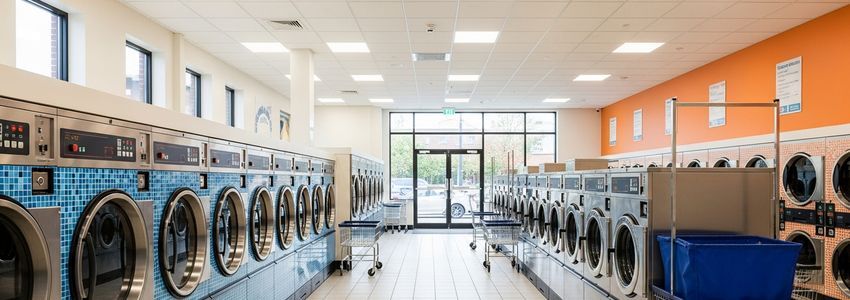
Running a profitable laundry business - whether a neighborhood laundromat, a commercial linen service, a hotel laundry operation, or a dry cleaning shop - demands reliable, high-capacity equipment that operates around the clock. The challenge is that commercial washers, industrial dryers, folding systems, and pressing machines represent significant capital investments. Laundry equipment financing gives business owners a structured, practical path to acquire the equipment they need without depleting cash reserves or disrupting daily operations.
This guide covers everything laundry business owners need to know about equipment financing and leasing - from the mechanics of how financing works and what lenders look for, to the specific equipment types you can fund and how Crestmont Capital helps businesses across the country get approved quickly.
In This Article
- What Is Laundry Equipment Financing?
- Why Finance Instead of Buying Outright?
- Types of Laundry Equipment You Can Finance
- How Laundry Equipment Financing Works
- Financing vs. Leasing: Key Differences
- Who Qualifies?
- Laundry Industry - Key Statistics
- How Crestmont Capital Helps
- Real-World Scenarios
- Financing vs. Cash Purchase vs. Leasing
- How to Get Started
- Frequently Asked Questions
What Is Laundry Equipment Financing?
Laundry equipment financing is a form of business lending that enables laundry business owners to purchase commercial washers, dryers, ironing and pressing systems, folding machines, dry cleaning equipment, and related assets by spreading the cost into manageable monthly payments over a defined term. Instead of paying the full purchase price upfront - which can range from $10,000 for a small setup to well over $500,000 for a large commercial laundry facility - you work with a lender to structure an affordable payment plan that aligns with your cash flow.
There are two primary structures: equipment loans and equipment leases. With an equipment loan, you borrow a specific amount to purchase the equipment outright, then repay the lender in fixed monthly installments with interest. At the end of the term, you own the equipment free and clear. With an equipment lease, you make monthly payments to use the equipment for a set period, after which you typically have the option to purchase, renew, or upgrade.
Both structures preserve working capital, allow businesses to match payment schedules to revenue patterns, and help avoid the cash drain of large one-time equipment purchases.
Industry Insight: The U.S. laundry services market - including coin-operated laundromats, commercial laundry services, and dry cleaners - is a multi-billion dollar industry serving millions of households and businesses every day. Equipment reliability is the single most critical factor in maintaining revenue flow.
Why Finance Instead of Buying Outright?
Many business owners ask whether they should simply purchase equipment with cash. While buying outright eliminates interest costs, it often creates more financial risk than it saves. Commercial laundry equipment is expensive, and tying up $50,000 to $200,000 or more in a single asset leaves your business dangerously thin on working capital for payroll, utilities, repairs, and unexpected costs.
Financing laundry equipment offers several strategic advantages that cash purchases simply cannot match:
- Cash flow preservation: Monthly payments spread the cost over 24 to 72 months, keeping cash available for operations and growth opportunities.
- Access to better equipment: Financing unlocks access to higher-quality commercial machines you might not be able to purchase outright - machines that are more energy-efficient, more reliable, and more profitable over time.
- Faster expansion: Instead of waiting to save enough capital to expand, financing lets you acquire equipment today and grow your revenue immediately.
- Tax advantages: Financed equipment may qualify for depreciation deductions or Section 179 expensing, potentially reducing your taxable income.
- Fixed payment predictability: Equipment loans typically carry fixed interest rates and fixed monthly payments, making budgeting straightforward and reliable.
- No dilution of equity: Unlike bringing on investors, financing lets you retain full ownership and control of your business.
Ready to Finance Your Laundry Equipment?
Get fast, flexible financing from the #1 business lender in the U.S. Apply in minutes - no obligation.
Apply Now →Types of Laundry Equipment You Can Finance
Laundry equipment financing is not limited to washers and dryers. Commercial lenders recognize the full scope of machinery and technology that modern laundry operations depend on. Here are the primary equipment categories eligible for financing:
Commercial Washers and Dryers
Front-load commercial washers, top-load machines, and industrial-grade dryers form the core of any laundry operation. Single units can cost anywhere from $2,000 for basic commercial models to $50,000 or more for large-capacity, high-efficiency stack machines. A full replacement or expansion of washer-dryer banks at a large laundromat can easily exceed $200,000, making financing essential for most operators.
Dry Cleaning Equipment
Dry cleaning machines, solvent recovery systems, spotting boards, and pressing equipment require significant investment. Modern dry-to-dry machines with integrated solvent recovery systems can cost $30,000 to $80,000 or more per unit. Financing allows dry cleaning business owners to upgrade from older machines to more environmentally compliant, energy-efficient systems without an unmanageable upfront expense.
Industrial Pressing and Ironing Systems
Commercial pressing tables, rotary irons, tunnel finishers, and steam presses are essential for hotel laundry operations, uniform services, and linen rental businesses. High-end tunnel finishers can run $50,000 to $150,000. Financing spreads these costs into manageable monthly payments tied to the revenue these machines help generate.
Folding Machines and Sorting Systems
Automated folding machines and garment sorting conveyor systems significantly increase throughput and reduce labor costs for high-volume operations. Financing these productivity tools often delivers a measurable return on investment within the first year of operation.
Water Treatment and HVAC Systems
Water softening systems, boilers, steam generators, and HVAC equipment are often overlooked but critical components of laundry operations. These systems can represent substantial capital investments, and financing allows you to install them correctly without straining cash reserves.
Point-of-Sale and Payment Systems
Modern laundromats increasingly rely on card-operated payment systems, mobile payment platforms, and POS management software. These technology upgrades can be bundled with equipment financing packages, making it easy to modernize an entire facility in a single transaction.
Laundry Vans and Pickup-Delivery Vehicles
Commercial laundry businesses that offer pickup-and-delivery services need reliable vehicles. Many lenders will finance commercial delivery vans and service vehicles as part of a comprehensive laundry business financing package.
How Laundry Equipment Financing Works
The process of securing laundry equipment financing is straightforward when you work with an experienced lender. Understanding each step helps you prepare the right documentation and move through approval quickly.
Step 1 - Choose your equipment and get a quote. Before approaching a lender, identify the specific equipment you want to finance. Obtain quotes from equipment dealers or manufacturers. Having accurate pricing is essential for determining your financing amount. Lenders want to see exactly what is being financed and at what cost.
Step 2 - Complete a loan application. A standard equipment financing application asks for basic business information - your business name, EIN, time in business, annual revenue, and the equipment you're financing. Most lenders can pre-approve applications within 24 to 48 hours.
Step 3 - Submit supporting documents. Depending on the loan amount and the lender's requirements, you may need to provide bank statements, tax returns, a business credit report, and sometimes a copy of the equipment invoice. For larger financing amounts - typically over $150,000 - lenders may require additional financial statements.
Step 4 - Receive approval and review terms. Once approved, you'll receive a loan offer with the interest rate, term length, monthly payment amount, and any fees. Review all terms carefully before signing. Crestmont Capital's advisors walk you through every detail to make sure the terms work for your business.
Step 5 - Sign documents and receive funding. After signing the financing agreement, funds are typically released directly to the equipment vendor within a few business days. Some lenders can fund in as little as 24 hours for smaller transactions.
Step 6 - Begin making payments and using your equipment. Your payment schedule begins as outlined in your agreement. You take delivery of your equipment, put it to work, and start generating revenue to cover your loan payments.
By the Numbers
Laundry Equipment Financing - Key Statistics
$5B+
Annual U.S. coin laundry industry revenue
35,000+
Coin-operated laundromats in the U.S.
24-72
months
Typical equipment loan terms
95%+
Of business equipment can be financed
Financing vs. Leasing: Key Differences
One of the most common questions laundry business owners ask is whether they should finance or lease their equipment. Both options have genuine advantages, and the right choice depends on your business goals, tax situation, and how you plan to use the equipment long-term.
| Factor | Equipment Financing (Loan) | Equipment Leasing |
|---|---|---|
| Ownership | You own the equipment at end of term | Lender owns; you have purchase option at end |
| Monthly Payments | Typically higher | Often lower (you're not buying it outright) |
| Upgrade Flexibility | You own it - can upgrade by selling and refinancing | Easy to upgrade at end of lease term |
| Balance Sheet | Asset and liability both recorded | May be off-balance-sheet (operating lease) |
| Tax Treatment | Depreciation + interest deduction | Lease payments may be fully deductible |
| Best For | Long-life equipment you plan to keep | Equipment that becomes outdated quickly |
| Down Payment | Often 10-20% (or 0% with good credit) | Often first/last payment or small deposit |
For laundry businesses that plan to operate the same machines for 10 to 20 years - which is common in the industry - equipment financing (a loan) often makes more financial sense because ownership builds equity. For businesses that want to upgrade to newer, more efficient machines every 5 to 7 years, leasing provides flexibility and lower monthly payments.
Who Qualifies for Laundry Equipment Financing?
Lenders evaluate several factors when reviewing equipment financing applications from laundry businesses. Understanding what underwriters look for helps you prepare a stronger application and improves your chances of approval at the best available rates.
Time in Business
Most traditional lenders prefer businesses that have been operating for at least two years. Alternative lenders - including Crestmont Capital - can often work with businesses that have been open for as little as six months, provided they demonstrate stable revenue and a clear path to servicing the debt.
Credit Score
Personal credit scores above 650 give you access to a wider range of lenders and better interest rates. However, equipment loans are considered secured financing because the equipment itself serves as collateral. This means lenders may approve applicants with lower credit scores who might not qualify for unsecured loans, as long as cash flow is strong.
Revenue and Cash Flow
Lenders want to see monthly revenue that comfortably covers proposed loan payments, with room to spare. A general rule of thumb is that total monthly debt obligations - including the new equipment payment - should not exceed 40 to 50 percent of monthly gross revenue. For laundromats generating $15,000 to $30,000 per month in revenue, this typically supports equipment financing packages ranging from $30,000 to $150,000.
Industry Experience
Previous experience operating or managing a laundry business is a positive factor in underwriting. Lenders favor borrowers who understand the industry, know how to manage equipment, and have a track record of stable operations. New entrants to the laundry business can still qualify, but may need to provide a stronger application with more documentation.
Tip: Even if your personal credit is below 680, you can improve your approval odds by demonstrating strong monthly revenue, low existing debt, and a solid bank statement history. Crestmont Capital reviews the full picture - not just a credit score.
How Crestmont Capital Helps Laundry Businesses Get Funded
Crestmont Capital has helped thousands of small business owners across the United States access fast, flexible financing for equipment, operations, and growth. Our team specializes in equipment financing solutions for laundry businesses of all sizes - from family-run laundromats to large commercial linen services.
When you work with Crestmont Capital, you benefit from a streamlined application process that typically delivers a decision within 24 hours. We work with a broad network of lenders, which means we can match you with the financing structure and terms that best fit your specific situation - whether you have excellent credit, strong revenue but imperfect credit, or are newer to the business.
Our financing programs for laundry businesses include:
- Equipment loans for washer/dryer purchases, dry cleaning systems, and folding equipment
- Equipment leasing for operators who prefer lower monthly payments and upgrade flexibility
- Working capital loans to cover operating costs while equipment is being installed or during slow revenue periods
- Business lines of credit for ongoing operational needs, repairs, and supplies
- Commercial equipment financing for high-value assets exceeding $250,000
We understand that laundry businesses often operate on tight margins where equipment downtime translates directly into lost revenue. That's why speed matters. From application to funding, Crestmont Capital moves fast so you can move forward.
Learn more about our equipment financing options or explore our equipment leasing programs to see which structure fits your laundry business best.
Get Funded for Your Laundry Equipment Today
Our team of financing specialists is ready to review your application and find the right funding solution for your laundry business.
Start Your Application →
Real-World Scenarios: How Laundry Businesses Use Equipment Financing
Understanding how financing works in practice helps business owners visualize whether and how it applies to their own situation. Here are six realistic scenarios drawn from common use cases in the laundry industry.
Scenario 1: Independent Laundromat Owner Replacing Aging Machines
A laundromat owner in the Midwest has been operating for 12 years. His original commercial washers and dryers are approaching the end of their useful life, experiencing frequent breakdowns and costing him $2,000 to $4,000 per month in lost revenue and repair bills. He finances a full replacement of 20 washer-dryer combos for $180,000 over 60 months. The new energy-efficient machines reduce utility costs by $800 per month and eliminate repair bills. His monthly loan payment of approximately $3,400 is covered more than twice over by the cost savings and improved throughput alone.
Scenario 2: Hotel Linen Service Expanding Capacity
A commercial linen company that services four midsize hotels is losing contracts because it cannot process sufficient volume. It finances a tunnel finisher, three industrial washers, and two high-speed dryers for $220,000 over 72 months. The additional processing capacity allows the company to take on two new hotel contracts generating $18,000 per month in new recurring revenue - far exceeding the loan's monthly payment of approximately $4,100.
Scenario 3: Dry Cleaner Upgrading to Modern Equipment
A dry cleaning shop operating older perc machines needs to upgrade to environmentally compliant hydrocarbon or wet cleaning equipment to meet local regulations. The owner finances a new dry-to-dry machine and updated pressing systems for $65,000 over 48 months. She avoids regulatory penalties, qualifies for new "green cleaner" certifications that attract eco-conscious customers, and positions the business for long-term sustainability.
Scenario 4: New Laundromat Startup
An entrepreneur is opening a new 3,000-square-foot laundromat in an underserved urban neighborhood. She finances her entire equipment package - 30 commercial washers, 25 dryers, card-payment systems, and water treatment equipment - for $320,000 with an SBA equipment loan at a 25-year term to keep payments low during the business-building phase. The demographic analysis projects steady customer traffic that will cover loan payments within the first 6 months.
Scenario 5: Pickup-and-Delivery Laundry Service
A laundry entrepreneur runs a pickup-and-delivery service from a leased processing facility. As demand grows, he finances two commercial delivery vans plus additional processing equipment for $95,000 to expand his delivery territory. Increased service radius allows him to add 120 new recurring customers within 90 days, generating $14,400 in additional monthly revenue against a loan payment of approximately $1,800.
Scenario 6: Fitness Center Adding Laundry Facilities
A large fitness center with 3,500 members wants to add in-house towel and uniform laundry services. It finances commercial washers, dryers, and a folding station for $55,000 over 36 months. The service adds $6 per member per month in new revenue, generating $21,000 per month to cover the loan payment of approximately $1,700 while substantially improving member retention.
Financing vs. Cash Purchase vs. Leasing: A Side-by-Side Summary
To help you decide which path is right for your laundry business, here is a direct comparison of the three primary acquisition strategies for laundry equipment:
| Consideration | Cash Purchase | Equipment Loan | Equipment Lease |
|---|---|---|---|
| Upfront Cost | Full price paid immediately | 10-20% down (or $0 down) | First/last month + deposit |
| Cash Flow Impact | Significant drain | Minimal - fixed monthly payments | Lowest monthly payments |
| Interest Cost | None | Interest charged on balance | Implied cost in payments |
| Equipment Ownership | Immediate ownership | After final payment | Optional purchase at end |
| Ideal For | Cash-rich businesses with no better use of capital | Businesses planning long-term ownership | Businesses wanting upgrade flexibility |
Key Takeaway: For the majority of laundry business owners, an equipment loan delivers the best long-term outcome - you own the equipment, payments are predictable, and you preserve cash for operations. Leasing is an excellent alternative for operators who prioritize lower monthly payments or anticipate upgrading to newer machines within 5-7 years.
How to Get Started with Laundry Equipment Financing
Complete our quick application at offers.crestmontcapital.com/apply-now - takes just a few minutes and requires no hard credit pull for pre-qualification.
A Crestmont Capital financing advisor will contact you to review your needs, discuss equipment quotes, and match you with the right financing program.
Receive your approval decision - often within 24 hours - review your loan or lease terms, sign your agreement, and receive funds typically within 2-5 business days.
Your Laundry Business Deserves Better Equipment
Don't let capital constraints hold back your growth. Crestmont Capital helps laundry businesses across the U.S. get the financing they need - fast.
Apply Now →Frequently Asked Questions About Laundry Equipment Financing
What is laundry equipment financing?
Laundry equipment financing is a lending solution that allows laundry businesses to acquire commercial washers, dryers, dry cleaning machines, pressing equipment, and related assets by spreading the purchase cost over time through fixed monthly loan payments. Instead of paying the full price upfront, you work with a lender to finance the equipment - preserving your working capital for operations, staffing, and growth.
What types of laundry equipment can be financed?
Most laundry-related equipment can be financed, including commercial washers and dryers, dry cleaning machines, tunnel finishers, rotary irons, folding machines, garment conveyor systems, water softeners, boilers, card-payment systems, POS technology, and commercial delivery vans used for pickup-and-delivery laundry services. If it's used in your laundry operation, there's a good chance it qualifies.
What credit score do I need to qualify for laundry equipment financing?
A personal credit score of 650 or above gives you access to the widest range of lenders and best interest rates. However, equipment financing is secured lending - the equipment itself serves as collateral - which means lenders may work with scores below 650 if your business demonstrates strong monthly revenue and stable cash flow. Crestmont Capital reviews your full financial picture, not just a credit score.
How much can I finance for laundry equipment?
Equipment financing amounts vary by lender, but most can accommodate requests from $10,000 up to $5 million or more for large commercial operations. For a small laundromat, $30,000 to $150,000 is a common range. For large commercial linen operations or hotel laundry facilities, financing packages in the $250,000 to $500,000+ range are available through commercial financing channels.
What are typical interest rates on laundry equipment loans?
Interest rates on equipment loans for laundry businesses typically range from approximately 5% to 25% annual percentage rate, depending on credit profile, time in business, loan amount, and term length. Borrowers with strong credit and established revenue often qualify for rates in the 7% to 12% range. Alternative lenders may charge higher rates but offer faster approvals and more flexible qualification criteria.
What is the difference between equipment financing and equipment leasing?
Equipment financing (a loan) means you borrow money to purchase equipment - you own it once the loan is repaid. Equipment leasing means you pay to use the equipment for a defined period, after which you typically have the option to purchase at a residual value, renew the lease, or return the equipment. Loans generally cost more per month but build equity; leases cost less per month but offer more flexibility to upgrade.
How long are equipment loan terms for laundry businesses?
Loan terms for laundry equipment typically range from 24 to 72 months (2 to 6 years). SBA equipment loans can extend to 10 years for larger purchases. The term length affects your monthly payment - longer terms mean lower monthly payments but more total interest paid over the life of the loan. Most lenders try to match the loan term to the expected useful life of the equipment.
Can I finance used laundry equipment?
Yes. Many lenders offer financing for used commercial laundry equipment, though terms and approval criteria may differ from new equipment financing. Lenders typically require an appraisal or invoice to establish the equipment's current market value. Used equipment often commands slightly higher interest rates because it carries more risk for the lender (shorter remaining useful life, higher risk of breakdown).
How fast can I get approved for laundry equipment financing?
Approval timelines vary by lender and loan size. With alternative lenders like Crestmont Capital, pre-approvals for equipment financing are often available within 24 to 48 hours. Funding after signing can happen within 2 to 5 business days. SBA equipment loans may take several weeks due to additional government documentation requirements. For urgent equipment needs, alternative lenders offer the fastest path to funding.
Can a new laundromat qualify for equipment financing?
Yes, startup laundromats can qualify for equipment financing, though it may require stronger personal credit, a detailed business plan, and sometimes a larger down payment. SBA 7(a) loans are an excellent option for startup laundromats because they allow new businesses with limited operating history to access significant capital when supported by a solid business case and good personal credit.
Does laundry equipment financing affect my business credit?
Yes. Making on-time payments on an equipment loan builds positive business credit history, which can improve your Dun & Bradstreet score and your ability to access larger amounts of financing at better rates in the future. Equipment financing is one of the best tools small business owners can use to establish and strengthen a business credit profile.
Do I need a down payment for laundry equipment financing?
Down payment requirements vary by lender and your credit profile. Many lenders offer $0 down equipment financing to borrowers with strong credit and established revenue. Others require 10% to 20% down, particularly for larger loan amounts or applicants with limited credit history. Having a down payment ready can improve your approval odds and help you qualify for lower interest rates.
What documents do I need to apply for laundry equipment financing?
Typical documents required for equipment financing applications include: completed application form, 3-6 months of business bank statements, 2 years of business tax returns (for larger loans), equipment invoice or vendor quote, and a copy of your business license. Smaller loans under $100,000 often require less documentation and can be approved with just bank statements and the equipment invoice.
What happens if my laundry equipment breaks down during the financing period?
You remain responsible for loan payments regardless of whether the equipment is operational. This is why many commercial lenders and equipment dealers strongly recommend purchasing service warranties or maintenance contracts alongside your equipment financing. A warranty plan protects your revenue and your ability to meet loan obligations if a machine fails unexpectedly.
Can I refinance a laundry equipment loan for better rates later?
Refinancing equipment loans is possible when your credit profile has improved significantly since the original loan or when market interest rates have dropped substantially. Equipment refinancing is less common than other types of loan refinancing because the equipment depreciates over time, reducing its value as collateral. Your best opportunity to refinance is within the first two to three years of the original loan, before significant depreciation occurs.
Disclaimer: The information provided in this article is for general educational purposes only and is not financial, legal, or tax advice. Funding terms, qualifications, and product availability may vary and are subject to change without notice. Crestmont Capital does not guarantee approval, rates, or specific outcomes. For personalized information about your business funding options, contact our team directly.