
The insulation contracting industry sits at the center of two powerful forces in the American economy: a massive construction sector and a nationwide push toward energy efficiency. For business owners, journalists, researchers, and investors, understanding the latest insulation contractor statistics is the fastest way to gauge where this essential trade is heading. This report compiles the most important insulation contractor statistics for 2026, covering market size, employment, revenue, demand drivers, and the trends shaping the industry over the next several years.
Insulation contractors install, repair, and remove the materials that regulate temperature, control moisture, and reduce energy consumption in residential, commercial, and industrial buildings. Their work directly affects utility bills, indoor comfort, building durability, and carbon emissions. The data below shows an industry that is large, fragmented, growing steadily, and facing both a skilled labor shortage and a historic retrofit opportunity.
In This Article
- The Insulation Contracting Industry at a Glance
- Insulation Market Size and Growth Statistics
- Workforce and Employment Statistics
- Revenue and Business Statistics
- Demand Drivers: Energy Efficiency and Construction Trends
- Material and Segment Breakdown
- Challenges Facing Insulation Contractors in 2026
- Growth Opportunities for Insulation Businesses
- How Crestmont Capital Supports Insulation Contractors
- Real-World Growth Scenarios
- Frequently Asked Questions
- How to Get Started
The Insulation Contracting Industry at a Glance
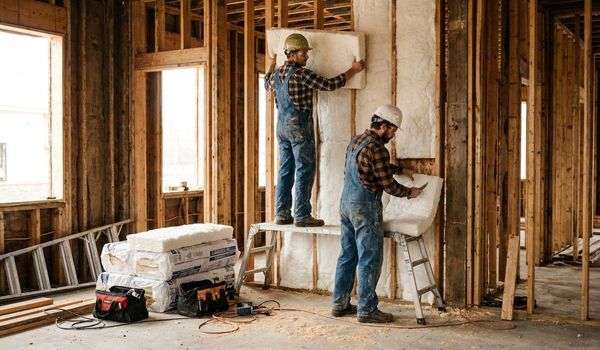
Insulation contractors are specialty trade contractors responsible for installing fiberglass batts, blown-in cellulose, spray polyurethane foam, mineral wool, and rigid foam board in walls, attics, crawl spaces, basements, and mechanical systems. Within the construction classification system used by the U.S. Census Bureau, insulation work falls primarily under specialty trade contractors, a category that also includes drywall and plaster installers who frequently perform insulation work.
Industry research firms estimate that the U.S. insulation contracting industry generates roughly $18 billion to $20 billion in annual revenue and supports an estimated 25,000 to 30,000 business establishments nationwide. That makes insulation one of the larger specialty trades in American construction, comparable in scale to fencing, flooring, and painting contractors. The industry is highly fragmented: no single company holds a meaningful national market share, and the vast majority of operators are small businesses with fewer than 20 employees.
Demand splits broadly into two channels. New construction work tracks housing starts and commercial building activity, while retrofit and weatherization work tracks energy prices, building codes, and incentive programs. In recent years the retrofit channel has grown in importance as owners of existing buildings look to cut energy costs and meet tightening efficiency standards.
Key Stat: Industry studies cited by the North American Insulation Manufacturers Association estimate that roughly 90% of U.S. homes are under-insulated, representing one of the largest untapped retrofit opportunities in residential construction.
Insulation Market Size and Growth Statistics
The U.S. insulation market, measured by material and installation value, is estimated at approximately $11 billion to $13 billion per year, depending on whether the measurement captures materials only or materials plus installation labor. Analysts tracking the sector project a compound annual growth rate in the range of 5% to 6% through the end of the decade, which would push the U.S. market toward $15 billion or more by 2030.
Several structural forces support that growth outlook:
- Aging housing stock. The median age of an American owner-occupied home is now over 40 years, according to U.S. Census Bureau housing data. Older homes almost always need air sealing and insulation upgrades to meet modern comfort and efficiency expectations.
- Steady residential construction. Annual housing starts have hovered around 1.3 million to 1.4 million units in recent years, each of which requires insulation to pass code inspections.
- Commercial building activity. Total U.S. construction spending has exceeded $2 trillion on an annualized basis, per Census Bureau reports, with commercial and industrial projects driving consistent insulation demand.
- Energy efficiency standards. Updated model energy codes, including recent editions of the International Energy Conservation Code, require higher R-values in most climate zones, which increases the dollar value of insulation work per project.
- Retrofit incentives. Federal, state, and utility energy efficiency incentive programs continue to channel billions of dollars into weatherization and building envelope upgrades.
The spray foam segment deserves special attention. Spray polyurethane foam insulation has been the fastest-growing material category in the industry, with the U.S. spray foam market estimated at roughly $1.5 billion to $2 billion annually and growth rates that outpace the broader market. Contractors who add spray foam rigs and trained crews can typically command higher margins than those focused solely on fiberglass or cellulose installation.
Growing an Insulation Business Takes Capital
From spray foam rigs to box trucks and blowers, Crestmont Capital funds the equipment insulation contractors need. Apply in minutes.
Apply Now →Workforce and Employment Statistics
The Bureau of Labor Statistics tracks insulation workers as a distinct occupation, separating floor, ceiling, and wall insulation workers from mechanical insulation workers who cover pipes, ducts, and industrial equipment. Together these occupations employ roughly 60,000 workers nationwide, and that figure rises considerably when helpers, estimators, and crew supervisors are included.
Key workforce figures for 2026 include:
- Median annual wage: Insulation workers earn a median wage in the mid-$40,000s, with experienced installers, spray foam technicians, and foremen commonly earning $55,000 to $75,000 depending on region and specialization.
- Job growth: Employment in the trade is projected to grow at roughly 4% to 6% over the decade, about in line with the average for all occupations, with replacement needs adding thousands of additional openings each year.
- Labor shortage: Contractor surveys consistently rank insulation among the trades with the most difficulty finding skilled workers, alongside electrical and plumbing. An aging workforce and limited apprenticeship pipelines are the primary causes.
- Training pathways: Most insulation workers learn on the job through informal training or registered apprenticeships, which typically run two to four years for mechanical insulation work.
For insulation business owners, the labor data carries a clear implication: growth is constrained less by demand than by the ability to hire and retain installers. Companies that invest in training, safety equipment, and competitive pay are the ones capturing the largest share of available work. That investment, in turn, often requires access to outside capital, particularly for smaller operators competing against regional firms with deeper benches.
Revenue and Business Statistics for Insulation Contractors
Dividing industry revenue by establishment count produces an average revenue per insulation business in the range of $600,000 to $800,000 per year. That average masks wide variation: a two-person attic insulation crew might gross $250,000 annually, while a diversified commercial insulation subcontractor can exceed $10 million.
Other notable business-level statistics for the industry include:
- Small business dominance: More than 90% of insulation contracting firms employ fewer than 20 people, and a large share operate with five or fewer field employees. The U.S. Small Business Administration classifies most insulation contractors as small businesses under size standards for specialty trades, which run as high as $19 million in average annual receipts.
- Profit margins: Specialty trade contractors in this space typically target gross margins of 30% to 40% on installation work and net margins of 8% to 15% after labor, materials, insurance, and overhead.
- Startup costs: A basic blown-in insulation operation can launch for $40,000 to $80,000 including a used truck and blower, while a professional spray foam rig package commonly runs $60,000 to $150,000 or more for the trailer, proportioner, compressor, and generator.
- Seasonality: Revenue is moderately seasonal, with peaks in spring and fall for retrofit work and year-round volume for contractors tied into new construction pipelines.
These numbers explain why equipment financing and working capital products are so widely used in the trade. The upfront cost of a spray foam rig, a box truck fleet, or a warehouse full of material is substantial relative to the cash flow of a typical small operator, and paying cash for major purchases can leave a business dangerously exposed during slow payment cycles.
Demand Drivers: Energy Efficiency and Construction Trends
Understanding insulation contractor statistics requires understanding what actually moves demand. Five drivers dominate the 2026 landscape:
1. Energy costs. When heating and cooling costs rise, homeowner interest in insulation rises with them. Search interest in insulation upgrades historically tracks energy price cycles, and contractors report that high utility bills remain the single most common reason customers call.
2. Building energy codes. Each update to the International Energy Conservation Code raises minimum R-values and air-sealing requirements. Jurisdictions adopting newer code editions effectively increase the amount of insulation work required on every permitted project, which lifts revenue per job across the industry.
3. Incentive programs. Federal energy efficiency incentives, state rebate programs, and utility-sponsored weatherization initiatives collectively direct billions of dollars per year toward insulation and air sealing work. Contractors who register as participating contractors with these programs gain a reliable lead channel.
4. Electrification and heat pumps. The rapid adoption of heat pumps increases the value of a tight, well-insulated building envelope, since efficient heating equipment performs best in efficient buildings. HVAC contractors increasingly partner with insulation firms, creating cross-referral pipelines.
5. Consumer awareness. Energy efficiency content on platforms like Forbes and mainstream coverage of home energy costs on outlets such as Reuters have made insulation upgrades a mainstream homeowner conversation rather than a niche concern.
By the Numbers
Insulation Contractor Industry - Key Statistics for 2026
$18B+
Estimated annual U.S. insulation contracting industry revenue
60,000+
Insulation workers employed across the United States
90%
Share of U.S. homes estimated to be under-insulated
5-6%
Projected annual market growth rate through 2030
Material and Segment Breakdown
The insulation market divides cleanly by material type, and each segment has distinct economics for contractors. Fiberglass remains the volume leader, but spray foam generates the highest revenue per installed square foot. The table below summarizes the major segments as they stand in 2026:
| Material | Approx. Market Share | Typical R-Value per Inch | Growth Outlook |
|---|---|---|---|
| Fiberglass (batt and blown) | 45-50% | R-2.9 to R-3.8 | Steady, tied to housing starts |
| Spray polyurethane foam | 20-25% | R-3.5 to R-6.5 | Fastest-growing segment |
| Cellulose (blown) | 10-15% | R-3.2 to R-3.8 | Stable in retrofit attic work |
| Mineral wool | 5-10% | R-3.0 to R-4.2 | Growing in fire-rated commercial work |
| Rigid foam board | 5-10% | R-4.0 to R-6.5 | Strong in commercial roofing and exteriors |
By building type, residential work accounts for roughly 60% to 65% of insulation demand, with commercial and industrial projects making up the balance. Within residential, the retrofit segment has gained share steadily as utility costs and efficiency awareness have climbed.
Efficiency Stat: The U.S. Environmental Protection Agency estimates that homeowners can save an average of 15% on heating and cooling costs by air sealing their homes and adding insulation in attics, floors, and crawl spaces.
Challenges Facing Insulation Contractors in 2026
The statistics above describe a healthy industry, but insulation contractors face real operational headwinds that shape business strategy this year.
Labor availability. The shortage of experienced installers is the constraint cited most often by contractors looking to grow. Recruiting from competing trades, investing in training, and retaining crews through seasonal dips all add cost and complexity. Firms that cannot staff additional crews cannot take on additional work, regardless of how strong demand is.
Material price volatility. Spray foam chemicals, fiberglass, and resin-based products have all experienced significant price swings in recent years. Contractors quoting fixed-price work weeks or months in advance carry real exposure to material cost spikes, which makes supplier relationships and inventory management genuine competitive advantages.
Cash flow timing. Commercial and builder work frequently pays on 30 to 90 day terms, while payroll and material purchases come due weekly. This gap between completing work and collecting payment is the most common financial stress point in the trade, and it intensifies precisely when a business is growing fastest.
Insurance and compliance costs. Spray foam work in particular carries elevated insurance requirements, and compliance obligations around chemical handling, respirators, and jobsite safety add ongoing overhead that smaller operators must plan for carefully.
Growth Opportunities for Insulation Businesses
For contractors positioned to invest, 2026 offers several well-defined growth paths backed by the data:
- The residential retrofit wave. With an estimated 90% of U.S. homes under-insulated and energy codes tightening, attic upgrades, air sealing, and crawl space encapsulation represent a multi-decade demand runway.
- Spray foam expansion. Adding spray foam capability lets a contractor serve higher-value jobs in both residential and light commercial work. Spray foam services also pair naturally with existing blown-in operations.
- Commercial and industrial contracts. Mechanical insulation for pipes and ducts, cold storage facilities, and metal building insulation offer larger contract values and repeat institutional customers.
- Weatherization program participation. Government-funded weatherization assistance and utility rebate programs pay contractors directly for qualifying work and provide a steady flow of pre-qualified customers.
- Regional growth corridors. Sun Belt metros continue to lead the nation in housing starts, creating outsized demand for insulation contractors in Texas, Florida, Arizona, the Carolinas, and Tennessee. U.S. Census Bureau building permit data consistently shows these regions at the top of new residential construction activity.
Each of these paths shares a common requirement: capital. Rigs, trucks, blowers, training, and marketing all cost money before they generate revenue, which is why access to flexible financing sits behind nearly every successful insulation business expansion.
How Crestmont Capital Supports Insulation Contractors
Crestmont Capital works with insulation contractors across the country to fund the equipment and working capital that growth requires. As the #1 rated business lender in the U.S., Crestmont structures financing around the realities of the trade: seasonal revenue, equipment-heavy operations, and payment cycles that rarely line up with expenses.
Contractors expanding their fleet or adding spray foam capability frequently use equipment financing to acquire proportioners, compressors, blowers, and box trucks without draining cash reserves. Those outfitting crews for larger commercial jobs can also explore construction equipment financing for the specialty machinery bigger contracts demand.
For the cash flow gap between completing work and getting paid, a business line of credit provides revolving access to funds that smooths payroll and material purchases through slow collection periods. Contractors weighing a spray foam rig purchase can also review our breakdown of spray foam equipment financing, and owners comparing funding structures will find practical guidance in our guide to insulation contractor business loans.
Ready to Expand Your Insulation Operation?
Get fast, flexible financing from the #1 business lender in the U.S. No obligation - apply in minutes.
Apply Now →Real-World Growth Scenarios
Statistics describe the industry; scenarios show how contractors actually apply financing to capture the opportunity. These four examples reflect common situations Crestmont Capital funds every week:
Scenario 1: Adding a first spray foam rig. A fiberglass insulation contractor in Georgia with steady builder relationships sees spray foam jobs going to competitors. A $95,000 rig package financed over five years puts the payment near $2,000 per month, while the higher-margin foam work it unlocks adds $15,000 to $25,000 in monthly revenue. The rig pays for itself within the first season.
Scenario 2: Staffing up for a weatherization contract. A Midwest contractor wins a utility-sponsored weatherization program worth $400,000 per year but needs two additional crews, two used box trucks, and blower equipment to fulfill it. A combination of equipment financing and a working capital facility covers the $120,000 ramp-up cost, with program payments providing predictable repayment.
Scenario 3: Bridging a slow collection cycle. A commercial insulation subcontractor in Texas carries $300,000 in receivables from general contractors on 60-day terms while meeting $45,000 in weekly payroll. A business line of credit covers the gap, and the company pays interest only on what it draws during the weeks it actually needs the funds.
Scenario 4: Buying out a retiring competitor. An established contractor in the Carolinas acquires a retiring competitor's customer list, trucks, and equipment for $250,000. Acquisition financing spreads the purchase over a term the acquired revenue comfortably covers, instantly doubling the buyer's residential retrofit book.
Pro Tip: Financing equipment preserves working capital for payroll and materials. In a trade where the gap between completing work and collecting payment routinely runs 30 to 90 days, keeping cash liquid is often the difference between accepting a growth opportunity and passing on it.
Frequently Asked Questions
How many insulation contractors are there in the US? +
Industry research estimates place the number of U.S. insulation contracting establishments at roughly 25,000 to 30,000 businesses. The industry is highly fragmented, with no dominant national player and the vast majority of firms employing fewer than 20 people.
How big is the US insulation market? +
The U.S. insulation market is estimated at approximately $11 billion to $13 billion annually when measuring materials and installation value, while insulation contracting services as an industry generate roughly $18 billion to $20 billion in revenue per year.
How fast is the insulation industry growing? +
Analysts project the U.S. insulation market to grow at a compound annual rate of roughly 5% to 6% through 2030, driven by energy code updates, retrofit demand, incentive programs, and steady residential construction activity.
What is the average revenue of an insulation contracting business? +
Average revenue per insulation business falls roughly in the $600,000 to $800,000 range, though the figure varies widely. Small crews may gross $250,000 per year while diversified commercial subcontractors can exceed $10 million annually.
How much do insulation workers earn? +
Insulation workers earn a median annual wage in the mid-$40,000s according to Bureau of Labor Statistics data. Experienced installers, spray foam technicians, and crew supervisors commonly earn $55,000 to $75,000 depending on region and specialization.
Is the insulation industry facing a labor shortage? +
Yes. Contractor surveys consistently rank insulation among the trades with the greatest difficulty finding skilled workers. An aging workforce and limited apprenticeship pipelines mean labor availability, not demand, is the primary constraint on industry growth.
What share of the market does spray foam insulation hold? +
Spray polyurethane foam accounts for an estimated 20% to 25% of the U.S. insulation market and is the fastest-growing material segment. The U.S. spray foam segment alone is estimated at $1.5 billion to $2 billion per year.
What percentage of US homes are under-insulated? +
Industry studies cited by the North American Insulation Manufacturers Association estimate that roughly 90% of U.S. homes are under-insulated relative to current efficiency recommendations, creating an enormous long-term retrofit opportunity.
What drives demand for insulation contractors? +
The five main demand drivers are energy costs, building energy code updates, federal and state incentive programs, heat pump adoption and electrification, and growing consumer awareness of home energy efficiency. New housing starts and commercial construction add baseline volume.
How much does it cost to start an insulation contracting business? +
A basic blown-in insulation operation can launch for roughly $40,000 to $80,000 including a used truck and blower. A professional spray foam rig package typically runs $60,000 to $150,000 or more for the trailer, proportioner, compressor, and generator.
What equipment do insulation contractors need? +
Core equipment includes insulation blowers, spray foam proportioners and rigs, air compressors, generators, box trucks or trailers, ladders, and safety gear. Commercial work may also require vacuum removal systems, scaffolding, and specialty cutting tools.
Are insulation contractor businesses profitable? +
Well-run insulation contractors typically target gross margins of 30% to 40% on installation work and net margins of 8% to 15%. Profitability depends heavily on labor efficiency, material purchasing, and keeping crews consistently scheduled.
What is the job outlook for insulation workers? +
Employment of insulation workers is projected to grow roughly 4% to 6% over the decade, about in line with the average for all occupations. Replacement of retiring workers adds thousands of additional openings each year beyond new growth.
How do insulation contractors finance equipment and growth? +
Most contractors use a combination of equipment financing for rigs and trucks, working capital loans for materials and payroll, and business lines of credit for cash flow gaps. Crestmont Capital specializes in fast, flexible financing built for contractors.
What trends will shape the insulation industry after 2026? +
Key trends include continued tightening of energy codes, growth of the retrofit market as housing stock ages, spray foam and high-R material adoption, electrification driving envelope upgrades, and consolidation as private equity shows growing interest in specialty trades.
Put These Industry Trends to Work
Join thousands of contractors who trust Crestmont Capital for fast, flexible business funding. Apply today.
Apply Now →How to Get Started
Complete our quick application at offers.crestmontcapital.com/apply-now - takes just a few minutes.
A Crestmont Capital advisor will review your needs and match you with the right financing option.
Receive your funds and put them to work - often within days of approval.
Conclusion
The insulation contractor statistics for 2026 describe an industry with rare tailwinds: $18 billion to $20 billion in annual revenue, a market growing at 5% to 6% per year, 60,000 workers and counting, and a residential retrofit opportunity measured in the tens of millions of under-insulated homes. Demand drivers from energy codes to electrification point in the same direction, and the primary constraint on growth is capacity, not customers.
For insulation business owners, the strategic question is not whether the work exists but whether the business can fund the crews, rigs, and trucks needed to capture it. Companies that secure flexible capital ahead of demand are the ones turning these industry statistics into revenue. To explore financing options built specifically for contractors, visit Crestmont Capital or start an application today.
Disclaimer: The information provided in this article is for general educational purposes only and is not financial, legal, or tax advice. Funding terms, qualifications, and product availability may vary and are subject to change without notice. Crestmont Capital does not guarantee approval, rates, or specific outcomes. For personalized information about your business funding options, contact our team directly.

About the author and reviewer
Allan GarfinkleMBA (Finance), JD
Chief Revenue Officer, Crestmont Capital
Allan Garfinkle is the Chief Revenue Officer at Crestmont Capital, where he has spent more than a decade leading revenue strategy, business development, and operational growth. With 28 years of experience building and advising startups and small businesses, Allan has helped more than 10,000 business owners navigate financing decisions, growth opportunities, and changing economic conditions. He earned a Bachelor of Science in Economics and an MBA with a concentration in Finance from Northeastern University, as well as a Juris Doctor from New England Law, where his studies focused on contracts and business law. His writing draws on extensive practical experience in small-business lending, equipment financing, business credit, and commercial finance.