Indoor batting and golf combo facility financing gives entrepreneurs a path to fund the two most capital-intensive parts of a dual-concept entertainment venue at once: batting cage systems and golf simulator bays. These hybrid facilities are becoming one of the fastest-growing segments of the family entertainment and sports entertainment industry, and lenders have developed financing structures specifically suited to the mixed equipment lists, longer buildouts, and revenue models these venues rely on.
In This Article
What Is Indoor Batting and Golf Combo Facility Financing?
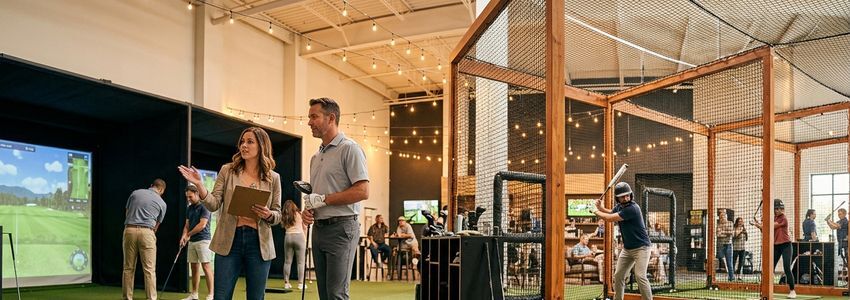
Indoor batting and golf combo facility financing refers to commercial loans, leases, and credit lines structured to fund a venue that combines batting cages, pitching tunnels, and golf simulator bays under one roof. Unlike single-sport facilities, combo venues require financing that covers two distinct equipment categories at once: ball-pitching machinery and netting systems for the batting side, and high-definition launch monitors, projection screens, and simulator software for the golf side.
These hybrid concepts have grown in popularity because they let operators capture two customer bases with one lease footprint. A facility might run six batting cages during Little League season and pivot unused bays to golf simulator rentals in the winter, or run both simultaneously to appeal to corporate groups, birthday parties, and league players. Lenders who understand this dual-revenue model are more comfortable underwriting the equipment and buildout costs than a general-purpose commercial lender unfamiliar with the space.
Financing typically covers three cost centers: the batting equipment (pitching machines, cage netting, turf, scoreboards), the golf equipment (simulator screens, launch monitors, projectors, simulator software licenses, flooring), and the buildout itself (electrical work, HVAC, sound dampening, lighting, and tenant improvements). Because these are higher-ticket purchases than a single-concept venue, financing is often the difference between opening with a partial build and opening at full capacity on day one.
The combo model itself is a direct response to a real problem single-concept entertainment operators run into: uneven seasonal demand. A batting cage facility with no golf simulator bays often sees a steep revenue drop once outdoor baseball and softball seasons wind down, while a golf simulator lounge with no batting cages misses out on the spring and summer surge of youth leagues looking for off-field practice space. By financing both equipment categories in the same buildout, operators smooth out revenue across the calendar year instead of riding the peaks and valleys of a single sport's season.
Lenders who specialize in sports and entertainment equipment financing also tend to understand depreciation schedules differently than a generalist bank would. Golf simulator technology, particularly launch monitors and tracking sensors, improves rapidly, which means some operators prefer shorter financing terms or lease structures so they are not locked into five-year-old hardware while competitors offer the newest tracking accuracy. Batting equipment, by contrast, tends to hold up mechanically for much longer, so financing terms on pitching machines and cage structures are often stretched out to match that longer useful life. A lender who treats the entire combo facility as a single undifferentiated equipment package may not structure the deal in a way that actually reflects how each piece of equipment ages.
Key Benefits of Financing a Batting and Golf Combo Venue
Financing a combo facility instead of paying cash preserves working capital for the parts of the business that are hardest to predict in year one: staffing, marketing, league partnerships, and the first few months of utility and lease payments before steady foot traffic builds.
- Preserve cash flow: Spread the cost of pitching machines, simulator bays, and buildout across manageable monthly payments instead of a large upfront outlay.
- Open with full capacity: Financing both equipment categories at once lets you launch with a complete mix of bays rather than a partial build that limits bookings.
- Match payments to equipment life: Terms can align with how long batting and golf equipment realistically perform before needing upgrades or replacement.
- Protect credit lines for operations: Keep revolving credit available for payroll, inventory, and marketing rather than tying it up in hard equipment costs.
- Faster time to revenue: Equipment-specific lenders who understand combo venues can often move faster than a bank unfamiliar with the business model.
- Potential tax treatment advantages: Depending on how the financing is structured, businesses may be able to deduct equipment costs under standard business expense rules. Always confirm specifics with a qualified tax professional.
Ready to Build Your Combo Facility?
Get fast, flexible financing from the #1 business lender in the U.S. No obligation. Apply in minutes.
Apply Now →How Combo Facility Financing Works
Most lenders evaluate combo facility financing through the same lens they use for any commercial equipment and buildout package, with a few extra questions specific to dual-concept venues.
- Define your equipment and buildout scope. List every batting-side item (pitching machines, cages, netting, turf, protective padding, scoreboards) and every golf-side item (simulator enclosures, launch monitors, projectors, screens, simulator software, flooring) separately, along with contractor quotes for electrical, HVAC, and tenant improvements.
- Get quotes from equipment vendors. Pitching machine and simulator manufacturers typically provide itemized quotes that lenders use to verify collateral value and structure the loan or lease.
- Submit a financing application. Most equipment lenders ask for basic business information, time in business or a startup business plan, personal and business credit information, and the vendor quotes.
- Underwriting review. The lender reviews creditworthiness, the realistic revenue model for a combo venue (membership, league fees, hourly bay rentals, party packages), and the collateral value of the equipment being financed.
- Approval and terms. Loan or lease terms are set based on the useful life of the equipment, typically longer for structural buildout items and shorter for technology-heavy golf simulator hardware that may need upgrades sooner.
- Funding and vendor payment. Once approved, funds are disbursed to equipment vendors and contractors, or directly to you depending on the structure of the loan.
By the Numbers
Indoor Entertainment and Golf Simulator Industry Snapshot
$1.9B+
Estimated 2025 global golf simulator market value
~9.6%
Projected annual growth rate for golf simulator demand through 2034
1,450+
Active family entertainment centers reported operating in the U.S.
3-10 yrs
Typical equipment financing term range tied to useful equipment life
Equipment and Buildout Categories
A combo facility's financing needs typically break down into a few core categories, and understanding each one helps you build an accurate funding request.
Batting Side Equipment
- Pitching machines (baseball and softball, multiple speed settings)
- Cage netting, frames, and dividers
- Synthetic turf and batter's box mats
- Protective screens and L-screens
- Digital scoreboards and pitch-speed displays
Golf Side Equipment
- Simulator enclosures, impact screens, and projectors
- Launch monitors and ball-tracking sensors
- Simulator software licenses (courses, swing analysis)
- Hitting mats and flooring built to absorb repeated impact
- Seating, lounge furniture, and bay dividers
Shared Buildout Costs
- Electrical upgrades for lighting, sound, and simulator hardware
- HVAC sized for an indoor facility with high ceilings and heavy equipment load
- Sound dampening and acoustic treatment between bays
- Point-of-sale, booking software, and security systems
- Signage, branding, and lobby or party-room furnishings
Key Stat: The global golf simulator market was valued at roughly $1.9 to $2.1 billion in 2025 and is projected to grow at nearly a 9.6% compound annual rate through 2034, driven in large part by commercial installations like combo entertainment venues.
Who This Financing Is Best For
Combo facility financing is designed for a specific type of operator and a specific stage of business growth.
- New entrepreneurs opening a first location who need to fund batting and golf equipment plus buildout at the same time without draining personal savings.
- Existing batting cage operators adding golf simulators to diversify revenue and attract corporate, league, and off-season customers.
- Existing golf simulator lounges adding batting cages to capture youth sports leagues and family traffic during peak seasons.
- Multi-location operators expanding a proven combo concept into a second or third market.
- Operators taking over an existing space that needs significant retrofitting for both equipment types.
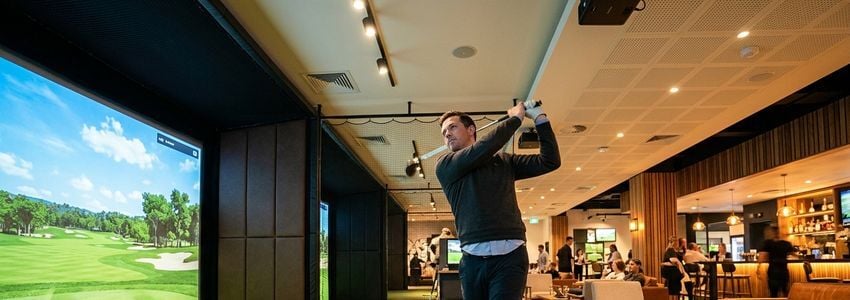
Whether you are opening your first combo venue or expanding a facility that already does one half of the business well, a financing partner who understands both equipment categories can help structure a deal that matches your actual revenue timeline rather than a generic equipment loan template.
Comparing Your Financing Options
Several financing structures can fund a combo facility, and the right one depends on how much of the project is equipment versus construction, and how established your business is.
| Financing Type | Best For | Typical Term | Collateral |
|---|---|---|---|
| Equipment Financing | Pitching machines, simulators, screens | 3-7 years | The equipment itself |
| Equipment Leasing | Operators who want lower upfront cost and upgrade flexibility | 2-5 years | Leased equipment |
| SBA Loans | Full buildout plus equipment for a new location | 10-25 years | Business assets, sometimes real estate |
| Business Line of Credit | Smaller add-ons, repairs, or seasonal cash flow gaps | Revolving | Varies, often unsecured |
| Unsecured Working Capital | Opening costs not tied directly to equipment | 6-24 months | None required |
Many combo facility owners use more than one financing type at once: an equipment loan for the pitching machines and simulator hardware, paired with a working capital loan or line of credit to cover the first several months of operating expenses while the business builds a customer base.
It is worth noting that lease structures and loan structures carry different implications for ownership and balance sheet treatment. With an equipment loan, you own the pitching machines and simulator hardware outright once the loan is paid off, which can matter if you plan to hold the equipment for a decade or more. With a lease, you typically have lower monthly payments and the option to upgrade to newer simulator technology at the end of the term, but you do not build equity in the equipment itself. Many combo facility operators choose a split approach: financing the batting side (which ages slowly) through a purchase-style equipment loan, and the golf side (which evolves quickly) through a lease.
SBA loans deserve a closer look for operators planning a full ground-up buildout rather than a simple equipment refresh. Because SBA 7(a) and 504 programs can bundle leasehold improvements, equipment, and sometimes real estate into a single loan, they are often the most cost-effective option for a first-time combo facility that needs everything from electrical work to pitching machines financed under one roof. The tradeoff is a longer and more document-intensive approval process compared to a straightforward equipment loan, so operators on a tight opening timeline sometimes combine a faster equipment loan for the time-sensitive purchases with an SBA loan in process for the larger buildout.
How Crestmont Capital Helps
Crestmont Capital works with entertainment and sports facility operators to structure financing around the realities of a combo venue, not a one-size-fits-all template. Our equipment financing programs are built to cover both batting-side and golf-side equipment in a single application, and our equipment leasing options give operators flexibility to upgrade simulator technology as it evolves without being locked into outdated hardware.
For operators who need to fund the full buildout alongside equipment, our financing solutions can be paired with an unsecured working capital loan to cover opening costs that fall outside strict equipment collateral, such as marketing, initial staffing, and lease deposits. For larger, multi-location projects, our team can also walk you through SBA loan options that combine real estate, buildout, and equipment into one long-term facility.
If you already operate a golf simulator business and are adding batting cages, or you run a batting cage facility and are adding golf simulator bays, our underwriting team has direct experience financing both equipment categories and can move quickly through the application process.
Fund Your Combo Facility the Right Way
From pitching machines to golf simulator bays, we structure financing around your full equipment list. No obligation to apply.
Get Started →Real-World Scenarios
Scenario 1: The New Combo Venue
A first-time entrepreneur signs a lease on a 10,000-square-foot warehouse space and plans six batting cages and four golf simulator bays. She uses equipment financing to cover pitching machines, netting, simulator hardware, and software, while a separate working capital loan covers the first three months of rent and payroll before league signups generate steady revenue.
Scenario 2: Adding Golf Simulators to an Existing Batting Facility
An established batting cage operator notices winter months bring in a fraction of summer revenue. He finances two golf simulator bays in an underused corner of the facility, using equipment leasing to keep monthly payments low and preserve the option to upgrade simulator software as newer versions release.
Scenario 3: Adding Batting Cages to a Golf Simulator Lounge
A golf simulator lounge owner wants to attract more weekend family traffic and youth baseball leagues. She finances three batting cages and a pitching machine package, reusing existing lobby and point-of-sale infrastructure, which keeps her total request focused on equipment rather than a full buildout.
Scenario 4: Multi-Location Expansion
An operator with one successful combo venue wants to replicate the concept in a second city. He pursues an SBA loan to cover leasehold improvements, equipment, and initial working capital for the second location, using the first facility's financial track record to strengthen the application.
Scenario 5: Equipment Replacement and Upgrade
A five-year-old combo facility needs to replace aging pitching machines and upgrade its oldest golf simulator bays to current launch-monitor technology. The owner uses equipment financing specifically for the replacement equipment, keeping the loan term aligned with the shorter useful life of simulator technology compared to structural batting cage equipment.
Scenario 6: Corporate and League Partnership Growth
A combo facility owner lands a partnership with a local corporate wellness program and a youth travel baseball league, both of which want recurring access to bays during off-peak weekday hours. To support the added volume, he finances two additional golf simulator bays and upgrades his cage netting system, using a mid-sized equipment loan sized specifically to the incremental revenue those partnerships are expected to generate.
Frequently Asked Questions
Turn Your Combo Concept Into a Reality
Equipment financing built around batting cages and golf simulators, not a generic template. Apply in minutes.
Apply Now →Next Steps
Get itemized pricing for batting cage and golf simulator equipment separately.
Factor in electrical, HVAC, flooring, and sound dampening needs for both concepts.
Have personal and business financial details ready for underwriting review.
Submit your application to a team experienced in entertainment and sports facility financing.
Conclusion
Indoor batting and golf combo facility financing exists because these venues have genuinely different equipment needs than a single-concept business, and the right financing structure reflects that. Whether you are opening a brand-new facility with six cages and four simulator bays, or adding one concept to a business that already runs the other, matching your financing to the useful life and purpose of each equipment category sets your venue up to open strong and stay profitable through every season.
Crestmont Capital works with entertainment and sports facility operators across the country to structure financing for exactly this kind of dual-concept business. If you are ready to move forward with your batting and golf combo facility, our team can walk you through the options and help you find the structure that fits your project, whether that means a straightforward equipment loan, a lease built around upgrading simulator technology, or a larger SBA-backed buildout that covers construction, equipment, and working capital in one package.
Disclaimer: The information provided in this article is for general educational purposes only and is not financial, legal, or tax advice. Funding terms, qualifications, and product availability may vary and are subject to change without notice. Crestmont Capital does not guarantee approval, rates, or specific outcomes. For personalized information about your business funding options, contact our team directly.