
 (800) 949-0401
Organic Waste Composting Equipment Financing: The Complete Guide for Green Businesses
Organic waste composting is one of the fastest-growing sectors in the green economy. Businesses ranging from commercial farms and food processors to municipalities and waste management companies are investing in composting equipment to reduce landfill dependency, lower disposal costs, and meet increasingly stringent environmental regulations. But high-quality composting equipment carries a significant price tag, and that is where organic waste composting equipment financing becomes essential.
Whether you operate a small farm looking to process crop residues or a large food manufacturing facility generating tons of organic waste daily, the right financing solution can make composting technology accessible without draining your operating capital. This complete guide walks you through every aspect of financing composting equipment, from understanding your loan options to qualifying, applying, and getting funded.
In This Article
- What Is Organic Waste Composting Equipment?
- Types of Composting Equipment You Can Finance
- Financing Options for Composting Equipment
- How Composting Equipment Financing Works
- By the Numbers: Composting Industry Statistics
- Who Qualifies for Composting Equipment Financing?
- Financing vs. Leasing: Which Is Better?
- How Crestmont Capital Helps
- Real-World Scenarios
- Frequently Asked Questions
- How to Get Started
What Is Organic Waste Composting Equipment?
Organic waste composting equipment refers to the machinery and systems used to convert biodegradable materials into compost, a rich soil amendment used in agriculture, landscaping, and horticulture. The organic materials processed typically include food scraps, yard waste, agricultural residues, manure, paper, and cardboard. When managed properly, composting diverts these materials from landfills, reduces methane emissions, and creates a valuable end product.
Composting equipment varies widely in scale and complexity. Small businesses might use basic turning machines or windrow turners, while large-scale operations require industrial in-vessel composting systems, aeration equipment, screening machines, and automated monitoring technology. The common thread is that all of this equipment represents a meaningful capital investment that benefits from structured financing.
Industry Insight: The U.S. composting industry processes over 25 million tons of organic waste annually, diverting it from landfills. With growing regulatory mandates for organic waste diversion in states like California, Oregon, and New York, demand for commercial composting equipment is accelerating rapidly.
The market for composting equipment includes a broad range of buyers: commercial farms, food and beverage manufacturers, institutional food service operations (universities, hospitals, corporate campuses), municipalities, landscaping companies, waste haulers, and environmental services firms. Each of these business types can access composting equipment financing through dedicated lending programs designed for commercial equipment acquisition.
Types of Composting Equipment You Can Finance
Before exploring financing options, it helps to understand what types of equipment fall under the composting umbrella. Lenders generally finance any equipment that has a clear business purpose and holds residual value, and composting equipment qualifies across the board.
Windrow Turners
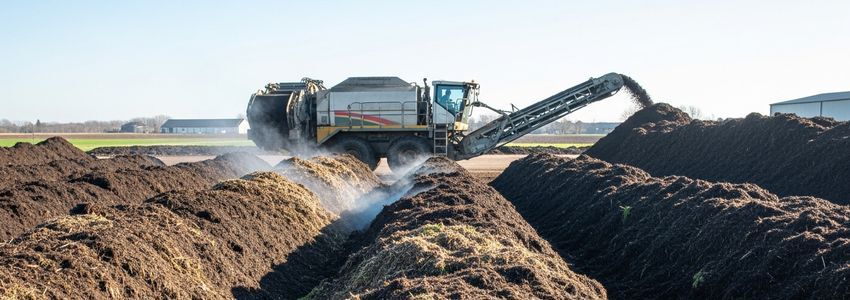
Windrow turners are mobile machines that aerate large outdoor composting rows (windrows) by mechanically turning and mixing the material. They range from small tow-behind units costing $15,000 to $30,000 to large self-propelled turners exceeding $200,000. For agricultural and municipal operations processing high volumes of material, windrow turners are the backbone of the operation.
In-Vessel Composting Systems
In-vessel systems process organic waste inside enclosed containers or vessels, allowing precise control over temperature, moisture, and aeration. These systems are ideal for food processors, grocery chains, and institutional facilities that generate consistent streams of food waste. In-vessel systems typically cost between $50,000 and $500,000+ depending on capacity, making financing a practical necessity.
Trommel Screens and Shredders
Trommel screens sort finished compost by particle size, while shredders pre-process bulky organic material before composting begins. These machines range from $20,000 to over $150,000 and are often purchased alongside primary composting systems as part of a complete processing line.
Aeration and Blower Systems
Aerated static pile systems use blowers and perforated pipes to push air through composting material, dramatically accelerating the process. These engineered systems require infrastructure investment including fans, piping, and control systems. Total costs typically range from $30,000 to $200,000 for commercial-scale installations.
Biodigesters and Anaerobic Digesters
Anaerobic digesters go a step beyond composting by processing organic waste without oxygen to produce biogas (a renewable energy source) and digestate (a liquid fertilizer). These systems represent some of the largest capital investments in organic waste processing, often ranging from $200,000 to several million dollars for commercial-scale units.
Monitoring and Control Technology
Modern composting operations rely on software and sensor systems to monitor temperature, moisture, oxygen levels, and process parameters. These technology components can be financed as part of a larger equipment package, enabling businesses to implement fully automated, data-driven composting operations.
Ready to Finance Your Composting Equipment?
Get competitive rates on organic waste composting equipment financing from the #1 business lender in the U.S. Apply in minutes with no obligation.
Apply Now ->Financing Options for Composting Equipment
Business owners looking to fund composting equipment have several financing pathways available. The right choice depends on the size of the purchase, the business's credit profile, cash flow needs, and long-term ownership goals.
Equipment Loans
An equipment loan is a term loan where the composting equipment itself serves as collateral. Lenders typically finance 80 to 100 percent of the equipment's purchase price, with repayment terms ranging from 24 to 72 months. Interest rates for well-qualified borrowers range from 5 to 15 percent annually. Equipment loans result in full ownership at the end of the term, making them ideal for businesses that plan to use the equipment for many years.
Equipment Leasing
Equipment leasing allows businesses to use composting equipment for a set period in exchange for monthly payments, without taking on debt or ownership responsibility. At the end of the lease term, businesses typically have the option to return the equipment, renew the lease, or purchase the equipment at its residual value. Leasing preserves cash flow and can provide flexibility when technology is evolving rapidly.
SBA Loans
The Small Business Administration's 7(a) and 504 loan programs can be used to finance composting equipment, particularly for larger investments. SBA 7(a) loans offer up to $5 million with terms up to 10 years for equipment, while SBA 504 loans are designed for major fixed asset acquisitions over $150,000. SBA loans offer competitive rates but require more documentation and longer approval timelines than conventional equipment financing.
Working Capital Loans
If the composting equipment purchase is relatively modest or the business needs flexibility in how it uses the funds, a working capital loan or business line of credit can cover the acquisition cost. These products are typically unsecured and rely on business revenue rather than equipment collateral, making them suitable for businesses that have strong cash flow but may not qualify for equipment-specific financing.
Green Business Financing Programs
Several state and federal programs offer preferential financing for businesses investing in environmentally beneficial equipment. The USDA's Rural Energy for America Program (REAP) and certain state-level clean energy funds may offer grants or low-interest loans for composting infrastructure, particularly for agricultural operations and rural businesses. Stacking these programs with conventional equipment financing can dramatically reduce out-of-pocket costs.
By the Numbers
Organic Waste Composting — Key Statistics
25M+
Tons of organic waste composted annually in the U.S.
$9.4B
U.S. composting market size projected by 2028
30%+
Of landfill waste is compostable organic material
4,700+
Composting facilities currently operating across the U.S.
How Composting Equipment Financing Works
Understanding the mechanics of equipment financing helps business owners make informed decisions and prepare for the application process. Here is how the process typically unfolds from initial inquiry to funded equipment.
Step 1: Determine the Equipment You Need
Before approaching a lender, identify the specific composting equipment you plan to purchase, obtain quotes from vendors or manufacturers, and confirm the total project cost including installation, accessories, and any site preparation required. Having a clear picture of the purchase helps lenders evaluate the collateral and structure an appropriate loan.
Step 2: Assess Your Business Qualifications
Lenders evaluate composting equipment loan applications based on several key factors: business credit score, personal credit score, time in business, annual revenue, and existing debt obligations. Most conventional equipment lenders require a minimum of 12 to 24 months in business and annual revenue of at least $100,000. Businesses with credit scores above 650 generally have access to the broadest range of financing options.
Step 3: Gather Documentation
Typical documentation requirements for composting equipment financing include the last 2 to 3 months of business bank statements, recent tax returns, financial statements, a vendor quote or invoice, and basic business registration documents. Some lenders, particularly for smaller equipment purchases, can approve loans with only bank statements, streamlining the process considerably.
Step 4: Apply and Receive Approval
Many equipment lenders offer online applications that take 10 to 15 minutes to complete. Approval timelines vary from same-day decisions for straightforward applications to one to two weeks for larger or more complex transactions. Once approved, the lender issues a commitment letter outlining the loan amount, rate, term, and conditions.
Step 5: Close the Loan and Take Delivery
At closing, the lender pays the equipment vendor directly, and you take delivery of the composting equipment. Your repayment schedule begins according to the agreed terms. For lease arrangements, you begin making monthly payments immediately and the equipment is available for productive use from day one.
Pro Tip: For equipment purchases above $150,000, request multiple competing quotes from different lenders. Even a 1 percent difference in interest rate on a $200,000 loan over 60 months saves approximately $5,800 in total interest charges.
Who Qualifies for Composting Equipment Financing?
Composting equipment financing is available to a wide range of business types. Any legitimate business that processes organic waste, produces compost for sale, or uses composting as part of its waste management strategy can potentially qualify.
Agricultural Operations
Farms of all sizes benefit from composting equipment to process crop residues, manure, and food processing byproducts. Agricultural businesses often have strong fixed assets and land collateral, which supports equipment loan approvals even when revenue may be seasonal or cyclical.
Food and Beverage Manufacturers
Food processors, breweries, juice manufacturers, and other food production facilities generate significant organic waste streams. Composting equipment helps these businesses reduce disposal costs and often enables them to sell finished compost as a secondary revenue stream. Strong business financials make food and beverage companies excellent candidates for equipment financing.
Municipalities and Government Agencies
Many local governments operate composting programs as part of their solid waste management systems. While government entities often have access to grants and bonds, equipment financing and leasing programs provide flexibility when budget cycles create timing challenges for capital purchases.
Landscaping and Environmental Services Companies
Landscaping companies, tree services, and environmental consultants that handle green waste can use composting equipment to process materials on-site rather than paying tipping fees at disposal facilities. These businesses often have steady revenue and equipment collateral that supports straightforward financing.
Waste Management and Recycling Companies
Commercial waste haulers and recycling operations that want to add composting to their service offerings represent prime candidates for equipment financing. Established waste management companies typically have the revenue history, credit profile, and business infrastructure lenders look for.
Does Your Green Business Qualify?
Crestmont Capital works with agricultural businesses, food processors, landscapers, and environmental services companies nationwide. Find out your options today.
Get Pre-Qualified ->Composting Equipment Financing vs. Leasing: A Comparison
One of the most common decisions business owners face is whether to finance (purchase with a loan) or lease composting equipment. Both approaches have distinct advantages depending on your cash flow situation, how long you plan to use the equipment, and your balance sheet preferences.
| Feature | Equipment Loan (Financing) | Equipment Lease |
|---|---|---|
| Ownership | You own the equipment outright at loan payoff | Lender retains ownership; option to buy at end |
| Monthly Payments | Generally higher (paying off principal + interest) | Generally lower (paying for use, not full purchase) |
| Down Payment | Often 10-20%, some lenders offer 0% down | Typically first and last payment at signing |
| Balance Sheet Impact | Appears as asset and liability on balance sheet | Operating lease may keep off balance sheet |
| Equipment Flexibility | Own it forever; upgrading requires selling old unit | Easy to upgrade at end of lease term |
| Total Cost | Lower long-term cost if equipment has long useful life | May cost more over time if renewals are frequent |
| Best For | Equipment with 10+ year lifespan; stable operations | Rapidly evolving technology; cash flow constraints |
For most composting equipment - particularly large, durable machines like windrow turners and in-vessel systems - an equipment loan typically delivers better long-term value because the machinery has a useful life of 10 to 20 years or more. Leasing makes more sense for technology-heavy components like monitoring software and sensor systems that may need upgrading as the industry evolves.
How Crestmont Capital Helps Composting Businesses Get Funded
Crestmont Capital is a U.S.-based business lender rated #1 in the country, offering a full range of equipment financing and business loan products for green businesses, agricultural operations, and environmental services companies. Whether you need to finance a single windrow turner or fund an entire composting facility buildout, Crestmont Capital has the lending products and industry expertise to help you succeed.
Our equipment financing programs cover composting equipment of all types and sizes, with loan amounts from $25,000 to $5 million and terms from 24 to 84 months. For agricultural businesses, our agricultural equipment financing programs are specifically designed for farm operations that need flexible, seasonal-friendly repayment structures.
Businesses that generate compost as a byproduct of food processing or waste management operations may also benefit from our working capital loans, which provide flexible funding for operational expenses, expansion costs, and equipment purchases without the collateral requirements of traditional secured financing.
For businesses looking to finance an entire composting operation including facility improvements, multiple equipment units, and technology systems, our commercial financing solutions offer customized capital structures that address the full scope of the project.
Our SBA loan programs are available for qualifying businesses and offer the most competitive rates on the market for long-term equipment investments. Our SBA specialists guide borrowers through the application process from start to finish, making what can be a complex process as straightforward as possible.
Why Crestmont Capital? Our team specializes in equipment and business lending for industries that traditional banks may hesitate to serve, including environmental services, agricultural processing, and green technology. We understand the economics of composting operations and structure financing accordingly.
Real-World Scenarios: Composting Equipment Financing in Action
Understanding how financing works in practice helps business owners evaluate options and set realistic expectations. Here are several representative scenarios illustrating different financing approaches for composting equipment.
Scenario 1: Mid-Size Farm Adding Composting Capacity
A 500-acre diversified farm in Iowa generates significant quantities of manure and crop residue. The farm's owner wants to invest in a self-propelled windrow turner ($185,000) to process these materials into compost for sale to local gardeners and landscapers. With 15 years in business, strong annual revenue, and good credit, the farm qualifies for a 60-month equipment loan at 7.5 percent APR. Monthly payments of approximately $3,700 are comfortably supported by projected compost sales revenue of $8,000 to $12,000 per month once the operation reaches capacity.
Scenario 2: Food Processor Installing In-Vessel System
A mid-size food processing plant in California generates 8 tons of organic waste daily and faces increasing tipping fees at the local landfill. The company wants to install an in-vessel composting system ($350,000 installed) to process waste on-site and sell the resulting compost to local farms. Using an equipment loan with a 10 percent down payment ($35,000) and a 72-month term, the company finances $315,000 at 8 percent APR for monthly payments of approximately $4,900. Landfill cost savings of $6,000 per month make the project cash-flow positive from the start.
Scenario 3: Startup Composting Company Using SBA Financing
An entrepreneur in Oregon is launching a commercial composting service targeting restaurants and food retailers in the Portland metro area. The startup needs an aerated static pile system and a trommel screen totaling $275,000. As a new business, the owner qualifies for an SBA 7(a) loan with a 10-year term, leveraging the lower payments to match the ramp-up period as the customer base grows. The SBA loan's longer term reduces monthly payments versus conventional equipment financing, supporting cash flow during the critical early growth phase.
Scenario 4: Municipal Composting Program Expansion
A mid-size city in New York State wants to expand its existing composting program by adding a second windrow operation and upgrading its monitoring and control systems. The total equipment cost is $420,000. The city uses a combination of state grant funding ($100,000) and equipment financing ($320,000) structured with a 48-month term. The phased approach ensures the expansion can be absorbed into the existing operational budget without straining city finances.
Scenario 5: Landscaping Company Adding Composting Revenue Stream
A landscaping company in Texas collects green waste from clients and currently pays to dispose of it at a regional composting facility. The business owner has identified an opportunity to process this material on-site using a tow-behind windrow turner ($28,000) and sell the resulting compost to local nurseries and garden centers. Using a short-term equipment loan with a 36-month repayment schedule, the company funds the purchase for approximately $870 per month - well below the $2,400 monthly savings from eliminating tipping fees.
Scenario 6: Brewery Adding Spent Grain Composting
A regional craft brewery in Colorado generates significant quantities of spent grain and other organic waste. Rather than paying a local farmer to haul away spent grain, the brewery decides to invest in a compact in-vessel composting system ($65,000) to process waste on-site. Using a working capital loan, the brewery funds the purchase over 36 months for approximately $2,100 per month, funded by savings on waste disposal and revenue from selling compost to local homeowners and farmers markets.
Frequently Asked Questions
How to Get Started
Complete our quick application at offers.crestmontcapital.com/apply-now - it only takes a few minutes.
A Crestmont Capital equipment financing advisor will review your needs and match you with the right loan or lease for your composting project.
Receive your funds and take delivery of your composting equipment - often within days of approval. Start processing organic waste and building your green business.
Conclusion
Organic waste composting equipment financing opens the door to a growing, profitable, and environmentally important sector of the green economy. Whether you are a farm looking to process agricultural residues, a food manufacturer trying to reduce disposal costs, or an entrepreneur building a commercial composting service, the right financing solution makes your equipment investment accessible without sacrificing operational cash flow.
The key is understanding your options: equipment loans for long-term ownership, leasing for flexibility and lower payments, SBA financing for the most competitive rates, and working capital solutions for smaller or more flexible needs. No two composting businesses are identical, and the best financing structure reflects your specific operational model, cash flow dynamics, and long-term goals.
Crestmont Capital specializes in helping green businesses access the capital they need to grow. Our experience with agricultural, food processing, and environmental services companies means we understand the unique financing needs of composting operations. Apply today and take the first step toward building or expanding your organic waste composting capability with the funding to match your vision.
Disclaimer: The information provided in this article is for general educational purposes only and is not financial, legal, or tax advice. Funding terms, qualifications, and product availability may vary and are subject to change without notice. Crestmont Capital does not guarantee approval, rates, or specific outcomes. For personalized information about your business funding options, contact our team directly.








