Winning bigger contracts requires more than ambition and a solid pitch. Clients and general contractors awarding large projects expect subcontractors and vendors to have the equipment, capacity, and operational readiness to deliver on time. For many small and mid-size businesses, the biggest barrier to scaling up is access to the right tools and machinery — not talent, not reputation, and not effort.
Equipment loans solve that barrier. They allow businesses to acquire the machinery, vehicles, and technology they need to take on larger workloads, meet project specifications, and compete against larger competitors for contracts that were previously out of reach. When structured correctly, equipment financing is one of the most capital-efficient ways to grow a business without draining working capital reserves.
This guide covers everything you need to know about using equipment loans strategically — from how they work and who qualifies, to real-world scenarios showing exactly how financing can help you win the contracts that change your business trajectory.
In This Article
- What Are Equipment Loans?
- How Equipment Loans Work
- How Equipment Loans Help You Win Bigger Contracts
- Types of Equipment You Can Finance
- Equipment Loans vs. Other Financing Options
- Who Qualifies for Equipment Loans?
- How Crestmont Capital Helps
- Real-World Scenarios
- How to Get Started
- Frequently Asked Questions
What Are Equipment Loans?
Equipment loans are business financing products specifically designed to fund the purchase of physical assets used in commercial operations. Unlike general-purpose term loans that can be used for any business expense, equipment loans are secured by the equipment being financed. This means the machinery, vehicle, or technology itself serves as collateral, which typically results in more favorable interest rates and approval terms compared to unsecured financing.
The loan proceeds go directly toward the purchase price of the equipment. The borrower then repays the principal plus interest over a fixed term — typically 24 to 84 months — while using the equipment to generate revenue. At the end of the repayment period, the business owns the asset outright with no residual balance or buyout requirement.
Equipment loans differ from equipment leases in one fundamental way: ownership. When you lease equipment, you pay for the right to use it and may return it or buy it at the end of the lease term. When you take an equipment loan, you own the asset from day one and build equity as you repay. For businesses looking to win recurring contracts and build long-term capacity, equipment ownership often makes more financial sense than leasing.
Key Stat: According to the Equipment Leasing and Finance Association (ELFA), U.S. businesses invested over $1.6 trillion in equipment and software in a recent year, with more than two-thirds financed through loans, leases, or lines of credit rather than cash purchases.
How Equipment Loans Work
The mechanics of equipment financing are straightforward, but understanding each component helps you evaluate whether a specific loan offer aligns with your business goals and cash flow requirements.
Loan Amount: Equipment loans typically cover 80% to 100% of the equipment's purchase price. Many lenders offer 100% financing on newer equipment from reputable manufacturers, while used equipment purchases may require a 10-20% down payment.
Interest Rates: Rates vary based on your credit profile, time in business, equipment type, and lender. Qualified borrowers can expect rates ranging from 5% to 25% APR. Businesses with strong credit and established revenue histories typically qualify for rates at the lower end of that range.
Loan Terms: Most equipment loans run between 2 and 7 years, though heavy equipment and commercial vehicles may qualify for longer terms. Matching the loan term to the useful life of the equipment is generally advisable — you want to pay off the loan before the equipment depreciates significantly.
Repayment Structure: Equipment loans typically feature fixed monthly payments, making cash flow planning straightforward. Some lenders offer seasonal payment structures, deferred payment starts, or step-up payment schedules for businesses with cyclical revenue patterns.
Application Process: Most equipment financing applications require minimal documentation compared to SBA loans or commercial real estate financing. Basic requirements typically include bank statements (3-6 months), a business tax return or financial statement, and an invoice or quote for the equipment being purchased.
Quick Guide
How Equipment Loans Work — At a Glance
Submit a simple application with basic business financials and an equipment quote.
Receive your approval decision — often within 24-48 hours for qualified applicants.
Lender pays the equipment seller directly. You take delivery and begin operations.
Make fixed monthly payments over the loan term. Own the asset outright at the end.
How Equipment Loans Help You Win Bigger Contracts
The connection between equipment access and contract size is direct: clients awarding larger projects select vendors and subcontractors who can demonstrate the capacity, capability, and reliability to perform. Equipment is a visible, verifiable signal of that capacity.
Here is how equipment financing translates directly into competitive advantages when bidding on larger work:
Meeting Equipment Specifications: Many contracts — particularly in construction, government procurement, healthcare, and food service — include specific equipment requirements. A general contractor building a hospital facility may require a subcontractor to have a specific type of concrete pump. A school district awarding a food service contract may specify commercial kitchen equipment that meets NSF and health code requirements. Without the right equipment, you cannot even bid. With financing, you can acquire the exact equipment needed before submitting a proposal, qualifying you for opportunities that would otherwise be off the table.
Demonstrating Capacity to Scale: When you bid for a contract that is 3-5 times larger than your current typical project size, procurement officers and decision-makers will scrutinize your ability to deliver. Equipment loans allow you to make concrete investments in additional machinery and vehicles before the contract is awarded, demonstrating that you have already taken steps to scale your operations — not just that you plan to if selected.
Reducing Project Timelines: Larger contracts often carry strict completion deadlines with penalty clauses for delays. Additional equipment — a second excavator, an additional production line, supplementary fleet vehicles — can dramatically compress project timelines. When you can credibly commit to faster completion schedules than competitors, you have a meaningful differentiator that many clients will pay a premium to access.
Protecting Working Capital: Depleting cash reserves to purchase equipment outright leaves your business financially vulnerable during project execution. Unexpected costs, payment delays from clients, or material price increases can create cash flow crises when reserves are thin. Equipment loans spread acquisition costs over time, allowing you to preserve cash for operational expenses, insurance, payroll, and materials while still having the equipment you need on the job.
Ready to Win Your Next Big Contract?
Get fast, flexible equipment financing from the #1 business lender in the U.S. Apply in minutes with no obligation.
Apply Now →Types of Equipment You Can Finance
Equipment loans are remarkably versatile. Nearly any business-use asset with a quantifiable value and usable life can be financed through an equipment loan. The range extends far beyond heavy machinery — it encompasses technology, vehicles, medical devices, food service equipment, and much more.
Common categories of financed equipment include:
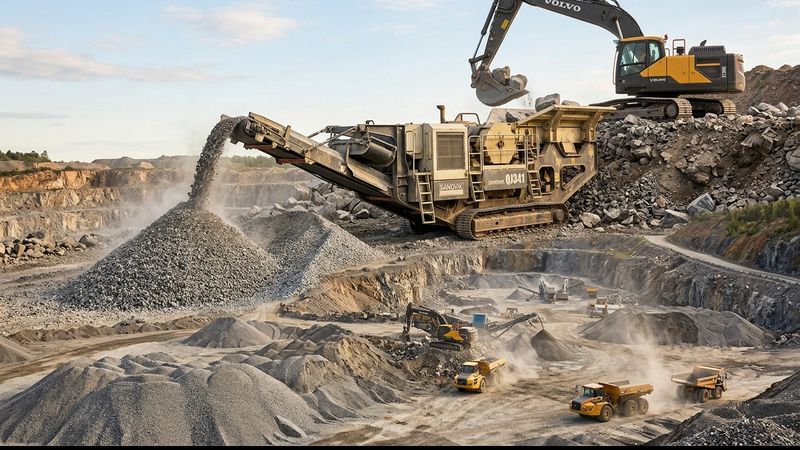
- Construction and Heavy Equipment: Excavators, bulldozers, cranes, concrete mixers, loaders, and graders
- Commercial Vehicles and Fleet: Semi-trucks, delivery vans, service vehicles, refrigerated trucks, and specialized fleet vehicles
- Manufacturing Machinery: CNC machines, injection molding equipment, conveyor systems, industrial robots, and fabrication tools
- Medical and Healthcare Equipment: MRI machines, CT scanners, surgical equipment, imaging systems, and diagnostic tools
- Restaurant and Food Service: Commercial ovens, refrigeration units, dishwashers, espresso machines, and food preparation equipment
- Technology and IT Infrastructure: Servers, networking equipment, workstations, audio-visual systems, and software platforms
- Agricultural Equipment: Tractors, harvesters, irrigation systems, and precision agriculture technology
- Fitness and Wellness Equipment: Commercial cardio machines, strength training equipment, and spa and therapy devices
- Salon and Beauty Equipment: Styling chairs, stations, laser systems, and skincare technology
Crestmont Capital's equipment financing programs are designed to accommodate a wide range of industries and asset types. Whether you need a single piece of heavy machinery or a complete operational buildout, our specialists can structure a solution that fits your project timeline and cash flow profile.
By the Numbers
Equipment Financing in the U.S. — Key Statistics
$1.6T
Annual U.S. equipment investment by businesses
79%
Of U.S. businesses that use some form of financing for equipment
24-48hrs
Typical approval timeframe for qualified applicants
100%
Financing available on many new equipment purchases
Equipment Loans vs. Other Financing Options
When evaluating how to acquire equipment, businesses typically weigh several options. Understanding the trade-offs helps you choose the approach that best serves your contract growth strategy.
| Feature | Equipment Loan | Equipment Lease | SBA Loan | Cash Purchase |
|---|---|---|---|---|
| Ownership | Yes - immediate | No (option at end) | Yes - immediate | Yes - immediate |
| Down Payment | 0-20% | First/last payment | 10-20% | 100% upfront |
| Approval Speed | 24-72 hours | 24-72 hours | 30-90 days | Immediate |
| Preserves Cash Flow | Yes | Yes | Yes | No |
| Builds Business Equity | Yes | No | Yes | Yes |
| Documentation Required | Minimal | Minimal | Extensive | None |
| Best For | Long-term assets, contract-driven growth | Tech that depreciates quickly, flexibility | Large purchases, multiple uses | Strong cash position, no debt preference |
For businesses specifically focused on winning bigger contracts, equipment loans typically outperform leasing because ownership strengthens your balance sheet, signals stability to clients, and eliminates end-of-term uncertainty. Unlike SBA loans, which require extensive documentation and can take months to process, equipment loans can be approved and funded in days — which matters when a contract opportunity has a submission deadline.
Crestmont Capital also offers a business line of credit that can complement equipment financing — giving you flexible working capital for operational costs while your equipment loan handles the asset acquisition.
Who Qualifies for Equipment Loans?
Equipment loans have more accessible qualification standards than many other forms of business financing. Because the equipment itself serves as collateral, lenders can extend financing to businesses that might not qualify for unsecured working capital loans or SBA products.
General qualification criteria include:
Time in Business: Most equipment lenders prefer businesses with at least 1-2 years of operating history. Startup equipment financing is available but typically requires stronger personal credit and may carry slightly higher rates.
Credit Profile: Business credit score and personal credit score are both evaluated. Scores above 650 typically qualify for competitive rates, while scores below 600 may still qualify through lenders specializing in challenged credit — at higher rates or with additional documentation.
Revenue: Lenders generally look for consistent monthly revenue sufficient to service the proposed loan payment, typically requiring a debt service coverage ratio of 1.25x or better. Most equipment loans require minimum annual revenue of $100,000-$250,000.
Business Type: Equipment loans are available to sole proprietors, partnerships, LLCs, S-Corps, and C-Corps. Most U.S. business entity types qualify.
Equipment Type: The collateral value of the equipment matters. Assets with strong resale markets (construction equipment, fleet vehicles, medical imaging devices) are viewed more favorably than highly specialized assets with limited secondary market liquidity.
Pro Tip: Even if your business credit is not strong, demonstrating that the equipment will generate sufficient revenue to cover loan payments — and providing a compelling business case tied to a specific contract opportunity — can significantly improve your approval odds with experienced lenders.
How Crestmont Capital Helps
Crestmont Capital is rated the #1 business lender in the United States and offers equipment financing solutions for businesses across every industry. Our specialists understand that contract-driven businesses operate on tight timelines and need financing decisions made quickly — not after weeks of bureaucratic review.
Here is what sets Crestmont Capital's equipment financing apart:
Fast Approvals: Our streamlined application process delivers decisions in as little as 24 hours for qualified applicants. When a contract opportunity has a proposal deadline, you cannot afford to wait weeks for a funding decision.
Flexible Terms: We offer equipment loan terms from 12 to 84 months and can structure payments around your revenue cycle. Seasonal businesses, project-based contractors, and other businesses with variable income can request payment structures that match cash flow patterns.
High Approval Rates: Because we specialize in business lending and understand how equipment generates revenue, we can approve financing for businesses that traditional banks have declined. Our focus is your ability to generate revenue with the equipment — not just your credit score.
No Prepayment Penalties: If your contract is completed ahead of schedule and you want to pay off the loan early, we won't penalize you for it.
Industry Expertise: Our advisors have deep experience financing equipment for construction companies, healthcare providers, restaurants, manufacturers, transportation firms, and other industries. We understand the equipment you need and can help ensure the loan structure serves your specific operational context.
Beyond equipment financing, Crestmont Capital offers a full suite of business lending products including SBA loans, working capital loans, and commercial financing for businesses at every stage of growth. Our clients often use a combination of financing products — equipment loans for asset acquisition and working capital lines for operational flexibility — to position themselves for aggressive contract growth.
Get the Equipment You Need to Grow
Crestmont Capital's equipment loans are fast, flexible, and designed for businesses that are ready to scale. Apply in minutes — no obligation.
Apply Now →
Real-World Scenarios: Equipment Loans in Action
The strategic value of equipment financing becomes clearest through concrete examples. Here are six real-world scenarios illustrating how equipment loans help businesses move up-market and win larger, more profitable contracts.
Scenario 1 — The Growing Excavation Contractor: A mid-size excavation company in Ohio had a strong reputation for residential site work but wanted to break into commercial construction projects. A regional general contractor was awarding a $2.1 million site preparation contract but required bidders to have a specific CAT excavator model and a tri-axle dump truck. The excavation company's existing fleet included neither. Using an equipment loan through Crestmont Capital, the owner financed both pieces of equipment for a combined $340,000 with a 60-month term. The monthly payment of $6,200 was less than 10% of the first month's contract revenue, and winning the commercial contract established the company's credibility for future bids. Within 18 months, the company had won three more commercial contracts exceeding $5 million in total value.
Scenario 2 — The Food Service Distributor: A commercial food service company in Texas distributed to restaurant chains but lacked the refrigerated truck capacity to service a major hospital network's cafeteria system — a contract valued at $800,000 annually. The hospital required temperature-controlled delivery vehicles that met specific health code standards. By financing two refrigerated trucks through an equipment loan, the distributor qualified for and won the hospital contract. The revenue increase covered the loan payments within 90 days and funded the down payment for a third vehicle six months later.
Scenario 3 — The Roofing Contractor Scaling to Commercial Work: A residential roofing company in Florida had a waiting list of homeowners but wanted to transition into commercial roofing, which offered larger project sizes and more predictable scheduling. Commercial roofing requires specialized equipment — roofing lifts, commercial-grade sprayers, and safety systems — that differs significantly from residential work. An equipment loan financed the capital equipment needed, and the company successfully bid on and won a multi-building corporate campus roofing project worth $1.4 million.
Scenario 4 — The Medical Imaging Practice Expanding Services: A private radiology practice in California had contracts with several insurance networks that covered MRI services, but patients frequently faced long waits due to limited scanner capacity. A competing hospital had begun offering faster scheduling, drawing referrals away. By financing a second MRI machine through an equipment loan, the practice was able to expand its hours, reduce patient wait times, and renegotiate its contracts with two insurance networks for higher reimbursement rates based on improved capacity and access metrics. The equipment loan paid for itself within the first year of operation.
Scenario 5 — The Landscaping Company Chasing Municipal Contracts: A landscaping company in North Carolina had built a reliable client base of residential accounts but wanted to pursue municipal maintenance contracts — parks, public spaces, and government buildings. Municipal contracts are typically 3-5 times larger than residential accounts but require specialized equipment like zero-turn mowers rated for commercial use and commercial-grade aerators. An equipment loan funded the qualifying machinery, and the company won a two-year municipal parks contract worth $420,000 annually — more than double their previous total revenue.
Scenario 6 — The IT Services Firm Bidding on Enterprise Clients: A managed IT services provider in Massachusetts wanted to pursue enterprise-level clients but lacked the server infrastructure and networking equipment needed to support the SLAs (service level agreements) that larger organizations required. Enterprise contracts specified redundant systems, specific hardware brands, and monitoring infrastructure that the firm's existing setup couldn't match. By financing a server buildout through an equipment loan, the IT firm qualified for and won a three-year managed services contract with a regional healthcare system worth $1.2 million over the contract term.
How to Get Started
Next Steps for Equipment Loan Financing
Get a quote or invoice from the equipment dealer or manufacturer. Knowing the exact purchase price and equipment specifications makes the application process faster.
Complete our quick application at offers.crestmontcapital.com/apply-now — takes just a few minutes. Have your last 3-6 months of bank statements ready.
A Crestmont Capital advisor will review your financing needs, assess your application, and present loan options with clear terms and payment structures.
Once approved, funds are typically disbursed within 1-3 business days. Take delivery of your equipment and start bidding with confidence.
Conclusion
Equipment loans are not just a financing product — they are a growth strategy. When your business can demonstrate the capacity, capability, and readiness to handle larger projects, you compete in a different market with higher margins, longer-term relationships, and greater revenue stability. The gap between where your business is today and where a larger contract would take you is often bridged by a single capital investment in the right equipment.
Crestmont Capital has helped thousands of U.S. businesses across every industry use equipment financing to move up-market, win bigger contracts, and build the operational foundation for sustained growth. Our equipment financing programs are designed for speed, flexibility, and accessibility — because we understand that contract opportunities don't wait for slow lenders.
If you have a contract opportunity in sight and need the right equipment to pursue it, the best time to start the financing process is now. Apply online in minutes and get a decision within 24-48 hours.
Frequently Asked Questions
What is an equipment loan and how is it different from an equipment lease?
An equipment loan provides financing to purchase a physical business asset that you own immediately. You repay the loan with interest over a fixed term and keep the equipment at the end. An equipment lease provides the right to use equipment for a defined period without ownership — you return the equipment or buy it at lease end. Equipment loans are generally better for businesses building long-term capacity and seeking to win larger contracts because ownership demonstrates financial stability.
How quickly can I get approved for an equipment loan?
Most equipment loan applications through Crestmont Capital receive a decision within 24-48 hours. Simpler applications with straightforward equipment and strong credit profiles can sometimes be approved same-day. After approval, funding typically occurs within 1-3 business days. This speed is one of the key advantages of equipment financing over SBA loans, which can take 30-90 days to process.
What credit score do I need to qualify for an equipment loan?
Most equipment lenders prefer a credit score of 650 or higher for standard rates. Borrowers with scores between 600-649 may still qualify with additional documentation or a slightly higher interest rate. Some lenders, including Crestmont Capital, work with businesses with scores below 600 when the equipment's revenue-generating potential and business cash flow are strong. Always apply even if your credit is less than perfect — the equipment collateral significantly improves approval odds.
Can I finance used or pre-owned equipment?
Yes. Most equipment lenders finance used equipment, though terms may differ from new equipment purchases. Used equipment loans may require a higher down payment (10-20%), have shorter maximum terms, or carry slightly higher rates due to the lower collateral value. The equipment's age, condition, and secondary market value all factor into the lender's assessment. Generally, used equipment manufactured within the last 5-10 years is most easily financeable.
Do equipment loans require a down payment?
Many equipment loans offer 100% financing with no down payment required for new equipment from established manufacturers, especially when borrower credit and business financials are strong. Down payments of 10-20% are more common for used equipment or borrowers with lower credit scores. A down payment can also reduce your monthly payment amount and total interest cost over the loan term if you prefer to contribute some capital upfront.
What documents do I need to apply for an equipment loan?
Basic documentation for most equipment loans includes: 3-6 months of business bank statements, a completed loan application, and an invoice or quote for the equipment being purchased. Some lenders also request the most recent business tax return and a brief description of how the equipment will be used. Larger loan amounts (over $500,000) typically require more comprehensive financial documentation including profit and loss statements and balance sheets.
How do equipment loans affect my business credit?
Equipment loans can positively impact your business credit score when managed responsibly. Making consistent on-time payments builds your credit profile with business credit bureaus, which can improve your access to financing and lower rates on future loans. Adding an installment loan to your credit mix is generally viewed positively. The initial application will result in a hard inquiry that may temporarily reduce your score by a small amount.
Can a startup qualify for an equipment loan?
Yes, though startups face stricter requirements than established businesses. Lenders typically look for strong personal credit (680+), relevant industry experience from the owner, and a compelling business plan tied to the equipment acquisition. Down payment requirements may be higher (20-30%). Crestmont Capital offers startup equipment financing programs and can work with new businesses that have a clear revenue plan for the equipment.
What interest rates can I expect on an equipment loan?
Equipment loan rates typically range from 5% to 25% APR. Well-qualified borrowers with strong credit, established revenue history, and new equipment as collateral often qualify for rates in the 6-12% range. Rates are influenced by your credit profile, time in business, loan term, equipment type, and market conditions. Comparing offers from multiple lenders is advisable — even a 2-3% rate difference can translate to significant savings over a 5-year term.
How much can I borrow with an equipment loan?
Equipment loan amounts vary widely based on the lender, borrower qualifications, and the type of equipment being financed. Most lenders offer equipment loans from as low as $5,000 to $5 million or more for larger commercial assets. Heavy construction equipment, commercial vehicles, and large manufacturing machinery often qualify for higher loan amounts due to their significant resale value. The loan amount is typically limited to the purchase price or fair market value of the equipment.
Can I finance multiple pieces of equipment at once?
Yes. Many lenders will finance multiple pieces of equipment under a single loan or under separate loans closed simultaneously. This is particularly common for businesses outfitting a new facility, expanding a fleet, or acquiring a complete production line. Bundling multiple pieces under one loan can simplify repayment with a single monthly payment and may result in better rates than financing each item individually.
What happens if I default on an equipment loan?
If a borrower defaults on an equipment loan, the lender has the right to repossess the financed equipment as collateral. Unlike unsecured loans, the lender's primary recourse is against the asset rather than requiring a personal guarantee enforcement (though many equipment loans do include personal guarantees from business owners). Defaulting also damages your business and personal credit scores, making future financing more difficult and expensive. If you anticipate payment difficulties, contact your lender proactively to discuss modification options before missing payments.
Are equipment loans better for winning contracts than business lines of credit?
Equipment loans and business lines of credit serve different purposes and often work best together. Equipment loans provide fixed capital specifically for asset acquisition — they're ideal when you need a specific piece of machinery to qualify for a contract. Business lines of credit provide flexible revolving capital for operational costs, materials, and expenses during project execution. Using an equipment loan to acquire the machinery and a line of credit for working capital is a common and effective combination for businesses aggressively pursuing contract growth.
How long does it take to receive funds after approval?
After loan approval, funds are typically disbursed within 1-3 business days. In most cases, the lender pays the equipment seller directly rather than transferring funds to your business account. This streamlines the process and ensures the financing is used for the intended purchase. Rush closings may be available in some circumstances when a contract opportunity has an urgent timeline.
Does financing equipment improve my chances of winning a government contract?
Yes. Government contracts — at the federal, state, and municipal level — often include specific equipment requirements as qualification criteria. Bidders must demonstrate that they have or will acquire the specified equipment before contract award or project commencement. Businesses that have already financed and taken delivery of required equipment are in a stronger competitive position than those that plan to acquire equipment contingent on winning the contract. Financing demonstrates commitment and reduces perceived execution risk in the eyes of government procurement officers.
Disclaimer: The information provided in this article is for general educational purposes only and is not financial, legal, or tax advice. Funding terms, qualifications, and product availability may vary and are subject to change without notice. Crestmont Capital does not guarantee approval, rates, or specific outcomes. For personalized information about your business funding options, contact our team directly.