
 (800) 949-0401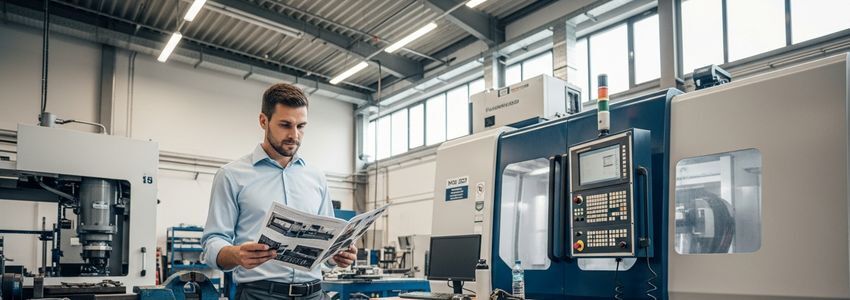
Specialized Equipment Financing: The Complete Guide for Niche Market Businesses
In the competitive landscape of modern business, having the right tools is not just an advantage; it is a necessity for survival and growth. For companies operating in niche markets, this necessity often involves acquiring highly specialized, expensive, and custom-built equipment. From advanced medical imaging devices and precision manufacturing robots to heavy-duty construction machinery and high-performance data servers, these assets are the engines of productivity and innovation. However, their high cost can present a significant barrier to entry and expansion, straining cash flow and limiting a company's ability to seize new opportunities. Traditional financing methods, such as standard bank loans, often fall short when it comes to funding these unique assets. Mainstream lenders may not understand the intrinsic value, long-term utility, or resale potential of specialized equipment, leading to conservative valuations, unfavorable terms, or outright application denials. This funding gap can leave ambitious business owners in a difficult position, forced to choose between delaying critical upgrades, settling for less effective equipment, or depleting vital working capital reserves. This is where specialized equipment financing emerges as a strategic financial solution. It is a tailored form of funding designed specifically for the acquisition of non-standard, industry-specific assets. Unlike one-size-fits-all loans, this financing model is built on a deep understanding of the equipment's value and its role in generating revenue for the business. This comprehensive guide will explore every facet of specialized equipment financing, providing niche market business owners with the knowledge needed to leverage this powerful tool for sustainable growth and a distinct competitive edge.In This Article
- What Is Specialized Equipment Financing?
- Which Niche Industries Benefit Most
- How Specialized Equipment Financing Works
- Key Statistics: Equipment Financing by the Numbers
- Types of Financing Structures Available
- Key Benefits for Niche Businesses
- Specialized Equipment Financing vs. Other Options
- How Crestmont Capital Helps
- Real-World Scenarios
- Frequently Asked Questions
- How to Get Started
- Conclusion
What Is Specialized Equipment Financing?
Specialized equipment financing is a specific category of asset-based lending that enables businesses to acquire unique, high-cost, or custom-made machinery and technology essential for their operations. At its core, the financing agreement uses the piece of equipment itself as the primary collateral for the loan or lease. This fundamental feature distinguishes it from many traditional loans that often require broader business assets, real estate, or personal guarantees as security.
The "specialized" nature of this financing is what truly sets it apart. Lenders who operate in this space possess deep industry-specific knowledge. They understand that a multi-axis CNC machine for an aerospace manufacturer or a polymerase chain reaction (PCR) machine for a biotech lab is not a generic asset. They have expertise in valuing this type of equipment, assessing its useful life, understanding its potential resale market (even if limited), and recognizing its direct impact on a company's revenue-generating capacity. This expertise allows them to underwrite financing agreements that traditional banks might deem too risky.
Consider the difference: a standard bank might see a $500,000 robotic welding arm as a liability with a small, niche resale market. A specialized lender, however, sees it as a high-value, long-lasting asset that can dramatically increase a manufacturer's output and quality, making it a sound investment to finance. This nuanced perspective is critical for businesses in sectors where off-the-shelf equipment simply does not suffice.
Furthermore, specialized equipment financing is not a single product but a range of financial structures. These can include equipment finance agreements (EFAs), various types of leases (like $1 buyout or Fair Market Value), and other tailored solutions. The goal is to match the financing terms to the company's specific financial situation, cash flow patterns, and long-term business strategy. For instance, a business in a rapidly evolving tech sector might prefer a lease structure that allows for easy upgrades, while a heavy construction company might opt for a loan that results in full ownership of a durable, long-lasting asset like a crane.
Key Insight: The core principle of specialized equipment financing is that the value and revenue-generating potential of the asset itself justify the loan. This shifts the focus from a company's historical credit to its future potential enabled by the new equipment.
Ultimately, this financing model serves as a vital bridge for niche businesses. It connects the need for mission-critical, advanced equipment with a practical and accessible funding mechanism. It empowers companies to invest in the best possible tools for their trade without jeopardizing their financial stability, enabling them to innovate, scale operations, and compete at the highest level within their specific industry.
Acquire the Specialized Tools You Need to Grow
Don't let capital constraints hold you back. Get a no-obligation quote for your specific equipment needs today.
Apply Now →Which Niche Industries Benefit Most
While almost any business can utilize equipment financing, companies in niche industries with high-cost, purpose-built assets stand to gain the most significant advantages from specialized financing solutions. These industries often rely on technology and machinery that is not easily resold and requires expert valuation. Here is a detailed look at some of the key sectors that thrive with this type of funding.
Healthcare and Medical Facilities
The medical field is a prime example of an industry dependent on cutting-edge, expensive, and highly specialized equipment. From private dental practices to large diagnostic imaging centers, the need for advanced technology is constant.
- Diagnostic Imaging Centers: Equipment such as MRI machines, CT scanners, PET scanners, and X-ray systems can cost hundreds of thousands to millions of dollars. Specialized financing allows these centers to acquire the latest technology, offering better patient outcomes and attracting more referrals, without a massive upfront capital outlay.
- Dental and Orthodontic Practices: Modern dentistry relies on technology like CBCT (Cone Beam Computed Tomography) scanners, CAD/CAM milling machines for same-day crowns, and advanced sterilization systems. Financing these assets allows practices to expand their service offerings and improve efficiency.
- Surgical Centers and Hospitals: Robotic surgery systems (like the da Vinci), laser treatment devices, and advanced patient monitoring equipment are critical for modern surgical procedures. These assets require lenders who understand their value and long operational life.
Construction and Heavy Machinery
The construction industry runs on heavy, durable, and often purpose-built equipment. The cost of a single piece of machinery can be substantial, making financing an essential part of fleet management and project bidding.
- General Contractors: Companies require a fleet of excavators, bulldozers, wheel loaders, and graders. Specialized financing can be structured to match project timelines and seasonal cash flow variations common in construction.
- Crane and Rigging Services: Mobile and tower cranes represent a massive capital investment. Lenders specializing in heavy equipment understand the long-term value and revenue potential of these assets, offering financing terms that reflect their decades-long useful life.
- Paving and Roadwork: Asphalt pavers, milling machines, and compactors are necessary for infrastructure projects. Financing allows companies to bid on larger municipal and state contracts by ensuring they have the right equipment for the job.
Manufacturing and Industrial Automation
In the competitive world of manufacturing, precision, speed, and efficiency are paramount. This is often achieved through sophisticated and automated equipment that requires significant investment.
- CNC Machining and Metal Fabrication: 5-axis CNC mills, waterjet cutters, and laser welders are foundational to modern fabrication. Specialized manufacturing equipment financing helps shops acquire the technology to produce complex parts with tight tolerances.
- Robotics and Automation: Assembly line robots, automated guided vehicles (AGVs), and robotic welding cells improve productivity and safety. Lenders familiar with Industry 4.0 technology can provide financing for entire automated systems.
- Plastics and Injection Molding: High-tonnage injection molding machines and custom molds are expensive but essential. Financing helps companies scale production to meet large orders.
Agriculture and Farming Technology
Modern agriculture is increasingly tech-driven. "AgriTech" involves specialized equipment that boosts crop yields, improves efficiency, and reduces manual labor.
- Precision Agriculture: GPS-guided autonomous tractors, advanced combine harvesters with yield monitoring, and drone systems for crop spraying represent the future of farming. Specialized financing helps farmers adopt these technologies to stay competitive.
- Dairy and Livestock Operations: Automated milking systems, robotic feeders, and advanced climate control systems for barns are significant investments that can be made possible through tailored financing.
- Food Processing: Custom sorting, washing, and packaging lines for produce and other food products require lenders who understand the food and beverage industry's unique demands.
Technology and Information Services
While not "heavy" machinery, the equipment in the tech sector is highly specialized, expensive, and subject to rapid innovation cycles, making financing a strategic choice.
- Data Centers: The cost of servers, networking hardware, and cooling infrastructure for a data center is enormous. Financing, particularly leasing, allows for regular technology refreshes to keep up with performance demands.
- Film and Media Production: High-end digital cinema cameras, specialized lenses, audio equipment, and powerful post-production editing suites are critical tools of the trade that can be financed to conserve cash for project-specific costs.
- Telecommunications: Companies that build out fiber optic networks or install cell towers require specialized equipment like fusion splicers, trenchers, and testing hardware, all of which are ideal candidates for financing.
How Specialized Equipment Financing Works
The process of securing specialized equipment financing is typically more streamlined and faster than a traditional bank loan. Lenders in this space prioritize the value of the asset and the business's ability to generate revenue with it. While the exact steps can vary between lenders, the general process follows a clear and logical progression designed for efficiency.
Step 1: Application and Initial Consultation
The journey begins with a simple application, which can often be completed online in a few minutes. You will provide basic information about your business, such as its legal name, time in business, and annual revenue. Crucially, you will also provide details about the specific equipment you wish to acquire, including the vendor, model number, and purchase price. An experienced financing advisor will then connect with you to discuss your business needs, cash flow, and long-term goals. This consultation is key, as it helps the advisor recommend the most suitable financing structure (e.g., a loan versus a lease) for your situation.
Step 2: Documentation and Underwriting
Following the initial consultation, you will be asked to provide a few supporting documents. For many financing agreements under $250,000, this might be as simple as a few recent bank statements. For larger, more complex transactions, additional documents like financial statements or tax returns may be required. This information, combined with a credit check, is used by the underwriting team to assess the financial health of your business. However, unlike a bank that might focus heavily on historical credit scores, a specialized lender places significant weight on the equipment's value and your business's operational history and future revenue potential.
Step 3: Approval and Term Sheet Presentation
The underwriting process is typically very fast, with approvals often granted within 24 to 48 hours. Once approved, you will receive a formal term sheet. This document clearly outlines the approved amount, interest rate or factor rate, term length (e.g., 36, 48, or 60 months), and the monthly payment. It will also specify the type of financing structure, such as an Equipment Finance Agreement (EFA) or a specific type of lease. This is your opportunity to review all the details with your financing advisor and ensure the terms align perfectly with your budget and business objectives.
Step 4: Contract Signing and Vendor Payment
Once you agree to the terms, you will receive the final financing documents for your signature. Modern lenders utilize e-signature technology, making this step quick and convenient. After the signed contract is returned, the financing company coordinates directly with the equipment vendor you have chosen. They will issue a purchase order and transfer the full purchase price of the equipment directly to the vendor. This removes a significant administrative burden from you, as you do not have to manage the payment logistics yourself.
Step 5: Equipment Delivery and Repayment
With the vendor paid, they will release the equipment for shipment and delivery to your business location. Once you confirm that you have received the equipment and it is in good working order, your financing agreement officially begins. Your first payment will be due according to the schedule outlined in your contract. You can then put your new, high-value asset to work immediately, generating revenue while making manageable monthly payments. The equipment begins paying for itself from day one, demonstrating the immediate return on investment that this financing model facilitates.
Specialized Equipment Financing: Key Statistics
The Power of Equipment Financing in Numbers
Key statistics that highlight the impact and prevalence of financing specialized assets for business growth.
~8 in 10
U.S. businesses, from small startups to Fortune 500 companies, use some form of financing to acquire the equipment they need to operate and grow. (Source: Equipment Leasing and Finance Association)
$1 Trillion+
Is invested annually by U.S. businesses in equipment and software, with financing playing a critical role in these capital expenditures. (Source: Equipment Leasing & Finance Foundation)
94%
Of business owners who have used equipment financing report that they would use it again, highlighting its effectiveness and positive impact on their operations. (Source: Forbes)
$224 Billion
Is the projected value of the global construction equipment market by 2030, a sector heavily reliant on specialized financing to acquire high-cost assets. (Source: Fortune Business Insights)
Types of Financing Structures Available
Specialized equipment financing is not a monolithic product. It encompasses several different structures, each designed to meet specific business needs regarding ownership, cash flow, and asset management. Understanding these options allows you to select the best path forward for your company.
Equipment Finance Agreement (EFA)
An Equipment Finance Agreement, or EFA, is a straightforward loan for the purchase of equipment. In this structure, the business is the owner of the equipment from the very beginning. The lender provides the funds to purchase the asset and places a lien on that specific piece of equipment as collateral. The business makes regular principal and interest payments over a fixed term. At the end of the term, once the final payment is made, the lien is released, and the business owns the equipment free and clear.
- Best for: Businesses that want to own their assets long-term and build equity. It's ideal for equipment with a very long useful life, such as heavy construction machinery or industrial manufacturing tools.
$1 Buyout Lease (Capital Lease)
Often referred to as a capital lease, this structure functions very similarly to an EFA but is framed as a lease. The business makes monthly lease payments for the duration of the term. At the end of the term, the business has the option to purchase the equipment for a nominal amount, typically just $1. Because ownership is virtually guaranteed to transfer at the end, for accounting purposes, this is often treated as a purchase. It provides the benefits of a loan while being structured as a lease.
- Best for: Companies that want the certainty of ownership but may prefer the payment structure of a lease. It combines the end-goal of an EFA with the contractual framework of a lease agreement.
Fair Market Value (FMV) Lease (Operating Lease)
A Fair Market Value lease, or operating lease, is a true rental agreement. The business pays to use the equipment for a set period, and the monthly payments are typically lower than those in a loan or a $1 buyout lease. This is because the payments are only covering the depreciation of the asset during the lease term, not its full value. At the end of the term, the business has several options:
- Return the equipment to the lender.
- Renew the lease for an additional term.
- Purchase the equipment at its then-current Fair Market Value.
- Best for: Businesses in industries with rapid technological change, like IT or medical diagnostics. An FMV lease provides a hedge against obsolescence, allowing the company to easily upgrade to the latest technology every few years. It's also great for preserving cash flow due to lower payments.
Terminal Rental Adjustment Clause (TRAC) Lease
A TRAC lease is a specialized option designed specifically for over-the-road commercial vehicles, such as semi-trucks and trailers. It is a type of operating lease with a unique feature: a pre-determined residual value is set for the vehicle at the beginning of the lease. At the end of the term, the vehicle is sold. If it sells for more than the pre-set residual value, the business (lessee) receives the surplus. If it sells for less, the business must pay the difference.
- Best for: Trucking companies and businesses with commercial vehicle fleets. It offers the lower payments of an operating lease while giving the lessee a stake in the vehicle's end-of-life value, incentivizing proper maintenance.
Key Benefits for Niche Businesses
Choosing specialized equipment financing over other funding methods offers a host of strategic advantages specifically tailored to the needs of niche market businesses. These benefits go beyond simply acquiring an asset; they contribute to financial health, operational agility, and long-term competitive positioning.
1. Preservation of Working Capital
The most immediate and significant benefit is the preservation of cash. Specialized equipment is incredibly expensive. Paying cash upfront can deplete a company's liquidity, leaving little room for other critical business needs like marketing, hiring, inventory, or unexpected emergencies. Financing converts a massive capital expenditure into a predictable and manageable monthly operating expense, keeping vital cash reserves intact for growth and stability.
2. Equipment Serves as Its Own Collateral
Unlike many traditional bank loans that may require a blanket lien on all business assets or even personal guarantees from the owners, specialized equipment financing is self-secured. The asset being financed is the sole collateral for the deal. This is a crucial advantage for business owners, as it protects other business and personal assets from being tied to the loan, reducing overall financial risk.
3. Customized and Flexible Payment Structures
Specialized lenders understand that not all businesses have a consistent, linear monthly cash flow. Many niche industries, such as agriculture, construction, and tourism, are seasonal. Lenders can structure repayment plans to match these cycles. This might include:
- Seasonal Payments: Higher payments during peak revenue months and lower or no payments during the off-season.
- Deferred Payments: A 90-day or 120-day deferment on the first payment, giving the business time to get the equipment installed and generating revenue before payments begin.
- Step-Up/Step-Down Payments: Payments that start low and increase over time as the equipment's productivity ramps up, or vice versa.
4. Fast and Efficient Funding Process
In business, speed matters. An opportunity to take on a large new contract might depend on acquiring a specific piece of equipment quickly. The traditional bank loan process can take weeks or even months of paperwork and committee reviews. Specialized equipment lenders, however, have a highly streamlined process. With simplified applications and a focus on the asset's value, approvals can often be secured in hours, and funding can be completed in a matter of days. This agility allows businesses to act decisively and capitalize on opportunities as they arise.
Key Stat: According to a CNBC/SurveyMonkey Small Business Survey, 29% of small business owners cite cash flow as their biggest challenge. Equipment financing directly addresses this pain point by converting a large cash purchase into a manageable operational expense.
5. Hedge Against Technological Obsolescence
For businesses in technology, medicine, and other rapidly evolving fields, today's state-of-the-art equipment can be outdated in just a few years. An FMV lease structure is a perfect solution for this challenge. It allows a business to use the best available technology for a 2-4 year term and then easily upgrade to the next generation of equipment at the end of the term. This ensures the company always has a competitive edge without being saddled with owning obsolete assets that are difficult to sell.
6. Access to Higher-Quality Equipment
Financing expands a company's purchasing power. Instead of being limited to what can be afforded with cash on hand, a business can finance the exact piece of equipment it needs to perform at its best. This means no more settling for a smaller, less efficient, or lower-quality machine. Acquiring the optimal equipment can lead to higher quality output, faster production times, and greater overall profitability, allowing the asset to easily pay for itself over the life of the financing term.

Specialized Equipment Financing vs. Other Options
When a business needs to acquire a specialized asset, there are several funding paths to consider. Understanding the distinct advantages and disadvantages of each is crucial for making the right financial decision. Specialized equipment financing often stands out as the most strategic choice for niche assets, but seeing it in comparison to other options provides a clearer picture.
| Feature | Specialized Equipment Financing | Equipment Leasing | Traditional Bank Loan | Business Line of Credit | Cash Purchase |
|---|---|---|---|---|---|
| Ownership | Immediate ownership (EFA) or at end of term ($1 buyout). | Lender owns asset; option to buy at end of term (FMV lease). | Immediate ownership. | Immediate ownership. | Immediate ownership. |
| Collateral | The equipment itself is the primary collateral. | The equipment itself. | Often requires blanket liens on all business assets, real estate, or personal guarantees. | May require a blanket lien on business assets. | N/A |
| Upfront Cost | Low. Typically first and last month's payment. Sometimes zero down. | Low. First month's payment is common. | High. Significant down payment (10-25%) is often required. | Low. No down payment for purchase, but setup fees may apply. | Highest. 100% of the equipment cost. |
| Approval Speed | Very Fast. Often 24-48 hours. | Very Fast. 24-48 hours. | Slow. Can take weeks or months. | Moderate. Can take several weeks to establish. | Immediate (if cash is available). |
| Flexibility | High. Terms and payment schedules can be customized (e.g., seasonal payments). | Highest. Easy to upgrade equipment at end of term. | Low. Rigid payment structures. | High. Can draw and repay funds as needed for various purposes. | N/A |
| Best For | Acquiring high-cost, specialized assets with a long useful life while preserving cash and protecting other assets. | Equipment that becomes obsolete quickly (e.g., tech, medical) or when lowest monthly payment is the priority. | Businesses with very strong credit, significant collateral, and no immediate need for the funds. | Short-term working capital needs, inventory purchases, or covering payroll. Not ideal for large, single-asset purchases. | Companies with very large cash reserves that won't be impacted by the purchase. |
See How Our Financing Compares
Get a personalized financing quote and compare it against your other funding options. The choice is clear.
Apply Now →How Crestmont Capital Helps
Navigating the world of specialized equipment financing requires a partner with deep industry knowledge, a robust network of lenders, and a commitment to your business's success. At Crestmont Capital, we are more than just a lender; we are a strategic financing partner dedicated to helping niche businesses acquire the critical assets they need to thrive.
Our expertise is built on years of experience working directly with businesses in the very industries discussed here: healthcare, construction, manufacturing, and more. We understand the difference between a standard bulldozer and a long-reach excavator, between a simple server and a high-performance computing cluster. This granular understanding allows us to advocate for our clients and structure financing that truly reflects the value of the asset and the strength of the business.
Crestmont Capital offers a wide spectrum of commercial financing solutions, including highly competitive equipment financing and flexible equipment leasing options. We take a consultative approach, working with you to determine the best structure for your specific goals. Whether you need the long-term ownership of an EFA or the flexibility of an FMV lease to stay on the cutting edge of technology, we tailor the solution to you.
Our streamlined application process is designed for the speed of modern business. We have stripped away the unnecessary red tape common in traditional lending, allowing for approvals in hours, not weeks. We also recognize that equipment is just one part of a larger growth strategy. For businesses needing more comprehensive funding, we also provide access to a variety of small business loans to support working capital, expansion, and other operational needs.
By partnering with Crestmont Capital, you gain access to a dedicated team that is invested in your success. We handle the complexities of the financing process, from underwriting to vendor payment, so you can remain focused on what you do best: running your business. Let us help you turn your next critical equipment acquisition into a seamless and strategic investment in your company's future.
Real-World Scenarios
To better illustrate the practical application and impact of specialized equipment financing, let's explore a few detailed, real-world scenarios across different niche industries.
Scenario 1: The Expanding Dental Practice
The Business: "Precision Dental Arts," a successful dental practice looking to expand into cosmetic and implant dentistry.
The Challenge: To offer these advanced services, Dr. Evans needs a Cone Beam Computed Tomography (CBCT) machine. This 3D imaging system is essential for precise implant placement but comes with a hefty price tag of $120,000. Paying cash would wipe out the practice's cash reserves, which are needed for marketing the new services and hiring an additional hygienist.
The Solution: Dr. Evans applies for specialized medical equipment financing. The lender, understanding the high value and revenue-generating potential of a CBCT machine in a modern dental practice, quickly approves a 60-month Equipment Finance Agreement (EFA). The machine itself is the only collateral required.
The Outcome: The financing company pays the vendor directly, and the CBCT machine is installed within a week. Precision Dental Arts begins offering high-margin implant services immediately. The new revenue generated by the machine ($15,000+ per month) far exceeds the monthly finance payment of approximately $2,500. Dr. Evans preserves her cash flow, hires new staff, and sees her practice's profitability and reputation grow significantly.
Scenario 2: The High-Tech Manufacturing Startup
The Business: "AeroForm Machining," a startup founded by experienced engineers to produce complex components for the aerospace industry.
The Challenge: AeroForm has landed a major contract, but it requires a specific 5-axis CNC milling machine that costs $450,000. As a new business, they lack the extensive financial history required by traditional banks, who are also hesitant to lend against such a specialized piece of equipment.
The Solution: The founders approach a specialized equipment financing company that has a dedicated manufacturing division. The lender evaluates the founders' experience, their strong business plan, and the secured contract. They see the CNC machine not as a risk, but as the essential tool for fulfilling a profitable contract. They approve a 7-year, $1 buyout lease, structuring the deal with a 90-day deferred payment plan. This gives AeroForm time to install the machine, begin production, and start invoicing their client before the first payment is due.
The Outcome: AeroForm gets the exact machine they need to meet the contract's stringent specifications. The deferred payment plan is critical for their early-stage cash flow. They successfully deliver on the contract, establishing a strong reputation in the industry. The financing was the catalyst that allowed them to launch and scale their operations far more quickly than would have been possible otherwise.
Scenario 3: The Sustainable Farming Operation
The Business: "Green Valley Organics," a mid-sized family farm transitioning to more sustainable and efficient practices.
The Challenge: The farm's owners want to invest in a GPS-guided, variable-rate fertilizer spreader to reduce chemical usage and increase crop yields. The equipment costs $85,000. Their income is highly seasonal, with the majority of revenue coming in after the fall harvest.
The Solution: They secure specialized agricultural equipment financing. The lender understands the cyclical nature of farming and offers a custom payment plan. They structure a 5-year EFA with annual payments. The large payment is due each November, right after the farm has sold its harvest and its cash flow is at its peak. This eliminates the strain of making monthly payments during the leaner planting and growing seasons.
The Outcome: Green Valley Organics acquires the precision equipment before the spring planting season. The technology allows them to reduce fertilizer costs by 20% and increase their corn yield by 8%. The annual payment structure aligns perfectly with their business model, making the investment manageable and highly profitable. They are able to operate more sustainably and improve their bottom line, all thanks to a flexible financing solution that understood their unique needs.
Frequently Asked Questions
1. What exactly is specialized equipment financing?
It is a type of asset-based lending specifically designed for acquiring unique, industry-specific, or custom-made equipment. The key difference is that the equipment itself serves as the primary collateral for the loan or lease. Lenders in this space have expertise in valuing these niche assets and understanding their role in your business's revenue generation.
2. How does the financing process work?
The process is typically very fast and streamlined. It starts with a simple online application, followed by a brief consultation and submission of basic financial documents (like bank statements). Underwriting is quick, often providing an approval within 24-48 hours. Once you sign the documents, the lender pays your chosen equipment vendor directly, and the equipment is shipped to you.
3. Who qualifies for this type of financing?
A wide range of businesses qualify, from startups to established corporations. Lenders look at a combination of factors, including time in business, business credit, personal credit of the owner, and cash flow. Because the equipment itself is the collateral, qualification criteria can be more flexible than for a traditional bank loan. Even businesses with less-than-perfect credit may be approved.
4. What types of equipment can be financed?
Virtually any type of business-related equipment can be financed, but this model is ideal for high-cost, specialized assets. This includes medical and dental devices, heavy construction machinery, manufacturing and CNC machines, agricultural technology, commercial vehicles, and high-end IT hardware, among many others.
5. What are typical interest rates and terms?
Rates and terms vary based on the business's credit profile, time in business, the cost of the equipment, and the length of the term. Terms typically range from 24 to 84 months (2 to 7 years). Interest rates are competitive and are fixed for the life of the agreement, ensuring a predictable monthly payment.
6. Is collateral other than the equipment required?
In the vast majority of cases, no. The primary benefit of specialized equipment financing is that the asset being financed serves as its own collateral. This protects your other business and personal assets and avoids the need for blanket liens or pledging real estate.
7. Can I get financing if I have bad credit?
Yes, it is often possible. While a strong credit history will secure the best rates, specialized lenders place significant weight on the value of the equipment and the business's cash flow. There are many programs available for business owners with challenged credit, making it a more accessible option than traditional bank loans. A resource like the SBA.gov website can also provide guidance for businesses in various financial situations.
8. How long does the application and approval process take?
It is remarkably fast. The initial application takes only a few minutes. Approval decisions are typically made within one business day, and funding can be completed in as little as 2-3 days from the initial application. This speed allows businesses to acquire needed equipment without long delays.
9. Is a down payment required?
Often, no large down payment is required. Many financing structures are designed to be "100% financing," covering the full cost of the equipment. Some agreements may require the first and last month's payments upfront, but this is significantly less than the 10-25% down payment often required by banks.
10. How is this different from a standard bank loan?
There are several key differences. Equipment financing is faster, requires less documentation, and uses the equipment as collateral. Bank loans are slower, have much stricter credit and collateral requirements (often demanding blanket liens), and may not be suitable for financing specialized assets that they do not know how to value.
11. Should I lease or buy the equipment?
This depends on your business goals. If you want to own the asset long-term and it has a long useful life, a loan (EFA) or a $1 buyout lease is best. If the equipment becomes obsolete quickly or you want the lowest possible monthly payment and flexibility to upgrade, a Fair Market Value (FMV) lease is the superior choice.
12. Can you give an example for a specific niche industry?
Certainly. A construction company might use an EFA to finance a $200,000 excavator they plan to use for 10+ years. In contrast, a video production company might use a 3-year FMV lease for a $50,000 high-end camera, allowing them to upgrade to the newest model when the lease is up.
13. How does Crestmont Capital help with this process?
Crestmont Capital acts as your expert partner. We leverage our deep industry knowledge and a vast network of lenders to find the most competitive rates and best terms for your specific equipment. We manage the entire process for you, from application to funding, providing a seamless, consultative experience.
14. What happens at the end of the financing term?
If you have a loan (EFA) or a $1 buyout lease, you make the final payment and own the equipment free and clear. If you have an FMV lease, you can choose to return the equipment, renew the lease, or purchase it at its fair market value.
15. What are the first steps to get started?
The first step is to get a quote for the equipment you need from a vendor. The second step is to complete a simple online application with a trusted financing partner like Crestmont Capital. An advisor will then contact you to discuss your options with no obligation.
Have More Questions? We Have Answers.
Our team of financing specialists is ready to help you navigate your options. Start a no-pressure conversation today.
Apply Now →How to Get Started
Taking the next step toward acquiring your mission-critical equipment is a straightforward process. By following these steps, you can move efficiently from identifying a need to having the asset working for your business.
Select Your Equipment and Vendor
Identify the exact make and model of the equipment you need. Obtain a formal quote or invoice from the vendor of your choice. This document is essential as it will provide the exact cost to be financed.
Complete a Simple Application
Fill out a quick online application. You will need basic information about your business and the equipment you are purchasing. This typically takes less than five minutes to complete.
Review Your Financing Options
A dedicated financing advisor will contact you, often within the hour, to discuss your application and present you with the best available financing terms and structures. This is your opportunity to ask questions and ensure the plan fits your budget.
Sign and Fund
Once you've selected your preferred option, you will receive the final documents for e-signature. After signing, we handle the rest, coordinating payment directly with your vendor so they can release your new equipment for delivery.
Conclusion
For businesses operating in niche markets, specialized equipment is the lifeblood of their operation. It is the engine of innovation, the creator of competitive advantage, and the key to unlocking greater productivity and profitability. However, the high cost of these assets has historically been a formidable barrier, forcing many companies to compromise, delay, or drain precious capital reserves.
Specialized equipment financing fundamentally changes this dynamic. It is a powerful financial tool that provides a direct, accessible, and strategic pathway to acquiring the best possible tools for the job. By leveraging the intrinsic value of the equipment itself, this financing model offers unparalleled benefits: preservation of cash flow, protection of other assets, flexible payment structures, and a speed that matches the pace of modern business. It levels the playing field, allowing small and mid-sized niche businesses to compete with larger players by investing in top-tier technology and machinery.
From the dental practice adopting 3D imaging to the manufacturer embracing automation, the story is the same. Strategic financing is not just about managing costs; it is about enabling growth. It is an investment in your company's future, empowering you to take on bigger projects, serve more clients, and operate at peak efficiency. By partnering with a financing expert who understands your industry and your unique assets, you can transform a daunting capital expenditure into a manageable and strategic step forward, ensuring your business is well-equipped for the challenges and opportunities that lie ahead.
Disclaimer: The information provided in this article is for general educational purposes only and is not financial, legal, or tax advice. Funding terms, qualifications, and product availability may vary and are subject to change without notice. Crestmont Capital does not guarantee approval, rates, or specific outcomes. For personalized information about your business funding options, contact our team directly.








