Equipment loans for home-based businesses are the financial bridge that makes the leap to commercial space possible. When you have outgrown your garage workshop, spare bedroom office, or kitchen-based bakery, the decision to move into dedicated commercial premises is a milestone worth celebrating. But it also comes with a long list of equipment needs that can feel financially overwhelming. The good news: equipment financing exists precisely for this transition.
Whether you need commercial-grade ovens, CNC machinery, point-of-sale systems, office workstations, HVAC units, or specialized tools, equipment loans let you acquire what you need immediately while preserving your working capital. You spread the cost over months or years, keep cash in the bank for operating expenses, and often qualify based on the equipment's value rather than your credit score alone.
This guide covers everything a home-based business owner needs to know about equipment loans when moving to commercial space, including eligibility, rates, how to apply, real-world scenarios, and how Crestmont Capital can help you get funded fast.
In This Article
- What Are Equipment Loans?
- Why Home-Based Businesses Need Equipment Loans
- Types of Equipment You Can Finance
- How Equipment Loans Work
- By the Numbers: Equipment Financing
- Who Qualifies for Equipment Loans?
- Equipment Financing vs. Equipment Leasing
- How Crestmont Capital Helps
- Real-World Scenarios
- Frequently Asked Questions
- How to Get Started
What Are Equipment Loans?
An equipment loan is a form of business financing used to purchase specific tangible assets for your operations. The equipment itself serves as collateral for the loan, which means lenders often have more flexible approval criteria than for unsecured business loans. You borrow a set amount, purchase the equipment, and repay the loan over a fixed term with interest.
Equipment loans are different from general business term loans in one important way: the asset being financed is also the security. If you default, the lender can reclaim the equipment. This arrangement benefits borrowers because it lowers the lender's risk, which translates into more accessible approvals and competitive rates, even for newer businesses.
For home-based businesses transitioning to commercial space, equipment loans are particularly valuable because the move itself creates a concentration of large one-time expenses. Buying five pieces of equipment simultaneously could drain a year of savings. Financing each item or financing a bundle through one loan keeps your cash position healthy while you build revenue in the new location.
Key Insight: Equipment financing has grown into one of the most widely used forms of small business credit. According to the Small Business Administration, access to capital is the number one barrier to growth for small businesses in the United States, and equipment financing is specifically designed to remove that barrier for asset-heavy transitions.
Why Home-Based Businesses Need Equipment Loans When Moving to Commercial Space
The transition from home to commercial is rarely just a change of address. It triggers a cascade of equipment-related needs that often surprise entrepreneurs who have been making do with residential-grade tools or minimal setups. Here is what typically happens:
Capacity requirements increase dramatically. A home baker who produced 50 cupcakes at a time in a residential oven now needs commercial ovens capable of 500 per hour. A woodworker using a single table saw in the garage now needs a full shop setup with dust collection, industrial clamps, and material handling equipment. The residential setup that worked fine at home simply cannot handle commercial volumes.
Regulatory requirements demand professional-grade equipment. Commercial kitchens must comply with health department standards. Manufacturing facilities must meet OSHA requirements. Medical or wellness businesses need equipment certified for professional use. Home-grade equivalents often do not qualify, and operators cannot legally run the business without proper equipment in place.
Landlords and clients expect professional infrastructure. A commercial space that is not properly outfitted can hurt your credibility. Retail customers, wholesale buyers, and B2B clients expect a professional setup when they visit or partner with you. Cutting corners on equipment can cost you accounts worth far more than the equipment loan.
The opportunity window is narrow. When you sign a commercial lease, you typically need to be operational within 30 to 90 days. Equipment loans funded through specialized lenders like Crestmont Capital can close in as little as 24 to 48 hours for equipment under $150,000, making it possible to hit your opening date without delays.
Ready to Equip Your New Commercial Space?
Get fast, flexible equipment financing from the #1 business lender in the U.S. Apply in minutes - no obligation.
Apply Now →Types of Equipment You Can Finance for Your Commercial Move
Equipment loans are broadly flexible. Most lenders will finance any tangible asset that has a clear commercial purpose and holds resale value. Here are the categories most relevant to home-based businesses moving to commercial space:
Kitchen and Food Service Equipment
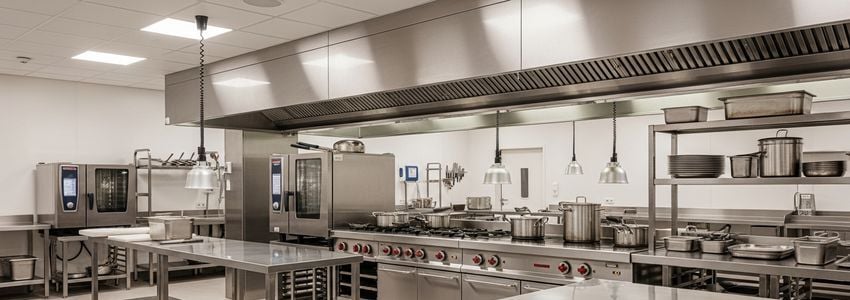
Commercial-grade ovens, refrigerators, walk-in coolers and freezers, dishwashers, prep tables, hood ventilation systems, and food processing machines. Whether you are opening a restaurant, catering facility, or specialty food production operation, this equipment is typically the largest single expense in your transition.
Manufacturing and Production Equipment
CNC machines, laser cutters, 3D printers, industrial sewing machines, welding equipment, woodworking tools, metalworking machinery, and packaging lines. Manufacturers transitioning from garage operations to commercial space often need to finance an entirely new production floor.
Office and Technology Equipment
Workstations, servers, networking infrastructure, phone systems, security systems, point-of-sale terminals, and specialized software hardware. Professional services firms, tech businesses, and retail operations all have significant technology needs when moving to dedicated commercial space.
Medical, Dental, and Wellness Equipment
Examination tables, diagnostic equipment, dental chairs and X-ray machines, massage tables, therapy equipment, and lab instruments. Healthcare and wellness businesses transitioning to commercial space often face the most complex and expensive equipment lists.
HVAC, Electrical, and Facility Equipment
Industrial HVAC units, electrical panels and generators, compressors, material handling equipment, and loading dock tools. These infrastructure items are often overlooked but can represent a significant portion of transition costs.
Vehicles and Fleet
Delivery vans, service vehicles, forklifts, and specialized transport equipment. For businesses that gain commercial delivery or service capabilities as part of the transition, commercial fleet financing is available alongside traditional equipment loans.
How Equipment Loans Work: A Step-by-Step Breakdown
Understanding the mechanics of equipment financing helps you compare offers intelligently and avoid common mistakes. Here is how the process typically works for home-based businesses moving to commercial space.
Step 1: Identify the Equipment You Need. Create a comprehensive list of every piece of equipment your commercial operation requires. Include the make, model, expected cost, and vendor. For new equipment, get formal quotes. For used equipment, document the source and condition. This list becomes the foundation of your loan application.
Step 2: Choose Between New and Used Equipment. Most lenders finance both new and used equipment, though used equipment loans sometimes carry slightly higher rates due to the additional risk. New equipment typically qualifies for the lowest rates because it has a predictable lifespan and higher resale value.
Step 3: Apply for Financing. Applications for equipment loans typically require basic business information, bank statements (usually 3 to 6 months), a credit check (business and sometimes personal), equipment quotes or invoices, and for larger loans, tax returns and financial statements. Many specialized lenders can approve smaller loans ($5,000 to $150,000) within 24 hours based on bank statements alone.
Step 4: Receive Approval and Review Terms. Your lender will provide loan terms including the principal amount, interest rate, term length (typically 2 to 7 years), monthly payment, and any fees. Review these carefully against the cash flow your commercial operation will generate before accepting.
Step 5: Close and Take Possession. Once you accept the terms, funds are typically disbursed directly to the equipment vendor or to your business account. You take possession of the equipment, begin operations, and make monthly payments per your loan schedule.
By the Numbers
Equipment Financing for Small Business Transitions - Key Statistics
$1.1T
Annual U.S. equipment finance originations (ELFA)
80%
Of U.S. businesses use some form of equipment financing
24 hrs
Typical approval time for loans under $150K
$500K+
Maximum equipment loan available to qualifying businesses
Who Qualifies for Equipment Loans?
Equipment loans have some of the most accessible qualification criteria in business lending, precisely because the equipment acts as collateral. Here is what lenders typically look for.
Credit Score Requirements
For traditional equipment financing through banks, a personal credit score of 680+ is typical. Alternative lenders like Crestmont Capital work with business owners who have scores as low as 580 to 620. Your business credit profile also matters, so if you have been building business credit from your home-based operation, that works in your favor. If you have credit challenges, read our guide on bad credit equipment financing.
Time in Business
Most lenders prefer at least 1 to 2 years in business, but startup equipment financing is available for businesses under one year old. If you have been operating your home-based business for at least 6 months and can show consistent revenue, many lenders will work with you. Learn more about startup equipment financing options.
Annual Revenue
Requirements vary widely by lender and loan size. For smaller equipment loans ($10,000 to $50,000), many lenders require $50,000 to $100,000 in annual revenue. For larger loans, $150,000 to $250,000+ in annual revenue is more typical. The equipment's value also plays a role, since a high-value piece of machinery reduces the lender's risk.
Business Type and Industry
Most industries qualify for equipment financing. Lenders may be more cautious about certain high-risk sectors, but for the majority of home-based businesses moving to commercial space, including food service, manufacturing, retail, medical, professional services, and trades, equipment loans are widely available.
Down Payment
Many equipment loans require little to no down payment, especially when financing new equipment. Some lenders offer 100% financing on qualifying equipment. If a down payment is required, it is typically 10 to 20% of the equipment cost.
Pro Tip: Home-based businesses often underestimate the documentation value of their existing operation. Bank statements showing consistent monthly revenue from your home business, even modest amounts, significantly strengthen your equipment loan application. Many lenders approve based on bank statement cash flow rather than requiring full financial statements for loans under $100,000.
Equipment Financing vs. Equipment Leasing: What is Right for Your Commercial Move?
When outfitting your new commercial space, you will encounter both equipment loans (financing to own) and equipment leases. Understanding the difference helps you choose the right structure for each asset.
Equipment Loans (Financing to Own): You borrow money to purchase the equipment outright. At the end of the loan term, you own the asset free and clear. Loans are better for equipment you plan to keep for many years, assets that appreciate or retain high value, and situations where ownership matters for your business model or tax strategy.
Equipment Leasing: You pay to use the equipment for a set period without owning it. At the end of the lease, you may have the option to purchase, return, or renew. Leasing is better for technology equipment that becomes outdated quickly, items you need temporarily, and situations where you want to preserve borrowing capacity. Crestmont Capital offers equipment leasing alongside traditional equipment loans.
| Feature | Equipment Loan | Equipment Lease |
|---|---|---|
| Ownership | You own the equipment | Lender owns until lease-end |
| Monthly Cost | Higher (building equity) | Lower (no equity) |
| Ideal Equipment | Long-lived, high value | Technology, short-use assets |
| Credit Impact | Builds credit history | Varies by structure |
| End of Term | You own it outright | Buy, return, or renew |
For most home-based businesses making a permanent move to commercial space, a combination approach works best: finance core production equipment you will use for years, and lease technology or specialty items you expect to upgrade within 3 to 5 years.
How Crestmont Capital Helps Home-Based Businesses Finance Their Commercial Move
Crestmont Capital is the #1 rated business lender in the United States, specializing in equipment financing that gets entrepreneurs funded fast. When you are trying to open your commercial space on schedule, you cannot afford a 60-day bank approval process. Crestmont Capital moves faster.
We offer equipment loans from $10,000 to $5,000,000 with terms from 12 to 84 months. Our funding process is designed for business owners who need decisions quickly. For equipment under $150,000, approvals typically come within 24 hours and funding within 2 to 3 business days. Our specialists work directly with home-based business owners at every stage of the commercial transition - from initial planning to final equipment installation.
Beyond equipment financing, Crestmont Capital offers complementary products that are often needed during a commercial move, including working capital loans for operating expenses during the setup phase and business lines of credit for ongoing flexibility after you open. Many clients finance their equipment through a term loan and maintain a line of credit for inventory and payroll needs.
Our underwriting team understands home-based businesses. We evaluate your actual business performance, not just your credit score. If you have been running a profitable operation from home for two or more years, that track record speaks for itself in our approval process. Read more about what lenders look for in our complete guide to equipment financing.
Funding Your Commercial Transition Made Simple
Equipment loans, working capital, and lines of credit - all in one place. Crestmont Capital has helped thousands of entrepreneurs move from home to commercial successfully.
Get Your Equipment Loan →Real-World Scenarios: How Equipment Loans Support the Home-to-Commercial Transition
Abstract explanations only go so far. Here are six realistic scenarios showing how equipment loans work for businesses in the midst of a commercial move.
Scenario 1: The Home Baker Opening a Production Kitchen
Maria has been running a specialty cake business from her home kitchen for three years, grossing $120,000 annually. She signs a lease on a 1,500-square-foot commercial kitchen space. Her equipment needs total $85,000: two commercial convection ovens ($18,000 each), a walk-in cooler ($12,000), a commercial mixer ($8,000), stainless prep tables ($6,000), and a commercial dishwasher ($5,000). She applies for an equipment loan through Crestmont Capital, is approved in 24 hours based on her bank statements, and funds within three days. Her monthly payment is approximately $1,600 over 60 months. Her commercial operation generates $280,000 in its first full year, making the loan payment manageable from month one.
Scenario 2: The Woodworker Scaling a Workshop
David built custom furniture from his garage workshop for four years, earning $95,000 per year. Moving to a 3,000-square-foot commercial shop requires a significant equipment upgrade: industrial table saw ($4,500), CNC router ($28,000), dust collection system ($3,500), industrial planer and jointer ($6,000), air compressor ($2,500), and workbench systems ($5,000). Total equipment cost: $49,500. An equipment loan covers all of it at a manageable monthly payment, allowing David to double his production capacity and take on commercial contracts he previously had to decline.
Scenario 3: The eBay Seller Opening a Fulfillment Center
James has been running an e-commerce operation from his spare bedroom, generating $200,000 in annual revenue. Moving to a commercial warehouse requires pallet racking systems ($15,000), a commercial label printer ($3,500), a barcode scanning system ($4,000), shipping stations ($8,000), a forklift ($22,000), and security systems ($5,500). Equipment financing covers these upfront costs while keeping his cash available for inventory purchases, which are the real profit driver in his business.
Scenario 4: The Wellness Practitioner Opening a Clinic
Sarah has been offering massage therapy and holistic wellness services from a home treatment room. Moving to a commercial clinic space requires professional massage tables ($3,500 each for four), a commercial-grade infrared sauna ($12,000), an air purification system ($4,000), reception and waiting area furniture ($6,500), and a scheduling and payment system ($3,000). Equipment financing enables the professional setup that attracts higher-value clients willing to pay commercial rates.
Scenario 5: The Screen Printer Moving from Garage to Shop
Michael has been screen printing custom apparel from his garage for two years. His commercial space requires an automatic screen printing press ($32,000), a conveyor dryer ($8,500), an exposure unit ($4,000), a washout booth ($2,500), and an embroidery machine ($18,000). Total: $65,000. Equipment financing allows Michael to take on orders from corporate clients, sports teams, and schools that require the professional equipment and space his home setup could not accommodate.
Scenario 6: The Personal Chef Opening a Catering Facility
Elena operated a personal chef and catering service from a licensed home kitchen. To scale into event catering, she needs a commissary kitchen with commercial ranges ($24,000), refrigeration ($16,000), chafing dishes and transport equipment ($8,000), and a commercial van with insulated compartments ($35,000). Equipment financing covers both the kitchen equipment and the commercial vehicle through a combined loan, simplifying her financing with one monthly payment.
Research Insight: A study from CNBC Small Business found that the majority of home-based business owners who successfully transition to commercial space do so using some form of outside financing. Self-funding the entire transition is rare and often puts unnecessary strain on working capital during the most critical growth phase.
Frequently Asked Questions
What is the minimum credit score for an equipment loan?
Traditional bank lenders typically require a personal credit score of at least 680. Alternative lenders like Crestmont Capital work with scores as low as 580 to 620, especially when the equipment being financed has strong collateral value. Business credit history, time in business, and revenue consistency all factor into the decision alongside your credit score.
Can I get an equipment loan if my home-based business is less than a year old?
Yes, startup equipment financing is available for businesses under one year old. Requirements are stricter: you may need a higher personal credit score (680+), a down payment of 10 to 20%, and documentation of your business plan and projected revenue. Some lenders specialize in startup equipment loans and can evaluate your situation even with limited business history. Having bank statements showing revenue, even modest amounts, dramatically improves approval chances.
How quickly can I get funded after applying for an equipment loan?
With Crestmont Capital, equipment loans under $150,000 are typically approved within 24 hours and funded within 2 to 3 business days. Larger loans or those requiring more documentation may take 3 to 7 days. Bank lenders can take 2 to 4 weeks. If you are on a tight timeline for your commercial lease start date, working with a specialized equipment lender is the recommended approach.
What documents do I need to apply for an equipment loan?
For loans under $150,000, you typically need: 3 to 6 months of business bank statements, a completed loan application, equipment quote or invoice from the vendor, and basic business information (EIN, business name, address). For larger loans, lenders may also request business and personal tax returns for the past 2 years, a profit and loss statement, and a balance sheet. The application process with Crestmont Capital takes about 10 minutes online.
What interest rates should I expect on an equipment loan?
Equipment loan rates vary based on your credit profile, time in business, loan amount, and the type of equipment. Rates generally range from 6% to 30% APR. Business owners with strong credit (700+) and two or more years in business typically qualify for rates in the 6 to 15% range. Newer businesses or those with lower credit scores may see rates in the 15 to 30% range. The equipment's collateral value helps offset credit risk, keeping rates lower than unsecured business loans for the same borrower profile.
Can I finance used equipment, or only new equipment?
Both new and used equipment can be financed. Used equipment loans are common and practical for businesses on tighter budgets. Lenders may apply slightly higher rates for used equipment due to reduced collateral value and shorter remaining useful life. For used equipment, lenders typically want documentation of the item's condition, age, and current market value. A professional inspection report or dealer appraisal can help secure better terms.
Should I get one loan for all equipment or separate loans for each item?
Both approaches have merit. A single bundled equipment loan simplifies your monthly payments and often reduces overall transaction costs (fewer origination fees). Separate loans allow you to match loan terms to each equipment item's useful life and may provide more flexibility if you want to pay off some items faster. For most home-based businesses making a commercial transition, a single bundled loan covering all equipment needs is the most efficient approach.
Do I need to put down a deposit or collateral beyond the equipment itself?
For most equipment loans, the equipment being financed serves as the primary collateral. Many lenders offer 100% financing with no down payment required, particularly for new equipment from established vendors. Some lenders may request a 10 to 20% down payment for used equipment, newer businesses, or borrowers with lower credit scores. In most cases, no additional collateral beyond the equipment itself is needed, making equipment loans less risky to the borrower than general business loans secured by personal assets.
How does an equipment loan affect my business credit?
An equipment loan reported to business credit bureaus (Dun and Bradstreet, Equifax Business, Experian Business) will positively impact your business credit profile when payments are made on time. Consistent on-time payments build your PAYDEX score and business credit history, making it easier and cheaper to borrow in the future. For home-based businesses that may have limited formal credit history, an equipment loan is an excellent tool for establishing and building a strong business credit profile.
What happens if I can't make payments on my equipment loan?
If you miss payments, the lender has the right to repossess the equipment used as collateral. Most lenders will work with you on a payment plan before taking repossession action, especially if you communicate proactively about financial difficulties. Before signing an equipment loan, make sure your projected commercial revenue comfortably covers the monthly payment with a meaningful buffer. If you are concerned about cash flow during your setup phase, a working capital loan or line of credit can bridge gaps and protect your equipment loan payments.
Can I refinance my equipment loan if interest rates drop?
Yes, equipment loan refinancing is possible and can save significant money over a multi-year term. If rates improve, your credit score improves, or your business financial profile strengthens since you first took the loan, refinancing to a lower rate is worth exploring. Check for prepayment penalties in your original loan agreement before pursuing refinancing, as some equipment loans include early payoff fees that may offset the rate savings.
Is equipment financing better than using a business credit card for equipment purchases?
For equipment purchases over $5,000, an equipment loan is almost always better than a business credit card. Credit cards typically carry 18 to 29% APR with no fixed payoff schedule, while equipment loans offer lower rates with structured monthly payments. The one exception is if you can pay off the credit card balance in full within a 0% promotional period, in which case the card may be interest-free. For large equipment purchases, however, the loan structure is more suitable for cash flow management.
Can I finance equipment and leasehold improvements together?
Equipment loans specifically cover tangible equipment assets. Leasehold improvements such as painting, flooring, plumbing, electrical upgrades, and built-in fixtures are not equipment and cannot typically be included in an equipment loan. For those costs, a working capital loan, business term loan, or SBA loan is more appropriate. Many businesses opening commercial spaces take an equipment loan for their equipment needs and a separate working capital or SBA loan for buildout costs.
How do I determine the right loan amount for my commercial equipment needs?
Start with a comprehensive equipment list for your commercial operation, then get formal quotes from vendors for each item. Add a 10 to 15% contingency for items you may have overlooked or for cost overruns. Run a simple ROI analysis: if the equipment enables you to generate $X in additional monthly revenue, and the loan payment is $Y per month, ensure X comfortably exceeds Y. Many equipment lenders will pre-approve you for a maximum amount based on your financials, allowing you to shop confidently within that range.
Where can I learn more about equipment financing options for small businesses?
The SBA's loan program page provides an overview of government-backed financing options. Crestmont Capital's equipment financing resource center at crestmontcapital.com/equipment-financing covers eligibility, rates, and application details specific to small businesses. For a comprehensive overview of all financing options available to growing businesses, our guide to equipment financing is the recommended starting point. The Forbes Advisor equipment financing guide also provides an independent overview of the marketplace.
How to Get Started with Equipment Financing for Your Commercial Move
Document every piece of equipment your commercial operation requires. Get formal quotes from vendors. This forms the foundation of your loan application and helps you arrive at the right loan amount.
Complete our quick application at offers.crestmontcapital.com/apply-now. Have 3 to 6 months of business bank statements ready. The process takes about 10 minutes.
A Crestmont Capital specialist will review your application, typically within 24 hours for loans under $150,000. You will receive a detailed term sheet outlining your loan amount, rate, monthly payment, and term.
Accept your offer and receive funds directly to your business account or your equipment vendor within 2 to 3 business days. Take possession of your equipment and open your commercial space on schedule.
Conclusion
Moving from a home-based business to commercial space is one of the most exciting and demanding transitions an entrepreneur can make. Equipment loans for home-based businesses are the financial tool that makes this transition achievable without draining your working capital or forcing you to delay opening. Whether you need commercial kitchen equipment, manufacturing machinery, technology infrastructure, or specialized tools, equipment financing gives you immediate access to what you need while preserving the cash flow required to operate and grow.
Crestmont Capital has helped thousands of small business owners navigate the home-to-commercial transition with fast, flexible equipment financing tailored to their specific industry and equipment needs. If you are ready to take your business to commercial scale, start your application today. The equipment loans for home-based businesses you need are closer than you think.
Take the Next Step Toward Your Commercial Space
Apply for equipment financing with Crestmont Capital today. Decisions in 24 hours, funding in days.
Apply Now →Disclaimer: The information provided in this article is for general educational purposes only and is not financial, legal, or tax advice. Funding terms, qualifications, and product availability may vary and are subject to change without notice. Crestmont Capital does not guarantee approval, rates, or specific outcomes. For personalized information about your business funding options, contact our team directly.