
 (800) 949-0401
Equipment Financing for Multi-Location Rollouts: The Complete Guide for Growing Businesses
Scaling a successful business from a single location to a multi-unit enterprise is a monumental step. This expansion requires significant capital, especially for acquiring the standardized equipment essential for brand consistency and operational efficiency. This guide provides a comprehensive overview of equipment financing for multi-location rollouts, a strategic financial tool designed to fuel your growth without depleting your working capital.
In This Article
- What Is Multi-Location Equipment Financing?
- Key Benefits for Growing Businesses
- How Multi-Location Equipment Financing Works
- Types of Equipment Eligible for Financing
- Qualification Requirements
- Financing Strategies for Multi-Location Rollouts
- How Crestmont Capital Helps
- Real-World Scenarios
- Comparing Equipment Financing vs. Leasing
- Frequently Asked Questions
- How to Get Started
- Conclusion
What Is Multi-Location Equipment Financing?
Multi-location equipment financing is a specialized funding solution designed for businesses planning to open multiple new locations. Unlike a standard equipment loan for a single purchase, this type of financing is structured to accommodate the complexities of a large-scale rollout. It provides a pre-approved line of credit or a master loan agreement that allows a business to acquire necessary equipment for several sites over a defined period.
This strategic approach moves beyond a one-off transaction. It establishes a financial partnership that understands and supports your growth trajectory. Instead of applying for a new loan every time you are ready to open another location, you work under a single, overarching agreement. This streamlines the entire process, from procurement to payment, ensuring you can deploy new locations quickly and efficiently.
The core principle is to provide a scalable and predictable funding mechanism. Whether you are a restaurant franchise standardizing your kitchen equipment, a chain of fitness centers installing identical workout machines, or a medical group equipping new clinics, multi-location financing ensures you have the capital ready when you need it. This allows you to focus on the operational aspects of expansion, such as site selection, construction, and hiring, rather than getting bogged down in repetitive financing applications.
Key Benefits for Growing Businesses
Embarking on a multi-location expansion is a capital-intensive venture. Strategic financing offers numerous benefits that can mean the difference between steady growth and stalling due to cash flow constraints. Here are the key advantages of using equipment financing for your rollout.
Preserves Working Capital
The most significant benefit is the preservation of cash. Outfitting even one new location with equipment can cost tens or hundreds of thousands of dollars. Multiplying that across several new sites can drain your cash reserves, leaving little for other critical expansion costs like marketing, inventory, and payroll. Financing allows you to spread the cost of equipment over time, keeping your working capital fluid and available for daily operations and unforeseen opportunities.
Ensures Brand and Operational Consistency
For multi-location businesses, consistency is paramount. Customers expect the same experience whether they visit your store in one city or another. Financing a large equipment purchase upfront ensures you can equip every new location with the exact same models and technology. This standardization simplifies staff training, streamlines maintenance, and reinforces your brand identity, leading to a more reliable and professional customer experience.
Leverages Bulk Purchasing Power
When you have financing secured for a multi-location rollout, you can negotiate with equipment vendors from a position of strength. Placing a large, single order for multiple locations often unlocks significant volume discounts that would be unavailable for one-off purchases. This can lower your total cost of acquisition, and the savings can be substantial over the course of your expansion.
Streamlines the Funding Process
Imagine the administrative burden of applying for a separate loan for each of your five, ten, or twenty new locations. A multi-location financing plan, often structured as a master agreement, consolidates this into a single, comprehensive process. You go through underwriting once, establish the total credit facility, and then draw funds as needed for each new site. This saves an immense amount of time and paperwork.
Creates Predictable Budgeting
Financing converts a massive, variable capital expenditure into a fixed, predictable monthly payment. This makes financial forecasting and budgeting for your expansion much simpler and more accurate. You know exactly what your equipment costs will be each month, allowing for better management of your overall cash flow as the new locations ramp up to profitability.
Accelerates Speed to Market
In a competitive landscape, speed is a critical advantage. Having your equipment financing pre-approved and ready to deploy means you can move faster than competitors. When a prime real estate location becomes available, you can commit without worrying about securing funding for the fit-out. This agility allows you to seize opportunities and scale your business on your timeline, not your lender's.
Ready to Fuel Your Expansion?
Secure the capital you need for your multi-location rollout. Our streamlined process gets you funded faster.
Apply Now →How Multi-Location Equipment Financing Works
Understanding the process of securing financing for a multi-site expansion can demystify the journey and help you prepare effectively. While specifics can vary between lenders, the general workflow follows a logical progression designed for efficiency and scalability. Here is a step-by-step breakdown of how it typically works.
Step 1: Strategic Consultation and Planning
The process begins not with an application, but with a conversation. You will consult with a financing specialist to outline your complete expansion plan. This includes the total number of planned locations, the timeline for the rollout, the specific types of equipment needed, and estimated costs. The lender's goal is to understand the full scope of your project to structure a financing solution that aligns with your business objectives and cash flow projections.
Step 2: Application and Underwriting
Next, you will submit a single, comprehensive application package. This includes your business financial statements, personal financial information for the principals, your detailed expansion plan, and quotes from your equipment vendors. The lender performs a thorough underwriting process, evaluating your company's financial health, credit history, and the viability of your growth plan. Because this is for a large-scale project, the underwriting is more in-depth than for a single equipment purchase, focusing on your ability to manage and sustain growth.
Key Insight: The Master Loan Agreement is the cornerstone of multi-location financing. It's a pre-approved credit facility that eliminates the need for repeated applications, allowing you to draw funds for each new location as your project progresses.
Step 3: Approval and Master Agreement
Once approved, you will be presented with a Master Loan Agreement or a similar credit facility. This document outlines the total approved financing amount, the interest rate, repayment terms, and the process for requesting funds (draws). This single agreement governs the entire financing for your rollout. It is the key element that provides the flexibility and efficiency needed for a phased expansion.
Step 4: Phased Funding and Vendor Payment
As you prepare to open each new location, you initiate a draw request against your master agreement. You provide the lender with the invoices for the equipment for that specific site. The lender then disburses the funds directly to your equipment vendors. This process is repeated for each location in your rollout plan. This "just-in-time" funding model ensures you are only paying for the capital you are actively using, which helps manage interest costs effectively.
Step 5: Repayment and Account Management
Repayment terms are structured to match your project's timeline. In some cases, you may have an interest-only period during the initial rollout phase, with full principal and interest payments beginning once a certain number of locations are operational. Your loan may be structured as one large loan, or each draw may convert into its own term loan under the master agreement. Throughout the process, you will typically have a dedicated account manager to assist with draws, vendor coordination, and any questions that arise.
By the Numbers
Equipment Financing for Multi-Location Businesses
$1.8T
Projected U.S. business investment in equipment and software annually.
79%
of U.S. companies use financing to acquire equipment. (Source: ELFA)
82%
of business failures are due to poor cash flow management. (Source: CNBC)
2.2%
Projected annual growth for franchise establishments in the U.S.
Types of Equipment Eligible for Financing
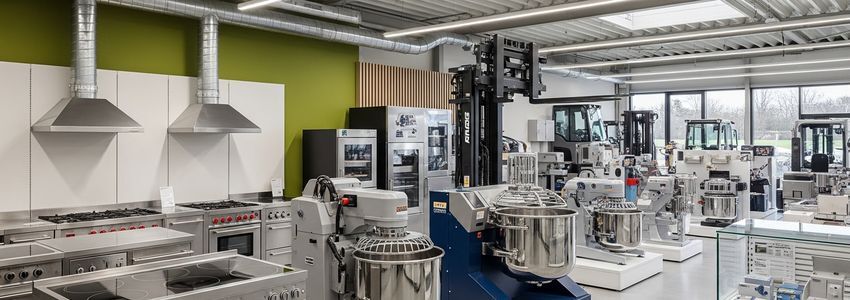
Virtually any type of new or used business equipment needed for your locations can be financed. The key is that the equipment is essential to your operations and revenue generation. Lenders are comfortable financing these assets because the equipment itself serves as collateral for the loan. Below are examples of eligible commercial equipment across various industries that are common in multi-location rollouts.
Restaurant & Food Service
- Commercial ovens, ranges, and grills
- Walk-in coolers and freezers
- Point-of-Sale (POS) systems and terminals
- Espresso machines and beverage dispensers
- Dishwashing stations and sanitation equipment
- Dining room furniture and fixtures
Retail & Franchise
- Store shelving, displays, and fixtures
- Security systems and surveillance cameras
- POS systems and cash registers
- Digital signage and menu boards
- Inventory management technology
- Customer seating and decor
Healthcare & Medical
- Diagnostic imaging equipment (X-ray, ultrasound)
- Patient examination tables and chairs
- Dental chairs and delivery systems
- Lab and testing equipment
- Electronic Health Record (EHR) computer systems
- Sterilization and sanitation units
Fitness & Gyms
- Cardio machines (treadmills, ellipticals, bikes)
- Strength training equipment and free weights
- Locker room facilities and amenities
- Access control and membership management systems
- Audio/visual equipment for classes
Manufacturing & Industrial
- CNC machines and fabrication tools
- Assembly line robotics and automation
- Forklifts and materials handling equipment
- Packaging and shipping machinery
- Quality control and testing devices
Technology & Office
- Computer servers and networking hardware
- Employee workstations and laptops
- Teleconferencing and AV systems
- Office furniture and cubicles
- Specialized software licenses (can often be bundled)
Qualification Requirements
Securing financing for a multi-location expansion involves a more rigorous evaluation than a single equipment loan. Lenders are not just investing in assets; they are investing in your growth strategy. They need to be confident that your business can handle the increased debt and operational complexity. Here are the primary factors considered during the qualification process.
Time in Business
Most lenders prefer to see a proven track record of success. A minimum of two to three years in business is a common requirement. This history demonstrates that your business model is stable and profitable, reducing the perceived risk of expansion.
Strong Revenue and Cash Flow
Lenders will analyze your historical financial statements (profit and loss, balance sheets, cash flow statements) to assess your profitability. They need to see consistent revenue and positive cash flow from your existing location(s) to feel confident that you can support the debt payments for the new ones, especially during their initial ramp-up period.
Good Credit History
Both your business credit score and the personal credit scores of the owners are critical. A strong credit history indicates responsible financial management. While requirements vary, a personal credit score above 680 is often a good starting point for competitive financing options.
Key Insight: A well-documented expansion plan is just as important as your financial statements. Lenders need to see that you have a clear, realistic strategy for site selection, marketing, and operations for each new location.
A Detailed Expansion Plan
This is a crucial component. You must present a comprehensive business plan for the rollout. It should include:
- Market research for new locations
- Detailed financial projections (pro-forma statements) for each new site
- A clear timeline for openings
- An operational plan for managing multiple locations
- Marketing strategy to launch the new units
Management Experience
Lenders will evaluate the experience and strength of your management team. Do you and your key personnel have experience in managing a growing business or multiple locations? A strong team with a history of success in your industry adds significant credibility to your application.
Down Payment or Equity
While 100% financing is sometimes possible, many lenders will require some form of down payment, typically between 10% and 20% of the total project cost. This "skin in the game" shows your commitment to the project and reduces the lender's overall risk.
Financing Strategies for Multi-Location Rollouts
A successful multi-location rollout requires more than just capital; it requires the right capital structure. There are several strategic ways to approach financing your expansion, each offering different benefits. Working with an experienced financial partner can help you determine the best strategy or combination of strategies for your specific business goals.
Master Lease or Loan Agreement
This is the foundational strategy for most rollouts. A master agreement is a pre-approved line of credit that you can draw from as you open new locations. You go through the underwriting process once to establish the total facility amount. Then, for each new location, you simply submit the equipment invoices to draw down the necessary funds. This approach is incredibly efficient, saving time and ensuring funding is available exactly when needed.
Phased Funding Schedule
Instead of taking a single lump-sum loan, a phased funding strategy aligns capital deployment with your construction and opening schedule. This means you only start paying interest on the funds as you use them. For example, if you plan to open 12 locations over 24 months, you can structure the financing to release funds for two or three locations at a time. This method is highly effective for managing interest expense and cash flow during a prolonged expansion.
Bundling Soft Costs
The cost of new equipment goes beyond the sticker price. Soft costs like shipping, installation, staff training, and even initial software licensing can add up to 20-25% of the total project cost. Many financing agreements allow you to bundle these essential soft costs into the loan. This provides a true turnkey financing solution, ensuring you have the capital for everything needed to make your new locations fully operational from day one.
Sale-Leaseback on Existing Assets
If you own the equipment in your existing, profitable locations, you can leverage that equity to fund your expansion. In a sale-leaseback transaction, you sell your current equipment to a finance company and then lease it back from them. This injects a significant amount of cash into your business, which can be used as a down payment or to fund the initial stages of your rollout, all while you continue to use the same assets without interruption.
Combining with Other Financing Types
Equipment financing is a powerful tool, but it doesn't have to be your only one. A comprehensive growth strategy might involve a blend of financing options. For example, you could use an SBA loan, known for its favorable terms, to cover real estate and working capital, while using a more flexible equipment financing agreement specifically for the machinery and technology. This hybrid approach allows you to match the right type of capital to the right business need.
Design Your Growth Strategy
Our experts can help you structure the perfect financing plan for your multi-unit expansion. Let's build your future together.
Get a Free Consultation →How Crestmont Capital Helps
Navigating the complexities of financing a multi-location rollout requires a partner with specialized expertise. At Crestmont Capital, we understand the unique challenges and opportunities that come with scaling a business. We are more than just a lender; we are a strategic partner dedicated to providing the flexible and reliable capital you need to achieve your growth ambitions.
Expertise in Growth Financing
We specialize in small business financing for growing companies. Our team has extensive experience structuring deals for franchise expansions, chain store rollouts, and multi-site service businesses. We understand the importance of speed, consistency, and scalability, and we build these principles into every financing solution we create.
Customized and Flexible Structures
There is no one-size-fits-all solution for expansion. We work closely with you to understand your specific timeline, cash flow, and operational needs. Whether you need a master lease agreement, a phased funding schedule, or a hybrid solution that includes working capital, we will design a financing package that is tailored to your unique growth plan.
A Streamlined, Tech-Enabled Process
Your time is best spent running your business, not chasing paperwork. Our application and funding process is designed for maximum efficiency. From our simple online application to our dedicated account managers who handle vendor coordination, we streamline every step to ensure you get your funding quickly and with minimal hassle, allowing you to focus on your rollout.
Dedicated Support
When you partner with Crestmont Capital for your rollout, you will be assigned a dedicated account manager. This single point of contact will be with you from the initial consultation to the final funding disbursement. They will understand the intricacies of your plan and will be available to answer questions, coordinate with your vendors, and ensure a smooth process for each new location you open.
Real-World Scenarios
To better illustrate how multi-location equipment financing works in practice, let's explore a few hypothetical but realistic scenarios based on common business expansion models.
Scenario 1: The Fast-Casual Restaurant Chain
The Business: "FreshBites," a successful fast-casual salad and bowl concept with three profitable locations in one metropolitan area.
The Goal: To open ten new locations across the state over the next 18 months. Total equipment cost is estimated at $1.5 million ($150,000 per location for ovens, refrigeration, POS systems, and furniture).
The Solution: FreshBites partners with a lender to secure a $1.5 million Master Loan Agreement. They go through underwriting once. As they sign the lease for each new location, they submit the vendor invoices to their financing partner, who pays the vendors directly. They arrange for interest-only payments for the first six months to allow the new stores to ramp up. This structure allows them to preserve their cash for inventory and pre-opening marketing while ensuring every new restaurant has the exact same high-performance kitchen setup, maintaining their brand's quality standards.
Scenario 2: The Regional Fitness Center Expansion
The Business: "IronStrong Gyms," a boutique fitness center with two locations known for its state-of-the-art equipment and group classes.
The Goal: To expand into three new suburban markets, requiring a total of $900,000 in equipment ($300,000 per gym for treadmills, weight machines, and A/V systems).
The Solution: IronStrong secures an equipment financing facility that allows them to bundle soft costs. The financing covers not only the gym equipment but also the costs of delivery, professional installation, and flooring. The funding is phased, with one-third of the total loan disbursed as each new location's construction is completed. This "just-in-time" capital deployment minimizes their interest costs and aligns perfectly with their construction schedule, enabling a smooth and rapid opening for each new gym.
Scenario 3: The Urgent Care Clinic Network
The Business: "QuickCare Clinics," an operator of four urgent care centers.
The Goal: To rapidly establish a presence in a new region by opening six clinics within one year. The required medical equipment (digital X-ray machines, diagnostic tools, exam tables) totals $2.4 million ($400,000 per clinic).
The Solution: QuickCare's management team has deep industry experience but wants to keep bank lines of credit open for working capital. They opt for an equipment leasing program under a master agreement. This provides 100% financing for the equipment, preserving their cash and bank credit. The lease payments are a fixed operating expense, simplifying their budgeting. At the end of the term, they have the option to purchase the equipment or upgrade to newer technology, providing flexibility in a field where medical technology evolves quickly. According to the U.S. Small Business Administration, insufficient capital is a leading cause of business failure, a risk QuickCare mitigates with this strategy.
Comparing Equipment Financing vs. Leasing
When planning your multi-location rollout, you will likely encounter two primary options for acquiring equipment: financing (a loan) and leasing. Both are excellent tools, but they serve different financial strategies. Understanding the key differences will help you decide which path is better for your business.
| Feature | Equipment Financing (Loan) | Equipment Leasing |
|---|---|---|
| Ownership | You own the equipment from the start. The lender holds a lien on it until the loan is fully paid. | The leasing company (lessor) owns the equipment. You (the lessee) have the right to use it for the lease term. |
| Upfront Cost | Typically requires a down payment, often 10-20% of the equipment cost. | Often requires only the first and last month's payment upfront, resulting in a lower initial cash outlay. |
| Monthly Payments | Payments are generally higher because you are paying off the full value of the equipment to own it. | Payments are typically lower because you are only paying for the equipment's depreciation during the lease term. |
| Long-Term Cost | Once the loan is paid off, you own the asset free and clear. The total cost is the purchase price plus interest. | If you choose to buy the equipment at the end, the total cost can sometimes be higher than with a loan. |
| End-of-Term Options | You own the equipment and can continue to use it, sell it, or dispose of it as you wish. | You have several options: purchase the equipment (e.g., for $1 or Fair Market Value), renew the lease, or return it and upgrade to new technology. |
| Best For | Businesses that want to build equity and use equipment with a long useful life (e.g., heavy machinery, kitchen ovens). | Businesses that need to conserve cash, want lower monthly payments, or use technology that quickly becomes obsolete (e.g., computers, medical equipment). |
Unlock Your Growth Potential
Don't let capital constraints hold back your expansion. Discover the financing you need to open your next locations.
Apply Now →Frequently Asked Questions
How to Get Started
Taking the first step towards financing your multi-location expansion is straightforward. Following a structured approach will ensure you are well-prepared to secure the best possible financing for your growing business.
Create a detailed business plan that outlines your growth strategy, including location analysis, timelines, marketing plans, and comprehensive financial projections.
Compile all necessary paperwork, including several years of business tax returns, current financial statements, personal financial statements, and equipment quotes from your chosen vendors.
Speak with a specialist who understands multi-location financing. Discuss your plan and goals to identify the best financing structure for your specific needs.
Complete a single, comprehensive application. A dedicated financing partner like Crestmont Capital makes this easy with a streamlined online process and expert guidance.
Conclusion
Expanding your business to multiple locations is a defining moment in your company's journey. It is a testament to your success and a bold step towards a larger future. However, this growth must be supported by a smart and sustainable financial strategy. Equipment financing for multi-location rollouts is not merely a loan; it is a strategic tool that enables you to scale efficiently, maintain brand consistency, and preserve your vital working capital.
By leveraging a master financing agreement, you can streamline procurement, accelerate your speed to market, and create predictable budgets. This allows you to focus on what you do best: running and growing your business. Partnering with a financial expert who understands the nuances of expansion financing is critical to building a capital structure that supports, rather than hinders, your ambitions.
At Crestmont Capital, we are committed to helping businesses like yours achieve their full potential. If you are ready to take the next step and turn your vision of a multi-location enterprise into a reality, we have the expertise and the capital solutions to help you get there.
Disclaimer: The information provided in this article is for general educational purposes only and is not financial, legal, or tax advice. Funding terms, qualifications, and product availability may vary and are subject to change without notice. Crestmont Capital does not guarantee approval, rates, or specific outcomes. For personalized information about your business funding options, contact our team directly.








