When your business depends on skilled, versatile workers operating modern machinery, equipment financing is one of the most powerful tools available to fuel that growth. Cross-training your workforce - teaching employees to operate multiple types of equipment - is a proven strategy to boost productivity, reduce downtime, and build operational resilience. But cross-training only works if your team has access to the right tools. Outdated machinery undermines even the best training program and puts you at a disadvantage against better-equipped competitors.
This guide explains exactly how equipment financing works for businesses investing in cross-training initiatives, what types of equipment you can finance, how to qualify, and how Crestmont Capital helps business owners across every industry get funded fast.
In This Article
- What Is Equipment Financing?
- Why Cross-Training Demands the Right Equipment
- Key Benefits of Financing Equipment for Your Team
- Types of Equipment You Can Finance
- How the Financing Process Works
- Equipment Financing vs. Equipment Leasing
- Who Qualifies for Equipment Financing?
- How Crestmont Capital Helps
- Real-World Scenarios
- How to Get Started
- Frequently Asked Questions
What Is Equipment Financing?
Equipment financing is a type of business loan used specifically to purchase machinery, tools, vehicles, technology, or other tangible assets your business needs to operate. Unlike a general working capital loan, equipment financing is purpose-built: the funds go directly toward acquiring specific equipment, and that equipment typically serves as the collateral for the loan. This structure often makes it easier to qualify for than unsecured loans, since the lender's risk is backed by a hard asset with recoverable value.
Equipment loans are structured with fixed monthly payments over a defined term - usually 24 to 84 months - and interest rates that reflect both your creditworthiness and the type of equipment being financed. Once the loan is paid in full, you own the asset outright. This is different from equipment leasing, where you make payments for temporary use of the asset without building equity.
For business owners investing in cross-training programs, equipment financing is particularly valuable. It allows you to acquire multiple types of machinery - the same equipment your team will be trained to operate - without a large upfront capital outlay. You can spread the cost over time while your newly skilled workforce generates the revenue to service the debt.
Key Fact: According to the U.S. Small Business Administration, equipment is among the most common uses of small business financing - and one of the most straightforward to qualify for, precisely because the asset secures the loan.
Why Cross-Training Demands the Right Equipment
Cross-training is the business practice of teaching employees to perform multiple roles or operate various types of equipment within your organization. In a construction company, a worker might be certified on an excavator, a compact track loader, and an aerial lift platform. In a manufacturing plant, an employee could be qualified to run a CNC lathe, a plasma cutting table, and a coordinate measuring machine. In a healthcare practice, support staff might be trained on multiple diagnostic platforms.
The business case for cross-training is compelling. A cross-trained workforce reduces the impact of absences and turnover. When someone leaves or calls in sick, another qualified team member can step into that role seamlessly - no project delays, no costly equipment idle time. Cross-training also increases overall output because workers can be shifted to wherever demand is highest on any given day.
But cross-training without the right equipment defeats its own purpose. You cannot train a team on machinery that is out of date, unreliable, or limited in quantity. Outdated equipment creates a learning gap between what your team practices in-house and what industry-standard operations actually look like. Modern equipment often features safety improvements, efficiency upgrades, and digital interfaces that simply do not exist on older machines. If your team trains on obsolete tools, they are not learning the skills the market values.
This is where equipment financing solves a real operational problem. By financing new equipment, you can update your fleet, expand capacity, and ensure your cross-training program produces workers who are genuinely ready to perform at the highest level.
Ready to Upgrade Your Equipment?
Crestmont Capital finances equipment for businesses across every industry. Fast approvals, flexible terms, no prepayment penalties.
Apply Now →Key Benefits of Financing Equipment for Your Team
The decision to finance rather than purchase equipment outright has both financial and operational advantages. Here is why most business owners choose financing:
Preserve working capital. A large equipment purchase drains cash reserves that could be used for payroll, inventory, marketing, or other growth initiatives. Financing spreads the cost over time and keeps your cash flow intact. You put a relatively small down payment - sometimes as low as 10 percent - and pay the balance through manageable monthly installments.
Access better equipment sooner. Waiting to save enough cash to buy equipment outright means months or years of competitive disadvantage. Financing lets you acquire what you need now, with repayment structured to align with the revenue the equipment helps generate.
Build toward ownership. Unlike leasing, equipment financing means you own the asset at the end of the term. The equipment builds equity as you pay it down, and when fully paid off, it becomes a free-and-clear asset on your balance sheet.
Fixed, predictable payments. Equipment loans typically carry fixed interest rates and fixed monthly payments, making budgeting straightforward. There are no surprise rate adjustments or variable costs to manage.
Financing scales with your training program. If you are equipping teams in multiple departments or across multiple locations, financing allows you to acquire everything you need in one transaction rather than piece-mealing purchases as savings allow.
Industry Data: The Equipment Leasing and Finance Association (ELFA) reports that approximately 80% of U.S. businesses use some form of equipment financing rather than paying cash for major equipment purchases - a figure that has held steady across economic cycles.
Types of Equipment You Can Finance
Equipment financing covers a broad range of assets across virtually every industry. Here are the most common categories financed by Crestmont Capital clients:
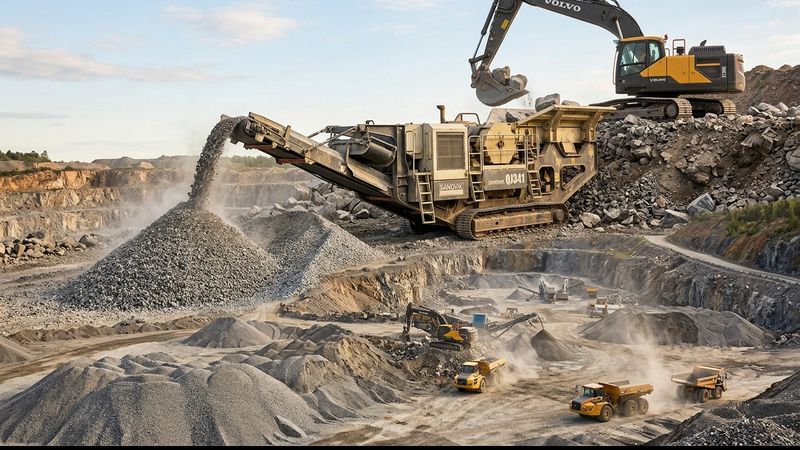
Construction and heavy equipment. Excavators, skid steers, bulldozers, cranes, aerial lifts, concrete mixers, compactors, and specialty attachments. Construction companies use cross-training to maximize utilization of every machine on a job site.
Manufacturing machinery. CNC machines, lathes, plasma cutters, robotic welding arms, quality control scanners, conveyor systems, injection molding equipment, and assembly line tooling. Manufacturing is one of the highest cross-training industries because machine versatility directly translates to throughput capacity.
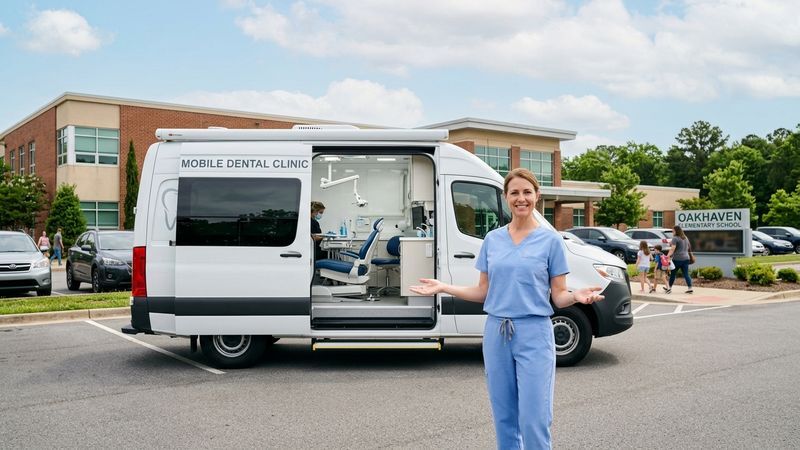
Healthcare and medical equipment. Diagnostic imaging systems, patient monitoring platforms, laboratory analyzers, surgical support equipment, and therapy devices. Healthcare practices cross-train clinical staff on multiple platforms to optimize scheduling and coverage.
Restaurant and food service equipment. Commercial ovens, prep stations, refrigeration units, dishwashing systems, POS systems, and specialty cooking equipment. Restaurant owners often train staff across front-of-house and kitchen operations to handle peak periods efficiently.
Technology and IT infrastructure. Servers, networking hardware, workstations, specialized software systems, and production equipment used in media, print, and digital services. Tech businesses rely heavily on cross-training as technology evolves rapidly.
Transportation and fleet vehicles. Box trucks, semi-trucks, vans, forklifts, and specialized vehicles. Fleet operators train drivers on multiple vehicle types to maximize deployment flexibility. Learn more about equipment leasing options for fleets that prefer not to hold the asset on their books.
Agricultural equipment. Tractors, harvesters, irrigation systems, and specialized agricultural machinery. Farm operations rely on cross-trained workers who can handle every piece of equipment across growing seasons.
If it is a tangible, productive asset with a useful life of two or more years, it can almost certainly be financed.
Quick Guide
How Equipment Financing Works — At a Glance
Submit your basic business information, equipment details, and desired loan amount at crestmontcapital.com.
Credit profile, time in business, revenue, and equipment value are evaluated. Equipment serves as collateral.
You receive loan amount, interest rate, term length, and monthly payment. Review and accept your offer.
Funds go directly to the equipment vendor. Your team begins training immediately on new machinery.
How the Equipment Financing Process Works
Understanding the mechanics of equipment financing helps you prepare a stronger application and move through approval faster. Here is a step-by-step breakdown of the process:
Step 1: Identify the equipment you need. Before applying, have a clear picture of what equipment you want to finance. Know the make, model, approximate cost, and the vendor or seller. This information speeds up underwriting significantly.
Step 2: Gather your financial documents. Lenders typically require recent bank statements (3-6 months), business tax returns, a profit and loss statement, and basic business documentation such as your business license and EIN. Some lenders, including Crestmont Capital, offer streamlined programs that require less documentation for smaller loan amounts.
Step 3: Submit your application. The application collects your business information, the equipment details, and the requested loan amount. Most applications can be completed online in under 15 minutes.
Step 4: Underwriting and approval. The lender evaluates your creditworthiness, the value of the equipment as collateral, and your ability to repay. Equipment loans are generally easier to underwrite than unsecured loans because the asset reduces lender risk. Approvals at Crestmont Capital can come as fast as the same business day for qualified applicants.
Step 5: Loan agreement and closing. Once approved, you receive a formal loan agreement outlining your interest rate, monthly payment, term length, and any fees. After signing, funds are disbursed directly to the equipment vendor.
Step 6: Repayment and ownership. You make fixed monthly payments over the loan term. At the end of the term, the loan is paid in full and you own the equipment outright. Some loans allow early payoff with no prepayment penalty.
Equipment Financing vs. Equipment Leasing
The decision between financing and leasing comes down to how long you plan to use the equipment and whether ownership is important to your business strategy.
| Feature | Equipment Financing | Equipment Leasing |
|---|---|---|
| Ownership | You own the equipment at loan payoff | Lender/lessor retains ownership |
| Equity Building | Yes - equity grows with each payment | No equity built |
| Monthly Payment | Typically higher (builds toward ownership) | Typically lower |
| Equipment Updates | Keep until you sell or replace | Easier to upgrade at end of lease |
| Best For | Long-term use, core business equipment | Rapidly-changing tech, short-term needs |
| Balance Sheet | Asset and liability recorded | Off-balance-sheet (operating lease) |
For cross-training programs, equipment financing is usually the stronger choice. The equipment your team trains on is the same equipment they will use day after day for years. Owning that equipment builds long-term value and eliminates ongoing lease payments once the loan is paid off. Read our full breakdown in Equipment Leasing vs. Equipment Financing: Which Is Better for Your Business?
Who Qualifies for Equipment Financing?
Equipment financing is one of the more accessible forms of business credit because the equipment itself reduces lender risk. That said, lenders still evaluate several factors before approving a loan. Here is what they look at:
Credit score. Most traditional lenders require a personal credit score of at least 650-680. However, alternative lenders like Crestmont Capital work with business owners with scores as low as 500-550, particularly when the equipment has strong collateral value. For a deeper look at options for lower credit scores, see our guide on equipment financing with bad credit.
Time in business. Most lenders want to see at least 1-2 years of operating history. Startups can sometimes qualify with a stronger personal credit profile and larger down payment.
Annual revenue. Lenders want to confirm you have sufficient cash flow to service the debt. A general rule of thumb is annual revenues of at least 1.25x the loan amount, though this varies by lender.
Equipment age and value. New equipment is easier to finance than used. If you are purchasing used machinery, lenders will scrutinize the condition, age, and resale value more carefully. Highly specialized equipment can also face stricter scrutiny.
Down payment. Equipment loans sometimes require a down payment of 10-20 percent. The down payment reduces your loan-to-value ratio and strengthens your application. Some lenders offer 100% financing for well-qualified borrowers.
Industry and business type. Certain industries face stricter underwriting standards due to historical default rates. Most standard industries - construction, manufacturing, healthcare, food service, transportation - qualify readily.
Tip: If your personal credit is thin or your business is newer, providing additional documentation - such as detailed financial projections, equipment appraisals, or a business plan - can strengthen your application considerably.
How Crestmont Capital Helps Your Business
Crestmont Capital is one of the leading business lenders in the United States, with a track record of helping business owners across construction, manufacturing, healthcare, food service, transportation, and dozens of other industries secure the equipment financing they need to grow. Here is what sets our equipment financing program apart:
Fast approvals. Many clients receive same-day or next-day approval decisions. We understand that business opportunities move quickly and waiting weeks for a funding decision is not acceptable.
Flexible qualification. We work with business owners who may not qualify at a traditional bank, including those with less-than-perfect credit, limited years in business, or seasonal revenue patterns. Our bad credit equipment financing program specifically addresses this gap.
Financing up to $5 million. Whether you are financing a single piece of machinery or equipping an entire facility, Crestmont Capital can handle large-scale equipment purchases that many lenders cannot accommodate.
Loan terms up to 84 months. Longer terms mean lower monthly payments, which makes it easier to fit equipment financing into your operating budget without stress-testing cash flow.
No prepayment penalties. If your business performs well and you want to pay off your loan early, Crestmont Capital does not penalize you for it.
Dedicated advisors. You are not handed off to an automated system. A Crestmont Capital advisor works with you directly to understand your equipment needs, structure the right loan, and guide you through closing.
Whether you need a small business loan for a single machine or a larger credit facility for a full equipment overhaul, our team is ready to help you get funded.
Finance Equipment. Train Your Team. Grow Faster.
Get flexible equipment financing from Crestmont Capital - the #1 business lender in the U.S. Same-day approvals available.
Apply Now →Real-World Scenarios: Equipment Financing in Action
To illustrate how equipment financing supports cross-training programs across different industries, here are six realistic business scenarios:
Scenario 1: Mid-size construction company, Texas. A 45-person general contractor wants to cross-train excavator operators to also run compact track loaders and mini-excavators. They finance three new machines totaling $680,000. With a 60-month term at a competitive rate, their monthly payment is manageable within their project billing cycle. Within 90 days, six operators are certified on all three machines, reducing their need to subcontract specialty work and adding $200,000 in annual margin.
Scenario 2: Contract manufacturer, Ohio. A precision machining shop finances four CNC machining centers at $1.2 million total to train their existing workforce across all four machines. Previously, each operator was dedicated to one machine. After cross-training, they can run all four stations with a smaller team during off-peak periods and scale up easily during surge production. Equipment financing at a 72-month term keeps cash flow positive from day one.
Scenario 3: Independent restaurant group, Chicago. A three-location restaurant operator finances a full equipment refresh for all back-of-house stations at each location, including new commercial ovens, prep tables, and refrigeration - $280,000 total. Staff at each location are cross-trained to cover any station. Turnover costs drop significantly because flexible, multi-skilled staff are more engaged and easier to deploy.
Scenario 4: Regional healthcare network, Florida. A multi-specialty clinic finances new diagnostic platforms in radiology and cardiology so support staff can cross-train on multiple modalities. The $950,000 financing enables them to schedule staff more efficiently, reduce per-procedure labor costs, and improve patient throughput by 22% over six months.
Scenario 5: Agricultural operation, Central Valley, California. A large-scale produce farm finances a new harvesting combine and precision irrigation system at $520,000. Workers are cross-trained across both systems and the existing tractor fleet. During peak season, any available hand can step into any equipment role, eliminating critical staffing bottlenecks during harvest windows.
Scenario 6: Distribution company, Georgia. A regional distribution center finances 12 new electric forklifts to replace aging propane units. With consistent, standardized equipment across all units, cross-training warehouse staff becomes straightforward. Every associate is certified on every forklift model. Productivity increases, and the company qualifies for energy incentive rebates through its state utility provider. Their fast business loan approval meant they could execute the entire equipment rollout before the holiday peak season.
How to Get Started
Complete our quick application at offers.crestmontcapital.com/apply-now - takes just a few minutes. Have your equipment details and basic business information ready.
A Crestmont Capital equipment financing advisor will review your needs, explain your options, and help you structure the right loan for your business and budget.
Once approved, funds are sent directly to your equipment vendor. Your new machinery arrives and your cross-training program begins - often within days of your initial application.
Conclusion
Investing in cross-training is one of the most effective ways to build a resilient, productive business. But that investment pays off only when your team has access to modern, reliable equipment. Equipment financing bridges the gap between where your business is today and the capability level you need to compete. By spreading the cost of new machinery over a fixed term, you protect your cash flow while equipping your workforce with the tools they need to excel.
Crestmont Capital has helped thousands of business owners across every industry access fast, flexible equipment financing with terms designed to fit real-world cash flow. Whether you need $50,000 or $5 million in equipment, our team is ready to help you get funded and get moving. Apply today at offers.crestmontcapital.com/apply-now and see what you qualify for.
Get Your Equipment Financed Today
Fast approvals, competitive rates, and flexible terms from the #1 rated business lender in the U.S.
Apply Now →Frequently Asked Questions
What is equipment financing and how does it work?
Equipment financing is a business loan used to purchase specific machinery, vehicles, or tools. The equipment serves as collateral for the loan, making it easier to qualify than unsecured loans. You repay the loan in fixed monthly installments over a set term, and you own the equipment outright once the loan is paid off.
What types of equipment can I finance for a cross-training program?
You can finance virtually any tangible business asset: construction machinery, manufacturing equipment, medical devices, restaurant equipment, technology hardware, fleet vehicles, agricultural machinery, and more. If it is productive, depreciable, and has a useful life of two or more years, it qualifies for equipment financing.
What credit score do I need to qualify for equipment financing?
Traditional bank lenders typically require a personal credit score of 650 or higher. Alternative lenders like Crestmont Capital work with business owners with scores as low as 500-550, especially when the equipment has strong collateral value or the business has solid revenue. Bad credit does not automatically disqualify you from equipment financing.
How long does equipment financing approval take?
Approval timelines vary by lender and loan size. Crestmont Capital can issue approval decisions as fast as the same business day for many equipment financing applications. Larger or more complex loans may take 2-5 business days. Having your documents ready - bank statements, financial statements, equipment details - speeds up the process considerably.
What is the difference between equipment financing and equipment leasing?
Equipment financing means you are borrowing money to purchase the equipment - you build equity with each payment and own it at payoff. Equipment leasing means you are paying for the right to use equipment owned by someone else, with no equity built. Financing is generally better for long-term core equipment; leasing may make sense for technology that becomes obsolete quickly or for businesses that prefer to preserve capital.
Can I finance used or pre-owned equipment?
Yes, most lenders including Crestmont Capital finance used equipment. The key considerations are the equipment's age, condition, and resale value. Lenders are more cautious with equipment over 10-15 years old or in poor condition. Having an appraisal or dealer invoice helps document the value. New equipment typically receives better terms because it carries lower lender risk.
What loan terms and amounts are available?
Crestmont Capital offers equipment financing from as little as $10,000 up to $5 million per transaction. Repayment terms range from 24 to 84 months depending on loan amount and equipment type. Longer terms mean lower monthly payments, which can be helpful for cash flow management. Interest rates are fixed, providing predictable payments throughout the loan term.
Do I need a down payment for equipment financing?
Down payment requirements vary by lender and borrower profile. Many equipment loans require 10-20% down, though well-qualified borrowers may be approved for 100% financing. A larger down payment reduces your monthly payment and can improve your interest rate. If your credit is limited, putting more down can offset the risk and improve your chances of approval.
How does cross-training benefit my business financially?
Cross-training reduces the financial impact of employee turnover and absenteeism by ensuring multiple people can fill any role. It lowers subcontracting costs because more tasks can be completed in-house. It maximizes equipment utilization because trained operators are available across shifts. And it reduces hiring urgency since the existing team is more flexible and deployable - all of which translates directly to improved profit margins.
What documents do I need to apply for equipment financing?
Standard documentation includes 3-6 months of recent business bank statements, your last 1-2 years of business tax returns, a current profit and loss statement, and basic business information (legal name, EIN, business license). You will also need details on the equipment: make, model, cost, and the vendor or dealer. For larger loans, additional financial documentation may be requested.
Can a startup or new business get equipment financing?
Startups and new businesses can qualify for equipment financing, though it is more challenging than for established businesses. Lenders will weigh your personal credit score heavily and may require a larger down payment or a personal guarantee. Strong personal credit (680+) and a solid business plan can overcome limited business history. Some lenders specialize in first-time business financing.
Is equipment financing better than using a business line of credit?
Equipment financing is generally better for purchasing specific, defined assets because the equipment serves as collateral, interest rates are often lower, and the loan is structured for the full purchase price. A business line of credit is better for ongoing or unpredictable expenses. Some businesses use a line of credit to cover soft costs associated with equipment acquisition (installation, training, shipping) while financing the equipment itself separately.
What happens if my business can no longer make payments?
If you default on an equipment loan, the lender can repossess the equipment since it serves as collateral. This protects the lender's position but can seriously disrupt your operations. Before defaulting, contact your lender to explore workout options - many lenders will negotiate a payment deferral or modification rather than repossess, as repossession is costly for both parties. Having cash reserves and maintaining consistent communication with your lender is critical.
How does equipment financing affect my business credit?
Taking out an equipment loan and making consistent, on-time payments is one of the best ways to build business credit. Lenders that report to business credit bureaus (Dun and Bradstreet, Experian Business, Equifax Business) will record your payment history. A strong payment record on an equipment loan can meaningfully improve your business credit score, making future financing cheaper and more accessible.
Why choose Crestmont Capital for equipment financing?
Crestmont Capital is rated the #1 business lender in the United States. We offer same-day approvals, flexible qualification standards, loan amounts from $10,000 to $5 million, terms up to 84 months, and no prepayment penalties. Our advisors specialize in equipment financing across construction, manufacturing, healthcare, transportation, food service, and dozens of other industries. We work with business owners who may have been declined elsewhere - and we close fast so you can get your equipment and get back to work.
Disclaimer: The information provided in this article is for general educational purposes only and is not financial, legal, or tax advice. Funding terms, qualifications, and product availability may vary and are subject to change without notice. Crestmont Capital does not guarantee approval, rates, or specific outcomes. For personalized information about your business funding options, contact our team directly.