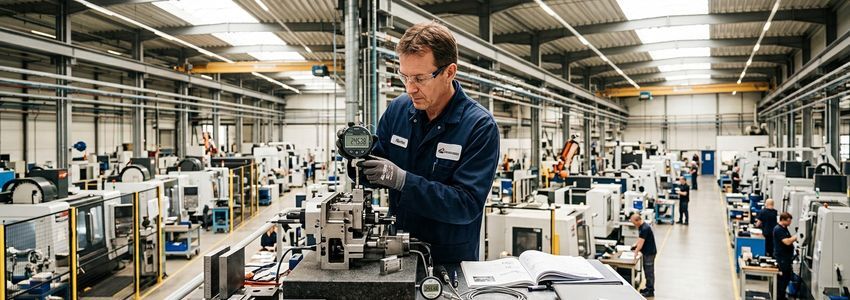
Equipment calibration and certification financing gives business owners a fast way to cover the cost of recalibrating, testing, or recertifying critical machinery without draining cash reserves. When a calibration cycle comes due, a piece of equipment fails a certification audit, or a new regulatory standard requires third-party verification, the bill often lands with little warning and even less flexibility on timing.
For manufacturers, labs, medical practices, and industrial service companies, calibration and certification are not optional line items. They are the difference between staying operational and being shut out of contracts, insurance coverage, or regulatory compliance entirely. This guide explains how equipment calibration and certification financing works, who qualifies, and how to choose the right funding structure when the clock is already running.
In This Article
What Is Equipment Calibration and Certification Financing?
Equipment calibration and certification financing is short-to-medium term business funding used to pay for the inspection, calibration, recertification, or third-party verification of equipment that must meet a specific accuracy, safety, or regulatory standard. This can include testing instruments in a lab, recalibrating scales or gauges in a manufacturing plant, certifying pressure vessels, or renewing an ISO-required measurement standard.
Unlike financing for a full equipment purchase, calibration and certification financing typically covers a smaller, more targeted expense: technician labor, calibration lab fees, replacement parts identified during inspection, travel costs for on-site certification, and any documentation or accreditation fees tied to the process. Because these costs are often unplanned and time-sensitive, the financing products used tend to prioritize speed of funding over the lowest possible rate.
Businesses across manufacturing, healthcare, food production, aerospace, construction, and laboratory services all rely on recurring calibration and certification cycles to keep equipment compliant. When a cycle is missed or a piece of equipment fails inspection, the business is often given a short compliance window, sometimes as little as 30 to 60 days, to correct the issue. That timeline makes traditional bank financing impractical and pushes many operators toward faster alternative lending products.
The scope of what falls under "calibration and certification" is broader than many business owners realize. It can include recalibrating a digital scale used for portion control in a commercial kitchen, verifying the accuracy of a torque wrench on an assembly line, certifying a forklift's load rating, testing a fire suppression system's pressure gauges, or renewing a facility-wide ISO 9001 audit. Each of these carries its own cost structure, timeline, and consequence for non-compliance, which is why financing needs to be flexible enough to match the specific situation rather than a one-size-fits-all product.
Many business owners are surprised to learn that calibration costs alone, without factoring in any parts replacement, can run from a few hundred dollars for a single handheld instrument to tens of thousands of dollars for a full facility recertification involving multiple technicians, specialized test equipment, and extended on-site time. When a failed inspection also reveals worn components that must be replaced before recertification can be approved, the total cost climbs quickly and often exceeds what a business has budgeted for the year.
Key Benefits
- Speed of funding. Many alternative lenders can approve and fund within 24 to 72 hours, which matters when a compliance deadline or contract requirement is on the line.
- Preserves working capital. Financing the cost spreads it over time instead of pulling a lump sum from operating cash or a line of credit reserved for payroll and inventory.
- Keeps equipment in service. Fast funding means less downtime waiting on internal budget approval or cash accumulation before the calibration technician can be scheduled.
- Flexible use of funds. A single loan or advance can cover labor, parts, lab fees, and travel costs together rather than requiring separate approvals for each expense.
- Supports contract and insurance compliance. Many commercial contracts, insurance policies, and industry certifications require documented proof of current calibration. Financing helps avoid lapses that could void coverage or breach a contract clause.
- Accessible with less-than-perfect credit. Alternative lenders typically weigh cash flow and time in business more heavily than personal credit score, opening the door for businesses that might not qualify for a traditional bank loan.
Facing a Compliance Deadline?
Get fast, flexible financing from the #1 business lender in the U.S. No obligation, apply in minutes.
Apply Now →How It Works
Financing a calibration or certification expense generally follows a straightforward path, but the exact steps depend on which funding product a business chooses. Here is the typical sequence from identifying the need to getting equipment back in compliant, working condition.
Quick Guide
How Equipment Calibration Financing Works, At a Glance
Get a written quote from the calibration or certification provider covering labor, parts, and fees.
Match the funding type (working capital loan, line of credit, or short-term advance) to the timeline and repayment ability.
Provide basic business financials, bank statements, and time-in-business details. Most alternative lenders skip lengthy documentation.
Once approved, funds are typically deposited within one to three business days, allowing the calibration or certification work to be scheduled immediately.
Repayment terms vary by product. A working capital loan might carry a fixed term of six to eighteen months with daily or weekly payments, while a business line of credit allows a business to draw only what is needed for the calibration cost and repay on a revolving basis. The right structure depends on how predictable future calibration cycles are and whether this is a one-time event or a recurring cost the business wants a standing credit facility to cover.
Underwriting for this type of financing tends to move faster than a typical term loan because lenders are evaluating a relatively small, well-defined expense against an established business's cash flow, rather than underwriting a large capital purchase. Most alternative lenders rely on automated bank statement analysis rather than manual financial statement review, which is a major reason approval decisions can come back within hours instead of weeks. A business with consistent monthly deposits and at least six months of operating history is typically in a strong position to qualify quickly.
It also helps to loop in the calibration or certification provider early. Many providers can offer a not-to-exceed estimate or itemized quote before work begins, which gives the lender a clear funding target and helps avoid requesting a second draw mid-project if the scope expands. Businesses that wait until the technician is already on site to start the financing conversation often lose several days of otherwise avoidable downtime.
Key Stat: According to the U.S. Small Business Administration, small businesses accessed a record $45 billion in SBA-guaranteed capital in fiscal year 2025, with manufacturing sector lending alone rising 16.7% year over year as more operators sought financing for equipment modernization and compliance-related upgrades.
Types of Calibration and Certification Financing
Not every calibration or certification expense fits neatly into a single financing category. Understanding the main product types helps a business owner match the right tool to the specific situation.
- Short-term working capital loans. A lump sum repaid over a fixed period, typically 3 to 18 months. Best for a one-time calibration or certification event with a known total cost.
- Business lines of credit. A revolving credit facility that can be drawn against repeatedly. Useful for businesses with recurring calibration cycles across multiple pieces of equipment throughout the year.
- Equipment financing add-ons. Some equipment lenders will bundle calibration or initial certification costs into the financing for a piece of equipment being purchased or leased, rather than treating it as a separate expense.
- Merchant cash advances. An advance against future receivables, repaid via a percentage of daily sales. Fast to fund but typically carries a higher cost of capital, best reserved for urgent, short compliance windows.
- SBA-backed loans. For businesses with more lead time, an SBA 7(a) loan can fund calibration equipment purchases or broader compliance upgrades at more favorable rates, though the approval timeline is longer than alternative lending.
- Invoice factoring. Businesses with outstanding receivables can factor those invoices for immediate cash, freeing up funds for calibration costs without taking on new debt. This works well for B2B service providers with slower-paying commercial clients.
Choosing between these options often comes down to two factors: how much lead time exists before the compliance deadline, and whether the expense is a one-time event or the first of several recurring calibration needs throughout the year. A business anticipating multiple certification cycles across different equipment categories is generally better served by establishing a standing line of credit than repeatedly applying for new short-term loans each time a deadline approaches.
Who This Financing Is Best For
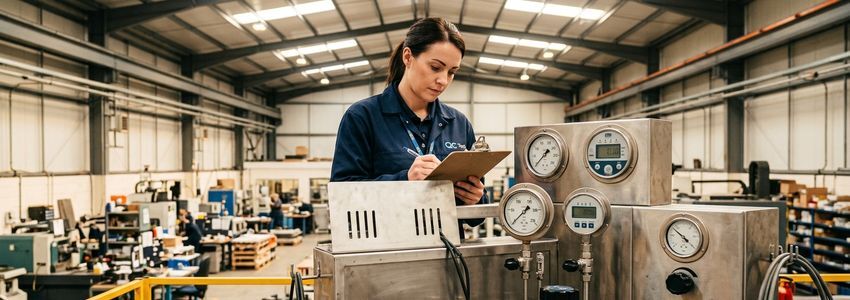
Equipment calibration and certification financing tends to serve a specific set of business situations rather than being a general-purpose funding product. It is most useful for:
- Manufacturers with ISO 9001, ISO 17025, or industry-specific quality standards requiring documented calibration schedules
- Medical, dental, and diagnostic imaging practices where equipment must pass regular calibration to remain compliant with health regulations
- Food and beverage producers with scales, thermometers, and processing equipment subject to health department or USDA inspection standards
- Construction and industrial service companies whose lifting, pressure, or safety equipment requires periodic third-party certification
- Laboratories and testing facilities where instrument accuracy is directly tied to client contracts and accreditation status
- Aerospace and defense subcontractors operating under strict measurement and traceability standards
Businesses that are least likely to need this type of financing are those with predictable, budgeted annual calibration costs and enough cash reserves to absorb the expense without disrupting operations. For everyone else, particularly companies facing a sudden failed inspection, a new customer contract requiring certification proof, or a compressed compliance deadline, financing bridges the gap between the requirement and the available cash.
Seasonal and cyclical businesses also benefit from this type of financing more than most. A food producer ramping up for a peak season, for example, may need every scale, thermometer, and processing line certified within a narrow pre-season window. Financing lets the business front-load compliance work without tying up the cash it needs for inventory and seasonal labor during the same period.
Comparing Your Financing Options
| Financing Type | Typical Funding Speed | Best For |
|---|---|---|
| Working capital loan | 1-3 business days | One-time calibration or certification event |
| Business line of credit | 2-5 business days | Recurring calibration cycles across multiple assets |
| Merchant cash advance | Same day to 24 hours | Urgent, unavoidable compliance deadlines |
| SBA 7(a) loan | 2-8 weeks | Larger, planned compliance upgrades with lead time |
Cost of capital and funding speed generally move in opposite directions. The fastest products, like merchant cash advances, are appropriate when a business genuinely cannot wait, but they carry a higher effective cost. A working capital loan or business line of credit strikes a more balanced approach for most calibration and certification scenarios, offering funding within a few business days at a more moderate cost.
How Crestmont Capital Helps
Crestmont Capital works with business owners who need funding fast when equipment compliance issues threaten to disrupt operations. Rather than a one-size-fits-all product, Crestmont evaluates the specific calibration or certification need and matches it to the right structure, whether that is an unsecured working capital loan, a business line of credit, or equipment financing if the calibration issue is tied to a broader equipment replacement decision.
For businesses whose calibration need stems from a failed inspection or audit, Crestmont's process is designed to move quickly. Applications can be completed online, and funding decisions typically happen within one business day, with funds available shortly after approval. Businesses that are also weighing whether to lease or purchase replacement equipment as part of the fix can review equipment leasing options, and those that need a broader look at commercial funding solutions can start with Crestmont's commercial financing hub.
Businesses dealing with a related compliance issue, such as a failed internal quality audit that also triggered the calibration requirement, may find it useful to review Crestmont's guide on financing for a failed quality audit and corrective action plan. Companies that lost a required industry certification entirely, rather than simply needing a routine recalibration, can also review the guide on recertification cost financing for a closely related funding scenario.
Don't Let a Compliance Deadline Stall Your Business
Crestmont Capital can help you fund calibration and certification costs fast. Apply in minutes, no obligation.
Apply Now →Real-World Scenarios
Scenario 1: The failed pressure vessel inspection. A regional food processing plant discovered during a routine safety audit that three pressure vessels were overdue for certification and one had failed inspection outright. With a 45-day window to correct the issue before the plant risked a shutdown order, the owner used a short-term working capital loan to cover technician labor, replacement gaskets, and the certifying agency's fees, keeping the plant operational without missing a production run.
Scenario 2: The lab losing ISO accreditation. An independent testing lab learned that two of its measurement instruments were out of calibration tolerance, putting its ISO 17025 accreditation at risk just before a major client contract renewal. The lab owner secured a business line of credit to fund immediate recalibration by an accredited third party, protecting both the accreditation and the client relationship.
Scenario 3: The medical practice equipment recall. A diagnostic imaging center received notice that its equipment required an unscheduled calibration check following a manufacturer service bulletin. Rather than delay patient scheduling, the practice financed the calibration visit and minor parts replacement through a fast working capital loan, avoiding weeks of reduced patient throughput.
Scenario 4: The construction firm's crane certification. A construction company's mobile crane failed its annual load-test certification just as a major project was set to begin. Facing potential project delays and liquidated damages clauses in its contract, the company used a merchant cash advance to fund emergency recertification within 48 hours, keeping the project on schedule.
Scenario 5: The brewery's flow meter recalibration. A craft brewery's excise tax reporting depends on accurately calibrated flow meters tracking production volume. When a routine audit flagged one meter as out of tolerance, the brewery faced potential tax reporting penalties if it wasn't corrected before the next filing period. Ownership used a short-term working capital loan to expedite recalibration by a specialized technician, avoiding both the penalty and a production slowdown.
Scenario 6: The auto repair shop's lift certification. An independent auto repair shop was notified by its insurance carrier that continued coverage was contingent on current certification for all vehicle lifts on the premises, two of which had lapsed. Rather than risk a coverage gap, the shop owner used a business line of credit to fund certification for both lifts within the same week, keeping the shop fully insured and operational.
Frequently Asked Questions
What is equipment calibration and certification financing?
It is short-to-medium term business funding used to cover the cost of calibrating, testing, or recertifying equipment to meet a required accuracy, safety, or regulatory standard, including labor, lab fees, parts, and accreditation costs.
How fast can I get funding for an urgent calibration deadline?
Many alternative lenders can approve and fund a working capital loan or line of credit within one to three business days. Merchant cash advances can sometimes fund the same day for the most urgent situations.
What documents are needed to apply?
Most alternative lenders ask for several months of business bank statements, basic business information, and time-in-business verification. A written estimate from the calibration or certification provider is also helpful to determine the funding amount.
Can I get financing if my business has less-than-perfect credit?
Yes. Alternative lenders typically place more weight on cash flow, revenue consistency, and time in business than on personal credit score, which makes this type of financing accessible to a wider range of businesses than a traditional bank loan.
What is the difference between a working capital loan and a line of credit for this purpose?
A working capital loan provides a lump sum repaid on a fixed schedule, ideal for a one-time calibration event. A line of credit is a revolving facility you can draw against repeatedly, better suited for businesses with recurring calibration needs across multiple pieces of equipment.
Can financing cover replacement parts found during a calibration inspection?
Yes. Most working capital loans and lines of credit are flexible enough to cover labor, calibration fees, and any parts or components identified as needing replacement during the inspection process, all in a single funding amount.
Is calibration and certification financing the same as equipment financing?
Not exactly. Equipment financing is typically used to purchase or lease a new piece of equipment, while calibration and certification financing covers the cost of testing, inspecting, or recertifying equipment you already own. Some lenders bundle both into a single financing package when a full equipment replacement is needed.
What industries use this type of financing most often?
Manufacturing, medical and diagnostic practices, food and beverage production, laboratories, aerospace subcontractors, and construction and industrial service companies are the most frequent users, since all operate under recurring calibration or certification standards.
What happens if I miss a required calibration deadline?
Consequences vary by industry but can include loss of accreditation, voided insurance coverage, failed audits, contract breaches, or in regulated industries, a forced shutdown of the affected equipment or facility until compliance is restored.
How much can I typically borrow for calibration or certification costs?
Funding amounts vary widely based on the scope of the calibration or certification project and the business's revenue and cash flow, ranging from a few thousand dollars for a single instrument to well over six figures for a facility-wide certification overhaul.
Is an SBA loan a good option for calibration costs?
An SBA 7(a) loan can work well for larger, planned compliance upgrades where a business has several weeks to a couple of months of lead time, but it is generally too slow for urgent, deadline-driven calibration needs.
Can startups or newer businesses qualify?
Most alternative lenders require at least six months to a year in business and consistent monthly revenue. Businesses that are newer may have more limited options but can still explore working capital products designed for shorter operating histories.
Does financing calibration costs affect my ability to get other business loans?
A well-managed, on-time repaid financing arrangement generally has a neutral to positive effect, since it demonstrates the business can manage debt responsibly. Lenders typically look at overall debt load and cash flow when evaluating future applications.
Will I need to provide collateral for this type of financing?
Most working capital loans and lines of credit used for calibration and certification costs are unsecured, meaning no specific collateral is required. Larger financing amounts or SBA-backed options may require a personal guarantee or a general business lien, but rarely a dedicated asset pledge for a calibration expense.
How do I get started with Crestmont Capital?
Complete Crestmont's online application, providing basic business information and recent bank statements. A funding specialist will review the calibration or certification need and recommend the financing structure that best fits the timeline and repayment ability.
Next Steps
Contact your calibration or certification provider for a detailed cost breakdown before applying for financing.
Have 3-6 months of business bank statements ready to speed up the application process.
Submit a quick online application to see what financing options you qualify for.
Once funded, move forward with your provider right away to stay ahead of the compliance deadline.
Keep Your Equipment Compliant and Your Business Running
Apply today and see how quickly Crestmont Capital can fund your calibration or certification project.
Apply Now →Conclusion
A sudden equipment calibration or certification requirement does not have to derail operations or force a business to drain its cash reserves. Equipment calibration and certification financing gives manufacturers, labs, medical practices, and industrial service companies a fast, flexible way to stay compliant, protect contracts and accreditations, and keep critical equipment running. By understanding the available financing structures, from working capital loans to lines of credit, business owners can move quickly when a compliance deadline hits and choose the option that fits both the urgency and the budget.
Crestmont Capital specializes in fast-turnaround business funding for exactly these situations. Whether the need is a single instrument recalibration or a facility-wide certification overhaul, a funding specialist can help identify the right structure and move the application through in as little as one business day.
The businesses that come out ahead after a surprise calibration or certification bill are the ones that treat the financing decision the same way they treat the compliance requirement itself: as something to act on immediately rather than delay. A short conversation with a funding specialist, paired with a written estimate from the calibration provider, is usually enough to get a clear picture of available options and timelines. From there, the path back to full compliance, and back to normal operations, is often just a matter of days.
Disclaimer: The information provided in this article is for general educational purposes only and is not financial, legal, or tax advice. Funding terms, qualifications, and product availability may vary and are subject to change without notice. Crestmont Capital does not guarantee approval, rates, or specific outcomes. For personalized information about your business funding options, contact our team directly.