E-bike shop business loans are specialized financing solutions that help electric bike retailers purchase inventory, upgrade equipment, hire staff, and expand their operations. As electric bikes continue to reshape urban transportation and recreational cycling, e-bike retailers across the country are experiencing rapid growth and significant capital needs. Whether you are launching your first electric bike shop or scaling an established dealership, understanding your financing options is critical to long-term success.
In This Article
- What Are E-Bike Shop Business Loans?
- The Electric Bike Market Opportunity
- Types of Financing for E-Bike Retailers
- How to Use Financing for Your E-Bike Shop
- E-Bike Industry: Key Statistics
- How E-Bike Shop Financing Works
- How to Qualify
- How Crestmont Capital Helps E-Bike Retailers
- Real-World Scenarios
- Frequently Asked Questions
- How to Get Started
What Are E-Bike Shop Business Loans?
E-bike shop business loans are commercial financing products that provide electric bike retailers with working capital, equipment funding, or credit lines to manage and grow their businesses. Unlike consumer loans, these business financing products are structured around business revenue, time in business, and creditworthiness rather than personal debt metrics alone.
Electric bike shops face unique financial challenges. Inventory represents a significant upfront cost, with individual e-bikes ranging from $1,000 to well over $10,000 for premium models. Add in the cost of service tools, charging equipment, showroom buildouts, and marketing, and the capital requirements for a competitive e-bike shop can easily exceed six figures. The right financing partner makes the difference between a thriving retail operation and one that struggles to keep shelves stocked.
Business loans for e-bike shops can take many forms, including term loans, lines of credit, equipment financing, and inventory financing. Each product serves different needs, and the best choice depends on your specific situation, goals, and financial profile.
The Electric Bike Market Opportunity
The electric bike industry is one of the fastest-growing segments in both retail and transportation. According to industry research, global e-bike sales have been growing at double-digit percentages annually, with the United States market following this trajectory as commuters, recreational cyclists, and fitness enthusiasts increasingly embrace electric-assisted cycling.
Several factors are driving this growth. Rising fuel costs have made e-bikes an attractive commuting alternative. Urban congestion and environmental awareness are pushing consumers away from cars for short to medium distance trips. Improvements in battery technology have extended range and reduced prices, making e-bikes accessible to a broader consumer base. Government incentive programs at the federal and state level continue to encourage clean transportation adoption.
Market Insight: The U.S. e-bike market is projected to reach multi-billion dollar valuations through the mid-2020s, driven by urban mobility trends, sustainability initiatives, and improving affordability. Retailers who build their inventory and service infrastructure now are positioning themselves ahead of mainstream adoption.
For e-bike shop owners, this growth creates enormous opportunity but also significant capital demand. Keeping up with evolving product lines, training staff on new technologies, and maintaining adequate inventory to meet customer demand all require consistent access to business capital. This is exactly where e-bike shop business loans become essential.
Types of Financing for E-Bike Retailers
E-bike retailers have access to a variety of financing products, each designed for different purposes. Understanding the landscape helps you match the right product to the right need.
Term Loans
A traditional term loan provides a lump sum of capital that you repay over a fixed period with regular payments. For e-bike shops, term loans work well for large one-time investments such as showroom expansions, major inventory purchases, or purchasing additional retail locations. Terms typically range from one to five years, with both short-term and long-term options available depending on the size of the loan and the lender.
Business Line of Credit
A business line of credit gives you access to revolving capital up to a pre-approved limit. You draw funds as needed and repay them, restoring available credit. This flexibility makes lines of credit ideal for e-bike shops managing seasonal inventory fluctuations, bridging gaps between bulk purchases and sales cycles, or covering operational costs during slower months. Learn more about business lines of credit and how they work for retail businesses.
Equipment Financing
Equipment financing allows you to purchase service tools, diagnostic equipment, charging stations, and retail fixtures by using the equipment itself as collateral. This keeps your working capital free for inventory while still equipping your shop with professional-grade tools. Equipment financing is an especially smart choice for e-bike shops that need expensive battery management systems, specialized repair stands, and wheel truing equipment.
Inventory Financing
Inventory financing is designed specifically to fund product purchases. For e-bike retailers who need to place large orders with manufacturers or distributors to take advantage of volume pricing or secure limited-availability models, inventory financing provides the capital needed without depleting cash reserves. The inventory itself typically serves as collateral for this type of loan.
Working Capital Loans
Working capital loans provide short-term funds to cover day-to-day operating expenses such as payroll, utilities, marketing, and supplier payments. E-bike shops with seasonal sales patterns benefit from working capital loans that help them maintain operations during slower months while building up inventory for peak selling seasons.
SBA Loans
Small Business Administration loans offer competitive rates and longer repayment terms for qualified businesses. While the application process is more involved than alternative lenders, SBA loans can provide substantial capital for e-bike shop owners looking to make long-term infrastructure investments. Explore SBA loan options to see if your business qualifies.
Ready to Finance Your E-Bike Shop?
Crestmont Capital offers flexible funding options for electric bike retailers. Get pre-qualified in minutes with no obligation.
Apply Now →How to Use Financing for Your E-Bike Shop
Knowing the types of loans available is only part of the equation. Understanding how to deploy that capital strategically is what separates growing businesses from stagnant ones.
Inventory Expansion
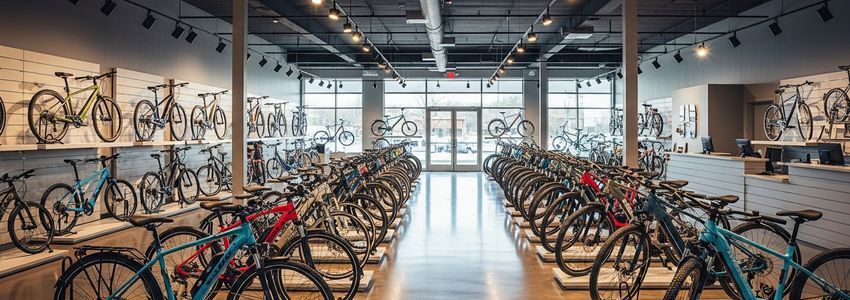
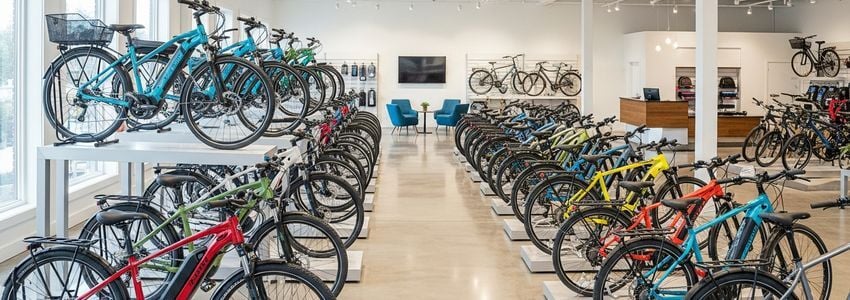
The most immediate use of e-bike shop financing is building and maintaining a robust inventory. Customers want to test ride before they buy, and a well-stocked showroom with diverse price points, styles, and brands creates a superior experience that drives conversion. Financing allows you to stock full product lines without waiting to accumulate cash from sales.
Service Department Buildout
Service revenue represents a significant and recurring profit stream for e-bike shops. Customers need battery servicing, software updates, brake adjustments, and annual maintenance. Investing in high-quality service tools, a dedicated service bay, and certified technician training builds long-term customer loyalty and generates consistent income separate from initial bike sales.
Storefront Improvements and Expansion
Your physical environment communicates your brand's quality to customers. A modern, well-organized showroom with proper lighting, test track space, and professional displays significantly improves the buying experience. Financing a retail renovation or expansion can result in measurable increases in foot traffic, average transaction size, and brand perception.
Marketing and Digital Presence
E-bike customers increasingly begin their buying journey online. Investing in search engine marketing, social media advertising, an optimized website, and local SEO campaigns builds awareness in your market and drives showroom visits. A focused marketing investment funded through a small business loan often delivers strong ROI for retail businesses in growing product categories.
Staff Hiring and Training
Knowledgeable staff are essential in the electric bike retail environment. Customers have technical questions about battery range, motor types, charging times, and warranty terms. Well-trained sales and service staff reduce returns, increase customer satisfaction, and build the kind of reputation that generates word-of-mouth referrals. Financing can cover hiring costs, salaries during a ramp-up period, and manufacturer-sponsored certification programs.
E-Bike Industry: Key Statistics
By the Numbers
E-Bike Retail - Key Market Statistics
$18B+
Global e-bike market value by 2030 (projected)
12%+
Average annual market growth rate in the U.S.
$3,000+
Average e-bike purchase price in the U.S.
40M+
E-bikes sold globally per year
How E-Bike Shop Financing Works
Understanding the mechanics of the lending process helps you prepare a strong application and set realistic expectations. The process varies somewhat by lender type and product, but most business loans for e-bike shops follow these general steps.
Step 1: Determine Your Financing Need
Before applying, define exactly what you need the capital for, how much you need, and what time horizon makes sense for repayment. A clear purpose strengthens your application and helps you select the right product. Lenders want to understand how the funds will be deployed and how the investment will generate returns.
Step 2: Gather Required Documentation
Most business lenders require standard documentation including recent business bank statements (typically three to six months), business and personal tax returns, a business license or formation documents, and information about your existing revenue and expenses. Some lenders also request a brief explanation of how the funds will be used.
Step 3: Submit Your Application
Online lenders and alternative financing providers have streamlined the application process significantly. Many decisions are made within 24 to 48 hours for smaller loan amounts, while larger loans or SBA products may take several weeks. The application itself typically takes less than an hour to complete when you have your documents ready.
Step 4: Review and Accept Offers
Once approved, you will receive a term sheet outlining the loan amount, interest rate or factor rate, repayment schedule, and any fees. Read the offer carefully and compare the total cost of capital, not just the headline rate. Look for origination fees, prepayment penalties, and any covenants that could restrict your business operations.
Step 5: Receive Funds and Deploy Capital
After signing the loan agreement, funds are typically deposited within one to three business days for online lenders, or longer for SBA and bank loans. Have a clear deployment plan ready so capital is put to work immediately rather than sitting idle in a checking account.
How to Qualify for E-Bike Shop Business Loans
Qualification criteria vary by lender and product type, but most business lenders evaluate a similar set of factors when reviewing applications from e-bike retailers.
Time in Business
Traditional lenders typically require at least two years in operation, while alternative and online lenders often approve businesses with as little as six months of history. If your e-bike shop is relatively new, focusing on alternative lenders with lower time-in-business requirements expands your options considerably.
Annual Revenue
Lenders want to see that your business generates enough revenue to comfortably service the debt. Most business loan products require annual revenue in the range of $100,000 or more, though requirements vary widely. Your debt service coverage ratio, which measures your ability to cover loan payments from business cash flow, is a key metric lenders evaluate.
Credit Score
Both business and personal credit scores factor into most loan decisions. A business credit score of 600 or higher opens doors to a wider range of products, and scores above 700 typically unlock the most competitive rates. However, bad credit business loan options exist for owners with lower scores who can demonstrate strong revenue and cash flow.
Cash Flow
Positive and consistent cash flow is often the single most important factor for alternative lenders. Business bank statements showing regular deposits and manageable expenses signal to lenders that you have the capacity to repay. Even if your credit score is not perfect, strong cash flow can compensate and secure approval.
Collateral
Secured loans require assets to back the debt. For e-bike shops, eligible collateral can include inventory, equipment, fixtures, and in some cases real estate. Unsecured loans do not require collateral but typically carry higher interest rates to compensate for the lender's increased risk.
Not Sure If You Qualify?
Our advisors work with e-bike retailers at every stage, from startups to established multi-location shops. Apply in minutes and see your options.
Check Your Options →How Crestmont Capital Helps E-Bike Retailers
Crestmont Capital is a direct business lender serving small and mid-size businesses across the United States, including electric bike retailers, sporting goods stores, and specialty retail shops. As the nation's top-rated business lender, we provide flexible financing options tailored to the unique needs of growing retail businesses.
Our lending approach is designed to work for e-bike shop owners, not against them. We evaluate the full picture of your business, including revenue trends, cash flow patterns, industry outlook, and growth potential, rather than relying solely on credit score benchmarks. This allows us to say yes to many e-bike retailers who have been turned down by traditional banks.
We offer a range of products including term loans, business lines of credit, equipment financing, and working capital solutions, all with straightforward terms and fast decisions. Most approved applicants receive funding within one to three business days, allowing you to move quickly on inventory opportunities, lease opportunities, or growth initiatives.
Our loan amounts range from $5,000 to several million dollars, making us an appropriate partner for solo e-bike shop owners and multi-location chains alike. Whether you need $25,000 to stock up before the spring cycling season or $500,000 to open a second location, our team can structure a solution that works for your timeline and cash flow.
For e-bike shop owners looking at equipment needs, our equipment financing programs offer competitive rates for service tools, charging infrastructure, and retail technology. For those managing seasonal inventory cycles, our business line of credit products offer the revolving flexibility that retail businesses need. And for those ready to scale, our term loan products provide the capital depth to make significant investments with confidence.
Real-World Scenarios: How E-Bike Shop Owners Use Business Loans
Scenario 1 - Spring Inventory Surge: An e-bike retailer in Denver needs to place a major order with three manufacturers before the spring cycling season, but current cash flow is tied up in ongoing operations. A $75,000 inventory financing loan allows the shop to stock full product lines of city commuters, trail bikes, and cargo e-bikes before demand peaks, resulting in a record sales quarter.
Scenario 2 - Service Department Expansion: A shop owner in Austin notices that service revenue is being lost because the single service bay creates bottlenecks. A $30,000 equipment loan funds a second service bay, diagnostic tools, and a technician certification program. Within six months, service revenue increases by 40% and becomes a significant portion of monthly gross margin.
Scenario 3 - Second Location: An established Portland e-bike retailer with three years of strong performance wants to open a second location in a nearby suburb. A $250,000 term loan funds the lease buildout, initial inventory, signage, and hiring costs for the new store. The owner secures the financing within a week and has the second location operational before the summer season.
Scenario 4 - Showroom Renovation: A two-year-old e-bike shop in Chicago recognizes that its outdated showroom layout is hurting conversion rates. A $50,000 renovation loan funds a complete redesign, including test track installation, LED lighting upgrades, digital displays, and a customer lounge area. Post-renovation, average transaction sizes increase and close rates improve measurably.
Scenario 5 - Digital Marketing Investment: A suburban e-bike shop owner uses a $15,000 working capital loan to fund a six-month digital marketing campaign including Google Ads, Instagram advertising, and local SEO. The campaign generates a substantial increase in showroom foot traffic and online inquiries, delivering a measurable return on investment within the first quarter.
Scenario 6 - Fleet and Rental Program: An e-bike retailer near a tourist destination adds a rental fleet to generate recurring income. A $40,000 equipment loan funds the purchase of 20 rental e-bikes, locks, helmets, and reservation software. The rental program generates steady daily income that helps cover overhead costs during slower retail sales periods.
How to Get Started
Complete our quick application at offers.crestmontcapital.com/apply-now - takes just a few minutes with basic information about your business.
A Crestmont Capital advisor who understands the retail and specialty bicycle industry will review your application, discuss your specific funding needs, and match you with the most appropriate financing product.
Receive your funds quickly - often within 24 to 72 hours of approval - and deploy them into the inventory, equipment, or expansion that will grow your e-bike business.
Conclusion
The electric bike market represents one of the most compelling retail growth opportunities in the country right now. Consumers are actively seeking e-bike retailers who can provide expert guidance, quality products, and reliable service. Building the inventory, infrastructure, and team to capture this demand requires capital, and e-bike shop business loans provide the financial foundation to compete and win.
Whether you need working capital to smooth seasonal cash flow, inventory financing to build a comprehensive product selection, equipment loans to upgrade your service department, or a term loan to expand your footprint, the right financing partner makes it all possible. Crestmont Capital specializes in helping retail businesses like yours access the funding needed to move fast and grow confidently.
Do not let capital constraints limit your growth in one of retail's hottest segments. Explore your options today and position your e-bike shop for long-term success in the electric mobility revolution.
Power Your E-Bike Shop's Growth
Crestmont Capital is ready to help electric bike retailers access fast, flexible business financing. No obligation - apply in minutes.
Apply Now →Frequently Asked Questions
What types of loans are available for e-bike shops?
E-bike shop owners can access term loans, business lines of credit, equipment financing, inventory financing, working capital loans, and SBA loans. The best product depends on your specific purpose, timeline, and financial profile.
How much can an e-bike shop borrow?
Loan amounts vary by lender, product type, and your business's financial profile. Working capital loans and lines of credit often start at $5,000 to $25,000, while term loans and inventory financing can range from $25,000 to several million dollars for larger or well-established operations.
Do I need good credit to get an e-bike shop business loan?
Good credit improves your options and rates, but it is not always required. Alternative lenders focus heavily on business revenue and cash flow, meaning e-bike shop owners with lower credit scores but strong business performance can still qualify for competitive financing.
How long does it take to get funding for an e-bike shop?
Online and alternative lenders often approve and fund within 24 to 72 hours. Traditional bank loans may take two to four weeks. SBA loans can take 30 to 90 days or more. For most e-bike retailers, alternative lenders offer the speed and flexibility that retail inventory timelines demand.
Can a new e-bike shop get a business loan?
Yes, though options may be more limited. Startups with less than six months of business history may have fewer lender options, but some lenders specialize in new business financing. Demonstrating a strong business plan, personal creditworthiness, and relevant industry experience improves your chances.
What documents do I need to apply for an e-bike shop loan?
Typical documentation includes three to six months of business bank statements, one to two years of business and personal tax returns, a valid business license, and basic information about your business structure and ownership. Some lenders may request additional financial statements or a brief description of how you plan to use the funds.
What can I use an e-bike shop business loan for?
Business loans for e-bike shops can fund inventory purchases, equipment upgrades, service department buildouts, showroom renovations, marketing campaigns, additional staff, rental fleet development, or a second location. The funds can generally be used for any legitimate business purpose.
What interest rates apply to e-bike shop business loans?
Interest rates vary based on loan type, lender, loan amount, repayment term, and the borrower's financial profile. SBA loans typically offer the lowest rates, often in the single digits. Bank loans range from approximately 6 to 12 percent. Alternative lenders may charge higher rates in exchange for faster approvals and more flexible qualification criteria.
Is a personal guarantee required for e-bike shop loans?
Many business loans require a personal guarantee, especially for small businesses and loans without collateral. Some larger business loans to established companies can be structured without personal guarantees, but these are typically reserved for businesses with strong financial histories and significant assets.
How does equipment financing work for e-bike shop tools and service equipment?
Equipment financing allows you to purchase service tools, charging stations, wheel truing stands, diagnostic devices, and retail fixtures with the equipment itself as collateral. You pay a fixed monthly amount over the loan term and own the equipment outright at the end. This preserves working capital for inventory and operations while still equipping your shop professionally.
What is the difference between a term loan and a line of credit for an e-bike shop?
A term loan provides a lump sum repaid over a fixed period, best for defined one-time investments. A line of credit provides revolving access to capital up to a limit, best for ongoing needs like seasonal inventory, payroll, or operational expenses that fluctuate month to month.
Can I use business financing to add a rental fleet to my e-bike shop?
Yes. Equipment financing or term loans can fund the purchase of rental e-bikes and accessories. Rental fleets generate recurring revenue and introduce new customers to your brand, making this a strong ROI investment for shops in tourist-heavy or high-traffic urban markets.
How do seasonal sales patterns affect e-bike shop loan applications?
Lenders who understand retail businesses expect seasonal revenue fluctuations. Providing multiple months of bank statements helps demonstrate your full annual cycle. Applying before your busy season with a strong prior-year performance record typically yields the best outcomes.
What makes Crestmont Capital different from a traditional bank for e-bike shop loans?
Crestmont Capital evaluates the full picture of your business performance, not just credit score. We offer faster decisions, more flexible qualification criteria, and products designed for retail businesses that traditional banks often overlook. Most approvals happen within 24 hours and funding within one to three business days.
Can I refinance existing e-bike shop debt through Crestmont Capital?
Yes. Crestmont Capital can help e-bike shop owners refinance existing high-cost debt into more manageable terms, potentially reducing monthly payments and freeing up cash flow for reinvestment. Contact our team to discuss your current obligations and explore refinancing options.
Disclaimer: The information provided in this article is for general educational purposes only and is not financial, legal, or tax advice. Funding terms, qualifications, and product availability may vary and are subject to change without notice. Crestmont Capital does not guarantee approval, rates, or specific outcomes. For personalized information about your business funding options, contact our team directly.