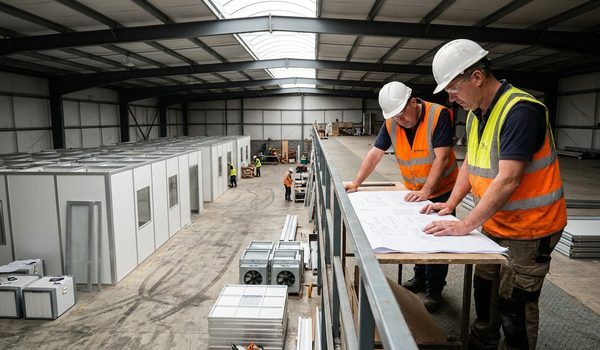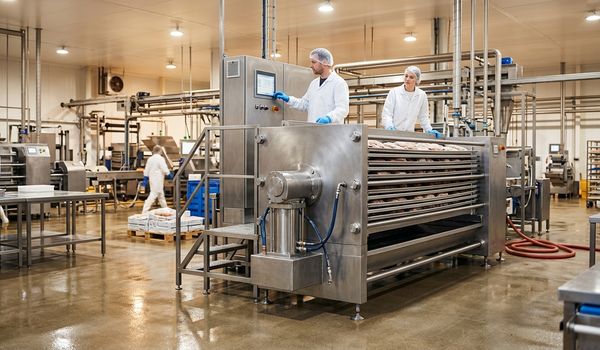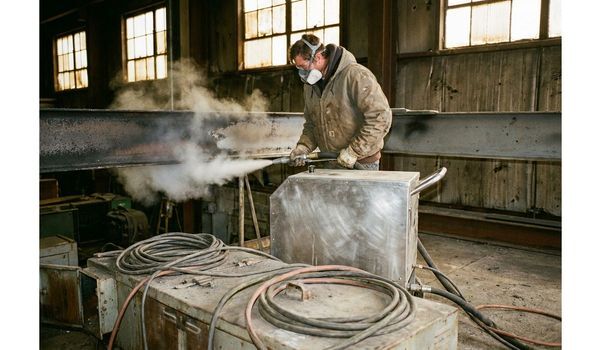
Dry ice blasting has become one of the fastest-growing industrial cleaning methods in the country, and for good reason. It cleans equipment, surfaces, and sensitive components without water, chemicals, or abrasive media, which means less downtime, no secondary waste, and no damage to the underlying material. The barrier for most businesses is the price tag. A commercial-grade dry ice blasting machine typically runs between $20,000 and $80,000, and that is before compressors, accessories, and training. Dry ice blasting equipment financing solves that problem by spreading the cost into predictable monthly payments, so your business can put the machine to work now and pay for it from the revenue it generates. This guide covers everything you need to know: how the financing works, what machines cost, who qualifies, and how to get funded fast.
In This Article
- What Is Dry Ice Blasting Equipment?
- Key Benefits of Dry Ice Blasting Machines
- How Dry Ice Blasting Equipment Financing Works
- Types of Dry Ice Blasting Machines
- Who Benefits Most From Financing?
- Buying vs. Leasing vs. Financing
- How Crestmont Capital Helps
- Real-World Scenarios
- Frequently Asked Questions
- How to Get Started
What Is Dry Ice Blasting Equipment?
Dry ice blasting equipment is a category of industrial cleaning machinery that propels small pellets of solid carbon dioxide at high speed toward a surface. When the pellets strike the surface, they lift away contaminants such as grease, paint, mold, soot, adhesives, and production residue through a combination of kinetic energy, thermal shock, and sublimation. The dry ice pellets convert directly from a solid to a gas on impact, which means the cleaning media simply disappears. Nothing is left behind except the removed contaminant.
A complete dry ice blasting system has three main components. The blasting machine itself meters and accelerates the dry ice pellets using compressed air. An air compressor, often purchased separately, supplies the volume and pressure the machine needs to operate. Finally, hoses, applicator guns, and nozzle assemblies deliver the pellet stream to the work surface. Some operators also invest in pelletizers, which are machines that manufacture dry ice pellets on demand from liquid CO2, eliminating the need for frequent dry ice deliveries.
The technology has been adopted across a wide range of industries because it solves problems that traditional cleaning methods cannot. Sandblasting and soda blasting remove surface material along with the contaminant, which makes them unsuitable for delicate substrates. Pressure washing introduces water into environments where moisture causes corrosion, electrical hazards, or sanitation concerns. Chemical solvents create disposal obligations and worker exposure risks. A dry ice blasting machine avoids all three problems, which is why demand for these systems keeps growing among restoration contractors, manufacturers, food processors, and specialty cleaning companies.
For most small and mid-size businesses, the challenge is not understanding the value of the technology. It is finding the capital to acquire it. That is where equipment financing enters the picture.
Key Benefits of Dry Ice Blasting Machines
Businesses that add dry ice blasting capability tend to do so for a short list of compelling operational reasons. Understanding these benefits matters because they directly affect the return on investment that justifies the financing payment.
- No secondary waste stream. Because the dry ice sublimates on impact, there is no spent media to sweep up, contain, or dispose of. Cleanup after a blasting job involves only the contaminant itself, which dramatically reduces labor time and disposal fees compared to sand or soda blasting.
- Non-abrasive cleaning. Dry ice pellets are soft relative to most industrial surfaces. The process removes the contaminant without etching, profiling, or wearing down the substrate, so it is safe on machined surfaces, electrical components, molds, and historical materials.
- No water or chemicals. The process is completely dry. Equipment can be cleaned in place without disassembly in many cases, and there is no risk of moisture damage, rust, or chemical residue. This is especially valuable in food processing and electrical applications.
- Faster turnaround. Operators report cleaning times that are often 50 to 80 percent faster than manual scraping, solvent wiping, or media blasting followed by media cleanup. Less downtime means more production time or more billable jobs per week.
- New revenue potential. For contractors, a dry ice blasting machine opens the door to premium service lines such as mold remediation, fire damage cleanup, industrial maintenance contracts, and specialty restoration work that commands higher margins than conventional cleaning.
- Environmentally responsible profile. The CO2 used in dry ice is typically recaptured from existing industrial processes, and the cleaning method eliminates chemical solvents and contaminated wastewater from the workflow.
Key Stat: The U.S. equipment finance industry funds more than $1 trillion in equipment acquisitions each year, and the majority of American small businesses use financing rather than cash to acquire machinery. Financing a dry ice blasting machine puts you in the mainstream of how smart operators acquire revenue-producing equipment.
How Dry Ice Blasting Equipment Financing Works
Equipment financing is a straightforward funding structure. A lender provides the capital to purchase the machine, you take possession of it immediately, and you repay the amount financed plus a financing charge over a fixed term, usually 24 to 72 months. In most structures, the equipment itself serves as collateral, which keeps approval requirements more flexible than unsecured borrowing and keeps rates lower than most unsecured loan products.
Here is the typical process from application to operation:
- Identify the equipment. Get a quote or invoice from the equipment vendor for the dry ice blasting machine, plus any compressor, accessories, or pelletizer you plan to include in the purchase.
- Submit a short application. Most equipment financing applications ask for basic business information, time in business, revenue range, and the equipment details. With Crestmont Capital, the application takes only a few minutes to complete.
- Receive a credit decision. Lenders evaluate the health of your business more than your personal credit alone. Many approvals come back within 24 hours, and strong files can move even faster.
- Review terms and sign. You receive a financing agreement showing the monthly payment, term length, and end-of-term ownership provisions. Review it, ask questions, and sign electronically.
- Vendor gets paid, you get the machine. The lender pays the equipment vendor directly. The machine ships to your business, and your payment schedule begins.
- Own the equipment. At the end of a standard equipment finance agreement, you own the machine outright. Some structures include a nominal purchase option instead.
The practical effect is powerful. Instead of writing a $45,000 check that drains your working capital, you might finance the full amount over 48 or 60 months and let the revenue from the machine cover the payment. Many operators find that two or three additional blasting jobs per month more than cover the monthly financing cost.
Ready to Add Dry Ice Blasting to Your Business?
Get fast, flexible equipment financing from the #1 business lender in the U.S. Apply in minutes, no obligation.
Apply Now →Types of Dry Ice Blasting Machines
Not all dry ice blasting equipment is built for the same job. Understanding the main categories helps you size the machine correctly and finance the right amount rather than overbuying or underbuying.
Compact and Portable Units
Entry-level portable machines are designed for contractors who move between job sites. They are lighter, run on smaller compressors, and handle detail work such as mold remediation in crawl spaces, fire damage restoration in residential structures, and automotive cleaning. Prices for quality portable units generally start in the $20,000 to $35,000 range. These are the most common machines financed by first-time buyers and service contractors.
Mid-Range Industrial Units
Mid-range machines offer higher pellet feed rates, more aggressive cleaning capability, and greater durability for daily use. Manufacturing plants, food processors, and busy restoration companies typically buy in this tier. Expect pricing between $35,000 and $55,000 for the blasting unit alone. These machines handle production line cleaning, printing press cleaning, mold and die cleaning, and larger surface restoration projects.
Heavy-Duty and Automated Systems
At the top of the market are high-output machines and fully or partially automated blasting systems integrated into production environments. These systems can exceed $80,000 and are typically financed by established manufacturers with continuous cleaning requirements, such as tire mold cleaning operations or high-volume food production facilities.
Pelletizers and Support Equipment
Operators who blast frequently often add a dry ice pelletizer to produce their own blasting media on site. A pelletizer eliminates dry ice delivery logistics and cuts media cost substantially at high volumes. Pelletizers are significant capital purchases in their own right, often ranging from $40,000 to well over $100,000, and they are commonly financed alongside the blasting machine or in a separate equipment financing arrangement. Compressors, aftercoolers, and moisture separators are smaller but essential add-ons that can usually be bundled into the same financing agreement.
By the Numbers
Dry Ice Blasting Equipment - Key Figures
$20K-$80K
Typical price range for a commercial dry ice blasting machine
33M+
Small businesses operating in the U.S., per the SBA
$1T+
Annual U.S. equipment finance volume - the standard way businesses acquire machinery
0
Water, chemicals, or secondary waste produced by the dry ice blasting process
Who Benefits Most From Dry Ice Blasting Equipment Financing?
Financing makes sense for any business that wants the revenue and efficiency of dry ice blasting without tying up cash. Certain types of operators see the strongest returns:
- Restoration contractors. Fire and smoke damage cleanup is one of the highest-margin uses of dry ice blasting. A restoration company that adds a machine can clean soot and char from structural surfaces without the labor of hand scrubbing or the waste of media blasting, and it can market mold remediation services with a chemical-free process that appeals to property owners and insurers alike.
- Manufacturers and processors. Production equipment, molds, dies, and conveyors all accumulate residue that hurts quality and uptime. In-house dry ice blasting lets maintenance teams clean equipment in place, often without full disassembly, which keeps lines running.
- Food and beverage facilities. The dry, chemical-free process aligns well with sanitation requirements. Bakeries, commercial kitchens, and food plants use dry ice blasting on ovens, mixers, and packaging equipment where water and solvents are problematic.
- Specialty cleaning companies. Contract cleaning firms use dry ice blasting as a premium service line for industrial clients, historical restoration, printing, and marine applications.
- Automotive and aerospace operations. From classic car restoration to aircraft component cleaning, the non-abrasive nature of the process makes it suitable for high-value surfaces that cannot tolerate sanding or harsh chemicals.
The common thread across all of these operators is the same: the machine pays for itself through a combination of new billable services and reduced labor or downtime. When the monthly payment is smaller than the monthly benefit, financing is the financially sound path.
Pro Tip: Bundle your compressor, hoses, nozzles, and even initial dry ice supply into a single equipment financing agreement. Bundling keeps one simple monthly payment and avoids draining cash on the supporting gear that makes the machine productive from day one.
Buying vs. Leasing vs. Financing: Comparing Your Options
There are three practical ways to put a dry ice blasting machine in your facility. Each has a different cash flow profile and a different long-term cost.
| Factor | Cash Purchase | Equipment Financing | Equipment Leasing |
|---|---|---|---|
| Upfront cost | Full price, $20K-$80K+ | Little to none; often 100% financing | Low; first payment plus fees |
| Ownership | Immediate | Yes, at end of term | No, unless purchase option exercised |
| Monthly payment | None | Fixed, predictable | Fixed, often slightly lower |
| Working capital impact | Severe - cash is gone | Minimal - cash stays available | Minimal |
| Best for | Cash-rich buyers | Most businesses building equity in the machine | Operators who upgrade equipment frequently |
For the majority of small and mid-size businesses, equipment financing hits the sweet spot. You conserve cash for payroll, marketing, dry ice supply, and day-to-day operations, while still ending the term as the owner of a productive asset. A cash purchase makes sense only when the business has surplus capital that cannot earn a better return elsewhere. Leasing fits operators who expect to trade up to newer machines every few years and do not need to build equity.
One more option worth mentioning is a working capital loan, which some operators use alongside equipment financing to cover the softer costs of launching a blasting service line: training, marketing, insurance riders, and initial dry ice inventory.
Dry ice blasting sits at the intersection of two well-documented trends: the growth of specialty contracting services and the rising adoption of equipment financing among small businesses. The U.S. Small Business Administration reports more than 33 million small businesses operating in the country, and access to capital remains their most commonly cited growth constraint. National business data from the U.S. Census Bureau's Statistics of U.S. Businesses program shows the cleaning and remediation services sector continuing to expand, while business press coverage from outlets like Reuters and CNBC chronicles how equipment investment keeps small operators competitive against larger players.
How Crestmont Capital Helps
Crestmont Capital is the #1 rated business lender in the United States, and equipment financing is one of our core specialties. We fund dry ice blasting machines, compressors, pelletizers, and complete equipment packages for restoration contractors, manufacturers, food processors, and specialty cleaning companies across the country.
Here is what working with Crestmont looks like in practice. Our equipment financing programs cover new and used machines from any vendor, so you are free to buy the exact make and model that fits your operation. If you prefer lower payments with upgrade flexibility, our equipment leasing options give you that structure. And if you are buying a pre-owned machine from a dealer or private seller, our used equipment financing programs handle those transactions routinely.
The application itself is fast. You complete a short online form, our advisors review your file the same day in most cases, and approvals often arrive within 24 hours. Because the equipment serves as collateral, we can approve businesses that banks turn down, including companies with limited operating history or imperfect credit. Terms typically run 24 to 72 months with fixed monthly payments, and funding moves directly to your equipment vendor so the machine ships without delay.
Operators who already follow the blasting equipment space may also find our guide on sandblasting equipment financing useful for comparing abrasive and non-abrasive cleaning investments, and our overview of financing for cleaning companies covers the broader funding landscape for service contractors.
Get Your Machine Financed This Week
Same-day reviews, 24-hour approvals, and terms up to 72 months. See your options now.
Check Your Options →Real-World Scenarios: How Businesses Use This Financing
Numbers tell the story better than theory. Here are five representative scenarios showing how different operators put financed dry ice blasting equipment to work.
Scenario 1: The Mold Remediation Contractor
A two-truck mold remediation company in the Southeast was turning away attic and crawl space jobs because hand scrubbing was too slow to be profitable. The owner financed a $32,000 portable dry ice blasting machine over 48 months, landing a payment under $900 per month. Blasting cut average job labor from three days to one, which let the company double its job volume without hiring. The machine paid for itself within the first quarter of use.
Scenario 2: The Fire Restoration Firm
A restoration contractor in the Midwest wanted to stop subcontracting smoke and soot cleanup after structure fires. The company financed a mid-range machine plus a diesel compressor for about $51,000 over 60 months. Bringing soot removal in-house added roughly $8,000 of margin per large fire job, and the firm now markets chemical-free cleanup directly to insurance adjusters. Monthly financing cost is covered by a single mid-size job.
Scenario 3: The Food Processing Plant
A regional bakery was shutting down production lines for full weekends to deep-clean ovens, conveyors, and mixers with water and chemicals. Management financed a $44,000 industrial dry ice blasting machine over 48 months. Cleaning now happens during short maintenance windows with no water intrusion and no chemical residue concerns. Recovered production time alone exceeds the financing payment several times over.
Scenario 4: The Automotive Restoration Shop
A classic car restoration shop wanted a gentler way to strip paint and undercoating from valuable body shells without warping panels or removing metal. The owner financed a compact machine for $28,000 over 36 months and began marketing dry ice stripping as a premium service. The shop charges a significant premium over media blasting because owners of high-value vehicles actively seek out the non-abrasive process.
Scenario 5: The Industrial Cleaning Startup Division
An established commercial cleaning company launched an industrial services division built around dry ice blasting. Rather than paying cash, the owners financed two machines and a pelletizer, about $130,000 total, over 60 months. The division won a recurring contract cleaning production equipment for a printing facility, and the contract revenue covers the full financing payment with room to spare while the company keeps its cash reserves intact.
The pattern repeats across every scenario: the payment is fixed and predictable, while the revenue and savings the machine creates scale with use. That asymmetry is exactly why equipment financing exists.
Frequently Asked Questions
What is dry ice blasting equipment financing? +
Dry ice blasting equipment financing is a funding arrangement that lets your business acquire a dry ice blasting machine, compressor, and related gear without paying the full purchase price upfront. A lender pays the equipment vendor, you take delivery of the machine immediately, and you repay the financed amount through fixed monthly payments over a set term, typically 24 to 72 months. At the end of a standard equipment finance agreement, you own the machine outright.
How much does a dry ice blasting machine cost? +
Commercial dry ice blasting machines generally range from about $20,000 for compact portable units to $80,000 or more for heavy-duty industrial systems. Mid-range machines suitable for most restoration and manufacturing applications typically fall between $35,000 and $55,000. Support equipment such as compressors, aftercoolers, and nozzle kits add to the total, and on-site pelletizers for producing your own dry ice can add $40,000 to $100,000 or more. Most buyers finance the complete package in one agreement.
Can I finance a used dry ice blaster? +
Yes. Used equipment financing is widely available for pre-owned dry ice blasters purchased from dealers, auctions, or private sellers. Terms depend on the age, condition, and price of the machine, but used equipment often qualifies for the same term lengths as new equipment. Financing a used machine is a practical way to enter the dry ice blasting market at a lower monthly payment.
What credit score do I need to finance dry ice blasting equipment? +
There is no single minimum score because equipment financing decisions weigh the overall health of your business, including time in business, revenue, and cash flow, more heavily than personal credit alone. Because the machine itself serves as collateral, approvals are available across a wide credit range, including applicants with imperfect credit. Stronger credit profiles generally receive better rates and terms.
How long does approval take? +
Many equipment financing applications receive a credit decision within 24 hours, and straightforward files can be approved the same day. Once documents are signed, funding is sent directly to your equipment vendor, often within one to two business days, so the machine can ship without delay.
Is leasing or financing better for a dry ice blasting machine? +
It depends on your goals. Financing is usually the better choice if you want to own the machine and build equity, because you own it outright at the end of the term. Leasing typically offers slightly lower payments and makes it easier to upgrade to newer equipment every few years, but you do not own the machine unless you exercise a purchase option. Most businesses that plan to keep the machine long term choose financing.
Can a new business finance dry ice blasting equipment? +
Yes, although startups face closer review. Newer businesses may be asked for a larger down payment, a personal guarantee, or additional documentation such as contracts, projections, or industry experience. Operators with relevant backgrounds, such as restoration or industrial cleaning experience, often qualify even with limited time in business.
What terms are available for dry ice blasting equipment financing? +
Terms typically run from 24 to 72 months, with fixed monthly payments throughout. Longer terms lower the monthly payment but increase the total financing cost over the life of the agreement. Shorter terms cost more per month but build equity faster and reduce the total amount paid. Many buyers choose 48 or 60 months as a balance between payment size and total cost.
Does the equipment serve as collateral? +
Yes. In most equipment financing structures, the machine itself is the collateral for the funding. This is one of the biggest advantages of equipment financing over unsecured borrowing, because the collateralized structure keeps approval requirements more flexible and rates lower. It also means the financing does not tie up other business or personal assets.
Can I include accessories and training in the financing? +
In many cases, yes. Compressors, hoses, nozzles, aftercoolers, and even soft costs such as delivery, installation, and operator training can often be bundled into a single equipment financing agreement. Bundling keeps one simple monthly payment and preserves cash for operating expenses.
What industries use dry ice blasting? +
Dry ice blasting is used across restoration, manufacturing, food and beverage processing, printing, automotive, aerospace, marine, and historical preservation. Fire and mold restoration contractors use it for soot and microbial cleanup. Manufacturers use it to clean molds, dies, and production equipment in place. Food facilities use it because the process introduces no water or chemicals into sanitary environments.
Is a down payment required? +
Not always. Many qualified buyers receive 100 percent financing with little or no money down. Where down payments are requested, they are typically modest, often one or two monthly payments due at signing. Applicants with newer businesses or weaker credit may be asked for a larger upfront amount to strengthen the file.
Can I pay off my equipment financing early? +
Most equipment financing agreements allow early payoff, though the specific economics vary by contract. Some agreements include a prepayment premium or calculate the payoff on a remaining-balance basis, while others offer a discount for early payoff. Review the payoff provisions before signing, especially if you expect to retire the debt ahead of schedule.
What is the difference between dry ice blasting and sandblasting? +
The core difference is the cleaning media. Sandblasting propels abrasive media such as sand or grit, which removes contaminants but also etches and wears the underlying surface, and it leaves a large volume of spent media to clean up and dispose of. Dry ice blasting uses soft CO2 pellets that sublimate on impact, leaving no secondary waste and causing no abrasion. Dry ice blasting is the better choice for delicate surfaces, electrical components, food facilities, and indoor work, while sandblasting remains common for heavy rust and coating removal on robust surfaces.
How do I apply for dry ice blasting equipment financing? +
Start by getting a quote from your equipment vendor for the machine and any support equipment. Then complete the short online application with Crestmont Capital, which takes just a few minutes. An advisor will review your file, present your approval and terms, and walk you through the documents. Once signed, funding goes directly to the vendor and your machine ships.
Your Machine Is One Application Away
Join thousands of business owners who fund equipment through Crestmont Capital. Fast decisions, flexible terms.
Start Your Application →How to Get Started
Complete our quick application at offers.crestmontcapital.com/apply-now - takes just a few minutes.
A Crestmont Capital advisor will review your needs and match you with the right financing option for your dry ice blasting equipment.
We pay your equipment vendor directly, your machine ships, and you put it to work - often within days of approval.
Conclusion
A dry ice blasting machine is one of those rare equipment purchases that can change the trajectory of a service business or a maintenance operation. It wins higher-margin work, cuts labor time, opens new service lines, and does it all without water, chemicals, or surface damage. The only real obstacle is the upfront cost, and dry ice blasting equipment financing removes that obstacle completely. With fixed monthly payments, terms up to 72 months, and approvals that can arrive within a day, there is no reason to let a price tag stand between your business and this capability. Crestmont Capital has funded equipment purchases for thousands of businesses just like yours, and our advisors are ready to structure financing around your specific machine, vendor, and budget. Apply today, and put your dry ice blasting machine to work while it pays for itself.
Disclaimer: The information provided in this article is for general educational purposes only and is not financial, legal, or tax advice. Funding terms, qualifications, and product availability may vary and are subject to change without notice. Crestmont Capital does not guarantee approval, rates, or specific outcomes. For personalized information about your business funding options, contact our team directly.

Allan Garfinkle
Allan Garfinkle is the Chief Revenue Officer at Crestmont Capital, where he has spent more than a decade leading revenue strategy, business development, and operational growth. With 28 years of experience building and advising startups and small businesses, Allan has helped more than 10,000 business owners navigate financing decisions, growth opportunities, and changing economic conditions. He earned a Bachelor of Science in Economics and an MBA with a concentration in Finance from Northeastern University, as well as a Juris Doctor from New England Law, where his studies focused on contracts and business law. His writing draws on extensive practical experience in small-business lending, equipment financing, business credit, and commercial finance.