A plate freezer is one of the most efficient pieces of freezing equipment a food processing business can own, and it is also one of the more capital-intensive purchases on the equipment list. Plate freezer financing gives seafood processors, meat packers, co-packers, and frozen food manufacturers a practical way to add high-capacity contact freezing without tying up the cash the business needs for inventory, payroll, and day-to-day operations. Instead of writing a six-figure check, you spread the cost over predictable monthly payments while the equipment starts producing revenue immediately.
This guide covers everything a business owner needs to know about financing a plate freezer: how the equipment works, what it costs, which types are available, who qualifies for financing, and how the application process works from quote to funded deal. Whether you are replacing an aging blast freezer, adding a second freezing line, or buying your first industrial plate freezer, the financing options below will help you structure the purchase in a way that protects your cash flow.
Crestmont Capital is the #1 rated business lender in the United States, and equipment financing for food processors is one of our specialties. If you already know what you need, you can skip ahead to the application steps at the end of this guide.
In This Article
What Is a Plate Freezer?
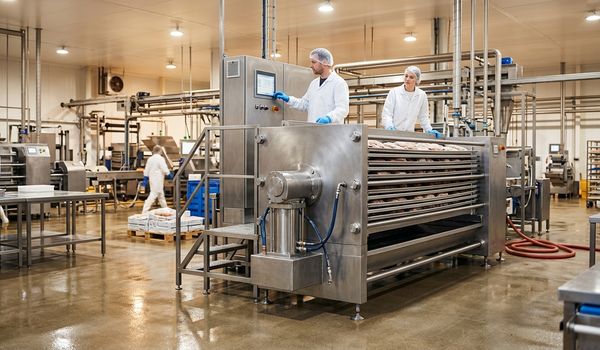
A plate freezer is an industrial freezing system that freezes products through direct contact with refrigerated metal plates. The product, whether it is a tray of fish fillets, a block of shrimp, packaged meat, or cartons of fruit puree, is loaded between flat plates that are cooled to temperatures as low as -40 degrees Fahrenheit. Because the plates touch the product directly, heat transfers out of the product far faster than it would in a conventional air-based freezer. The result is a rapid, uniform freeze that locks in texture, moisture, and quality.
Plate freezers come in two main configurations. Horizontal plate freezers hold products in flat layers between stacked plates and are the standard choice for freezing blocks of seafood, ground meat, and packaged goods. Vertical plate freezers hold products upright between vertical plates and are common on fishing vessels and in high-volume seafood plants where whole fish or surimi blocks need to be frozen into uniform slabs for storage and shipping. Both types are sometimes called contact freezers because the refrigeration surface makes direct contact with the product or its packaging.
The technology is a cornerstone of the modern cold chain. Frozen food is an enormous category in the U.S. economy: food manufacturing generates roughly $1 trillion in annual shipments, according to data tracked by the U.S. Census Bureau, and frozen category growth has been covered extensively by outlets like CNBC as consumer demand for frozen seafood, prepared meals, and protein continues to climb. Processors that can freeze product quickly and consistently are the ones that win retail and foodservice contracts, and plate freezers are how many of them do it.
Because plate freezers freeze by conduction rather than convection, they are also among the most energy-efficient freezing methods available per pound of product. That efficiency matters when you are running freezing cycles around the clock, and it is one reason processors upgrading from older blast freezing rooms often see a measurable drop in utility costs after a plate freezer installation.
Key Benefits of Plate Freezers for Food Processors
Processors invest in plate freezers for a short list of very practical reasons. The equipment pays for itself through product quality, throughput, and operating savings, which is exactly the kind of return profile lenders like to see when underwriting equipment financing.
- Faster freeze times. Direct contact freezing can bring a two-inch product block to target temperature in roughly two hours, a fraction of the time an air blast room needs for the same job.
- Better product quality. A faster freeze means smaller ice crystals, less cellular damage, and less drip loss on thaw. For seafood and premium proteins, that quality difference translates directly into price per pound.
- Lower energy cost per pound. Conduction is inherently more efficient than moving refrigerated air, so plate freezers typically use significantly less energy per pound frozen than blast freezers of similar capacity.
- Uniform, stackable output. Plate freezers produce flat, uniform blocks and packages that stack cleanly, palletize efficiently, and maximize cold storage density.
- Compact footprint. A plate freezer delivers high capacity in a relatively small amount of floor space compared with an equivalently rated blast freezing room.
- Reliable, simple mechanics. With fewer moving parts than tunnel or spiral systems, plate freezers are durable machines with long service lives, which supports strong resale value at the end of the financing term.
Key Stat: The U.S. is home to more than 33 million small businesses, according to the U.S. Small Business Administration, and access to capital is consistently cited as the top barrier to growth. Equipment financing exists specifically to close that gap for purchases exactly like a plate freezer.
How Plate Freezer Financing Works
Plate freezer financing is a form of equipment financing structured around the machine itself. The freezer serves as the collateral for the funding, which is why equipment financing is generally easier to qualify for than unsecured working capital and why terms on titled or serialized equipment tend to be favorable. Here is how the process works from start to finish.
Step 1: Get a quote from your equipment vendor. Before you apply, know what you are buying. A formal quote or purchase order from the manufacturer or dealer, with model, capacity, and price, is the document your lender will underwrite against. Quotes for new and used equipment are both acceptable.
Step 2: Submit a financing application. A complete application includes basic business information, ownership details, time in business, and recent bank statements. For larger plate freezer deals, a lender may also ask for two years of business financials or tax returns. At Crestmont Capital, the initial application takes only a few minutes to complete online.
Step 3: Review your approval and terms. Approvals spell out the amount financed, the term length, the monthly payment, and any down payment requirement. Equipment financing terms commonly run 24 to 72 months, and strong files can see terms extend beyond that for large systems.
Step 4: Documentation and funding. Once you accept the terms, the lender issues documents for signature, then pays the vendor directly. The freezer ships, gets installed, and starts earning its keep while you make fixed monthly payments.
Step 5: Own the equipment at the end of the term. With a standard equipment loan or a $1 buyout lease, the plate freezer is yours free and clear once the final payment clears. Given that industrial plate freezers routinely stay in service for 15 to 20 years or more, most owners enjoy many years of payment-free production after the financing term ends.
Ready to Scale Your Frozen Production?
Get fast, flexible plate freezer financing from the #1 business lender in the U.S. No obligation, apply in minutes.
Apply Now →Types of Plate Freezers You Can Finance
Plate freezer financing covers the full range of contact freezing equipment, from compact units for specialty processors to fully automated systems for high-volume plants. The main categories are below.
Horizontal Plate Freezers
The horizontal plate freezer is the workhorse of land-based seafood and meat processing. Products are loaded in flat trays or frames between horizontal plates, and hydraulic pressure brings the plates into firm contact with the product for the duration of the cycle. Horizontal units are ideal for freezing uniform blocks of fish fillets, shrimp, surimi, ground meat, and prepared meals in standardized sizes. Capacities range from a few hundred pounds per batch for small units to multiple tons per cycle for industrial systems.
Vertical Plate Freezers
Vertical plate freezers hold product upright between vertical plates and are the standard choice aboard fishing vessels and in plants that freeze whole fish, roe, or offal into dense blocks for cold storage. Because they load from the top and discharge from the bottom, vertical units fit compact processing spaces and integrate well with continuous unloading systems. Many are built to marine specifications, which makes them a common financing request from vessel owners and onshore processors alike.
Contact Freezers for Packaged Goods
Some plate freezer configurations are designed specifically for cartoned or trayed products, where packaging needs to keep its shape through the freeze. These units apply controlled plate pressure so packages freeze flat and uniform without bulging, which matters for retail presentation and case packing downstream.
Plate Freezers with IQF Pre-Cooling
Processors that need individually quick frozen output sometimes pair a plate freezer with a pre-cooling or crust-freezing stage. While a plate freezer is not an IQF machine in the strict sense, hybrid lines use contact freezing to set the surface of the product before a final freeze, preserving piece separation for products like scallops and shrimp. Financing can be structured to cover the entire line, not just the plate unit.
Used and Refurbished Plate Freezers
Because plate freezers are mechanically simple and long-lived, the used market is active and legitimate. A well-maintained used horizontal plate freezer can cost 40 to 60 percent less than new and still deliver a decade or more of service. Lenders finance used equipment routinely, and Crestmont Capital offers dedicated used equipment financing for exactly these purchases. Expect the lender to ask for the unit's age, condition, and hours or service records as part of underwriting.
By the Numbers
Plate Freezer Financing: Key Statistics
~2 hrs
Typical freeze time for a two-inch product block in a plate freezer, versus four hours or more in an air blast room
30-50%
Lower energy use per pound frozen compared with conventional air blast freezing, thanks to direct-contact heat transfer
$1T
Approximate annual shipments of U.S. food manufacturing, per Census Bureau data, with frozen products a fast-growing share
15-20 yrs
Typical service life of a well-maintained industrial plate freezer, far outlasting most financing terms
How Much Does a Plate Freezer Cost?
Plate freezer cost varies widely with capacity, configuration, refrigerant system, and automation level. As a general framework, buyers should expect the following ranges for the equipment itself, before installation and refrigeration connections.
- Small batch plate freezers for specialty processors and pilot plants: roughly $40,000 to $120,000.
- Mid-size horizontal plate freezers for established seafood and meat processors: roughly $150,000 to $400,000.
- Large industrial systems with automated loading, multiple stations, and integrated refrigeration: $500,000 to $1.5 million or more.
- Used and refurbished units: commonly 40 to 60 percent below comparable new pricing, depending on age, condition, and hours.
The equipment quote is not the whole budget. Buyers should also plan for freight and rigging, installation, refrigeration piping and charging, electrical work, and any floor or drainage modifications. On a mid-size horizontal plate freezer project, all-in installed cost commonly lands 15 to 30 percent above the equipment price. The good news: most lenders will finance the soft costs along with the equipment, so the entire project can live inside one monthly payment rather than draining working capital at commissioning time.
Against that cost, weigh the return. A processor replacing contract freezing or an aging blast room with an in-house plate freezer typically gains on three fronts at once: lower energy cost per pound, higher product value from better quality and yield, and the ability to take on larger contracts that require guaranteed freezing capacity. It is common for the combined gain to exceed the monthly financing payment within the first year of operation.
Pro Tip: When you request your vendor quote, ask for a version that itemizes freight, installation, and refrigeration connections separately. Lenders can usually fold those line items into the financed amount, and having them itemized up front keeps your project budget honest.
Who Is Plate Freezer Financing Best For?
Plate freezer financing is built for established food businesses that freeze product at commercial scale. The strongest fits include the following.
- Seafood processors freezing fish blocks, shrimp, scallops, surimi, and roe for domestic and export markets.
- Fishing vessel owners adding or replacing marine-rated vertical plate freezers to freeze catch at sea and command higher prices than iced delivery brings.
- Meat and poultry processors freezing ground products, portioned cuts, and offal in uniform blocks.
- Fruit and vegetable processors freezing purees, pulps, and juice concentrates for the ingredient market.
- Co-packers and prepared food manufacturers adding freezing capacity to win contracts that require it.
- Cold storage operators offering blast or plate freezing as a paid service to smaller producers.
From a qualification standpoint, lenders look at time in business, revenue, credit history, and the equipment itself. Most plate freezer financing approvals go to businesses with at least one to two years of operating history, consistent monthly revenue, and a credit profile that shows the business services its obligations. Because the freezer secures the funding, plate freezer financing is often accessible to owners whose credit is good but not perfect. Younger companies can qualify as well, particularly when the ownership has industry experience and the contract pipeline supports the payment.
Plate Freezer Loans vs. Leasing vs. Cash Purchase
There are three realistic ways to put a plate freezer on your floor, and each has a place depending on your cash position, tax situation, and how long you intend to run the machine.
| Feature | Equipment Loan | Equipment Lease | Cash Purchase |
|---|---|---|---|
| Ownership | You own it from day one, lender holds a lien | Lessor owns it during the term, buyout at end | You own it outright immediately |
| Upfront cost | Low, often 0 to 10 percent down | Low, typically first and last payment | 100 percent of purchase price due at once |
| Monthly payment | Fixed principal and interest | Fixed lease payment, often lower than a loan | None |
| Typical term | 24 to 72 months, longer for large systems | 24 to 60 months | Not applicable |
| Cash flow impact | Preserves working capital for operations | Preserves working capital, off-balance-sheet options | Ties up a large amount of cash |
| Best for | Buyers who want long-term ownership of a 15 to 20 year asset | Buyers who want lower payments or plan to upgrade | Buyers with surplus cash and no better use for it |
For most processors, the loan is the natural choice. A plate freezer is a long-lived asset with strong resale value, so owning it makes sense, and financing lets you keep your cash in the business where it earns more than the cost of the funds. Leasing fits buyers who want the lowest possible monthly payment or who expect to upgrade capacity within a few years. Paying cash is rarely the best move for a growing processor: the same dollars almost always produce a higher return in inventory, marketing, or a second production line than they save in interest.
If you are weighing a plate freezer against other freezing technologies, our guides to blast freezer financing and spiral freezer financing walk through the economics of those systems in the same detail.
How Crestmont Capital Helps Food Processors Finance Plate Freezers
Crestmont Capital is the #1 rated business lender in the U.S., and food processing equipment is a category we fund every week. Our team understands the difference between a horizontal plate freezer and a spiral tunnel, what a marine-rated vertical unit costs to install, and how the cash conversion cycle works in seafood and protein processing. That knowledge shows up in faster approvals and structures that fit how processors actually earn.
What working with Crestmont Capital looks like in practice:
- Fast decisions. Most equipment financing applications receive a decision within 24 to 48 hours, and funded deals can close in days rather than weeks.
- Flexible structures. Loans, leases, and sale-leaseback arrangements on new, used, and refurbished plate freezers, with terms matched to the equipment's useful life.
- Full project financing. We can fold freight, installation, and refrigeration connections into the financed amount so the whole project fits one payment.
- High approval rates. Because the equipment secures the funding, we can approve files that unsecured lenders decline.
- A real person on the phone. You work with a funding specialist who knows food equipment, not a ticket queue.
Processors buying broader freezing or production lines can also explore our dedicated food equipment financing programs, which cover everything from plate freezers to packaging equipment under one structure. If your project is part of a larger plant build-out, our manufacturing equipment financing options can wrap multiple machines into a single facility.
Get a Financing Quote Built for Your Freezer Line
Talk to an equipment specialist who knows food processing. Fast approvals, flexible terms, funding built around your project.
Apply Now →Real-World Scenarios: How Businesses Use Plate Freezer Financing
Every funded deal is different, but the situations below reflect the most common ways processors put plate freezer financing to work.
Scenario 1: The Seafood Processor Replacing Contract Freezing
A Gulf Coast shrimp processor was paying a third-party cold storage facility to blast freeze every pound it packed, plus freight both ways. The logistics alone consumed margin, and peak-season capacity was never guaranteed. The company financed a $285,000 horizontal plate freezer over 60 months. The monthly payment came in below what it had been spending on contract freezing and trucking in an average month, and the plant gained same-day freezing that improved product quality enough to win two new retail accounts in the first year.
Scenario 2: The Vessel Owner Freezing at Sea
An Alaska fishing vessel owner was delivering catch on ice and accepting whatever the dock price happened to be that week. By financing a marine-rated vertical plate freezer, the vessel began freezing blocks at sea within hours of the catch. Frozen-at-sea product commands a significant premium over iced delivery, and the added per-pound revenue covered the financing payment while shortening trips, since the hold could be managed more efficiently. The freezer is expected to remain in service long after the five-year term ends.
Scenario 3: The Co-Packer Winning a Frozen Meals Contract
A regional co-packer landed a prepared meals contract that required guaranteed freezing capacity the plant did not have. Rather than pass on the largest account in company history, ownership financed a mid-size plate freezer with automated loading for roughly $360,000. The contract revenue covered the payment several times over, and the added capacity let the co-packer bid on frozen work it previously had to decline.
Scenario 4: The Meat Processor Upgrading from an Aging Blast Room
A Midwest meat processor running a 25-year-old blast freezing room was watching utility costs climb and product quality slip. Drip loss on thaw was costing real money on every pound of ground beef it sold. The company financed a new horizontal plate freezer and saw freeze times drop from most of a shift to about two hours per batch. Energy use per pound fell by more than a third, and the quality improvement reduced customer complaints to near zero within two quarters.
Scenario 5: The Fruit Processor Entering the Frozen Ingredient Market
A Pacific Northwest fruit processor had always sold fresh and puree to local buyers. When an ingredient supplier offered a multi-year contract for frozen puree, the company financed a plate freezer sized to the contract rather than buying a larger system outright. The conservative structure kept the payment comfortably inside the contract margin, and the business now has a second revenue stream it can expand when the term matures.
Pro Tip: Lenders respond well to a simple one-page use-of-funds summary. A short paragraph explaining what the freezer will do for revenue, margins, or contract capacity can meaningfully strengthen an application, especially on larger systems.
Frequently Asked Questions
What is plate freezer financing? +
Plate freezer financing is a business funding arrangement that lets a food processing company acquire a plate freezer by paying for it over time instead of all at once. The freezer itself serves as collateral, which keeps qualification straightforward and terms favorable. Structures include equipment loans, where you own the machine from day one, and leases with a purchase option at the end of the term.
How does a plate freezer work? +
A plate freezer freezes product through direct contact with refrigerated metal plates cooled to temperatures as low as -40 degrees Fahrenheit. Product is loaded between the plates in trays, frames, or packages, and hydraulic pressure brings the plates into firm contact. Heat transfers out by conduction, which is far faster than air-based freezing, so a two-inch block typically reaches target temperature in about two hours.
How much does a plate freezer cost? +
Equipment pricing depends on capacity and automation. Small batch units generally run $40,000 to $120,000, mid-size horizontal plate freezers run $150,000 to $400,000, and large automated industrial systems can exceed $1 million. Used and refurbished units commonly sell for 40 to 60 percent less than comparable new machines. Budget an additional 15 to 30 percent for freight, installation, and refrigeration connections.
What is the difference between a plate freezer and a blast freezer? +
A plate freezer freezes by direct contact with refrigerated plates, while a blast freezer circulates very cold air around the product. Plate freezers freeze faster per cycle, use less energy per pound, and produce flat, uniform blocks that stack efficiently. Blast freezers handle irregular shapes and continuous loads more flexibly. Many plants run both, using plates for uniform blocks and blast capacity for odd-sized product.
What credit score do I need to finance a plate freezer? +
There is no single cutoff, because the equipment secures the funding. Approvals commonly go to owners with personal credit in the mid-600s or better, and stronger files see better rates and terms. Lenders also weigh time in business, revenue, and cash flow. A weaker credit score does not automatically disqualify you when the deal and the business fundamentals are sound.
Can I finance a used plate freezer? +
Yes. Used and refurbished plate freezers are financed routinely, and they are popular purchases because the machines are durable and long-lived. Expect the lender to ask for the unit's age, condition, and service history, and note that terms on used equipment may be slightly shorter than on new. A used unit from a reputable dealer can be one of the best values in freezing equipment.
How long are plate freezer financing terms? +
Typical terms run 24 to 72 months, with longer terms available on large industrial systems. Lenders generally match the term to the equipment's expected useful life, and since industrial plate freezers routinely run 15 to 20 years, terms on the longer end are common for qualified buyers. Shorter terms cost less overall; longer terms lower the monthly payment.
Do I need a down payment for plate freezer financing? +
Many approvals require little or no down payment, particularly for established businesses with solid credit and cash flow. Files with more risk factors, such as limited operating history or challenged credit, may be asked for 10 to 20 percent down. A down payment reduces the amount financed and the monthly payment, and it can improve pricing on marginal files.
Is leasing a plate freezer better than buying one? +
Neither is universally better. Buying with an equipment loan builds equity in a machine that will likely serve for 15 to 20 years, and it usually costs less over the full life of the asset. Leasing offers lower monthly payments and an easier upgrade path if you expect capacity needs to change within a few years. Your funding specialist can model both structures against your actual numbers.
What documents do I need to apply for plate freezer financing? +
At minimum, expect to provide a completed application, an equipment quote or purchase order from the vendor, and three to six months of recent business bank statements. Larger transactions may also call for two years of business tax returns or financial statements. Having these ready before you apply is the single biggest factor in how fast a deal closes.
How fast can I get approved and funded? +
Most equipment financing applications receive a decision within 24 to 48 hours once the file is complete. Funding follows quickly after documents are signed, with the lender paying the vendor directly. Straightforward deals routinely close inside a week, which matters when a vendor is holding pricing or a used machine will not stay on the market long.
Can financing cover shipping, installation, and refrigeration connections? +
Yes, in most cases. Lenders can finance soft costs such as freight, rigging, installation, refrigeration piping, and electrical work as part of the same transaction, typically up to a set percentage of the equipment cost. Ask your vendor to itemize these on the quote so the full project can be folded into one monthly payment.
Which food processing businesses use plate freezers most? +
Seafood processing is the classic application, particularly for fish blocks, shrimp, scallops, and surimi. Meat and poultry processors use plate freezers for ground products and portioned items, and fruit processors use them for purees and concentrates. Co-packers, prepared food manufacturers, cold storage operators, and fishing vessels with marine-rated vertical units round out the most common buyers.
Can I finance more than one plate freezer or a full freezing line? +
Yes. Multi-unit purchases and complete freezing lines, including conveyors, glazing equipment, and packaging machinery, can be financed under a single facility. Combining the full project into one structure simplifies payments and often produces better overall terms than financing each component separately.
Will a plate freezer lower my operating costs compared to my current freezer? +
For most processors replacing blast freezing capacity or contract freezing services, yes. Direct-contact freezing uses significantly less energy per pound, faster freeze times improve yield by reducing drip loss, and uniform blocks cut packaging and storage labor. Many buyers find the combined savings and quality gains exceed the monthly financing payment from the first year of operation.
Put Contact Freezing to Work for Your Business
Join the processors who fund growth through Crestmont Capital. Fast decisions, flexible terms, one simple application.
Apply Now →How to Get Started
Request a formal quote from your plate freezer vendor, with freight, installation, and refrigeration work itemized so the full project can be financed.
Complete our quick application at offers.crestmontcapital.com/apply-now. It takes just a few minutes and does not obligate you.
A funding specialist will walk you through the approval, term options, and monthly payment, and answer every question about the structure.
Once you accept, documents are issued for signature and the vendor is paid directly. Your plate freezer ships, installs, and starts earning.
Conclusion: Freeze Product, Not Cash Flow
A plate freezer is the kind of asset that changes what a food processing business can take on: bigger contracts, better product quality, lower energy cost per pound, and freezing capacity you control instead of rent. The only real question is how to pay for it, and for most processors the answer is plate freezer financing that matches the payment to the revenue the machine produces.
Whether you are financing your first horizontal plate freezer, upgrading a vessel with a marine-rated vertical unit, or building out a full freezing line, Crestmont Capital has the equipment financing programs and the food processing expertise to get it done quickly. The application takes minutes, decisions come fast, and funding is structured around how your business actually operates. Reach out today, and put your freezing capacity to work while your cash keeps working too.
Disclaimer: The information provided in this article is for general educational purposes only and is not financial, legal, or tax advice. Funding terms, qualifications, and product availability may vary and are subject to change without notice. Crestmont Capital does not guarantee approval, rates, or specific outcomes. For personalized information about your business funding options, contact our team directly.

Allan Garfinkle
Allan Garfinkle is the Chief Revenue Officer at Crestmont Capital, where he has spent more than a decade leading revenue strategy, business development, and operational growth. With 28 years of experience building and advising startups and small businesses, Allan has helped more than 10,000 business owners navigate financing decisions, growth opportunities, and changing economic conditions. He earned a Bachelor of Science in Economics and an MBA with a concentration in Finance from Northeastern University, as well as a Juris Doctor from New England Law, where his studies focused on contracts and business law. His writing draws on extensive practical experience in small-business lending, equipment financing, business credit, and commercial finance.