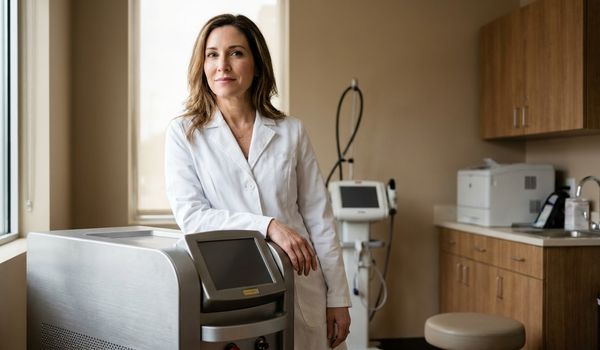
Dermatology has quietly become one of the strongest specialties in outpatient medicine, and the latest dermatology statistics tell a clear story: patient demand is rising on both the medical and cosmetic sides, revenue per practice keeps climbing, and the technology that powers modern skin care is getting more capable and more expensive at the same time. Whether you run an established clinic or you are planning to open your first practice, understanding the numbers behind the industry helps you make smarter decisions about growth, staffing, and financing.
This report brings together the most important dermatology practice financing statistics for 2026, from market size and growth rates to startup costs, equipment prices, and the funding options practices actually use to expand. Use it as a benchmark for your own business plan, and keep it as a reference when you are ready to talk with a lender about your next move.
In This Article
- The Dermatology Industry at a Glance in 2026
- Dermatology Market Size and Growth Statistics
- Dermatology Practice Revenue and Income Benchmarks
- The Cost of Opening a Dermatology Practice
- Dermatology Equipment Costs in 2026
- How Dermatology Practices Use Financing
- Financing Options for Dermatology Practices
- Workforce and Patient Demand Statistics
- What Lenders Look For in a Dermatology Practice
- How Crestmont Capital Helps Dermatology Practices
- Real-World Financing Scenarios
- Frequently Asked Questions
- How to Get Started
The Dermatology Industry at a Glance in 2026
Dermatology sits at a rare intersection in healthcare. It is part essential medical care, with skin cancer screenings, biopsies, and chronic condition management, and part consumer-driven elective care, with injectables, laser treatments, and aesthetic procedures that patients pay for out of pocket. That dual engine gives dermatology practices a revenue mix that most medical specialties cannot match, and it is a big reason lenders view the specialty favorably.
Several structural trends are shaping the industry right now:
- Two revenue engines. Medical dermatology (insurance-billed visits, procedures, and pathology) provides steady, recurring cash flow, while cosmetic dermatology adds high-margin, cash-pay revenue on top.
- Consolidation. Private equity-backed platforms have spent years acquiring independent practices, which has pushed practice valuations up and created a competitive market for acquisitions.
- Technology arms race. Each new generation of lasers, energy-based devices, and imaging systems raises patient expectations, and practices that invest tend to win share in their local markets.
- Teledermatology growth. Virtual visits have become a permanent part of the triage model, letting practices handle higher patient volume without proportionally higher overhead.
For a broader view of how medical practices across specialties are funding growth this year, see our companion report on medical practice financing statistics. Dermatology consistently ranks among the top specialties in that data, both for revenue per provider and for lender appetite.
Industry-level counts from federal sources such as the U.S. Census Bureau Economic Census show offices of physicians, the NAICS category that includes dermatology practices, generating hundreds of billions of dollars in annual receipts across the country, and dermatology holds an outsized share of that activity relative to its headcount because of its procedure-heavy model.
Dermatology Market Size and Growth Statistics
The market data for dermatology comes in two layers, and both are growing fast.
First is the clinical dermatology services market in the United States, which covers medical visits, surgical dermatology, and pathology. Industry analysts size the U.S. dermatology services market in the tens of billions of dollars annually, supported by more than 12,000 practicing dermatologists and a patient population that is getting older and more sun-aware every year. Skin cancer remains the most common cancer in the United States, and screening volume alone keeps medical dermatology schedules full.
Second is the global medical aesthetics market, which includes injectables, energy-based devices, and cosmeceuticals. That market is valued at roughly $25.6 billion to $31.9 billion in 2026 depending on how analysts draw the boundaries, with broader definitions of aesthetic medicine (including surgical cosmetic procedures) pushing estimates above $109 billion. Growth projections cluster between 11.5% and 13.8% compound annual growth through the early 2030s, which makes aesthetics one of the fastest-growing segments in all of healthcare. Business media coverage of consumer health spending, including reporting tracked by outlets like CNBC's small business section, has repeatedly highlighted medical aesthetics as one of the most resilient consumer health categories, even through periods of broader economic softness.
Within aesthetics, facial injectables (neuromodulators like botulinum toxin and hyaluronic acid fillers) account for roughly half of all medical aesthetic revenue worldwide. Dermatology clinics and physician-led aesthetic centers hold the largest end-user share of the aesthetics market, generally estimated in the 48% to 55% range, because patients increasingly prefer board-certified oversight for procedures they used to accept from non-physician providers.
Key Stat: The global medical aesthetics market is projected to grow at roughly 11.5% to 13.8% per year through the early 2030s, making dermatology one of the fastest-growing practice categories in outpatient medicine.
What does that mean for a practice owner? A market growing at double-digit rates rewards capacity. Every treatment room, laser, and provider you add during a growth window compounds. The practices that capture this wave are the ones that can fund expansion quickly, which is exactly where dermatology practice financing enters the picture.
Ready to Grow Your Dermatology Practice?
Get fast, flexible financing from the #1 business lender in the U.S. No obligation - apply in minutes.
Apply Now →Dermatology Practice Revenue and Income Benchmarks
Dermatology is consistently one of the highest-earning specialties in medicine, and that earning power flows directly into practice financials.
- Physician compensation. Physician compensation surveys published annually across the industry place average dermatologist income in the $400,000 to $470,000 range, putting dermatology near the top of the specialty pay tables year after year. Practice owners who also keep the profits of the business frequently earn well above employed benchmarks.
- Revenue per provider. A well-run dermatology practice commonly generates $1 million or more in annual collections per full-time dermatologist, and practices with a strong cosmetic mix can push well past that figure because aesthetic services carry higher per-visit revenue and no insurance discount.
- Cash-pay share. In practices with an active cosmetic book of business, cash-pay services can represent 25% to 50% of total revenue, which smooths out reimbursement delays and improves margins.
- Ancillary services. Dispensing skincare products, offering membership plans, and adding physician extenders (nurse practitioners and physician assistants) all raise revenue per square foot without requiring additional physician hours.
From a lender's perspective, these benchmarks matter because they translate directly into repayment capacity. A practice generating $1 million per provider with a 30%+ margin can comfortably service six figures of equipment or expansion debt. That is why dermatology practice loans tend to come with some of the most competitive terms in healthcare lending.
For comparison, our report on dental practice financing statistics shows a similar pattern in dentistry, another specialty where a cash-pay elective layer sits on top of insurance-driven care. Lenders reward both models for the same reason: diversified revenue is durable revenue.
The Cost of Opening a Dermatology Practice
Startup costs are where dermatology practice financing statistics get real for new owners. Opening an independent dermatology practice in 2026 typically requires between $250,000 and $500,000 in initial capital, and practices that launch with a full cosmetic offering can exceed that range comfortably. Here is where the money goes:
- Buildout and leasehold improvements. Medical-grade exam rooms, procedure rooms, sterilization areas, and ADA-compliant layouts often run $100 to $200 per square foot, with a modest 2,000-square-foot clinic easily requiring $150,000 to $300,000 in buildout alone.
- Equipment. A baseline medical dermatology setup (exam chairs, lighting, cryosurgical units, dermoscopes, minor surgical trays) is manageable, but adding energy-based devices pushes equipment budgets into six figures fast. See the equipment section below for detailed numbers.
- Licensing, credentialing, and legal. Entity formation, malpractice tail coverage, payer credentialing, and regulatory setup typically total $20,000 to $50,000 before the first patient walks in.
- Initial inventory. Practices offering injectables need opening inventory of neuromodulators and fillers, which can require $20,000 to $50,000 in upfront product purchases.
- Working capital runway. Most advisors recommend holding six to twelve months of operating expenses in reserve, because insurance receivables take 30 to 60 days to mature even in a busy new practice.
The pattern across hundreds of funded practices is consistent: owners underestimate the working capital requirement more than any other line item. Equipment quotes are exact; cash flow timing is not. That is why the strongest startup plans pair an equipment loan with a working capital facility rather than trying to stretch one loan across both needs.
Dermatology Equipment Costs in 2026
Equipment is the single largest capital category for most dermatology practices, and it is also the most straightforward to finance because the equipment itself secures the loan. Typical 2026 price ranges:
| Equipment Category | Typical Price Range (New) | Primary Use |
|---|---|---|
| Fractional CO2 laser | $80,000 - $130,000 | Resurfacing, scar revision |
| Excimer laser | $70,000 - $95,000 | Psoriasis, vitiligo |
| IPL / photofacial platform | $30,000 - $65,000 | Pigmentation, redness |
| RF microneedling device | $45,000 - $110,000 | Tightening, texture |
| Body contouring platform | $75,000 - $150,000 | Non-surgical fat reduction |
| Laser hair removal system | $50,000 - $100,000 | Hair removal |
| Exam room setup (per room) | $8,000 - $15,000 | Chair, lighting, dermoscopy |
| EMR / practice management | $15,000 - $50,000 / year | Software, billing, scheduling |
A single multi-application laser platform can generate $10,000 to $30,000 per month in incremental cash-pay revenue at typical utilization, which is why energy-based devices are the most commonly financed equipment category in dermatology. Practices rarely pay cash for a $120,000 laser when a financing payment of roughly $2,500 per month lets the device pay for itself within the first week of each month's schedule.
Crestmont Capital finances the full range of clinical and aesthetic devices through its medical equipment financing programs, with terms structured around the revenue profile of the specific device rather than a one-size-fits-all schedule.
Pro Tip: Finance the device, not the deposit. Practices that pay cash for equipment and then run short on working capital face much harder conversations with lenders than practices that finance equipment and keep their cash reserves intact.
How Dermatology Practices Use Financing
Across the practices we work with, financing demand clusters into five clear use cases:
- New practice launches. Bundled funding covering buildout, equipment, and working capital runway so the practice opens with momentum instead of a cash crunch.
- Equipment acquisition. Device-specific loans and leases for lasers, energy platforms, and diagnostic equipment, structured so monthly payments track the revenue the device produces.
- Practice acquisitions. Financing to buy out a retiring physician or acquire a competitor's book of business, often at valuations of 60% to 80% of annual collections for established practices.
- Working capital. Short-term facilities that cover payroll, rent, and injectable inventory while insurance receivables catch up, especially during a growth push or a new provider ramp.
- Expansion and second locations. Capital to duplicate a proven model into a new market without draining the flagship location's reserves.
The mechanics are simpler than most physicians expect. Equipment financing uses the device itself as collateral, which keeps rates low and approvals fast. Working capital and line-of-credit products are underwritten primarily on practice revenue and bank statements. Acquisition loans lean on the target practice's collections history. In all three cases, a specialty with dermatology's revenue profile gives the lender confidence, and that confidence shows up as better terms for the borrower.
By the Numbers
Dermatology Practice Financing - Key Statistics for 2026
$25.6B+
Global medical aesthetics market size in 2026
11.5%+
Projected annual growth rate through the early 2030s
$400K+
Average dermatologist income, among the top specialties
$500K
Upper range of typical new-practice startup cost
Financing Options for Dermatology Practices
Dermatology practices have access to nearly every mainstream business funding product, but five cover almost all real-world demand:
| Financing Option | Best For | Typical Structure |
|---|---|---|
| Equipment financing | Lasers, energy devices, exam equipment | 3-7 year terms, device as collateral, fixed payments |
| SBA loans | Practice acquisition, real estate, large expansions | 10-25 year terms, lowest rates, slower approval |
| Business line of credit | Inventory, payroll timing, marketing pushes | Revolving credit, draw as needed, pay on balance |
| Working capital loans | Receivables gaps, new provider ramp-up | 3-18 month terms, fast funding, revenue-based |
| Practice acquisition loans | Buying an existing practice or book of business | 5-10 year terms, sized to target collections |
For large, patient-capital projects like buying a building or acquiring a multi-provider practice, SBA loans remain the gold standard on price. The SBA's loan programs offer the longest terms and lowest rates available to small medical practices, in exchange for more documentation and a longer approval timeline. Many dermatology owners use a blended approach: an SBA facility for the acquisition itself, plus faster equipment and working capital products for the day-to-day investment cycle.
A business line of credit deserves special mention for dermatology practices because of the injectables cycle. Neuromodulator and filler inventory turns over monthly, rewards programs and rebates favor practices that order in volume, and a revolving line lets the practice buy at the right time without touching reserves.
Find the Right Financing for Your Practice
Equipment, working capital, SBA, and acquisition funding - one application, multiple options.
Get Started →Workforce and Patient Demand Statistics
Demand-side numbers explain why dermatology practices can invest with confidence:
- Provider shortage. The United States has roughly 3 to 4 dermatologists per 100,000 people, and the specialty consistently appears on shortage lists in physician workforce studies. Existing practices carry full schedules, and new patient wait times of several weeks are common in many metro areas.
- Aging patient base. Skin cancer incidence rises with age, and the large baby boomer cohort is deep into the highest-risk years. Medical dermatology volume is structurally supported for decades regardless of economic cycles.
- Millennial and Gen Z aesthetics demand. Younger cohorts are entering the aesthetics market earlier and spending more per year on prevention-focused treatments than any previous generation, expanding the cosmetic revenue layer well beyond its historical base.
- Extender-driven capacity. Nurse practitioners and physician assistants now deliver a substantial share of dermatology visits. Practices that add extenders scale revenue without adding physician partners, and the financing used to add treatment rooms and devices is what makes that model work.
- Teledermatology reach. Virtual triage widens the funnel, particularly in underserved rural markets, and converts efficiently into in-office procedure volume.
The combination of a structural provider shortage and rising demand on both sides of the practice gives dermatology an unusually low-risk profile among small businesses. Lenders track these same statistics, which is one reason approval rates for established dermatology practices run high relative to other industries.
What Lenders Look For in a Dermatology Practice
Dermatology practices are strong candidates for financing, but underwriting still runs on fundamentals. Here is what matters most:
- Credit profile. A personal credit score of 650+ opens most programs, and 700+ unlocks the best pricing. Practice partners with weaker credit can still qualify through revenue-based products.
- Revenue history or documentation. Established practices qualify on collections history and bank statements. New graduates typically qualify on the strength of a signed employment or partnership contract, residency completion documentation, and the specialty's income statistics.
- Time in business. Two or more years of operating history unlocks the widest product menu. Newer practices are far from excluded; they simply match with startup-oriented programs.
- Use of funds. Clearly defined, revenue-linked uses (a specific device, a specific acquisition, a defined buildout) approve faster and at better terms than general-purpose requests.
- Cash flow coverage. Lenders model whether practice cash flow covers the new payment with room to spare. Dermatology's margins make this test easier to pass than in most industries.
Key Stat: Established dermatology practices commonly generate $1 million or more in annual collections per provider, a benchmark that gives them some of the strongest debt-service coverage ratios in small business lending.
How Crestmont Capital Helps Dermatology Practices
Crestmont Capital is the #1 rated business lender in the United States, and healthcare practices are a core specialty. For dermatology practice owners, that translates into a practical set of advantages:
- Speed. Equipment and working capital approvals in days, not the weeks a bank committee requires. When a laser manufacturer's quarter-end pricing expires Friday, speed is worth real money.
- Specialty fluency. Our advisors understand dermatology revenue models, including the cosmetic cash-pay layer, and structure payments around how the practice actually collects.
- Full product menu. Equipment financing, working capital, lines of credit, SBA loans, and acquisition funding under one roof, so a growing practice can layer facilities as it scales instead of re-shopping every need.
- One simple application. A single online application opens the full menu of options, with a dedicated advisor to match the right product to the specific project.
Whether you are opening your first practice, adding a second laser, or acquiring a retiring colleague's book of business, the process starts the same way: a short application and a conversation about your numbers.
Real-World Financing Scenarios
Statistics become decisions in specific moments. These five scenarios reflect the most common ways dermatology practices put financing to work:
Scenario 1: The new graduate launch. A dermatologist finishing residency signs on to open an independent practice in a growing suburb. A bundled facility covers $180,000 of buildout, $95,000 of equipment, and $150,000 of working capital runway. The practice reaches breakeven in month nine because the equipment payment schedule assumed a realistic ramp rather than day-one volume.
Scenario 2: The second laser. An established two-provider practice has a three-week wait for its existing resurfacing laser. Financing a second $110,000 platform at roughly $2,400 per month adds $18,000 per month in cash-pay revenue within the first quarter. The device pays for its own annual debt service in under six weeks of utilization.
Scenario 3: The retirement acquisition. A solo dermatologist with a 25-year-old practice announces retirement. A younger colleague acquires the practice for 70% of annual collections using an acquisition loan, keeps the staff and location, and recovers the full purchase price from retained patient revenue in under three years.
Scenario 4: The aesthetics expansion. A medical dermatology practice carves out two rooms for a dedicated cosmetic suite. An equipment lease covers the RF microneedling and body contouring platforms, and a line of credit funds the initial injectable inventory. The cosmetic suite reaches 30% of practice revenue within a year.
Scenario 5: The receivables bridge. A fast-growing practice adds a physician assistant and watches payroll jump $14,000 per month while insurance receivables lag 45 days. A working capital facility smooths the gap, and the practice retires the balance eight months later once the new provider's panel matures.
Your Practice Has a Scenario. We Have the Funding.
Talk to a financing advisor who understands dermatology practices and their revenue cycles.
Apply Now →Frequently Asked Questions
How big is the dermatology industry in 2026? +
The U.S. dermatology services market is sized in the tens of billions of dollars annually, supported by more than 12,000 practicing dermatologists. The global medical aesthetics market, which covers injectables and energy-based devices, is valued at roughly $25.6 billion to $31.9 billion in 2026 and is projected to grow at 11.5% to 13.8% per year through the early 2030s.
How much does it cost to start a dermatology practice? +
Most independent dermatology practices launch with $250,000 to $500,000 in initial capital. That range covers buildout, equipment, licensing, initial inventory, and a working capital runway. Practices launching with a full cosmetic suite often sit at the upper end of the range.
How much do dermatology practices make per year? +
A well-run practice commonly generates $1 million or more in annual collections per full-time dermatologist. Practices with a strong cosmetic mix can exceed that benchmark because aesthetic services carry higher per-visit revenue and no insurance discount.
What equipment do dermatology practices need? +
Core medical equipment includes exam chairs, surgical lighting, cryosurgical units, and dermoscopes. Cosmetic practices add energy-based devices such as fractional CO2 lasers, IPL platforms, RF microneedling systems, excimer lasers, and body contouring devices. EMR and practice management software round out the technology stack.
How much does dermatology equipment cost? +
Energy-based devices range from about $30,000 for entry IPL platforms to $150,000 for premium body contouring systems. Fractional CO2 lasers typically run $80,000 to $130,000. A per-room exam setup costs $8,000 to $15,000. Most practices finance equipment rather than paying cash.
Can a new dermatologist get financing right out of residency? +
Yes. New graduates routinely qualify using residency completion documentation, a signed employment or partnership contract, and the specialty's strong income statistics. Startup-oriented equipment and working capital programs are designed for exactly this situation.
What credit score do you need for dermatology practice financing? +
A personal credit score of 650 or higher opens most financing programs, and 700 or higher unlocks the best pricing. Practices with weaker credit can still access revenue-based products underwritten primarily on collections history.
Are SBA loans a good option for dermatology practices? +
SBA loans are an excellent fit for large, patient-capital projects such as practice acquisitions, commercial real estate, and major expansions, thanks to their long terms and low rates. The tradeoff is a longer approval timeline and heavier documentation, so many practices pair an SBA facility with faster equipment financing.
How fast can a dermatology practice get funded? +
Equipment financing and working capital products often approve within days and fund within a week. SBA loans take longer, typically several weeks to a few months depending on project complexity. The fastest path is a complete application with current bank statements.
Can I finance cosmetic lasers and energy-based devices? +
Yes, and they are the most commonly financed equipment category in dermatology. The device itself serves as collateral, which keeps rates competitive. Payments are frequently structured so the device's own cash-pay revenue covers the monthly obligation many times over.
What is the difference between equipment financing and equipment leasing? +
With equipment financing, you own the device at the end of the term and build equity with each payment. With a lease, you pay for use of the equipment with options to upgrade, purchase, or return it at term end. Practices that expect rapid technology refresh cycles often prefer leasing; practices buying durable platforms usually prefer financing.
How do dermatology practices finance practice acquisitions? +
Acquisition loans are sized to the target practice's collections history, with established practices typically valued at 60% to 80% of annual revenue. Terms run five to ten years. SBA loans are a common vehicle for larger acquisitions, while conventional practice loans move faster for smaller deals.
Does financing hurt practice cash flow? +
Structured correctly, financing protects cash flow rather than straining it. The goal is to match each payment to the revenue the funded asset produces. A laser generating $15,000 per month with a $2,500 payment improves cash flow from month one, while paying cash for the same device would have drained reserves.
What documents do lenders require from dermatology practices? +
Established practices typically provide three to six months of business bank statements, a basic application, and equipment quotes for device financing. New graduates add residency documentation and a signed contract. Acquisition loans require the target practice's financials and a purchase agreement.
How do I choose the right financing partner for my dermatology practice? +
Look for a lender with healthcare experience, a full product menu (equipment, working capital, lines of credit, SBA), transparent pricing, and speed that matches your timeline. Ask how payments will be structured relative to your revenue cycle, and favor advisors who understand the cosmetic cash-pay layer of dermatology economics.
How to Get Started
Complete our quick application at offers.crestmontcapital.com/apply-now - takes just a few minutes.
A Crestmont Capital advisor will review your practice's numbers and match you with the right financing option for your project.
Receive your funds and put them to work - often within days of approval.
Conclusion
The dermatology statistics heading into 2026 describe a specialty with rare tailwinds: a structurally undersupplied provider base, an aging population driving medical volume, and a double-digit-growth aesthetics market layered on top. The practices best positioned to capture that growth are the ones that can invest in capacity, technology, and people ahead of the demand curve rather than behind it.
Dermatology practice financing is the tool that makes that timing possible. Whether your next move is a startup launch, a second laser, a cosmetic suite, or an acquisition, the numbers in this report give you the benchmarks to plan it with confidence. When you are ready to move, Crestmont Capital's team is ready to structure funding around the way your practice actually earns.
Disclaimer: The information provided in this article is for general educational purposes only and is not financial, legal, or tax advice. Funding terms, qualifications, and product availability may vary and are subject to change without notice. Crestmont Capital does not guarantee approval, rates, or specific outcomes. For personalized information about your business funding options, contact our team directly.

Allan Garfinkle
Allan Garfinkle is the Chief Revenue Officer at Crestmont Capital, where he has spent more than a decade leading revenue strategy, business development, and operational growth. With 28 years of experience building and advising startups and small businesses, Allan has helped more than 10,000 business owners navigate financing decisions, growth opportunities, and changing economic conditions. He earned a Bachelor of Science in Economics and an MBA with a concentration in Finance from Northeastern University, as well as a Juris Doctor from New England Law, where his studies focused on contracts and business law. His writing draws on extensive practical experience in small-business lending, equipment financing, business credit, and commercial finance.