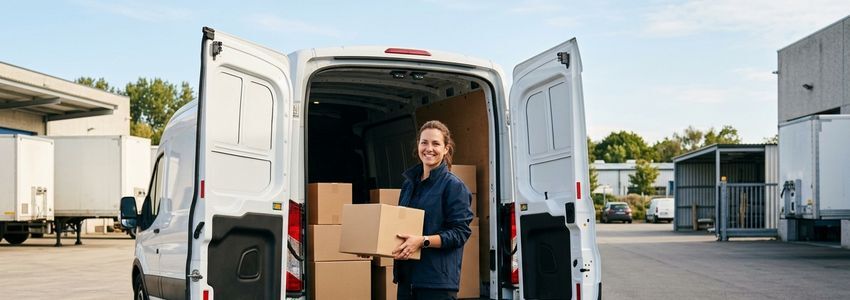
Courier van financing is the fastest way for delivery and courier business owners to acquire cargo vans, sprinter vans, and delivery vehicles without draining cash reserves. Whether you're launching a new route, replacing an aging fleet vehicle, or scaling up to meet growing demand from e-commerce and last-mile delivery contracts, the right financing structure can put a reliable van on the road in days instead of months. This guide walks through every option available, how the approval process works, what lenders look for, and how to choose the financing path that fits your courier operation best.
In This Article
What Is Courier Van Financing?
Courier van financing is a category of commercial vehicle financing designed specifically for businesses that transport goods, packages, or documents as their core operation. Instead of paying the full purchase price of a cargo van, sprinter van, or delivery vehicle upfront, a courier business borrows the funds (or leases the vehicle) and repays the lender over a fixed term, typically two to six years.
This type of financing covers new and used vans across every major brand: Ford Transit, Mercedes-Benz Sprinter, Ram ProMaster, Chevrolet Express, and Nissan NV. It can also cover the outfitting costs that turn a bare van into a working delivery vehicle, including shelving systems, refrigeration units for temperature-sensitive freight, GPS fleet tracking hardware, and branded wraps.
According to U.S. Census Bureau data on the couriers and messengers sector (NAICS 492), the industry has grown substantially in recent years as e-commerce volume continues to climb, and independent courier operators now make up a large share of the last-mile delivery market that major retailers and regional distributors depend on. This growth has pushed more courier owners to look for financing solutions that can keep pace with rising delivery demand.
The cost of new commercial vans has also climbed in recent years. A new Ford Transit, Mercedes-Benz Sprinter, or Ram ProMaster cargo van now commonly starts in the mid-$40,000s to mid-$50,000s before any upfits, according to manufacturer pricing data, which makes financing an increasingly important tool for courier businesses that need to add capacity without a large cash outlay.
Ready to Add a Van to Your Fleet?
Get fast, flexible courier van financing from the #1 business lender in the U.S. No obligation, apply in minutes.
Apply Now →Key Benefits of Courier Van Financing
Financing a courier van instead of paying cash preserves working capital for fuel, insurance, driver payroll, and the everyday costs of running a delivery operation. Here is what courier business owners gain by financing their vehicles rather than buying outright.
- Preserve cash flow. A single new cargo van can cost $45,000 to $65,000. Financing spreads that cost across monthly payments instead of tying up capital you need for operations.
- Faster fleet expansion. Approved courier businesses can often get funded within 24 to 72 hours, letting you accept a new delivery contract without waiting weeks for a bank loan.
- Predictable budgeting. Fixed monthly payments make it easy to forecast expenses and build accurate margins into your delivery pricing.
- Tax advantages. Many financing structures allow you to deduct vehicle-related business expenses; consult your accountant on the specifics for your situation.
- Build business credit. On-time payments on a commercial van loan help establish a credit history for your courier business, separate from your personal credit.
- Access to newer, more reliable vehicles. Financing makes it affordable to run newer vans with better fuel economy and fewer breakdowns, which directly protects on-time delivery rates.
Key Stat: The U.S. couriers and local delivery services sector has expanded consistently over the past several years as e-commerce order volume keeps rising, and independent and small-fleet operators represent a growing share of last-mile delivery capacity nationwide.
How Courier Van Financing Works
The process for financing a courier van follows a consistent path across most lenders, though timelines and documentation requirements vary. Understanding each step helps you move faster and avoid delays.
- Identify the vehicle. Decide whether you need a new or used van, the size and cargo capacity required for your routes, and whether you need refrigeration, shelving, or other upfits.
- Gather documentation. Most lenders request basic business information: time in business, monthly revenue or bank statements, and a vehicle quote or invoice from the dealer.
- Submit an application. Online applications with alternative lenders like Crestmont Capital typically take 10 to 15 minutes and require minimal paperwork compared to traditional bank loans.
- Receive an approval decision. Many courier and delivery businesses receive a decision within a few hours to one business day, depending on the lender and loan size.
- Review terms and sign. Review the interest rate, term length, monthly payment, and any fees before signing the agreement.
- Get funded and take delivery. Once approved, funds are typically disbursed directly to the dealer or seller, or to your business account if purchasing from a private party.
Quick Guide
How Courier Van Financing Works, At a Glance
Pick the make, model, and any needed upfits for your routes.
Submit basic business and revenue details in minutes.
Receive a decision, often within hours.
Funds disburse quickly so your van is on the road fast.
Types of Courier Van Financing
Not every courier business needs the same financing structure. Here are the main options available.
Commercial Van Loans
A traditional commercial van loan gives you ownership of the vehicle once the loan is paid off. You make fixed monthly payments over a term, typically 36 to 72 months, and the van serves as collateral for the loan.
Equipment Leasing
Leasing a courier van means lower monthly payments and the option to upgrade to a newer vehicle at the end of the lease term. This works well for courier businesses that want to keep their fleet modern without a large upfront commitment.
Sprinter Van and Cargo Van Financing
Sprinter van financing and cargo van financing refer to loans specifically structured around the higher purchase price and larger cargo capacity of vans like the Mercedes-Benz Sprinter, Ford Transit, and Ram ProMaster, which are common choices for high-volume courier and last-mile delivery routes.
Fleet Financing for Multiple Vehicles
If you're scaling from one van to several, fleet financing packages allow you to finance multiple vehicles under a single agreement, often with better terms per unit than financing each van separately.
Used Van Financing
Used commercial vans cost significantly less than new ones and can still qualify for financing, though terms may be slightly shorter and rates slightly higher depending on vehicle age and mileage.
SBA-Backed Financing
Some courier businesses explore SBA loans as a path to vehicle financing, particularly when the van purchase is part of a broader business expansion. SBA-backed loans can offer competitive rates, though the application and approval timeline is typically longer than alternative lending options, which matters if you need a van on the road quickly to fill an open delivery route.

What Determines Your Rate and Terms
Lenders evaluate several factors when structuring a courier van financing offer. Understanding these variables helps you present your business in the strongest possible light and anticipate what you'll qualify for.
- Time in business. Established courier operations with two or more years of operating history typically qualify for better rates than brand-new businesses.
- Monthly and annual revenue. Lenders want to see revenue that comfortably supports the monthly payment on top of existing expenses like fuel, insurance, and driver pay.
- Personal and business credit history. Stronger credit generally unlocks lower rates, though many alternative lenders will work with owners who have less-than-perfect credit if the business fundamentals are solid.
- Vehicle age and mileage. New vans typically qualify for longer terms and lower rates than high-mileage used vehicles, which carry more risk for the lender.
- Down payment amount. A larger down payment can reduce your monthly payment and may help you secure a better rate, though many courier businesses qualify for financing with minimal money down.
- Existing debt obligations. Lenders review your current debt load, including any other vehicle loans or business financing, to ensure the new payment fits comfortably within your cash flow.
Rates for commercial vehicle financing can vary widely based on these factors, and even a small difference in rate can add up to thousands of dollars over a multi-year term. It's worth comparing more than one financing offer before committing, especially when financing a full fleet rather than a single van.
Who Courier Van Financing Is Best For
Courier van financing is a strong fit for a range of delivery-focused businesses, including:
- Independent courier operators expanding from a single vehicle to a small fleet to take on more delivery contracts.
- Medical courier services that need reliable, climate-controlled vans to transport lab specimens, pharmaceuticals, or medical records on tight timelines.
- Last-mile delivery contractors working with major carriers or e-commerce fulfillment networks that require a set number of vans in service.
- Same-day and messenger services in urban markets where van reliability directly affects customer retention.
- Food and grocery delivery businesses that need refrigerated or insulated cargo vans for perishable goods.
- Growing courier companies replacing aging vehicles before breakdowns start cutting into delivery capacity and customer trust.
Common Mistakes to Avoid When Financing a Courier Van
Courier business owners sometimes make avoidable mistakes when financing a vehicle for the first time. Watching for these pitfalls can save real money over the life of the loan.
- Focusing only on the monthly payment. A lower monthly payment stretched over a longer term can end up costing more in total interest. Always compare the full cost of the loan, not just the payment size.
- Underestimating upfit costs. Shelving, refrigeration, and branding can add thousands of dollars beyond the base vehicle price. Build these costs into your financing request upfront rather than scrambling for extra funds later.
- Not shopping multiple lenders. Rates and terms vary. Getting at least two offers gives you leverage and a clearer sense of what a fair deal looks like for your business profile.
- Ignoring maintenance reserves. Financing the van is only part of the cost of ownership. Set aside a maintenance budget so a routine repair doesn't strain your cash flow on top of the loan payment.
- Overextending on fleet size. Adding more vans than your current contracts support can create payment pressure before the new capacity generates revenue. Scale fleet financing to match confirmed or highly likely demand.
Courier Van Financing vs. Leasing vs. Cash Purchase
Choosing between financing, leasing, and paying cash depends on your growth plans, cash position, and how long you intend to keep each vehicle.
| Feature | Van Loan | Leasing | Cash Purchase |
|---|---|---|---|
| Ownership | Yes, after final payment | No, unless buyout option used | Immediate |
| Upfront Cash Needed | Low to moderate | Low | Full purchase price |
| Monthly Payment | Moderate | Lower | None |
| Best For | Long-term fleet ownership | Frequent vehicle upgrades | Businesses with strong cash reserves |
| Cash Flow Impact | Preserved | Preserved | Significant one-time hit |
How Crestmont Capital Helps Courier Businesses
Crestmont Capital works with courier and delivery business owners across the country to structure commercial van financing that fits their route volume, cargo requirements, and growth timeline. Our team understands the unique cash flow rhythms of delivery businesses and structures repayment terms that align with your revenue, not a rigid one-size-fits-all bank schedule.
Because delivery businesses often run on tight margins with revenue tied directly to route volume, we take the time to understand how your business generates cash before recommending a structure. This means looking at seasonality, contract terms with the companies you deliver for, and how many vehicles you realistically need in the next six to twelve months rather than pushing a generic loan product.
We offer several paths depending on your situation:
- Equipment financing for a single van or a small batch of vehicles
- Equipment leasing if you want lower payments and the flexibility to upgrade vehicles regularly
- A business line of credit for ongoing fleet maintenance, repairs, and unexpected vehicle needs
- Working capital loans to support payroll and operations while you scale your delivery routes
Our courier van financing process is built for speed. Most applicants receive a decision within one business day, and approved businesses can often have funds in hand within 24 to 72 hours, letting you accept a new delivery contract without losing the opportunity to a competitor who moved faster.
Growing Your Delivery Fleet?
Crestmont Capital helps courier businesses finance vans fast, so you never miss a delivery contract. Apply in minutes, no obligation.
Apply Now →Real-World Scenarios
Scenario 1: Independent Courier Landing a New Contract
A single-van courier operator in Ohio is offered a regional delivery contract that requires three vans within 30 days. Rather than turning down the opportunity, the owner uses courier van financing to acquire two additional cargo vans, splitting the payments across 60 months and keeping enough cash on hand to cover fuel and insurance for the expanded fleet.
Scenario 2: Medical Courier Replacing an Aging Vehicle
A medical courier service transporting lab specimens relies on a 9-year-old van that has started breaking down mid-route, risking sample integrity and client trust. The company finances a newer, climate-controlled sprinter van, protecting its contracts with local hospitals and labs.
Scenario 3: Last-Mile Delivery Contractor Scaling for Peak Season
A last-mile delivery contractor working with a regional e-commerce fulfillment center needs to add four vans ahead of the holiday shopping surge. Fleet financing lets the company acquire all four vehicles under one streamlined agreement instead of four separate loan applications.
Scenario 4: Same-Day Messenger Service Expanding Into a New Market
A same-day messenger service expanding from one city to a neighboring metro area finances two used cargo vans to keep startup costs low while testing demand in the new market, preserving cash for driver recruitment and local marketing.
Scenario 5: Grocery Delivery Startup Needing Refrigerated Capacity
A grocery delivery business needs a refrigerated cargo van to safely transport perishable orders. Equipment financing covers both the van and the refrigeration unit installation, letting the company launch its cold-chain delivery service without a large upfront investment.
Pro Tip: When comparing van models for financing, factor in total cost of ownership, not just sticker price. Fuel efficiency, maintenance history, and cargo capacity all affect your long-term margins per delivery route.
Don't Let a Slow Loan Process Cost You a Contract
Apply for courier van financing today and get a decision fast. No obligation, no long wait times.
Apply Now →Frequently Asked Questions
What is courier van financing?
Courier van financing is a loan or lease structured to help delivery and courier businesses acquire cargo vans, sprinter vans, and other delivery vehicles without paying the full purchase price upfront. Payments are spread over a fixed term, typically two to six years.
How much does it cost to finance a courier van?
New cargo and sprinter vans typically range from $45,000 to $65,000, with used vans costing significantly less. Monthly payments depend on the loan amount, term length, interest rate, and any down payment applied.
How fast can I get approved for courier van financing?
Many courier businesses receive a decision within hours to one business day when working with an alternative lender like Crestmont Capital, compared to weeks with a traditional bank.
Can I finance a used cargo van?
Yes. Used vans can qualify for financing, though terms may be slightly shorter and rates slightly higher depending on the vehicle's age, mileage, and condition.
What credit score do I need for courier van financing?
Requirements vary by lender. Alternative lenders often work with a wider credit range than traditional banks and place more weight on business revenue and time in business alongside credit history.
Should I lease or finance a courier van?
Leasing works well if you want lower monthly payments and plan to upgrade vehicles every few years. Financing makes sense if you want to build equity in the vehicle and keep it long-term as part of your fleet.
Can I finance multiple vans at once for my courier fleet?
Yes. Fleet financing packages let courier businesses finance several vans under one agreement, which often comes with more favorable terms than financing each vehicle separately.
Does courier van financing cover refrigeration and shelving upfits?
In many cases, yes. Equipment financing can be structured to include the cost of shelving, refrigeration units, GPS tracking, and other upfits needed to make the van operational for your specific delivery work.
What documents do I need to apply?
Most lenders ask for basic business information, recent bank statements, and a quote or invoice for the vehicle you want to finance. Some lenders also request proof of time in business.
Can a new courier business qualify for van financing?
New courier businesses can qualify, though requirements and terms may differ from an established operation. Lenders typically look at personal credit, available collateral, and projected revenue for newer businesses.
What is the difference between a cargo van and a sprinter van?
"Sprinter van" technically refers to the Mercedes-Benz Sprinter model, but the term is often used broadly for tall, high-capacity cargo vans. "Cargo van" is the general category that includes Sprinters, Ford Transits, Ram ProMasters, and similar vehicles used for hauling freight and packages.
How long are typical courier van financing terms?
Terms typically range from 36 to 72 months, depending on the lender, vehicle age, and loan amount. Shorter terms mean higher monthly payments but less interest paid overall.
Is a down payment required for courier van financing?
Some lenders require a down payment, typically 10 to 20 percent of the vehicle's purchase price, while others offer financing with little to no money down depending on the applicant's qualifications.
How do I choose the right lender for courier van financing?
Compare approval speed, term flexibility, and whether the lender understands courier and delivery business cash flow patterns. A lender experienced with commercial vehicle financing for delivery operations will structure terms that fit your route revenue cycle.
Keep Your Delivery Business Moving
Whether you need one van or a full fleet, Crestmont Capital can help you get funded fast. Apply now, no obligation.
Apply Now →Next Steps
Decide on cargo capacity, new vs. used, and any upfits required for your routes.
Pull together recent bank statements and basic business details.
Submit your application online in minutes and get a fast decision.
Take delivery of your van and keep your delivery contracts on schedule.
Financing Multiple Vans as You Scale
Many courier businesses start with a single van and grow into a multi-vehicle operation as delivery volume increases. Planning your financing strategy with that growth trajectory in mind can save time and reduce friction later.
Rather than applying for a new loan every time you add a vehicle, some courier businesses negotiate a master financing agreement with a lender, allowing them to add vans under pre-approved terms as needed. This can be especially useful for seasonal businesses that need to flex fleet size up during peak periods, such as holiday shopping season for e-commerce delivery contractors, and back down during slower months.
Working with a lender that understands the courier and delivery industry also means fewer surprises. A lender familiar with route-based revenue, seasonal demand swings, and the realities of vehicle wear and tear from daily stop-and-go driving will structure terms that reflect how your business actually operates, rather than applying generic underwriting assumptions built for other industries.
Conclusion
Courier van financing gives delivery and courier business owners a practical way to acquire the vehicles they need without draining working capital or waiting weeks for a bank decision. Whether you're replacing an unreliable vehicle, adding capacity for a new contract, or building out a multi-van fleet, the right financing structure keeps your business moving and your cash flow intact. As e-commerce and last-mile delivery demand continues to grow, having dependable, well-financed vans in your fleet is one of the clearest ways to stay competitive and protect the relationships you've built with your delivery clients.
If you're ready to explore courier van financing options, Crestmont Capital's team is ready to help you find a solution built around your delivery business. From a single replacement vehicle to a full fleet expansion, getting the right financing in place now means one less obstacle between your courier business and the contracts, routes, and revenue you're working to grow.
Disclaimer: The information provided in this article is for general educational purposes only and is not financial, legal, or tax advice. Funding terms, qualifications, and product availability may vary and are subject to change without notice. Crestmont Capital does not guarantee approval, rates, or specific outcomes. For personalized information about your business funding options, contact our team directly.