
 (800) 949-0401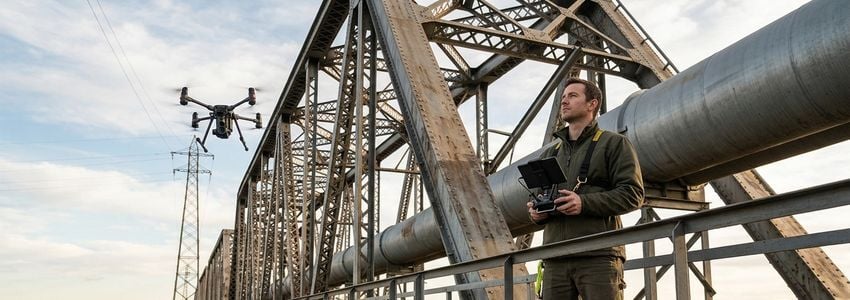
Commercial Drone Fleet Financing for Inspection Services: The Complete Guide for Business Owners
Commercial drone fleet financing gives inspection service companies a way to acquire multiple UAV units, sensors, and support equipment without draining working capital in a single purchase. For businesses that inspect bridges, pipelines, wind turbines, cell towers, and industrial facilities, having the right fleet on hand often determines whether a contract gets won or lost. This guide breaks down exactly how commercial drone fleet financing works, what it costs, and how to structure a deal that fits an inspection business's cash flow.
In This Article
What Is Commercial Drone Fleet Financing?
Commercial drone fleet financing is a business funding solution that allows inspection companies to purchase or lease multiple unmanned aerial vehicles, along with the cameras, LiDAR sensors, thermal imaging payloads, batteries, and docking stations that go with them, while paying over time instead of upfront. Rather than treating each drone as a one-off purchase, fleet financing is structured around the total operational need of the business: how many units are required, what sensor packages each job demands, and how quickly the equipment needs to be deployed.
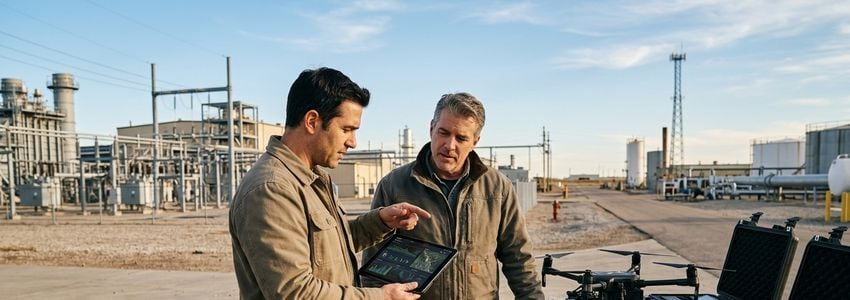
Inspection services covering bridges, pipelines, rooftops, solar farms, cell towers, wind turbines, and large industrial sites increasingly rely on drones instead of manual crews. That shift has created strong demand for financing that recognizes drones as legitimate, revenue-generating business equipment, not just a hobbyist purchase. Lenders who understand this space structure loans and leases around the equipment's useful life, resale value, and the contracts it will support.
A typical drone fleet financing package covers the airframes themselves, redundant batteries and charging systems, specialized payloads (thermal, multispectral, LiDAR), ground control stations, transport cases, and sometimes software subscriptions for flight planning and data processing. Because inspection contracts often require backup units in case of mechanical failure or FAA-mandated maintenance downtime, financing the full fleet at once, rather than piecemeal, tends to be more efficient than financing individual drones as cash allows.
Key Stat: The U.S. commercial drone market was estimated at roughly $33.6 billion in 2026, with infrastructure inspection representing one of the largest and fastest-growing application segments, according to industry market research cited by Forbes.
Key Benefits of Financing a Drone Fleet
Financing a fleet instead of paying cash preserves capital for payroll, insurance, fuel, and the day-to-day costs of running an inspection business. It also allows companies to scale their fleet size in step with contract volume rather than waiting to save up enough to expand.
- Preserves working capital - cash stays available for operating expenses, payroll, and unexpected repairs instead of being tied up in hardware.
- Enables fast fleet scaling - a company that wins a large pipeline or utility inspection contract can add units quickly rather than turning down the work.
- Keeps pace with technology upgrades - drone sensor technology (thermal, LiDAR, multispectral) improves quickly; financing shorter terms makes upgrading more realistic.
- Predictable monthly payments - fixed payment structures make budgeting and bidding on new contracts easier and more accurate.
- Potential tax advantages - equipment financing can allow a business to claim depreciation on financed assets, depending on how the deal is structured (consult a tax professional for specifics).
- Redundancy without overextension - financing makes it realistic to carry backup drones and batteries for FAA-mandated maintenance windows or mechanical failures without a large cash outlay.
Ready to Expand Your Drone Fleet?
Get fast, flexible financing from the #1 business lender in the U.S. No obligation - apply in minutes.
Apply Now →How Commercial Drone Fleet Financing Works
The process for financing a drone fleet is similar to financing any other type of commercial equipment, with a few industry-specific wrinkles related to how quickly the technology changes and how contracts are structured.
Quick Guide
How Drone Fleet Financing Works - At a Glance
Work with your drone manufacturer or reseller to build a quote covering all units, sensors, batteries, and accessories.
Submit a simple application with basic business financials and the equipment quote to a lender.
Compare term length, payment schedule, and end-of-term options (buyout, upgrade, or return).
Once approved, funds are released to the vendor and the fleet is delivered and put into service quickly.
Approval timelines for equipment financing are typically much faster than a bank term loan. Many inspection companies can go from application to funded in a matter of days, which matters when a new inspection contract has a tight mobilization deadline.
Lenders will typically look at time in business, monthly revenue, and the value and resale profile of the equipment being financed. Because commercial drones hold resale value reasonably well when properly maintained, they can often serve as partial collateral for the financing itself, which can help approval odds for newer inspection companies.
Financing Options and Types for Drone Fleets
There is no single "right" way to finance a drone fleet. The best structure depends on how quickly the business expects sensor technology to change, how the company wants to handle taxes, and how much flexibility it needs at the end of the term.
- Equipment financing (loan structure) - the business owns the drones outright once the loan is paid off; ideal for companies that plan to use the same fleet for several years.
- Equipment leasing (true lease) - lower monthly payments with the option to return, renew, or upgrade equipment at the end of the term; useful given how fast sensor payloads evolve.
- $1 buyout lease - functions like a loan; ownership transfers for $1 at the end of the term, useful for capturing depreciation benefits.
- Fair market value (FMV) lease - lowest monthly payment; at the end of term, the business can buy at fair market value, renew, or upgrade to newer sensor technology.
- Working capital loans - unsecured funding that can supplement equipment financing to cover software subscriptions, pilot training, or insurance premiums tied to a new fleet.
- Bad credit equipment financing - options exist for newer inspection businesses or owners with less-than-perfect credit, often collateralized more heavily by the equipment itself.
Who Commercial Drone Fleet Financing Is Best For
This type of financing tends to make the most sense for a specific set of inspection-focused businesses rather than casual or hobbyist drone operators.
- Infrastructure inspection companies serving utilities, pipelines, and telecom towers
- Construction and roofing inspection firms adding aerial survey capability
- Solar and wind energy inspection and maintenance contractors
- Insurance adjusters and claims companies expanding aerial damage assessment
- Engineering and surveying firms adding drone-based data collection services
- Municipal and government contractors bidding on bridge or public infrastructure inspection work
Financing vs. Leasing vs. Cash Purchase
Business owners evaluating how to acquire a drone fleet usually compare three paths: financing through a loan, leasing, or paying cash outright. Each has trade-offs worth understanding before committing.
| Option | Upfront Cost | Ownership | Best For |
|---|---|---|---|
| Equipment Loan | Low (small down payment) | Owned at term end | Long-term fleet use, stable technology needs |
| Equipment Lease | Very low | Optional buyout or upgrade | Companies expecting frequent tech upgrades |
| Cash Purchase | High (full amount) | Owned immediately | Companies with excess capital and no near-term need for cash flexibility |
Pro Tip: If sensor technology in your inspection niche changes quickly (thermal, LiDAR, multispectral), a leasing structure with an upgrade option often outperforms an outright purchase over a 3-5 year horizon, even though monthly payments may be similar.
How Crestmont Capital Helps Inspection Businesses Finance Drone Fleets
Crestmont Capital works with inspection service companies to structure equipment financing and equipment leasing around the realities of running a drone-based operation, including the need for backup units, sensor upgrades, and fast mobilization for new contracts. Rather than a one-size-fits-all product, financing packages are built around fleet size, contract pipeline, and how quickly the business expects to scale.
For inspection companies that also need cash flow support beyond the hardware itself, Crestmont's unsecured working capital loans can help cover pilot certifications, insurance premiums, or software subscriptions that come with operating a larger fleet. Companies that are newer or have less-than-perfect credit can also explore bad credit equipment financing options, since the drones themselves often serve as strong collateral.
Businesses considering a longer-term capital strategy, including larger asset purchases alongside a growing fleet, may also want to review Crestmont's SBA loan programs, which can offer favorable terms for established companies with a track record of contracts. For inspection companies that have already scaled a fleet and are now looking at diversifying into related aerial services, our guide on drone survey equipment financing covers financing specifically for aerial mapping and land survey work, while our commercial drone financing guide covers the broader landscape of drone-related business funding.
Win More Inspection Contracts
A larger, better-equipped fleet means more bids you can accept. See what financing you qualify for today.
Apply Now →Real-World Scenarios
Scenario 1: Pipeline Inspection Contractor Wins a Multi-State Contract. A five-person pipeline inspection company wins a contract covering three states but only owns two drones. Financing a fleet of six additional units, including thermal payloads, allows the company to run parallel inspection crews and meet the contract's tight timeline without depleting its cash reserves.
Scenario 2: Solar Farm Maintenance Company Adds Thermal Imaging. A solar inspection business has been using visual-only drones, but a large client now requires thermal imaging to detect underperforming panels. Leasing new thermal-equipped units, rather than purchasing outright, lets the company add the capability with a manageable monthly payment while preserving the option to upgrade sensors again in two years.
Scenario 3: Telecom Tower Inspection Startup Needs Its First Fleet. A newly formed tower inspection company has contracts lined up but limited operating history. Bad credit equipment financing, secured partly by the drones themselves, allows the owner to acquire an initial fleet of four units and start generating revenue instead of waiting to save enough cash.
Scenario 4: Municipal Bridge Inspection Bid. A civil engineering firm wants to bid on a state department of transportation bridge inspection contract that requires BVLOS-capable drones with redundant units for FAA maintenance windows. Financing the entire fleet at once, rather than adding drones one at a time, lets the firm submit a competitive, fully-equipped bid.
Scenario 5: Insurance Adjuster Expands Aerial Claims Services. An insurance adjusting firm currently outsources aerial roof and storm-damage assessments. Financing a small in-house fleet of four drones with basic and thermal payloads allows the firm to bring the service in-house, cutting per-claim costs and speeding up assessment turnaround for clients.
Frequently Asked Questions
Don't Let Equipment Hold Your Business Back
Get a fast, no-obligation quote for your drone fleet financing today.
Apply Now →Next Steps
Map out how many units, sensor types, and backup equipment your current and upcoming contracts require.
Request a full itemized quote covering airframes, payloads, batteries, and accessories.
Submit your application with Crestmont Capital to compare loan and lease structures.
Once approved, put your expanded fleet to work and start bidding on larger contracts.
Conclusion
Commercial drone fleet financing gives inspection service companies a practical way to scale from a handful of units to a fully-equipped, redundant fleet without tying up the cash needed to run day-to-day operations. Whether the goal is adding thermal payloads for solar inspection, building in backup units for pipeline contracts, or simply keeping pace with sensor technology, the right financing structure makes it possible to say yes to bigger contracts instead of turning them down. Businesses ready to evaluate loan and lease options for their next fleet expansion can start the process with Crestmont Capital today.
Disclaimer: The information provided in this article is for general educational purposes only and is not financial, legal, or tax advice. Funding terms, qualifications, and product availability may vary and are subject to change without notice. Crestmont Capital does not guarantee approval, rates, or specific outcomes. For personalized information about your business funding options, contact our team directly.








