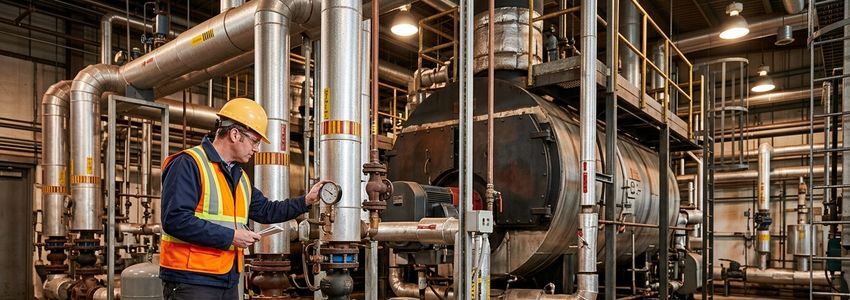
A commercial boiler feed pump failure does not send a warning email. One morning the pressure gauge drops, the low-water cutoff trips, and an entire production line, hospital wing, hotel property, or manufacturing floor loses hot water, steam, or process heat within hours. For companies that rely on boiler systems to run laundry operations, sterilize equipment, heat facilities, or power industrial processes, a failed feed pump is not a maintenance item. It is an operational emergency. Boiler feed pump replacement financing exists precisely for this moment, giving business owners a way to fund an urgent replacement without draining cash reserves or waiting weeks for a capital budget approval that the situation simply does not allow.
This guide walks through exactly how boiler feed pump replacement financing works, what it costs, who qualifies, and how to move from "the pump just failed" to "the new unit is installed and running" as quickly as possible.
In This Article
- What Is a Boiler Feed Pump (and Why Does Replacement Cost So Much)?
- Key Benefits of Financing a Boiler Feed Pump Replacement
- How Boiler Feed Pump Replacement Financing Works
- Types of Financing Available
- Who This Financing Is Best For
- Financing vs. Cash vs. Leasing: A Straight Comparison
- How Crestmont Capital Helps
- Real-World Scenarios
- Frequently Asked Questions
- Next Steps
What Is a Boiler Feed Pump (and Why Does Replacement Cost So Much)?
A boiler feed pump is the piece of equipment responsible for pushing water, at high pressure, back into a boiler system to replace the water that has been converted into steam. Without a functioning feed pump, a boiler cannot maintain the water level required for safe, continuous operation. Most industrial and commercial safety codes require an automatic low-water cutoff that shuts the entire boiler down the moment feed pump pressure drops below a safe threshold, which is why a pump failure almost always means a full boiler shutdown, not a partial one.
Commercial-grade feed pumps are precision equipment. They are built to handle high-temperature water (often 200-plus degrees Fahrenheit), operate under continuous duty cycles, and hold tight tolerances to avoid cavitation. Depending on horsepower, boiler system size, and whether the unit is a simplex or duplex configuration, a replacement commercial boiler feed pump typically runs anywhere from $4,000 to $25,000 or more once installation, piping modifications, and controls integration are included. For larger industrial boiler plants, that figure can climb well past $40,000.
Because these pumps run around the clock in many facilities, wear is constant and failure can happen with little warning, particularly on units nearing the end of a 10-to-15-year service life. When a feed pump does fail, the business is left with an equipment cost it did not plan for in this quarter's budget, on a timeline measured in days, not months.
What Drives the Cost of Replacement
Several factors determine where a specific replacement falls in that cost range. Horsepower and flow rate requirements are the biggest driver, since a small commercial system might need a modest single-stage pump while a large industrial boiler plant requires a multi-stage, high-pressure unit. Simplex systems (a single pump) cost less than duplex systems (two pumps, providing redundancy so one can run while the other is serviced), but many facilities that cannot tolerate downtime choose duplex configurations specifically to avoid ever facing this exact emergency again.
Installation complexity adds to the total as well. If the new pump is a direct swap using existing piping, controls, and electrical connections, labor costs stay relatively low. If the failure also damaged piping, valves, or the control panel, or if code requirements have changed since the original installation, the project can expand well beyond the pump price alone. Lead time on the replacement unit itself is another factor: standard-stock pumps can often be sourced within days, while specialized industrial units may need to be special-ordered, which is where a bridge financing solution becomes especially valuable to cover interim costs like rental equipment or overtime labor.
Key Stat: According to the U.S. Small Business Administration, unplanned equipment failure is one of the most common reasons small and mid-sized businesses turn to short-term financing, because critical infrastructure repairs rarely wait for the next budget cycle.
Key Benefits of Financing a Boiler Feed Pump Replacement
Paying cash for an emergency equipment replacement can feel like the "safe" choice, but for most businesses it creates more risk than it solves. Financing the replacement instead offers several concrete advantages:
- Speed. A boiler down for days can mean lost production, canceled service appointments, or a facility that cannot legally operate. Financing can move faster than internal capital approval processes, getting the new pump ordered and installed sooner.
- Cash flow preservation. Draining a cash reserve to cover a $10,000-plus emergency repair leaves a business exposed if a second unexpected cost hits the same month. Financing spreads the cost over time instead of absorbing it all at once.
- Predictable payments. Fixed monthly payments make it easier to forecast cash flow for the rest of the year, compared to an unplanned lump-sum cash outlay.
- Preserves other credit lines. Using equipment-specific financing keeps a business's existing bank line of credit or working capital line untouched for other needs.
- Potential tax treatment advantages. Many equipment financing structures allow the business to deduct payments or depreciate the asset, though every business should confirm specifics with its own accountant.
- Ability to upgrade, not just replace. Financing often makes it realistic to install a more efficient, higher-capacity, or better-monitored feed pump instead of the cheapest like-for-like replacement.
Boiler Down? Don't Wait on a Budget Cycle.
Get fast, flexible financing from the #1 business lender in the U.S. No obligation - apply in minutes.
Apply Now →How Boiler Feed Pump Replacement Financing Works
Equipment financing for a boiler feed pump replacement generally follows a straightforward path, though the exact steps can vary slightly depending on the lender and financing structure.
- Get a quote from your boiler service contractor. Most lenders will want a written quote or invoice from the mechanical contractor or pump supplier before releasing funds, so this is the first practical step once the failure is diagnosed.
- Submit a financing application. Most equipment financing applications for amounts under $150,000 require only basic business information, a few months of bank statements, and time in business - not a full financial package.
- Receive an approval decision. Emergency-focused lenders can often turn around approvals within hours to a couple of business days, which matters when a facility cannot operate without steam or hot water.
- Funds are disbursed directly to the vendor, or to the business. Depending on the structure, the lender either pays the equipment vendor directly or advances funds to the business to pay for the pump and installation.
- Installation proceeds immediately. Because the financing decision does not depend on the business's internal capital budget cycle, installation crews can typically start work as soon as the pump is delivered.
- Repayment begins on a fixed schedule. Monthly payments are set at approval, so there are no surprises on the repayment side while the business focuses on getting back to full operation.
By the Numbers
Commercial Boiler Feed Pump Replacement - Key Numbers
$4K-$25K+
Typical replacement cost range for a commercial boiler feed pump, installed
10-15 Yrs
Average service life of a commercial-grade feed pump before failure risk rises
24-48 Hrs
Typical approval turnaround for equipment financing under $150,000
33M+
Small businesses in the U.S., per the SBA, for whom access to capital remains the top growth barrier
Types of Financing Available for Boiler Feed Pump Replacement
Not every business needs the same financing structure. The right fit depends on the size of the invoice, how urgently funds are needed, and the business's existing credit profile.
Equipment Financing / Equipment Loans
The pump itself typically serves as collateral, which often means better rates and terms than an unsecured product. This is usually the most cost-effective option when the replacement is planned even a few days in advance, and it works well whether the pump is purchased new or refurbished.
Equipment Leasing
For businesses that want to preserve capital or prefer to avoid ownership of aging mechanical equipment long-term, leasing structures spread the cost over the lease term and can include end-of-term purchase or upgrade options.
Business Line of Credit
An existing or newly established line of credit gives a business the flexibility to draw funds immediately for the pump and any related emergency repair costs (piping, controls, electrical work) without a new application process for each expense.
Unsecured Working Capital Loan
For businesses that need funds fast and do not want to tie financing directly to the equipment, a working capital loan can cover the pump replacement along with any related revenue loss during downtime, such as payroll for idled staff.
SBA Loans
For businesses planning a larger equipment overhaul (replacing the feed pump along with other aging boiler plant components), an SBA-backed loan can offer longer terms and lower rates, though the approval timeline is typically longer than same-week emergency financing.
Choosing Between These Options
For a true same-week emergency, equipment financing or an unsecured working capital loan are usually the fastest paths to funding, since both can be underwritten primarily against recent bank activity and time in business rather than a lengthy credit review. A business line of credit is the better long-term tool if this is not the first unexpected equipment cost the company has faced this year, since it can be drawn against repeatedly without a new application each time. SBA financing makes the most sense when the feed pump replacement is bundled with a larger capital project and the business can tolerate a multi-week approval process rather than needing funds within days.
Who This Financing Is Best For
Boiler feed pump replacement financing is most useful for facility-dependent businesses where downtime translates directly into lost revenue or a compliance issue. This commonly includes:
- Manufacturing plants that rely on steam for production processes
- Commercial laundry and linen service operators
- Hotels, resorts, and multi-family residential properties with central boiler systems
- Hospitals, surgical centers, and healthcare facilities requiring sterilization steam
- Food processing and commercial bakery operations
- Breweries and beverage manufacturers using boiler-driven heat
- School districts, universities, and other institutions with central heating plants
- Property management companies overseeing commercial or multi-unit buildings
It is also a strong fit for any business that has already committed available cash to payroll, inventory, or another operating expense this month and cannot absorb a five-figure surprise without disrupting other obligations.
It is a less obvious, but still valuable, fit for businesses in a growth phase that are already planning a broader facilities upgrade. Rather than treating a feed pump failure as an isolated event, some owners use the moment to finance a slightly larger package, replacing the feed pump alongside aging controls, valves, or insulation in the same mechanical room. Because financing decisions are typically based on the total invoice rather than a line-by-line equipment audit, bundling related work into a single financed project is often more efficient than financing each repair separately over time.
Pro Tip: If your facility has any advance warning of pump wear (unusual noise, pressure fluctuation, or an aging unit flagged during inspection), applying for financing before full failure gives you more lender options and better rates than an after-the-fact emergency application.
Financing vs. Cash vs. Leasing: A Straight Comparison
| Factor | Cash Purchase | Equipment Financing | Equipment Leasing |
|---|---|---|---|
| Upfront cash needed | Full amount | Little to none | Little to none |
| Speed to install | Fast, if cash on hand | Fast (24-48 hrs approval) | Fast |
| Ownership at end | Immediate | Immediate or at loan payoff | Optional buyout |
| Impact on cash reserves | High | Low | Low |
| Best for | Businesses with excess reserves | Businesses that want to own the asset | Businesses that prefer flexibility over ownership |
How Crestmont Capital Helps
Crestmont Capital works with business owners facing exactly this kind of unplanned equipment emergency. Rather than routing every applicant through a slow, document-heavy underwriting process, Crestmont focuses on fast decisioning so a failed boiler feed pump does not turn into a week of downtime.
Depending on the size of the repair and the business's financial profile, Crestmont can structure the right solution through equipment financing, commercial equipment financing, or an unsecured working capital loan if the business needs funds that cover more than just the pump itself. For businesses that already have financing needs beyond this single repair, a business line of credit can provide ongoing flexibility for future equipment surprises. Businesses planning a larger boiler system overhaul may also want to review Crestmont's guide on commercial boiler system financing, which covers financing for full boiler replacements rather than a single component.
Crestmont's application process is built for speed: a short online application, minimal documentation for smaller equipment amounts, and decisions that typically come back within one to two business days. For businesses that have never financed equipment before, Crestmont's small business financing hub is a good starting point to understand available products before applying.
Keep Your Facility Running
Talk to a financing specialist today and find out what you qualify for - most decisions come back within 1-2 business days.
Apply Now →Real-World Scenarios
Scenario 1: The Commercial Laundry Operator
A regional commercial laundry service running three shifts a day loses its primary boiler feed pump on a Tuesday morning. With contracts to hotels and hospitals that require daily linen turnaround, even one day of downtime risks breach-of-contract penalties. The company secures equipment financing within 24 hours, the vendor installs a new duplex feed pump system by Thursday, and the business is back to full capacity before the weekend, having preserved its cash reserves for payroll.
Scenario 2: The Multi-Family Property Manager
A property management company overseeing a 200-unit apartment complex discovers a failed feed pump in the central boiler plant during a cold snap, with tenants losing heat and hot water. The management company uses a working capital loan to cover both the emergency pump replacement and after-hours contractor labor rates, avoiding a habitability violation and costly tenant complaints.
Scenario 3: The Food Processing Plant
A mid-sized food processing facility relies on steam for sanitation cycles required to maintain USDA compliance. When the feed pump fails, production halts entirely. The plant manager finances a same-day replacement through an equipment loan structured against the new pump, restoring production within 48 hours and avoiding a costly compliance shutdown.
Scenario 4: The Boutique Hotel
A boutique hotel with 80 rooms loses hot water across the property when its boiler feed pump fails during a fully booked weekend. Facing potential refunds and reputation damage from guest complaints, ownership finances an emergency replacement through an equipment lease, restoring hot water within a day and protecting the weekend's revenue.
Scenario 5: The School District Central Plant
A school district's central heating plant, which serves three connected buildings from a single boiler room, experiences a feed pump failure in late fall. With winter approaching and no room in the annual maintenance budget for an unplanned five-figure repair, the facilities director works with the district's finance office to secure equipment financing structured around the school year's existing revenue calendar, allowing the replacement to proceed within the week rather than waiting for the next budget approval cycle.
Frequently Asked Questions
What is a boiler feed pump and why does it fail?
A boiler feed pump pushes treated water back into a boiler to replace water converted to steam. Failures typically result from bearing wear, seal degradation, cavitation damage, or age-related mechanical breakdown after years of continuous duty cycles.
How much does it cost to replace a commercial boiler feed pump?
Replacement costs typically range from $4,000 to $25,000 or more depending on horsepower, whether it is a simplex or duplex configuration, and installation complexity. Large industrial systems can cost significantly more.
How fast can I get financing for an emergency boiler feed pump replacement?
Many equipment and working capital lenders, including Crestmont Capital, can provide approval decisions within 24 to 48 hours for amounts under $150,000, allowing installation to begin almost immediately after approval.
What documents do I need to apply for boiler feed pump replacement financing?
Most lenders require basic business information, several months of recent bank statements, and a quote or invoice from the equipment vendor or mechanical contractor. Larger financing amounts may require additional financial documentation.
Can I get financing if my boiler feed pump already failed and my facility is shut down?
Yes. Emergency equipment financing is specifically designed for situations where a facility is already down. Lenders that specialize in fast approvals understand the time-sensitive nature of these repairs.
Is equipment financing or leasing better for a boiler feed pump replacement?
Equipment financing is generally better if you want to own the pump outright and build equity in the asset. Leasing may be preferable if you want lower monthly payments or plan to upgrade equipment again in the near future.
Will bad credit prevent me from getting boiler feed pump replacement financing?
Not necessarily. Many equipment-backed financing products weigh the value of the collateral (the pump itself) alongside credit history, and some lenders specialize in working with businesses that have less-than-perfect credit.
Can financing cover installation and labor costs, not just the pump itself?
Yes, in most cases. Financing can typically be structured to cover the full invoice from your mechanical contractor, including labor, piping modifications, and controls integration, not just the equipment cost.
What happens if my boiler feed pump financing application is denied?
If declined by one lender, businesses often have other options, including alternative equipment lenders, a business line of credit application, or an unsecured working capital loan that considers different underwriting criteria.
How long are typical repayment terms for boiler feed pump financing?
Terms commonly range from 24 to 60 months for equipment financing, depending on the loan amount and the expected useful life of the pump. Larger SBA-backed financing may offer longer terms.
Should I replace with the same pump model or upgrade to a more efficient unit?
If financing is covering the cost either way, many businesses choose to upgrade to a more energy-efficient or higher-capacity unit rather than a like-for-like replacement, since the monthly payment difference is often minimal.
Can I finance a boiler feed pump replacement along with other repairs at the same time?
Yes. Many working capital and equipment financing products can be structured to cover multiple related repairs in a single financing package, such as a feed pump replacement alongside piping or electrical work.
Does financing a boiler feed pump replacement affect my other credit lines?
Equipment-specific financing is generally separate from a business's existing lines of credit, meaning it typically does not reduce availability on an existing bank line or working capital facility.
What industries most commonly need boiler feed pump replacement financing?
Commercial laundries, hotels, hospitals, food processing plants, breweries, manufacturing facilities, and multi-family property managers are among the most common businesses that need this type of financing.
How do I start the financing process for an emergency boiler feed pump replacement?
Get a written quote from your mechanical contractor or pump vendor, then submit an application with a lender that specializes in fast equipment or working capital decisions. Most applications take just minutes to complete online.
Get Your Facility Back Online
Fast, flexible financing for the equipment your business depends on. Apply now, no obligation.
Apply Now →Next Steps
Have your mechanical contractor or pump vendor provide a detailed invoice covering equipment, labor, and any related parts.
Submit a short application with basic business details - most take just a few minutes to complete.
Compare financing structures and repayment terms with a financing specialist before committing.
Once funded, your contractor can move forward with installation, often within days of approval.
Conclusion
A failed boiler feed pump is a problem that does not respect budget cycles or cash flow plans. Whether the facility is a commercial laundry, a hospital, a hotel, or a manufacturing plant, the cost of downtime almost always outweighs the cost of financing the repair. Boiler feed pump replacement financing gives business owners a practical way to fund a fast, professional replacement without draining reserves or delaying the fix while a capital request works through internal approvals. The businesses that recover fastest from this kind of emergency are the ones that know their financing options before the pump fails, not after.
If your facility depends on a boiler system for heat, hot water, steam, or a production process, treat this guide as a planning tool even before anything breaks. Knowing which financing product fits your situation, having a relationship with a lender that can move quickly, and understanding your likely cost range all shrink the gap between failure and full operation again. That gap, more than the repair bill itself, is usually what determines how expensive an emergency ends up being.
Disclaimer: The information provided in this article is for general educational purposes only and is not financial, legal, or tax advice. Funding terms, qualifications, and product availability may vary and are subject to change without notice. Crestmont Capital does not guarantee approval, rates, or specific outcomes. For personalized information about your business funding options, contact our team directly.