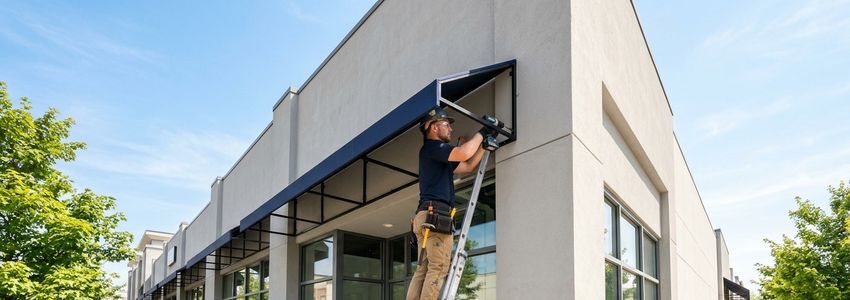
A cracked, sagging, or storm-torn awning does more than look bad. It signals neglect to every customer who walks past, and in many cities a damaged canopy is also a code violation waiting to happen. When the estimate for a full commercial awning replacement financing project lands on your desk, most business owners do not have $8,000 to $40,000 in free cash sitting around to cover it. That is where a targeted business loan for a commercial awning or canopy replacement comes in, giving you the ability to fix the problem now and pay it back over time out of ongoing revenue.
Crestmont Capital works with small business owners across retail, restaurant, hospitality, and commercial property sectors to fund exactly this kind of unplanned exterior repair. Below is a complete breakdown of how commercial awning and canopy financing works, what it typically costs, and how to decide which funding option fits your situation.
In This Article
- What Is Commercial Awning and Canopy Replacement Financing?
- Why a Damaged Awning Can't Wait
- Key Benefits of Financing the Replacement
- How the Financing Process Works
- Financing Options and Loan Types
- What a Replacement Actually Costs
- Who This Financing Is Best For
- Comparing Your Funding Options
- How Crestmont Capital Helps
- Real-World Scenarios
- Frequently Asked Questions
- Next Steps
What Is Commercial Awning and Canopy Replacement Financing?
Commercial awning replacement financing is a type of small business funding used specifically to pay for the removal, fabrication, and installation of a new storefront awning, entrance canopy, walkway cover, or fabric/metal shade structure on a commercial building. It is not a specialized loan product with its own name at most banks. Instead, it is a working capital loan, equipment financing arrangement, or business line of credit that a business owner directs toward this specific exterior repair.
Awnings and canopies take a beating from sun, wind, hail, and age in ways most business owners never budget for separately. A vinyl or fabric awning typically lasts 7 to 15 years before the material fades, tears, or delaminates from UV exposure. A metal or aluminum canopy can last 20-plus years but is vulnerable to sudden failure from wind uplift, hail denting, or rust at the mounting points. When failure happens, it is rarely a "nice to have" repair. A torn awning flapping in the wind is a liability risk. A canopy with a failing frame can be condemned by a building inspector until it is fixed or removed.
Because the need is often sudden and the price tag is real, financing lets a business spread the cost over 6 to 60 months instead of draining a bank account or delaying repairs and losing customers in the meantime.
Key Stat: Roughly 70% of first-time purchase decisions at a retail or restaurant storefront are influenced by curb appeal, according to industry retail studies. A worn-out or missing awning is often the first thing a new customer notices, before they ever see what is inside.
Why a Damaged Awning or Canopy Can't Wait
Business owners often try to patch an awning problem rather than replace it, hoping to stretch another season out of a structure that is clearly failing. That approach usually backfires for a few specific reasons.
- Liability exposure. A loose panel, exposed frame edge, or partially detached fabric section over a walkway is a slip-and-fall and falling-object risk. If someone is hurt under a known-defective awning, general liability coverage may not fully protect the business if negligence is found.
- Code and lease compliance. Many municipalities require permits for awning installation and have minimum clearance, wind-load, and fire-rating standards. Landlords in retail centers frequently include storefront appearance clauses in commercial leases that require awnings to be maintained in "like-new" condition.
- Lost revenue from appearance. A faded, torn, or missing awning reads as "this business is struggling" to passersby, whether or not that is true. That perception directly affects walk-in traffic for restaurants, salons, retail shops, and any storefront-dependent business.
- Escalating repair costs. Small tears become full frame failures. Rust at a canopy mounting bolt becomes a structural replacement instead of a hardware fix if left unaddressed for another storm season.
Waiting for cash flow to catch up often means waiting through an entire storm season or peak sales period with a visibly damaged storefront. Financing removes that delay.
Key Benefits of Financing an Awning or Canopy Replacement
Choosing to finance rather than pay cash, or rather than delay the project, gives a business several concrete advantages:
- Preserve working capital. Keep cash on hand for payroll, inventory, and day-to-day operating expenses instead of depleting reserves on a single exterior project.
- Fast turnaround. Many working capital and equipment financing products fund within 24 to 72 hours of approval, which matters when a canopy has already been flagged by an inspector or a landlord.
- Predictable payments. Fixed monthly payments make it easier to budget the repair into normal cash flow rather than absorbing one large hit.
- No need to liquidate assets. Financing avoids pulling from a business savings account, a retirement account, or a personal line of credit to solve a business-property problem.
- Better contractor negotiating position. Approved financing in hand often lets a business move faster with a contractor, sometimes securing better material pricing or an earlier install slot before peak season.
- Protects revenue during the repair window. Faster funding means a faster fix, which limits the number of days the business operates with a damaged, embarrassing, or unsafe storefront.
Don't Let a Damaged Storefront Cost You Customers
Get fast, flexible financing from the #1 business lender in the U.S. No obligation, apply in minutes.
Apply Now →How the Financing Process Works
The process for financing a commercial awning or canopy replacement is straightforward and typically follows the same steps regardless of which loan product a business ultimately chooses.
- Get a contractor estimate. Before applying, obtain at least one, ideally two, written estimates from a commercial awning fabricator or general contractor. This gives you an accurate funding amount to request instead of guessing.
- Choose the right funding type. Decide whether the project fits better as a working capital loan (fast, flexible, based on revenue), an equipment financing arrangement (if the awning or canopy structure qualifies as a depreciable business asset), or a business line of credit (if you want reusable access for this and future property repairs).
- Submit a simple application. Most small business funding applications require basic business information, several months of bank statements, and a description of use of funds. No lengthy business plan or collateral appraisal is typically required for amounts in the common awning-replacement range.
- Receive an approval decision. Decisions on working capital products are often same-day or next-day. Equipment financing decisions may take slightly longer if a formal equipment quote is being underwritten.
- Funds are disbursed. Once approved, funds are deposited directly to the business bank account, often within 24 to 72 hours, so the contractor deposit and remaining balance can be paid on the fabricator's normal schedule.
- Repay over a fixed term. Repayment is structured as fixed daily, weekly, or monthly payments over a term that typically ranges from 6 months to 5 years, depending on the product and amount financed.
Financing Options and Loan Types for Awning and Canopy Replacement
There is no single "awning loan" product at most lenders. Instead, business owners typically choose from a handful of financing structures depending on the size of the project, how the awning qualifies from an accounting standpoint, and how quickly funds are needed.
Unsecured Working Capital Loans
A working capital loan is often the fastest and simplest way to fund a mid-size awning or canopy replacement. These loans are based primarily on business revenue and time in business rather than requiring the awning itself as collateral, and funding can often land in 1 to 3 business days.
Business Line of Credit
A business line of credit makes sense for businesses that expect ongoing property maintenance needs beyond just the awning, such as an older commercial building with a history of exterior repairs. Draw only what is needed for the awning project now, and keep the remaining credit line open for the next unplanned repair.
Commercial Real Estate or Property Improvement Financing
For businesses that own their building outright, larger canopy or storefront renovation projects sometimes qualify for commercial real estate financing, particularly when the awning replacement is bundled into a broader facade or storefront improvement project rather than a standalone repair.
Equipment Financing
In some cases, a large permanent canopy structure (particularly metal or structural canopy systems) can be financed as commercial equipment, spreading the cost over the useful life of the structure with fixed monthly payments.
By The Numbers
Commercial Storefront Repairs and Financing at a Glance
70%
Of first-time purchase decisions are influenced by storefront curb appeal
$22.5B
Total 2025 U.S. hail damage repair cost to residential and commercial structures
36.2M
Small businesses in the U.S. that rely on physical storefronts and property upkeep
1-3 Days
Typical funding time for an unsecured working capital loan
Sources: SBA Office of Advocacy small business data; 2025 hail damage repair cost estimates reported via industry loss data; retail curb appeal industry studies.
What Does a Commercial Awning or Canopy Replacement Actually Cost?
Costs vary widely based on material, size, and structure type, but business owners planning for this expense should expect the following general ranges:
- Fabric/vinyl retractable awnings: $2,000 to $8,000 per unit depending on width and motorization.
- Fixed fabric storefront awnings: $1,500 to $6,000 depending on length and frame material.
- Metal or aluminum canopies: $8,000 to $30,000+ for entrance canopies, walkway covers, or drive-through canopies.
- Structural steel canopy systems: $20,000 to $75,000+ for larger commercial applications such as gas station canopies, loading dock covers, or multi-bay storefront systems.
- Permitting and engineering: $500 to $3,000 depending on jurisdiction, especially where wind-load or structural review is required.
These figures typically do not include emergency removal of a failed structure, which can add $500 to $2,500 depending on size and access difficulty.
Key Stat: Severe convective storms, including hail, drove roughly $42 billion in U.S. insured losses in 2025 alone, making storm-related exterior damage one of the most common and expensive unplanned property expenses small businesses face.
Who This Financing Is Best For
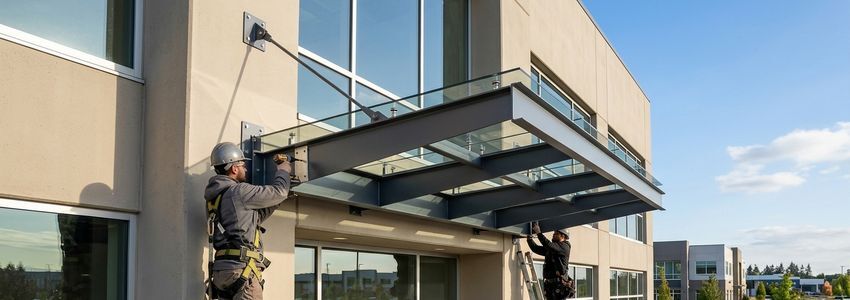
Commercial awning and canopy replacement financing is a strong fit for a range of business types, including:
- Retail storefronts where the awning is a core part of the brand identity and street presence.
- Restaurants and cafes with outdoor dining or entrance canopies that see heavy foot traffic and weather exposure.
- Medical and dental offices where an entrance canopy protects patients from weather and supports ADA-compliant covered access.
- Gas stations and convenience stores needing structural canopy repair or replacement over fuel islands.
- Commercial property owners and landlords maintaining awnings across multiple tenant storefronts in a retail strip or plaza.
- Hotels and hospitality businesses where a damaged porte-cochere or entrance canopy directly affects guest first impressions.
It is generally the right choice any time a business needs the repair completed quickly, wants to preserve cash reserves, or does not have the capital on hand to pay the full contractor invoice up front.
Comparing Your Funding Options
Business owners facing an awning or canopy replacement typically weigh financing against two alternatives: paying cash, or delaying the repair. Here is how the three approaches compare.
| Approach | Speed | Impact on Cash Reserves | Risk |
|---|---|---|---|
| Business Financing | 1-3 days to fund | Minimal, cash reserves preserved | Low, fixed predictable payments |
| Paying Cash | Immediate if funds available | High, drains reserves in one lump sum | Leaves no buffer for other emergencies |
| Delaying the Repair | N/A | None short-term, higher long-term | Liability exposure, code issues, lost sales, worse damage |
How Crestmont Capital Helps
Crestmont Capital is rated the #1 business lender in the country and has helped small businesses fund everything from equipment purchases to unexpected property repairs like awning and canopy replacements. Our commercial financing programs are built around speed and simplicity, because a damaged storefront is not a problem that benefits from a slow underwriting process.
When you work with Crestmont Capital on an awning or canopy replacement, you get:
- A straightforward application with minimal paperwork
- Funding decisions in as little as 24 hours
- Flexible repayment terms matched to your business's cash flow
- A dedicated funding specialist who understands unplanned property repairs, not just standard equipment purchases
If your awning damage is part of a larger issue, such as a failing storefront window or a property insurance premium spike tied to the same building, it is worth reviewing related resources like our guide to financing a storefront glass or window replacement and our breakdown of financing options for a commercial property insurance premium spike, since these property-related expenses often show up together after severe weather.
Ready to Restore Your Storefront?
Crestmont Capital can fund your awning or canopy replacement in as little as 24 hours. No obligation to apply.
Apply Now →Real-World Scenarios
Scenario 1: Retail Boutique After Hail Damage
A women's clothing boutique in a strip mall took direct hail damage to its retractable fabric awning during a spring storm. The landlord's lease required the tenant to maintain storefront appearance, and the insurance deductible did not cover the full $4,200 replacement cost. The owner used a short-term working capital loan to cover the difference and had a new awning installed within a week, avoiding a lease violation notice.
Scenario 2: Restaurant With a Failing Entrance Canopy
A family-owned restaurant discovered rust had compromised the mounting brackets on its metal entrance canopy during a routine inspection. The city required the canopy be repaired or removed within 30 days. With a $14,500 estimate and no available cash reserve after a slow winter season, the owner secured equipment financing to cover the structural replacement and kept the restaurant's signature covered patio entrance intact.
Scenario 3: Multi-Tenant Retail Plaza Owner
A commercial property owner managing a six-unit retail plaza needed to replace aging fabric awnings across three storefronts at once after years of sun damage, at a combined cost of nearly $18,000. Rather than draw down cash reserves meant for property taxes, the owner opened a business line of credit, financed the awning project, and kept the remaining credit available for the next property maintenance need.
Scenario 4: Gas Station Canopy Replacement
A gas station and convenience store operator faced a $32,000 estimate to replace a structural steel fuel island canopy after years of wear compromised the support columns. Because the amount exceeded what a standard working capital product could comfortably cover, the owner used a combination of equipment financing and a smaller working capital draw to complete the project without pausing fuel sales during construction.
Scenario 5: Medical Office Entrance Canopy
A dental office needed an ADA-compliant covered entrance replaced after the original canopy's fabric deteriorated beyond repair, creating a liability concern for patients entering during rain. A fast working capital loan allowed the practice to complete the $6,800 replacement within two weeks, before a scheduled state facility inspection.
Frequently Asked Questions
What is commercial awning replacement financing?
It is business funding, typically structured as a working capital loan, equipment financing arrangement, or business line of credit, used to pay for removing and installing a new commercial storefront awning or canopy structure.
How much does a commercial awning or canopy replacement cost?
Costs range from roughly $1,500 for a small fixed fabric awning to $75,000 or more for a large structural steel canopy system, depending on size, material, and engineering requirements.
How fast can I get funding for an awning replacement?
Many unsecured working capital loans fund within 1 to 3 business days of approval, and some approvals can be issued the same day the application is submitted.
Do I need collateral to finance an awning or canopy project?
Unsecured working capital loans generally do not require collateral. Equipment financing may use the canopy structure itself as collateral, but personal assets are typically not required.
What credit score do I need to qualify?
Requirements vary by lender and product, but many small business financing options consider overall business revenue and banking history alongside credit score, making approval accessible to businesses with less-than-perfect personal credit.
Can I finance an emergency canopy replacement after storm damage?
Yes. Working capital loans are commonly used for emergency property repairs, including storm-related awning and canopy damage, precisely because they can be approved and funded quickly.
Should I file an insurance claim instead of financing the repair?
If the damage is storm or accident related, filing a claim is worth exploring, but deductibles, claim delays, and depreciation often leave a gap. Financing can cover that gap or fund the full project while a claim is processed.
What repayment terms are typical for this type of financing?
Repayment terms commonly range from 6 months to 5 years depending on the loan amount and product type, with fixed payments structured around your business's cash flow cycle.
Can a business line of credit be used for future property repairs too?
Yes. A business line of credit is reusable, so funds drawn for an awning replacement can be repaid and the same credit line can be used again for future exterior or property maintenance needs.
Is a landlord or tenant responsible for awning replacement costs?
This depends entirely on the commercial lease agreement. Many leases place storefront appearance and awning maintenance responsibility on the tenant, which is why tenant-side financing for this expense is common.
Does a new awning or canopy actually increase sales?
Retail industry studies consistently link storefront curb appeal, including awnings and signage, to first-time customer decisions, with some studies citing new customer sales increases after an exterior refresh.
Can startups or newer businesses qualify for this financing?
Most working capital lenders look for at least 6 to 12 months in business and consistent revenue, so newer businesses may need to explore equipment-specific financing or provide additional documentation to qualify.
What documents are needed to apply?
Typical requirements include several months of business bank statements, basic business identification information, and a contractor estimate or invoice for the awning or canopy project.
Can financing cover permitting and engineering costs too?
Yes, most working capital financing is flexible on use of funds, so permitting fees, engineering review costs, and removal of the old structure can typically be rolled into the total amount financed.
How do I get started with Crestmont Capital?
Complete a short online application with basic business details and a contractor estimate. A funding specialist will review your options and can typically provide a decision within 24 hours.
Get Your Storefront Fixed the Right Way
Apply today and see your financing options for your awning or canopy replacement, with no obligation.
Apply Now →Next Steps
Contact a commercial awning contractor for a detailed quote on your replacement project.
Compare working capital, equipment financing, and line of credit options based on your project size.
Submit a short application and get a funding decision, often within 24 hours.
Move forward with your contractor and restore your storefront's appearance and safety.
Conclusion
A damaged or aging awning or canopy is more than a cosmetic issue. It is a liability risk, a potential code violation, and a direct hit to the first impression your storefront makes on every customer who walks by. Commercial awning replacement financing gives business owners a practical way to fix the problem quickly without draining cash reserves needed for payroll, inventory, and everyday operations. Whether the right fit is an unsecured working capital loan, an equipment financing arrangement, or a business line of credit, the goal is the same: get the repair done fast, protect your business's appearance and safety, and keep cash flow steady while you pay it off.
Disclaimer: The information provided in this article is for general educational purposes only and is not financial, legal, or tax advice. Funding terms, qualifications, and product availability may vary and are subject to change without notice. Crestmont Capital does not guarantee approval, rates, or specific outcomes. For personalized information about your business funding options, contact our team directly.