
 (800) 949-0401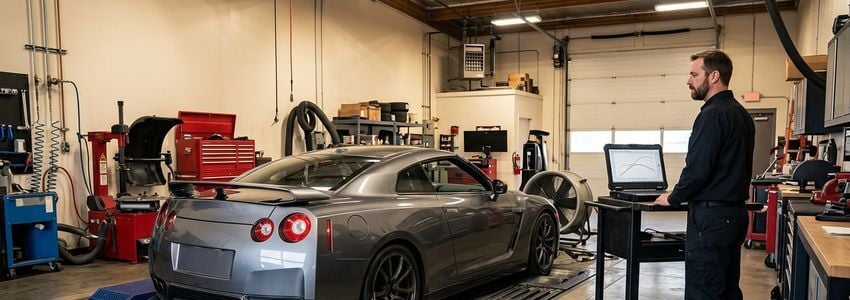
Chassis Dynamometer Financing: The Complete Guide for Performance Shop Owners
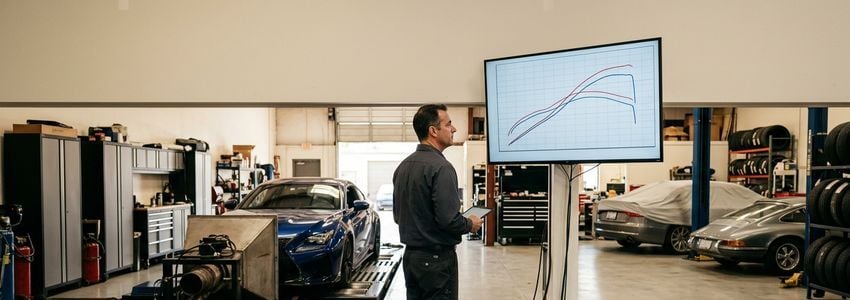
Chassis dynamometer financing gives performance shops, tuning centers, and general repair facilities a way to add wheel-based horsepower and torque testing without tying up six figures of working capital. A quality chassis dynamometer, often called a "chassis dyno," measures power at the wheels rather than at the crank, which makes it the gold standard for tuning shops that need real-world, drivetrain-inclusive data. Entry-level single-roller units start around $35,000, while a full climate-controlled, all-wheel-drive dyno cell with load-cell absorption and data acquisition software can run past $400,000.
Very few independent shop owners can write a check that size and still keep cash on hand for payroll, parts inventory, and rent. Chassis dynamometer financing spreads that cost over 24 to 84 months so the equipment starts paying for itself in tuning sessions, dyno-day rentals, and diagnostic billing the same month it goes in the bay. This guide walks through exactly how chassis dynamometer financing works, what a dyno actually costs installed, how lenders evaluate a shop's application, and how to structure the deal that fits your cash flow.
In This Article
What Is Chassis Dynamometer Financing?
Chassis dynamometer financing is a business loan or equipment lease structured specifically to help shop owners purchase, install, or upgrade a dyno that measures horsepower and torque at the drive wheels. Unlike an engine dynamometer, which tests a bare engine on a stand before it goes into a vehicle, a chassis dyno tests the complete vehicle as a system, capturing drivetrain loss, tire slip, and real-world load exactly the way a customer will experience the car or truck on the street or track.
Rather than draining a cash reserve or maxing out a business credit card, a shop owner works with a lender to structure fixed monthly payments that match the revenue the dyno generates. Most deals are structured as an equipment finance agreement or a $1 buyout lease, both of which let the shop keep 100% of the tax depreciation benefit and own the equipment outright once the term ends.
Financing also typically covers more than just the rollers and load cell. A complete chassis dyno installation usually needs a reinforced concrete pad, ventilation and exhaust extraction, a cooling fan bank, data acquisition software, and often a dedicated dyno room with sound dampening. Lenders who understand the automotive performance space will roll all of that "soft cost" into a single financed amount rather than forcing the shop to pay for construction out of pocket.
Key Benefits of Financing a Chassis Dynamometer
- Preserve working capital. Keep cash available for parts inventory, payroll, and marketing instead of locking it into one piece of equipment.
- Start generating revenue immediately. Dyno tuning sessions, pull days, and diagnostic testing can begin billing customers as soon as the unit is calibrated and running.
- Predictable monthly payments. Fixed-rate financing makes it easy to budget against expected dyno revenue instead of guessing.
- Tax advantages. Equipment finance agreements are frequently eligible for accelerated depreciation treatment, which a shop's CPA can evaluate.
- Upgrade path. Financing terms of 3 to 5 years line up well with the useful life of a chassis dyno before newer data acquisition technology becomes available.
- Bundled soft costs. Installation, concrete work, ventilation, and software can often be rolled into the same financed amount as the dyno itself.
Key Stat: The U.S. Small Business Administration reports that small businesses make up more than 99% of all U.S. firms, and access to capital remains one of the top challenges cited by owners looking to expand service offerings like dyno tuning.
How Chassis Dynamometer Financing Works
The process is faster and more straightforward than most shop owners expect, especially compared to a traditional bank term loan. Here is the typical sequence from application to installation.
- Get a quote from your dyno manufacturer or distributor. Lenders need a specific make, model, and price to structure a financing offer, so this comes first.
- Submit a simple application. Most equipment lenders only require a one-page application, a few months of business bank statements, and basic business information for deals under $250,000.
- Receive underwriting decision. Equipment lenders that specialize in automotive and industrial equipment can often turn around approvals in 24 to 48 hours.
- Choose your structure. Decide between an equipment finance agreement (loan-style ownership from day one) or a lease (lower payments, option to buy at term end).
- Sign documents and fund the vendor. Once approved, the lender pays the dyno manufacturer or distributor directly, often within a few business days.
- Installation and calibration. Most chassis dyno installs take one to three weeks depending on whether a concrete pad or dedicated dyno room needs to be built.
- Start billing dyno hours. Once calibrated, the shop can begin scheduling tuning sessions, diagnostic pulls, and dyno-day events.
Types of Chassis Dynamometers and What They Cost
Chassis dynamometers vary enormously in price depending on drive configuration, load absorption method, and whether the unit includes an enclosed, climate-controlled cell. Understanding these categories helps a shop owner and lender agree on a realistic financed amount.
Entry-Level Single-Roller Dynos ($35,000 to $65,000)
These units use a single set of rollers under the drive wheels and an inertia or basic eddy current brake to calculate power. They are common in independent performance shops that primarily tune front-wheel-drive or rear-wheel-drive vehicles and do not need simultaneous four-wheel-drive testing.
Mid-Range AWD Roller Dynos ($100,000 to $180,000)
All-wheel-drive dynamometers with independent front and rear roller sets allow shops to test AWD platforms without a transfer case adapter. These units typically include more sophisticated eddy current or water-brake load absorption for consistent, repeatable pulls at higher horsepower levels.
Hub Dynamometers ($150,000 to $300,000)
Hub dynos bolt directly to the wheel hub, eliminating tire slip entirely and delivering the most accurate torque data available outside of an engine dyno. They are popular with race shops and OEM-adjacent tuning operations that need lab-grade repeatability.
Full Motorsports-Grade Dyno Cells ($250,000 to $500,000+)
These are complete, enclosed, climate-controlled rooms with high-capacity ventilation, fire suppression, load-cell absorption rated for 2,000+ horsepower, and integrated data acquisition software. This tier is typically financed alongside a facility buildout or major shop expansion.
Ready to Add Dyno Testing to Your Shop?
Get fast, flexible chassis dynamometer financing from the #1 rated business lender in the U.S. No obligation, apply in minutes.
Apply Now →Who Chassis Dynamometer Financing Is Best For
Chassis dynamometer financing makes the most sense for shops that already have a customer base ready to pay for tuning and diagnostic services but lack the cash reserves to buy equipment outright. It fits several distinct business models.
- Performance and tuning shops that currently outsource dyno time and want to bring that revenue in-house.
- General auto repair shops expanding into performance services to capture additional revenue per bay.
- Diesel repair facilities that need chassis dyno data for emissions diagnostics and towing power verification.
- Race shops and motorsports teams that need in-house testing between events instead of renting outside dyno time.
- Franchise and multi-bay operations looking to standardize tuning quality across locations.
Pro Tip: Shops that already charge for diagnostic scans or outsource dyno tuning to a competitor down the street are often the fastest to see positive ROI, since the customer demand already exists before the equipment arrives.
Financing Options Compared
Not every financing structure fits every shop. Here is how the most common options stack up for a chassis dynamometer purchase.
| Structure | Ownership | Monthly Payment | Best For |
|---|---|---|---|
| Equipment Finance Agreement | Owner from day one | Moderate | Shops planning to keep the dyno long-term |
| $1 Buyout Lease | Owner at term end | Lower | Shops wanting lower payments now, ownership later |
| Business Line of Credit | Owner immediately | Variable / flexible | Shops with other short-term capital needs too |
| SBA 7(a) Loan | Owner immediately | Low, long-term | Shops financing a dyno alongside a larger buildout |
According to the U.S. Small Business Administration, SBA-backed loans offer competitive terms for equipment and real estate purchases, but the application timeline is typically measured in weeks rather than days. For a shop that needs a dyno online quickly to capture tuning season demand, an equipment finance agreement or lease structured through a specialized lender is usually the faster path.
How Crestmont Capital Helps
Crestmont Capital works with performance shops, general repair facilities, and race teams across the country to structure equipment financing built around the realities of the automotive performance business, not a one-size-fits-all bank template. Because dyno purchases often come bundled with installation, ventilation, and dyno room construction, Crestmont structures financing that covers the full project cost, not just the machine on the invoice.
Shops with less-than-perfect credit or a shorter time in business are not automatically excluded. Bad credit equipment financing options exist specifically for owners who have the revenue and customer demand to support a new dyno but do not fit a traditional bank's credit box. For shops that want to test the waters with a used or refurbished unit before committing to a brand-new system, used equipment financing is also available.
Shop owners who have already added diagnostic tools or expanded into transmission work may find it useful to review Crestmont's engine dynamometer financing guide or the transmission shop equipment financing guide for related equipment strategies, since many shops end up financing multiple pieces of testing equipment as they scale their performance service line.
By the Numbers
Chassis Dynamometer Financing — Key Figures
$35K–$500K+
Typical chassis dyno cost range, entry-level to motorsports-grade
24–48 Hrs
Typical underwriting turnaround for equipment financing under $250K
24–84 Mo
Common financing term lengths for shop equipment
99%
Share of U.S. firms classified as small businesses, per the SBA
Real-World Scenarios
Scenario 1: The Independent Tuning Shop
A single-bay tuning shop in the Southeast had been outsourcing every dyno pull to a shop 40 minutes away, losing customers to the drive time. The owner financed a $58,000 entry-level single-roller dyno through a 60-month equipment finance agreement. Within four months, in-house dyno sessions covered the full monthly payment with room to spare, and the shop picked up new customers who no longer had to drive out of town.
Scenario 2: The AWD Specialist
A shop specializing in Subaru and Audi performance builds needed an all-wheel-drive dyno to properly tune both axles simultaneously. They financed a $145,000 AWD roller dyno with a $1 buyout lease, keeping monthly payments low during the first year while they built out their AWD customer base, then rolling excess dyno revenue into faster payoff in years two and three.
Scenario 3: The Diesel Repair Facility
A diesel repair shop added chassis dyno testing to verify towing horsepower after emissions system repairs, a service their competitors did not offer. Financing a $110,000 mid-range unit let them add a documented before-and-after horsepower report to every major repair invoice, increasing average ticket size significantly.
Scenario 4: The Race Team Support Shop
A shop supporting a regional racing series financed a $320,000 hub dynamometer to give race teams lab-grade, repeatable torque curves between events. The higher price point was financed through an SBA 7(a) loan alongside a small facility expansion, since the shop was also adding a dedicated dyno room.
Scenario 5: The Multi-Bay Franchise Group
An owner with three general repair locations wanted to standardize dyno-based diagnostic and tuning quality across all three shops. Rather than paying cash at each location, the group financed all three units under one master equipment lease, simplifying accounting and preserving working capital across the whole operation.
How to Qualify for Chassis Dynamometer Financing
Qualification requirements for equipment financing are generally far less strict than a traditional bank term loan, especially for deals structured through lenders who specialize in automotive and shop equipment.
- Time in business: Most lenders prefer at least 1 to 2 years in operation, though startups with a strong owner credit profile may still qualify for smaller equipment amounts.
- Business bank statements: Typically 3 to 6 months of statements to verify revenue and cash flow stability.
- Personal credit score: A score in the mid-600s or higher opens up the best rates, though bad credit equipment financing options exist for lower scores.
- Equipment quote: A formal quote from the dyno manufacturer or distributor listing make, model, and total project cost including installation.
- Business tax returns: May be requested for larger financed amounts, typically above $150,000.
Get Pre-Qualified for Dyno Financing Today
A fast, simple application with no impact on your credit score to check your options.
Check Your Options →Frequently Asked Questions
Turn Dyno Testing Into a New Revenue Line
See real financing numbers for the chassis dynamometer your shop needs, with no obligation.
Get Started →Next Steps
Contact your preferred dyno manufacturer or distributor for a written quote including installation.
Pull the last 3 to 6 months of business bank statements to speed up underwriting.
Apply online in minutes with no obligation and no impact on your credit score to check options.
Compare structures, sign, and get your dyno on order, often within days of approval.
Conclusion
Chassis dynamometer financing lets a performance shop, general repair facility, or race support business add real, in-house horsepower and torque testing without stalling other parts of the operation to save up cash. With entry-level units starting around $35,000 and full motorsports-grade dyno cells running well past $500,000, the right financing structure depends on the shop's revenue plans, credit profile, and how quickly the equipment will start paying for itself. Whether the goal is a single-roller unit for a one-bay tuning shop or a full climate-controlled dyno cell for a growing race support operation, chassis dynamometer financing turns a six-figure capital expense into a manageable monthly payment backed by the new revenue the equipment generates.
Disclaimer: The information provided in this article is for general educational purposes only and is not financial, legal, or tax advice. Funding terms, qualifications, and product availability may vary and are subject to change without notice. Crestmont Capital does not guarantee approval, rates, or specific outcomes. For personalized information about your business funding options, contact our team directly.








