
 (800) 949-0401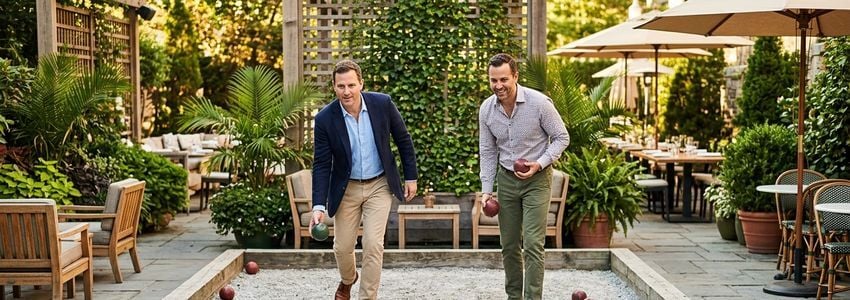
Bocce Ball Court Construction Financing: The Complete Guide for Business Owners
Bocce ball has quietly become one of the most in-demand outdoor amenities in American hospitality and community real estate. Restaurants, breweries, boutique hotels, country clubs, and homeowners associations are installing courts to give guests a reason to linger, order another round, and come back next weekend. But building a court the right way, with proper drainage, a durable surface, and lighting for evening play, costs real money, and most business owners do not want to pull that cash out of working capital. That is where bocce ball court construction financing comes in.
In This Article
- What Is Bocce Ball Court Construction Financing?
- Why Businesses Are Adding Bocce Courts
- How the Financing Works
- Types of Financing Options
- What a Bocce Court Actually Costs
- Who Should Consider This Financing
- Financing vs. Paying Cash
- How Crestmont Capital Helps
- Real-World Scenarios
- How to Apply
- FAQ
- Next Steps
What Is Bocce Ball Court Construction Financing?
Bocce ball court construction financing is business capital used specifically to fund the design, site preparation, materials, and installation of a commercial bocce court. It is not a residential home improvement loan. It is structured for businesses, meaning lenders evaluate the project based on the company's revenue, time in business, and creditworthiness rather than personal home equity.
This type of financing can cover the full scope of a project: excavation and grading, sub-base and drainage systems, the playing surface itself (crushed oyster shell, decomposed granite, synthetic turf, or an engineered composite), border and edging materials, lighting, seating, shade structures, and even bocce equipment like balls, scoreboards, and storage.
Because a bocce court is a physical improvement to commercial property, it can be financed through several different loan structures depending on how the project is scoped, whether it is treated as equipment, a leasehold improvement, or part of a broader property upgrade.
Lenders generally look at this category of financing the same way they would evaluate any other commercial property improvement or equipment purchase: they want to understand the total project cost, how the improvement supports the business's revenue model, and how repayment will be handled out of ongoing cash flow. A bocce court is a relatively low-risk, high-visibility improvement compared to more specialized equipment, which is one reason many lenders, including Crestmont Capital, are comfortable financing these projects for qualified businesses.
It is also worth noting that bocce court financing is rarely a standalone product on a lender's rate sheet. Instead, it typically falls under a broader financing category, such as equipment financing, commercial financing, or working capital, and the lender structures the specific terms, amount, and repayment schedule around your project scope and business profile.
Why Businesses Are Adding Bocce Courts
The rise of "experiential" hospitality is not a passing fad. Guests, especially younger diners and drinkers, increasingly choose venues based on what they can do there, not just what they can eat or drink. A bocce court gives a restaurant patio, brewery beer garden, or hotel lawn a built-in activity that keeps people on-site longer.
- Longer guest dwell time typically translates into higher food and beverage spend per visit
- A signature outdoor amenity differentiates a venue from competitors in a crowded market
- Courts support private events, league nights, and corporate outings, opening new revenue streams
- Bocce appeals across age groups, making it a low-barrier activity for families, couples, and groups of friends alike
- Community associations and senior living communities use courts to boost resident satisfaction and property appeal
According to U.S. Census Bureau data, there are more than 714,000 food service and drinking establishments operating in the United States. In a market that dense, standing out matters, and physical amenities that create memorable experiences are one of the most effective ways independent operators compete with larger chains.
Hospitality operators are not the only ones paying attention. Real estate developers building mixed-use projects, apartment communities competing for renters, and even corporate campuses looking to improve employee wellness and retention are adding outdoor game amenities as a differentiator. A bocce court requires far less space and long-term maintenance than a pool or full sport court, which makes it an attractive option for properties with limited outdoor square footage.
There is also a generational shift worth noting. Younger consumers, particularly Gen Z and younger millennials, consistently tell researchers they value experiences over material purchases, and they are more likely to choose a venue based on what they can do there rather than the menu alone. A bocce court, cornhole set, or similar low-barrier game gives a venue a built-in reason to be chosen over a competitor with a similar menu and price point but no activity to offer.
Key Stat: Some operators report outdoor amenity additions, including game courts and expanded patio space, contribute to a meaningful lift in overall visit spend by keeping guests on-site through additional rounds of food and drinks.
Ready to Build Your Bocce Court?
Get fast, flexible financing from the #1 business lender in the U.S. No obligation, apply in minutes.
Apply Now →How Bocce Ball Court Construction Financing Works
The process generally follows the same structure as any other business financing product, with a few extra steps to account for the construction and contractor component of the project.
Step 1: Get a project estimate. Before applying, most business owners work with a landscape contractor, hardscape company, or sports court builder to get a written estimate covering site work, materials, and installation labor.
Step 2: Choose a financing structure. Depending on the size of the project, this could mean equipment financing for a prefab court kit, commercial financing for a full site build, an SBA loan for a larger amenity investment tied to a broader renovation, or a working capital loan or business line of credit for a smaller court addition.
Step 3: Submit an application. Lenders typically request basic business financials, such as recent bank statements, a completed application, and sometimes tax returns, along with the contractor estimate.
Step 4: Underwriting and approval. The lender reviews revenue, time in business, and credit profile. Straightforward equipment and working capital requests can often be approved within a day or two.
Step 5: Funding and construction. Once approved, funds are typically disbursed directly to the business, which then pays the contractor according to the project timeline. Some equipment-specific financing structures may pay a vendor directly for materials or prefabricated court components.
Types of Financing Options for Bocce Court Construction
There is no single "bocce court loan" product. Instead, business owners typically use one of several existing commercial financing structures, matched to the size and complexity of the project.
Equipment Financing
If the court involves a prefabricated kit, modular surface system, lighting package, or bundled equipment purchase, equipment financing is often the most efficient path. Terms are typically structured to match the useful life of the equipment, and approval can be faster than a traditional term loan.
Commercial Financing for Site Improvements
Larger builds involving excavation, drainage systems, retaining walls, and hardscape work often fall under general commercial financing, which can be structured around the total project cost rather than a single piece of equipment.
SBA Loans
SBA loans can be a strong fit when the bocce court is part of a broader property renovation or expansion, particularly for restaurants, hotels, and hospitality businesses looking for longer repayment terms and lower monthly payments.
Unsecured Working Capital Loans
For smaller court additions or businesses that want to avoid pledging specific collateral, unsecured working capital loans offer a fast, flexible way to fund the project using general business cash flow as the basis for approval.
Business Line of Credit
A business line of credit can be useful when project scope or costs are still being finalized, since it allows a business to draw funds as needed rather than taking a lump sum upfront.
By the Numbers
Bocce Ball Court Construction - Key Statistics
714K+
Food service and drinking establishments in the U.S. (Census Bureau)
$15K–$40K
Typical cost range for a commercial-grade bocce court build
30%
Average revenue lift some venues report from added outdoor amenities
5–7 Days
Typical funding turnaround for equipment and working capital financing
What Does It Actually Cost to Build a Commercial Bocce Court?
Cost depends heavily on court size, surface material, drainage requirements, and finishing touches like lighting and seating. Here is a general breakdown business owners can use when budgeting a project.
| Project Type | Typical Size | Estimated Cost Range |
|---|---|---|
| Basic single court, crushed stone surface | 40' x 10' | $6,000 – $12,000 |
| Commercial-grade court with drainage and lighting | 60' x 12' | $15,000 – $30,000 |
| Premium court with shade structure, seating, synthetic turf | 60' x 12' | $30,000 – $40,000+ |
| Multi-court complex (2 to 4 courts) | Varies | $45,000 – $90,000+ |
Key cost drivers include site grading and drainage (especially in areas with heavy rainfall or poor soil drainage), the choice between natural materials like crushed oyster shell versus lower-maintenance synthetic surfaces, border materials such as timber, paver, or metal edging, and add-ons like LED lighting for night play, pergolas or shade sails, and built-in seating.
Location and existing site conditions also matter. A flat, well-draining lot with easy contractor access will cost meaningfully less to prepare than a sloped site that requires retaining walls or extensive regrading. Businesses in regions with harsh winters may also want to budget for a slightly more durable base and drainage system to prevent frost heave and surface shifting over time.
Pro Tip: Ask your contractor for a phased estimate that separates site work, surface material, and finishing touches like lighting and seating. This makes it easier to right-size your financing request and avoid over-borrowing for features you may want to add later.
Who Should Consider Bocce Court Construction Financing
This type of financing tends to make the most sense for businesses where an outdoor amenity directly supports revenue, guest retention, or property value.
- Restaurants and gastropubs looking to activate underused patio or outdoor dining space
- Breweries, wineries, and taprooms building out beer gardens or outdoor seating areas
- Boutique hotels and resorts adding grounds amenities to compete for leisure travelers and event bookings
- Country clubs and private clubs expanding recreational offerings beyond golf and tennis
- Homeowners associations and residential communities upgrading clubhouse or common area amenities
- Senior living communities adding low-impact recreational activities for residents
- Event venues and corporate campuses looking to offer differentiated outdoor experiences for private events
For a related look at outdoor recreation financing, many of the same considerations apply to businesses researching pickleball business loans or disc golf course business loans, since all three fall under the broader category of outdoor amenity and recreational facility financing.
Financing vs. Paying Cash: Which Makes More Sense?
Many business owners could technically pay cash for a bocce court, but that does not always mean they should. Here is how the two approaches typically compare.
| Factor | Paying Cash | Financing |
|---|---|---|
| Impact on cash reserves | Reduces available working capital | Preserves cash for payroll, inventory, and emergencies |
| Speed to build | Limited by available savings | Can move forward as soon as approved |
| Predictability | One-time large outflow | Fixed, predictable monthly payments |
| Flexibility for other add-ons | May limit budget for lighting, seating, extras | Can bundle full project scope into one payment plan |
For most operators, the deciding factor comes down to opportunity cost. If cash sitting in reserve can otherwise cover payroll gaps, inventory purchases, or unexpected repairs, financing the court construction while preserving that liquidity is often the more resilient choice.
How Crestmont Capital Helps
Crestmont Capital works with restaurants, breweries, hospitality groups, clubs, and community associations to structure financing around real project needs rather than forcing every request into a single rigid product.
- Straightforward equipment financing for prefab court kits, lighting, and furnishings
- Commercial financing for full-scope site construction and hardscape work
- Access to SBA loans for larger renovation projects that include outdoor amenities
- Fast unsecured working capital for smaller builds with minimal paperwork
- Flexible business line of credit options for projects with evolving scope
Every application is reviewed with a straightforward view of the business, not just a credit score, which allows Crestmont to structure financing that fits both the project timeline and the operator's cash flow.
Crestmont Capital has worked with a wide range of hospitality and recreation businesses on similar amenity and property improvement projects, from restaurant business loans to financing for outdoor and indoor recreational facilities. That experience means the team understands the seasonal cash flow patterns common in hospitality, the importance of getting a project funded before peak season, and how to structure repayment so it does not strain day-to-day operations.
Turn Unused Outdoor Space Into a Revenue Driver
Whether you run a restaurant, brewery, hotel, or private club, Crestmont Capital can help you finance the amenity your guests are asking for.
Apply Now →Real-World Scenarios
Scenario 1: The Craft Brewery Beer Garden
A regional craft brewery had an underused gravel lot next to its taproom. The owners financed a 60-foot regulation bocce court with synthetic turf and LED lighting through an equipment financing package, allowing them to host weekly league nights that consistently filled the taproom on what used to be a slow Tuesday.
Scenario 2: The Boutique Hotel Lawn Upgrade
A 40-room boutique hotel wanted to add grounds amenities ahead of wedding and event season. Using commercial financing bundled with a broader landscaping project, the hotel added two bocce courts near its event lawn, which it now markets directly to event planners as a differentiator against larger chain properties.
Scenario 3: The HOA Clubhouse Amenity
A homeowners association board approved a bocce court addition to its clubhouse grounds after resident surveys showed strong demand for low-impact recreational amenities. The association used a working capital loan to fund the project without dipping into its reserve fund.
Scenario 4: The Country Club Expansion
A private country club expanded beyond its golf and tennis offerings by adding a three-court bocce complex near its clubhouse patio, financed through an SBA loan tied to a broader clubhouse renovation. The courts are now booked for member events and casual weekend play alike.
Scenario 5: The Restaurant Patio Activation
An independent Italian restaurant converted an unused side patio into a single bocce court to complement its outdoor dining area. The relatively small project was financed with a short-term unsecured working capital loan, and the restaurant now hosts a monthly bocce and wine pairing night that consistently sells out.
How to Apply for Bocce Court Construction Financing
Quick Guide
How the Application Process Works, At a Glance
Request a written quote covering site work, materials, and labor.
Pull recent bank statements and, if needed, tax returns.
Provide your estimate and financials for review.
Receive funds and move forward with construction on your timeline.
Documentation requirements vary by financing type. Equipment financing and unsecured working capital loans often require minimal paperwork, while SBA loans and larger commercial financing packages typically require more detailed financial history and project documentation.
It helps to plan your application timeline around your busy season. Hospitality operators in particular should aim to apply, get funded, and complete construction before their peak months, whether that is patio season for a restaurant, summer for a resort, or wedding season for an event venue, so the amenity is ready to generate revenue when demand is highest.
Frequently Asked Questions
Give Your Guests a Reason to Stay Longer
Apply today and find out how quickly you can fund your bocce court project.
Apply Now →Next Steps
Get a written estimate from a landscape or hardscape contractor for your specific site.
Decide which financing structure fits your project size and timeline.
Apply with Crestmont Capital to see what financing options you qualify for.
Conclusion
Bocce ball court construction financing gives restaurants, breweries, hotels, clubs, and communities a practical way to add one of the most in-demand outdoor amenities in hospitality today without draining cash reserves. Whether the project calls for a simple single-court build or a multi-court complex with lighting and shade structures, the right financing structure can turn an underused patch of outdoor space into a revenue-generating amenity guests keep coming back for. If you are ready to explore financing for your project, Crestmont Capital can help you find a structure that fits your business and your timeline.
Disclaimer: The information provided in this article is for general educational purposes only and is not financial, legal, or tax advice. Funding terms, qualifications, and product availability may vary and are subject to change without notice. Crestmont Capital does not guarantee approval, rates, or specific outcomes. For personalized information about your business funding options, contact our team directly.








