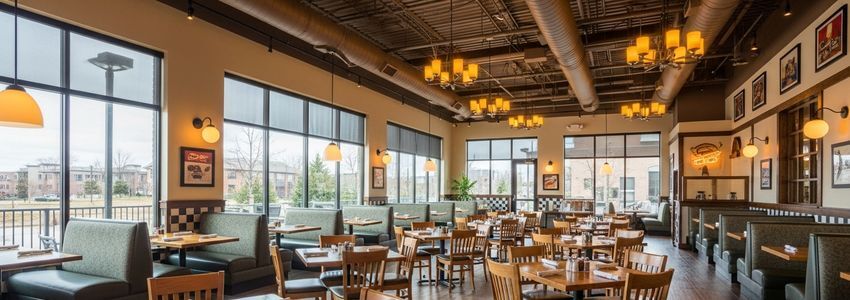
If you're researching the Village Inn franchise cost and how to fund your investment, you've come to the right place. Village Inn is one of America's most recognized family dining brands, with decades of heritage built around made-from-scratch pies and classic breakfast fare. Opening a Village Inn franchise is a significant business opportunity, but it also requires substantial upfront capital. Whether you're a first-time franchisee or a seasoned multi-unit operator, understanding your Village Inn franchise financing options is the critical first step toward ownership.
In This Article
What Is Village Inn?
Village Inn is a beloved American family dining chain with roots going back to 1958, when the first location opened in Denver, Colorado. The brand has grown into a franchise system with hundreds of locations across the United States, primarily in the Midwest, Mountain West, and Sun Belt states. Village Inn is operated under the Bakers Square Restaurant brand portfolio and is known for its iconic pies, hearty breakfast offerings, and affordable comfort food that appeals to a broad demographic of families, retirees, and value-conscious diners.
What makes Village Inn an attractive franchise opportunity is its recognition in markets where it operates, its strong breakfast and brunch positioning -- a dining segment that has proven recession-resistant -- and its support infrastructure for franchisees. The brand's emphasis on all-day breakfast, pie baking, and family-friendly service has helped it maintain loyal customer bases in communities across the country.
Village Inn franchisees benefit from a proven operating model, national supply chain relationships, ongoing marketing support, and training programs designed to help new operators succeed from day one. For entrepreneurs looking to enter the casual dining franchise space without the sky-high costs associated with some national brands, Village Inn represents a compelling middle-ground investment.
If you're seriously considering Village Inn as your franchise of choice, understanding both the financial requirements and the available funding mechanisms is essential before you make any commitments. That's exactly what this guide is designed to help you do.
Ready to Finance Your Village Inn Franchise?
Get fast, flexible financing from the #1 business lender in the U.S. No obligation -- apply in minutes.
Apply Now ->Village Inn Franchise Cost Breakdown
Understanding the full Village Inn franchise cost is the foundation of any financing plan. Village Inn franchise investment costs vary depending on whether you're converting an existing restaurant location or building from the ground up, your market's real estate costs, and the size of the restaurant footprint. Here is a detailed breakdown of what you can expect to invest:
Initial Franchise Fee
The Village Inn initial franchise fee typically ranges from $35,000 to $50,000. This one-time fee grants you the right to use the Village Inn brand, operating systems, training programs, and ongoing franchisor support. The fee varies based on territory exclusivity and negotiated terms.
Real Estate and Construction Costs
Building or renovating a Village Inn location is typically the largest line-item expense. New construction costs for a full-service family dining restaurant can range from $800,000 to $2,000,000 depending on location, local construction costs, and land acquisition. If you're converting an existing restaurant, costs will be lower -- typically in the $300,000 to $700,000 range for renovations and build-out.
Equipment and Fixtures
Commercial kitchen equipment, dining room furniture, pie display cases, point-of-sale systems, and other essential fixtures typically cost between $150,000 and $400,000. Village Inn's menu requires specialized pie-baking and breakfast equipment in addition to standard restaurant gear.
Signage and Decor
Brand-compliant exterior and interior signage, Village Inn branded decor elements, and the distinctive pie display cases and countertops run approximately $30,000 to $80,000.
Initial Inventory and Supplies
Opening inventory including food products, paper goods, cleaning supplies, and uniforms typically costs $20,000 to $40,000.
Working Capital Reserve
Franchisors typically require you to have a working capital reserve to cover operations during the ramp-up period. For Village Inn, this is typically estimated at $75,000 to $150,000 for the first three to six months of operation.
Total Estimated Investment
All-in, the total Village Inn franchise investment typically falls in the range of $500,000 to $2,500,000, with the median new-build investment around $1.2 million to $1.8 million. This wide range reflects the significant impact of real estate decisions -- a conversion in a lower-cost market is far more affordable than a ground-up build in a high-cost urban area.
Village Inn Franchise: By the Numbers
Financing Options for Your Village Inn Franchise
The good news for aspiring Village Inn franchisees is that multiple financing pathways exist to help you fund your investment. Most franchisees don't pay for the entire investment out of pocket -- they leverage a combination of financing products to cover different parts of the project. Here's an overview of the main financing categories available:
- SBA 7(a) Loans -- The gold standard for franchise financing, offering up to $5 million with favorable terms
- SBA 504 Loans -- Ideal for real estate and major equipment purchases, with fixed-rate long-term financing
- Conventional Business Loans -- Traditional term loans from banks and alternative lenders
- Equipment Financing -- Asset-backed loans specifically for kitchen and restaurant equipment
- Business Lines of Credit -- Flexible revolving credit for working capital and operational needs
- Rollover for Business Startups (ROBS) -- Use retirement funds without early withdrawal penalties
- Alternative Lenders -- Faster approvals with more flexible qualification criteria
The right mix for your situation depends on your credit profile, available collateral, liquidity, and timeline. Let's explore each major financing category in detail.
SBA Loans for Village Inn Franchise Financing
The U.S. Small Business Administration (SBA) offers loan programs specifically designed to help entrepreneurs like you access affordable capital for business investments including franchise purchases. According to the SBA's official lending programs page, SBA loans offer government-backed guarantees that reduce lender risk and enable you to access larger loan amounts with better terms than conventional financing alone.
For Village Inn franchise financing, the two most relevant SBA programs are:
SBA 7(a) Loan Program
The SBA 7(a) loan is the most popular and versatile SBA financing option for franchisees. Key features include:
- Loan amounts up to $5 million
- Repayment terms up to 10 years for working capital and equipment, up to 25 years for real estate
- Interest rates typically prime plus 2.25% to 4.75%, making them highly competitive
- Down payment requirements typically 10-20% of total project cost
- Can cover franchise fees, construction, equipment, working capital, and more
Village Inn is a recognized franchise brand, which works in your favor with SBA lenders who prefer established systems with proven unit economics. Many SBA-approved lenders have experience financing family dining franchises and understand the Village Inn business model.
SBA 504 Loan Program
The SBA 504 loan is ideal if you're purchasing land, building a new location, or acquiring a major piece of commercial real estate for your Village Inn. Key features include:
- Fixed, below-market interest rates for the SBA-backed portion
- Loan amounts up to $5.5 million for the SBA debenture portion
- Terms of 10, 20, or 25 years
- Typically requires 10% equity injection from the borrower
- Structured as a partnership between a conventional lender (50%), SBA-backed CDC (40%), and borrower equity (10%)
For franchisees pursuing a ground-up build or real estate purchase, the SBA 504 can significantly reduce your borrowing costs compared to conventional real estate loans. Crestmont Capital works with SBA lenders who specialize in this product for franchise investors.
Learn more about SBA loan options for franchisees through Crestmont Capital's dedicated SBA financing team.
Equipment Financing for Village Inn
A Village Inn restaurant requires significant commercial kitchen equipment: commercial ranges, ovens, pie baking equipment, refrigeration units, prep tables, dishwashers, point-of-sale systems, and much more. Rather than depleting your cash reserves or taking out a larger general business loan to cover equipment costs, equipment financing lets you use the equipment itself as collateral.
Key advantages of equipment financing for Village Inn franchisees:
- Preserve cash flow -- Spread costs over 3-7 years rather than paying upfront
- Faster approval -- Asset-backed loans have simpler underwriting than SBA loans
- Tax advantages -- Equipment depreciation and Section 179 deductions may apply (consult a tax professional)
- No additional collateral needed -- The equipment itself secures the loan
- Matches useful life -- Loan terms typically align with equipment lifespan
Village Inn equipment needs can easily run $150,000 to $400,000. Equipment financing allows you to fund this substantial cost separately from your real estate and franchise fee financing, optimizing your overall capital structure. Explore equipment financing options that Crestmont Capital offers for restaurant operators.
Working Capital Solutions for Village Inn Operators
Even with perfect planning, new restaurant franchises require financial cushion during the ramp-up phase. Staff training, inventory management, marketing spend, and the inevitable early-stage operational learning curve all consume cash. A business line of credit is one of the most valuable tools you can have as a new Village Inn franchisee.
A business line of credit provides revolving access to capital that you draw on as needed and repay over time. Unlike a term loan where you receive a lump sum, a line of credit gives you flexibility to manage cash flow seasonally and handle unexpected expenses without stress.
Additionally, as your Village Inn location stabilizes and generates consistent revenue, short-term business loans can be used for specific capital needs like equipment upgrades, marketing campaigns, or bridging seasonal gaps. And for long-term expansion -- adding a second or third Village Inn location -- long-term business loans provide the structured capital needed for major growth investments.
Need Working Capital for Your Village Inn Launch?
Crestmont Capital offers flexible lines of credit and working capital loans designed for franchise operators. Apply in minutes with no obligation.
Apply Now ->Financing Requirements for Village Inn Franchise Loans
Understanding what lenders look for when evaluating a Village Inn franchise loan application helps you prepare your strongest possible case. While requirements vary by lender and loan type, here are the standard benchmarks across major financing categories:
Credit Score Requirements
For SBA loans, most lenders prefer a personal credit score of 680 or higher, though some SBA lenders will consider scores down to 650 with compensating factors. For conventional bank loans, scores of 700+ are typically required. Alternative and non-bank lenders may work with credit scores as low as 600, making them a viable option for franchisees still rebuilding credit.
If your credit score needs improvement, Crestmont Capital's bad credit business loan options may still provide pathways to funding based on your overall financial picture rather than score alone.
Liquid Capital and Down Payment
Most franchise lenders require you to demonstrate liquid capital (cash, marketable securities, retirement accounts) equivalent to at least 10-30% of the total project cost. For a $1.2 million Village Inn investment, that means $120,000 to $360,000 in verifiable liquid assets. The SBA's standard equity injection requirement is typically 10-20%.
Industry and Business Experience
Prior restaurant or foodservice management experience significantly strengthens your loan application. Franchisors often require evidence of management capability, and lenders look for this too. If you're a first-time operator, partnering with an experienced restaurant manager or having a strong management team in place can compensate for limited personal experience.
Franchise Disclosure Document (FDD) Review
Lenders financing franchise investments will typically request a copy of Village Inn's Franchise Disclosure Document. The FDD provides critical information about the franchise system's financials, obligations, and performance data. Reviewing the FDD with a franchise attorney before applying for financing is strongly recommended.
Business Plan and Financial Projections
A comprehensive business plan with realistic financial projections is required for most SBA and conventional loans. Your plan should include startup cost summaries, projected income statements for 3-5 years, market analysis for your target location, and your management approach. Lenders want to see that you've done thorough homework on your Village Inn investment.
Collateral
Many franchise loans are secured by the assets being financed (real estate, equipment) plus personal guarantees from all owners with 20% or more ownership. If you own other real estate or business assets, these may also be available as collateral to strengthen your loan application.
How Crestmont Capital Helps Village Inn Franchisees
Crestmont Capital is America's #1 rated business lender, with deep expertise in franchise financing across dozens of franchise systems. When you work with Crestmont Capital for your Village Inn franchise loan, you get:
- Access to 75+ lending partners -- We match your profile with the right lenders from our extensive network, giving you competitive options rather than a single take-it-or-leave-it offer
- SBA expertise -- Our SBA specialists know the nuances of franchise SBA applications and help you navigate the process efficiently
- Fast pre-qualifications -- Know where you stand within hours, not weeks
- Flexible options for all credit profiles -- Whether you have excellent credit or you're working through challenges, we have products designed for your situation
- Dedicated franchise financing advisors -- Our team understands the unique dynamics of franchise investments and provides guidance beyond just the loan
- Multiple product access -- SBA loans, equipment financing, lines of credit, and more through a single application process
According to Forbes Advisor's guide to franchise loans, working with a lender experienced in franchise financing can significantly improve your approval odds and terms compared to approaching a general business lender unfamiliar with franchise dynamics.
Crestmont Capital has funded franchise investments ranging from single-unit launches to multi-unit expansion projects. Our goal is to be your long-term funding partner as your Village Inn business grows.
Our small business loans and specialized franchise products are structured to meet the specific cash flow patterns of restaurant businesses, with repayment terms and structures that match your revenue cycle rather than forcing you into one-size-fits-all loan products.
Real-World Village Inn Franchise Financing Scenarios
To make this more concrete, here are four realistic scenarios illustrating how Village Inn franchisees have structured their financing:
Scenario 1: First-Time Franchisee, Conversion Unit
Profile: Lisa, a former restaurant manager with 12 years of experience, wants to convert an existing casual dining space into a Village Inn in a mid-size Midwest city.
Total investment: $650,000 (lower due to existing kitchen infrastructure)
Financing structure:
- SBA 7(a) loan: $500,000 (10-year term)
- Personal equity injection: $100,000
- Equipment financing line: $50,000
Result: Lisa leveraged her industry experience and the existing location's lower build-out costs to keep her SBA loan at a manageable size. Her monthly payments allowed her to break even by month six.
Scenario 2: Multi-Unit Operator Expansion
Profile: Marcus owns two successful fast-casual franchise locations and wants to add a Village Inn to diversify into the family dining segment.
Total investment: $1,500,000 (ground-up construction)
Financing structure:
- SBA 504 loan (real estate + construction): $1,000,000
- Equipment financing: $300,000
- Business line of credit (working capital): $150,000
- Equity injection from existing business cash flow: $50,000
Result: Marcus used his existing franchise track record and business cash flow as collateral strength. The SBA 504 locked in a below-market fixed rate on the real estate, and the equipment line preserved his operational cash.
Scenario 3: Couple Purchasing Existing Village Inn
Profile: David and Karen want to purchase an existing Village Inn franchise from a retiring owner rather than building new.
Total investment: $800,000 (franchise resale purchase)
Financing structure:
- SBA 7(a) acquisition loan: $640,000
- Seller financing (negotiated): $80,000 (10% of purchase price)
- Personal down payment: $80,000
Result: Purchasing an existing location meant David and Karen acquired an already-operating business with established revenue -- making lender approval more straightforward than a startup loan. They needed less liquid capital and got operational immediately.
Scenario 4: Rural Market Operator with Credit Challenges
Profile: James has strong restaurant management experience but a credit score of 615 due to past medical debt, and wants to open a Village Inn in an underserved rural market.
Total investment: $550,000 (smaller conversion unit)
Financing structure:
- Alternative lender term loan: $350,000
- Equipment financing: $120,000
- Personal savings: $80,000
Result: While James couldn't qualify for SBA at his credit score, an alternative lender evaluated his full financial picture -- including 15 years of management experience and a strong business plan. He secured funding through Crestmont Capital's alternative lending network and plans to refinance to SBA within 18 months after building a stronger business credit profile.
As CNBC reports, alternative lenders have become an increasingly important part of the small business funding ecosystem, particularly for borrowers who don't yet meet traditional bank criteria.
How to Finance a Village Inn Franchise Step by Step
Here is a step-by-step roadmap for securing Village Inn franchise financing:
- Review the FDD: Obtain and review Village Inn's Franchise Disclosure Document with a qualified franchise attorney before making any financial commitments.
- Assess your financial position: Pull your personal credit reports, calculate your liquid assets, and understand your net worth. This is the baseline lenders will evaluate.
- Define your total project cost: Get contractor bids, equipment quotes, and all-in estimates so you know exactly how much capital you need.
- Determine your equity injection: How much are you contributing? SBA loans typically require 10-20%. More equity generally means better rates and terms.
- Apply through Crestmont Capital: Submit a single application to access 75+ lending partners. Our team identifies the optimal mix of SBA, equipment, and working capital financing for your specific situation.
- Prepare your business plan: Work with our advisors and your accountant to develop financial projections and a business plan that satisfies lender requirements.
- Close your financing: Once approved, coordinate closing timelines with the franchisor, real estate team, and lender to align your funding with your opening schedule.
For franchisees who need capital quickly -- perhaps to secure a specific location before it's taken by another operator -- Crestmont Capital also offers fast business loans that can bridge timing gaps while longer-term SBA financing is processed.
Frequently Asked Questions
How much does a Village Inn franchise cost in total? +
The total Village Inn franchise investment typically ranges from $500,000 to $2,500,000 depending on location, whether you're building new or converting an existing space, and local real estate costs. A mid-range estimate for a conversion unit is around $600,000 to $900,000, while a new build can run $1.2 million to $2 million or more.
What is the Village Inn franchise fee? +
Village Inn's initial franchise fee is typically in the range of $35,000 to $50,000. This fee is paid at the time of signing the franchise agreement and grants you the license to operate under the Village Inn brand and system. The franchise fee is a one-time payment and is separate from ongoing royalties.
What royalty rate does Village Inn charge franchisees? +
Village Inn franchisees typically pay a royalty rate of approximately 4-5% of gross sales on an ongoing basis. There is also typically a marketing fund contribution, often around 1-2% of gross sales, that goes toward national and regional advertising and marketing programs. These ongoing fees should be factored into your financial projections.
Can I get an SBA loan for a Village Inn franchise? +
Yes. Village Inn is an established franchise brand, which makes it a viable candidate for SBA 7(a) and SBA 504 financing. SBA loans offer up to $5 million with terms of 10-25 years and competitive interest rates. You'll generally need a credit score of 680+, relevant experience, and the ability to inject 10-20% equity to qualify for SBA franchise financing.
What credit score do I need for a Village Inn franchise loan? +
For SBA loans, most lenders prefer a personal credit score of 680 or higher. Conventional bank loans typically require 700+. Alternative lenders may work with scores as low as 600. If your credit score needs work, Crestmont Capital can still explore options through our network of alternative lenders who evaluate your overall financial profile rather than score alone.
How much liquid capital do I need to open a Village Inn franchise? +
Most lenders require you to demonstrate liquid capital (cash, marketable securities, retirement accounts) of at least 10-30% of the total project cost. For a $1 million Village Inn investment, that means roughly $100,000 to $300,000 in verifiable liquid assets. Village Inn itself may have additional net worth or liquidity requirements outlined in the FDD.
Does Village Inn offer any financing assistance to franchisees? +
Like many franchise systems, Village Inn may have relationships with preferred lenders or financial partners, and these will typically be disclosed in the FDD under Item 10. However, you are not required to use franchisor-referred lenders, and working with a third-party lender like Crestmont Capital often gives you access to more competitive rates and terms through a broader marketplace.
How long does it take to get approved for a franchise loan? +
Approval timelines vary by loan type. SBA loans typically take 30-90 days from application to funding. Conventional bank loans are similar. Alternative lenders can approve and fund in as little as 24-72 hours for smaller amounts. Equipment financing typically takes 1-5 business days. Crestmont Capital can give you a pre-qualification decision within hours of receiving your application.
Can I use retirement funds (ROBS) to finance a Village Inn franchise? +
Yes. Rollover for Business Startups (ROBS) is a legal strategy that allows you to use funds from your 401(k) or IRA to invest in your franchise without triggering early withdrawal penalties or taxes. ROBS requires a specific corporate structure (C-Corp) and ongoing compliance. Many Village Inn franchisees use ROBS either as their primary equity injection or in combination with SBA financing. Consult a ROBS specialist and attorney before pursuing this strategy.
Is it easier to get financing for an existing Village Inn versus a new build? +
Generally, yes. Acquiring an existing, operating Village Inn franchise is often easier to finance because the business has historical revenue data, an established customer base, and proven cash flow -- all of which reduce lender risk. New builds are startup situations that require stronger projections and typically more equity. Both are financeable, but existing acquisitions tend to get faster approvals with more favorable terms.
What documents do I need to apply for a Village Inn franchise loan? +
Typical documentation requirements include: personal and business tax returns (3 years), personal financial statement, business plan with financial projections, resume/CV showing relevant experience, Village Inn FDD, franchise agreement draft, real estate lease or purchase agreement, construction/renovation bids, equipment quotes, and government-issued ID. Crestmont Capital's team will provide a tailored document checklist based on your specific loan type.
Can I finance multiple Village Inn locations at once? +
Multi-unit financing is possible but complex. Most lenders prefer you to demonstrate the success of your first location before extending financing for additional units. However, experienced multi-unit operators with strong financial profiles can sometimes secure financing for multiple units simultaneously or through staged financing agreements. Crestmont Capital has experience structuring multi-unit franchise financing packages.
What is the difference between a franchise fee and ongoing royalties? +
The franchise fee is a one-time upfront payment made at the beginning of your franchise relationship -- it grants you the license to operate under the Village Inn brand. Royalties are ongoing fees (typically a percentage of gross sales) paid to the franchisor throughout the life of your franchise agreement in exchange for continued use of the brand, systems, and ongoing support. Both are legitimate operating costs that should be factored into your financial projections.
How does equipment financing work for a restaurant franchise? +
Equipment financing for a restaurant franchise works by using the equipment itself as collateral for the loan. You borrow the money to purchase equipment, make monthly payments over a set term (typically 3-7 years), and own the equipment outright when the loan is paid off. This preserves your working capital for operations rather than tying it up in large equipment purchases. Approval is faster than SBA loans because the collateral is straightforward.
Why choose Crestmont Capital over my local bank for franchise financing? +
Your local bank offers one set of products and criteria. Crestmont Capital gives you access to 75+ lenders through a single application, including SBA specialists, equipment financiers, alternative lenders, and more. Our franchise financing advisors know the Village Inn investment profile and can structure a financing package that optimizes your terms across multiple products. You get competitive options, expert guidance, and a partner who understands franchise businesses -- not just a one-size-fits-all bank loan.
How to Get Started
Complete our quick, no-obligation application at offers.crestmontcapital.com/apply-now. It takes about 5 minutes and doesn't affect your credit score.
A dedicated Crestmont Capital advisor will review your profile, discuss your Village Inn investment goals, and identify the best financing options from our network of 75+ lenders. You'll receive a pre-qualification decision within hours.
Once approved, we coordinate with your franchisor, real estate team, and legal counsel to align funding timelines with your opening schedule. Our team stays with you through closing to ensure a smooth, timely process so you can focus on launching your business.
Start Your Village Inn Journey Today
Join hundreds of franchise operators who have funded their businesses through Crestmont Capital. Apply now and get a financing decision within hours -- not weeks.
Apply Now ->Conclusion
Investing in a Village Inn franchise is a substantial commitment -- one that requires careful financial planning and access to the right capital. The good news is that multiple financing pathways are available to help you achieve your ownership goals, from SBA loans and equipment financing to business lines of credit and alternative lending options.
The Village Inn brand brings decades of recognition, a loyal customer base, and a proven operating model to the table. Your job as a prospective franchisee is to ensure your financial foundation is equally strong. That means understanding your total investment requirements, knowing your credit profile, having realistic financial projections, and working with a lender who understands franchise businesses.
Crestmont Capital is America's #1 rated business lender, with expertise in franchise financing across the spectrum of loan products and credit profiles. Whether you're exploring your first franchise investment or expanding your portfolio, our team is ready to help you structure the financing that gets your Village Inn open and operating.
Don't let financing complexity slow you down. The right franchise location won't wait forever -- and neither should you. Apply online today and take the first real step toward Village Inn franchise ownership.
Disclaimer: The information provided in this article is for general educational purposes only and is not financial, legal, or tax advice. Funding terms, qualifications, and product availability may vary and are subject to change without notice. Crestmont Capital does not guarantee approval, rates, or specific outcomes. For personalized information about your business funding options, contact our team directly.

Allan Garfinkle
Allan Garfinkle is the Chief Revenue Officer at Crestmont Capital, where he has spent more than a decade leading revenue strategy, business development, and operational growth. With 28 years of experience building and advising startups and small businesses, Allan has helped more than 10,000 business owners navigate financing decisions, growth opportunities, and changing economic conditions. He earned a Bachelor of Science in Economics and an MBA with a concentration in Finance from Northeastern University, as well as a Juris Doctor from New England Law, where his studies focused on contracts and business law. His writing draws on extensive practical experience in small-business lending, equipment financing, business credit, and commercial finance.