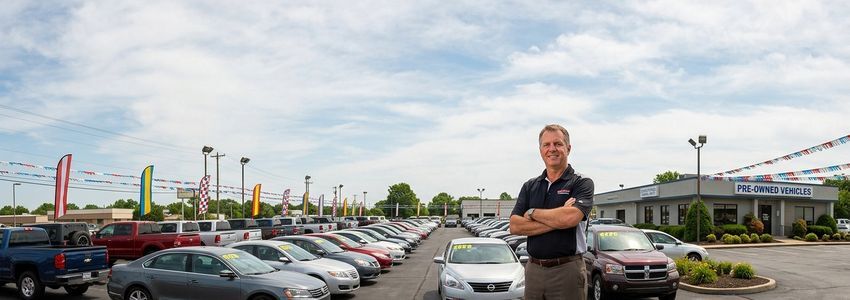
Running an independent used car dealership requires constant capital. You need funds to purchase inventory at auction, recondition vehicles, pay for lot rent, staff your team, and cover the slow months when floor traffic dips. Unlike franchised new car dealers who benefit from manufacturer incentive programs and established lending relationships, independent used car dealers often have to find financing on their own terms. A used car dealership business loan gives you the working capital, equipment financing, and inventory funding you need to keep your lot stocked and your business growing.
This guide covers every financing option available to independent and used car dealers, how to qualify, and how Crestmont Capital can help you get funded fast.
In This Article
- What Is a Used Car Dealership Business Loan?
- Why Independent Dealers Need Specialized Financing
- Types of Financing for Used Car Dealers
- How a Used Car Dealer Loan Works
- What Lenders Look For
- How Crestmont Capital Helps
- Real-World Scenarios
- Loan Type Comparison
- Frequently Asked Questions
- How to Get Started
What Is a Used Car Dealership Business Loan?
A used car dealership business loan is a commercial financing product designed to help independent and pre-owned auto dealers cover the operational and growth costs unique to their industry. These loans differ from standard small business loans because they account for the specific cash flow cycles, inventory needs, and risk profiles of used car operations.
Independent dealerships operate in a fundamentally different financial environment than franchise new car dealers. You don't have a manufacturer supplying vehicles on consignment or providing co-op advertising funds. Every vehicle on your lot represents capital you've deployed, and every day a car sits unsold is a day that capital isn't working for you. Financing tools designed for your industry help you manage these dynamics without draining your operating reserves.
According to the Small Business Administration, access to capital is one of the top challenges facing small business owners in the United States. For used car dealers specifically, this challenge is compounded by the capital-intensive nature of maintaining an inventory that can turn over every 30 to 90 days.
Industry Snapshot: There are approximately 130,000 used car dealerships operating in the United States, the vast majority of which are independent operations without franchise backing. These dealers collectively sell tens of millions of vehicles annually and generate hundreds of billions in revenue - yet they often struggle to access the same financing tools available to larger franchise operations.
Why Independent Used Car Dealers Need Specialized Financing
Independent used car dealerships face a set of financial pressures that are distinct from virtually any other small business. Understanding these pressures is the first step toward choosing the right financing product for your situation.
Inventory Is Your Largest Expense - and It Moves Fast
Your inventory is not a static asset. Every car you acquire at auction or through trade-ins represents a capital outlay that must be recovered within a reasonable timeframe. If your lot holds 40 vehicles averaging $12,000 each, you have $480,000 tied up in inventory at any given moment. When a hot car sells in three days and you need to replace it quickly, you need capital that moves at the same speed as your business.
Traditional bank loans with 45 to 90 day approval timelines don't work for dealers who need to fund auction purchases on a weekly or biweekly basis. Used car dealership business loans from alternative and direct lenders can fund in 24 to 72 hours, which aligns with the pace of the automotive market.
Reconditioning Costs Add Up
Independent dealers rarely buy cars that go straight from the auction to the lot. Most pre-owned vehicles require some degree of reconditioning - from a simple detail and oil change to a full mechanical inspection, brake replacement, tire swap, and cosmetic repair. According to industry data reported by CNBC, average reconditioning costs per vehicle can range from $1,000 to $3,500 depending on the vehicle's condition and age. For a 40-car lot, that's anywhere from $40,000 to $140,000 in reconditioning expense per inventory cycle.
Seasonal Cash Flow Challenges
Used car sales are not uniform throughout the year. Tax refund season (February through April) and back-to-school season often drive strong sales. December and January are frequently slower months for many independent lots. A business line of credit or working capital loan can help you bridge slow periods without laying off staff or letting your inventory dwindle to an uncompetitive level.
No Manufacturer Support
Franchised new car dealers receive volume bonuses, co-op advertising dollars, and floor plan financing programs directly from manufacturers like Ford, GM, and Toyota. Independent used car dealers have none of these safety nets. Every dollar of advertising, every piece of equipment, every operational expense comes out of your own revenue or from financing you arrange yourself.
Ready to Fund Your Used Car Lot?
Crestmont Capital offers fast, flexible financing for independent auto dealers. Apply in minutes - no obligation.
Apply Now →Types of Financing Available for Used Car Dealerships
There is no single "used car dealer loan." Multiple financing products can serve different needs within the same dealership. Understanding each option helps you select the right tool for each specific challenge.
Working Capital Loans
A working capital loan is one of the most versatile financing tools for independent dealers. These loans provide a lump sum you can use for any operational purpose: payroll, advertising, utilities, insurance, lot maintenance, or reconditioning. They are not tied to specific asset purchases, which makes them flexible enough to address the unpredictable nature of running a used car lot.
Working capital loans from direct lenders typically carry terms of 6 to 24 months with fixed daily or weekly payments. They can be funded in as little as 24 hours, making them suitable for dealers who need capital quickly.
Business Line of Credit
A business line of credit works like a revolving credit facility. You're approved for a maximum credit limit, and you draw from it as needed - paying interest only on what you've used. As you repay, the credit replenishes and becomes available again.
For used car dealers, a line of credit is ideal for managing unpredictable cash flow needs. You might draw $30,000 in February to fund reconditioning on five vehicles, repay it when those cars sell in March, and then draw again in May for a different expense. This flexibility is difficult to replicate with term loans.
Inventory Financing and Floor Plan Loans
Traditional floor plan financing - where a lender finances specific vehicles and holds the title until each unit sells - is typically available to franchised dealers but can be harder to access for independent operations. However, inventory financing options exist that help independent dealers fund auction purchases, trade-in vehicles, and bulk acquisitions.
Some alternative lenders offer unsecured working capital that functions similarly to floor plan financing - providing capital for inventory without requiring the lender to hold individual vehicle titles. This is a faster and more flexible option for many independent dealers.
Equipment Financing
Every dealership needs equipment to operate efficiently: vehicle lifts, diagnostic tools, tire changers, detailing equipment, point-of-sale systems, and office technology. Equipment financing lets you acquire these assets while preserving your working capital for inventory and operations.
Equipment loans are secured by the equipment itself, which often means more favorable rates and terms than unsecured products. Terms typically range from 24 to 84 months, and payments are fixed and predictable - easy to plan around.
Short-Term Business Loans
Short-term business loans provide a quick infusion of capital that you repay over 3 to 18 months. For dealers who need to seize a time-sensitive opportunity - a large auction lot, a bulk purchase from a rental company, or a fleet acquisition - short-term loans deliver funds fast with minimal documentation requirements.
SBA Loans
The Small Business Administration's loan programs can provide larger capital amounts at more favorable terms than many conventional products. SBA loans are best suited for established dealers looking to finance significant expansion - a new lot, a facility purchase, or a major equipment overhaul. The tradeoff is that SBA programs take longer to process and require more documentation than alternative lending options.
Buy Here Pay Here (BHPH) Dealer Financing
Buy Here Pay Here dealerships that offer in-house financing to customers with poor credit have unique financing needs. BHPH dealers carry a portfolio of receivables (customer loan payments) on their books, which creates both an asset and a liability. Revenue-based financing products can advance capital against your BHPH receivables, giving you funds to purchase more inventory while your existing portfolio generates repayment.
By the Numbers
Used Car Dealership Industry at a Glance
130K+
Independent used car dealers operating in the U.S.
$1,500
Average reconditioning cost per vehicle before sale
24 Hrs
Typical funding time from alternative lenders like Crestmont
40M+
Used vehicles sold in the U.S. annually
How a Used Car Dealership Business Loan Works
The process of obtaining and using a used car dealership business loan is straightforward when you work with a lender who understands the auto industry. Here's how the process typically unfolds from application to funded capital.
Step 1: Determine Your Capital Need
Before applying for any financing, calculate exactly how much capital you need and what you'll use it for. Are you buying inventory at an upcoming auction? Covering payroll during a slow month? Expanding your lot with additional service equipment? Having a clear use-of-funds picture helps you choose the right product and the right amount - which in turn leads to better loan terms.
Step 2: Gather Basic Financial Documentation
Most alternative and direct lenders require minimal documentation compared to traditional banks. Typical requirements include three to six months of business bank statements, your dealer license, proof of business ownership, and basic information about your dealership's revenue and time in operation. You generally do not need to provide personal tax returns or audited financial statements.
Step 3: Submit Your Application
Online applications with modern lenders take five to fifteen minutes to complete. You'll provide basic business and personal information, connect your bank account for revenue verification, and indicate the amount and purpose of the loan. Some lenders use automated underwriting systems that can return a decision in minutes.
Step 4: Review Your Offer
Once approved, you'll receive an offer that includes the loan amount, factor rate or interest rate, repayment term, and daily or weekly payment amount. Review all terms carefully - pay close attention to the total cost of capital, not just the monthly payment. A shorter-term loan with higher payments may cost less overall than a longer-term product with lower payments.
Step 5: Receive Funds and Execute Your Plan
After accepting your offer and signing the loan agreement, funds are typically deposited into your business bank account within one to three business days. Some lenders can fund same-day. Once funded, you can deploy the capital immediately for your intended purpose.
What Lenders Look For When Financing Used Car Dealers
The qualification criteria for a used car dealership business loan vary by lender and product type. However, there are common factors that most lenders evaluate when reviewing an application from an independent auto dealer.
Time in Business
Most alternative lenders require a minimum of six months to one year in business. Established dealers with two or more years of operating history will qualify for larger amounts and better terms. If you're operating a relatively new dealership, you may still qualify for working capital loans, though amounts may be more modest initially.
Monthly Revenue
Lenders typically want to see consistent monthly revenue that supports the requested loan amount. A common benchmark is that your monthly loan payment should not exceed 10 to 15 percent of your average monthly revenue. For most dealer financing products, minimum monthly revenues of $10,000 to $25,000 are required.
Credit Profile
Unlike traditional bank loans that may require a 700+ personal credit score, many alternative lenders work with dealership owners across a wide range of credit profiles. Some products - including small business loans from direct lenders - are available to borrowers with scores as low as 550. Having a stronger credit profile will generally result in better rates and higher approval amounts.
Dealer License Status
You'll need to hold an active, valid dealer license in your state. Lenders will verify this as part of the underwriting process. Make sure your license is current and in good standing before applying.
Bank Account Health
Lenders will review three to six months of business bank statements to assess your average daily balance, consistency of deposits, and whether you have any history of overdrafts or returned payments. Keeping a clean bank account with consistent activity will help your approval odds significantly.
Pro Tip: If you're planning to apply for a used car dealership business loan, avoid large unexplained withdrawals or unusual transactions in the 90 days leading up to your application. Clean, consistent banking activity is one of the strongest signals of creditworthiness that alternative lenders use in their underwriting models.

How Crestmont Capital Helps Independent Used Car Dealers
Crestmont Capital is a direct business lender rated #1 in the United States. We specialize in funding businesses that traditional banks overlook - including independent used car dealerships that don't fit the standard lending mold. Whether you're a single-lot operation with 20 vehicles or a multi-location used car business with hundreds of units, we have financing solutions sized for your needs.
Unlike banks that may take 30 to 90 days to process a business loan, Crestmont Capital can approve and fund your dealership in as little as 24 hours. We evaluate your actual business performance rather than relying exclusively on credit scores and collateral, which means more independent dealers get approved.
Our lending team has experience working with used car dealerships across all 50 states, including Buy Here Pay Here operations, independent franchise-free lots, and dealers who specialize in specific vehicle categories like trucks, luxury vehicles, or high-mileage economy cars. We understand the seasonal nature of your business and the importance of having capital available when the right inventory opportunity presents itself.
For dealers who want to learn more about general car dealership financing options, see our resource on car dealership business loans which covers the full landscape of auto dealer financing.
Get Financing Built for Your Dealership
Crestmont works with independent used car dealers nationwide. Fast approvals, flexible terms, and no unnecessary red tape.
Apply Now →Real-World Scenarios: How Independent Dealers Use Business Loans
Understanding how other independent dealers have used business financing helps illustrate what's possible for your own operation. Here are several realistic scenarios that represent common use cases across the industry.
Scenario 1: Funding an Auction Buy
Marcus runs a 35-car lot in the Southeast. A regional auction announces an upcoming sale that includes a fleet of low-mileage corporate vehicles - exactly the type of inventory his customers want. The fleet is expected to go for $180,000 total. Marcus applies for a working capital loan of $200,000 on a Monday. Crestmont approves and funds the loan by Wednesday. Marcus attends the auction Thursday, purchases 15 vehicles at a strong price, reconditions them, and sells all 15 within six weeks - more than covering his loan cost and turning a healthy profit on the margin.
Scenario 2: BHPH Dealer Expanding In-House Financing
Tonya operates a Buy Here Pay Here lot and offers in-house financing to customers who can't qualify for traditional auto loans. Her business is generating strong receivables - customers making weekly payments on 60 vehicles. But her cash is tied up waiting for those payments to come in. She uses revenue-based financing to receive an advance against her receivables, which she deploys immediately to purchase 20 more vehicles at auction. Her BHPH portfolio grows, her revenue increases, and the advance repays itself as her customer payments flow in.
Scenario 3: Lot Expansion and Equipment Upgrade
David has operated a used truck dealership for five years. He's maxed out the physical capacity of his current lot and wants to lease additional adjacent space to display 15 more trucks. He also needs a commercial vehicle lift and advanced diagnostic equipment to service the trucks he sells. David uses equipment financing to cover the lift and diagnostic tools, and a working capital loan to fund the first three months of rent on the expanded space plus additional inventory. The increased lot capacity allows him to display higher-margin units and generate enough additional revenue to easily cover both loan payments.
Scenario 4: Surviving a Slow Season
Priya's dealership does great business from February through October. But November through January are slow, and she always finds herself burning through reserves to cover payroll, insurance, and utilities. This year, she takes out a business line of credit in October before the slow season begins. She draws $40,000 in November to cover operating costs, makes minimum payments in December and January, and then repays the balance in full when her February sales surge. The line of credit costs her a few thousand dollars in interest but saves her the stress of a cash crisis and lets her retain her entire team through the slow period.
Scenario 5: Rapid Lot Refresh Before Peak Season
James noticed that his inventory had gotten stale over a rough winter - too many high-mileage sedans, not enough trucks and SUVs that his customers were actually asking for. He uses a short-term business loan to fund a complete inventory refresh, liquidating his current vehicles at wholesale and purchasing a targeted mix of trucks, crossovers, and family SUVs. The refreshed inventory drives a 40 percent increase in his monthly sales volume for the next four months - well exceeding the cost of the loan.
Scenario 6: Emergency Roof Repair on Dealer Office
A severe storm damages the roof of Carla's dealership office. The repair estimate is $22,000. Her property insurance covers most of it, but she has a $7,500 deductible and won't see the insurance check for 45 days. She uses a short-term working capital advance to cover the full repair cost immediately - keeping her business operational and her team comfortable - then repays the loan with the insurance proceeds when they arrive.
Comparing Your Financing Options
Different loan products suit different dealer needs. This comparison table helps you identify the right fit for your specific situation:
| Loan Type | Best For | Typical Amount | Speed | Term |
|---|---|---|---|---|
| Working Capital Loan | Inventory, operations, reconditioning | $10K - $500K | 24-72 hours | 6-24 months |
| Business Line of Credit | Seasonal cash flow management | $25K - $250K | 2-5 days | Revolving |
| Equipment Financing | Lifts, diagnostic tools, technology | $5K - $500K | 2-5 days | 24-84 months |
| Short-Term Loan | Auction purchases, lot refresh | $10K - $250K | 24-48 hours | 3-18 months |
| Inventory Financing | Bulk vehicle purchases | $50K - $2M | 3-7 days | Per-unit revolving |
| SBA Loan | Facility purchase, major expansion | $50K - $5M | 30-90 days | Up to 25 years |
According to a Forbes analysis of small business lending, alternative lenders approve roughly 57 percent of small business loan applications compared to the 19 percent approval rate at large traditional banks. For independent dealers who may not have perfect credit or years of audited financial statements, the alternative lending market offers dramatically better access to capital.
Frequently Asked Questions
Can independent used car dealers qualify for business loans?
Yes. Independent used car dealers can qualify for a range of business loan products through alternative and direct lenders. While traditional banks may be reluctant to lend to independent dealers without extensive collateral and a long banking relationship, direct lenders evaluate your actual business revenue, bank account history, and time in business rather than focusing exclusively on collateral or credit score. Dealers with at least six months of operating history and consistent monthly revenue typically qualify for working capital loans, short-term loans, and lines of credit.
What credit score do I need to get a used car dealership business loan?
Requirements vary by lender and product. Traditional bank loans often require a personal credit score of 680 or above. Alternative and direct lenders like Crestmont Capital work with dealers across a wider range of credit profiles, sometimes as low as 550. Revenue-based products like merchant cash advances may have even more flexible credit requirements, prioritizing your monthly sales volume over your personal credit score. The higher your credit score, the better terms you'll typically receive - but a lower score does not automatically disqualify you.
How fast can I get funding for my used car dealership?
Working capital loans and short-term business loans from alternative lenders can fund in as little as 24 hours from approval. In some cases, same-day funding is available. Traditional bank loans and SBA loans take significantly longer - typically 30 to 90 days from application to funding. If you have a time-sensitive capital need, such as an upcoming auction or a bulk inventory purchase opportunity, a direct lender is almost always the right choice over a traditional bank.
Can I use a business loan to buy cars at auction?
Yes. Many independent dealers use working capital loans and short-term business loans to fund auction purchases. Because these loans are deposited into your business bank account as a lump sum, you can use them to pay for vehicles at any auction - whether that's a regional independent auction, an online digital auction, or a manufacturer closed auction you have access to. The key is to plan ahead and apply for funding before the auction date so that capital is available when you need it.
What documents do I need to apply for a used car dealer loan?
Most alternative lenders require minimal documentation. The standard application package includes three to six months of business bank statements, a copy of your active dealer license, basic business information (legal name, EIN, address), and the owner's personal information for a credit check. Some lenders may also ask for a simple profit and loss statement or your most recent business tax return. You generally do not need audited financials, property appraisals, or complex collateral documentation to qualify for working capital products.
Can Buy Here Pay Here dealers get business loans?
Yes. Buy Here Pay Here dealers can access working capital loans, lines of credit, and revenue-based financing products. BHPH operations actually have a compelling case for alternative lenders because they generate consistent, predictable cash flow from in-house customer payments. Some lenders will advance capital against your BHPH receivables portfolio, allowing you to fund more inventory purchases even while your existing receivables are still generating payments. The key is working with a lender familiar with the BHPH business model.
How much can I borrow for my used car dealership?
Loan amounts depend on your monthly revenue, time in business, credit profile, and the specific product you apply for. Most working capital loans for used car dealerships range from $10,000 to $500,000. Equipment financing can cover specific asset purchases up to $2 million or more. SBA loans can go up to $5 million for qualifying businesses. Your starting point should be identifying exactly how much capital you need for your specific use case - borrowing more than necessary increases your repayment burden without proportional benefit.
Do I need collateral to get a used car dealer business loan?
Not necessarily. Many working capital loans, short-term business loans, and merchant cash advances are unsecured - meaning they don't require specific collateral like real estate or inventory to secure the loan. Equipment financing is secured by the equipment itself, which is built into the product structure. Traditional bank loans and SBA loans often require collateral, which is one reason many independent dealers choose alternative lenders for faster and less documentation-heavy access to capital.
How do used car dealership loans differ from loans for new car franchise dealers?
Franchise new car dealers have access to manufacturer floor plan programs, co-op advertising funds, and established banking relationships that independent used car dealers simply don't have. Independent used car dealers must source their own inventory financing, typically at higher costs and with less favorable terms than manufacturer-sponsored programs. However, independent dealers have more flexibility in what vehicles they carry, how they market themselves, and how they structure their business - and there is a robust alternative lending market specifically designed to serve the capital needs of independent operators.
Can I get a used car dealership loan with bad credit?
Yes. Alternative lenders evaluate your full financial picture - not just your credit score. If your dealership has strong monthly revenue and consistent bank deposits, you may qualify for a working capital loan even with a credit score below 600. Revenue-based financing and merchant cash advance products place even less emphasis on credit scores, focusing instead on your monthly sales volume. Having bad credit may result in higher costs and lower approval amounts, but it does not automatically disqualify you from getting funded.
What's the difference between floor plan financing and a working capital loan for auto dealers?
Traditional floor plan financing is a revolving credit product where the lender holds the title to each vehicle and is repaid when that specific vehicle sells. It's inventory-specific and requires the lender to have visibility into your vehicle-by-vehicle transactions. A working capital loan, by contrast, provides a lump sum deposited into your business account that you can use for any purpose - including buying inventory. Working capital loans are simpler, faster, and more flexible than floor plan financing, though they typically carry higher costs. For many independent dealers, working capital loans are a practical alternative when traditional floor plan financing isn't accessible.
How long does it take to get approved for a used car dealer loan?
With alternative lenders, the approval process for a used car dealer business loan can be completed in as little as a few hours. Many applications receive a preliminary decision within minutes through automated underwriting. Full approval and funding typically happens within one to three business days. Traditional bank loans and SBA programs take considerably longer - often 30 to 90 days from application to funding - and require significantly more documentation. For time-sensitive needs like auction purchases, alternative lenders are almost always the better choice.
Can I use a business loan to hire additional staff for my dealership?
Yes. Working capital loans and lines of credit can be used for any operational expense, including payroll. If you're expanding your team - adding salespeople, a finance manager, a detailer, or lot attendants - a working capital loan can fund the initial payroll costs while your increased capacity generates higher revenue. This is a legitimate and common use of business loan proceeds for growing dealerships.
Is there financing available for used car dealerships that have only been open a few months?
Some alternative lenders work with dealerships that have been operating for six months or more. While newer businesses may qualify for smaller loan amounts and face a more limited product selection, it is possible to get financing even in your first year of operation. If your dealership has been open for less than six months, you may need to look at equipment financing secured by specific assets, or explore personal financing options to bridge the gap until you have more operating history. As your business matures and builds a track record of consistent revenue, your borrowing options will expand significantly.
What should I look for when comparing used car dealership loan offers?
When comparing loan offers, focus on the total cost of capital rather than just the interest rate or factor rate. Calculate how much you'll repay in total over the full loan term and compare that amount across offers. Also evaluate the payment frequency and amount to ensure they fit your cash flow - daily payments work well for high-volume dealerships but can strain a smaller operation. Check for prepayment penalties, origination fees, and any other charges embedded in the offer. Finally, consider the lender's reputation and whether they have experience working with auto dealerships specifically.
How to Get Started
Complete our simple application at offers.crestmontcapital.com/apply-now. No lengthy forms, no unnecessary paperwork - just the basics we need to evaluate your dealership.
A Crestmont Capital advisor who understands the auto dealer business will review your application and help match you with the right loan product for your specific situation.
Once approved, receive your funds in as little as 24 hours. Use the capital to buy inventory, fund reconditioning, cover payroll, expand your lot, or handle any other pressing business need.
Conclusion
Independent used car dealers operate in a fast-moving, capital-intensive business where the ability to act quickly on inventory opportunities separates successful lots from struggling ones. A used car dealership business loan gives you the financial flexibility to stock your lot with the vehicles your customers want, maintain your operations through slow periods, invest in equipment and infrastructure, and capture growth opportunities as they arise.
Unlike franchised new car dealers who benefit from manufacturer support programs, independent used car dealers must be resourceful in finding capital. The good news is that the alternative lending market has evolved significantly to serve exactly this type of business. Whether you need working capital for auction purchases, a line of credit for seasonal management, equipment financing for your service bay, or a short-term loan to fund a rapid lot refresh, Crestmont Capital has the products and expertise to help you get funded fast.
According to a recent AP News report on the used car market, the pre-owned vehicle segment continues to represent one of the most active areas of the U.S. auto industry. Independent dealers who can access capital quickly are well-positioned to capitalize on market opportunities that larger, slower-moving organizations cannot.
Don't let a capital gap keep your lot from reaching its potential. Apply today and let Crestmont Capital put the right financing behind your dealership's growth.
Ready to Grow Your Used Car Business?
Join thousands of independent dealers who trust Crestmont Capital for fast, flexible business financing. Apply in minutes, fund in as little as 24 hours.
Apply Now →Disclaimer: The information provided in this article is for general educational purposes only and is not financial, legal, or tax advice. Funding terms, qualifications, and product availability may vary and are subject to change without notice. Crestmont Capital does not guarantee approval, rates, or specific outcomes. For personalized information about your business funding options, contact our team directly.