
 (800) 949-0401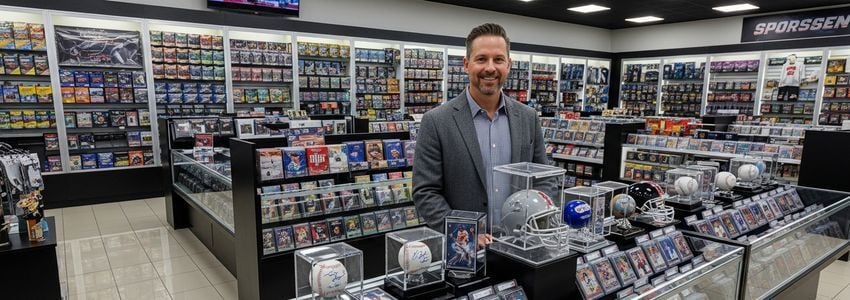
Sports Card Shop Business Loans: The Complete Financing Guide for Sports Card Shop Owners
The sports card and collectibles market is experiencing unprecedented growth, creating massive opportunities for new and existing shop owners. To capitalize on this boom, securing the right sports card shop business loans is essential for acquiring inventory, expanding operations, and staying ahead of the competition. This comprehensive guide covers everything you need to know about financing your sports card business, from the types of loans available to how you can use capital to scale your success.
In This Article
- What Are Sports Card Shop Business Loans?
- The Sports Card Market: A Booming Industry
- Types of Financing for Sports Card Shops
- How Sports Card Shop Business Loans Work
- Who Qualifies for Sports Card Shop Financing?
- How to Use Financing to Grow Your Shop
- How Crestmont Capital Helps Shop Owners
- Real-World Financing Scenarios
- Frequently Asked Questions
- How to Get Started
- Conclusion
What Are Sports Card Shop Business Loans?
Sports card shop business loans are specialized financial products designed to meet the unique capital needs of entrepreneurs in the collectibles industry. Unlike generic business loans, these funding solutions are structured to address the specific challenges and opportunities that hobby shop owners face. This includes the need for rapid inventory acquisition, cash flow management during market fluctuations, and investment in technology for grading, authentication, and e-commerce.
Running a sports card shop is not like running a typical retail store. Your primary asset-inventory-is a volatile commodity with values that can change overnight. A rare rookie card could be worth thousands one day and tens of thousands the next based on a player's performance. Sealed wax boxes from a hot new product release can double in price within weeks. This dynamic environment requires access to flexible and fast capital.
Traditional banks often struggle to understand this business model. They may undervalue your inventory, hesitate at the market's volatility, or have lengthy application processes that cause you to miss out on crucial purchasing opportunities. A lender specializing in small business loans, like Crestmont Capital, understands these nuances. We recognize that a well-curated inventory is not just stock-it is a portfolio of appreciating assets. Therefore, sports card shop business loans are tailored to provide the working capital necessary to thrive in this fast-paced market.
These loans can be used for a wide range of purposes, including:
- Purchasing high-value single cards and graded slabs.
- Stocking up on sealed wax boxes and cases for new releases.
- Expanding your physical storefront or opening a new location.
- Investing in grading equipment, high-quality display cases, and security systems.
- Launching an e-commerce website to reach a national audience.
- Funding marketing campaigns and hosting community events like trade nights.
- Covering operational expenses like rent, utilities, and payroll during slower periods.
Ultimately, a sports card shop business loan is a strategic tool that empowers you to seize opportunities, manage cash flow effectively, and build a more profitable and resilient business in the exciting world of sports collectibles.
The Sports Card Market: A Booming Industry
The sports card industry is no longer just a nostalgic hobby-it is a formidable alternative asset class attracting serious investors and passionate collectors alike. The market has experienced a meteoric rise in recent years, driven by a confluence of factors including the pandemic-era boom, the rise of online communities, and the professionalization of grading services like PSA and BGS.
The numbers paint a clear picture of a thriving industry. According to a report by Forbes, the global sports trading card market was valued at $13.82 billion in 2019 and is projected to skyrocket to $98.75 billion by 2027. This represents a compound annual growth rate (CAGR) of over 23%, a figure that rivals many high-growth tech sectors. This explosive growth signals a sustainable and long-term interest in the hobby, creating a stable foundation for shop owners to build upon.
Several key trends are fueling this expansion:
- Increased Media Attention: High-profile sales, such as the $12.6 million paid for a 1952 Topps Mickey Mantle card, regularly make national news. This coverage, highlighted by outlets like The Associated Press, brings new participants into the market and legitimizes cards as a serious investment.
- The Rise of Grading: Third-party authentication and grading have introduced a standardized, transparent system for valuing cards. A card graded as a pristine "Gem Mint 10" can be worth 10, 20, or even 100 times more than an ungraded version. This has created a more liquid and trustworthy market.
- Digital Integration: Online marketplaces like eBay, and social media platforms like Instagram and YouTube, have created a global community of collectors. Live "box breaks" have become a popular form of entertainment and commerce, allowing shops to sell products to customers worldwide in real-time.
- Nostalgia and New Collectors: Many adults who collected cards in their youth are re-entering the hobby with more disposable income. Simultaneously, a new generation is discovering the thrill of collecting, drawn in by modern players and flashy card designs.
For a brick-and-mortar sports card shop, this market boom presents both a massive opportunity and a significant challenge. The opportunity lies in the ever-growing customer base and the increasing value of inventory. The challenge is having the necessary capital to compete. The most sought-after products and single cards require substantial upfront investment. Without adequate financing, it is difficult to acquire the inventory needed to attract high-spending customers and establish your shop as a premier destination for collectors.
The Modern Hobby Shop's Advantage
While e-commerce is a major force, physical hobby shops offer invaluable experiences that online sellers cannot replicate: community, immediate gratification, and the thrill of the in-person hunt. A well-funded shop can leverage these advantages by hosting events, offering a diverse and high-quality inventory, and becoming a central hub for the local collecting community. Financing is the key to unlocking this potential.
Types of Financing Available for Sports Card Shops
Navigating the world of business financing can be complex, but understanding your options is the first step toward securing the right capital for your sports card shop. Each type of loan offers different benefits, terms, and use cases. Here is a breakdown of the most common and effective financing solutions for hobby shop owners.
SBA Loans
SBA loans are partially guaranteed by the U.S. Small Business Administration, which reduces the risk for lenders. This often results in more favorable terms, such as lower interest rates and longer repayment periods, compared to other types of loans. For a sports card shop, an SBA loan is an excellent option for major investments like purchasing a commercial property for your store, significant renovations, or a large-scale initial inventory purchase.
- Best For: Large, long-term investments; business acquisition; real estate purchases.
- Pros: Low interest rates, long repayment terms (up to 10-25 years), high funding amounts.
- Cons: The application process can be lengthy and requires extensive documentation. Qualification criteria are often strict.
Business Term Loans
A traditional term loan provides a lump sum of capital that you repay over a fixed period with regular, predictable payments. This is a versatile option that can be used for almost any business purpose, from expanding your retail space to launching a major marketing initiative. The stability of fixed payments makes it easier to budget and manage your cash flow.
- Best For: Planned, one-time expenses like expansion, equipment purchases, or a strategic inventory buy.
- Pros: Predictable repayment schedule, can be used for a wide variety of purposes, often comes with competitive rates for qualified borrowers.
- Cons: May be less flexible than a line of credit for ongoing, fluctuating needs.
Business Line of Credit
A business line of credit is one of the most flexible financing tools for a sports card shop owner. It gives you access to a set amount of capital that you can draw from as needed. You only pay interest on the funds you use, and as you repay the principal, your available credit is replenished. This is perfect for managing the unpredictable nature of the collectibles market-you can quickly access funds to buy a valuable collection that walks into your store or stock up on a hot new product before it sells out.
- Best For: Ongoing working capital needs, unexpected inventory opportunities, managing cash flow gaps.
- Pros: Highly flexible, draw and repay as needed, only pay interest on the amount used, funds are readily available.
- Cons: Interest rates can sometimes be higher than term loans. There may be fees for maintaining the line.
Equipment Financing
As a modern sports card shop, your "equipment" extends beyond a simple cash register. It includes high-end display cases, professional lighting, a robust point-of-sale (POS) system, security cameras, and potentially even specialized equipment for card grading or photography. Equipment financing allows you to purchase these necessary items without a large upfront cash outlay. The equipment itself typically serves as collateral for the loan.
- Best For: Purchasing display cases, POS systems, security equipment, computers, and other physical assets.
- Pros: Preserves cash for other uses, streamlined application process, the asset secures the loan.
- Cons: Funds can only be used for equipment purchases.
Working Capital Loans
A working capital loan is a short-term financing solution designed to cover everyday operational expenses. For a card shop, this is crucial for managing the cycle of buying and selling inventory. You might use a working capital loan to pay for a large shipment of the latest Panini Prizm release, cover rent and payroll during a slower month, or bridge a cash flow gap while waiting for a large online sale to clear. These loans are often unsecured and focus on getting you capital quickly.
- Best For: Short-term cash flow needs, inventory purchases, covering operational costs.
- Pros: Fast funding times, flexible use of funds, often accessible to businesses with less-than-perfect credit.
- Cons: Shorter repayment terms and potentially higher interest rates than long-term loans.
Merchant Cash Advance (MCA)
A merchant cash advance is not a traditional loan but rather an advance on your future sales. A lender provides you with a lump sum of cash in exchange for a percentage of your daily or weekly credit card sales until the advance is paid back, plus a fee. This can be a very fast way to get capital, especially if your business has strong credit card sales volume but may not qualify for other loans. It's an option for urgent needs, like seizing a can't-miss inventory deal.
- Best For: Businesses needing immediate cash and have high credit card sales volume.
- Pros: Very fast funding, approval is based on sales volume rather than credit score.
- Cons: Can be a more expensive form of financing compared to traditional loans.
Ready to Fund Your Sports Card Shop?
Explore flexible financing options designed for growth. Apply in minutes without impacting your credit score.
Apply Now →How Sports Card Shop Business Loans Work
Securing a business loan for your sports card shop might seem daunting, but modern lenders like Crestmont Capital have streamlined the process to be fast, transparent, and straightforward. Understanding the key stages can help you prepare and navigate the journey with confidence. Here is a step-by-step look at how the financing process typically works.
Step 1: Pre-Qualification and Initial Consultation
The first step is to determine your eligibility without a major commitment. You will typically fill out a short online form with basic information about your business, such as your time in business, monthly revenue, and estimated credit score. This pre-qualification step is often a "soft pull" on your credit, meaning it will not affect your credit score. Based on this initial information, a funding specialist will contact you to discuss your needs, goals, and the potential financing options available to you.
Step 2: The Application
Once you decide to move forward, you will complete a more detailed application. This is where you provide specific documentation to support your request. While requirements vary by lender and loan type, common documents include:
- Bank Statements: Typically the last 3-6 months to verify revenue and cash flow.
- Financial Statements: Profit and loss statements and balance sheets, especially for larger loan requests.
- Tax Returns: Both personal and business tax returns may be required.
- Business Plan: For startups or significant expansion projects, a plan outlining your strategy, market analysis, and financial projections is crucial.
- Inventory List: For a sports card shop, a detailed list of high-value inventory can be a powerful supporting document.
Lenders like Crestmont Capital often use technology to simplify this stage, allowing you to securely upload documents online, which significantly speeds up the process compared to traditional banks.
Step 3: Underwriting and Review
During the underwriting phase, the lender's team of analysts reviews your application and all supporting documents. They assess the financial health of your business, your credit history, and your ability to repay the loan. For a sports card shop, underwriters will pay close attention to the consistency of your sales, your profit margins on key products (like wax boxes vs. graded singles), and your overall cash flow management. They are essentially evaluating the risk associated with lending to your business.
Step 4: Approval and Offer
If your application is approved, the lender will present you with a formal offer or a set of offers. This document will clearly outline the key terms of the financing, including:
- Loan Amount: The total capital you will receive.
- Interest Rate or Factor Rate: The cost of borrowing the money.
- Repayment Term: The length of time you have to repay the loan.
- Payment Amount and Frequency: How much you will pay and whether it is daily, weekly, or monthly.
- Fees: Any origination fees or other costs associated with the loan.
It is critical to review this offer carefully and ask your funding specialist any questions you may have. A transparent lender will ensure you understand every aspect of the agreement before you commit.
Step 5: Funding
Once you accept the offer and sign the loan agreement, the final step is the transfer of funds. With modern alternative lenders, this process is incredibly fast. Unlike traditional banks that can take weeks or even months, many fast business loans can be funded in as little as 24-48 hours. The capital is deposited directly into your business bank account, ready for you to use for your intended purpose, whether it's buying that key Shohei Ohtani rookie card collection or stocking up for the next Topps Chrome release.
$98.7B
Projected Global Sports Card Market by 2027
Source: Forbes
23%
Compound Annual Growth Rate (CAGR) for the Industry
Source: Forbes
$12.6M
Record Sale for a Single Sports Card (1952 Mantle)
Source: AP News
Who Qualifies for Sports Card Shop Financing?
Lenders evaluate several key factors to determine if a business is a good candidate for financing. While specific requirements can vary between different loan products and financial institutions, most will assess your business based on a combination of metrics. Understanding these criteria can help you prepare your application and increase your chances of approval for a sports card shop business loan.
Credit Score
Your personal and business credit scores are significant indicators of your financial responsibility. A higher credit score generally suggests a lower risk to the lender, which can lead to better loan terms and higher approval odds. While traditional banks often require excellent credit (700+), many alternative lenders, including Crestmont Capital, have more flexible options for business owners with lower scores. They may place more weight on your business's revenue and cash flow.
Time in Business
Lenders prefer to see a track record of stability and success. Most require a minimum time in business, which can range from six months to two years. A longer operational history demonstrates that your business model is viable and that you have experience navigating the sports card market. If you are a startup, options are more limited but still available, especially through SBA programs or loans that require a strong business plan and personal collateral.
Annual or Monthly Revenue
Consistent revenue is one of the most critical factors for loan approval. Lenders need to see that your sports card shop generates enough income to comfortably cover its existing expenses plus the new loan payments. They will typically review your last 3-12 months of bank statements to verify your cash flow. A steady or growing revenue stream is a very positive sign. Many lenders have minimum annual revenue thresholds, which could be anywhere from $100,000 to $250,000 or more, depending on the loan type.
Cash Flow and Profitability
Beyond top-line revenue, lenders will analyze your business's cash flow. They want to see that you have more money coming in than going out each month. Positive cash flow indicates a healthy, well-managed business. Profitability is also important, as it shows your business model is sustainable. Be prepared to provide profit and loss statements to demonstrate your shop's financial health.
Business Plan (for Startups and Expansions)
For new sports card shops or those seeking a large loan for a major expansion, a comprehensive business plan is essential. Your plan should detail your understanding of the market, your target audience, your inventory strategy, your marketing plan, and your financial projections. It should convincingly argue why the loan is a sound investment that will generate a positive return. According to the SBA, a strong business plan is a crucial roadmap for success and a key component of a loan application.
What If I Don't Meet All the Criteria?
Don't be discouraged if you don't perfectly match every requirement. Alternative lenders often take a holistic view of your business. Strengths in one area, like very strong monthly revenue, can sometimes offset weaknesses in another, such as a shorter time in business or a lower credit score. It is always worth speaking with a funding specialist to explore your options.
How to Use Financing to Grow Your Sports Card Shop
Securing a sports card shop business loan is just the beginning. The real key to success lies in strategically deploying that capital to generate a strong return on your investment. Smart use of financing can transform your shop from a small local hobby store into a regional powerhouse. Here are some of the most effective ways to use funding to fuel your growth.
Strategic Inventory Acquisition
Inventory is the lifeblood of any sports card shop. Having the right products at the right time is what sets you apart. Financing allows you to:
- Buy in Bulk: Purchase sealed wax boxes and cases of hot new products directly from distributors. Buying in larger quantities often leads to better pricing, increasing your profit margins.
- Acquire High-End Singles: Capitalize on opportunities to buy high-value graded rookie cards, autographs, and vintage cards from walk-in customers or at trade shows. Having "grail" cards in your display case attracts serious collectors.
- Diversify Your Offerings: Expand beyond the "big three" sports. Stock products for soccer, F1 racing, UFC, and non-sports cards like Pokémon to attract a wider customer base.
Physical Store Expansion or Renovation
Your physical location is a direct reflection of your brand. A clean, modern, and well-organized store enhances the customer experience and encourages them to stay longer and spend more.
- Expand Your Footprint: Lease a larger space or knock down a wall to create more room for inventory, customer browsing, and event space.
- Upgrade Your Displays: Invest in professional, well-lit display cases to showcase your high-end cards and protect them securely.
- Create a Community Space: Use funds to build a dedicated area with tables and chairs for trade nights, box breaks, and trading card game (TCG) tournaments. This builds a loyal community around your shop.
Technology and E-commerce Investment
In today's market, a strong online presence is non-negotiable. Technology can streamline your operations and expand your reach far beyond your local area.
- Build a Professional Website: Launch a full-featured e-commerce site to sell sealed products, supplies, and single cards to a national or even global audience.
- Invest in a POS System: A modern point-of-sale system can track inventory, manage sales data, and build a customer database for marketing purposes.
- Upgrade Your Breaking Setup: If you do live box breaks, invest in high-quality cameras, microphones, and lighting to create a professional and engaging online broadcast.
Marketing and Brand Building
You can have the best inventory in the world, but it will not sell if people do not know you exist. Strategic marketing is essential for driving foot traffic and online sales.
- Digital Advertising: Run targeted social media ad campaigns on platforms like Facebook, Instagram, and TikTok to reach local collectors.
- Sponsor Events: Sponsor a local card show or a youth sports league to increase your brand visibility within the community.
- Host In-Store Events: Use marketing funds to promote major events like trade nights, new release parties, or athlete signing appearances. These events generate buzz and significant sales.
Hiring and Training Staff
As your business grows, you cannot do it all yourself. Hiring knowledgeable and passionate staff can free you up to focus on high-level strategy and inventory acquisition.
- Hire an Inventory Specialist: Bring on an employee dedicated to sorting, pricing, and listing cards for your online store.
- Recruit a Customer Service Expert: A friendly and knowledgeable face at the counter can make all the difference in building customer loyalty.
- Invest in Training: Use funds to send your staff to major industry trade shows to network and learn about the latest market trends.
How Crestmont Capital Helps Sports Card Shop Owners
In the fast-paced world of sports collectibles, opportunity doesn't wait. When a prized collection walks through your door or a can't-miss deal on sealed wax becomes available, you need a financial partner who moves as quickly as the market. Crestmont Capital understands the unique demands of your industry and is dedicated to providing the fast, flexible sports card shop business loans you need to succeed.
We differentiate ourselves from traditional banks and other lenders through our streamlined process and deep understanding of small business needs. We see beyond the numbers on a balance sheet; we see the passion and potential of your business.
Speed and Efficiency
The biggest deals in the collectibles world are often time-sensitive. A traditional bank's multi-week or multi-month loan process is simply too slow. At Crestmont Capital, our application is simple and can be completed online in minutes. We provide quick decisions, and once approved, funding can be in your account in as little as 24 hours. This speed is your competitive advantage, allowing you to secure inventory and act on growth opportunities before anyone else.
Flexible Financing Options
We know that a one-size-fits-all approach doesn't work. Your sports card shop has unique needs, whether it's short-term capital for a product release or long-term funding for a new location. We offer a wide range of financing solutions, including working capital loans, business lines of credit, and more. Our dedicated funding specialists work with you to understand your specific goals and tailor a financing solution that aligns perfectly with your business strategy.
Simplified Qualification
We believe that your business's performance is the best indicator of its potential. While traditional lenders can get bogged down by strict FICO score requirements and collateral demands, we focus on your business's health and cash flow. We work with business owners across a wide range of credit profiles and have options for businesses with as little as six months of operating history. Our goal is to find a way to say "yes."
A True Partnership
When you work with Crestmont Capital, you are not just getting a loan; you are gaining a partner invested in your growth. Our team is here to provide guidance and support throughout the life of your loan and beyond. We pride ourselves on transparency, with no hidden fees and clear, easy-to-understand terms. We are committed to building long-term relationships with our clients, helping them secure the capital they need at every stage of their business journey.
Partner with a Leader in Small Business Funding
See why sports card shop owners trust Crestmont Capital for fast, reliable financing solutions.
Apply Now →Real-World Scenarios: Sports Card Shop Financing in Action
To better understand the practical impact of sports card shop business loans, let's explore a few hypothetical but realistic scenarios. These examples illustrate how different types of financing can be used to solve specific challenges and unlock growth.
Scenario 1: The Inventory Opportunity
The Situation: Sarah, owner of "Rookie Fire Cards," has been in business for two years. A long-time local collector unexpectedly decides to sell his entire collection of 1980s basketball rookie cards, including multiple high-grade Michael Jordan and Larry Bird rookies. The asking price is $50,000, and he needs the cash within a week. Sarah knows she can sell the cards for a combined total of over $80,000, but she only has $10,000 in available cash.
The Solution: Sarah applies for a short-term working capital loan from Crestmont Capital. Because her shop has strong, consistent monthly sales, she is quickly approved. The $50,000 is funded to her account in 48 hours. She purchases the collection, immediately lists the key cards online, and sells the Michael Jordan rookie for $45,000 within the first month. The loan allows her to seize a highly profitable opportunity she would have otherwise missed.
Scenario 2: The E-commerce Pivot
The Situation: Mark's shop, "The Cardboard Vault," has a strong local following but he's hitting a ceiling on his in-store sales. He wants to launch a professional e-commerce website and start doing live box breaks to reach a national audience. The estimated cost for website development, a high-quality camera setup, and initial online marketing is $25,000.
The Solution: Mark secures a business term loan. The fixed monthly payments are easy to budget for, and the five-year repayment term keeps them manageable. He uses the funds to hire a web developer, purchase his streaming equipment, and run a targeted social media campaign to promote his first big break. Within six months, his online sales match his in-store revenue, effectively doubling his business.
Scenario 3: Managing Cash Flow and New Releases
The Situation: "Collector's Corner," owned by David, faces a common challenge. The summer months are slightly slower for foot traffic, but it is also when three of the year's most anticipated products are released. To get the best pricing, he needs to pre-order a large volume, costing around $40,000, but his cash flow is tight.
The Solution: David had previously established a $75,000 business line of credit. He draws $40,000 from his line to pay for the pre-orders. When the products arrive, they sell out within weeks, bringing in over $65,000 in revenue. He immediately repays the $40,000 principal plus interest, and his line of credit is restored to its full $75,000, ready for the next opportunity. The flexibility of the line of credit allows him to navigate seasonal cash flow fluctuations without missing out on essential inventory.
Scenario 4: The Startup Dream
The Situation: Emily is a passionate collector who has been selling online for years and wants to open her first brick-and-mortar store. She has a detailed business plan and excellent personal credit but lacks the startup capital for the security deposit, store build-out, and initial inventory, which she estimates at $100,000.
The Solution: Emily works with a lender to apply for an SBA 7(a) loan. Her strong business plan, good credit, and experience selling online make her a strong candidate. While the process takes longer than other loan types, she is approved. The SBA loan provides the capital she needs with a favorable long-term repayment plan and a competitive interest rate, allowing her to open her dream shop on a solid financial foundation.
Frequently Asked Questions
1. Can I get a loan for a brand new sports card shop?
Yes, financing for a startup sports card shop is possible, though it can be more challenging than for an established business. Options often include SBA loans, which are designed to support new businesses, or personal loans. A strong business plan, good personal credit, and some personal investment (collateral) will significantly increase your chances of approval.
2. How quickly can I get funded?
The funding speed depends on the type of loan. With alternative lenders like Crestmont Capital, working capital loans and merchant cash advances can often be funded in as little as 24-48 hours after approval. Term loans may take a few days, while SBA loans have the longest timeline, often taking several weeks to a few months.
3. What if I have bad credit?
While a good credit score helps, it is not always a deal-breaker. Many modern lenders prioritize a business's cash flow and revenue over the owner's personal credit score. Options like a merchant cash advance or some working capital loans are specifically designed for business owners with less-than-perfect credit, provided the business has strong and consistent sales.
4. Can I use my valuable card inventory as collateral?
This can be complex. While some specialized lenders might consider high-value, graded inventory as a form of collateral, most traditional and alternative lenders do not. The market for collectibles is considered too volatile. Lenders are more likely to secure a loan with more traditional assets like real estate, equipment, or a general lien on business assets.
5. What is the difference between an interest rate and a factor rate?
An interest rate is the percentage of the principal charged for a loan, typically expressed as an annual percentage rate (APR). It is common with traditional term loans and SBA loans. A factor rate is a decimal figure (e.g., 1.25) used to calculate the total repayment amount on short-term financing like an MCA. To find the total payback, you multiply the loan amount by the factor rate. Factor rates can sometimes appear lower but often represent a higher cost of capital than an APR.
6. How much money can I borrow for my sports card shop?
The amount you can borrow depends on your business's financial health, including its annual revenue, cash flow, time in business, and your credit profile. Loan amounts can range from a few thousand dollars for a small working capital loan to several hundred thousand or even millions for an SBA loan or large-scale expansion financing.
7. Will applying for a loan hurt my credit score?
Most alternative lenders, including Crestmont Capital, use a "soft credit pull" for the initial pre-qualification process. A soft pull does not impact your credit score. A "hard credit pull," which can have a small, temporary impact on your score, is typically only performed once you decide to move forward with a specific loan offer.
8. What documents do I need to apply?
Commonly required documents include 3-6 months of recent business bank statements, a government-issued photo ID, and a voided business check. For larger loans or SBA loans, you may also need to provide business and personal tax returns, profit and loss statements, a balance sheet, and a detailed business plan.
9. Is a business line of credit better than a term loan for a card shop?
It depends on your needs. A business line of credit is ideal for ongoing, unpredictable expenses like seizing inventory opportunities or managing cash flow. A term loan is better for a single, large, planned expense like a store renovation or a major equipment purchase. Many established shops find it beneficial to have both.
10. Can I use a business loan to buy out a competitor's shop?
Yes, this is known as an acquisition loan. Both SBA loans and some term loans can be structured to finance the purchase of another business. This is a great strategy for expanding your market presence quickly.
11. What are the typical repayment terms?
Repayment terms vary widely by loan type. Short-term working capital loans and MCAs might have terms from 3 to 18 months. Business term loans typically range from 1 to 5 years. SBA loans offer the longest terms, often 10 years for working capital or equipment, and up to 25 years for real estate.
12. Are there any restrictions on how I can use the loan funds?
For most loans, like working capital or term loans, the funds can be used for any legitimate business purpose, giving you great flexibility. The main exception is equipment financing, where the funds must be used to purchase the specific equipment being financed.
13. What is an origination fee?
An origination fee is a one-time, upfront fee charged by a lender to cover the costs of processing and underwriting a loan. It is usually calculated as a percentage of the total loan amount and is often deducted from the loan proceeds before they are disbursed to you.
14. Can I repay my loan early? Is there a penalty?
This depends on the lender and the loan product. Some loans, particularly those from traditional banks or the SBA, do not have prepayment penalties. However, some short-term loans or MCAs may require you to pay back the full, agreed-upon amount regardless of when you pay it off. Always clarify the prepayment policy before signing a loan agreement.
15. How is a sports card shop different from other retail businesses to a lender?
The key difference is the nature of the inventory. Unlike a clothing store where inventory depreciates, a card shop's inventory can appreciate significantly, acting more like an investment portfolio. Lenders who understand this dynamic can better assess the true value and potential of your business. They also recognize the need for speed to capitalize on a volatile but opportunity-rich market.
How to Get Started
Ready to take your sports card shop to the next level? Securing the right financing is the most effective way to fuel your growth. The process is faster and more straightforward than you might think. Follow these simple steps to begin your funding journey with Crestmont Capital.
Step 1: Apply in Minutes
Complete our simple, secure online application. It takes just a few minutes and requires only basic information about you and your business. This initial step is free and will not impact your credit score.
Step 2: Review Your Options
A dedicated funding specialist will contact you to discuss your application, understand your specific needs, and walk you through the best financing options available for your sports card shop. We believe in complete transparency.
Step 3: Get Funded
Once you select an offer and complete the final steps, your funds will be deposited directly into your business bank account. In many cases, capital can be available in as little as 24 hours.
Don't Wait to Grow Your Business
Secure the capital you need to stock up, expand, and thrive in the collectibles market.
Apply Now →Conclusion
The sports card market is hotter than ever, and for ambitious shop owners, the opportunities for growth are immense. However, capitalizing on this boom requires more than just passion and industry knowledge-it requires capital. A strategic sports card shop business loan is the tool that can unlock your business's full potential, enabling you to acquire premium inventory, expand your operations, and build a thriving community of collectors.
From flexible lines of credit that help you seize last-minute deals to term loans that fund your long-term vision, a variety of financing solutions are available to meet your specific needs. By partnering with a lender like Crestmont Capital, which understands the unique rhythm of the collectibles industry, you gain access to the fast, reliable funding necessary to outpace the competition.
Do not let a lack of working capital hold you back from building the sports card shop of your dreams. Explore your financing options today and make the strategic investment that will pay dividends for years to come.
Disclaimer: The information provided in this article is for general educational purposes only and is not financial, legal, or tax advice. Funding terms, qualifications, and product availability may vary and are subject to change without notice. Crestmont Capital does not guarantee approval, rates, or specific outcomes. For personalized information about your business funding options, contact our team directly.
```







