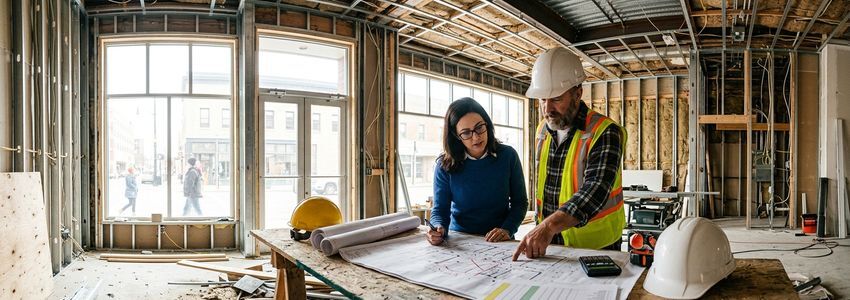
A retail buildout rarely goes exactly according to plan. Permit delays, contractor change orders, supply chain hiccups on flooring or fixtures, and unexpected structural issues behind the walls can turn a tight construction budget into a serious cash shortfall almost overnight. When that happens, tenant improvement loans and related working capital tools give business owners a way to keep the project moving without draining every dollar of operating cash before the doors even open.
In This Article
What Is Tenant Improvement Financing?
Tenant improvement financing is working capital or a term loan used to cover the cost of building out, renovating, or customizing a leased commercial space so it is ready for business. For retailers, that typically means flooring, lighting, fixtures, signage, point-of-sale wiring, HVAC modifications, ADA compliance upgrades, and finish carpentry that turns a bare shell into a functioning storefront.
Most retail leases include a tenant improvement (TI) allowance from the landlord, a fixed dollar amount per square foot the landlord contributes toward the buildout. The problem is that TI allowances are almost always negotiated and locked in months before construction begins, long before anyone knows what a contractor will actually find behind the drywall or what materials will cost by the time the crew breaks ground.
When actual costs exceed the TI allowance, and permit delays or change orders stretch the timeline past the original opening date, the retailer is left covering the gap. That gap is what tenant improvement financing and buildout overrun loans are designed to close, so a delayed opening doesn't also become a stalled opening.
Key Stat: Research on commercial construction projects has found that a large share of projects exceed their original budget, with average cost overruns commonly cited in the range of 15% to 30% above initial estimates, depending on project scope and complexity.
Key Benefits of Buildout Overrun Financing
- Protects your opening date. Funding a change order or an unexpected line item quickly keeps contractors moving instead of stopping work while you scramble for cash.
- Preserves working capital. Instead of pulling cash out of inventory, marketing, or payroll reserves, you keep a dedicated pool of funds for construction costs alone.
- Bridges the TI allowance gap. Covers the difference between what the landlord contributed and what the buildout actually costs.
- Flexible use of funds. Can be applied to materials, labor, permits, inspection fees, design changes, or even holding costs like rent during a delayed opening.
- Fast access to capital. Many working capital products fund within days, which matters when a contractor is waiting on a payment to resume work.
- Keeps landlord relationships intact. Meeting build-out milestones on time avoids lease penalties or disputes over delayed occupancy.
Ready to Get Your Buildout Back on Schedule?
Get fast, flexible financing from the #1 business lender in the U.S. No obligation - apply in minutes.
Apply Now →How Buildout Overrun Financing Works
The process is similar to most small business financing, but speed matters more here because contractors and material suppliers are often waiting on payment to continue work.
- Identify the funding gap. Compare your remaining TI allowance and committed construction budget to the updated contractor estimate, including any change orders.
- Gather documentation. Lenders typically want the lease, the general contractor's budget or change order documentation, recent bank statements, and basic business financials.
- Apply and get a decision. Working capital lenders can often return a decision within 24 to 48 hours based on cash flow and time in business rather than requiring a full commercial real estate underwriting process.
- Receive funds. Once approved, funds are typically deposited directly into your business bank account, ready to pay contractors, suppliers, or permit fees.
- Repay on a schedule that fits your cash flow. Depending on the product, repayment can be a fixed daily, weekly, or monthly amount, or structured around future revenue.
Financing Options for Buildout Overruns
Not every overrun needs the same tool. The right option depends on how large the gap is, how quickly you need funds, and whether the overrun is a one-time event or part of an ongoing pattern of delays.
Working Capital Loans
A lump sum of capital repaid over a fixed term, based primarily on business cash flow rather than collateral. This is often the fastest route to covering a mid-size overrun without pledging the buildout itself as collateral.
Business Line of Credit
A revolving credit line lets you draw only what you need as change orders come in, and you only pay interest on what you use. This is useful when overruns arrive in stages rather than as a single lump sum.
Equipment Financing
If part of the overrun involves fixtures, kitchen equipment, refrigeration, or point-of-sale hardware, equipment financing can fund those specific items directly, often with the equipment itself serving as collateral, which can mean better terms.
Short-Term Bridge Financing
For a defined, short gap where you expect the TI allowance reimbursement or a construction draw to arrive soon, a short-term bridge loan can cover the interim period.
SBA Loans
For larger buildouts planned well in advance, an SBA loan can fund a broader scope of leasehold improvements, though the timeline for approval is typically longer and less suited to an active overrun that needs funding this week.

By the Numbers
Retail Buildouts and Cost Overruns - Key Statistics
33M+
Small businesses operating in the U.S., per the SBA
~30%
Typical range cited for construction cost overruns above initial budget
24-48 Hrs
Typical decision time on working capital financing for an active overrun
$45B
In SBA 7(a) and 504 loans delivered to small businesses in FY2025
Who This Financing Is Best For
Buildout overrun financing tends to fit certain situations especially well:
- Retailers mid-construction who have already exhausted their landlord's TI allowance and need to cover the remaining scope of work.
- Multi-location retail operators managing several buildouts at once, where one location running over budget can create ripple effects across the broader expansion plan.
- Franchisees and independent store owners facing contractor change orders for code compliance, ADA upgrades, or structural surprises discovered mid-project.
- Business owners with a firm lease start date and rent obligations beginning whether or not the space is finished, making delay itself a cash flow risk.
- Retailers whose landlord reimbursement or construction draw is confirmed but not yet disbursed, creating a timing gap rather than a true budget shortfall.
Comparing Your Options
Choosing the right tool for a buildout overrun comes down to speed, cost, and how much of the gap you need to cover.
| Option | Speed to Fund | Best For |
|---|---|---|
| Working Capital Loan | 1-3 business days | A defined lump-sum overrun |
| Business Line of Credit | 2-5 business days | Staged change orders over time |
| Equipment Financing | 2-7 business days | Fixtures, kitchen or POS equipment |
| Short-Term Bridge Loan | 2-5 business days | Waiting on a confirmed TI reimbursement |
| SBA Loan | 30-90 days | Planned, larger-scope buildouts |
How Crestmont Capital Helps
Crestmont Capital works with retail business owners to close the gap between a landlord's tenant improvement allowance and the real cost of getting a store open. Rather than a rigid, one-size-fits-all product, Crestmont evaluates your lease terms, contractor budget, and business cash flow to match you with the right financing structure.
Depending on your situation, that might mean an unsecured working capital loan to cover an immediate change order, a business line of credit to handle overruns as they arise in stages, or equipment financing for fixtures and kitchen or point-of-sale equipment that's part of the buildout scope. For larger, planned expansions, Crestmont also offers SBA loan options.
If your buildout overrun is tied to a broader renovation or remodel project, Crestmont's guide on financing a commercial renovation and build-out covers additional financing angles worth reviewing. And if the overrun stems from a piece of equipment or system that failed mid-project, the guide to emergency equipment financing may also apply.
Crestmont's application process is built for speed. Most applicants can complete the initial application in minutes and receive a funding decision within 24 to 48 hours, which matters when a contractor is waiting on payment to keep crews on site.
Don't Let a Budget Gap Delay Your Grand Opening
Crestmont Capital can help you cover the difference between your TI allowance and your real buildout cost. Fast decisions, flexible terms.
Apply Now →Pro Tip: Ask your contractor for a written change order the moment a scope change happens, even if you plan to negotiate it later. Lenders move faster when they can see a documented, itemized overrun instead of a verbal estimate.
Real-World Scenarios
Scenario 1: The Hidden Electrical Problem
A boutique retailer signs a lease for a second location and budgets $180,000 for buildout, expecting a $120,000 TI allowance from the landlord to cover most of it. Once the electrician opens the walls, the panel is found to be undersized for the retailer's lighting and POS needs, adding an unplanned $22,000 to the project. A working capital loan covers the gap so the electrical work isn't paused while the owner tries to renegotiate the lease.
Scenario 2: Permit Delays Push Back the Opening
A restaurant buildout stalls for six weeks waiting on a city health department inspection sign-off, during which rent obligations continue and the owner has already paid deposits to staff hired for the planned opening date. A short-term bridge loan covers the extra weeks of rent and payroll until the doors can open.
Scenario 3: Multi-Location Expansion Overruns
A regional retail chain opening three new stores simultaneously sees material costs rise mid-project across all three locations due to a supplier price increase. Rather than pulling funds from operating cash at existing profitable stores, the company draws on a business line of credit to cover the increase at each new location as invoices come due.
Scenario 4: ADA Compliance Upgrade
A retail buildout passes initial permitting, but a follow-up inspection flags an accessibility issue with the restroom layout that wasn't part of the original design. The change order adds $14,000 to the project. Equipment and fixture financing covers the new fixtures while a small working capital advance covers the additional labor.
Scenario 5: Landlord Reimbursement Delay
A retailer's TI allowance reimbursement from the landlord is confirmed in the lease but won't be disbursed until 30 days after a certificate of occupancy is issued. To keep contractors paid on schedule in the meantime, the owner uses short-term bridge financing, then pays it off in full once the landlord's reimbursement arrives.
Frequently Asked Questions
What is tenant improvement financing?
Tenant improvement financing is a business loan or working capital product used to pay for the construction, renovation, or customization costs required to make a leased commercial space ready for business, often used when the landlord's tenant improvement allowance does not cover the full project cost.
How is tenant improvement financing different from a TI allowance?
A TI allowance is money contributed directly by the landlord, typically negotiated as a fixed dollar amount per square foot before construction begins. Tenant improvement financing is separate capital the business owner obtains, often to cover costs above and beyond that landlord allowance.
What causes most retail buildout cost overruns?
Common causes include unexpected structural or electrical issues found once walls are opened, permit and inspection delays, contractor change orders, material price increases, and code compliance requirements such as ADA upgrades discovered mid-project.
How quickly can I get financing for a buildout overrun?
Working capital loans and business lines of credit can often be approved and funded within 24 to 48 hours once documentation such as bank statements and the contractor's revised budget or change order is submitted.
What documents do I need to apply?
Most lenders request recent business bank statements, the commercial lease with TI allowance terms, the contractor's budget or change order documentation, and basic business financial information such as time in business and monthly revenue.
Can I use a business line of credit instead of a lump-sum loan?
Yes. A business line of credit is often a better fit when overruns arrive in stages, since you only draw funds as each change order or unexpected cost comes up, and you only pay interest on what you use.
Does equipment financing cover fixtures and kitchen equipment in a buildout?
Yes. Equipment financing can fund fixtures, kitchen equipment, refrigeration units, and point-of-sale hardware that are part of the buildout scope, often using the equipment itself as collateral for better terms.
Is an SBA loan a good option for a buildout overrun?
SBA loans can be a strong option for larger, planned leasehold improvement projects, but the approval timeline of 30 to 90 days generally makes them less suited to an active, in-progress overrun that needs funding within days.
What happens if I can't cover a buildout overrun?
Without additional funding, contractors may pause work, which can push back your opening date, trigger lease penalties for missed occupancy deadlines, and create additional holding costs like rent and staff wages during the delay.
Can startups or new retail locations qualify for buildout financing?
Qualification depends on the lender and product. Working capital loans typically look at overall business cash flow and time in business, so an established company opening an additional location is often in a stronger position than a brand-new startup with no operating history.
How much can I borrow to cover a buildout overrun?
Loan amounts vary by lender and are typically based on business revenue, cash flow, and the specific dollar amount of the documented overrun. It's best to apply with a clear, itemized breakdown of the funding gap.
Will taking on financing for a buildout overrun hurt my credit?
Applying for financing typically involves a credit check, and how it affects your credit depends on the product and lender. Making payments on time, as with any business debt, is generally what helps maintain or build your credit profile over time.
Can I use this financing for holding costs like rent during a delay?
Many working capital products offer flexible use of funds, which can include rent, payroll, or other holding costs incurred during a construction delay, not just direct materials and labor.
What if my landlord reimbursement is delayed rather than the TI allowance being insufficient?
A short-term bridge loan is often the better fit for a timing gap, since it's designed to be repaid quickly once the confirmed landlord reimbursement or construction draw is disbursed.
How do I start the application process?
You can begin by gathering your lease, contractor budget documentation, and recent bank statements, then complete an application online. Most business owners can complete the initial application in minutes and receive a decision shortly after.
Keep Your Buildout Moving Forward
Whether it's a change order, a permit delay, or a TI allowance shortfall, Crestmont Capital can help you close the gap fast.
Apply Now →Next Steps
Get a written change order or updated budget from your contractor showing the exact gap between your TI allowance and actual costs.
Pull recent bank statements and basic revenue information so a lender can move quickly on a decision.
Choose between a working capital loan, line of credit, equipment financing, or bridge loan based on the size and shape of your gap.
Use funds to pay contractors and suppliers without delay, protecting your planned opening date.
Conclusion
A retail buildout overrun does not have to mean a delayed opening or a drained bank account. With the right tenant improvement financing in place, business owners can close the gap between a landlord's TI allowance and the real cost of construction, keep contractors on schedule, and protect the launch date they have already built a marketing plan and staffing schedule around. The key is documenting the overrun clearly, choosing the financing structure that matches the size and timing of the gap, and moving quickly once the need is identified.
Crestmont Capital works with retail business owners across the country to structure financing that fits a construction timeline, not the other way around. Whether the gap is a single change order or an ongoing series of costs across a multi-location expansion, fast, flexible capital can be the difference between a stalled project and a successful grand opening.
Disclaimer: The information provided in this article is for general educational purposes only and is not financial, legal, or tax advice. Funding terms, qualifications, and product availability may vary and are subject to change without notice. Crestmont Capital does not guarantee approval, rates, or specific outcomes. For personalized information about your business funding options, contact our team directly.