
 (800) 949-0401
Press Brake Machine Financing: The Complete Guide for Metal Fabrication Business Owners
A press brake is one of the most indispensable machines in a metal fabrication shop. Whether you are bending steel for HVAC ductwork, forming aluminum panels for aerospace components, or shaping stainless steel for commercial kitchen equipment, the press brake is at the center of your production floor. The challenge is that a quality press brake carries a price tag that ranges from $30,000 for a basic hydraulic model to well over $500,000 for a high-precision CNC press brake with advanced tooling. For most metal fabrication business owners, that means financing is not just an option - it is a strategic necessity.
This guide covers everything you need to know about press brake machine financing: how it works, what it costs, how to qualify, and how to choose the right lender so your shop stays competitive without draining your working capital.
In This Article
- What Is a Press Brake Machine?
- Why Finance a Press Brake Instead of Paying Cash?
- Press Brake Financing Options Explained
- Costs, Rates, and Typical Terms
- How to Qualify for Press Brake Financing
- The Application Process Step by Step
- Financing New vs. Used Press Brakes
- Section 179 and Tax Benefits
- How to Choose the Right Lender
- Common Mistakes to Avoid
- Frequently Asked Questions
- Next Steps
What Is a Press Brake Machine?
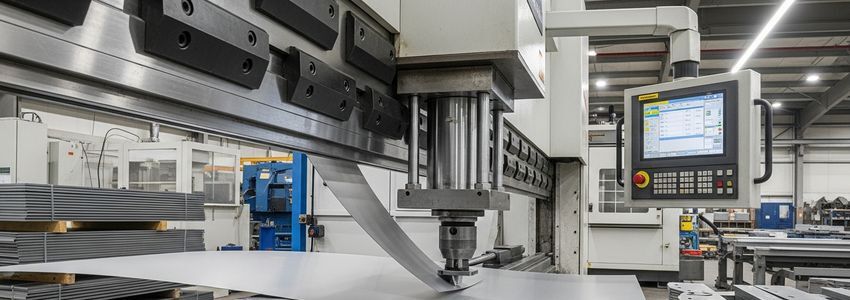
A press brake is a machine tool used to bend sheet metal and plate into precise angles and shapes. It applies force through a punch and die set, deforming the metal along a straight axis. Press brakes are fundamental equipment in industries including:
- Metal fabrication and structural steel
- HVAC and sheet metal contracting
- Aerospace and defense manufacturing
- Automotive parts production
- Custom furniture and architectural metalwork
- Agricultural equipment manufacturing
- Medical device production
Modern press brakes range from manually operated mechanical models to fully automated CNC (computer numerically controlled) systems with back-gauge automation, laser angle measuring, and robotic loading. The type your business needs depends on production volume, material thickness, bending length, precision requirements, and the complexity of parts you manufacture.
Types of Press Brakes and Their Price Ranges
Understanding the different categories helps you set realistic financing expectations:
- Mechanical press brakes: $15,000 to $50,000 - older technology, lower precision, best for light-duty shops
- Hydraulic press brakes: $30,000 to $150,000 - workhorse of most fabrication shops, good force control
- Electro-hydraulic (hybrid) press brakes: $50,000 to $250,000 - energy-efficient, precise, growing in popularity
- Electric press brakes: $75,000 to $300,000 - fastest, most precise, best for high-volume thin-gauge work
- CNC press brakes with advanced automation: $100,000 to $600,000+ - full production automation, robotic integration
For most growing metal fabrication shops, the sweet spot is a quality CNC hydraulic or hybrid press brake in the $80,000 to $200,000 range - an investment that typically requires financing to protect working capital.
Why Finance a Press Brake Instead of Paying Cash?
Even businesses with strong cash reserves often choose press brake financing over outright purchase. Here is why that decision often makes financial sense:
Preserve Working Capital
A metal fabrication shop lives and dies on its ability to purchase raw materials, meet payroll, and take on new jobs. Spending $150,000 in cash on a press brake can cripple your operating flexibility for months. Financing spreads that cost over time while keeping your cash available for day-to-day operations.
Match Equipment Cost to Revenue
When you finance a press brake, you pay for it while it produces revenue. The machine earns money each month, and your monthly payment comes out of those earnings. This aligns your capital outlay with the productive value of the asset.
Take Advantage of Tax Benefits
Under Section 179 of the IRS tax code, businesses can deduct the full purchase price of qualifying equipment in the year it is placed in service, rather than depreciating it over multiple years. This means you can finance a press brake, make small monthly payments, and still potentially write off the entire machine cost in year one - a powerful cash-flow strategy.
Access Better Equipment Sooner
Waiting until you have saved enough cash might mean operating with outdated or undersized equipment for years. Financing lets you get the right machine now, win better contracts, and grow faster.
Industry Insight: According to the Equipment Leasing and Finance Association (ELFA), over 80% of U.S. businesses use some form of equipment financing or leasing to acquire machinery and technology. In capital-intensive industries like metal fabrication, that number is even higher.
Ready to Finance Your Press Brake?
Get fast financing from the #1 business lender in the U.S. No obligation - apply in minutes.
Apply Now ->Press Brake Financing Options Explained
There is no single best way to finance a press brake. The right option depends on your business financials, how long you want to keep the machine, and your tax situation. Here are the main paths available:
1. Equipment Financing (Equipment Loan)
With a traditional equipment financing loan, the lender advances money to purchase the press brake, and the machine itself serves as collateral. You own the machine immediately and make fixed monthly payments over a set term - typically 24 to 72 months. At the end of the loan, you own the equipment free and clear.
Best for: Shops that want to build equity in the machine, plan to use it for many years, and want to maximize Section 179 deductions.
2. Equipment Leasing
Equipment leasing is essentially renting the machine from a lender for a set period, typically with options to purchase at the end for fair market value or a fixed amount (e.g., $1). Lease payments are often lower than loan payments, and in some structures, lease payments are fully deductible as a business expense.
Best for: Shops that want lower monthly payments, need to upgrade equipment frequently, or want to keep the machine off their balance sheet.
3. SBA 7(a) Loans
The Small Business Administration's 7(a) loan program can be used to purchase manufacturing equipment. SBA loans offer lower interest rates and longer terms (up to 10 years for equipment), but the approval process is more rigorous and slower - often 30 to 90 days. These work best for established businesses with strong financials. Learn more at SBA.gov.
4. Small Business Term Loans
Small business loans from direct lenders offer faster funding than SBA loans and can be used for equipment purchases alongside other business needs. For a press brake purchase combined with tooling, installation, operator training, and additional working capital, a term loan might cover everything in one package.
5. Business Line of Credit
A business line of credit is revolving credit you can draw on as needed. For a press brake purchase, this works best when you need flexibility or when the machine purchase is paired with significant working capital needs. It is typically not the most efficient option for a large single purchase.
6. Vendor Financing
Many press brake manufacturers and dealers offer in-house financing or work with preferred lenders. This can be convenient and sometimes competitive, but it is worth comparing rates against independent equipment lenders before signing.
Costs, Rates, and Typical Terms
Understanding what press brake financing actually costs helps you make informed decisions and negotiate effectively.
Press Brake Financing: Key Numbers at a Glance
$30K
Minimum typical loan amount
5-7%
Starting interest rates (strong credit)
24-72
Typical loan terms (months)
2-5 Days
Funding speed (online lenders)
100%
Financing available (no down payment options)
Interest Rates by Credit Profile
Equipment loan interest rates for press brakes typically fall into these ranges based on your business credit profile and financial strength:
- Excellent credit (700+ personal, strong revenue): 5% to 9% APR
- Good credit (650-700, established business): 8% to 15% APR
- Fair credit (600-650) or early-stage business: 12% to 22% APR
- Lower credit or startups: 18% to 35%+ APR (specialized lenders)
Sample Monthly Payment Estimates
For a $150,000 press brake financed over 60 months at various rates:
- At 7% APR: approximately $2,970/month
- At 12% APR: approximately $3,337/month
- At 18% APR: approximately $3,804/month
For a $80,000 press brake over 48 months at 10% APR: approximately $2,028/month.
Keep in mind that Section 179 deductions can offset a significant portion of the first-year cost, making the effective net cost substantially lower for most profitable businesses.
How to Qualify for Press Brake Financing
Lenders evaluate press brake financing applications using several key criteria. Understanding what they look for helps you prepare a stronger application and select the right financing product.
Time in Business
Most equipment lenders prefer businesses that have been operating for at least 2 years. Startups and newer businesses can still qualify, but typically face higher rates and may need a stronger down payment or additional collateral. Some specialized lenders work with businesses as young as 6 months.
Business Credit Score
Your business credit profile - including your PAYDEX score from Dun & Bradstreet, Experian Business score, and FICO Small Business Scoring Service (SBSS) score - plays a major role. Lenders also review your personal credit score, typically requiring a minimum of 600 to 620 for most products, though some bad credit equipment financing options are available for lower scores.
Annual Revenue
Lenders want to see that your business generates enough revenue to cover loan payments comfortably. Most equipment lenders look for annual revenue of at least 1.5 to 2 times the annual loan payment. For a $150,000 loan at $3,000/month ($36,000/year), you would ideally show $54,000 to $72,000 in annual revenue at minimum - though most qualifying shops will be doing much more.
Debt Service Coverage Ratio (DSCR)
This ratio measures your ability to service debt from operating cash flow. Lenders typically want a DSCR of at least 1.25, meaning your net operating income covers debt payments by 25% or more. A stronger DSCR gives you access to better rates.
Industry and Machine Type
Press brakes are considered strong collateral because they hold their value well, especially CNC models from reputable manufacturers like Amada, Trumpf, LVD, Bystronic, and ACCURPRESS. Lenders are generally comfortable financing well-known brands with a strong secondary market.
Financial Documentation
Typical requirements include:
- 2 years of business tax returns
- Recent business bank statements (3-6 months)
- Profit and loss statement
- Balance sheet
- Equipment quote or invoice
- Business license and formation documents
- Personal financial statement (for SBA or larger loans)
Pro Tip: For equipment loans under $150,000 with many online lenders, you may qualify with just bank statements and a credit check - no tax returns required. This "simplified documentation" approach speeds up approval to just 24 to 72 hours.
The Application Process Step by Step
Knowing what to expect before you apply reduces stress and helps you move faster from application to funded.
- Determine your equipment needs and budget. Get quotes from at least two to three vendors. Know the machine make, model, year, and purchase price before applying.
- Check your business and personal credit. Pull your reports from Dun & Bradstreet, Experian, and Equifax Business. Dispute any errors. Understand your personal FICO score.
- Gather your financial documents. Prepare tax returns, bank statements, and financial statements before starting applications - having these ready speeds everything up dramatically.
- Choose your financing type and lender. Decide between a loan, lease, or SBA option. Compare at least two to three lenders, including a direct equipment lender.
- Submit your application. Most online lenders have applications that take 15 to 30 minutes. Provide accurate information - inconsistencies cause delays.
- Review the offer. Evaluate interest rate, term, total cost, prepayment penalties, and any fees. Compare offers side by side.
- Sign and fund. Once approved, review and sign your loan documents. The lender typically pays the vendor directly, or funds are deposited to your account.
Fast Equipment Financing for Metal Fabricators
Apply in minutes. Get your press brake funded in as little as 2 business days.
Apply Now ->Financing New vs. Used Press Brakes
Both new and used press brakes can be financed, but the process differs in a few important ways.
New Press Brake Financing
New machines are easier to finance because there is no uncertainty about condition, history, or remaining useful life. Lenders are comfortable with full loan-to-value (LTV) ratios - often 100% financing with no down payment. Manufacturers sometimes offer promotional financing rates through authorized dealers, which can be very competitive.
Used Press Brake Financing
Used equipment financing is absolutely available, but lenders typically want to see the machine appraised or at least know its age, condition, and fair market value. Key considerations include:
- Most lenders prefer machines under 10 years old; some accept up to 15-20 years for well-maintained CNC models
- LTV ratios are often lower (70-90% of appraised value vs. full purchase price)
- A higher down payment may be required
- Manufacturer, model, and parts availability matter to lenders
Buying a quality used CNC press brake and financing it can be an excellent strategy for shops that need high-end capability at a lower total cost. A 5-year-old Amada HFB or Trumpf TruBend that cost $300,000 new might be available for $100,000 to $150,000 used - still a significant purchase that benefits from financing.
Key Consideration: When financing used equipment, always get a mechanical inspection from a qualified service technician before closing. The cost of inspection ($500 to $2,000) is minor compared to the risk of buying a machine with hidden problems.
Section 179 and Tax Benefits for Press Brake Financing
The IRS Section 179 deduction is one of the most powerful tax tools available to manufacturing businesses that finance equipment. For 2024, the Section 179 deduction limit is $1,160,000, with a phase-out beginning at $2,890,000 in total equipment purchases. This limit adjusts annually for inflation.
How It Works with Financing
If you finance a $200,000 press brake, you can still deduct the full $200,000 from your taxable income in year one - even though you only made monthly payments during the year. This is a critical point: the deduction is based on the cost of the equipment, not the amount you paid. You get the full tax benefit while spreading the cash cost over years.
For a business in the 35% tax bracket, a $200,000 Section 179 deduction saves $70,000 in taxes. Combined with financing, your net first-year cost can be dramatically lower than the sticker price suggests.
Bonus Depreciation
In addition to Section 179, businesses may qualify for bonus depreciation on equipment purchases. Bonus depreciation rules have changed over recent years, so consult your CPA or tax advisor to understand the current rates and how they interact with Section 179 for your specific situation. The SBA's small business tax guide provides a helpful overview.
Always work with a qualified accountant who understands manufacturing and equipment financing to maximize these benefits legally. According to CNBC's small business reporting, equipment financing combined with Section 179 is consistently one of the highest-ROI strategies for capital-intensive manufacturers.
How to Choose the Right Lender for Press Brake Financing
Not all equipment lenders are equal. Here is what to evaluate when comparing options:
Interest Rate and Total Cost of Loan
Always calculate the total amount you will repay, not just the monthly payment. A lower monthly payment from a longer term may cost significantly more overall. Ask for the APR and use it to compare offers apples-to-apples.
Approval Speed
If you have found a deal on a press brake and need to move quickly, look for a fast business loan option. Some equipment lenders can approve and fund in 24 to 72 hours for loans under $150,000. SBA loans typically take 30 to 90 days.
Flexibility on Credit and Time in Business
If your credit is not perfect or your business is relatively new, seek lenders who specialize in equipment financing for manufacturing businesses. Traditional banks typically require 680+ credit and 3+ years in business. Specialized equipment lenders often work with 600+ credit and 1+ year in business.
Down Payment Requirements
Many equipment lenders offer 100% financing (no down payment) for qualified buyers. If your cash is tight, look for "no money down" equipment loan options. If you have cash available, a 10-20% down payment typically earns you a better rate.
Prepayment Penalties
Ask explicitly whether there are prepayment penalties if you want to pay off the loan early. Some lenders charge 1-3% of the remaining balance; others have none. If you expect to refinance or pay off early, avoid lenders with steep prepayment penalties.
Lender Reputation and Specialization
Work with a lender who understands manufacturing equipment and can speak intelligently about your industry. Lenders who regularly finance press brakes, laser cutters, CNC equipment, and other fabrication machinery will process your application faster and with fewer complications. Forbes Advisor's equipment financing guide offers additional criteria for evaluating lenders.
Common Mistakes to Avoid When Financing a Press Brake
Learning from others' mistakes can save you time, money, and frustration. Here are the pitfalls that trip up metal fabricators most often:
Focusing Only on Monthly Payment, Not Total Cost
A lender offering a 72-month term may show you a lower monthly payment than a 48-month term, but you could end up paying 20-30% more in interest over the life of the loan. Always calculate and compare total repayment amounts.
Not Shopping Multiple Lenders
Getting only one quote - whether from your bank, a vendor's recommended lender, or an online marketplace - often means leaving money on the table. Compare at least two to three competing offers before deciding.
Ignoring Total Acquisition Cost
The press brake purchase price is just part of the total cost. Also budget for tooling and dies (which can add $5,000 to $50,000+), delivery and rigging, installation and electrical work, foundation preparation, operator training, and initial maintenance contract. Finance the full package so you are not depleting working capital on ancillary costs.
Not Consulting Your CPA Before Financing
Whether to use a loan vs. lease, and how to time the purchase for maximum tax benefit, depends heavily on your specific tax situation. A one-hour consultation with your CPA before signing can save tens of thousands of dollars in taxes.
Waiting Too Long
Many shop owners wait until their existing press brake fails before seeking financing. At that point, you are negotiating from a position of desperation and may accept worse terms or pay more for a machine than necessary. Plan your equipment acquisition 6-12 months in advance when possible.
Frequently Asked Questions About Press Brake Machine Financing
What credit score do I need to finance a press brake?
Most equipment lenders prefer a personal credit score of 620 or higher. With scores above 680, you access the most competitive rates. Some specialized lenders work with scores as low as 575-600, though rates will be higher and you may need a larger down payment.
Can I finance a used press brake?
Yes. Most lenders finance used press brakes, though terms may be slightly less favorable than for new machines. Lenders typically prefer machines under 10-15 years old with documented maintenance history. Machines from major manufacturers like Amada, Trumpf, LVD, and Bystronic hold their value well and are easier to finance.
How long does press brake financing approval take?
With online equipment lenders, approval can come in as little as 2-24 hours for loans under $150,000 with simplified documentation. For larger amounts or SBA loans, the process typically takes 1-3 weeks (conventional bank) or 30-90 days (SBA 7(a)).
Can a startup metal fabrication shop finance a press brake?
It is more challenging but possible. Some specialized startup equipment lenders work with businesses that have been open less than 1 year, though they typically require stronger personal credit (680+), a larger down payment (20-30%), and may require a personal guarantee. Alternatively, new businesses might look at startup SBA loans or alternative funding options through direct lenders.
Is 100% financing (no down payment) available for press brakes?
Yes, 100% financing is available for qualified buyers with good credit and established businesses. Some lenders also allow you to roll in soft costs like tooling, delivery, and installation into the financed amount, effectively financing 100% of your total acquisition cost.
Should I buy or lease a press brake?
If you plan to keep the machine for 10+ years and want to build equity, buying (equipment loan) is usually better. If you want lower monthly payments, prefer to upgrade equipment every 5-7 years, or need flexibility in your balance sheet, leasing may be preferable. Consult your CPA since the tax implications differ significantly between the two options.
What is the typical loan term for press brake financing?
Equipment loans for press brakes typically range from 24 to 72 months (2-6 years). SBA 7(a) loans allow up to 10 years for equipment. Most shop owners choose 48-60 month terms to balance monthly payment size with total interest cost.
Can I finance tooling and dies along with the press brake?
Many equipment lenders allow you to include tooling, dies, installation, training, and delivery costs in the loan. This is often called "soft cost inclusion." Ask your lender explicitly - it can significantly reduce out-of-pocket expenses at purchase time.
What happens if my business has bad credit?
Options still exist with lower credit scores. Specialized lenders focus on equipment value rather than credit alone. You may face higher rates, require a larger down payment (20-30%), and need a shorter loan term. Alternatively, a more creditworthy co-signer or providing additional collateral can improve terms.
Can I finance multiple machines (press brake, laser cutter, etc.) in one loan?
Yes. Many lenders offer blanket equipment loans that cover multiple pieces of equipment in a single financing package. This simplifies your administration (one payment) and can be more efficient for larger capital expenditure projects.
How does Section 179 work with press brake financing?
Under Section 179, you can deduct the full purchase price of a financed press brake in the year it is placed in service. The deduction is based on total cost, not the amount of loan payments made. For 2024, the deduction limit is $1,160,000. This means you can finance the machine, make monthly payments, and still write off the full machine cost - a powerful tax strategy for profitable businesses.
Are there industry-specific lenders for metal fabrication shops?
Yes. Some lenders specialize in manufacturing and fabrication equipment and understand the specific machines, manufacturers, and resale values involved. Working with a specialist can mean faster approvals, more competitive rates, and fewer documentation headaches compared to a generalist lender.
What if I want to refinance my existing press brake loan?
Equipment refinancing is possible if your financial situation has improved since the original loan (better credit, more revenue), if interest rates have dropped, or if you want to extend your term to lower monthly payments. The machine's remaining value serves as collateral for the new loan.
Can I finance a press brake from a private seller?
Some lenders will finance equipment purchased from private sellers, though it is more complicated than buying from a dealer. You will typically need an appraisal or inspection report, and the lender may require a UCC filing to establish their security interest. Not all lenders handle private-party equipment sales.
How do I know if press brake financing is worth it for my business?
Calculate your expected return on investment. If the new press brake allows you to take on contracts worth $50,000 per year that you could not previously handle, and your annual loan payments are $30,000, the ROI case is strong. Compare your monthly financing cost to the additional revenue and efficiency gains the machine enables. Most fabrication shops find that quality equipment pays for itself within 2-4 years when financed strategically.
Next Steps: How to Get Started with Press Brake Financing
Your Action Plan
- Define your equipment needs. Determine the tonnage, bending length, and CNC capability you require. Get at least two quotes from vendors or dealers.
- Review your credit. Pull your business and personal credit reports. Address any errors or derogatory items before applying.
- Calculate your budget. Include not just the machine cost but tooling, delivery, installation, and training. Know your maximum comfortable monthly payment.
- Consult your CPA. Discuss whether to buy or lease, timing for Section 179, and how the acquisition fits your overall tax strategy.
- Gather your documents. Prepare 2 years of tax returns, 3-6 months of bank statements, and a profit and loss statement.
- Apply with a specialist lender. Work with a direct lender who understands manufacturing equipment and can fund quickly without excessive bureaucracy.
- Compare offers. Get at least two to three quotes. Evaluate rate, term, total cost, and flexibility - not just monthly payment.
Conclusion
Press brake machine financing is a smart, strategic tool for metal fabrication businesses of all sizes. Whether you are equipping a new shop, replacing aging equipment, or adding capacity to meet growing demand, the right financing structure lets you invest in the best machine for your operation without sacrificing the working capital that keeps your business running day to day.
The combination of competitive equipment loan rates, Section 179 tax deductions, and flexible terms from modern lenders makes press brake financing more accessible and more cost-effective than ever. The key is choosing the right financing structure, working with a lender who understands your industry, and planning your acquisition carefully so the machine pays for itself through the new work it enables.
Crestmont Capital specializes in equipment financing for manufacturing and fabrication businesses across the United States. Our team understands the specific challenges and opportunities facing metal fabricators, and we move fast - often funding in 2 to 5 business days. Apply today and get your press brake working for your business.
Finance Your Press Brake Today
Join thousands of U.S. manufacturers who trust Crestmont Capital for fast, competitive equipment financing. Apply in minutes.
Apply Now ->Disclaimer: The information provided in this article is for general educational purposes only and is not financial, legal, or tax advice. Funding terms, qualifications, and product availability may vary and are subject to change without notice. Crestmont Capital does not guarantee approval, rates, or specific outcomes. For personalized information about your business funding options, contact our team directly.








