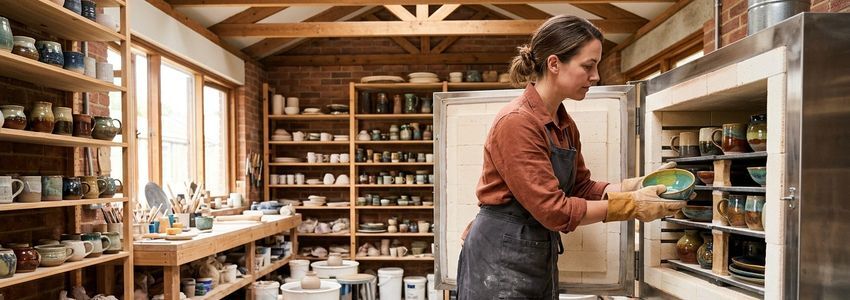
Pottery studio kiln financing is the financing businesses use to purchase, lease, or upgrade the kilns, pottery wheels, and production equipment a working ceramics studio depends on, without draining cash reserves on a single large purchase. Whether you are opening a new paint-your-own-pottery storefront, replacing an aging gas kiln that no longer holds temperature, or scaling a wholesale ceramics operation, the right financing structure can be the difference between a kiln sitting on a wish list and one firing your first batch of work next month.
A single commercial-grade kiln can run anywhere from $3,500 for a mid-size electric unit to well over $20,000 for a large industrial or high-capacity gas kiln. Add pottery wheels, slab rollers, extruders, ventilation systems, shelving, and glaze-mixing equipment, and a full studio buildout easily climbs into the tens of thousands of dollars before you have sold a single piece. For most independent studio owners and small ceramics businesses, paying that entire amount upfront is simply not realistic, which is exactly why pottery studio kiln financing exists.
In This Article
What Is Pottery Studio Kiln Financing?
Pottery studio kiln financing refers to business loans, equipment leases, and equipment finance agreements structured specifically to help ceramics studios acquire kilns and related production equipment. Rather than functioning as a specialty product offered only to potters, it is typically a standard small business equipment financing solution applied to the unique needs of a pottery or ceramics business.
This type of financing can cover a wide range of equipment beyond the kiln itself, including:
- Electric and gas kilns, from tabletop test kilns to large walk-in production kilns
- Pottery wheels, both kick wheels and electric wheels
- Slab rollers, extruders, and pug mills
- Ventilation and exhaust systems required for safe kiln operation
- Glaze-mixing stations, spray booths, and storage shelving
- Point-of-sale systems and retail fixtures for paint-your-own-pottery studios
- Buildout costs tied to plumbing, electrical upgrades, and clay traps
Because a kiln is a tangible, resellable asset, lenders can often extend equipment financing against the kiln itself as collateral. That structure tends to produce more favorable terms than an unsecured loan, since the lender's risk is partially offset by the value of the equipment being financed.
Key Benefits of Financing a Kiln Instead of Paying Cash
Many studio owners assume that saving up and paying cash is always the smarter move. In practice, financing a kiln or full studio buildout often makes more financial sense for a growing ceramics business.
- Preserve working capital. Keeping cash in the business means you can cover clay and glaze purchases, payroll, marketing, and rent while your kiln pays for itself over time.
- Match payments to revenue. A financed kiln generates income (through classes, wholesale production, or retail firing fees) while you are still paying it off, rather than requiring the full cost upfront before any revenue is generated.
- Faster equipment access. Financing approval can happen in days, letting you secure equipment before a busy season, holiday retail rush, or new class schedule rather than waiting months to save the full purchase price.
- Potential tax advantages. Business equipment purchases, including those made through financing, may be eligible for accelerated depreciation treatment. Consult a tax professional for guidance specific to your business.
- Upgrade without waste. Financing makes it easier to replace an aging or inefficient kiln on a predictable schedule instead of running equipment well past its safe operating life.
- Build business credit. Making consistent, on-time payments on an equipment loan or lease helps establish a credit history for your business, which can support better terms on future financing.
Key Stat: According to the U.S. Small Business Administration, small businesses make up 99.9% of all U.S. businesses, and access to capital is one of the most consistently cited barriers to growth, particularly for equipment-intensive businesses like ceramics studios.
Ready to Fire Up Your Studio?
Get fast, flexible equipment financing from the #1 business lender in the U.S. No obligation, apply in minutes.
Apply Now →How Pottery Studio Kiln Financing Works
The mechanics of pottery studio kiln financing are straightforward, and the process typically moves faster than business owners expect. Here is the general path from application to a kiln firing in your studio.
- Identify the equipment and total cost. Get a written quote from your kiln supplier or equipment dealer, including the kiln, installation, ventilation, and any electrical or gas line work required.
- Choose a financing structure. Decide between an equipment loan (you own the kiln from day one, building equity as you pay it down) or an equipment lease (lower monthly payments, with an option to buy, renew, or return the equipment at the end of the term).
- Submit a simple application. Most equipment financing applications require basic business information, time in business, revenue figures, and the equipment quote. Many lenders do not require a full tax return package for smaller equipment amounts.
- Receive underwriting approval. Lenders evaluate your business's cash flow, credit profile, and the resale value of the kiln as collateral. Approval decisions on equipment financing can often happen within 24 to 48 hours.
- Sign the agreement and fund the purchase. Once approved, funds are typically sent directly to the equipment vendor, or in some cases directly to you to pay the vendor.
- Install and begin production. Your kiln arrives, gets installed (including any required ventilation or electrical work), and you begin production, classes, or wholesale firing while making fixed monthly payments.
Types of Pottery Studio Financing
Not every ceramics business has the same needs. Here are the primary financing structures studio owners use, often in combination.
Equipment Financing / Equipment Loans
An equipment loan lets you borrow the purchase price of a kiln, pottery wheel, or full equipment package and pay it back over a fixed term, typically two to seven years depending on the equipment's useful life. You own the equipment from the start, and the kiln itself generally serves as collateral.
Equipment Leasing
Leasing a kiln usually means lower monthly payments compared to a loan, since you are paying for the equipment's use over a defined term rather than its full purchase price. At the end of the lease, many agreements offer a buyout option, often for a nominal amount or fair market value, depending on the lease structure.
Working Capital Loans
Beyond the kiln itself, many studio owners need capital for clay and glaze inventory, marketing for a studio opening, or payroll during a slow season. An unsecured working capital loan can complement equipment financing by covering these operating costs separately from the equipment purchase.
Business Line of Credit
A revolving line of credit gives studio owners flexible access to funds for ongoing needs, such as restocking clay supplies before a busy class season or covering an unexpected repair, without needing to reapply for a new loan each time.
Used Equipment Financing
Many studios successfully finance used or refurbished kilns and wheels, which can significantly lower the total cost of a buildout. Lenders who specialize in equipment financing can often structure terms for used equipment just as they would for new purchases.
By the Numbers
Pottery Studio Financing: Key Statistics
$2K-$20K+
Typical price range for a new commercial-grade kiln
$40K-$150K
Average full commercial studio buildout cost
24-48 Hrs
Typical equipment financing approval window
99.9%
Share of U.S. businesses classified as small businesses (SBA)
Who Pottery Studio Kiln Financing Is Best For
Kiln and ceramics equipment financing serves a wide range of business models within the pottery and ceramics space. Common candidates include:
- New studio founders opening a standalone pottery studio, ceramics school, or paint-your-own-pottery storefront who need to finance a full equipment package before opening day.
- Established studios replacing aging kilns that no longer hold consistent temperatures, have failing elements or burners, or no longer meet safety standards.
- Wholesale and production potters scaling output to meet retail or e-commerce demand who need a second or larger kiln to increase firing capacity.
- Art schools, community centers, and universities expanding or upgrading ceramics program equipment.
- Pottery class and workshop businesses that need multiple wheels and a larger-capacity kiln to accommodate group sessions.
- Seasonal or event-based ceramics businesses that need additional firing capacity ahead of a holiday retail season.
Studios with at least six months of operating history and consistent revenue, even modest revenue, are typically in the strongest position to qualify for favorable equipment financing terms. Newer studios and startups are not automatically excluded, but may see different terms or be directed toward startup-specific equipment financing options.
Comparing Your Financing Options
Choosing between an equipment loan, a lease, or a working capital loan depends on your studio's cash position, growth plans, and how long you intend to keep the equipment.
| Option | Best For | Ownership | Typical Term |
|---|---|---|---|
| Equipment Loan | Studios planning to keep the kiln long-term | You own it immediately | 2-7 years |
| Equipment Lease | Lower monthly payments, flexibility to upgrade | Buyout option at end of term | 2-5 years |
| Working Capital Loan | Supplies, marketing, payroll alongside equipment | N/A (unsecured funds) | 3 months-5 years |
| Business Line of Credit | Ongoing, repeat purchasing needs | N/A (revolving credit) | Revolving |
Paying cash outright remains an option for studios with significant reserves, but it ties up capital that could otherwise be used for inventory, marketing, or a second location. Financing gives most growing studios more flexibility without sacrificing the ability to acquire quality equipment.
How Crestmont Capital Helps Pottery Studio Owners
Crestmont Capital works with small business owners across industries, including creative and studio-based businesses, to structure equipment financing that fits the realities of a ceramics operation. Whether you need a straightforward equipment lease for a single kiln or a larger package covering wheels, ventilation, and retail fixtures, the application and underwriting process is designed to move quickly so you are not stuck waiting weeks for a decision.
For studios purchasing a pre-owned kiln to control costs, Crestmont also offers used equipment financing, which can make a quality refurbished kiln just as accessible as financing a new one. And if your immediate need is less about the kiln itself and more about covering clay inventory, marketing for a grand opening, or payroll during a slow stretch, an unsecured working capital loan can run alongside your equipment financing without requiring additional collateral.
Studio owners who are still deciding between a loan and a lease, or who want to understand how equipment financing fits alongside other funding they have used, such as a retail buildout loan, often find it helpful to review how other small business owners have approached similar decisions. Crestmont's guide on retail business loans covers many of the same financing fundamentals that apply to a storefront-style pottery studio, and the guide to used equipment financing goes deeper into how financing pre-owned equipment works across industries.
Let's Get Your Kiln Financed
Crestmont Capital works with creative and studio-based businesses every day. Apply now and get a decision fast.
Apply Now →Real-World Scenarios
Scenario 1: The New Studio Launch
A potter who has spent three years selling work at local markets decides to open her first storefront studio. She needs two pottery wheels, a mid-size electric kiln, shelving, and a point-of-sale system, totaling roughly $18,000. Rather than delaying her opening another year to save the full amount, she finances the equipment package with a five-year equipment loan, keeping her remaining savings available for rent deposits and opening inventory.
Scenario 2: The Kiln Replacement Emergency
An established ceramics studio's 12-year-old gas kiln develops a cracked wall and can no longer hold temperature safely. With class registrations already booked for the following month, the owner cannot afford a delay. He secures equipment financing for a new kiln within 48 hours, with the vendor installing it before his next scheduled class session.
Scenario 3: Scaling for Wholesale Demand
A production potter selling to boutique retailers nationwide outgrows her single kiln's firing capacity. She finances a second, larger kiln through a lease structure that keeps monthly payments manageable while she fulfills a growing wholesale order book, with a plan to exercise the buyout option once revenue stabilizes.
Scenario 4: The Community Studio Expansion
A nonprofit community arts center wants to add an adult ceramics program but lacks the capital reserves for new equipment. The organization uses equipment financing to acquire four wheels and a kiln, paying down the balance through program enrollment fees over three years.
Scenario 5: Combining Equipment and Working Capital
A studio owner relocating to a larger space finances her kiln and wheels through an equipment loan while separately securing a working capital loan to cover the buildout's plumbing and electrical work, keeping the two funding needs cleanly separated for easier bookkeeping.
Frequently Asked Questions
Pro Tip: Always get a full written quote that itemizes the kiln, ventilation, and installation costs separately before applying. Lenders can often finance the entire package in one agreement, but only if the full cost is documented upfront.
Next Steps
Contact your kiln supplier for an itemized quote covering the kiln, ventilation, and installation.
Compare a loan versus a lease based on how long you plan to keep the equipment.
Submit a simple application with your business details and equipment quote for fast review.
Once funded, your equipment is delivered and installed so your studio can get to work.
Don't Let Equipment Costs Slow You Down
Crestmont Capital can help you finance the kiln, wheels, and equipment your studio needs. Apply now, no obligation.
Apply Now →Conclusion
Pottery studio kiln financing gives ceramics business owners a practical path to acquiring the kilns, wheels, and production equipment their studio needs, without tying up the cash reserves required to run day-to-day operations. Whether you are launching a new storefront studio, replacing a failing kiln, or scaling production to meet wholesale demand, matching the right financing structure (a loan, a lease, or working capital) to your specific situation can make equipment ownership far more manageable. With approval timelines often measured in days rather than months, there is rarely a reason to let a financing gap keep your kiln cold.
Disclaimer: The information provided in this article is for general educational purposes only and is not financial, legal, or tax advice. Funding terms, qualifications, and product availability may vary and are subject to change without notice. Crestmont Capital does not guarantee approval, rates, or specific outcomes. For personalized information about your business funding options, contact our team directly.