
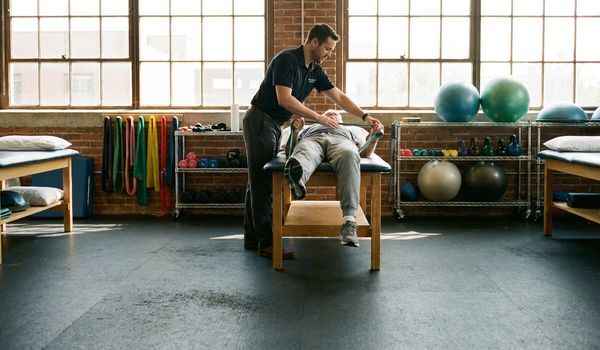
The physical therapy industry enters 2026 in a position of remarkable strength. Demand for rehabilitation and movement-based care keeps climbing, referral pipelines are widening, and clinic owners who understand the latest physical therapy statistics are making smarter decisions about hiring, equipment, and expansion capital. Whether you operate a single outpatient clinic or a growing multi-location group, the numbers behind this industry tell a clear story: the practices that invest ahead of demand are the ones capturing it. This report breaks down the most important physical therapy statistics for 2026, from market size and clinic revenue to equipment costs and financing trends, so you can benchmark your practice and plan your next move with confidence.
In This Article
- The State of the Physical Therapy Industry in 2026
- Market Size and Growth Statistics
- Clinic Revenue and Profitability Statistics
- Workforce and Patient Demand Statistics
- Startup and Equipment Costs in 2026
- How PT Clinics Use Financing
- Financing Options Compared
- How Clinic Financing Works
- How Crestmont Capital Helps
- Real-World Scenarios
- Who Benefits Most
- Frequently Asked Questions
- How to Get Started
The State of the Physical Therapy Industry in 2026
Physical therapy has quietly become one of the most resilient corners of American healthcare. The industry now spans more than 40,000 outpatient clinics, hospital-based departments, and private practices across the United States, employing roughly 250,000 licensed physical therapists along with tens of thousands of assistants, aides, and administrative staff. What was once viewed as a referral-dependent niche has matured into a primary access point for musculoskeletal care, with millions of patients now seeking physical therapy directly before ever seeing a surgeon.
Several structural forces are driving the industry's momentum in 2026. The American population continues to age, and adults over 65 use physical therapy services at roughly three times the rate of younger adults. At the same time, younger and more active populations are embracing PT as a first-line treatment rather than a post-surgical afterthought. Direct access laws, which now exist in some form in all 50 states, allow patients to begin treatment without a physician referral, dramatically shortening the path from pain to care and expanding the addressable market for every clinic.
The result is an industry with durable, non-cyclical demand. Musculoskeletal conditions affect an estimated one in two American adults, roughly 127 million people, and account for hundreds of billions of dollars in annual healthcare spending. Unlike discretionary healthcare services, physical therapy demand holds steady through economic cycles because pain does not pause for recessions. For clinic owners, this stability is precisely what lenders find attractive, and it explains why financing for physical therapy practices has become faster and more accessible than it was even five years ago.
Yet opportunity and pressure coexist. Reimbursement rates from commercial insurers and Medicare have been roughly flat to declining in real terms, forcing clinics to run leaner operations and diversify revenue. The clinics winning in 2026 are the ones treating their practice like the business it is: tracking benchmarks, investing in efficient equipment, and using financing strategically rather than reactively.
Physical Therapy Market Size and Growth Statistics
The headline physical therapy statistics for 2026 start with market size. Industry analysts estimate the U.S. physical therapy services market generates between $50 billion and $55 billion in annual revenue this year, up from roughly $40 billion at the start of the decade. That represents compound annual growth in the range of 3% to 5%, a pace that has held remarkably steady through the pandemic recovery, inflation spikes, and shifting reimbursement policy.
Drilling into the physical therapy market by segment reveals where growth is concentrated:
- Outpatient orthopedic clinics remain the largest segment, accounting for the majority of industry revenue, and continue to grow as surgical volumes rebound and surgeons increasingly prescribe pre-operative and post-operative PT.
- Sports medicine and performance training is among the fastest-growing niches, with cash-pay rates often double insurance-based rates per session.
- Pelvic health, vestibular rehab, and oncology rehabilitation are expanding as physician awareness grows and referral pathways formalize.
- Home health and mobile PT models are scaling quickly, enabled by telehealth hybrids and lower overhead structures.
- Industrial and workplace injury prevention programs are giving clinics direct contracts with employers, bypassing traditional referral channels entirely.
The physical therapy industry trends behind these numbers matter as much as the numbers themselves. Consolidation continues, with private equity-backed groups acquiring independent clinics at healthy valuations, typically 4 to 8 times EBITDA for well-run multi-site practices. That consolidation creates a strategic fork in the road for independent owners: scale up to compete, or differentiate into high-value niches. Both paths require capital, which is why financing activity among PT clinics has risen alongside market growth.
Looking beyond 2026, forecasts project the physical therapy market to continue expanding at roughly 3% to 6% annually through 2030, with outpatient and cash-pay segments outpacing the broader average. Few healthcare niches offer that combination of growth and predictability, and it is the core reason lenders compete to finance PT clinic expansions, equipment purchases, and acquisitions.
Clinic Revenue and Profitability Statistics
What do these industry-level numbers mean at the level of an individual clinic? The economics of a typical outpatient physical therapy practice in 2026 look like this: a single-location clinic with two to four treating therapists generally produces between $500,000 and $1.5 million in annual revenue. Solo practitioner practices commonly fall in the $250,000 to $600,000 range, while larger multi-therapist clinics with strong referral networks and ancillary services can exceed $2 million per location.
Revenue per therapist is the metric sophisticated owners watch most closely. A fully utilized physical therapist typically generates $150,000 to $200,000 in annual gross revenue, depending on payer mix, visit volume, and local rates. Clinics that keep therapist schedules filled at 85% to 95% of available slots consistently outperform those that tolerate gaps, which is why scheduling software, front-desk staffing, and referral marketing show up so directly in the revenue line.
Key Stat: Well-run outpatient PT clinics typically operate on net profit margins of 10% to 20%. The difference between the bottom and top of that range usually comes down to therapist utilization, payer mix, and overhead discipline rather than raw visit volume.
On the cost side, payroll dominates. Clinician and staff wages typically consume 50% to 60% of revenue, followed by rent at 6% to 10%, billing and administrative costs at 5% to 8%, and marketing at 2% to 5%. Equipment, while capital intensive upfront, is a relatively small ongoing expense, typically 3% to 6% of revenue when financed over its useful life. This cost structure is exactly why equipment financing and working capital loans map so naturally onto the PT business model: they convert lumpy capital needs into predictable monthly payments that a stable revenue base can absorb.
Payer mix remains the single biggest swing factor in clinic profitability. Clinics dependent on Medicare and Medicaid face rates that have been flat or declining in real terms, while those with a healthy share of commercial insurance and cash-pay services enjoy meaningfully higher per-visit economics. Industry surveys suggest roughly one in four clinics has added at least one cash-pay service line in the past three years, from dry needling and laser therapy to wellness memberships and performance packages, and those clinics report materially stronger margins.
Workforce and Patient Demand Statistics
Demand-side physical therapy statistics are just as compelling as the revenue figures. The U.S. Bureau of Labor Statistics projects employment of physical therapists to grow about 15% from 2022 to 2032, a rate it classifies as much faster than the average for all occupations. That translates to roughly 14,000 new physical therapy job openings per year over the decade, a signal of sustained demand that few clinical professions can match.
On the patient side, the drivers are structural rather than faddish. An estimated 127 million American adults live with a musculoskeletal condition, and musculoskeletal care represents one of the largest categories of U.S. healthcare spending, with annual costs commonly estimated above $380 billion. As insurers and employers push to reduce opioid prescriptions and avoidable surgeries, physical therapy keeps gaining share as the conservative first-line treatment. Physicians refer earlier, patients self-refer through direct access, and employers contract directly with clinics for injury prevention programs.
Key Stat: Adults over 65 use physical therapy at roughly three times the rate of younger adults, and the 65-plus population is projected to grow by more than 10 million people between 2025 and 2035. Every clinic's local demand curve is tilted upward for the rest of the decade.
The workforce picture does carry one warning for owners: recruiting and retaining licensed therapists is the industry's tightest bottleneck. Clinics compete for talent on pay, schedule flexibility, and equipment quality, and the clinics with modern, well-equipped treatment spaces consistently report easier recruiting. That is a practical argument for financing an equipment refresh before a hiring push rather than after.
Ready to Grow Your Practice?
Get fast, flexible financing from the #1 business lender in the U.S. No obligation - apply in minutes.
Apply Now →What It Costs to Open and Equip a PT Clinic in 2026
For therapists planning a launch, or owners benchmarking their own spending, startup cost statistics for physical therapy clinics have stayed relatively stable over the past few years. Most new outpatient clinics require between $70,000 and $150,000 in total startup capital, with the range driven mostly by market rents, build-out scope, and how much equipment is purchased new versus financed or leased.
A typical startup budget breaks down roughly as follows:
- Lease deposit and build-out: $15,000 to $50,000 depending on space condition and local construction costs
- Clinical equipment: $25,000 to $60,000 for treatment tables, modalities, and exercise equipment
- Technology and software: $5,000 to $15,000 for EMR, billing, scheduling, and telehealth systems
- Working capital reserve: $20,000 to $60,000 to cover payroll and overhead during the 6 to 12 month ramp to full patient volume
- Marketing and launch: $5,000 to $15,000 for referral outreach, local advertising, and community presence
On the equipment side, per-item pricing in 2026 runs approximately: $1,500 to $5,000 per electric hi-lo treatment table, $2,000 to $15,000 for therapeutic ultrasound and electrical stimulation units, $10,000 to $30,000 for Class IV laser therapy systems, $15,000 to $50,000 for a complete therapeutic exercise package, and $3,000 to $10,000 for hydrotherapy additions. An established clinic refreshing or expanding its equipment typically spends $40,000 to $100,000 per round.
These figures explain why equipment financing is the single most common financing product in the industry. Rather than writing a $60,000 check against early cash reserves, a clinic can finance the same equipment package over 36 to 60 months, often for a monthly payment that one or two additional patient visits per day fully covers. The equipment effectively pays for itself out of the revenue it enables.
How Physical Therapy Clinics Use Financing in 2026
Financing has become a standard operating tool for PT clinics rather than a last resort. Small business credit surveys from the Federal Reserve system consistently show that around 40% of employer firms apply for financing in a given year, and healthcare practices skew above that average because of their capital-intensive equipment needs and slow insurance reimbursement cycles. Within physical therapy specifically, four use cases dominate financing activity:
1. Equipment acquisition and upgrades. New tables, modalities, lasers, and exercise systems are the classic financed purchase. The asset secures the financing, approval is fast, and terms of 24 to 72 months align payments with the equipment's useful life.
2. Working capital to bridge reimbursement timing. Insurance claims typically pay 30 to 60 days after treatment, and denials or re-submissions can stretch that further. A working capital loan or line of credit smooths the gap between delivering care and getting paid for it, protecting payroll during the troughs.
3. Expansion and second locations. Once a first clinic reaches consistent profitability, the statistics favor scaling: multi-location groups spread marketing, billing, and management costs across a larger revenue base. Expansion financing typically combines a build-out loan with equipment financing and a working capital buffer for the new location's ramp.
4. Practice acquisition. With consolidation ongoing, acquiring a retiring competitor's practice is often the fastest growth path. Acquisition financing covers the purchase price, transition costs, and frequently an equipment refresh to bring the acquired clinic up to the buyer's standard of care.
By the Numbers
Physical Therapy Clinic Financing Statistics 2026 - Key Figures
$53B
Estimated U.S. physical therapy services market size in 2026
40,000+
Outpatient PT clinics and facilities operating nationwide
15%
Projected PT employment growth 2022-2032, per federal labor data
127M
U.S. adults affected by musculoskeletal conditions, the core PT patient base
Financing Options Compared for PT Clinics
Not all financing products fit every situation. The right structure depends on what the capital is for, how quickly it is needed, and the clinic's credit and revenue profile. Here is how the main options compare for a physical therapy practice in 2026:
| Feature | Equipment Financing | Working Capital Loan | Business Line of Credit | SBA 7(a) Loan |
|---|---|---|---|---|
| Best for | Tables, modalities, exercise systems | Payroll, marketing, lump-sum needs | Recurring cash flow timing gaps | Acquisitions, real estate, large expansions |
| Typical amounts | $10K - $500K | $25K - $500K | $25K - $250K revolving | $100K - $5M |
| Funding speed | 24 - 72 hours | 24 - 72 hours | 1 - 5 days | 4 - 8 weeks |
| Term length | 24 - 72 months | 6 - 24 months | Revolving, renews annually | 7 - 25 years |
| Collateral | The equipment itself | Usually unsecured | Receivables / unsecured | Business assets, often personal guarantee |
Many clinics layer products deliberately. A common pattern is a term loan or equipment package for a known purchase, plus a business line of credit held in reserve for reimbursement timing gaps. The line costs nothing when undrawn and eliminates the scramble when a big commercial payer slows down for a quarter.
How Clinic Financing Works, Step by Step
The process of financing equipment or working capital for a physical therapy clinic is far simpler than most owners expect, especially compared with the credentialing and billing complexity they already manage daily. Here is how it typically unfolds with a specialized lender:
Step 1: Define the need and the number. Identify exactly what the capital will do: a specific equipment package, a build-out, six months of payroll buffer, or an acquisition price. Lenders move fastest when the use of funds is concrete.
Step 2: Submit a short application. Most alternative lenders ask for a one-page application plus three to six months of business bank statements. For equipment financing, a vendor quote or equipment list usually completes the file.
Step 3: Underwriting review. The lender evaluates monthly revenue consistency, time in business, and credit. PT clinics tend to underwrite well because insurance receivables produce unusually stable, verifiable monthly deposits.
Step 4: Approval and terms. Approvals commonly arrive within 24 hours for equipment and working capital products, with term sheets outlining the amount, term, and payment structure.
Step 5: Funding and deployment. For equipment deals, the lender typically pays the vendor directly upon delivery confirmation. Working capital and lines of credit fund straight to the clinic's bank account, often the same week the application was submitted.
Pro Tip: Apply before you are desperate. Lenders price risk, and a clinic applying from a position of stable deposits gets materially better terms than one applying mid-crisis. The best time to set up a line of credit is when you do not urgently need it.
How Crestmont Capital Helps Physical Therapy Clinics
Crestmont Capital has financed thousands of healthcare businesses, and physical therapy clinics are among the strongest fits for our model. As the #1 rated business lender in the U.S., we work with PT practice owners at every stage, from first-clinic launches to multi-location groups pursuing acquisitions.
Our physical therapy business loans are built around the realities of clinic cash flow, including the 30 to 60 day insurance reimbursement cycle that trips up conventional bank underwriting. For clinical build-outs and upgrades, our physical therapy equipment financing and leasing programs cover treatment tables, modalities, exercise systems, and technology with terms matched to the equipment's useful life.
Clinics that need broader flexibility can pair equipment financing with unsecured working capital for payroll, marketing, or hiring ahead of a new contract, or open a line of credit for ongoing reimbursement timing gaps. Because we underwrite on clinic revenue patterns rather than rigid bank formulas, approvals move in days, not the weeks a traditional bank or SBA process requires. If you are weighing whether to expand, upgrade, or acquire in 2026, our advisors can show you exactly what your clinic qualifies for before you commit to anything.
For a deeper look at loan structures and qualification details, see our complete guide to physical therapy business loans, and our breakdown of the best business loan options for physical therapy companies.
Get the Capital Your Clinic Needs to Grow
Join thousands of healthcare businesses funded by Crestmont Capital. Approvals in as little as 24 hours.
Check Your Options →Real-World Scenarios: How PT Clinics Put Financing to Work
Statistics come to life in application. These four scenarios reflect the most common ways physical therapy clinics are using financing in 2026:
Scenario 1: The first-clinic launch. A physical therapist with eight years of outpatient experience signs a lease on a 2,000 square foot suburban space. Build-out and deposits run $35,000, and the equipment package - four hi-lo tables, ultrasound and e-stim units, and a compact exercise area - totals $55,000. Rather than draining her savings, she finances the full $55,000 equipment package over 48 months and takes a $40,000 working capital loan to cover payroll through the ramp. Her combined monthly payments come in under what two filled therapist schedules generate, and the clinic reaches break-even in month nine.
Scenario 2: The service-line expansion. An established three-therapist clinic wants to add Class IV laser therapy and a dry needling program to capture cash-pay revenue. The laser system costs $24,000 and certification plus marketing adds $11,000. A $35,000 equipment financing arrangement covers everything, and the new services generate $6,000 to $9,000 per month at 90% margin within six months. The financing payment is covered by the first week of laser sessions each month.
Scenario 3: The reimbursement bridge. A clinic with a heavy commercial payer mix hits a quarter where its largest insurer stretches payments from 35 days to 70 days. Payroll is $45,000 per month. A $100,000 business line of credit, opened the previous year and sitting undrawn, covers two payroll cycles until collections normalize. Total interest cost: under $2,000. The alternative - delayed payroll and therapist attrition - would have cost far more.
Scenario 4: The acquisition. A two-location group learns that a respected competitor across town is retiring. The practice, with $900,000 in annual revenue and a loyal referral base, is priced at $650,000. Acquisition financing covers the purchase, and a $60,000 equipment refresh brings the acquired clinic's tables and modalities up to standard. Combined, the three locations share billing, marketing, and management overhead, and the acquired practice's EBITDA rises 20% in the first year under shared operations.
Which Physical Therapy Businesses Benefit Most From Financing
Financing is not equally urgent for every clinic, but several profiles see outsized returns from using it deliberately:
- New graduates launching practices who have strong clinical skills but limited startup cash and want to preserve reserves for the ramp-up period.
- Established clinics facing an equipment cliff where aging tables and modalities are overdue for replacement and a single financed refresh restores both patient experience and recruiting appeal.
- Clinics adding cash-pay services like laser, shockwave, dry needling, or performance training, where a modest equipment investment unlocks high-margin revenue that pays the financing many times over.
- Owners approaching capacity who need a second location or additional treatment rooms to absorb waitlisted demand before patients defect to competitors.
- Multi-location groups pursuing acquisitions in a consolidating market, where speed of capital often determines who wins a quality practice.
- Any clinic with slow-paying insurance mixes that wants a line of credit in place so reimbursement timing never dictates payroll or growth decisions.
The common thread is that financing works best as a proactive tool. The clinics that treat capital as a growth lever, rather than an emergency fix, are the ones compounding the industry statistics in their favor. The SBA's market research guidance is a useful framework for sizing your local opportunity, and U.S. Census Bureau County Business Patterns data lets you benchmark clinic density and healthcare employment in your county. For a broader view of how small businesses nationwide are using financing and credit, the Forbes Advisor small business statistics roundup adds helpful context.
Frequently Asked Questions
How big is the physical therapy industry in 2026? +
The U.S. physical therapy services industry generates an estimated $50 billion to $55 billion in annual revenue in 2026, spread across more than 40,000 clinics and outpatient facilities. Industry revenue has grown steadily at roughly 3% to 5% per year over the past decade, driven by an aging population and rising demand for non-surgical treatment of musculoskeletal conditions.
What is the average revenue of a physical therapy clinic? +
Revenue varies widely by size and location, but a typical single-location outpatient physical therapy clinic generates between $500,000 and $1.5 million per year. Solo practitioner practices often fall in the $250,000 to $600,000 range, while multi-therapist clinics with strong referral networks can exceed $2 million annually.
How much does it cost to open a physical therapy clinic? +
Most new physical therapy clinics require $70,000 to $150,000 in startup capital. The largest line items are lease deposits and build-out, treatment equipment, and working capital to cover payroll and operating expenses during the first 6 to 12 months while patient volume ramps up. Equipment financing and working capital loans are commonly used to cover these costs.
What are typical profit margins for physical therapy clinics? +
Well-run outpatient physical therapy clinics typically operate on net profit margins of 10% to 20%. Margins are pressured by flat or declining insurance reimbursement rates, so clinics that control overhead, keep therapist utilization high, and add cash-pay services tend to land at the top of that range.
What percentage of physical therapy clinics use financing? +
Industry surveys consistently show that a majority of small healthcare practices, including physical therapy clinics, use some form of external financing. Equipment financing is the most common product because treatment tables, ultrasound units, and exercise systems are expensive and depreciate slowly, making them ideal assets to finance rather than purchase outright.
What credit score do I need for physical therapy clinic financing? +
Most alternative lenders look for a personal credit score of 600 or higher, while banks and SBA lenders typically prefer 680 or above. Clinics with lower scores can still qualify for equipment financing or revenue-based products because the equipment itself or future receivables secure the funding. Strong clinic cash flow can offset a weaker credit profile.
How fast can a physical therapy clinic get funded? +
Alternative lenders like Crestmont Capital can approve and fund equipment financing or working capital in as little as 24 to 72 hours after a complete application. Traditional bank loans and SBA loans take longer, typically 2 to 8 weeks, because of deeper underwriting and documentation requirements.
What equipment can be financed for a physical therapy clinic? +
Nearly all clinical and office equipment qualifies: treatment tables, therapeutic ultrasound and electrical stimulation units, laser therapy devices, treadmills and exercise machines, resistance and balance equipment, hydrotherapy systems, EMR and practice management software bundles, and even office furniture and waiting room fixtures.
Are SBA loans a good option for physical therapy practices? +
SBA 7(a) loans can be an excellent fit for established clinics with strong credit because they offer long repayment terms and competitive rates. The tradeoff is speed and paperwork: approval often takes 4 to 8 weeks. Clinics that need equipment or working capital quickly often pair faster alternative financing with an SBA application for longer-term needs.
How do reimbursement rates affect clinic financing? +
Insurance reimbursement rates have been roughly flat to declining in real terms, which compresses margins and makes consistent cash flow harder to maintain. Lenders look closely at payer mix and collections history. Clinics that diversify into cash-pay services such as wellness programs, dry needling, or performance training generally present stronger financing applications.
Can a new physical therapy graduate get financing to start a clinic? +
Yes, though options are narrower without business history. New graduates typically combine a smaller equipment financing package, a working capital loan sized to 6 months of expenses, and sometimes an SBA microloan. A detailed business plan with realistic patient volume projections and a referral strategy meaningfully improves approval odds.
What is the difference between a working capital loan and a line of credit for clinics? +
A working capital loan delivers a lump sum repaid on a fixed schedule, which suits one-time expenses like a marketing push or hiring ahead of a contract. A business line of credit provides revolving access to funds you draw and repay as needed, making it better for smoothing the recurring timing gaps between treating patients and collecting insurance reimbursements.
How much working capital does a typical PT clinic need? +
A common rule of thumb is 3 to 6 months of operating expenses held in reserve. For a clinic spending $40,000 per month on payroll, rent, and overhead, that means $120,000 to $240,000 of accessible capital. Newer clinics and those with slow-paying insurance mixes should target the higher end.
Do physical therapy clinics qualify for equipment leasing? +
Yes. Equipment leasing is widely available to PT clinics, including newer practices, because the equipment secures the lease. Leasing preserves cash, often requires little money down, and can bundle maintenance. Clinics that expect technology to change, such as laser or shockwave therapy devices, often prefer leasing over ownership.
How is the physical therapy market expected to grow after 2026? +
Industry forecasts project continued growth of roughly 3% to 6% annually through the end of the decade, with some segments growing faster. Employment of physical therapists is projected to grow about 15% from 2022 to 2032 according to federal labor data, much faster than average, reflecting durable demand from an aging and active population.
Turn These Statistics Into Your Growth Plan
The clinics investing ahead of demand are capturing it. See what your practice qualifies for today.
Get Started Now →How to Get Started
Complete our quick application at offers.crestmontcapital.com/apply-now - takes just a few minutes.
A Crestmont Capital advisor will review your clinic's needs and match you with the right financing option.
Receive your funds and put them to work - often within days of approval.
Conclusion: What the 2026 Numbers Mean for Your Practice
The physical therapy statistics shaping 2026 tell a consistent story. A $50 billion-plus market growing at 3% to 5% annually. More than 40,000 clinics competing for a patient base of 127 million Americans with musculoskeletal conditions. Federal projections calling for 15% growth in the PT workforce through 2032. Demand is not the question for this industry - capacity is.
The practices that will capture the largest share of that growth are the ones making deliberate investments now: modern equipment that attracts patients and clinicians, cash-pay service lines that lift margins, second locations that absorb waitlisted demand, and acquisitions that add revenue faster than organic growth alone. Each of those moves takes capital, and each is precisely the kind of investment the financing market is built to support.
Use the benchmarks in this report to measure where your clinic stands, identify the gap between where you are and where the market is heading, and close it with the right capital structure. When you are ready to act on what these physical therapy statistics mean for your practice, Crestmont Capital is ready to help you fund it.
Disclaimer: The information provided in this article is for general educational purposes only and is not financial, legal, or tax advice. Funding terms, qualifications, and product availability may vary and are subject to change without notice. Crestmont Capital does not guarantee approval, rates, or specific outcomes. For personalized information about your business funding options, contact our team directly.

Allan Garfinkle
Allan Garfinkle is the Chief Revenue Officer at Crestmont Capital, where he has spent more than a decade leading revenue strategy, business development, and operational growth. With 28 years of experience building and advising startups and small businesses, Allan has helped more than 10,000 business owners navigate financing decisions, growth opportunities, and changing economic conditions. He earned a Bachelor of Science in Economics and an MBA with a concentration in Finance from Northeastern University, as well as a Juris Doctor from New England Law, where his studies focused on contracts and business law. His writing draws on extensive practical experience in small-business lending, equipment financing, business credit, and commercial finance.