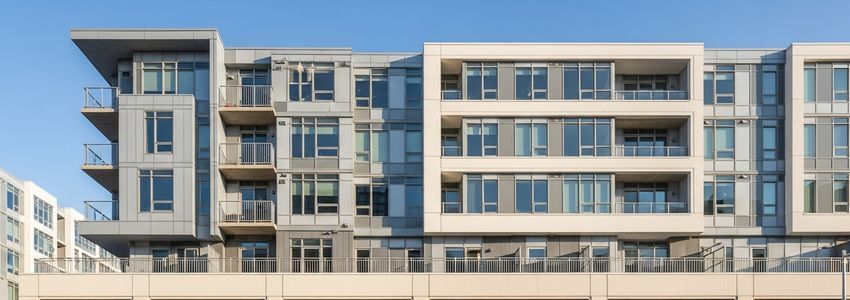
Mixed use properties - buildings that combine commercial space with residential units - represent one of the most versatile and potentially lucrative real estate investments available to business owners and investors today. A storefront on the ground floor with apartments above. A medical office building with condos on the upper floors. A retail strip with live-work lofts in the back. These hybrid properties generate multiple income streams, serve dual purposes, and have become increasingly attractive as urban markets evolve.
But financing a mixed use property is more complex than a standard residential mortgage or a straightforward commercial loan. Lenders have to account for both the commercial and residential components - each with its own underwriting standards, risk profiles, and income potential. Understanding how mixed use property loans work is the first step toward making a smart investment decision.
This guide covers everything you need to know about mixed use property financing: loan types, qualification requirements, down payment expectations, the application process, and practical tips to improve your approval odds.
What Is a Mixed Use Property Loan?
A mixed use property loan is a type of real estate financing designed specifically for properties that combine two or more different uses - typically commercial and residential - within a single building or development. These loans bridge the gap between traditional residential mortgages and commercial real estate loans, often requiring specialized underwriting that accounts for both components.
Common examples of mixed use properties include:
- Ground-floor retail with residential apartments on upper floors
- Office space combined with residential condominiums
- Restaurant or hospitality space with hotel rooms or short-term rentals
- Medical or professional office buildings with residential units
- Light industrial or studio space with live-work residential units
- Multifamily buildings with commercial space on the ground floor
The classification of a mixed use property - and therefore the type of loan that applies - depends heavily on the percentage of the building dedicated to each use. Lenders typically treat a property as primarily residential if 80% or more of the gross floor area is residential, and primarily commercial if commercial use exceeds a certain threshold (often 20-25% depending on the lender).
This distinction matters enormously because residential loans typically offer lower rates and more favorable terms than commercial loans. The commercial component of a mixed use property can push the financing into commercial territory, significantly changing your rate, down payment, and qualification requirements.
Why Mixed Use Properties Are Popular Investments
Mixed use development has seen a significant resurgence in the U.S. over the past decade, driven by shifting consumer preferences, urban planning trends, and the economics of dense urban real estate. According to the Urban Land Institute, mixed use development is one of the fastest-growing segments of commercial real estate, particularly in walkable urban cores and transit-oriented communities.
For investors and business owners, the appeal is clear:
Multiple Income Streams
A mixed use property generates revenue from both commercial tenants (retail, office, restaurant) and residential tenants (apartments, condos, live-work units). This diversification reduces risk - if commercial vacancy rises, residential income continues, and vice versa.
Higher Valuations in Urban Markets
Mixed use buildings often command premium valuations in dense urban and suburban markets where zoning allows them. The combination of retail foot traffic and residential density creates a virtuous cycle that can support higher cap rates and stronger appreciation.
Owner-Occupancy Opportunities
Many business owners finance mixed use buildings specifically to own the space their business occupies while using rental income from other units to offset their mortgage payment. This owner-user model is one of the most powerful wealth-building strategies available to small business owners.
Community and Market Demand
As walkable, live-work-play environments have become more desirable - particularly to millennial and Gen Z consumers - mixed use properties have grown in demand. This demand supports both residential and commercial occupancy rates.
Market Insight
The U.S. Census Bureau reports that mixed use zoning has expanded in more than 70% of major U.S. cities over the past 15 years, reflecting strong municipal policy support for walkable, transit-friendly development. For investors, this trend translates to growing inventory and favorable regulatory environments in many metro areas. (Source: U.S. Census Bureau)
Types of Mixed Use Property Loans
Several distinct financing options exist for mixed use properties. The right choice depends on the property's use breakdown, your ownership goals, credit profile, and how quickly you need to close.
Conventional Commercial Loans
Most mixed use properties - particularly those with significant commercial space - are financed through conventional commercial real estate loans from banks, credit unions, and non-bank lenders. These loans typically require:
- 20-35% down payment
- Strong personal and business credit
- Documented rental income or business occupancy
- Debt service coverage ratio (DSCR) of 1.20 or higher
- Terms of 5, 10, or 20 years with amortization of 20-25 years
SBA 504 Loans
For owner-occupants who plan to use a significant portion of the property for their own business, the SBA 504 loan program is one of the most attractive options available. SBA 504 loans offer:
- Down payments as low as 10% for eligible businesses
- Long terms (10, 20, or 25 years)
- Below-market fixed rates on the CDC portion
- The owner must occupy at least 51% of the building
The SBA 504 structure pairs a conventional bank loan (50% of project cost) with a CDC/SBA debenture (40%) and borrower equity (10%), keeping upfront costs manageable while locking in favorable long-term financing.
SBA 7(a) Loans
SBA 7(a) loans are more flexible than 504 loans and can be used for a wider range of purposes, including mixed use property acquisition. They offer up to $5 million with competitive rates and terms. Like the 504, the owner-occupancy requirement applies. Learn more about SBA loan options for business owners.
Conventional Residential Mortgages (for Mostly-Residential Properties)
If the property is primarily residential - typically defined as 80% or more of the floor area used for residential purposes - some lenders will finance it with a conventional residential mortgage (conforming, FHA, or portfolio). This can be highly advantageous because residential mortgage rates are generally lower than commercial rates and down payments may be smaller (3.5% to 20%). However, lenders scrutinize the commercial component carefully, and many apply stricter standards for properties with any commercial use.
Portfolio Loans
Portfolio lenders (banks and credit unions that hold their own loans rather than selling them to the secondary market) have more flexibility to underwrite mixed use properties on a case-by-case basis. They may offer competitive rates for borrowers who don't fit standard commercial or residential boxes. Portfolio loans are particularly useful for unique or complex properties that conventional lenders won't touch.
Bridge Loans and Hard Money
For investors who need to move quickly - to win a competitive bid, fund a renovation, or bridge a financing gap - short-term bridge loans or hard money loans can provide fast capital. These carry higher rates (8-14% or more) but can fund in days rather than weeks. They are typically refinanced into permanent financing once the property is stabilized or renovated.
Business Loans for Property-Related Expenses
Beyond the mortgage itself, many mixed use property owners use small business loans or a business line of credit to fund renovations, tenant improvements, operating expenses, or working capital needs associated with their commercial units.
Exploring Mixed Use Property Financing?
Crestmont Capital helps business owners and investors navigate complex real estate financing. Get pre-qualified with no hard credit pull.
Check Your Options - 2 MinutesQualification Requirements
Lenders evaluate mixed use property loan applications differently depending on the property type and loan program. Here is what most lenders look for across the spectrum of mixed use financing.
Credit Score Requirements
- Conventional commercial loans: 660-700+ typically required; 720+ for best rates
- SBA 504/7(a) loans: 680+ for most lenders
- Conventional residential mortgages: 620+ for conforming loans; 580 for FHA
- Portfolio loans: Varies widely; 600-640 minimum for many lenders
- Bridge/hard money: Credit is less important; property value and equity are primary
Down Payment
See the dedicated section below for down payment details - this is one of the biggest variables in mixed use financing.
Debt Service Coverage Ratio (DSCR)
DSCR is a critical metric for commercial and mixed use loans. It measures how well the property's income covers its debt payments:
DSCR = Net Operating Income / Annual Debt Service
Most commercial lenders require a minimum DSCR of 1.20-1.25, meaning the property must generate at least 20-25% more income than needed to cover loan payments. Properties with strong commercial lease terms and high residential occupancy will generally satisfy this requirement more easily.
Loan-to-Value (LTV) Ratio
LTV compares the loan amount to the property's appraised value. Commercial mixed use loans typically cap at 65-80% LTV. Residential-treated properties may qualify for up to 80-85% LTV. Lower LTV means higher down payment but also better rates and easier approval.
Property and Income Documentation
Lenders will want to see:
- Current leases or rental agreements for all occupied units
- Rent roll showing current and projected income
- Operating expense statements and net operating income calculations
- Property condition report or inspection
- Environmental assessment (for commercial properties)
- Business financial statements (for owner-occupants)
- Personal financial statements and tax returns (2 years)
Business and Financial History
For owner-occupant SBA loans, lenders will also evaluate:
- Business profitability and cash flow
- Industry and management experience
- Personal financial strength of principals
- Ability to service both the real estate debt and ongoing business expenses
Credit Score Tip
If your credit score is below the threshold for conventional financing, you still have options. Bad credit business loans and bridge financing can help you acquire or improve a property while you work on rebuilding credit. Portfolio lenders also offer more flexibility than conventional lenders for borrowers with complex credit histories.
How Much Can You Borrow?
Loan amounts for mixed use properties vary widely based on the property's value, income, and the financing program used.
| Loan Type | Typical Amount | Max LTV | Term |
|---|---|---|---|
| Conventional Commercial | $200K - $10M+ | 65-75% | 5-20 years |
| SBA 504 | Up to $5M (CDC portion) | Up to 90% | 10, 20, 25 years |
| SBA 7(a) | Up to $5M | Up to 90% | Up to 25 years |
| Residential Conforming | Up to $766,550 (2024) | Up to 80-85% | 15 or 30 years |
| Portfolio Loan | $100K - $5M+ | 65-80% | 5-30 years |
| Bridge/Hard Money | $100K - $5M+ | Up to 70-80% | 6 months - 3 years |
For very large mixed use developments or properties valued above $10 million, construction loans, CMBS (commercial mortgage-backed securities), or life insurance company loans may apply.
Down Payment Requirements
Down payment is often the biggest hurdle for mixed use property buyers. Because these properties straddle residential and commercial categories, down payments can vary significantly based on how the property is classified.
Primarily Residential Mixed Use (80%+ Residential Space)
- Conventional loan (owner-occupied): 5-20% depending on lender
- FHA loan (owner-occupied, 2-4 units): 3.5% with 580+ credit score
- Investment property: 20-25% minimum
Primarily Commercial Mixed Use
- Conventional commercial: 20-35%
- SBA 504 (owner-occupant): 10% (startup businesses may need 15-20%)
- SBA 7(a): 10-20% depending on lender and loan size
- Portfolio loans: 20-30% typical
Strategies to Reduce Down Payment
For buyers who want to minimize upfront cash:
- SBA programs offer the lowest down payments for owner-occupants (10%)
- Seller financing - some sellers will carry a second note to reduce the buyer's cash requirement
- Equity from existing properties - a business line of credit or equity loan on an existing property can fund the down payment
- Partner equity - bringing in a partner investor to contribute equity in exchange for ownership stake
- Working capital loans - some business owners use working capital for renovation costs, freeing up reserves for the down payment
The Loan Application Process
Applying for a mixed use property loan is more involved than a standard mortgage. Here is what to expect at each stage.
Stage 1: Property Analysis and Pre-Qualification
Before approaching a lender, build a thorough financial model for the property. Calculate net operating income using actual or projected rents for all units. Estimate operating expenses (maintenance, insurance, property management, vacancy allowance). Compute your expected DSCR at various loan amounts. This analysis will drive your lender conversations and determine what financing makes sense.
Stage 2: Choose Your Lender and Program
Based on the property's use breakdown, your credit profile, and your financing goals, narrow down to 2-3 lenders or programs that fit. Get pre-qualification letters or term sheets from multiple sources to compare rates, LTVs, and fees.
Stage 3: Formal Application
Submit your formal loan application with all supporting documentation:
- Personal financial statement and tax returns (2-3 years)
- Business financial statements (if owner-occupant)
- Property rent roll and lease agreements
- Property operating history (if available)
- Purchase and sale agreement
- Property appraisal order (lender will order this)
Stage 4: Underwriting and Appraisal
The lender's underwriter reviews your application, income, and creditworthiness while an independent appraiser values the property. Mixed use appraisals are more complex than standard residential appraisals and typically use an income approach alongside a sales comparison approach. Expect underwriting to take 2-6 weeks for most programs.
Stage 5: Commitment and Closing
Once approved, you receive a loan commitment letter outlining final terms. Review all documents carefully with an attorney before signing. Closing costs for commercial and mixed use loans typically run 2-5% of the loan amount, including origination fees, appraisal, title insurance, and legal fees.
Ready to Finance Your Mixed Use Property?
Our team works with business owners at every stage of the mixed use acquisition process. No hard pull to get started.
Start Your ApplicationMixed Use Property Financing at a Glance
Mixed Use Property: Key Financing Facts
Sources: SBA.gov, U.S. Census Bureau, Federal Reserve, Urban Land Institute
Tips to Improve Approval Odds
Getting approved for a mixed use property loan - and getting the best possible terms - requires preparation. Here are the most impactful steps you can take before applying.
Strengthen Your Financial Profile
Pay down high-utilization credit accounts, resolve any derogatory items on your credit report, and ensure your personal and business finances are clearly separated. Lenders look closely at personal financial strength for mixed use loans, especially when you are the business owner-occupant.
Document Rental Income Thoroughly
Provide executed leases, rent rolls, and 12-24 months of rent payment history for all units. If purchasing a vacant building or one with below-market rents, provide a detailed market rent analysis to support projected income. Lenders will use this to calculate DSCR - the stronger your documentation, the more favorable their analysis.
Show Property Management Experience
Lenders look more favorably on borrowers who have managed investment properties before. If you are new to landlording, consider a property management agreement with a professional management company to demonstrate that occupancy and income will be professionally maintained.
Get Your Appraisal Right
The appraisal is the foundation of your loan. Work with an appraiser experienced in mixed use properties. Ensure all comparable sales and rental properties used in the appraisal are truly comparable - neighborhood, use mix, size, condition. A well-supported appraisal can make or break your financing.
Consider the Right Loan Program for Your Situation
Many borrowers default to conventional commercial loans without exploring SBA options that could dramatically reduce their down payment. If you plan to occupy at least 51% of the building for your business, the SBA 504 program deserves serious consideration. Compare all relevant programs before committing to an application.
Work with an Experienced Lender
Not all lenders are comfortable with mixed use properties. Working with a lender or broker who has closed mixed use deals before will save time and reduce the risk of a last-minute denial due to inexperience with the property type. Crestmont Capital works with a broad network of commercial, SBA, and portfolio lenders with mixed use experience.
Use Business Financing for Renovation Costs
If the property needs renovation before or after acquisition, consider using a separate fast business loan or line of credit to fund tenant improvements and construction costs rather than rolling everything into the real estate loan. This can keep your LTV and DSCR in better shape while preserving flexibility for the long-term mortgage.
Common Challenges and How to Overcome Them
Mixed use property financing comes with unique challenges that conventional home buyers and commercial investors may not have encountered before. Here is how to navigate the most common ones.
Challenge: Property Classification Uncertainty
Some mixed use properties sit in an ambiguous zone between residential and commercial classification. Different lenders may classify the same property differently, leading to inconsistent quotes. The solution is to work with an experienced commercial mortgage broker or lender who can pre-determine how the property will be classified and select the right lending channel accordingly.
Challenge: Vacant or Partially-Occupied Properties
Lenders need to see stable income to underwrite a mixed use loan. Vacant buildings or those with below-market rents make DSCR calculations difficult. Bridge loans or hard money can fund the acquisition and stabilization phase, with a conventional refinance once occupancy is established. Some SBA lenders will also underwrite based on projected occupancy for owner-occupant borrowers.
Challenge: Complex Appraisals
Mixed use appraisals are inherently complex and can come in lower than expected if the appraiser lacks comparable data. Work with your lender to identify qualified appraisers with specific mixed use experience in your market. Providing your own market rent analysis and comparable property data to the appraiser can help support a stronger valuation.
Challenge: Higher Rates Than Expected
Borrowers accustomed to residential mortgage rates are often surprised by the higher rates on commercial and mixed use loans. If rate is your primary concern, focus on owner-occupant SBA programs which offer some of the most competitive rates available, or explore portfolio lenders who may offer relationship-based pricing. A strong credit profile and low LTV are the most direct paths to better rates.
Challenge: Slow Underwriting Timelines
Commercial mixed use loans take longer to underwrite than residential loans. Budget 30-90 days for most programs. If your purchase contract requires a faster close, negotiate a longer due diligence period or use a bridge loan to close quickly, with a plan to refinance into permanent financing. Short-term business loans can also help bridge gaps during the financing process.
For related reading on commercial real estate financing, explore our guide on commercial real estate financing for additional context on lender requirements and market trends. For working capital needs tied to your business operations in a mixed use property, check out revenue-based financing as a flexible option.
Frequently Asked Questions
What is a mixed use property loan?
A mixed use property loan is financing designed for buildings that combine commercial and residential uses - such as retail space on the ground floor with apartments above. These loans straddle residential and commercial categories and may be underwritten as either depending on the property's use breakdown. Options include conventional commercial loans, SBA 504 or 7(a) loans, residential mortgages (for primarily residential buildings), portfolio loans, and bridge financing.
What down payment is required for a mixed use property?
Down payment requirements vary widely. SBA 504 loans for owner-occupants require as little as 10% down. Conventional commercial loans typically require 20-35%. Residential mortgages (for primarily residential mixed use buildings) may require as little as 3.5% (FHA) or 5-20% (conventional). The classification of the property - residential vs. commercial - is the biggest driver of down payment requirements.
Can I use an FHA loan for a mixed use property?
Yes, in some cases. FHA loans can be used for mixed use properties if the property meets specific guidelines: the non-residential portion must not exceed 25-49% of total floor area (depending on the specific FHA program), the borrower must live in one of the residential units, and the commercial space must be typical and compatible with the neighborhood. Not all mixed use properties will qualify - lenders and appraisers must confirm FHA eligibility.
What is a DSCR and why does it matter for mixed use loans?
DSCR stands for Debt Service Coverage Ratio - it measures the property's net operating income compared to its annual debt payments. A DSCR of 1.25 means the property generates 25% more income than needed to make loan payments. Most commercial lenders require a minimum DSCR of 1.20-1.25. Mixed use properties with strong, diversified rental income typically satisfy DSCR requirements more easily than purely commercial buildings with single-tenant occupancy.
Is an SBA loan a good option for a mixed use property?
SBA loans are excellent for owner-occupant mixed use purchases. The SBA 504 program in particular offers some of the most favorable terms available - as low as 10% down, long fixed-rate terms up to 25 years, and below-market rates on the CDC portion. The key requirement is that the borrower's business must occupy at least 51% of the building. If you plan to run your business out of the commercial space, SBA financing should be your first call.
How long does it take to get approved for a mixed use property loan?
Timeline depends heavily on the loan type. Bridge and hard money loans can close in 5-15 business days. Portfolio commercial loans typically close in 30-60 days. SBA loans generally take 45-90 days from application to close. Conventional residential mortgages for primarily residential buildings close in 30-45 days in most cases. Having all documentation ready before applying is the single most effective way to speed up the process.
What credit score do I need for a mixed use property loan?
Credit score requirements vary by program. FHA loans accept scores as low as 580. Conventional residential mortgages typically require 620+. Conventional commercial loans generally require 660-700+. SBA loans require 680+. Portfolio and hard money lenders have the most flexibility, sometimes lending to borrowers with scores in the 600s or lower depending on the property's income and equity position.
Can I buy a mixed use property as an investment without living in it?
Yes. Many investors purchase mixed use properties purely as investments - renting out both commercial and residential units without occupying the building themselves. Investment mixed use loans require larger down payments (20-35%) and higher credit scores than owner-occupant programs. SBA loans are not available for non-owner-occupant purchases. Conventional commercial loans and portfolio loans are the most common financing vehicles for investment mixed use properties.
How are mixed use properties appraised?
Mixed use properties are typically appraised using two methods: the income approach (capitalizing net operating income using a market cap rate) and the sales comparison approach (comparing to recent sales of similar mixed use buildings). The appraiser must analyze both the commercial and residential components separately and then arrive at an overall value. These appraisals are more complex than standard residential appraisals, and lenders will require appraisers with commercial real estate experience.
What interest rates can I expect on a mixed use property loan?
Rates vary significantly by program, lender, credit profile, and market conditions. As a general guide: SBA 504 fixed rates are often among the lowest available for commercial real estate. Conventional commercial loans typically run slightly higher than residential rates. Bridge and hard money loans carry rates from 8-14% or higher. The best way to understand current rates is to get quotes from multiple lenders for your specific property and financial profile.
What is the difference between a mixed use loan and a commercial real estate loan?
A standard commercial real estate loan finances properties used entirely for commercial purposes - office buildings, retail centers, industrial warehouses, and so on. A mixed use loan specifically addresses buildings with both commercial and residential components. Lenders underwriting mixed use deals must analyze both components, sometimes using a blended methodology that incorporates residential appraisal and income underwriting standards alongside commercial standards.
Can I refinance a mixed use property?
Yes. Mixed use properties can be refinanced just like any other real estate. Common refinance scenarios include rate-and-term refinances to lower the interest rate, cash-out refinances to access equity for renovations or other investments, and refinancing out of a bridge loan into permanent financing once the property is stabilized. Refinance underwriting follows similar standards as purchase underwriting - credit, DSCR, LTV, and documentation of income all matter.
What documents do I need to apply for a mixed use property loan?
Typical documentation includes: 2-3 years of personal tax returns, 2-3 years of business tax returns (for owner-occupants), personal financial statement, current rent roll and all executed leases, property operating history (if available), purchase and sale agreement, government-issued ID, business license, and any existing property debt schedules. SBA loans require additional documentation including a business plan and management resumes.
Are there any government programs specifically for mixed use development?
Beyond SBA programs, several federal and state programs support mixed use development. HUD's Community Development Block Grant (CDBG) program funds mixed use development in low-to-moderate income areas. New Markets Tax Credits (NMTC) can support mixed use projects in economically distressed communities. Many states and municipalities offer their own incentives for mixed use development in designated zones. A commercial real estate attorney or economic development agency can help identify applicable programs for your specific project. (Source: SBA.gov)
How does Crestmont Capital help with mixed use property financing?
Crestmont Capital connects business owners and investors with a broad network of commercial, SBA, and portfolio lenders who understand mixed use properties. Our team can help you identify the right financing program for your property type, financial profile, and ownership goals, and guide you through the application process. Getting pre-qualified takes about 2 minutes with no hard credit pull. We work with borrowers across a wide range of credit profiles and property types.
Next Steps: How to Finance Your Mixed Use Property
- Analyze the Property Financials - Calculate net operating income from all units. Determine the commercial vs. residential use breakdown. Run DSCR at multiple loan amounts to understand your financing capacity.
- Review Your Credit and Financial Position - Pull your personal credit report, gather business financials, and assess your down payment capacity. Identify any issues to address before applying.
- Identify the Right Loan Program - Determine whether the property qualifies as primarily residential or commercial. Explore SBA options if you plan to owner-occupy. Compare conventional, portfolio, and bridge alternatives.
- Gather Documentation - Collect tax returns, bank statements, rent rolls, leases, and property financials before starting your application to minimize delays.
- Apply with Crestmont Capital - Submit your pre-qualification application in 2 minutes with no hard credit pull. Our team will match you with lenders suited to your property type and financial profile.
- Review Offers and Close - Compare rate, term, LTV, and fees across offers. Select the best fit for your investment strategy and move toward closing.
Start Your Mixed Use Property Financing Today
Get real offers from experienced commercial lenders. Fast, flexible, built for business owners and investors.
Apply Now - No Hard PullDisclaimer: The information provided in this article is for general educational purposes only and is not financial, legal, or tax advice. Funding terms, qualifications, and product availability may vary and are subject to change without notice. Crestmont Capital does not guarantee approval, rates, or specific outcomes. For personalized information about your business funding options, contact our team directly.

Allan Garfinkle
Allan Garfinkle is the Chief Revenue Officer at Crestmont Capital, where he has spent more than a decade leading revenue strategy, business development, and operational growth. With 28 years of experience building and advising startups and small businesses, Allan has helped more than 10,000 business owners navigate financing decisions, growth opportunities, and changing economic conditions. He earned a Bachelor of Science in Economics and an MBA with a concentration in Finance from Northeastern University, as well as a Juris Doctor from New England Law, where his studies focused on contracts and business law. His writing draws on extensive practical experience in small-business lending, equipment financing, business credit, and commercial finance.