The masonry contracting industry sits at the foundation of American construction, literally and economically. Whether you own a masonry business, manage a construction firm, or are evaluating the trade as an investment, understanding the latest masonry contractor statistics helps you make smarter decisions about hiring, equipment, pricing, and financing.
This report pulls together the most current data available heading into 2026: market size, business counts, employment and wage figures, demand breakdowns, labor trends, and financing patterns. Every figure comes from credible sources including the U.S. Census Bureau, the Bureau of Labor Statistics, and major industry research firms, so you can benchmark your business against verified numbers rather than guesswork.
Use this as a reference guide. Each section focuses on one dimension of the industry, and the data points are presented in plain language so you can apply them directly to your business planning.
In This Article
- What Is the Masonry Contracting Industry?
- Market Size and Growth Statistics
- How Many Masonry Contractors Are There?
- Employment and Wage Statistics
- Revenue and Profit Margin Benchmarks
- Residential vs. Commercial Demand
- Labor Shortage and Workforce Statistics
- Technology and Productivity Trends
- Financing Trends Among Masonry Contractors
- What These Statistics Mean for Your Business
- How Crestmont Capital Helps
- Real-World Scenarios
- Frequently Asked Questions
- How to Get Started
What Is the Masonry Contracting Industry?
Masonry contracting covers businesses that build, repair, and restore structures made from brick, concrete block, natural stone, and related unit materials. In federal industry classification, the trade falls primarily under NAICS code 238140 (Masonry Contractors), part of the broader specialty trade contractors group within the construction sector.
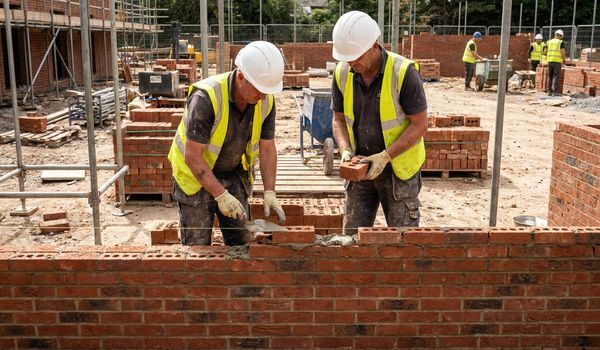
The work spans a wide range of projects. On the residential side, masonry contractors build foundations, chimneys, fireplaces, retaining walls, driveways, patios, and exterior veneer. On the commercial side, they handle structural block walls, building facades, institutional projects, hardscaping, and restoration work on aging buildings. Some firms specialize narrowly, such as tuckpointing or historic restoration, while others operate as full-scope masonry subcontractors on large commercial jobs.
The trade is one of the oldest in construction, and it remains labor intensive. Skilled masons typically enter through a three to four year apprenticeship, and the quality of the finished work depends heavily on crew experience. That labor dependence shapes nearly every statistic in this report, from wage trends to the persistent workforce shortage discussed later.
Masonry contractors also sit downstream of broader construction cycles. When housing starts rise, residential masonry demand follows. When commercial and institutional building picks up, block and stone work follows. Understanding where the industry stands in 2026 starts with its overall size.
Masonry Industry Market Size and Growth Statistics
The U.S. masonry contracting industry generates an estimated $25 billion to $33 billion in annual revenue, depending on how the market boundary is drawn. The narrower figure, roughly $25 billion, reflects employer establishments with formal payrolls. The broader figure, up to $33.3 billion, includes non-employer sole proprietors, independent stone setters, and specialty hardscape installers who operate outside traditional payroll reporting.
Industry revenue has grown at a compound annual rate of approximately 2.5% to 3.5% in the years leading into 2026. That pace roughly tracks overall U.S. construction growth, which makes sense: masonry work is a derived demand that rises and falls with building activity rather than moving independently.
Key Stat: The U.S. masonry contracting market is worth an estimated $25 billion to $33.3 billion annually, with a growth rate of roughly 2.5% to 3.5% per year heading into 2026.
For context, total U.S. construction spending reached approximately $2.16 trillion in 2025, according to the U.S. Census Bureau's construction spending reports. Residential construction accounted for about $905 billion of that total, and nonresidential construction accounted for roughly $742 billion. Masonry work touches both categories, which is why the trade remains resilient even when one segment softens.
The 2025 spending data shows a modest pullback of about 1.4% from 2024 levels, driven largely by high interest rates that cooled new residential development. Even so, residential spending rebounded toward the end of 2025, and industry analysts expect steady, if unspectacular, growth for masonry services through 2026 as repair, restoration, and renovation work offsets slower new construction.
One structural factor supporting long-term demand is the age of the American building stock. Millions of brick and masonry buildings constructed in the early and mid twentieth century now require facade repair, repointing, and waterproofing. That maintenance cycle creates a baseline of demand that persists regardless of new construction trends.
How Many Masonry Contractors Are There in the U.S.?
The masonry contracting industry is remarkably fragmented. Researchers estimate roughly 87,000 masonry-related businesses operate in the United States when you count employer firms, sole proprietors, and specialty installers together. The core of the industry consists of approximately 20,000 employer establishments with formal payrolls.
Market concentration is low. The 50 largest masonry firms account for only about 15% of total industry revenue, which means the vast majority of work flows through small and mid-sized local contractors. This structure has practical implications: most masonry businesses compete regionally rather than nationally, and reputation within a local market matters more than brand scale.
Firm size data reinforces the small-business character of the trade. Nearly half of all active masonry contracting operations generate less than $1 million in gross annual sales. Only a small fraction exceed $10 million in annual revenue, and those larger firms typically operate multiple crews across several metro areas.
Geographically, masonry contractor concentration follows construction volume. California, Texas, Florida, and New York consistently lead the nation in registered masonry establishments, reflecting their large populations, active housing markets, and commercial development pipelines. States with older building stock, such as those in the Northeast and Midwest, also support outsized restoration and repair segments relative to their population.
Ready to Grow Your Masonry Business?
Get fast, flexible financing from the #1 business lender in the U.S. No obligation, apply in minutes.
Apply Now →Masonry Employment and Wage Statistics
The Bureau of Labor Statistics tracks masonry workers across several detailed occupations. The broad group covering brickmasons, blockmasons, stonemasons, and terrazzo finishers accounts for approximately 277,700 jobs nationwide. Within that group, brickmasons and blockmasons specifically hold about 62,400 jobs, including self-employed workers.
Pay in the trade is solid relative to its education requirements. The median annual wage for brickmasons and blockmasons stands at approximately $62,120, or about $29.87 per hour. The mean annual wage runs higher at roughly $68,280, pulled up by experienced journeymen, foremen, and specialists in high-cost metro markets.
The wage distribution shows a meaningful spread. Entry-level workers in the bottom tenth percentile earn around $44,820 per year, while the top ten percent of earners exceed $100,000 annually. That top tier typically includes supervisors, estimators, and specialists in high-end stonework or restoration. For business owners, these figures matter directly: wage costs are the single largest line item in most masonry operations, and competitive pay is now essential for retention.
Looking forward, the BLS projects employment growth of roughly 1% over the coming decade for masonry occupations, slower than the average for all occupations. That modest growth rate understates actual hiring demand, however. The industry is projected to see about 18,400 openings per year across all masonry occupations, with roughly 4,100 annual openings for brickmasons and blockmasons alone. The overwhelming majority of those openings come from replacing workers who retire or leave the trade rather than from new job creation.
For masonry business owners, the takeaway is straightforward: even in a slow-growth occupation, replacement demand alone keeps the labor market tight. Firms that build strong training pipelines and offer competitive compensation will have a structural advantage over those that treat hiring as an afterthought.
Revenue and Profit Margin Benchmarks for Masonry Businesses
Masonry contracting is a thin-margin business. Industry research consistently places average net profit margins between 4% and 7% for typical firms. Well-managed operators with disciplined estimating and strong backlog management can push margins higher, while firms that underbid work or mismanage labor costs frequently operate at break-even or worse.
The cost structure explains why margins stay compressed. Labor, including wages, payroll taxes, insurance, and benefits, typically consumes 30% to 40% of revenue. Materials such as brick, block, stone, mortar, and reinforcement account for another 25% to 35%. Equipment, vehicles, fuel, insurance, and overhead absorb most of what remains. Small shifts in material pricing or crew productivity can swing a job from profitable to unprofitable quickly.
Revenue distribution across the industry is heavily skewed toward small operations. As noted earlier, nearly half of active masonry businesses generate under $1 million in annual sales. A reasonable benchmark ladder looks like this: a solo operator with one crew might generate $300,000 to $600,000 annually; a small firm with two to four crews might generate $1 million to $4 million; and a regional operator with multiple divisions might exceed $10 million.
These benchmarks matter for planning purposes. If your firm generates $2 million in revenue at a 5% net margin, your annual profit is $100,000 before owner draws. Improving margin by even two percentage points adds $40,000 to the bottom line, which is why many successful masonry owners focus relentlessly on estimating accuracy, crew utilization, and equipment uptime rather than chasing raw revenue growth.
Residential vs. Commercial Masonry Demand
Residential construction drives the majority of masonry demand, accounting for roughly 55% of industry activity. Single-family housing, additions, outdoor living projects, and manufactured stone veneer installations make up the core of residential work. The remaining 45% comes from commercial and institutional construction, including retail buildings, offices, schools, government facilities, and infrastructure-related masonry repair.
The two segments behave differently across economic cycles. Residential masonry demand responds quickly to interest rates and housing starts, which is why the 2025 slowdown in new home construction squeezed many residential-focused firms. Commercial work, by contrast, tends to follow longer project timelines with larger contract values, offering more revenue stability but longer sales cycles and more competitive bidding.
| Factor | Residential Masonry | Commercial Masonry |
|---|---|---|
| Share of industry demand | Approximately 55% | Approximately 45% |
| Typical project size | Small to mid-size jobs | Mid-size to large contracts |
| Revenue cycle | Fast-moving, rate-sensitive | Longer timelines, more stable backlog |
| Primary customer | Homeowners, home builders | General contractors, developers, institutions |
| Payment terms | Deposits and progress draws | Net 30-60, retainage common |
Pro Tip: Masonry firms that serve both residential and commercial segments tend to weather rate cycles better. Diversifying your project mix smooths revenue when one segment slows, but it requires working capital to bridge the longer payment terms common on commercial jobs.
The payment term difference between segments has real cash flow consequences. Commercial contracts often include retainage, where 5% to 10% of each payment is withheld until project completion, plus net 30 to net 60 payment cycles. A masonry firm can be profitable on paper while still facing a cash crunch mid-project. This is one reason business lines of credit have become a standard financial tool for commercial-focused masonry subcontractors.
Labor Shortage and Workforce Statistics
The skilled labor shortage is the defining workforce story for masonry and the broader construction industry. According to workforce models from the Associated Builders and Contractors, the construction industry needed an estimated 349,000 net new workers in 2026, down from roughly 439,000 in 2025 as spending growth cooled. Critically, most of that demand comes from replacing retiring workers rather than staffing new projects.
Survey data from the Associated General Contractors of America paints a consistent picture. About 87% of construction firms report open hourly craft positions, and 82% report open salaried positions such as project managers and estimators. Among firms with craft openings, 88% say those positions are as hard or harder to fill than a year ago. Roughly 42% to 45% of contractors cite workforce shortages as a primary cause of project delays.
The demographic math behind the shortage is stark. Nearly 40% of the current skilled construction workforce is expected to retire by 2031, while only about 7% of active workers are between the ages of 19 and 24. Masonry faces an especially acute version of this problem because the trade requires years of hands-on training before a worker reaches full productivity.
By the Numbers
Masonry Contractor Industry - Key Statistics for 2026
$25B+
Estimated annual U.S. masonry industry revenue
87,000
Masonry-related businesses operating in the U.S.
$62,120
Median annual wage for brickmasons and blockmasons
87%
Construction firms reporting open craft positions
For masonry business owners, the labor shortage cuts two ways. On one hand, it constrains growth: you can only take on as much work as your crews can execute. On the other hand, it supports pricing power. When competitors are booked out and short on labor, well-staffed firms can be more selective about the jobs they bid and the margins they target.
Technology and Productivity Trends in Masonry
Masonry has historically resisted mechanization because laying brick and block is a dexterity-intensive craft. That is beginning to change, driven largely by the labor shortage. Several technology categories are gaining traction across the industry heading into 2026.
Semi-automated bricklaying systems and masonry robots are moving from pilot programs to real job sites, particularly on large commercial projects with repetitive wall sections. These systems do not replace masons; they handle repetitive placement while skilled workers focus on setup, quality control, and detail work. Early adopters report meaningful productivity gains on suitable projects, though the capital cost remains significant.
Digital estimating and project management software has seen broader adoption. Modern takeoff tools let estimators measure directly from digital plans, reducing both the time and the error rate in the bidding process. Building information modeling, once limited to large general contractors, is increasingly expected of specialty trades on major commercial projects.
Material handling equipment also continues to evolve. Telehandlers, rough-terrain forklifts, mortar mixers, silo systems, and powered scaffolding all reduce the physical strain on crews and improve daily output per worker. For many small and mid-sized masonry firms, equipment upgrades deliver faster and more predictable productivity gains than betting on unproven robotics.
The financing implication is direct: productivity-improving equipment often pays for itself through labor efficiency, but only if the business can afford the upfront cost. Many masonry contractors use construction equipment financing to spread that cost over the useful life of the asset rather than draining working capital.
Financing Trends Among Masonry Contractors
Masonry businesses share a financing profile common across specialty trades: high labor costs, material-heavy job costs, slow commercial payment cycles, and significant equipment needs. Each of those characteristics creates a specific financing use case.
Working capital loans and lines of credit bridge the gap between paying crews and suppliers weekly and collecting from general contractors 30 to 60 days later. Equipment financing spreads the cost of mixers, forklifts, scaffolding, saws, and trucks over time. SBA loans, particularly the 7(a) program, support larger expansions, acquisitions, and owner-occupied real estate purchases for established firms.
Need Capital for Crews, Materials, or Equipment?
Crestmont Capital funds masonry contractors fast, with options for working capital, equipment, and growth.
Apply Now →Industry conditions in 2026 make financial flexibility especially valuable. Material costs remain volatile, labor expenses are rising, and the firms best positioned to capture work are the ones that can mobilize crews and equipment quickly when competitors cannot. Access to capital has effectively become a competitive weapon in the trade, not just an operational necessity.
For a deeper look at financing options built specifically for this trade, see our guide on masonry contractor business loans, which walks through loan types, qualification standards, and application strategy in detail. Business owners benchmarking their operations can also review our small business loan statistics for 2026 for approval rate and funding amount data across industries.
What These Statistics Mean for Masonry Business Owners
Data only matters if it changes decisions. Here is how the key numbers in this report translate into practical guidance for running a masonry business in 2026.
First, the market is large but fragmented. With 87,000 competitors and low concentration, differentiation comes from reliability, specialization, and relationships rather than scale. Firms that develop a niche, whether restoration, hardscaping, or commercial block work, face less price competition than generalists bidding the same residential jobs as everyone else.
Second, labor is the binding constraint. With nearly nine out of ten construction firms reporting open craft positions, your ability to recruit, train, and retain masons determines your revenue ceiling more than demand does. Investing in apprenticeship pipelines, competitive wages, and crew stability is not an HR nicety; it is the core growth strategy for the trade right now.
Third, margins reward operational discipline. In a 4% to 7% net margin industry, a single underbid job or an idle crew can erase months of profit. The firms that thrive track job costing closely, maintain equipment proactively, and use financing tools strategically rather than reactively.
Finally, the demand mix offers resilience. With 55% of demand residential and 45% commercial, firms serving both segments can shift emphasis as cycles move. The aging national building stock adds a restoration and repair baseline that persists even when new construction slows.
How Crestmont Capital Helps Masonry Contractors Grow
Crestmont Capital works with masonry contractors and other specialty trade businesses every day, and we structure financing around the realities of the trade: weekly payroll, material-heavy job costs, retainage, and seasonal swings. As the #1 rated business lender in the U.S., we focus on speed, flexibility, and straight answers.
Our construction equipment financing programs cover the mixers, saws, forklifts, scaffolding systems, and trucks that masonry crews depend on, with terms matched to the useful life of the equipment. For day-to-day cash flow, our unsecured working capital loans provide fast funding without requiring specific collateral, which is often the right fit for bridging material purchases and payroll between draws.
Masonry firms with larger growth plans, such as adding crews, opening a second location, or acquiring a competitor, can also explore small business financing options including SBA loans and term loans. Our advisors understand contractor financials, including work-in-progress schedules and retainage, so you spend less time explaining your business model and more time running it.
Real-World Scenarios
To make the data concrete, here are five scenarios that reflect how masonry business owners are applying these industry trends in 2026.
Scenario 1: Bridging a commercial retainage gap. A masonry subcontractor lands a $400,000 commercial block job with 10% retainage and net 45 payment terms. Payroll and materials run $28,000 per week, but the first draw will not arrive for two months. A working capital line covers the gap, letting the firm take the job without straining its other projects.
Scenario 2: Financing a productivity upgrade. A five-crew masonry firm finances a new telehandler and a silo mortar system for $185,000. The equipment cuts material handling labor by roughly one worker per crew per day. At current wage levels near the BLS median, the labor savings cover the monthly financing payment within the first year.
Scenario 3: Hiring ahead of the retirement wave. With 40% of the skilled workforce expected to retire by 2031, a mid-sized masonry contractor partners with a local trade school to build an apprenticeship pipeline and uses a term loan to fund the first-year wage subsidy for three apprentices, securing capacity competitors cannot match.
Scenario 4: Shifting toward restoration work. A residential-focused firm sees new construction slowing in its market and pivots toward facade restoration and tuckpointing on older commercial buildings, a segment supported by the aging national building stock. A small equipment loan funds the swing stage and specialty grinding equipment the work requires.
Scenario 5: Acquiring a retiring competitor. An established masonry owner notices a respected local competitor preparing to retire with no succession plan. An SBA 7(a) loan finances the acquisition of the firm's customer list, equipment, and key crew members, instantly adding backlog and experienced labor in a tight hiring market.
Key Stat: With roughly 18,400 masonry job openings projected each year and only about 7% of the construction workforce aged 19 to 24, firms that invest in training pipelines now are building a durable competitive advantage.
Frequently Asked Questions
How many masonry contractors are there in the United States? +
Industry researchers estimate roughly 87,000 masonry-related businesses operate in the U.S., including sole proprietors and specialty installers. The core of the industry is about 20,000 employer establishments with formal payrolls.
How big is the masonry contracting industry in 2026? +
The U.S. masonry contracting market generates an estimated $25 billion to $33.3 billion in annual revenue, depending on whether non-employer businesses are counted. The industry has been growing at roughly 2.5% to 3.5% per year heading into 2026.
What is the average profit margin for a masonry contractor? +
Typical net profit margins for masonry contractors range from 4% to 7%. Well-run firms with disciplined estimating and strong crew utilization can exceed that range, while underbidding or labor overruns can quickly push a job below break-even.
How much do brickmasons and blockmasons earn per year? +
The Bureau of Labor Statistics reports a median annual wage of about $62,120 for brickmasons and blockmasons, or roughly $29.87 per hour. Top earners in the 90th percentile exceed $100,000 per year, especially in high-cost metro markets.
Is the masonry industry growing or shrinking? +
The industry is growing modestly, with revenue expanding at about 2.5% to 3.5% annually. Employment growth is slower at roughly 1% over the decade, but replacement demand from retirements keeps hiring needs high at about 18,400 openings per year across masonry occupations.
What share of masonry work is residential versus commercial? +
Residential construction accounts for approximately 55% of masonry demand, including single-family housing, additions, and outdoor living projects. Commercial and institutional work makes up the remaining 45%, including facades, structural block, and restoration projects.
What states have the most masonry contractors? +
California, Texas, Florida, and New York consistently lead the nation in registered masonry establishments, reflecting their large populations and active construction markets. Northeastern and Midwestern states with older building stock also support strong restoration and repair segments.
How hard is it for masonry contractors to find skilled workers right now? +
Very hard. Surveys show 87% of construction firms have open hourly craft positions, and 88% of those firms say the roles are as hard or harder to fill than a year ago. Nearly 40% of the skilled construction workforce is expected to retire by 2031, which will keep pressure on hiring for years.
What does the typical masonry contracting business look like in terms of size? +
Small. Nearly half of active masonry businesses generate less than $1 million in annual sales, and many operate with just one or two crews. The 50 largest firms hold only about 15% of total industry revenue, so the trade remains dominated by local and regional operators.
How do masonry contractors typically finance equipment and growth? +
Common options include equipment financing for mixers, forklifts, and trucks; working capital loans to bridge payroll and material costs between draws; business lines of credit for ongoing flexibility; and SBA loans for larger expansions or acquisitions. The right mix depends on the firm's cash flow cycle and growth plans.
What is the job outlook for masonry workers through the next decade? +
The BLS projects about 1% employment growth for masonry occupations over the decade, slower than average. However, roughly 18,400 openings per year are expected across the masonry trades, mostly to replace retiring workers, so demand for skilled masons remains steady.
How much working capital does a masonry business need? +
It depends on project mix and payment terms, but a common guideline is enough liquidity to cover four to eight weeks of payroll and materials. Commercial work with retainage and net 45 terms typically demands more working capital than residential jobs with deposits and faster draws.
What are the biggest cost drivers for masonry contractors? +
Labor is the largest cost, typically consuming 30% to 40% of revenue once wages, taxes, insurance, and benefits are included. Materials such as brick, block, stone, and mortar account for another 25% to 35%. Equipment, vehicles, fuel, and overhead absorb most of the remainder.
Are masonry businesses good candidates for equipment financing? +
Yes. Masonry relies on durable, productivity-driving equipment like mixers, saws, telehandlers, and scaffolding, which makes it well suited to equipment financing. Spreading the cost over the asset's useful life preserves working capital for payroll and materials.
Where can I find reliable data to benchmark my masonry business? +
Start with federal sources such as the U.S. Census Bureau's construction spending data and the Bureau of Labor Statistics occupational data for masonry trades. The SBA's market research guide also offers a practical framework for benchmarking your local market.
Put the Data to Work for Your Masonry Business
Whether you need equipment, working capital, or growth funding, Crestmont Capital can move at the speed of your next job.
Apply Now →How to Get Started
Complete our quick application at offers.crestmontcapital.com/apply-now - it takes just a few minutes.
A Crestmont Capital advisor will review your needs and match you with the right financing option for your masonry business.
Receive your funds and put them to work, often within days of approval.
Conclusion
The masonry contractor statistics for 2026 tell a consistent story. This is a $25 billion-plus industry made up of roughly 87,000 mostly small businesses, growing steadily at 2.5% to 3.5% per year, with thin but manageable margins and a persistent skilled labor shortage that rewards firms investing in their crews.
For business owners, the opportunities are real. Demand is supported by residential construction, commercial development, and a massive baseline of restoration work on aging buildings. Wages are rising, which pressures margins but also reflects the value of the skilled labor your business depends on. And in a fragmented market, the firms that combine operational discipline with smart access to capital are the ones best positioned to take share.
If you are planning your next equipment purchase, hiring push, or expansion, Crestmont Capital can help you move quickly. Apply online in minutes and talk with a funding specialist who understands the masonry trade.
Disclaimer: The information provided in this article is for general educational purposes only and is not financial, legal, or tax advice. Funding terms, qualifications, and product availability may vary and are subject to change without notice. Crestmont Capital does not guarantee approval, rates, or specific outcomes. For personalized information about your business funding options, contact our team directly.

Allan Garfinkle
Allan Garfinkle is the Chief Revenue Officer at Crestmont Capital, where he has spent more than a decade leading revenue strategy, business development, and operational growth. With 28 years of experience building and advising startups and small businesses, Allan has helped more than 10,000 business owners navigate financing decisions, growth opportunities, and changing economic conditions. He earned a Bachelor of Science in Economics and an MBA with a concentration in Finance from Northeastern University, as well as a Juris Doctor from New England Law, where his studies focused on contracts and business law. His writing draws on extensive practical experience in small-business lending, equipment financing, business credit, and commercial finance.