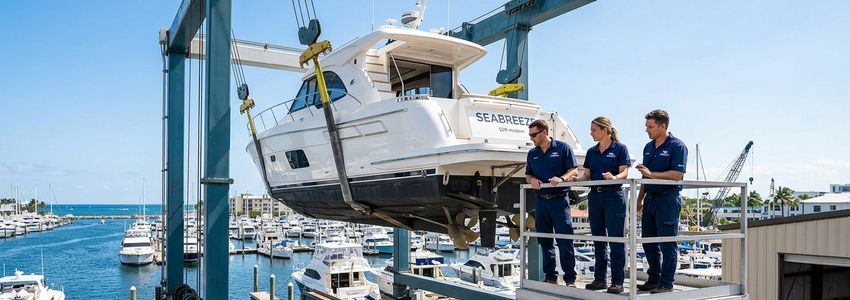
Running a marine repair shop or boatyard is demanding, capital-intensive work. Between high-cost diagnostic equipment, specialized lifts, seasonal revenue swings, and a customer base that expects fast turnaround on expensive vessels, marine service businesses face financing challenges that generic small business advice rarely addresses. A marine repair shop business loan gives owners the capital to invest in their operations, bridge slow-season cash gaps, and grow without sacrificing the quality their clients expect.
Whether you operate a full-service boatyard, a mobile marine mechanic operation, or a specialty fiberglass repair shop, the right financing can mean the difference between turning away work and landing your best season yet. This guide covers everything you need to know about funding your marine service business — loan types, amounts, qualifications, and how to apply.
In This Article
- What Is a Marine Repair Shop Business Loan?
- Why Marine Shops Need Specialized Financing
- Types of Financing for Marine Repair Businesses
- How Much Can You Borrow?
- What Lenders Look For
- How Crestmont Capital Helps Marine Businesses
- Real-World Scenarios
- Loan Comparison Table
- How to Get Started
- Frequently Asked Questions
What Is a Marine Repair Shop Business Loan?
A marine repair shop business loan is a form of commercial financing designed to meet the specific capital needs of businesses in the recreational and commercial marine service industry. These loans can fund equipment purchases, facility upgrades, payroll during seasonal lulls, parts inventory, and business expansion — all with repayment structures tailored to how marine service businesses actually generate revenue.
Unlike consumer boat loans (which finance the purchase of a vessel), a marine repair shop business loan finances the business itself. The borrower is the owner of a marine service enterprise — a boatyard, detailing shop, engine repair specialist, fiberglass fabricator, or similar operation. Capital is deployed to keep the business running and growing, not to purchase a recreational asset.
Marine businesses operate in a niche where seasonal demand, high inventory costs, and expensive specialized tools create cash flow dynamics that standard small business lenders sometimes misread. Lenders experienced in the marine sector understand that a boatyard generating $1.2 million in revenue between March and October isn't a struggling business — it's a thriving one with a predictable seasonal model that responds well to the right loan structure.
Industry Snapshot: According to the U.S. Census Bureau, there are over 12,000 boat dealers and marine repair establishments in the United States. The marine industry contributes over $230 billion annually to the U.S. economy, supporting more than 650,000 jobs — creating consistent demand for boatyard financing across the country.
Why Marine Repair Shops Need Specialized Financing
The marine service industry presents financial patterns that most general lenders aren't equipped to evaluate. Understanding these dynamics helps you choose the right loan and lender — and helps you present your business accurately when you apply.
Seasonal Revenue Concentration
Most marine repair shops earn 70 to 85 percent of their annual revenue in a four-to-six-month window. Spring commissioning season and fall haul-out periods drive the majority of billable hours. The rest of the year, overhead continues while revenue slows. Without working capital access, even a profitable shop can struggle to make payroll and pay suppliers in January.
High Equipment Costs
Marine-specific equipment isn't cheap. A new hydraulic boat lift can run $40,000 to $200,000 depending on capacity. Engine diagnostic tools, fiberglass spray equipment, watercraft travel lifts, and pressure washing systems represent significant capital outlays. Financing equipment rather than depleting cash reserves lets you preserve liquidity for operations.
Parts and Materials Inventory
Keeping adequate parts inventory — impellers, anodes, prop shafts, engine components, bottom paint — requires capital upfront. During peak season, running out of a critical part can mean losing a job to a competitor. Inventory financing or a line of credit gives marine shops the flexibility to stock appropriately without tying up cash unnecessarily.
Slip, Yard, and Facility Expansion
Growing a boatyard often means adding covered storage, expanding wet slips, or acquiring adjacent property. These projects require significant capital that most shops can't fund from annual cash flow alone. Term loans and commercial real estate financing support this type of strategic growth.
Hiring and Labor During Peak Demand
Marine technicians are in high demand and command premium wages. Seasonal businesses often need to bring on additional certified mechanics and yard hands ahead of the busy season — before the revenue materializes. A working capital loan bridges that gap, letting you staff up without straining your reserves.
Need Financing for Your Marine Repair Business?
Crestmont Capital works with boatyards, marine mechanics, and boat service companies across the U.S. Apply in minutes — no obligation.
Apply Now →Types of Financing for Marine Repair Shops and Boatyards
There is no single "marine repair shop loan" — instead, several financing products can be matched to the specific need you're addressing. The best choice depends on what you're funding, how quickly you need capital, and where your business stands financially.
Term Loans
A term loan delivers a lump sum upfront, repaid over a fixed schedule with predictable payments. This structure is ideal for large one-time expenditures: buying a boat lift, purchasing a competitor's business, adding covered storage, or funding a major facility renovation. Terms typically range from 12 months to 10 years, with longer terms available through SBA loan programs.
Business Line of Credit
A business line of credit functions like a revolving account — you draw funds when you need them and repay as revenue comes in. This is particularly effective for marine repair shops managing seasonal cash flow, covering payroll between busy periods, or handling unexpected large parts orders. You only pay interest on what you actually draw, making it cost-efficient when needs are variable.
Equipment Financing
For equipment purchases, equipment financing is often the most cost-effective route. The equipment itself serves as collateral, which typically results in favorable rates and terms. Marine-specific equipment that qualifies includes hydraulic lifts, boat travel cranes, pressure washing systems, engine testing stands, diagnostic computers, and mobile service vehicles. Repayment terms are structured to match the equipment's useful life.
Working Capital Loans
An unsecured working capital loan provides quick access to operating funds without requiring you to collateralize a specific asset. These loans are well-suited for bridging the off-season, covering payroll, stocking parts inventory, or handling a sudden opportunity — like hiring an additional certified technician before a busy season. Approval can happen in days, not weeks.
SBA Loans
The U.S. Small Business Administration partners with lenders to offer government-backed loan programs that carry lower down payments, longer terms, and competitive rates compared to conventional financing. SBA 7(a) loans can fund up to $5 million and are available for working capital, equipment, and real estate. For marine businesses with established revenue and credit history, SBA financing offers exceptional terms — though approval timelines are longer than alternative lenders.
Revenue-Based Financing
Revenue-based financing ties repayment to a percentage of monthly revenue rather than fixed payments. During your slow season, payments decrease proportionally. During your peak spring and summer months, you pay more and pay down the balance faster. This structure can be ideal for marine businesses with predictable but seasonal income patterns.
Invoice Financing
If your marine shop does significant commercial work — servicing marinas, fleets, fishing operations, or government vessels — you may carry accounts receivable with net-30 or net-60 payment terms. Invoice financing lets you access the value of those unpaid invoices immediately, rather than waiting 30 to 60 days for payment. This improves cash flow without taking on traditional debt.
By the Numbers
Marine Repair Shop Financing — Key Statistics
$230B+
Annual U.S. marine industry economic contribution
12,000+
Marine repair and boat service establishments in the U.S.
$500K
Typical loan range for established boatyards
2-5 Days
Average funding time with alternative lenders
How Much Can a Marine Repair Shop Borrow?
Loan amounts for marine service businesses vary widely based on the lender, loan type, business revenue, and creditworthiness. Here is a practical overview of what most marine shop owners can expect:
- Working capital loans: $25,000 to $500,000
- Equipment financing: $10,000 to $5,000,000 (depending on asset value)
- Business lines of credit: $20,000 to $250,000 (revolving)
- SBA 7(a) loans: Up to $5,000,000
- Revenue-based financing: $10,000 to $500,000
- Invoice financing: Up to 90% of qualifying accounts receivable
Most established marine repair shops with $500,000 or more in annual revenue can qualify for loans in the $100,000 to $750,000 range through alternative lenders. Businesses with strong credit, longer operating history, and solid documentation can often qualify for larger amounts or more favorable terms through SBA programs.
If you're evaluating how much to borrow, a useful rule of thumb is to match the loan term to the useful life of the asset you're financing — or in the case of working capital, keep terms short enough that the loan is repaid before you need to draw again next season.
What Lenders Look For in Marine Repair Shop Applications
Understanding how lenders evaluate your application puts you in a better position to present your business effectively. Marine repair shops have some unique characteristics that well-versed lenders appreciate — but it helps to know what to emphasize.
Annual Revenue and Consistency
Most lenders want to see at least $150,000 to $250,000 in annual gross revenue, though some alternative lenders will work with businesses at lower volumes. Consistency matters as much as size — a shop that shows predictable seasonal revenue year over year is a much stronger applicant than one with highly variable or declining revenue.
Time in Business
Traditional lenders typically require two or more years of operating history. Alternative lenders and some SBA programs work with businesses as young as one year. If you're in your first or second year, you'll likely have access to a narrower set of products, but options do exist.
Credit Profile
Both personal and business credit scores are evaluated. Most conventional lenders prefer a personal credit score of 680 or higher. Alternative lenders can work with scores in the 550 to 600 range, though rates will be higher. Having an established business credit profile — even a thin one — strengthens your application. According to Forbes Advisor, credit score is among the top three factors lenders evaluate in small business loan applications.
Cash Flow Documentation
Bank statements (typically three to six months), profit and loss statements, and tax returns are standard documentation requirements. For marine shops with seasonal patterns, it helps to provide a full year of statements so lenders can see your complete revenue cycle — not just a slow month snapshot.
Collateral
Many marine repair loans, particularly equipment financing, use the purchased asset as collateral. Working capital loans may be unsecured or may require a personal guarantee. Large term loans often require a combination of business assets and personal guarantees. SBA loans generally require collateral when it's available, but won't decline a loan solely on collateral shortfalls for otherwise creditworthy applicants.
Industry Experience
Lenders experienced in the marine sector know that a boatyard's January cash flow looks nothing like its June cash flow. Demonstrating your industry tenure, certifications (ABYC, Mercury Marine, Yamaha), and customer relationships — including commercial accounts — adds context that generic lenders might miss.
Pro Tip: When applying for a marine repair shop business loan, prepare a one-page narrative explaining your business model, seasonal revenue pattern, and how you plan to use the funds. This context — something many applicants skip — can meaningfully improve your approval odds with lenders unfamiliar with the marine industry.
How Crestmont Capital Helps Marine Repair Shops and Boatyards
Crestmont Capital works with marine repair shops, boatyards, and boat service businesses across the country to secure financing that fits the way these businesses actually operate. As a direct business lender rated #1 in the U.S., Crestmont offers a range of products designed for established businesses that need capital — fast, with terms that make sense.
Unlike banks that require weeks of evaluation and rigid qualification criteria, Crestmont can fund most marine repair shop loans within two to five business days. Our advisors understand seasonal revenue patterns, marine equipment valuations, and the unique challenges boatyards face managing cash across a twelve-month operating cycle.
Marine service businesses come to Crestmont for:
- Small business loans for boatyard expansion and facility improvements
- Equipment financing for hydraulic lifts, travel cranes, diagnostic tools, and marine service vehicles
- Business lines of credit for seasonal cash flow management and inventory
- Working capital loans for payroll, parts orders, and operational continuity
- SBA loans for large-scale capital needs and longer repayment horizons
The application process at Crestmont starts online and takes fewer than 10 minutes. A dedicated advisor reviews your application and reaches out to discuss your options — no waiting in a bank loan queue, no unexplained rejections. If you've been in business for at least one year and are generating revenue, you likely qualify for at least one financing product.
For marine business owners who have previously written about related financing topics, including our guide on boat repair business loans, this post expands into the specific needs of full-service marine repair shops and boatyards managing higher operational complexity.
Talk to a Marine Business Financing Specialist
Crestmont Capital advisors understand boatyards, seasonal revenue patterns, and marine industry financing needs. Get matched with the right product today.
Start Your Application →
Real-World Scenarios: Marine Shops Putting Capital to Work
The following scenarios illustrate how different types of marine repair shop business loans address real operational challenges. Names and details are illustrative examples based on common business situations.
Scenario 1: The Hydraulic Lift Upgrade
A 12-year-old marina in Florida is turning away 40-foot-plus vessels because its aging hydraulic lift maxes out at 35 feet and 12,000 pounds. The owner identifies a new 50-foot capacity lift that costs $185,000 installed. Using equipment financing, the shop structures a 60-month loan with the lift as collateral, keeping monthly payments manageable while immediately expanding the range of vessels it can service — and capturing the premium repair work that comes with larger boats.
Scenario 2: The Slow-Season Bridge
A Connecticut boatyard does $800,000 in annual revenue, nearly all of it between April and October. By December, cash reserves are depleted and February payroll looks uncertain. The owner applies for a $75,000 working capital line of credit in November, draws against it for payroll and parts procurement in January and February, and repays the balance in full by late April as the spring rush kicks in. Total interest cost is minimal because the balance is outstanding for just three months.
Scenario 3: The Parts Inventory Build
A marine service shop in the Pacific Northwest that specializes in outboard engine repair wants to build a comprehensive OEM parts inventory ahead of summer salmon fishing season. Carrying the right parts means same-day repairs rather than three-week waits. The owner secures a $60,000 working capital loan in March, stocks the inventory, and generates an additional $140,000 in revenue by August from customers who chose the shop specifically because of parts availability.
Scenario 4: The Second Location
A Texas boatyard has been profitable for eight years and wants to open a satellite repair facility on a lake 45 miles away. Total buildout and equipment cost: $620,000. The owner uses an SBA 7(a) loan — 10-year term, lower down payment, favorable rate — to finance the expansion. Within two years, the second location is generating $350,000 in annual revenue, making the loan payment manageable and the decision clearly profitable.
Scenario 5: Winning a Commercial Account
A boatyard in the Chesapeake region wins a service contract with a commercial crabbing operation that runs a fleet of 14 working boats. The contract requires significant upfront parts ordering and additional technician hours before billing begins. Invoice financing against the commercial invoices provides the working capital to service the account without straining the shop's existing cash position.
Scenario 6: Off-Season Staff Retention
A Michigan marina struggles every year to retain certified marine technicians through the off-season. Top mechanics leave for full-time employment elsewhere if they aren't kept on payroll through winter. The owner secures a $90,000 working capital loan to fund salaries October through March, retaining three key employees who then lead a record spring commissioning season. The reduced cost of rehiring and retraining easily offsets the loan cost.
Marine Repair Shop Financing: Comparing Your Options
| Loan Type | Best For | Typical Amount | Speed |
|---|---|---|---|
| Term Loan | Facility upgrades, acquisitions | $50K - $2M | 3-14 days |
| Equipment Financing | Lifts, cranes, tools, vehicles | $10K - $5M | 2-7 days |
| Line of Credit | Seasonal cash flow, inventory | $20K - $250K | 2-5 days |
| Working Capital | Payroll, parts, operational gaps | $25K - $500K | 1-3 days |
| SBA 7(a) | Large projects, real estate | Up to $5M | 30-90 days |
| Invoice Financing | Commercial accounts, net terms | Up to 90% of AR | 1-3 days |
| Revenue-Based | Seasonal businesses, flexible payback | $10K - $500K | 1-3 days |
According to CNBC Select, the best small business loans combine speed, flexible terms, and competitive rates — criteria that matter especially to marine businesses with time-sensitive seasonal needs. And per Bloomberg, small business lending continues to expand as alternative lenders fill gaps left by traditional banks, particularly for industry-specific businesses like marine service operations.
How to Get Started
Complete our quick application at offers.crestmontcapital.com/apply-now — takes just a few minutes. No obligation.
A Crestmont Capital specialist will review your operation, seasonal revenue pattern, and goals — then match you with the right financing product.
Receive your funds — often within 2 to 5 business days of approval — and deploy capital where it makes the biggest difference in your boatyard.
Ready to Fund Your Marine Business?
Join thousands of business owners who've secured funding through Crestmont Capital. Your application is waiting — apply in minutes.
Apply Now →Frequently Asked Questions
What is a marine repair shop business loan?
A marine repair shop business loan is a commercial financing product designed to fund the operating and capital needs of businesses in the marine service industry — including boatyards, fiberglass shops, outboard engine repair centers, and boat detailing businesses. These loans can fund equipment, payroll, inventory, facility improvements, and seasonal cash flow gaps.
How much can a marine repair shop borrow?
Loan amounts range from $25,000 for small working capital needs to $5 million or more for SBA-backed projects or equipment purchases. Most established marine repair shops with $500,000 or more in annual revenue qualify for $100,000 to $750,000 through alternative lenders. Equipment financing can match the full cost of a marine lift or crane.
Do lenders understand seasonal marine business revenue?
Experienced business lenders — including Crestmont Capital — understand that marine service businesses generate the majority of their annual revenue in a compressed window. Rather than penalizing businesses for slow-season months, they evaluate the full annual revenue cycle. Providing full-year bank statements helps lenders see the complete picture.
What credit score do I need to qualify?
Requirements vary by lender and loan type. Conventional lenders typically require a personal credit score of 680 or higher. Alternative lenders, including Crestmont Capital, can work with scores as low as 550 to 600 for some products. A higher score generally results in better rates and terms, but it is not the only factor lenders evaluate.
What documents do I need to apply for a marine shop loan?
Most lenders require three to six months of business bank statements, a government-issued ID, and basic business information (entity type, EIN, time in business). Larger loans and SBA applications typically require profit and loss statements, recent tax returns, and financial projections. Equipment financing also requires a quote or invoice for the equipment being purchased.
How fast can I get funded?
Funding speed depends on the loan type. Working capital loans and lines of credit through alternative lenders can fund in one to three business days. Equipment financing typically takes two to seven days. SBA loans take considerably longer — often 30 to 90 days — due to the additional underwriting requirements that accompany government-backed programs.
Can I use a marine repair shop loan to buy equipment?
Yes. Equipment financing is one of the most common use cases for marine service businesses. Eligible equipment includes hydraulic boat lifts, travel cranes, pressure washing systems, engine diagnostic equipment, CNC fiberglass tools, mobile service vehicles, and more. The equipment typically serves as collateral, which can result in better rates compared to unsecured options.
Is a line of credit or a term loan better for seasonal cash flow?
For recurring seasonal cash flow needs, a line of credit is often the better choice. You can draw funds when revenue dips, repay during your peak season, and draw again the following year — without reapplying each time. A term loan is better suited for one-time expenditures with a fixed cost. Many marine shops maintain both: a term loan for capital purchases and a line of credit for seasonal operational needs.
Can a mobile marine mechanic business qualify for financing?
Yes. Mobile marine mechanic businesses are eligible for most of the same loan products as fixed-location boatyards. Revenue requirements, time in business, and credit score criteria apply similarly. Equipment financing for a service vehicle and trailer is a common use case for mobile mechanics looking to upgrade their mobile unit.
What is the difference between a boatyard loan and a boat repair loan?
The terms are often used interchangeably in commercial lending. Both refer to business loans for companies that service, repair, and maintain watercraft. The distinction is more about the scale and scope of operations. Boatyards typically operate larger facilities with storage and launching capabilities, while boat repair shops may focus purely on mechanical and cosmetic service. Loan options and qualification criteria are largely the same.
Are marine repair shop loans available to businesses with bad credit?
Yes. Several financing options are available to marine shop owners with lower credit scores. Revenue-based financing and invoice financing rely more heavily on business revenue than credit scores. Equipment financing secured by the asset being purchased is also more accessible to owners with credit challenges. Rates and terms will be less favorable compared to applicants with strong credit, but options exist.
Can I finance boatyard expansion or a second location?
Yes. Term loans and SBA 7(a) loans are commonly used for boatyard expansion, whether that means adding storage capacity, purchasing adjacent land, or funding a second service location. SBA loans are particularly well-suited for these larger strategic investments, offering longer repayment terms and competitive rates for established businesses with strong operating history.
Do I need collateral for a marine repair shop loan?
It depends on the loan type. Equipment financing uses the equipment as collateral. Working capital loans and lines of credit from alternative lenders may be unsecured, requiring only a personal guarantee. SBA loans and large conventional term loans typically require business collateral when available. The good news is that some lenders won't decline otherwise qualified applicants for lack of collateral alone.
How long does the application process take?
For alternative lenders like Crestmont Capital, the online application takes fewer than 10 minutes to complete. A credit decision typically comes within hours to one business day. Once you accept an offer, funding often arrives within two to five business days. Traditional bank and SBA processes take significantly longer — often four to twelve weeks from application to funding.
Is it worth applying if I've been turned down by a bank?
Yes. Alternative lenders evaluate applications differently than traditional banks. A bank might decline a marine shop because of a seasonal revenue pattern that looks "inconsistent" to an algorithm, or because of credit criteria that don't reflect your actual business health. Alternative lenders look at full-picture factors including revenue trends, industry context, and time in business. Many marine businesses that were declined by banks have secured funding through Crestmont Capital.
Conclusion
A marine repair shop business loan is one of the most effective tools available to boatyard owners and boat service professionals who are ready to grow but need capital to do it. Whether you're financing a hydraulic lift, managing a slow-season cash crunch, stocking parts inventory ahead of your busiest months, or expanding to a second location, the right financing product can transform your operation.
The marine service industry is built on expertise, reliability, and quality workmanship. Crestmont Capital brings the same qualities to business financing — with fast approvals, flexible terms, and advisors who understand what it means to run a boatyard. Don't let a capital gap limit what your marine repair shop can achieve.
Apply today and get matched with a marine repair shop business loan that fits your business, your season, and your goals.
Disclaimer: The information provided in this article is for general educational purposes only and is not financial, legal, or tax advice. Funding terms, qualifications, and product availability may vary and are subject to change without notice. Crestmont Capital does not guarantee approval, rates, or specific outcomes. For personalized information about your business funding options, contact our team directly.