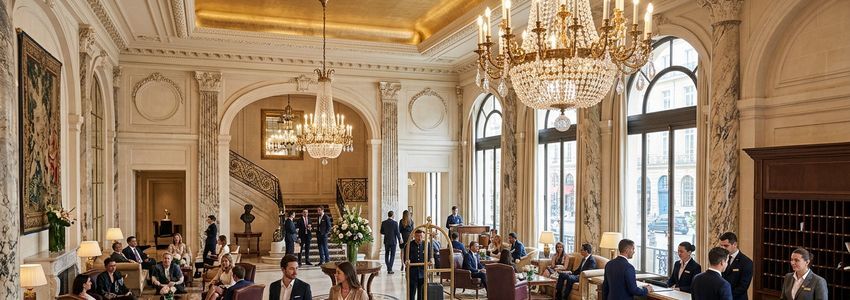
Le Méridien Hotels and Resorts is one of the world's most recognizable luxury hospitality brands, bringing European sophistication and cultural discovery to more than 120 properties across 40 countries. As part of Marriott International's premium portfolio, Le Méridien offers franchisees the power of the Marriott Bonvoy loyalty network, global sales infrastructure, and a brand story built on artistry, discovery, and timeless style. For investors ready to enter the luxury hotel space with a globally trusted brand, understanding Le Méridien franchise financing is the essential first step. This guide covers everything from total investment costs and SBA loan options to lender requirements and real-world financing structures that get deals across the finish line.
In This Article
- What Is a Le Méridien Franchise Loan?
- Le Méridien Franchise Investment Costs
- Financing Options for Le Méridien Investors
- Understanding Each Loan Type
- How to Qualify for Le Méridien Financing
- How Crestmont Capital Helps Investors
- Real-World Financing Scenarios
- Next Steps to Get Funded
- Frequently Asked Questions
What Is a Le Méridien Franchise Loan?
A Le Méridien franchise loan is a specialized commercial financing arrangement used to fund the acquisition, construction, renovation, or conversion of a hotel operating under the Le Méridien brand. These loans are distinct from conventional small business loans or residential mortgages because they must account for the unique economics of luxury hotel operations: high capital requirements, extended stabilization periods, complex brand standards, and the layered nature of hospitality revenue streams including rooms, food and beverage, meetings and events, and ancillary services.
Because Le Méridien sits in Marriott International's premium luxury tier, alongside brands like The Ritz-Carlton and St. Regis, the financial profile of a Le Méridien project is substantially different from economy or mid-scale hotel investments. Lenders evaluate these deals based on factors including the borrower's net worth and liquidity, demonstrated hotel management experience, a third-party market feasibility study, projected revenue per available room (RevPAR), and the strength of the local demand generators that will sustain occupancy and average daily rate (ADR) at premium levels.
Le Méridien franchise loans may be structured as SBA 7(a) or SBA 504 loans for qualifying components, conventional commercial real estate mortgages, construction-to-permanent loans, bridge loans during renovation phases, CMBS (commercial mortgage-backed securities) instruments for stabilized acquisitions, or a combination of several layers in a stacked capital structure. The right structure depends on your project type, timeline, equity availability, and risk tolerance.
Le Méridien Franchise Investment Costs
Before engaging any lender, you need a precise understanding of what a Le Méridien franchise project actually costs. The range is wide because it depends on whether you are converting an existing full-service hotel, acquiring a stabilized Le Méridien property, or undertaking new ground-up construction. Here is a detailed breakdown of the primary cost components based on current franchise disclosure information and hospitality industry benchmarks.
Initial Franchise Fee
The Le Méridien initial franchise fee is typically assessed on a per-room basis, with fees generally ranging from approximately $500 to $750 per room, subject to a minimum total fee in the range of $75,000 to $100,000. For a 200-room property, the initial franchise fee alone might represent $100,000 to $150,000. This fee grants the right to operate under the Le Méridien brand and access the full Marriott Bonvoy distribution and reservations ecosystem.
Ongoing Royalty and Program Fees
Le Méridien franchisees pay a series of ongoing fees that must be modeled into any financial projection:
- Royalty fee: Approximately 5.5% to 6.0% of gross room revenue
- Marriott Bonvoy loyalty program fee: Approximately 1.5% of gross room revenue
- Marketing fund contribution: Approximately 3.0% of gross room revenue
- Reservations and technology fee: Varies by channel mix and booking volume
Combined ongoing brand fees typically represent 10% to 12% or more of gross room revenue. This is a significant fixed cost that must be incorporated into your debt service coverage ratio (DSCR) calculations when modeling your project's ability to service debt.
Total Project Investment Range
The total capital required for a Le Méridien project varies considerably by project type:
- Hotel conversion (existing full-service property): $15 million to $60 million total
- New ground-up construction: $30 million to $120 million or more
- Acquisition of operating Le Méridien: $20 million to $150 million depending on market and property size
Key cost components across all project types include:
- Land or building acquisition: $3M to $40M depending on market
- Construction or renovation to brand standards: $10M to $80M+
- Furniture, fixtures, and equipment (FF&E): $2M to $15M
- Pre-opening expenses (marketing, staffing, training): $1M to $3M
- Working capital reserve (6 months minimum): $500K to $3M
- Soft costs (architecture, engineering, legal, permitting): $1M to $6M+
- Franchise fee: $75K to $200K
Le Méridien Hotel Franchise: Investment and Financing At a Glance
Sources: Marriott International FDD, hospitality industry estimates. Costs vary by project type, market, and property size.
Property Improvement Plan (PIP) Considerations
If you are converting an existing hotel to Le Méridien, Marriott's Property Improvement Plan (PIP) will specify every required renovation and upgrade to meet brand standards. Le Méridien PIPs are thorough: the brand's European aesthetic, signature lobby concepts, food and beverage programming, and technology infrastructure requirements all drive significant capital investment. PIP costs can range from cosmetic refreshes at $500K to full gut renovations exceeding $10 million for older properties. Budget conservatively and have your architect and construction team review the PIP requirements before finalizing your financing package.
Ready to Finance Your Le Méridien Hotel?
Crestmont Capital specializes in luxury hotel franchise financing. Get pre-qualified today with no obligation and no cost.
Apply Now - Free ConsultationFinancing Options for Le Méridien Franchise Investors
The good news for Le Méridien franchise investors is that the brand's premium positioning and Marriott affiliation make these projects attractive to a wide range of institutional and non-institutional lenders. The challenge is navigating those options and identifying the structure that optimizes your cost of capital, minimizes required equity, and aligns with your project timeline. Here are the primary financing channels available to Le Méridien investors.
1. SBA 7(a) Loans
The SBA 7(a) loan program is the most versatile small business financing tool available in the United States. For Le Méridien franchise projects, 7(a) loans can fund components including franchise fees, pre-opening costs, working capital, FF&E, and partial real estate financing up to the program maximum of $5 million. Because most Le Méridien projects exceed $5 million in total cost, the 7(a) loan is typically used as one layer in a stacked financing structure rather than as the sole source of capital.
Key 7(a) features for hotel projects:
- Maximum loan amount: $5 million per program
- Terms: Up to 25 years for real estate; 10 years for working capital and equipment
- Equity injection: As low as 10% for qualified franchise projects
- Rates: Variable, typically Prime + 2.25% to 2.75%
- Government guarantee: 75% to 85% depending on loan size
2. SBA 504 Loans
For projects involving significant real estate or large capital equipment purchases, the SBA 504 program offers a powerful structure. In a typical 504 deal, a conventional bank provides 50% of project costs, a Certified Development Company (CDC) backed by the SBA provides 40%, and the borrower contributes 10% equity. The CDC portion carries a fixed interest rate locked for 10 or 25 years, which provides rate certainty that variable-rate loans cannot match. The 504 program does not have a hard cap on total project size, making it more suitable for larger Le Méridien projects than the 7(a) alone.
3. Conventional Commercial Real Estate Loans
Major banks, regional lenders, and specialty hospitality finance companies offer conventional commercial mortgages for hotel franchise projects. For a Le Méridien acquisition or conversion, conventional lenders typically require 25% to 35% equity, a stabilized DSCR of at least 1.25x, demonstrated management experience, and a third-party market feasibility study. Interest rates and terms vary by lender and market conditions, but conventional loans often offer more flexibility in structure than government-backed programs.
4. Construction-to-Permanent Loans
New Le Méridien construction projects are typically financed through construction-to-permanent loans that wrap the construction phase and the long-term mortgage into a single instrument. During the construction period (typically 18-36 months), the borrower draws funds as milestones are completed and may pay interest only. Upon completion and stabilization, the loan converts to a permanent amortizing mortgage without the need for a new closing. This structure eliminates refinancing risk and transaction costs at conversion.
5. Bridge Loans
Bridge loans are short-term (typically 1-3 years), higher-rate financing instruments used to fund renovation, repositioning, or conversion projects where permanent financing is not yet available. For an investor converting an existing hotel to Le Méridien and needing time to complete the PIP and reach stabilized occupancy before qualifying for conventional permanent financing, a bridge loan provides the capital to execute the business plan. Once the property is stabilized, the bridge is paid off through a longer-term permanent loan at more favorable rates.
6. CMBS Loans
For the acquisition of a stabilized, operating Le Méridien property, CMBS (commercial mortgage-backed securities) loans offer competitive fixed rates, high leverage (up to 70-75% LTV), and non-recourse structures that limit personal liability. CMBS lenders underwrite based primarily on the property's cash flow and market performance rather than the borrower's personal financials, making them accessible to experienced hotel investors with strong track records even if personal balance sheets are already leveraged.
7. Mezzanine Financing and Preferred Equity
In the capital stack for large hotel projects, mezzanine debt or preferred equity can fill the gap between senior debt and the borrower's common equity, reducing the amount of cash equity required to close. Mezzanine lenders take a subordinate position behind the senior mortgage and charge higher rates (typically 10-18%) to compensate for increased risk. This structure is most common in institutional-scale hotel transactions involving experienced sponsors with strong track records.
Understanding Each Loan Type: Finding the Right Fit for Your Project
No two Le Méridien franchise projects are identical. A conversion of a boutique full-service hotel in a gateway urban market requires a fundamentally different financing approach than the acquisition of an existing stabilized Le Méridien resort or a ground-up development in a growing secondary market. Matching your specific project characteristics to the most appropriate financing instrument is one of the most important decisions you will make as a hotel investor.
Hotel Acquisition Financing
When acquiring an existing Le Méridien property or converting another brand to Le Méridien, acquisition financing typically provides 65% to 75% of the purchase price. Lenders will commission an independent appraisal and may also model an "as-stabilized" value reflecting the revenue improvement expected after brand transition and PIP completion. A strong market, demonstrated demand, and a credible renovation plan all contribute to a higher appraised value and more favorable loan terms.
Construction Financing for New Le Méridien Hotels
Ground-up construction financing for a luxury hotel brand is among the most complex transactions in commercial real estate lending. Lenders require architectural plans approved by Le Méridien's brand standards team, a guaranteed maximum price construction contract, a bonded general contractor with hotel construction experience, title insurance, and often completion guarantees from the developer. Construction loans are typically structured as revolving credit facilities with funds drawn in stages tied to construction progress inspections.
Renovation and PIP Financing
Le Méridien's PIPs can require substantial capital to execute on Marriott's timeline. Dedicated renovation financing may be structured as a supplemental mortgage on an existing first lien, a separate equipment loan for FF&E, or incorporated into the acquisition loan through an escrow holdback structure. Lenders will require a detailed renovation budget, a construction schedule, and a completion timeline that aligns with Marriott's PIP deadline requirements.
SBA Loans as Part of the Stack
SBA loans are a powerful component of any Le Méridien financing structure because they reduce required equity through government-backed guarantees. Even though SBA program limits (up to $5 million for 7(a)) may not cover the full project cost, using an SBA loan for working capital, franchise fees, or FF&E alongside a conventional mortgage for the real estate can significantly reduce the total equity injection required to close.
Long-Term vs. Short-Term Financing
Matching loan term to investment horizon is critical for hotel franchise investors. Long-term business loans with 15-25 year amortization schedules are appropriate for stabilized acquisitions where cash flow predictability is the priority. Short-term financing makes sense for bridge periods, renovations, or pre-opening phases where a permanent mortgage will follow after stabilization. Choosing the wrong term structure can create unnecessary refinancing risk or excessive carrying costs.
Working Capital Facilities
Even after a Le Méridien property opens and begins generating revenue, cash flow during the stabilization period can be uneven. Operating a luxury hotel means managing significant advance deposits, seasonal demand patterns, and large F&B and events revenues that may not convert to cash quickly. A revolving working capital facility provides the liquidity buffer to navigate the stabilization period without cash flow crises. Business lines of credit are particularly well-suited for this purpose because they allow you to borrow only what you need and repay as revenues build.
Need Help Structuring Your Le Méridien Franchise Loan?
Our hotel financing specialists analyze your project and match you with the right lenders. No cost. No obligation. Just expert guidance.
Get My Free Loan AnalysisHow to Qualify for a Le Méridien Franchise Loan
Qualifying for luxury hotel franchise financing requires a stronger borrower profile than most commercial lending transactions. Lenders extending tens of millions of dollars for a premium hotel project need confidence that the borrower can execute the development plan, operate the property profitably, and service debt through the inevitable cycles of the hospitality industry. Here is what lenders evaluate when underwriting a Le Méridien franchise loan application.
Credit Profile
For SBA hotel loans, most lenders require a minimum personal credit score of 680 to 700, with higher scores (720+) producing more favorable terms. Conventional commercial hotel lenders typically require 720 or above. Beyond your personal score, lenders also review your business credit profile, any existing debt obligations, and your payment history on prior real estate or business loans. If your score falls below these thresholds, options including bad credit business loans may still be available, though with higher equity requirements.
Net Worth and Liquidity
Hotel lenders almost universally require the borrower's net worth to equal or exceed the loan amount, with many preferring a net worth of 1.5x to 2.0x the total loan. Equally important is post-closing liquidity: most lenders require you to retain liquid assets (cash, marketable securities) equal to 10% to 20% of the loan amount after all down payments and closing costs. For a $25 million loan, that might mean keeping $2.5 to $5 million in reserve post-closing, which is a significant constraint for individual investors.
Hotel Management Experience
Marriott International and institutional lenders both place significant weight on the hotel management team's experience. For Le Méridien specifically, Marriott expects franchisees to demonstrate experience with luxury full-service hotel operations, which is a higher bar than limited-service or select-service brands. If you are newer to hotel ownership, partnering with a Marriott-approved hotel management company is often required and can significantly strengthen both your franchise application and your lender relationships. Many experienced hotel operators are open to management agreements for new projects.
Market Feasibility Study
Every serious hotel construction or renovation loan requires a third-party market feasibility study from a recognized hospitality research firm. Studies from companies like HVS, CBRE Hotels, PKF Hospitality Research, or Colliers are the industry standard and are required by virtually all institutional lenders. Your feasibility study must include a competitive set analysis, projected occupancy and ADR by year for five to ten years, RevPAR penetration assumptions, and a detailed operating expense model. Conservative, well-supported projections are far more credible to lenders than optimistic numbers that cannot be defended.
DSCR Projections
Your hotel project must demonstrate a projected stabilized DSCR of at least 1.25x at most lenders, and 1.30x or higher at many conventional real estate lenders. For a luxury property like Le Méridien, achieving the required DSCR depends heavily on your RevPAR assumptions relative to the competitive set, your operating expense discipline, and the timeline to stabilization. Be realistic about how long it will take your property to reach stabilized occupancy (typically 24 to 48 months post-opening) and model DSCR conservatively during that period.
Franchise Agreement Documentation
Most lenders will require evidence of an executed or at minimum a conditional Franchise License Agreement from Marriott International before issuing a loan commitment. The Le Méridien franchise agreement typically runs for 20 years, providing lenders with confidence that the brand premium will persist through the loan term. You will also need to provide the Franchise Disclosure Document (FDD) as part of your loan package. Note that Marriott's franchise approval process is rigorous and may run concurrently with your financing process, so start early.
How Crestmont Capital Helps Le Méridien Franchise Investors
Crestmont Capital is a premier small business lender and commercial financing provider with deep expertise in hotel franchise transactions. Our team has helped hundreds of hospitality investors navigate the complex world of luxury hotel financing, from SBA loan packaging to multi-layer capital structures for large institutional deals.
Here is how our team supports Le Méridien franchise investors at every stage of the financing process:
Lender Network Access
Crestmont maintains active relationships with SBA-preferred lenders, national and regional commercial banks with hospitality lending divisions, CMBS originators, bridge lenders, and private equity sources. Rather than limiting you to a single institution's products, we present your project to the right audience simultaneously and secure competing term sheets that drive the best possible terms.
SBA Loan Structuring
Our SBA specialists have structured hundreds of hotel franchise loans through the 7(a) and 504 programs. We guide clients through documentation requirements, negotiate with lenders on their behalf, and architect transactions that minimize required equity while maximizing approval probability. For Le Méridien projects, we often find creative ways to use SBA programs for FF&E and working capital components while pairing them with conventional real estate financing for the building itself.
Speed for Time-Sensitive Transactions
When you are under a purchase contract or racing to meet Marriott's franchise approval timeline, speed matters enormously. Crestmont's fast business loan capabilities allow qualified borrowers to move efficiently from application to term sheet, reducing the risk of missed deadlines, failed transactions, or cost overruns from delays.
Hotel-Specific Expertise
Not every commercial lender understands the hospitality sector's unique revenue dynamics, brand standards implications, or the role of hotel management companies in underwriting. Our team speaks the language of hotel finance, which makes us a more effective advocate and advisor throughout your transaction. We have seen the full lifecycle of hotel franchise deals, from pre-franchise application through construction, stabilization, and eventual refinancing or disposition.
Investors in other Marriott luxury brands have successfully used our financing framework - you can explore similar guides for Hampton Inn franchise loans and SureStay Hotel franchise loans for related insights on structuring hotel franchise financing across different brand tiers.
Real-World Le Méridien Franchise Financing Scenarios
Understanding how actual financing structures work in practice helps set realistic expectations and identify which approach best fits your situation. The following are three illustrative scenarios based on typical Le Méridien franchise deal profiles. These are hypothetical examples provided for educational purposes only; actual terms will vary based on market conditions, lender appetite, and individual project characteristics.
Scenario 1: Urban Hotel Conversion to Le Méridien
Project: A 180-room full-service independent hotel in a major metropolitan gateway market is acquired for $28 million, with an estimated $9 million Le Méridien PIP required over 18 months. Total capital requirement: $38 million including PIP, pre-opening, and reserves.
Financing structure:
- Conventional acquisition loan (65% of combined value): $18.2 million
- SBA 504 PIP loan (covers renovation capital): $7.6 million
- Equipment financing for FF&E: $2.8 million
- Business line of credit (pre-opening and working capital): $1.5 million
- Sponsor equity: $7.9 million (21% of total cost)
This stacked structure leveraged multiple financing channels to keep equity below 25% while maintaining a projected stabilized DSCR of 1.31x based on market feasibility projections from a recognized hospitality consulting firm.
Scenario 2: Ground-Up Le Méridien in a Resort Destination
Project: Developer builds a 220-room Le Méridien resort in a high-demand coastal destination market. Total project cost: $72 million including land, construction, FF&E, pre-opening, and reserves.
Financing structure:
- Construction-to-permanent loan (60% loan-to-cost): $43.2 million
- Mezzanine financing (15% of cost): $10.8 million at 13.5% interest
- Developer equity (25% of cost): $18 million
Mezzanine financing reduced the equity requirement from $28.8 million to $18 million, allowing the developer to retain capital for two additional projects in development simultaneously. The construction loan converted to a 25-year permanent mortgage at stabilization in year 3 with a DSCR of 1.28x.
Scenario 3: Acquisition of a Stabilized Le Méridien Asset
Project: An experienced hotel investment group acquires a 260-room operating Le Méridien in a major corporate travel market for $68 million. The property was recently renovated by the prior owner and has no significant PIP requirements for three years.
Financing structure:
- CMBS first mortgage (72% LTV): $48.96 million at a fixed rate
- Seller financing (subordinate note): $5 million
- Buyer equity: $14.04 million (21% of purchase price)
For a stabilized asset with documented RevPAR performance above competitive set penetration, CMBS financing offered the highest leverage and most competitive fixed rate. The non-recourse structure also protected the investor group's broader portfolio from cross-default risk. According to data from Bloomberg, luxury hotel CMBS transactions have remained a significant component of the commercial real estate lending market, particularly for brand-affiliated assets with strong income documentation.
The Le Méridien Brand Advantage for Franchise Investors
Understanding why Le Méridien commands investment-grade attention from lenders and investors requires understanding what makes the brand uniquely positioned in the luxury hotel landscape. Founded in Paris in 1972 by Air France, Le Méridien built its original reputation catering to sophisticated international travelers, particularly in major European gateway cities and premium resort destinations. That heritage - European artistry, cultural discovery, and distinctive design - differentiates the brand from other luxury chains and drives premium ADR positioning in the markets where it competes.
Marriott International's acquisition and integration of Le Méridien into its global portfolio brought the brand access to the Marriott Bonvoy loyalty ecosystem with over 200 million members, the most powerful hotel distribution platform in the world. According to research reported by Forbes, branded luxury hotels consistently outperform independent properties in occupancy and RevPAR metrics, particularly in high-demand markets where loyalty program members prioritize brands with which they can earn and redeem points.
The wellness and lifestyle positioning embedded in Le Méridien's brand architecture also aligns with powerful secular demand trends. Research from CNBC has consistently documented the acceleration of luxury and premium hotel demand driven by high-income travelers prioritizing experience over price. This structural demand tailwind supports the revenue assumptions that hotel franchise investors need to underwrite DSCR-positive deals in competitive markets.
For investors seeking hotel business loans, the Le Méridien brand provides a compelling investment thesis backed by global recognition, institutional-quality demand drivers, and Marriott's operational infrastructure. The result is a hotel brand that lenders understand, value, and are willing to finance at competitive leverage and rate levels.
Next Steps to Secure Your Le Méridien Franchise Loan
Your 7-Step Action Plan for Le Méridien Franchise Financing
- Initiate contact with Marriott International's franchise development team to obtain the Le Méridien FDD and begin the franchise qualification process. Preliminary brand approval is required before most lenders will issue a firm commitment.
- Commission a third-party market feasibility study from HVS, CBRE Hotels, PKF, or a comparable firm. This document is the cornerstone of your lender package and must demonstrate that the market supports a Le Méridien at your target ADR and occupancy levels.
- Assemble your full financial package: three years of personal and business tax returns, personal financial statements, business credit reports, and a five-to-ten-year pro forma model consistent with your feasibility study's projections.
- Engage a hotel financing specialist who can help you identify the optimal capital stack for your specific project - balancing SBA programs, conventional debt, mezzanine layers, and equity to achieve the best risk-adjusted outcome.
- Pre-qualify with multiple lenders before going under contract. Knowing your financing capacity in advance gives you credibility with sellers and reduces the risk of failed transactions caused by financing contingencies that cannot be satisfied on time.
- Structure your ownership entity correctly with the guidance of an experienced hospitality attorney. Hotel lenders have specific requirements for borrower entity type, key-person guarantees, ownership structure, and management agreement terms that must be aligned before underwriting begins.
- Submit your loan application and pursue parallel commitment letters from your lead lender(s) before your due diligence period expires. Construction and luxury hotel deals require more underwriting time than standard commercial loans, so start early and do not assume the clock can be stopped.
Start Your Le Méridien Franchise Financing Today
Crestmont Capital's hotel financing experts are ready to help you structure the right deal. Apply now for a free, no-obligation consultation and get pre-qualified quickly.
Apply Now - Get Pre-QualifiedAdditional Resources for Hotel Franchise Investors
Navigating the luxury hotel franchise financing landscape takes time and specialized knowledge. These resources can help you continue building your expertise and make more informed decisions:
- SBA Loan Programs Overview - Official SBA resource covering 7(a), 504, and other programs relevant to hotel franchise financing.
- Crestmont Capital SBA Loans - How our team structures SBA loan packages for hotel and franchise investors.
- Small Business Financing - Comprehensive commercial financing solutions for hospitality businesses of all sizes.
- Equipment Financing - Dedicated asset-based financing for hotel FF&E, kitchen equipment, and technology infrastructure.
- Hotel Business Loans - Our complete guide to hotel-specific financing across all brand tiers.
Frequently Asked Questions: Le Méridien Franchise Loans
What is the total cost to open a Le Méridien franchise?
The total cost to open a Le Méridien franchise varies significantly based on project type, property size, and location. Conversions of existing full-service hotels typically range from $15 million to $60 million, while ground-up new construction can range from $30 million to $120 million or more. The initial franchise fee itself ranges from approximately $75,000 to $200,000, but the bulk of the investment is in real estate, construction or renovation, FF&E, pre-opening costs, and working capital reserves required by Le Méridien's brand standards.
Can I use an SBA loan to finance a Le Méridien hotel?
Yes, SBA loans can be used to finance components of a Le Méridien franchise project. The SBA 7(a) program (up to $5 million) and the SBA 504 program are both applicable to hotel franchise financing. Because most Le Méridien projects exceed $5 million in total cost, SBA financing is typically layered with conventional commercial real estate loans as part of a stacked capital structure. This approach can significantly reduce the equity required to close a deal.
What credit score do I need for a Le Méridien franchise loan?
For SBA hotel loans, most lenders require a minimum personal credit score of 680 to 700, with scores above 720 producing more competitive terms. Conventional commercial hotel lenders typically require 720 or higher. Your credit score is one factor among many, including net worth, liquidity, industry experience, and the quality of your project. If your score is lower than these benchmarks, specialized financing options may still be available with additional equity requirements.
How much equity do I need to put into a Le Méridien franchise project?
Equity requirements for Le Méridien franchise financing typically range from 20% to 35% of the total project cost. SBA 504 loans can achieve as low as 10% equity for qualifying projects. Conventional commercial hotel lenders generally require 25% to 35%. The use of mezzanine debt, preferred equity, or seller financing can further reduce the required cash equity, though these structures add complexity and cost to the capital stack.
What is a Property Improvement Plan (PIP) and how does it affect my Le Méridien financing?
A Property Improvement Plan (PIP) is Marriott International's specification of renovations and upgrades required to bring an existing property up to Le Méridien brand standards. For a hotel conversion, the PIP can range from a few hundred thousand dollars for cosmetic updates to several million dollars for full renovations including room reconfigurations, lobby redesigns, F&B concept builds, and technology infrastructure upgrades. Lenders typically escrow PIP funds at closing and release them as construction milestones are met, ensuring the work is completed on schedule.
Does Marriott International have specific requirements for Le Méridien franchisees?
Yes, Marriott International has rigorous qualification requirements for Le Méridien franchisees, including demonstrated hotel management experience (particularly in luxury full-service operations), financial qualifications including net worth and liquidity thresholds, and development capabilities. If you lack direct luxury hotel management experience, Marriott will typically require you to partner with an approved hotel management company. Starting the franchise qualification process early is essential, as it runs in parallel with your financing process and cannot be rushed.
What is DSCR and why is it important for hotel franchise financing?
DSCR stands for Debt Service Coverage Ratio - the measure of how many times a hotel's net operating income (NOI) covers its annual debt payments. A DSCR of 1.25x means the hotel generates 25% more NOI than required to pay its debt. Most hotel lenders require a projected stabilized DSCR of at least 1.25x, with many preferring 1.30x or higher. For Le Méridien projects, achieving the required DSCR depends on conservative but realistic RevPAR projections supported by a credible third-party market study.
How long does the Le Méridien franchise loan process take?
The timeline varies significantly by loan type and project complexity. SBA hotel loans typically take 60 to 90 days from complete application submission to closing. Conventional commercial hotel loans may take 45 to 90 days. Construction loans often require 90 to 120 days or more due to the additional complexity of construction budget review, contractor due diligence, and environmental reports. Working with an experienced hotel financing specialist from the start can compress the timeline by ensuring your application package is complete and well-organized.
Can I use the Le Méridien hotel property as collateral for my loan?
Yes, the hotel real estate and the operating business typically serve as primary collateral for hotel franchise loans. For SBA loans, personal guarantees from all owners with 20% or more equity in the business are also required. Commercial hotel lenders frequently take assignments of the franchise agreement as additional collateral, since the franchise agreement itself has significant value as the source of the brand premium and revenue uplift. The value of the Le Méridien brand affiliation is built into the lender's collateral analysis.
What is the typical loan term for a Le Méridien hotel mortgage?
Hotel mortgage terms typically range from 10 to 25 years depending on the loan type. SBA 504 loans offer terms up to 25 years for real estate components. Conventional hotel mortgages are often structured with 10-year terms and 25-year amortization, creating a balloon payment at the end of the term. CMBS loans typically have 10-year terms. Construction loans have shorter 12 to 36-month terms before converting to permanent financing. The optimal term depends on your investment horizon, cash flow projections, and refinancing risk tolerance.
Are there financing programs designed specifically for Marriott brand hotels?
While Marriott International does not directly provide franchise financing, several major institutional lenders have developed preferred lending relationships with Marriott brands and have dedicated hospitality lending teams experienced in underwriting Marriott projects. These lenders may offer streamlined underwriting, faster approvals, and occasionally preferential pricing for well-qualified Le Méridien or other Marriott brand projects. A hotel financing specialist can help you identify which lenders have the strongest Marriott brand expertise and appetite in your target market.
What happens if I cannot make debt payments on my Le Méridien loan?
Failure to make scheduled debt service payments can result in technical default on your hotel loan, which may lead to lender enforcement action including foreclosure in severe cases. Most commercial hotel lenders offer workout options for borrowers experiencing temporary cash flow challenges, including interest rate modifications, payment deferrals, or loan extensions. Maintaining adequate cash reserves post-closing, having experienced management in place, and communicating proactively with your lender at the first sign of cash flow stress are the best protections against default risk.
Can I refinance my Le Méridien franchise loan after the hotel stabilizes?
Yes, refinancing after stabilization is both common and frequently advantageous for hotel franchise investors. Once a Le Méridien property has established two to three years of documented operating history, its demonstrated RevPAR performance typically supports a higher appraised value and better loan terms than were available during the initial financing. Refinancing can lower your interest rate, extend your amortization schedule to improve cash flow, or allow you to extract equity for new investments. Plan for refinancing as part of your original investment strategy from the start.
What is the difference between a bridge loan and a permanent loan for hotel financing?
A bridge loan is a short-term (typically 1 to 3 years), higher-rate financing instrument used when permanent financing is not yet available - for example, during a renovation or repositioning phase. It bridges the gap between today and when the property is stabilized and can qualify for conventional permanent financing. A permanent loan is a longer-term (10 to 25 years) instrument with lower rates appropriate for a stabilized, income-producing property. Most hotel renovation and conversion projects use a bridge loan during the transition period and then refinance into permanent financing once target occupancy levels are achieved.
How does Crestmont Capital support Le Méridien franchise loan applications?
Crestmont Capital provides Le Méridien franchise investors with access to a broad network of hotel lenders including SBA-preferred lenders, conventional commercial banks, CMBS originators, bridge lenders, and private equity sources. Our specialists help you structure the optimal capital stack, prepare a compelling loan package, and navigate the underwriting process from application to closing. We have structured complex hotel franchise transactions across multiple brand tiers and markets. Contact us today for a free, no-obligation consultation on your Le Méridien financing needs.
Disclaimer: The information provided in this article is for general educational purposes only and is not financial, legal, or tax advice. Funding terms, qualifications, and product availability may vary and are subject to change without notice. Crestmont Capital does not guarantee approval, rates, or specific outcomes. For personalized information about your business funding options, contact our team directly.

Allan Garfinkle
Allan Garfinkle is the Chief Revenue Officer at Crestmont Capital, where he has spent more than a decade leading revenue strategy, business development, and operational growth. With 28 years of experience building and advising startups and small businesses, Allan has helped more than 10,000 business owners navigate financing decisions, growth opportunities, and changing economic conditions. He earned a Bachelor of Science in Economics and an MBA with a concentration in Finance from Northeastern University, as well as a Juris Doctor from New England Law, where his studies focused on contracts and business law. His writing draws on extensive practical experience in small-business lending, equipment financing, business credit, and commercial finance.