Laser engraving equipment financing gives business owners a practical way to purchase CO2, fiber, and diode laser systems without draining cash reserves. Whether you are opening a personalization shop, adding engraving services to an existing trophy or sign business, or scaling a growing Etsy-to-storefront operation, the right financing structure can put a $15,000 to $120,000 machine on your production floor in days instead of months.
This guide walks through exactly how laser engraving equipment financing works, what it costs, which structure fits different business models, and how to avoid the common mistakes that slow down approval. You will also find real-world scenarios, a full FAQ, and a step-by-step path to applying.
In This Article
What Is Laser Engraving Equipment Financing?
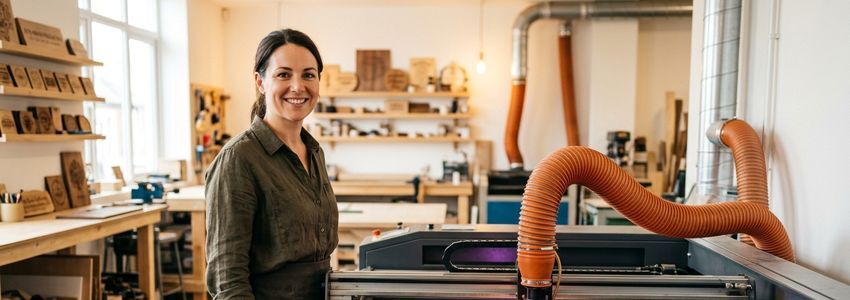
Laser engraving equipment financing is a type of commercial equipment loan or lease used specifically to purchase laser engraving and laser cutting machines, along with related accessories like fume extraction systems, rotary attachments, exhaust ventilation, and software upgrades. Instead of paying the full purchase price upfront, a business spreads the cost over a fixed monthly payment, typically for a term of 24 to 72 months.
The laser engraving machine itself usually serves as collateral for the loan, which is one reason lenders can approve this type of financing faster and with more flexible credit requirements than an unsecured loan. A new industrial-grade CO2 laser engraver can run from $8,000 to $40,000, while a high-powered fiber laser system for metal engraving or a large-format CO2 system for sign and trophy production can exceed $100,000. Financing turns that large one-time expense into a predictable operating cost.
This approach applies whether you are purchasing your very first machine to launch a personalization business, replacing an aging unit, or adding a second or third laser to handle increased order volume. Lenders that specialize in equipment financing, including Crestmont Capital, structure these deals around the asset being financed rather than requiring years of business history.
Unlike a general-purpose business loan, equipment financing is tied directly to a specific piece of machinery, which simplifies underwriting on both sides. The lender knows exactly what is being purchased and what it is worth on the resale market if payments were ever missed, and the borrower knows exactly what the monthly cost will be for the life of the agreement. That clarity is part of why equipment-secured financing has become the default funding method for shops adding laser capability, whether the goal is a single desktop unit for a home-based personalization business or a full production-floor fiber laser for an established manufacturer.
Key Stat: Roughly eight out of ten U.S. businesses use some form of financing when acquiring equipment rather than paying cash, according to industry data on commercial equipment purchases.
Key Benefits of Financing a Laser Engraving Machine
Business owners choose financing over a cash purchase for several practical reasons that affect both day-to-day operations and long-term growth plans.
- Preserve working capital. Keep cash on hand for materials, marketing, rent, and payroll instead of locking six figures into a single machine purchase.
- Predictable monthly payments. Fixed-rate financing makes it easy to budget and forecast cash flow months in advance.
- Faster approval than traditional bank loans. Equipment-secured financing often closes in days, not weeks, because the laser itself backs the loan.
- Access to newer, more capable machines. Financing can make a higher-wattage fiber laser or a larger-bed CO2 system affordable sooner, improving throughput and the range of materials you can engrave.
- Potential tax advantages. Many businesses can deduct equipment costs or lease payments as a business expense; a tax professional can confirm what applies to your specific situation.
- Flexibility to upgrade. Lease structures in particular make it easier to move to newer laser technology as your product mix or order volume changes.
- Build business credit. On-time payments on an equipment loan or lease can help establish or strengthen a business credit profile separate from the owner's personal credit.
Ready to Add a Laser Engraver to Your Shop?
Get fast, flexible equipment financing from the #1 business lender in the U.S. No obligation, apply in minutes.
Apply Now →How Laser Engraving Equipment Financing Works
The process is more straightforward than most first-time applicants expect. Here is what typically happens from application to delivery.
- Choose your equipment. Get a written quote from the laser manufacturer or dealer, including the machine model, wattage, bed size, and any accessories like a rotary attachment, chiller, or fume extractor.
- Submit a simple application. Most equipment lenders ask for basic business information, the equipment quote, and recent bank statements rather than a full loan package.
- Receive underwriting review. The lender evaluates your business revenue, time in business, and credit profile, weighing the equipment's resale value as part of the decision.
- Get an approval and terms. Approved applicants typically see term length, interest rate or factor rate, and monthly payment within one to two business days for equipment-secured financing.
- Sign and fund. Once you accept the terms, the lender pays the equipment vendor directly or reimburses you, and the machine ships or is installed.
- Make fixed monthly payments. You run the business and make a predictable payment for the length of the term, often 24 to 72 months.
Most equipment lenders can move through these steps far faster than a traditional bank, because the underwriting process is built around a smaller, more predictable set of variables. A bank evaluating a general term loan may want two to three years of tax returns, a full business plan, and extensive collateral documentation. An equipment lender financing a laser engraver is primarily concerned with whether the business generates enough revenue to support the payment and whether the machine itself holds resale value as a backstop. That narrower focus is what allows same-day or next-day decisions on many applications.
Types of Laser Engraving Equipment and Financing Structures
Not every laser engraving business needs the same machine or the same financing structure. Understanding the main categories helps you match the right equipment and the right loan or lease to your business model.
Common Laser Engraving Equipment Categories
- CO2 laser engravers: The most common choice for wood, acrylic, leather, glass, and some plastics. Entry-level desktop units start around $3,000 to $8,000; industrial-grade systems with larger beds run $15,000 to $40,000 or more.
- Fiber laser engravers: Built for marking and engraving metal, including stainless steel, aluminum, and anodized surfaces. Popular for trophy shops, industrial parts marking, and jewelry. Pricing typically ranges from $8,000 to $60,000 depending on wattage and bed size.
- Diode laser engravers: A lower-cost entry point often used by hobbyists scaling into a small business, generally under $5,000, with lower power output than CO2 or fiber systems.
- UV laser systems: Used for engraving heat-sensitive materials and adding color-contrast marks on metals and plastics; typically a higher-end investment above $25,000.
- Supporting equipment: Fume extraction and filtration systems, rotary attachments for cylindrical items, chillers for fiber systems, and design software licenses all add to the total project cost and can often be rolled into the same financing package.
Common Financing Structures
- Equipment loan: You own the machine from day one; the lender places a lien on it until the loan is paid off. Best for owners who want to build equity in the asset.
- Equipment lease (fair market value): Lower monthly payments with the option to buy the machine at the end of the term for its then-current market value, return it, or upgrade. Useful if you expect laser technology to improve quickly.
- $1 buyout lease: Functions similarly to a loan; at the end of the term you own the equipment for a nominal $1 payment. Payments are usually slightly higher than a fair market value lease.
- Working capital paired with equipment financing: Some businesses finance the laser itself through an equipment loan while using a separate working capital loan to cover installation, signage, or initial marketing.
By the Numbers
Equipment Financing and Small Business Lending at a Glance
$128B
Projected 2026 U.S. equipment finance demand, a 20-year high
80%
Of U.S. businesses use financing to acquire equipment
73%
Approval rate for auto and equipment loan applicants
7.1M+
Small businesses with fewer than 20 employees in the U.S.
Who Laser Engraving Equipment Financing Is Best For
Laser engraving equipment financing works well across a wide range of business stages and models, but it tends to make the most sense for a few specific situations.
- New personalization and gift businesses launching with a storefront, kiosk, or online shop that needs a reliable machine from day one without tying up startup capital.
- Trophy, award, and sign shops upgrading from an older or smaller-bed laser to handle larger jobs or higher order volume.
- Etsy and online sellers scaling up from a hobbyist diode laser to a production-grade CO2 or fiber system to keep up with order demand.
- Manufacturing and fabrication shops adding metal marking or part identification capability with a fiber laser system.
- Promotional products and corporate gifting businesses that need both a CO2 system for wood and acrylic items and a fiber system for metal drinkware or pens.
- Jewelry and custom accessory makers adding engraving services for personalization, monogramming, or small-batch production runs.
Pro Tip: If you are unsure whether to start with a CO2 or fiber laser, consider which materials make up the bulk of your expected orders. Wood, acrylic, and leather point toward CO2; metal marking and jewelry point toward fiber. Many growing shops eventually finance both.
Comparing Laser Engraving Financing to Other Funding Options
Business owners often consider several funding paths before settling on equipment financing. Here is how the most common alternatives stack up.
| Funding Option | Typical Speed | Collateral | Best For |
|---|---|---|---|
| Equipment financing/lease | 1 to 3 business days | The laser itself | Purchasing a specific machine |
| SBA 7(a) loan | Several weeks | Often required | Larger projects bundling equipment, buildout, and working capital |
| Traditional bank term loan | 2 to 6 weeks | Varies | Established businesses with strong financials |
| Unsecured working capital loan | 1 to 2 business days | None required | Covering installation, materials, or marketing alongside a purchase |
| Cash purchase | Immediate | None | Businesses with ample reserves who prefer no payments |
For most businesses buying a single laser engraving machine in the $8,000 to $60,000 range, dedicated equipment financing offers the fastest path to a funded, operating machine without the paperwork burden of an SBA loan or the higher cost of pulling from a merchant cash advance.
Cost of capital matters too, but it should be weighed against the opportunity cost of waiting. A business that delays a $20,000 laser purchase for six months while saving cash may lose far more than the cost of financing in missed orders, especially in a market where personalized and custom-engraved products are seeing consistent year-over-year demand growth. Financing shifts the math from "can I afford this machine today" to "can this machine pay for itself every month," which is usually the more accurate way to evaluate the investment.
How Crestmont Capital Helps You Finance Laser Engraving Equipment
Crestmont Capital works with business owners across the country to structure equipment financing specifically around the asset being purchased, including laser engraving and laser cutting systems. Rather than requiring years of financial history, Crestmont evaluates the equipment quote, your business revenue, and the realistic resale value of the machine.
If you are launching a new shop, Crestmont's startup equipment financing programs are built for businesses without an extensive track record. If you are replacing or upgrading an existing laser, Crestmont also offers used equipment financing for buying a quality pre-owned machine from a dealer or auction at a lower upfront cost.
For businesses that prefer the flexibility to upgrade equipment every few years as laser technology improves, equipment leasing structures are available with lower monthly payments than a traditional loan. And if your project involves more than just the laser itself, perhaps a buildout, signage, or working capital to cover your first few months of material costs, Crestmont's team can help structure a working capital loan alongside your equipment financing.
Business owners researching related equipment investments may also find it useful to review Crestmont's guide on laser engraving business loans, which covers broader business funding beyond just the machine itself, including buildout and working capital needs for a full laser engraving operation.
Get Your Laser Engraver Funded This Week
Crestmont Capital structures equipment financing around your machine, not just your credit score. Apply in minutes with no obligation.
Apply Now →Real-World Scenarios
Scenario 1: The Etsy Seller Scaling Up
Maria ran a personalized cutting board and wedding gift business from her garage using a small diode laser. As orders grew past what the machine could handle, she financed a larger CO2 laser with a bigger bed and faster cutting speed. The $18,000 machine was financed over 48 months, with the increased production capacity covering the monthly payment within the first two months of use.
Scenario 2: The Trophy Shop Adding Metal Engraving
A long-running trophy and awards shop wanted to offer engraved metal drinkware and corporate recognition plaques alongside its existing acrylic and wood awards. The owner financed a $35,000 fiber laser system, allowing the shop to win several new corporate accounts that specifically required metal engraving capability.
Scenario 3: The Sign Company Upgrading Capacity
A sign-making business was turning down large commercial jobs because its aging CO2 laser could not handle the volume. Financing a new $45,000 industrial-grade system with a larger bed and higher wattage let the company take on three additional commercial contracts in the first quarter after installation.
Scenario 4: The New Personalization Storefront
A first-time business owner wanted to open a mall-based personalization kiosk offering engraved gifts, but did not have enough cash reserves to buy both a laser and store fixtures outright. Startup equipment financing covered the $12,000 laser system, while a separate working capital loan covered buildout and initial inventory, letting the business open on schedule.
Frequently Asked Questions
Your Laser Engraver Is Closer Than You Think
See your financing options for a new or used laser engraving system in minutes, with no obligation to proceed.
Apply Now →Next Steps
Contact a laser manufacturer or dealer for a detailed quote including model, wattage, bed size, and accessories.
Most lenders ask for three to six months of recent business bank statements to review cash flow.
Apply online with Crestmont Capital in minutes, with no obligation to accept any offer.
Compare your rate, term, and monthly payment before signing.
Once funded, your vendor ships or installs the laser and you can start taking on new orders.
Conclusion
Laser engraving equipment financing gives business owners a fast, structured way to acquire the CO2, fiber, or diode laser system their business needs without tying up the cash required to buy equipment outright. From first-time personalization shops to established trophy, sign, and fabrication businesses adding new capability, financing lets you match your equipment investment to the revenue it generates rather than waiting until you have saved the full purchase price.
If you are ready to explore laser engraving equipment financing for a new or used machine, Crestmont Capital can walk you through your options and provide a decision quickly, so you can get back to running your business.
According to the U.S. Small Business Administration, equipment-backed loan programs remain one of the most accessible paths for small businesses to acquire the machinery they need to grow, and the broader creator and personalization economy highlighted by Forbes continues to expand demand for custom engraved products. The U.S. Census Bureau reports that more than seven million small businesses with fewer than 20 employees operate across the country, underscoring how common equipment-based growth decisions like this one are for owners just like you.
Disclaimer: The information provided in this article is for general educational purposes only and is not financial, legal, or tax advice. Funding terms, qualifications, and product availability may vary and are subject to change without notice. Crestmont Capital does not guarantee approval, rates, or specific outcomes. For personalized information about your business funding options, contact our team directly.